YouTube Transcript Downloader and AI Video Summaries
Paste a YouTube video URL to extract its English transcript, download the subtitles as text, or create a concise AI summary.
1. Paste link
Enter a YouTube video URL.
2. Find subtitles
Automatic English subtitles are detected.
3. Download
Save clean subtitles as a TXT file.
Recent summaries
4062 videos · Page 105 of 136
Leonard Susskind: Are We a Computer Simulation with a Purpose? | AI Podcast Clips
Lex Fridman
In this segment of the discussion, Leonard Susskind explores profound metaphysical questions regarding the nature of reality and our place within it. He specifically addresses whether humanity exists merely as a computer simulation driven by an underlying purpose or if there is a distinct intelligent agent responsible for orchestrating the entire universe.…
EN
Jul 30

Leonard Susskind: Richard Feynman and Intuitive Visualization vs Rigorous Mathematics
Lex Fridman
In this discussion, Leonard Susskind reflects on his relationship with Richard Feynman and how Feynman's unique approach to physics influenced him. Susskind describes Feynman as a physicist who operated through deep intuition rather than relying solely on complex mathematical formalism; he could close his eyes and visualize phenomena directly, allowing these mental images to guide highly sophisticated technical arguments.…
EN
Jul 30

Peter Norvig: Artificial Intelligence: A Modern Approach | Lex Fridman Podcast #42
Lex Fridman
Peter Norvig, co-author of *Artificial Intelligence: A Modern Approach* with Stuart Russell, reflects on how his textbook has evolved alongside the field from its first edition in 1995 to the fourth. The primary driver for change between early editions was a massive expansion in computing power; what were once impossible due to memory constraints, such as storing millions of predicate expressions, became feasible, allowing researchers to revisit and refine logical approaches like SAT solvers.…
EN
Jul 30

Peter Norvig: We Are Seduced by Our Low-Dimensional Metaphors | AI Podcast Clips
Lex Fridman
Peter Norvig argues that while neural networks excel at learning representations from data automatically, they often lack introspection and explainability regarding how they perceive the world or why their successes and failures occur so dramatically. He suggests that relying solely on more organized data is insufficient to solve these issues; instead, we must focus on trust, validation, and verification rather than just explanation alone.…
EN
Jul 30

Yann LeCun: Human-Level Artificial Intelligence | AI Podcast Clips
Lex Fridman
Yann LeCun addresses the monumental challenge of building a system with human-level intelligence, using the metaphor of climbing mountains to illustrate that while we can see the first obstacle clearly, there may be many more hidden ahead. He references historical examples like Newell and Simon's General Problem Solver from 1956 as early attempts that failed because researchers only focused on immediate peaks without understanding the broader landscape required for true generalization.…
EN
Jul 30

Jeremy Howard: Deep Learning Frameworks - TensorFlow, PyTorch, fast.ai | AI Podcast Clips
Lex Fridman
Jeremy Howard outlines the evolution of deep learning frameworks, tracing his team's journey from Theano and Caffe to TensorFlow before settling on PyTorch and eventually integrating fast.ai. He identifies a critical flaw in early systems like TensorFlow: their reliance on static computational graphs that require defining all operations upfront.…
EN
Jul 30

Gary Marcus: Nature vs Nurture is a False Dichotomy | AI Podcast Clips
Lex Fridman
Gary Marcus challenges the traditional nature versus nurture dichotomy, arguing instead that innate knowledge and learned experience are inextricably linked processes that must work together for development to occur. He notes that many people incorrectly assume a separation between these two forces, particularly within machine learning fields where researchers often feel compelled to choose one side over the other.…
EN
Jul 30
François Chollet: History of Keras and TensorFlow | AI Podcast Clips
Lex Fridman
François Chollet recounts the origins of Keras, which he began developing in February 2015 amidst a deep learning landscape dominated by C++ libraries like Caffe and Torch7. At that time, the field was relatively small with fewer than 10,000 practitioners, and computer vision using convolutional neural networks (CNNs) was the primary focus while natural language processing remained niche.…
EN
Jul 30

Jeremy Howard: Very Fast Training of Neural Networks | AI Podcast Clips
Lex Fridman
In this discussion, Jeremy Howard highlights a significant breakthrough in neural network training known as super convergence, originally discovered by researcher Leslie Smith. This phenomenon reveals that certain networks with specific high-parameter settings can be trained ten times faster and achieve better generalization when using a learning rate ten times higher than conventional wisdom suggests.…
EN
Jul 30

Machine Learning at Spotify - Gustav Soderstrom | AI Podcast Clips
Lex Fridman
Spotify's massive catalog, comprising over 50 million tracks and more than three billion playlists, presents a unique challenge for machine learning that Gustav Soderstrom frames through the lens of reinforcement learning.…
EN
Jul 30
François Chollet: Scientific Progress is Not Exponential | AI Podcast Clips
Lex Fridman
François Chollet challenges the prevailing narrative of an impending intelligence explosion, arguing instead that scientific progress follows a linear trajectory rather than an exponential one despite massive increases in resources. He posits that while recursive self-improvement is theoretically possible within isolated systems, real-world science operates as part of a complex ecosystem where tweaking one component inevitably creates bottlenecks elsewhere.…
EN
Jul 30
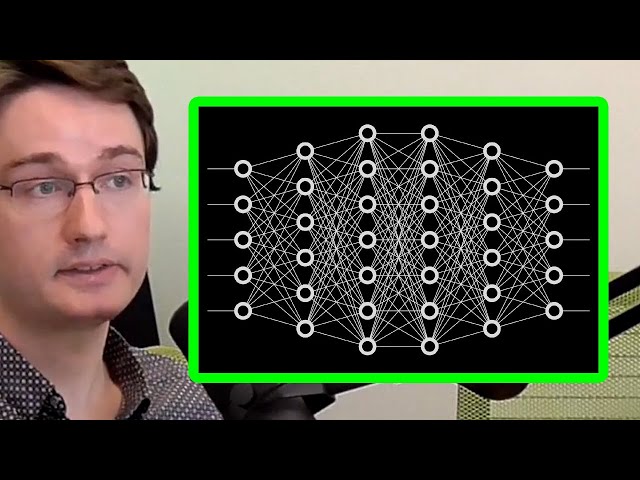
François Chollet: Limits of Deep Learning | AI Podcast Clips
Lex Fridman
François Chollet argues that deep learning models are fundamentally limited because they function as massive parametric systems trained via gradient descent to perform point-by-point geometric morphing between input and output spaces. This architecture forces networks to rely on interpolation, meaning they can only generalize effectively within the dense sampling of experience space provided by training data; if a scenario is not closely similar to what has been seen before, the model fails.…
EN
Jul 30

David Ferrucci: IBM Watson, Jeopardy & Deep Conversations with AI | Lex Fridman Podcast #44
Lex Fridman
David Ferrucci, who led the team behind IBM Watson's victory on Jeopardy!, joins this discussion to explore the philosophical and engineering underpinnings of artificial intelligence. His journey began with a biology background before shifting to computer science, driven by the belief that machines could eventually process information like humans do without necessarily requiring biological substrates.…
EN
Jul 30

David Ferrucci: The Story of IBM Watson Winning in Jeopardy | AI Podcast Clips
Lex Fridman
One of history's greatest achievements in artificial intelligence was IBM Watson competing against human champions on *Jeopardy!*, a challenge that David Ferrucci, then a lead at IBM Research, spearheaded to demonstrate advanced open-domain question answering capabilities.…
EN
Jul 30

David Ferrucci: What is Intelligence? | AI Podcast Clips
Lex Fridman
In this discussion, David Ferrucci defines intelligence primarily through two distinct lenses: the ability to predict future outcomes based on prior data and the capacity for communication that allows others to understand one's reasoning process.…
EN
Jul 30

Stuart Russell: The Control Problem of Super-Intelligent AI | AI Podcast Clips
Lex Fridman
In this discussion on the control problem of super-intelligent AI, Stuart Russell revisits historical warnings about artificial intelligence losing human oversight. He references Alan Turing's 1951 radio lecture, where Turing suggested that once machines surpass humanity in thinking speed, they might outstrip us so quickly that we could only survive by cutting power at strategic moments before being humbled.…
EN
Jul 30

Michio Kaku: Future of Humans, Aliens, Space Travel & Physics | Lex Fridman Podcast #45
Lex Fridman
In this episode of the Lex Fridman Podcast, theoretical physicist and futurist Michio Kaku explores the profound implications of our place in the universe, arguing that humanity is likely not alone given the astronomical odds involving billions of Earth-sized exoplanets orbiting stars within a galaxy containing hundreds of billion galaxies.…
EN
Jul 30

Michio Kaku: What Would Aliens Look Like? | AI Podcast Clips
Lex Fridman
Michio Kaku posits that extraterrestrial life, if it possesses intelligence comparable to humans, would likely share three fundamental biological or technological traits derived from evolutionary pressures on Earth: stereo eyesight, an opposable appendage for manipulation, and the ability to transmit complex language.…
EN
Jul 30

Michio Kaku: Brain-Computer Interfaces | AI Podcast Clips
Lex Fridman
Michio Kaku outlines a transformative future for brain-computer interfaces, beginning with breakthroughs in recording and transmitting memories. He notes that scientists are already capable of recording simple memories from mice and sending them over the internet, with plans to eventually achieve this in primates at institutions like Wake Forest University and Los Angeles.…
EN
Jul 30

Michio Kaku: Universes Are Being Created All the Time | AI Podcast Clips
Lex Fridman
Michio Kaku, a quantum physicist, challenges the conventional understanding of the Big Bang by asserting that it did not occur just once but rather happens continuously throughout existence. He argues that accepting a single origin for our universe would violate the Heisenberg uncertainty principle, suggesting instead that multiple universes are being created all the time as we speak.…
EN
Jul 30

Michio Kaku: The Mind of Einstein's God | AI Podcast Clips
Lex Fridman
Michio Kaku addresses the profound question of what constitutes the mind or nature of Einstein's God, referencing a famous sentiment attributed to Nobel Prize winner Steven Weinberg that suggests our increasing understanding of the universe reveals its pointlessness. However, Kaku counters this by highlighting how giants of physics have viewed divinity differently; specifically, Albert Einstein rejected the personal God found in religious texts who answers prayers and performs miracles.…
EN
Jul 30

Michio Kaku: String Theory | AI Podcast Clips
Lex Fridman
String theory posits a fundamental shift in our understanding of subatomic particles, suggesting that entities like electrons, protons, and quarks are not distinct objects but rather vibrations on incredibly tiny strings. This concept is framed through an analogy to music: just as different notes arise from vibrating strings on an instrument, the diversity of matter in nature stems from specific vibrational patterns within these microscopic filaments.…
EN
Jul 30
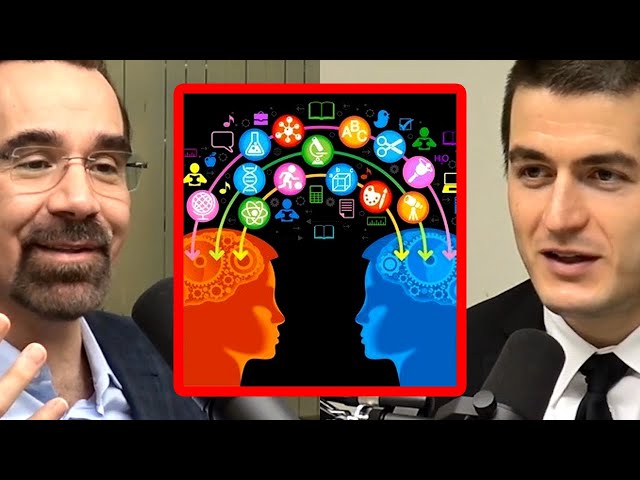
David Ferrucci: AI Understanding the World Through Shared Knowledge Frameworks | AI Podcast Clips
Lex Fridman
David Ferrucci argues that for artificial intelligence to truly understand the world, it must move beyond simple pattern matching and hardware limitations to acquire shared knowledge frameworks similar to those humans use naturally. He posits that while there is an infinite amount of specific data in the universe, the fundamental frameworks required to interpret social, political, and physical situations are finite.…
EN
Jul 30
Garry Kasparov: Chess, Deep Blue, AI, and Putin | Lex Fridman Podcast #46
Lex Fridman
Garry Kasparov reflects on his psychological drive in chess, identifying it less about a simple love for winning or hatred of losing and more about an intense passion to create something new and make a difference. He describes the pain of defeat as almost physical because he believed every loss stemmed from personal mistakes that could be corrected through improvement.…
EN
Jul 30

Garry Kasparov: The Butterfly Effect and the Wisdom of Forrest Gump | AI Podcast Clips
Lex Fridman
In this reflective segment, Garry Kasparov contemplates the nature of regret and the possibility of altering past moments in his life. He acknowledges that while he has made mistakes, particularly noting that 2005 marked his third marriage after marrying his current wife, these errors do not diminish his overall sense of accomplishment or joy.…
EN
Jul 30

Garry Kasparov: Magnus Carlsen is a Lethal Combination of Fischer and Karpov | Lex Fridman Podcast
Lex Fridman
Garry Kasparov addresses the challenge of ranking Magnus Carlsen among all-time chess greats, arguing that direct comparisons across generations are inherently flawed due to the exponential growth in knowledge about the game. He notes that modern players possess a vast repository of information unavailable to predecessors like Anatoly Karpov or Bobby Fischer, making it unfair to judge them solely on current standards without accounting for this informational gap.…
EN
Jul 30

Garry Kasparov: IBM Deep Blue, AlphaZero, and the Limits of AI in Open Systems | AI Podcast Clips
Lex Fridman
Garry Kasparov reflects on his 1997 loss to IBM's Deep Blue, describing it not merely as a sporting defeat but as a seminal moment in human civilization that shattered the long-held belief that chess represented the pinnacle of intellectual mastery. While many viewed this event with romanticism or even tragedy, Kasparov explains that the pain was physical and psychological because he had suspected his loss stemmed from factors beyond simple bad play rather than just time pressure.…
EN
Jul 30

Garry Kasparov: Fear of Mistake Guarantees Mistakes | AI Podcast Clips
Lex Fridman
In this introspective discussion, Garry Kasparov reflects on his psychological drivers throughout his illustrious chess career, specifically addressing whether a love for winning or a hatred of losing was his primary motivator. He confesses that while both emotions were present and painful—particularly the physical sting of defeat due to inevitable mistakes—the defining factor at the highest level was not merely emotional reaction but the ability to make decisive moves without predictable consequences.…
EN
Jul 30

Michio Kaku: AI Will Help Us Discover Genetic Immortality | AI Podcast Clips
Lex Fridman
Michio Kaku posits that artificial intelligence will serve as the catalyst for achieving genetic immortality, a feat previously sought in vain by historical figures like emperors and queens who chased the mythical Fountain of Youth.…
EN
Jul 30

Sean Carroll: Quantum Mechanics and the Many-Worlds Interpretation | Lex Fridman Podcast #47
Lex Fridman
In this continuation of his conversation with Lex Fridman, theoretical physicist Sean Carroll delves into classical mechanics and its historical evolution from Aristotelian teleology to Newton's laws. He explains how Isaac Newton initially struggled with "action at a distance," the concept that gravity acted across empty space without contact, which he left for future generations to solve.…
EN
Jul 30