YouTube Transcript Downloader and AI Video Summaries
Paste a YouTube video URL to extract its English transcript, download the subtitles as text, or create a concise AI summary.
1. Paste link
Enter a YouTube video URL.
2. Find subtitles
Automatic English subtitles are detected.
3. Download
Save clean subtitles as a TXT file.
Recent summaries
3610 videos · Page 96 of 121
Forever oscillate between dissatisfaction and gratitude
Lex Fridman
The closing segment of this discussion centers on a profound piece of advice regarding how to navigate life's emotional landscape, specifically urging individuals to maintain a dynamic balance between dissatisfaction and gratitude. The speaker suggests that one should forever oscillate between deep, profound doubt and self-dissatisfaction alongside an intense appreciation for every single moment of being alive.…
EN
Jul 30

David Silver: AlphaGo, AlphaZero, and Deep Reinforcement Learning | Lex Fridman Podcast #86
Lex Fridman
David Silver, a lead researcher at DeepMind and architect of AlphaGo and AlphaZero, recounts his journey from childhood fascination with computers to revolutionizing artificial intelligence through deep reinforcement learning. His early interest in AI was sparked by playing board games like Go, which he found more profound than chess or Scrabble due to its immense complexity and intuitive depth that classical heuristic search methods could not crack.…
EN
Jul 30

Consciousness is Not a Computation (Roger Penrose) | AI Podcast Clips
Lex Fridman
Roger Penrose argues that consciousness cannot be explained through computation or standard physical processes, a stance he developed over his scientific career before writing *The Emperor's New Mind*. During this period, he engaged with prominent figures in artificial intelligence like Marvin Minsky and Edward Fredkin, who envisioned computers eventually surpassing human knowledge.…
EN
Jul 30

AlphaZero and Self Play (David Silver, DeepMind) | AI Podcast Clips
Lex Fridman
The development of AlphaZero represents a profound intellectual leap in artificial intelligence, marking a transition from systems reliant on human expert data to those capable of learning entirely through self-play. In this framework, an agent learns by playing games against itself rather than relying on pre-existing knowledge bases or specific opponents.…
EN
Jul 30

Richard Dawkins: Evolution, Intelligence, Simulation, and Memes | Lex Fridman Podcast #87
Lex Fridman
In this conversation with Lex Fridman, evolutionary biologist Richard Dawkins addresses the probability of extraterrestrial life and its potential nature. Given the vast number of stars estimated in the universe—around $10^{22}$—Dawkins argues that it is highly improbable for intelligent life to exist elsewhere if one accepts that complex evolution occurred on Earth without divine intervention; he views this as a matter of staggering improbability rather than impossibility.…
EN
Jul 30

Richard Dawkins: The Programmer of the Simulation Came About Through Evolution | AI Podcast Clips
Lex Fridman
Richard Dawkins addresses the popular hypothesis that our reality might be a computer simulation, arguing that even if this premise holds true, it does not eliminate the necessity of evolutionary explanation. He posits that for such a programmer or creator to exist within their own context—whether they are in a meta-simulation—they must have arisen through gradual, incremental processes rather than appearing instantaneously.…
EN
Jul 30

Richard Dawkins: Meaning of Life | AI Podcast Clips
Lex Fridman
In this profound discussion on the nature of existence, Richard Dawkins addresses one of humanity's most enduring inquiries: what is the meaning of life? From a strictly scientific and biological perspective, he posits that the fundamental purpose of any living organism is the propagation of DNA. However, Dawkins clarifies that while this biological imperative drives evolution, it does not constitute the personal fulfillment or happiness individuals experience in their daily lives.…
EN
Jul 30

Eric Weinstein: Geometric Unity and the Call for New Ideas & Institutions | Lex Fridman Podcast #88
Lex Fridman
In this conversation, Eric Weinstein reflects on the current global crisis caused by the coronavirus pandemic, drawing parallels between today's situation and historical events like World War II and the Soviet era.…
EN
Jul 30
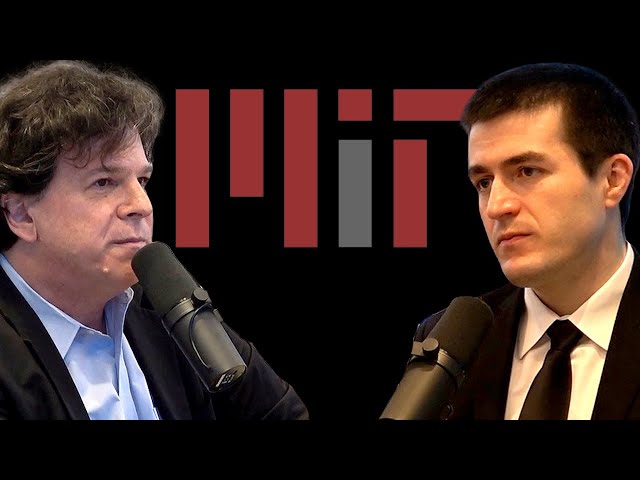
Take Back MIT | Eric Weinstein and Lex Fridman
Lex Fridman
In this intense discussion, Eric Weinstein and Lex Fridman critique the current state of elite institutions like MIT and Harvard, arguing that they have deviated from their original purpose of fostering radical innovation and protecting sharp minds.…
EN
Jul 30

I'm Most Proud of Trying - Eric Weinstein | AI Podcast Clips
Lex Fridman
In this poignant reflection, Eric Weinstein addresses his thoughts on mortality and death with a candid admission of fear regarding dying alone or being forgotten by those who knew him best. He expresses a deep desire for his legacy to be defined strictly by accuracy rather than the judgments or criticisms levied against him while he was alive.…
EN
Jul 30

Geometric Unity - A Theory of Everything (Eric Weinstein) | AI Podcast Clips
Lex Fridman
Eric Weinstein details his thirty-year journey toward developing Geometric Unity, a theory of everything he describes as an attempt to replace standard space-time with a concept called proto-space-time or Y14.…
EN
Jul 30

Elon Musk Makes Sense to Me (Eric Weinstein) | AI Podcast Clips
Lex Fridman
In this discussion, Eric Weinstein engages with a listener's perspective on Elon Musk and his ambitious efforts to propel humanity off Earth via SpaceX. The conversation begins by acknowledging that while both individuals are serious about space exploration, their methodologies differ significantly in nature. While the speaker suggests he might be more aligned with physics theory, he concedes that Musk represents a different but equally vital approach focused on engineering and practical application.…
EN
Jul 30

Eric Weinstein's Harvard Story - The System Breaks Down in Novel Situations | AI Podcast Clips
Lex Fridman
Eric Weinstein recounts his transformative experience at Harvard, which began with a deceptive encounter involving an advisor's so-called "secret seminar" on Chern-Simons invariants. Initially unaware of such gatherings, he was led to believe it was a prank until arriving early only to find the room empty and eventually filled by professors who treated his presence as disconcerting.…
EN
Jul 30

Stephen Wolfram: Cellular Automata, Computation, and Physics | Lex Fridman Podcast #89
Lex Fridman
In this conversation recorded in November 2019, Stephen Wolfram explores the boundaries of intelligence and communication with potential extraterrestrial life. He argues that there is no fundamental distinction between biological brains, weather systems, artificial intelligence (AI), and physical processes like pulsar magnetospheres; rather, they all exist on a spectrum of computation.…
EN
Jul 30

Richard Feynman on Computation (Stephen Wolfram) | AI Podcast Clips
Lex Fridman
In this discussion, Stephen Wolfram reflects on his professional relationship with Richard Feynman during their time at Caltech and later while both served as consultants for Thinking Machines Corporation. Although they collaborated frequently, a fundamental philosophical divide existed regarding business strategy; Wolfram viewed running the company as an effective mechanism to build tools that empower scientific exploration, whereas Feynman considered such administrative interests a distraction from pure physics.…
EN
Jul 30

What is Wolfram Language? (Stephen Wolfram) | AI Podcast Clips
Lex Fridman
Stephen Wolfram introduces Wolfram Language, a high-level symbolic programming language first released in 1988 alongside Mathematica and later integrated into Neural Network Frameworks (NAFA). Unlike traditional languages that rely on low-level computer operations or require extensive libraries for specific tasks, Wolfram Language is designed to be an abstract system capable of handling both computational logic and real-world entities directly.…
EN
Jul 30

Dmitry Korkin: Computational Biology of Coronavirus | Lex Fridman Podcast #90
Lex Fridman
Dmitry Korkin, a professor of bioinformatics and computational biology at Worcester Polytechnic Institute (WPI), joins Lex Fridman to discuss his group's work reconstructing the 3D structures of coronavirus proteins using viral genome data released in early February. Korkin describes viruses not merely as biological organisms but as highly efficient, intelligent machines perfected by evolution to perform specific functions with minimal material and information.…
EN
Jul 30

Jack Dorsey: Square, Cryptocurrency, and Artificial Intelligence | Lex Fridman Podcast #91
Lex Fridman
In this episode of the Lex Fridman Podcast, Jack Dorsey, co-founder and CEO of Square (now Block) and former Twitter leader, engages in a wide-ranging discussion covering engineering at scale, cryptocurrency, artificial intelligence, and philosophical questions regarding life's meaning. A significant portion of their conversation focuses on Square's mission to increase access to the global economy for merchants who are often excluded due to poor credit scores or lack of financial history.…
EN
Jul 30

Jack Dorsey: Yang Gang Forever | AI Podcast Clips
Lex Fridman
In a recent discussion regarding artificial intelligence and its societal impact, Jack Dorsey addressed concerns about job displacement raised prominently by Andrew Yang.…
EN
Jul 30

Turing Test: Can Machines Think?
Lex Fridman
In his seminal 1950 paper *Computing Machinery and Intelligence*, Alan Turing proposed replacing the ambiguous question of whether machines can think with a concrete engineering benchmark known today as the Turing Test or "Imitation Game." In this thought experiment, an interrogator communicates via text with two hidden entities—a human and a machine—and must determine which is which.…
EN
Jul 30

Harry Cliff: Particle Physics and the Large Hadron Collider | Lex Fridman Podcast #92
Lex Fridman
Harry Cliff, a particle physicist at the University of Cambridge working on the Large Hadron Collider (LHC) beauty experiment, explains that modern physics is fundamentally about studying quantum fields rather than discrete particles. In this view, what we perceive as matter consists of vibrations or ripples in invisible fluid-like objects called fields that permeate the entire universe; for instance, every electron is a disturbance in the ubiquitous electron field.…
EN
Jul 30
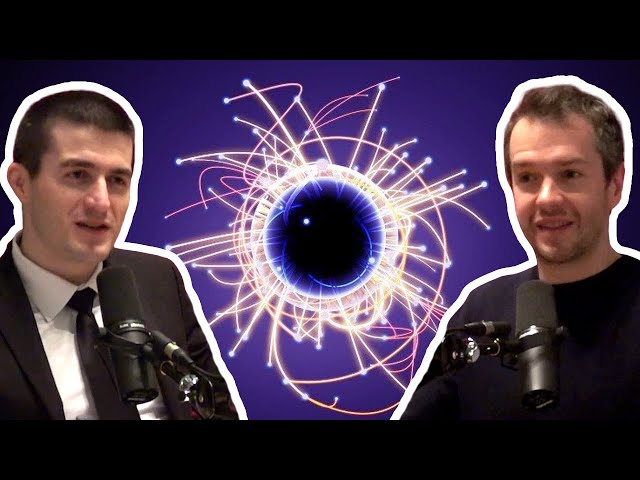
Higgs Particle (Harry Cliff) | AI Podcast Clips
Lex Fridman
The Higgs boson, often historically mislabeled as the "God particle" or a metaphorical "Jesus particle," represents a pivotal discovery in physics that confirmed the electroweak theory developed in the mid-seventies. This theoretical framework unified electromagnetism with the weak force and predicted four new particles: the W+, W-, Z bosons, and the Higgs boson.…
EN
Jul 30

Who is Hedgy? - A Story of Minimalism | AMA #5 - Ask Me Anything with Lex Fridman
Lex Fridman
In this Ask Me Anything segment, Lex Fridman introduces Hedgy, a stuffed hedgehog he acquired from a thrift store years ago, using it as a unique lens to explore themes of minimalism and personal philosophy. Unlike other plush toys in the bin that appeared with "dumb smiles" representing shallow happiness, Hedgy stood out for his profound seriousness and disturbed expression, which Fridman felt resonated deeply with him.…
EN
Jul 30

Eating One Meal a Day (Jack Dorsey) | AI Podcast Clips
Lex Fridman
Jack Dorsey shares his personal journey with intermittent fasting, noting that while he was among the first to adopt an eating once a day routine when others found it novel, he has since embraced the practice as both enjoyable and beneficial. He explains that although he loves food, he also appreciates suffering—a sentiment rooted in his Russian heritage—and believes that fasting helps one appreciate what it means to be human.…
EN
Jul 30

The Big Nap: Coronavirus and World War II - Eric Weinstein and Lex Fridman | AI Podcast Clips
Lex Fridman
Eric Weinstein and Lex Fridman explore a profound connection between the current global crisis caused by coronavirus and World War II, arguing that humanity has not moved past the lessons of collective action required in times of existential threat.…
EN
Jul 30

Daphne Koller: Biomedicine and Machine Learning | Lex Fridman Podcast #93
Lex Fridman
Daphne Koller, a Stanford professor and co-founder of Coursera, explains her transition from general machine learning to biomedicine following her father's death from an autoimmune disease where treatment options were limited by a lack of specific drug targets. She argues that while curing all diseases is an immense challenge due to the complexity of biology and the damage often done before discovery, significant progress has been made in understanding fundamental mechanisms for some conditions like breast cancer.…
EN
Jul 30

What is Deep Reinforcement Learning? (David Silver, DeepMind) | AI Podcast Clips
Lex Fridman
In this discussion with David Silver from DeepMind, reinforcement learning (RL) is defined as the scientific study of intelligence through an agent interacting with an environment to maximize a reward signal. The core problem involves an agent taking actions that alter the state of its surroundings and receiving observations along with feedback on how well it performed.…
EN
Jul 30
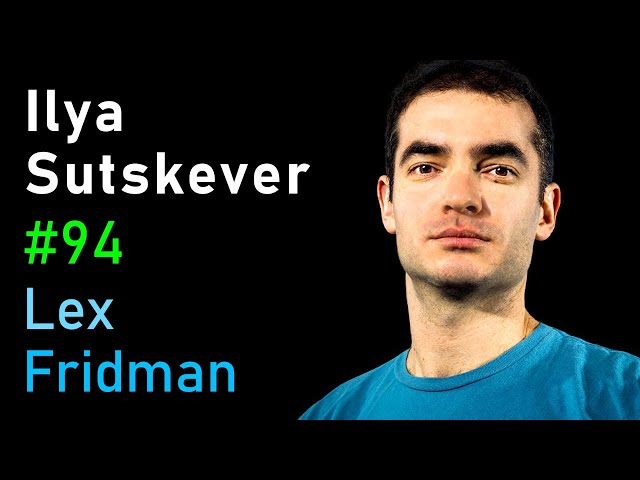
Ilya Sutskever: Deep Learning | Lex Fridman Podcast #94
Lex Fridman
In this conversation with Lex Fridman, Ilya Sutskever reflects on his pivotal role in launching the deep learning revolution through the seminal AlexNet paper alongside Jeff Dean and Andrew Ng.…
EN
Jul 30

How to Build AGI? (Ilya Sutskever) | AI Podcast Clips
Lex Fridman
In this discussion on building Artificial General Intelligence (AGI), Ilya Sutskever argues that AGI will likely emerge from a combination of deep learning and novel ideas, with self-play being a critical component. He highlights the unique ability of self-play systems to generate surprising behaviors and creative solutions that humans do not routinely exhibit, citing examples like AlphaZero and multi-agent hide-and-seek scenarios where agents developed unexpected strategies.…
EN
Jul 30

Language or Vision - What's Harder? (Ilya Sutskever) | AI Podcast Clips
Lex Fridman
In this discussion, Ilya Sutskever addresses the fundamental unity within machine learning across diverse domains like computer vision, natural language processing (NLP), and reinforcement learning (RL). He argues that despite superficial differences in architectures—such as transformers dominating NLP while convolutional neural networks are prevalent in vision—the underlying principles remain highly interconnected.…
EN
Jul 30