Video summary
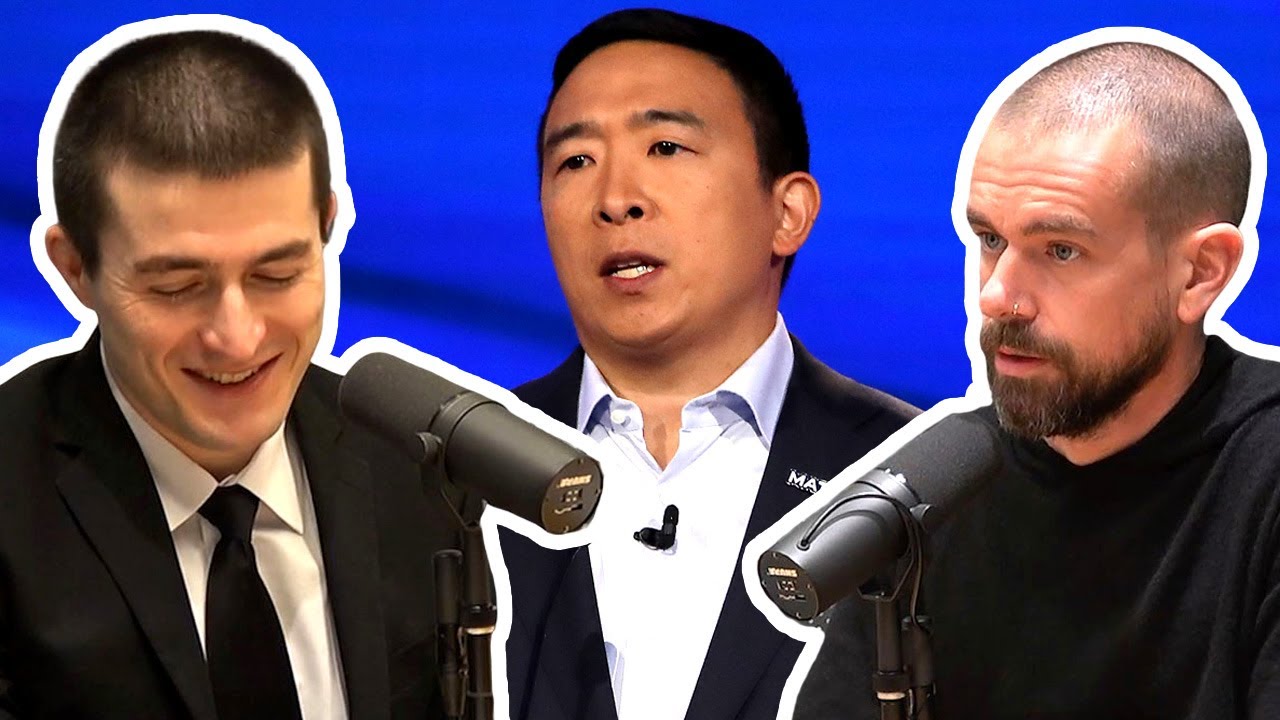
In a recent discussion regarding artificial intelligence and its societal impact, Jack Dorsey addressed concerns about job displacement raised prominently by Andrew Yang. Although Yang has recently stepped out of politics following his campaign for president, Dorsey expressed disappointment over this development but noted the positive news that Yang is launching a new podcast where he might be more open to debating topics like "ratatouille." The conversation centered on whether automation will inevitably lead to widespread unemployment and how society should prepare. While acknowledging that automation offers significant benefits, both speakers agreed there are serious negative implications if workers cannot transition effectively into new roles. Dorsey highlighted the immediate reality of these shifts within Square's business ecosystem, citing specific industries already affected by technological changes. He pointed out that truck drivers in Missouri and cashiers face existential threats as point-of-sale systems move to customer phones, apps enable pre-ordering, kiosks replace human interaction, and concepts like Amazon Go emerge. The number of workers needed for traditional cashier roles is diminishing rapidly, yet there are currently no clear solutions on how these individuals can transform their skills into new careers without a safety net. This rapid velocity of change distinguishes the current era from previous industrial shifts, creating urgent challenges that require immediate attention and support systems like Universal Basic Income (UBI). The dialogue emphasized that UBI serves as an essential economic floor to allow displaced workers time to retrain and acquire necessary skills rather than worrying about day-to-day survival. Dorsey argued that a monthly stipend of around $1,000 would not incentivize people to quit their jobs but would provide the psychological freedom needed to focus on upskilling for future opportunities. He noted that while Universal Basic Income was championed by figures like Martin Luther King Jr., its implementation is now more critical than ever due to the accelerating pace of automation driven by data and algorithms. The goal is not just to replace lost income but to empower individuals to navigate a rapidly evolving economy where traditional job structures are dissolving faster than in previous industrial ages. A significant portion of the discussion focused on the centralization of power regarding AI, specifically concerning who owns the data and controls the algorithms that drive these technologies. Dorsey expressed concern over how insights derived from vast amounts of user data currently benefit only a few very large companies rather than being shared to build tools that serve broader human needs or businesses effectively. He argued that regulation must play a strong role in addressing these primitives of AI, ensuring fair ownership and distribution of the benefits generated by artificial intelligence systems. Without proper oversight, society risks allowing technology to concentrate wealth and influence further into the hands of a select few entities. Ultimately, the conversation concluded with an emphasis on identifying problems early enough to propose viable solutions that can evolve as circumstances change. While Dorsey acknowledged that the specific figure for UBI might need adjustment based on real-world testing, he strongly advocated for attempting to implement such measures immediately rather than waiting until they are deemed obsolete or insufficient later in history. The consensus was clear: society needs better answers regarding data ownership and algorithmic transparency now, before these issues become insurmountable barriers. By learning from current challenges and proposing practical interventions like UBI and regulatory frameworks, humanity can harness the potential of AI while protecting workers from its disruptive effects.
Read the full video transcript
what are your thoughts sticking on
artificial intelligence a little bit
about the displacement of jobs that's
another perspective that candidates like
Andrew yang talked about being getting
forever yang Yang so he unfortunately
speaking of yang Yang has recently
dropped out I know it was very
disappointing and depressing yeah but
the on the positive side he's I think
launching a podcast so really cool yeah
that's he just announced that I'm sure
he'll try to talk you into trying to
come on to the podcast so about
ratatouille yeah maybe he'll be more
welcoming of the ratatouille argument
what are your thoughts on his concerns
of the displacement of jobs of
automations out of the of course there's
positive impacts that could come from
automation they I and but there could
also be negative impacts and within that
framework what are your thoughts about
universal basic income so these
interesting new ideas of how we can
empower people in the economy i I think
he was a hundred percent right on almost
every dimension we see this in in
squares business I mean he identified
truck drivers I'm from Missouri and he
certainly pointed to the concern and the
issue that people from where I'm from
feel every single day that is often
invisible and not talked about enough
you know the next big one is cashiers
this is where it pertains to squares
business we are seeing more and more of
the point-of-sale moved to the
individual customers hand in the form of
their phone and apps and pre-order and
order ahead we're seeing more kiosks
we're seeing more things like Amazon go
and the number of workers in as a
cashier and Rito's immense and you know
there's there's no real answers on how
they transform their skills and and work
and into something else and I think that
does lead to a lot of
really negative ramifications and the
important point that he brought up
around universal basic income is given
that this shift is going to come and
given it's going to take time to set
people up with new skills and new
careers they need to have a floor to be
able to survive and this thousand
dollars a month is such a floor it's not
going to incentivize you to quit your
job because it's not enough but it will
enable you to not have to worry as much
about just getting on day to day so that
you can focus on what I'm what am I
going to do now and what am I going to
what skills do I need to acquire and I
think I think that you know a lot of
people point to the fact that you know
during the industrial age we we had the
same concerns around automation factory
lines and everything worked out ok but
the the biggest change is just the
velocity and the centralization of a lot
of the things that make this work which
is the data and the algorithms that work
on this on this data I think the the
second biggest scary thing is just how
around AI is just who actually owns the
data and who can operate on it and are
we able to share the insights from the
data so that we can also build
algorithms that help our needs or help
our business or what not so that's where
I think regulation could play a strong
and positive part first looking at the
primitives of AI and the tools we use to
build these services that will
ultimately touch every single aspect of
the human experience and then how data
where data is owned and how its how its
shared
so those those are the answers that as a
society as a world we need to have
better answers around which we're
currently not they're just way too
centralized into a few very very large
companies but I think is about on with
identifying the problem and proposing
solutions that would actually work
at least that we'd learn from that you
could expand or evolve but I mean it's I
think it's ubi is well well past its
it's do I mean it was certainly
trumpeted by Martin Luther King and and
even even before him as well and like
you said like the you know the exact
thousand dollar mark might be might not
be the correct one but you should take
the stuff to try to implement these
solutions and see see what works
you