Video summary
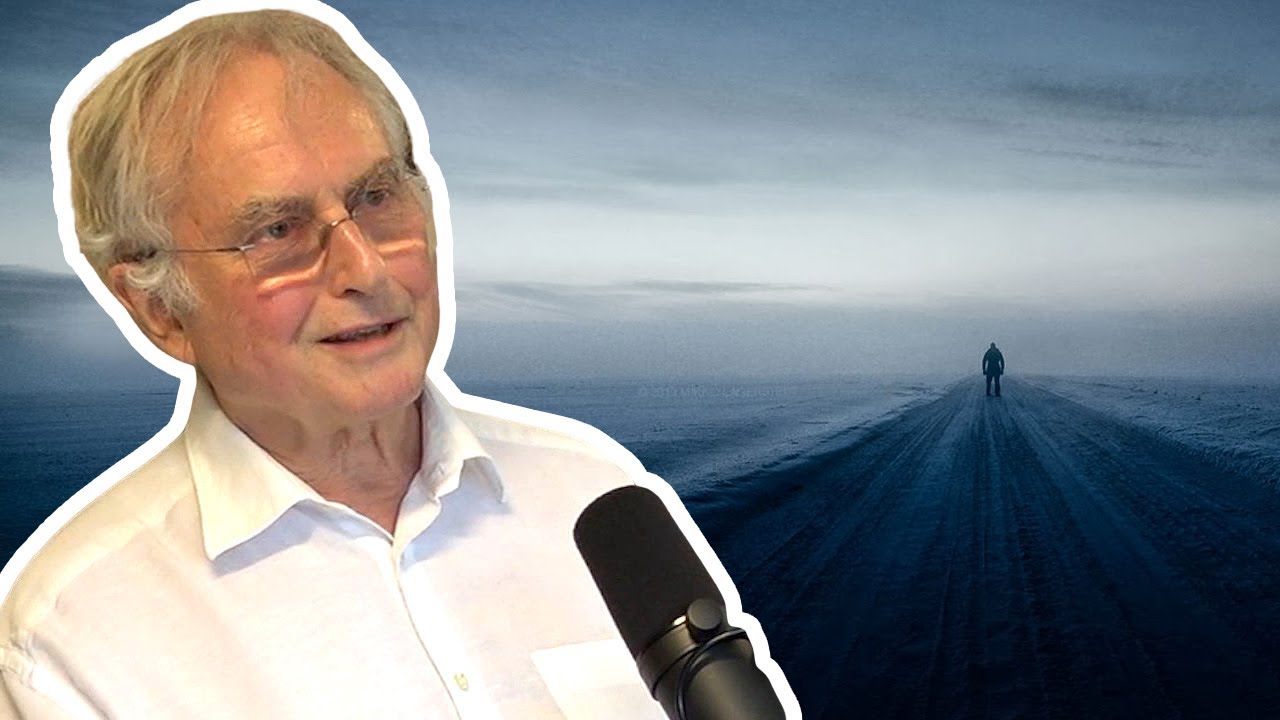
In this profound discussion on the nature of existence, Richard Dawkins addresses one of humanity's most enduring inquiries: what is the meaning of life? From a strictly scientific and biological perspective, he posits that the fundamental purpose of any living organism is the propagation of DNA. However, Dawkins clarifies that while this biological imperative drives evolution, it does not constitute the personal fulfillment or happiness individuals experience in their daily lives. He emphasizes that each person constructs their own unique meaning through a variety of goals and aspirations that often diverge significantly from one another's paths. These self-determined objectives range from tangible achievements to abstract intellectual pursuits. Dawkins notes that human brains are equipped with an innate goal-seeking machinery, allowing us to set both short-term targets, such as winning a football match or writing a book, and long-term ambitions driven by deeper curiosity. These higher-level goals frequently involve noble endeavors like understanding the riddle of the universe, deciphering the nature of consciousness, or unraveling how the brain functions. Although these pursuits are far removed from the raw biological drive to reproduce, they provide individuals with profound motivation that can even be described as spiritual in certain contexts. The paradox lies in the fact that while our minds craft these complex, meaningful narratives independent of immediate genetic survival needs, the very machinery enabling such creativity and ambition was originally programmed by natural selection for the sole purpose of DNA propagation. This evolutionary legacy ensures that humans are capable of setting lofty goals, yet it does not dictate what those specific goals must be. Consequently, every individual is free to define their own path to fulfillment, creating a personal meaning that stands apart from the universal biological mandate shared by all species. Despite this capacity for self-definition, Dawkins acknowledges the unsettling reality of human mortality and its emotional impact on him. He admits to pondering his eventual death, noting that it brings sadness because he will not witness what happens next in life or history. While some might find comfort in religious concepts of an afterlife, Dawkins finds the concept of eternity itself frightening when viewed as a state following our departure from this world. The fear stems less from missing future events and more from confronting the vastness of time that exists both before birth—during which we were effectively dead—and will follow death. To reconcile with this daunting prospect, Dawkins adopts a pragmatic perspective inspired by Mark Twain's observation that humans are "dead for billions of years" before they are born without suffering any inconvenience. By applying similar logic to the period after death, he suggests that eternity is best spent under a general anaesthetic, effectively viewing non-existence as a peaceful continuation rather than a terrifying void. This acceptance allows him to face mortality with equanimity, recognizing that while our biological programming seeks only replication, our conscious experience of life finds its value in the meaningful goals we choose and the way we navigate the finite span between birth and death.
Read the full video transcript
let me ask the last the silliest there
may be the most important question what
is the meaning of life what gives your
life fulfillment / happiness me from a
scientific point of view the meaning of
life is the propagation of DNA but
that's not what I feel that's not the
meaning of my life so the meaning of my
life is something which is probably
different from yours and differ from
other people's but we each make our own
meaning so we we have we set up goals we
want to achieve we want to write a book
we want to do whatever it is we do
writer quartet we want to win a football
match and these are these are short-term
girls well may begin quite long term
goals which are set up by our brains
which have goal seeking machinery built
into them but what we feel we don't feel
motivated by the desire to pass on our
DNA mostly we have other other goals
which can be very moving very important
they could even be called as called
spiritual in some cases we want to
understand the riddle of the universe we
want to understand consciousness we want
to understand how the brain works these
are all noble goals some of them can be
noble goals anyway and they are a far
cry from the fundamental biological goal
which is the propagation of DNA but the
machinery that enables us to set up
these higher level goals is originally
programmed into us by natural selection
of DNA the propagation of DNA but what
do you make of this unfortunate fact
that we are mortal do you ponder your
mortality does it make you sad this is I
I ponder it it would it makes me sad
that I shall have to leave and not see
what's going to happen next if there's
something frightening about mortality
apart from sort of missing as I said
something more deeply darkly
lightning it's the idea of eternity but
eternity is only frightening you feel
their eternity but before we were born
billions of years before we were born
and we were effectively dead before we
were born as I think was Mark Twain said
I was dead for billions of years before
I was born and never suffered the
smallest inconvenience that's how I was
going to be afterward after we leave so
I think of it as really it eternity is a
frightening prospect and so the best way
to spend it is under a general
anaesthetic which is what it'll be
beautifully put Richard there's a huge
honour to meet you to talk to you thank
you so much for your time thank you very
much
you