← Back to Submind

Topic

machine learning

Coolest Tool Award 2026: Microtask Generator

MediaWiki

The 2026 Coolest Tool Award celebrates innovation within the Wikimedia ecosystem by recognizing tools that simplify complexity and remove barriers to contribution. Last year's winners, including the Abuse Filter Analyzer and Paulina, demonstrated how evolving infrastructure can help communities navi …

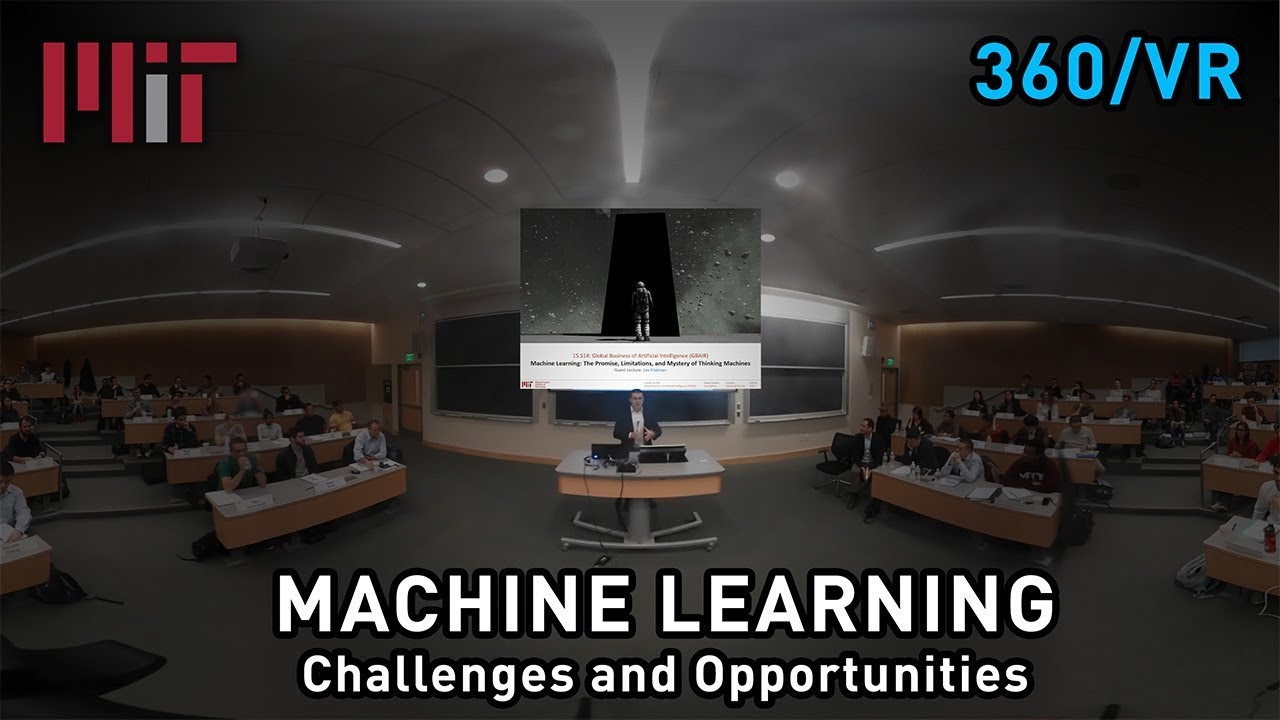
MIT Sloan: Intro to Machine Learning (in 360/VR)

Lex Fridman

The lecture introduces machine learning, specifically focusing on supervised learning where human-labeled data trains models to solve specific problems like distinguishing cats from dogs or translating languages. The core mechanism involves feeding input-output pairs into a system that learns throug …

Guido van Rossum: Python | Lex Fridman Podcast #6

Lex Fridman

In this episode of Lex Fridman's podcast, creator Guido van Rossum reflects on his upbringing in post-WWII Netherlands and how early exposure to Dutch literature shaped his worldview before he turned to technology as a teenager. He describes tinkering with electronic circuits not out of an initial d …

Rajat Monga: TensorFlow | Lex Fridman Podcast #22

Lex Fridman

Rajat Monga, Engineering Director of Google and leader of the TensorFlow team, joined Lex Fridman to discuss the evolution of machine learning from a niche research concept into a global ecosystem. The conversation traces the origins of Google Brain in 2011 under Jeff Dean, which aimed to scale deep …

Yann LeCun: Can Neural Networks Reason? | AI Podcast Clips

Lex Fridman

In this discussion, Yann LeCun addresses whether neural networks can be made to reason, asserting without doubt that they can if sufficient prior structure is integrated into their architecture. He challenges the traditional view held by many computer scientists who believe reasoning must rely on di …

Elon Musk: Brain Computer Interfaces - Machine Learning and Neuroplasticity

Lex Fridman

The provided text appears to be a corrupted or incomplete audio transcription containing fragmented words, background noise indicators like "[Music]," and non-coherent strings of letters that do not form meaningful sentences related to Elon Musk, brain-computer interfaces, machine learning, or neuro …

Michael Kearns: Game Theory and Machine Learning

Lex Fridman

In his discussion of markets and collective outcomes, Michael Kearns highlights how game theory serves as a mathematical framework for analyzing systems where individual interactions shape overall results. While originating in economics, this field has evolved into algorithmic game theory over the p …

Andrew Ng: Advice on Getting Started in Deep Learning | AI Podcast Clips

Lex Fridman

Andrew Ng emphasizes that deep learning and AI are accessible to self-taught individuals, citing statistics suggesting a significant portion of programmers learn without formal instruction. To help people enter this field, he highlights his Machine Learning course on Coursera as one of the most popu …

Daphne Koller: Biomedicine and Machine Learning | Lex Fridman Podcast #93

Lex Fridman

Daphne Koller, a Stanford professor and co-founder of Coursera, explains her transition from general machine learning to biomedicine following her father's death from an autoimmune disease where treatment options were limited by a lack of specific drug targets. She argues that while curing all disea …

Sergey Levine: Robotics and Machine Learning | Lex Fridman Podcast #108

Lex Fridman

In this episode of the Lex Fridman Podcast, Sergey Levine, a professor at Berkeley and leading researcher in robotics and machine learning, explores the profound gap between state-of-the-art robots and humans. He illustrates that while hardware limitations can be overcome with engineering investment …