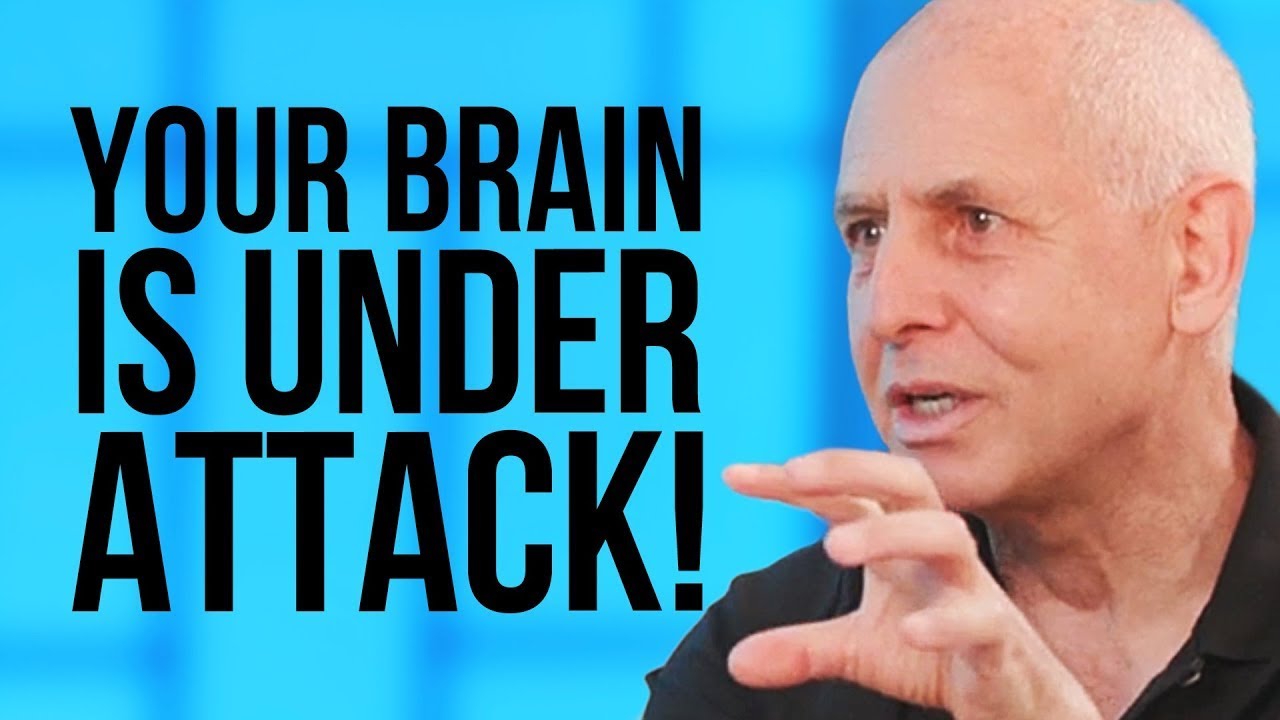
Change Your BRAIN, Change Your LIFE! These Hacks Will Improve Your BRAIN | Dr. Daniel Amen
Watch on YouTubeVideo summary
In this episode of Health Theory, host Tom Bilyeu interviews Dr. Daniel Amen regarding his book *Your Brain Is Always Listening*, introducing a framework where individuals must identify and manage internal "dragons" that hijack their emotional brain. These dragons represent deep-seated traumas or cognitive distortions—such as the anxious dragon, the inferior flawed dragon, or the newly identified death dragon—that cause the prefrontal cortex to go offline, leading to poor decision-making and pathological behaviors like OCD or addiction. Dr. Amen explains that while these issues often stem from past events, such as his own traumatic experience with a pet goat being slaughtered, they can be addressed by engaging the brain's braking system. The core strategy involves using specific techniques like EMDR (Eye Movement Desensitization and Reprocessing) and Havening to provide bilateral hemisphere stimulation, which helps desensitize emotional memories without erasing them entirely. The conversation highlights that accurate thinking is distinct from mere positive thinking; it requires the prefrontal cortex to objectively evaluate thoughts using a five-question process to determine their truthfulness and utility rather than just trying to force optimism. Dr. Amen emphasizes that goals must be clear, written down, and posted visibly because an unguided brain will default to negative patterns or "scheming" behaviors driven by society's marketing of unhealthy habits like overeating during holidays. He argues that having a defined purpose is essential for survival against these dragons, noting that without specific goals regarding relationships, work, money, physical health, emotional well-being, and spiritual growth, people remain stuck in perpetual sameness or burnout. Dietary choices play a critical role in brain function, with Dr. Amen asserting that approximately 30% of mental health issues are linked to poor nutrition rather than just genetics or psychology alone. He presents data from large-scale imaging studies showing linear correlations between weight gain and reduced blood flow throughout the brain, as well as findings that marijuana use accelerates brain aging more significantly than alcohol consumption in terms of activity reduction. The discussion underscores how processed foods act as "weapons of mass destruction" for the gut microbiome, which directly influences mood by fostering bacteria that produce anger or sadness rather than happiness. Consequently, adopting an elimination diet and focusing on whole foods is presented not just as a health choice but as a fundamental step in treating mental illness through brain health interventions. Ultimately, Dr. Amen advocates for a paradigm shift where society stops viewing these challenges solely as "mental illnesses" and instead treats them as matters of physical brain health that can be improved through lifestyle changes. By admitting to problems—whether they involve anxiety, weight issues, or substance use—and taking intentional steps like getting enough sleep, avoiding alcohol and marijuana, exercising regularly, and supplementing with omega-3s and vitamin D, individuals can reclaim control over their minds. The goal is to cultivate "brain envy," a state where people love their brains by optimizing them for better decisions, stronger relationships, and greater happiness, proving that anyone can overcome trauma-driven patterns through science-backed methods like brain imaging-guided therapy and nutritional optimization.
Read the full video transcript
Cuz I really think better brain,
better decisions. Better brain, better
relationships. Better brain, more money.
Better brain, better life.
Hope you enjoy the episode brought to
you by our sponsor Thrive. Get 50% off
your at-home gut health test when you go
to trythrive.com/impacttheory.
Enjoy the episode.
Everybody, welcome to another episode of
Health Theory. Today, we are joined by a
psychiatrist, best-selling author, and a
brain scan ninja, Dr. Amen. Thank you so
much for being here. I always love
spending time with you and reading your
books. They are incredible, have been
life-changing for me. And the most
recent one, Your Brain Is Always
Listening, is no exception. So, thank
you so much for being here.
Well, thank you for helping me spread
the word about brain health.
So, speaking of the brain, if it's
always listening, what is it always
listening to? And what is this idea of
dragons that you talked about in the
book? I find this really useful.
Well, your brain is always listening.
It's listening to your past. It's
listening to the food you eat. It's
listening to marketers. It's listening
say it's listening to your past, is it
listening to what you say about your
past? Or are you using listen as sort of
an umbrella for
reliving?
The past for many people is always
present for them. And I got this idea of
dragons from the past that still breathe
fire on your emotional brain. So, I was
doing a podcast with Dr. Sharon May,
who's a friend of mine, relational
therapist. And she started talking about
dragons from the past that were ruining
relationships. And then she and I
started collaborating, and it's like,
"Well, let's identify the dragons. And
we came up with 13 of them, and a couple
of the pandemic just exploded, like the
death dragon or the grief and loss
dragon.
Um but my whole life I was living with
the invisible
abandoned or insignificant dragon, one
of seven.
Um I was in the middle, I'm a second son
in a Lebanese family, which means you're
expendable.
Um
which turned out to be beautiful cuz I
didn't have to go in the grocery
business, right? In Lebanese families,
the oldest child the oldest male child
goes in the business and Is your brother
still in the business?
My brother is president of the business.
Wow. Um I don't think I'd ever heard you
talk I mean, your dad was really
successful in the business that he
built. I didn't realize just how much
sort of
I guess ended up not being familial
pressure for you, but certainly would
have been for your brother. Well, it's
pressure. When you grow up with a dad
that's very successful. I mean, he ended
up being the chairman of the board of a
$4 billion company. Wow. Um
you often just go like, I can never live
up to that. And so you're struggling in
that comparison,
which is actually the second dragon, the
inferior flawed dragon. And I had that
one in spades, you know, being short and
second and um
you know, it helped me in so many ways,
right? The dragons have downsides,
but they also have upsides. If you have
felt insignificant, well, I built a life
based on being significant. And it sort
of worked.
So, how do you help people reconcile
that? Like when I when I read the book,
I'm hearing about these dragons, they
mostly sound negative, but you in terms
of if they go unchecked, your prefrontal
cortex is offline. It really does become
pathological and it becomes a problem.
But I'm obsessed with this idea that
there's pathology on both sides. So, if
you have too much drive, it's going to
spill into pathology. You know, if
you're feeling too broken, too
inadequate, whatever. But if you don't
have enough, there's also pathology on
that side. How do you help people walk
that balance? Is it the prefrontal
cortex?
There's always this balance between your
prefrontal cortex. So, think of that as
the brake in your brain. But you don't
want it too strong. When it works too
hard, people have OCD. It's sort of like
the brake is always on. And so, if you
think of a car, like I like going to Big
Bear, and think about coming down the
hill, you need a good prefrontal cortex.
You need a good brake. Because if the
brake's not on, you die because you go
off a cliff. Which is
apropos. People don't brake their
behavior, and they make bad decisions.
And so, they die early. But if the brake
is always on,
you can't get down the hill, either,
because it's like stop, stop, stop,
stop. Think of people have OCD. So, it's
about balance between the front third of
your brain, prefrontal cortex, and your
emotional brain. Because we need
passion, we need purpose, we need a
reason to do something. But if it works
too hard, we get sad, or we get too
anxious, or we become traumatized.
Uh the wounded dragons, just so common,
way more common now since the pandemic.
Wounded dragon is I am broken in some
way, or something else?
It's I've had trauma. Okay.
And I tell this story of
Reliving it was so hard for me. But when
I was little, I had this beautiful white
goat who
um
Sugar.
was was our pet, Sugar. Yeah. And
um
I actually have this video. I did a
public television special on the new
book, and I actually showed the video of
me when I'm 5
playing with Sugar, and Sugar's kissing
me, and and it was just beautiful. But,
Sugar also liked my dad's roses. Okay.
And so, one day Sugar went off to the
farm, which means Sugar got slaughtered.
And a couple of nights later, my dad and
his brother were joking that they were
feeding us Sugar for dinner, which
was incredibly traumatic for me.
And
years later
at this point?
Like six, five or six.
Oof.
And I mean, I and I remember it like
it's yesterday.
But, years later, I was in Monterey,
Mexico, giving a big talk, and they have
goat meat for sale
in street vendors. Like we don't do that
in the United States. And as I walked
by,
I got flooded with that memory. And all
of the sudden, I'm 43 or something, have
a panic attack. Wow.
Because the past
is always connected to the present. And
so, if there's trauma,
learning how, and I talk about this in
the book, how to recognize it and
disconnect from it.
Okay, so that's recognizing it,
disconnecting, doing the unwinding is a
tall order. Before we get to that, can
you What are some of the most common
dragons, and if you have one of these
running rampant in your life, your
prefrontal cortex isn't putting the
brakes on it? What What does that
manifest as in in the more common
dragons?
Well, so we've had over 100,000 people
take the quiz knowyourdragons.com.
So people can do that. It's free. And
on average people have six of them. So
it's common to have issues. And the
anxious dragon is the most common. The
responsible dragon where
you feel like you have to take care of
other people.
Which actually can breed this thing
called codependence and entitlement in
others. You have to be careful with
that.
The wounded dragon. The inferior flawed
dragon. Very common. And it's basically
I compare myself to you in a negative
way.
Social media is driving that epidemic.
And the death dragon sort of surprised
me. But you know, we did the study
during COVID. And is it a fear of death?
It's the fear of death.
dragon
And a lot of people haven't come to
grips
with death.
Like one of the strategies I have
actually played out today is write down
10 good things about dying. Whoa. And
um
it's like, oh, well that's okay. Because
if it's inevitable, it is.
Right. It's it's like you have to learn
to embrace it. And there's a lot of
writing exercises in in the book because
I actually want people to write their
story and give it the ending they want.
And then ask themselves every day then
kick in your prefrontal cortex, is my
behavior
getting me
what I want? Cuz too often people go for
fixes that fail rather than fixes that
fix.
Okay. So first we're going to identify
our dragon. Okay, so I have the fear of
death dragon and I have the anxiety
dragon. As somebody who suffered with
the anxiety dragon, that one was very
easy for me to relate to. Okay, so I
have the anxiety dragon. I'm obsessing
about a future that I'm practicing the
failure unintentionally. This was my
thing. I would find my what I thought of
as exit ramps. Like if this situation
becomes problematic, what's my exit
ramp? But in thinking about all of my
exit ramps, I was rehearsing it going
wrong, wrong, wrong, wrong, wrong.
And
when I'm journaling, the idea I want to
bring together with this, so I I
identify my dragon, but now when I'm
doing the journaling, how do I get to
accurate thinking? Because the problem
in the first place is that I have a
cognitive distortion. I have a a
tendency to think of how the things
could go wrong, or at least that felt
like the right way to plan for the
future. I've since stopped doing that.
Um
how do you recognize what accurate
thinking actually is? And you go through
this in the book because you you have
that like four questions that you have
people do. I think it was four. And
there's a part in there where they would
often say like I'm going to fail. Are
you going to fail? Yes. Like to them
that seems self-evidently true. So how
do you help them recognize that that
isn't actually accurate?
I help them question it.
Whenever you feel sad or mad or nervous
or out of control, write out what you're
thinking.
And then
it's five questions, but it's is it
true?
Is it absolutely true?
With 100% certainty.
And that's the one that usually cracks
it. Like I'm worthless.
Is it absolutely true?
Now you're getting thoughtful. It's
like, well, I'm a mother.
And I'm a sister. And I'm a daughter.
And
no, it's not absolutely true. It's
ridiculous.
The third question is, how do I feel
when I believe I'm worthless?
Bad.
Withering.
Sad. Lonely.
And the fourth question is, who would I
be without this thought? Or how would I
feel if I didn't have the thought?
The most common answer to that one is
free.
And then
you flip it around to the opposite. It's
like
I
am worth something.
Or I have worth.
And then
give me an example.
Or two, or three, or four.
And you have to do that exercise at
least a hundred times
to begin to retrain your automatic
response.
I mean, I've been teaching people to
kill ants for a long time, automatic
negative thoughts, but I just found
these five questions. They're just so
elegant
to just have a dialogue with yourself.
I'll never be successful, or I won't
have enough money,
um or my life has no meaning.
It's like
well, let's put that under a microscope.
Not positive thinking.
Accurate thinking.
Okay, so putting myself in the shoes of
somebody that's trapped in one of these
dragons, my gut instinct, and you've
done this so much more than I have, but
my gut instinct is the part that they're
going to struggle with the most is
they're going to say the opposite,
right? So, I have worth, I have value.
It just isn't going to feel true. Or
it's going to feel true at such a low
rung level. Like, yes, okay, fine, I
have some value, but Jesus, is it enough
to be worth everything that that going
through? I find that people are so
ill-equipped to accurately identify what
their abilities are, their capabilities,
their worth, their value, all that. But,
I'm like, "Don't even worry about what's
true. Ask yourself what's useful." And
if it's useful to tell yourself, "I'm a
good person. I have worth." And that
gets you moving towards doing the things
that are actually worthy,
then we're going to do it.
Does that make sense to you or do you
think there's something better? Well,
well, not better. I like it. It's
With each of the dragons in the book,
I have their origin story. So, where do
they come from?
What's the upside? Cuz all the dragons
have upsides. My abandoned, invisible,
and insignificant dragon had tremendous
upside for me. Um
how do you tame it? So, it's more than
just correct your thinking.
So, there's strategies. So, for for one,
seek insignificance.
Well, that's useful. And it could be
volunteering at church. It, you know,
whatever fits
your definition internally of
significance. And then I have
meditations around each of them. Um
so,
think of that as foundational. Like the
wounded dragon, for example, I talk
about EMDR. Eye movement desensitization
and reprocessing. And it's so powerful.
It's when you're traumatized,
it actually gets stuck in your brain.
And we see a pattern. We call it the
diamond pattern in the brain. So, your
emotional brain gets turned on, and it
can't go back to normal or healthy. And
EMDR, they actually have you bring up
the trauma while they get your eyes to
move back and forth and it settles it
down. So, as an example, 1996,
so I've been doing imaging for 30 years.
The first 20 years
it was like
a horror film in my life cuz I was
getting picked on and I mean I had the
New York Times pick on me, the
Washington Post pick on me, and my
colleagues calling me bad names. And I'm
like, I just want to look at the brain.
What's your problem?
Um and in 1996 I had the state of
California's medical board investigate
me.
Yeah, I'd never heard that before. It's
crazy.
was traumatizing.
And I couldn't sleep. And one of the
original EMDR trainers worked for me.
And I walked into Jennifer Lendel's
office in my clinic and I'm like, you
need to help me.
After an hour of this treatment I was
absolutely fine.
So, they took my license from me. I
could get a job. I could take care of my
family. I was going to be fine. But you
can just imagine you would spend
a big chunk of your life trying to do
what you do and now someone's trying to
take it away from you.
Why does the lateral eye movement shift
the brain so profoundly? That you go
from I can't sleep, this is a total mess
to one session and now I'm good.
I think it's more than just eye
movement.
Um there's another technique that's
somewhat similar.
That's a part of the same technique? It
no.
But it's similar. It's called Havening.
Okay. And but they're both bilateral
hemisphere stimulation.
So, for example
um off camera we talked about how my dad
died last year. And a couple of days
after he died um
in a random stack of papers, I'm at my
mom's house just helping her organize
things.
It's a picture of my dead dad in the
mortuary. And I'm like, what idiot? What
cuz it just bothered me. And I noticed
it was just bothering me throughout the
day, you know, I'd see the picture and
I'd be irritated and
and then I'm like, oh, you help people
who have this problem. And Havening is
bilateral hemisphere stimulation. So,
it's either you're rubbing your hands
like this while you think of the trauma.
Um it's rubbing your face, probably not
cool in a pandemic. Um or what my
favorite thing is and I do this a lot
with my patients is I have them hold
their shoulders and then rub down to
their forearms and they do it for 30
seconds.
And the idea is to get stimulation on
both sides of your body.
sides while you bring up the trauma. Do
you have to do it yourself or can
someone else do it for you? Either way.
Interesting.
And people can learn about it at
Havening .org, like savehaven,
havening.org. And so I did that with the
picture.
And you rate it like on a scale of 1 to
10. And it was like a nine, I was pretty
irritated by this. And after I did it
for 30 seconds,
it's like a four.
And then after I did it again, the
irritation was gone. I did it two more
times for 30 seconds and I fell in love
with the picture because it was
the last picture of my dad on earth.
And so
there are techniques
so that you don't have to live with
trauma spinning
in your brain, whether it's EMDR, other
people do tapping, which can be helpful,
or Havening.
I want to speculate about why that's
working. So, when I meditate, what's
useful about meditation, the only times
that it works for me are when I can
really lock into the pleasure cycle of
the breath. So, I have to be thinking
about optimizing the pleasure of each
part of the breath. By doing that, I
really pull my brain to like, what is
happening right here, right now?
One, it helps because it's truly when
you're breathing in a meditative way, it
just feels good. Like, purely
hedonistically, it just feels good. And
then, my mind can't wander to whatever
is freaking it out because I'm there in
my breath.
And
I'm wondering if this is a
there's something about stimulating both
sides of the brain that's the important
part, or if this is just your focus is
now locking in on the sensation of being
touched or touching yourself, and that
disrupts
cuz I I think a lot about pattern
interrupting, that you're just hitting
the brakes on this runaway thought. And
by touching yourself, by tapping, by
whatever, that you you're grounding in a
physical sensation, which stops your
brain from thinking about the traumatic
thing.
That's sort of bullet point one. But,
bullet point two is that you fell in
love with the photo. But, let's take
these one at a time. Do you think it is
it the bilateral activation of the brain
that's critical, or is it just the
focus?
I think it's the bilateral hemisphere
stimulation. Cuz a lot of times, people
will bring up trauma and focus on it,
and it doesn't make them feel any
better, it makes them feel worse. But, I
did a study on EMDR. We took police
officers who were involved in shootings,
and they developed PTSD and couldn't go
back to work. And
I scanned them,
and then I scanned them during their
first EMDR session. So, while the
therapist was bringing up the trauma,
and the Were you scanning them in that
moment, Or you scan them after it?
In that moment. Interesting.
And
So, okay, before you go on
up. Their emotional
What what does it look like when they're
PTSD'd out? So, when they have PTSD, if
you look at
the scans I do, it looks like a diamond
pattern. Where their limbic or emotional
brain is more active compared to a
healthy brain. Mhm. And then in that
trauma activation, it gets bigger.
Gets more intense. But after they did an
average of eight sessions, calmed it
down.
And
that psychological intervention had
biological effects.
Okay, so that all makes sense.
Now, when I'm stroking myself,
I am recalling the memory.
I'm activating bilaterally my brain. I
don't understand why that breaks the
elevation of the emotion.
Why does it
Yeah, and I I'm not sure we know why. We
just know it does. It was actually
discovered by Francine Shapiro when she
was in Menlo Park that when she looked
left and then right and did it over and
over again, what she was upset about
didn't upset her as much. And it was
really from that moment she then started
working with
soldiers from the VA and
Did she come in and why she did it the
first time? Was it accidental?
accidental.
So. Intriguing. Okay. Yeah. And now we
have other groups like the Havening
Group. There's another group called
Brainspotting.
But they all seem to be bilateral
hemisphere stimulation tools
to bring up the trauma and sort of suck
the
emotion
out of it. So, you still remember
it. You know, I still remember being
investigated by the medical board.
Mhm.
But, I don't get freaked out. Do you
tell yourself a new story? So, you pull
So, one of the things I find most
fascinating about memory is that every
time you pull it into your working
memory,
you're affecting it.
And so, you can change the tenor of that
memory, the emotional resonance of that
memory as you hold it in a working
memory and then store it back. So, as
you're doing this, you're doing the
Havening, you're or the bilateral eye
movement or both, you're pulling the
memory forward, are you
to optimize the process, do you need to
tell yourself a different story about
it? Do you need to focus on the positive
things that came out of it? I mean, you
talk about being able to find positives
in death. Is that what we're doing? Or
you literally just need to think about
it in the normal way that you always
think about it in your I'm sure
obsessive way, but as long as you're
doing that bilateral contact, it's going
to lower the emotion. For many people,
that's exactly what happens. Um
other people, not so much. And so, then
you have to go, what else is going on?
Mhm. And
do they have a hurt prefrontal cortex?
So, a lot of the soldiers that we work
with, they have PTSD and traumatic brain
injury. People just didn't focus on the
fact that they were around three IED
blasts. And so, when things don't work
like you hope they would, that's where
the imaging work I do becomes so
helpful. So, the second fascinating
element here. So, we understand now how
lower the emotional resonance,
but how did you fall in love with that
photo? It So, even when you retold it to
me, it sounded like a change in story
that you went from that's a photo of my
father's death to that's the last photo
of somebody that I loved and cared
about.
Is that a narrative shift that's
required to get that new emotional
anchor or or the
the association with that physical
sensation is pleasant and therefore it
paints that new emotion on an old
memory.
So, part of it is skill.
Um my children get horrified if I want
to watch Pollyanna, one of my favorite
movies ever. Pollyanna teaches people to
play the glad game. Whatever situation
you're in, what is there to be glad
about in this situation? So, I've
trained my brain to do that over time.
And when you take the emotion out,
something's going to replace it. And if
you have skill in managing your mind,
you'll often look for what's right
rather than what's wrong.
And and I've worked really hard on that
cuz it wasn't my nature. Growing up, I
was pretty anxious and I was masterful
at predicting what's the worst thing
that could happen and then I'd make it
worse. So, It's down there. I know it.
It's a hallmark of people that have
panic attacks.
Um
but I've worked really hard and it's the
blessing of my job. I get to help people
and in that I always help myself.
Okay, so we need to identify what our
dragons are. We need to engage our
prefrontal cortex to make sure that we
pump the brakes on that stuff. We need
to reframe things, get good at the glad
game, the Pollyanna game, whatever we're
going to call that.
Right. Um we need to engage with
reality. So, how are things really
instead of trying to run or hide from
it, both the good and the bad. So, don't
over um think you're a loser, failure,
whatever.
Um Yeah, it's completely not helpful.
Cuz negative thinking
disrupts brain function.
Um but at the same time, too positive of
thinking, you could be driving down the
freeway at 125 miles an hour in the
rain. I mean,
positive thinking by itself is harmful.
We have to be thoughtful,
careful. No doubt. Um right? And that's
the prefrontal cortex. There's a whole
chapter in the book on the dragon tamer.
Mhm. It's like, how do you tame this
dragon thunder? Um And and you do it
with having forethought and judgment and
impulse control, which means, oh by the
way, you have to feed it right. There's
a whole section in the book on the
scheming dragons, which is really how
society is stealing your mind if you're
Scheming to make you worse, basically.
Yeah, like there's the holiday dragon,
right? Oh, it's Thanksgiving. Let's eat
terribly.
Right. Uh or it's Halloween or
Christmas. You know, we're going to
celebrate the birth of the baby Jesus by
eating terribly and hurting people. It's
like,
how does that make
sense? And there's a brand new 12-step
program in this book.
Uh because there's the addicted dragons.
I talk about the bad habit dragons. And
as I was writing that, I'm like, you
know, the 12-step program for addiction
was written basically in the 1930s.
And there's not one neuroscience step in
the 12 steps. It's mostly psychological,
social, and spiritual. And I'm like,
well, if a neuroscientist rewrote the 12
steps,
what would he add?
But step one in the traditional 12 steps
is admit your life is out of control.
And I'm like, no, that's step two. Step
one is, what do you want? No doubt.
Relationships, work, money, physical,
emotional. So, what do you want? Step
two, is your behavior getting you what
you want? If it's not, then you need
step three, which is get your brain
right. Cuz I really think better brain,
better decisions. Better brain, better
relationships. Better brain, more money.
Better brain, better life. No doubt.
I've never heard anybody talk about
goals before. Like, I'm obsessed with
that. And it just seems like people
don't bring it up. Uh but here we go.
This is from the book. You're more
likely to be able to protect yourself
from dragons and ants. We've talked
about those. When you have clear goals,
a healthy blood sugar level, plenty of
sleep, no alcohol in your system, and
you talk about marijuana as well, which
would be nice and controversial. You
don't mention it in this quote, but um
you have in the book. And you are not
hungry, angry, lonely, or tired. And I
thought, that really sums up
the
protective mechanisms, the things you
have to look out for, and what you have
to do.
Um
walk people through why are goals so
important?
Why is a guy that spent 40 years focused
on brain health talking about that? And
how did you come to realize just how
useful that is?
You have to tell your brain what you
want. Because it's always listening. And
if you don't know what you want. And I
ask all of my patients, what do you
want?
They'll talk about money.
Or they'll like, I have a
17, almost 18-year-old daughter. And
she's had two boyfriends.
And I've dismissed them both. But it's
like, what do you want?
And they talk about money. Mhm. And I'm
like, no. That's a side effect of a
meaningful,
purposeful
life.
Having that as the goal is a terrible
goal.
And
I like money. I always say to my team,
"No margin, no mission." Right? You have
to make money.
But if that's the point, that's the
prescription for unhappiness.
And I've always
and I got this when I was a medical
student.
It's
people get burned out
when they become unbalanced.
And so when I ask my patients what they
want,
relationships,
work,
money. It's important, but it can't be
the thing. Right. Physical, emotional,
spiritual health. What do you want in a
balanced way? Because if you know, then
you're more likely to get it.
So, for example,
you've met Tana. Mhm. Uh
I want a kind, caring, loving,
supportive, passionate relationship with
my wife.
I always want that.
But I don't always feel like that.
But when I'm thoughtful,
when I know my goals, cuz they're
posted, Mhm.
I'm so much more likely to act like
that,
which means I'm going to have a great
marriage.
Especially if she has clear goals, too,
and we have similar goals for our
relationship.
Do you guys talk about your goals? All
the time.
And when you say they're posted, where
are they posted?
So, I have them posted in my bathroom,
and I have them on my phone.
Very smart. And
And and so, everything it comes out. I
love like three-letter three-word
sentences or three-word questions. And
like for the Ands, is it true?
And for goals, is does it fit? Does my
behavior
today fit the goals I have for my life.
So, last night I was at the Orange
County Fair, they had fried butter
puffs.
Doesn't fit.
The goals I have, right? Cuz one of my
goals is to be physically healthy. If
you're trying to change medical
specialty, you want to live a long time
cuz it's going to take a long time.
And so, I want to be healthy because
that gives me energy
and happiness and
so, the
butter fried butter puffs didn't fit.
Yeah, I think this is
a super underserved um
thing. It
It There's a great Tony Robbins quote.
If you don't know where you want to be
in 5 years, you're already there. And I
remember when I heard that, I was like,
"Oh my god." Like, so many people have
dreams about where they want to go and
what they want to do, but they stay
these sort of vague, amorphous blobs and
they never get defined and therefore you
never achieve them and your future is
always 5 years away and you're just
you're stuck in this perpetual sameness.
So, it's really interesting to hear you
talk about that. So, now
let's say that they have their goal,
they've written it down, they posted it,
they see it multiple places in their
house.
How do they go about getting the brain
that they're going to need to actually
get there? So, we know that we don't eat
our butter puffs. In fact, what I'll ask
is, why don't we eat our butter puffs?
We want to live a long time, I get that,
but specifically what what is the
problem with
fried butter?
Yeah, like what makes something bad
food? I think that's the right way to
ask it.
Um I come up with this new phrase I just
love so much
that you only want to love food that
loves you back.
That you're in a relationship with food.
I think 30% of the mental health
problems in America are related to our
terrible diet.
Uh that you are what you eat in large
part. And if you're eating
I call them the weapons of mass
destruction, highly processed,
pesticide-sprayed, high-glycemic,
low-fiber food-like substances stored in
plastic containers, you're not going to
be healthy. You poison your gut. You're
poisoning your brain. And I published
three studies now. The last one on
35,000 scans, one of the world's largest
imaging studies.
Tom, you will not believe this. There
was a linear correlation on virtually
every area of the brain as people's
weight went up, the activity and blood
flow in their brain went down. I believe
it, unfortunately.
Healthy weight,
overweight,
obese, morbidly obese in a linear
fashion. When I saw those graphs, when I
was doing the research, I was just like
horrified. And I come from a family of
fat people. Uh my dad used to hate when
I'd say that. But I have a brother
that's 150 lb overweight. And a sister
the same thing. And I know if I just ate
everything that looked good to me,
I would be too. And now I'm not having
that, especially because I don't want a
small brain.
Right.
Right? And And people go, "Oh, that's
fat-shaming." And I feel terrible about
it cuz 72% of the country is overweight.
Think about that. I mean, how insane is
that? 42% of people are obese. The
pandemic made it worse.
We should be worried about that because
the extra fat on your body produces
inflammatory cytokines. And we know
inflammation's a major cause of
depression and dementia. The fat on your
body takes healthy testosterone, which
we need, which men and women need, and
it turns it into unhealthy,
cancer-promoting forms of estrogen.
That's a bad thing. Fat stores toxins.
We need to get serious about being at a
healthy weight with healthy food. Mhm.
Um
and so
diet is critical, exercise,
supplementation I think is really
important. They did study 97% of the
population um low on omega-3 fatty
acids. And so finding ways to
supplement. That 80% of us are deficient
in vitamin D. In a pandemic, that's not
okay. Nope. Right? Cuz people with low
vitamin D actually die more if they get
COVID-19.
So Yeah, going back to what you're
saying about fat shaming so first of
all, I come from a morbidly obese family
as well, and I've often said that you
when you love something, you don't hate
on it, look down on it. Like I don't
think less of people because they're
obese. Uh but going back to the idea of
facing reality
at the same time I know that I will lose
them earlier than I absolutely have to
if they continue to live that lifestyle.
And so getting people, especially now in
a pandemic, to just face that it isn't
fat shaming to say you're more likely to
survive this
disease that's ravaging, you know, the
entire human population if you are
living a healthy lifestyle, get your
weight under control, exercise, eat
right, work out, all of that stuff.
Um because there's nothing worse than
trying to solve a problem when you
ignore the thing that's actually causing
it. Like you're just at that point, it's
really about symptom mitigation versus
figuring out what's really going on.
Um
do you think that this So going back to
weight specifically
to pick up on that for a second because
I learned a long time ago as a
psychiatrist, if you don't admit you
have a problem,
you can't solve it. Dude, that is so
true. Until I finally admitted to my
wife that I was anxious, I I couldn't
make progress. And finally, I just was
like, "Fuck, I have to tell her." And it
really did not make me feel good about
myself because, you know, there is
something about the way that she would
look at me like I could do anything, and
that felt so good. And to finally be
like, "Yo, I'm over here. I'm
struggling, homie." Like, this is really
gnarly. And of course, it wasn't the
turn off that I feared it was going to
be, and it only brought us closer
together. But that was really hard to
admit. But then once I could say it out
loud to the person that was the only
person I really cared about impressing,
then it was like, "Okay, now I can
actually deal with this."
Because when you become more real,
you become more relatable.
And there's so many guys don't
understand this, that they deny that
they have a problem because they want to
be perceived as the person who has it
all together, but then nobody can relate
to you.
Um you know, that's one of the reasons I
became really vulnerable in the book,
and I haven't gotten any haters.
I mean, I have plenty of haters, don't
get me wrong. But from writing
from on that stand. Um
but I remember when I did the big NFL
study, at the time when the NFL was sort
of lying they had a problem, and my
letter to the commissioner, "If you
don't admit you have a problem, you
can't solve it, and it's going to get
worse." And And that came from marriages
where especially the guy wouldn't admit
that they were struggling, and it ended
up falling apart.
Yeah.
I can certainly understand that. So,
okay, we admit that we have a problem,
whether it's about weight or whatever.
Um how do we begin to unwind this stuff?
That's really I think the the important
thing. Is it Does it just come down to
Look, there are cuz you you write in the
book and I wrote them down so I can read
them out if we need to, but
um
there just Are there just certain things
you just have to do and you just
you have to do them and until you do
them like this is never going to change.
Well, then that's the bad habit chapter.
You know, I have the bad habit dragons.
There's the overeater bad habit dragon.
The worst of all the dragons is the
oblivious dragon.
Is that an intentional like you're
intentionally being oblivious or people
that really just don't know? You just
don't know and you haven't taken the
time. You go I'm fat because everybody
in my family's fat. It's like, "No, I
have a lot of fat people in my family
and I'm not because I don't get into
behaviors making it likely to be so."
And so it's about being intentional,
reading the labels of the food you eat,
of the products you put on your body.
It's asking yourself this one question.
Is this good for my brain or bad for it?
Right? I mean, ultimately in all of my
books I've tried to create brain envy. I
want people to love their brains. Um
and is this good for my brain or bad for
it?
reason that brain envy works just to be
clear is because you can improve your
brain. How exciting is that? And I've
proven that over and over and NFL
players and soldiers and police officers
that you're not stuck. And intuitively
people should know that, right? If I
don't sleep tonight, I'm not going to
think well tomorrow, but no one's
thinking about the physical functioning
of their brain. So I'm in Justin
Bieber's um new docu-series Seasons. And
he came out I've been his doctor for a
long time. And like many celebrities,
they do what I'd say sometimes. Show up
sometimes. But then,
cuz he went through a really hard time,
he came into my office and he said, "I
get it.
My brain is an organ like my heart is an
organ. If you told me I had heart
problems, I'd do everything you say. I'm
going to do everything you say."
And he got radically better.
And
you got to love it.
And
And we have to stop this whole mental
illness thing. I hate it. Cuz it's not
mental illness, it's brain health.
Right. Get your brain right and your
mood is better. You're happier. You're
more focused. You make less bad
decisions,
which will decrease your anxiety.
Speaking of anxiety, so you said earlier
that you think 30% of mental health,
brain health problems are tied to um
diet.
In my N of 1 experience, I think it's
even higher than that. So, when I think
about okay, suffering from profound
anxiety, I'm trying all the mental
tricks and there's no doubt they helped.
I'm very, very beneficial. But I just
couldn't I felt like I was learning to
better cope with the symptoms, but I
wasn't eliminating the symptoms. And so,
I was like, "What is going on?" And then
of course, because of what my wife went
through from a health perspective,
become aware of the gut, start really
thinking about what I'm eating and that
there are going to be things that might
be messing me up that I just would never
have guessed. Um long-time listeners of
my show will grow tired of hearing the
following statement, but at the
beginning of COVID, I went through
something really weird that I'd never
experienced before. I was getting super
tired all the time, brain fog, just like
almost losing my zest for life. and I
was like this is really bizarre.
And I thought okay, well what would you
tell somebody if they came and describe
those symptoms? And I was like no matter
what I would tell them it's something
that you're eating because that's just
so true in terms of the way if your
body's being affected your brain's being
affected it's almost certainly something
you're eating.
And I'm like but my diet so healthy like
how could this possibly be? And I was
like just eliminate whatever you're
eating a lot of and see what happens.
And I'm like what am I eating a lot of?
And I was like pecans? And so I cut out
pecans 48 hours later I was back in
business. I was like how the hell is it
possible that pecans of all the And they
were like raw they weren't even like
roasted. I mean these were like the
all but just plucked off a tree.
So I was I anyway I couldn't fathom that
that was it but it was it. And then that
got me thinking wait a second could my
anxiety be tied to something I'm eating?
And so then I started cutting out
anything processed cuz dude I love my
zero calorie drinks love them in a way I
can't even begin to tell you but of
course that comes with a lot of
chemicals that I've never even heard of
and I've heard of a lot of chemicals.
And
in cutting all of that out the what my
anxiety feels like to me now I might
still have a thought about something's
going to go wrong in the future. And
that will trigger that that feeling of
like ooh something bad is coming.
But it never escalates. Food is so
important.
And
when I put my patients on elimination
diet so we basically eliminate the bad
things.
They get
so much better.
And the nutritionists that work with us
have more success stories than the
psychiatrists. And they used to irritate
me.
Food matters. What you put in your mouth
your microbiome
matters. We have these hundred trillion
bugs in our gut. And what we feed them,
you know, helps to grow the ones that
make you happy or they help to grow the
ones that make you angry and sad. Um
it's just so important. And our biggest
blog last year,
uh I wrote one called I told you so. And
when I And I started with when I dated
Tana, she told me I will never tell you
I told you so.
She lied. It's like her favorite thing
to say.
And then
I said, "But the American Cancer Society
just came out and said you shouldn't
drink."
Why? It increases your risk of seven
different kinds of cancer, not to
mention it prematurely ages your
were given that advice, I was like, "Uh
like this one just doesn't land for me.
It just doesn't seem possible that it
would be essentially a health food. What
about weed?"
Marijuana is
uh in
that very in It's in. I published a
study on a thousand marijuana users.
Every area of their brain is lower in
activity. Now, does help some people?
Like when my father and wife
What does it actually help with? It
helps increase appetite.
For some people, it can actually
decrease seizure frequency.
It suppresses
activity in the brain.
I I'm very worried because as the
perception of dangerousness of a drug
goes down, its use goes up, especially
in teenagers. And if you're smoking or
eating edibles as a teenager, you've
just increased your risk of anxiety,
depression, and suicide in your 20s.
Oof. So, that It's not good. And I, you
know, all child psychiatrists, I'm also
a child psychiatrist, have the
experience of all of the sudden a
16-year-old is not acting right. And we
test them and they end up positive for
marijuana. That it's not innocuous.
And and I think that's the important
thing. Now, is it worse than alcohol?
Well, actually, I published a study on
62,000. This is the world's largest
imaging study. 62,000 scans on how the
brain ages. And then we looked at what
accelerated aging. Schizophrenia was the
worst. Your brain looked 10 years older
than people who didn't have
schizophrenia. The second worst, and it
was a surprise for me, was marijuana.
Your brain Worse than alcohol? Worse
than alcohol, worse than smoking. What?
I am startled by that. Yeah, I was too.
And it's like it's the data. And I have
no dog in the fight. Right? If you
smoke, if you don't smoke, you're just
actually more likely to see me if you
do. Is it lowering blood flow? Like
what's the mechanism?
flow to brain.
Wow. I thought for sure you were going
to say alcohol was the worst.
Yeah. But neither of them are good.
Man, that's crazy.
Yeah. So
Food can make you happy.
So can drugs. That's the That's the
problem. Like when I think about all the
the insults that people can do to their
brain, how important the brain is for
the mind, and that your mind, if you
don't have your mind under control, your
life Your life will be determined by how
well you control your mind. Like I just
because ultimately, all we are is a
string of emotions. Things either make
you feel good, bad, or indifferent. And
when you spend a lot of time feeling
bad, life sucks. When you spend a lot of
time feeling good, life is great. And it
doesn't matter if you have all the money
in the world, if you feel bad, life
sucks. Doesn't matter if you're broke as
the day is long, if you feel good, life
is great. So
but the number of things that insult our
brain from just
concussive trauma from certain types of
contact sports to sitting around to
weed, alcohol, a lot of things that are
fun. Over prescription of drugs, oh my
god. Gadget screen time, like yeah,
negative thoughts. Like it is bananas
and the amount of time that people have
to put into getting it right. So we have
a high school course called Brain Thrive
by 25.
And
I I love this course. And we play game
with them called who has more fun.
The kid with the good brain or the kid
with the bad brain? Who gets the girl
and gets to keep her because he doesn't
act like an ass? The kid with the good
brain or the kid with the bad brain? Who
gets into college? Who gets the job they
want? Who has the most consistent
positive behavior?
It's the person with the good brain.
This is not about not having fun. It's
about having fun with all of you intact.
Yeah, and over a prolonged period of
time. Over a prolonged period of time.
Dr. Amen, thank you so much for coming
on. Dude, I always love your books and
time with you. Where can people connect
with you
and ensure that they have the good brain
over a long period of time?
Well, they
find us at amenclinics.com. So amen like
the last word in a prayer, clinics.com.
They can follow me on Facebook or
Instagram. Instagram it's @doc_amen.
We're doing a whole cool series called
Scan My Brain. Done some just wonderful
influencers. It's super fun and um we
want to create a revolution in brain
health. Want to end mental illness, end
that whole discussion and really start
talking
with a better brain always comes a
better life.
I love it. I love it and thank you for
everything that you do.
Guys, if you haven't already
followed him on every conceivable place,
do. Read his books, they are
transformative. And speaking of things
that are transformative, if you haven't
already, be sure to subscribe. And until
next time, my friends, be legendary.
Take care.
Thank you guys so much for watching and
being a part of this community. If you
haven't already, be sure to subscribe.
You're going to get weekly videos on
building a growth mindset, cultivating
grit, and unlocking your full potential.