YouTube Transcript Downloader and AI Video Summaries
Paste a YouTube video URL to extract its English transcript, download the subtitles as text, or create a concise AI summary.
1. Paste link
Enter a YouTube video URL.
2. Find subtitles
Automatic English subtitles are detected.
3. Download
Save clean subtitles as a TXT file.
Recent summaries
3764 videos · Page 82 of 126
AMA #5: Intrusive Thoughts, CGMs, Behavioral Change, Naps & NSDR
Andrew Huberman
In this Ask Me Anything episode, Dr. Andrew Huberman clarifies the critical distinction between clinical obsessive-compulsive disorder (OCD) and common neurotic tendencies or specific behavioral fixations often colloquially labeled as "being OCD." He explains that true OCD is characterized by compulsive behaviors that fail to reduce anxiety regarding obsessions; instead, they exacerbate it.…
EN
Jul 30
Leverage Dopamine to Overcome Procrastination & Optimize Effort
Andrew Huberman
Dopamine functions as a critical neuromodulator in five distinct brain circuits, with the mesocortical pathway being central to motivation, drive, and goal pursuit rather than specific rewards or pleasures. This circuit originates from neurons in the ventral tegmental area (VTA) and nucleus accumbens that project to the prefrontal cortex, a region responsible for context-aware decision-making and suppressing inappropriate impulses.…
EN
Jul 30

Control Stress for Healthy Eating, Metabolism & Aging | Dr. Elissa Epel
Andrew Huberman
Dr. Elissa Epel, a professor of Psychiatry and Behavioral Sciences at UCSF and director of the Center on Aging Metabolism and Emotions, joins Huberman Lab to redefine stress not merely as an external event but as how individuals respond to demands exceeding their resources. She emphasizes that while acute stress is a vital survival mechanism involving energy mobilization via mitochondria and ATP, chronic or unmanaged stress leads to exhaustion and biological damage through constant vigilance.…
EN
Jul 30

The Science of Healthy Hair, Hair Loss and How to Regrow Hair
Andrew Huberman
Hair biology centers on endogenous stem cells located within a niche at the base of each follicle, known as the hair bulb. These stem cells drive cell replication and mitosis to produce daughter cells that stack up into durable strands made primarily of keratin protein. Every strand has its own growth cycle duration; scalp hairs can grow for four to eight years before entering a resting phase or falling out, whereas eyebrow hairs have much shorter cycles lasting only months.…
EN
Jul 30

Neuralink & Technologies to Enhance Human Brains | Dr. Matthew MacDougall
Andrew Huberman
Dr. Matthew McDougall, head neurosurgeon at Neuralink and a former Stanford professor, joins Andrew Huberman to discuss the intersection of neuroscience, robotics, and machine learning in enhancing human brain function.…
EN
Jul 30

Science-Based Mental Training & Visualization for Improved Learning
Andrew Huberman
Mental training and visualization are scientifically validated tools for accelerating learning across diverse domains, including music, mathematics, sports, and motor skills. This process relies fundamentally on neuroplasticity—the brain's ability to reorganize itself by forming new neural connections in response to experience—which occurs through two primary forms: developmental plasticity during early life and adult self-directed adaptive plasticity.…
EN
Jul 30

AMA #6: Eye Health, Why We Yawn & Increasing Motivation
Andrew Huberman
In this Ask Me Anything episode, Andrew Huberman addresses eye health protocols for aging and general populations, emphasizing the critical need to balance viewing distances throughout the day. He explains that while looking at close-range objects like smartphones or books is not inherently harmful, an exclusive focus on near vision causes the eyeball to lengthen during development—a process observed in chickens, mice, and humans—leading to myopia (nearsightedness).…
EN
Jul 30
How Smells Influence Our Hormones, Health & Behavior | Dr. Noam Sobel
Andrew Huberman
Dr. Noam Sobel, a professor of neurobiology at The Weizmann Institute of Science and former colleague of Andrew Huberman at UC Berkeley, joins to elucidate the profound complexity of human olfaction and chemosensation. Contrary to popular belief that smell is merely an accessory sense linked to taste, Dr.…
EN
Jul 30

How to Use Cold & Heat Exposure to Improve Your Health | Dr. Susanna Søberg
Andrew Huberman
Dr. Susanna Søberg, a leading expert on deliberate cold and heat exposure, joins Huberman Lab to discuss her groundbreaking research published in *Cell Reports Medicine*, which establishes actionable protocols for enhancing human metabolism through thermogenesis. The core of the discussion revolves around how specific temperature differences between skin and water trigger physiological responses rather than absolute temperatures alone.…
EN
Jul 30

Adderall, Stimulants & Modafinil for ADHD: Short- & Long-Term Effects
Andrew Huberman
Andrew Huberman, a professor of neurobiology and Ophthalmology at Stanford School of Medicine, explains how stimulants like Adderall, Ritalin (methylphenidate), and Vyvanse function to treat ADHD by modulating brain networks rather than simply increasing general activity.…
EN
Jul 30

AMA #7: Cold Exposure, Maximizing REM Sleep & My Next Scientific Studies
Andrew Huberman
In this Ask-Me-Anything episode, Andrew Huberman addresses common concerns regarding deliberate cold exposure and its relationship to illness, specifically whether one can catch a cold from freezing or if it is safe to practice during minor sickness. Huberman clarifies that brief exposures of 1 to 10 minutes followed by warming up do not directly cause infections; the risk lies in prolonged time spent in cold, dry air where mucosal linings become thinner and less robust against pathogens.…
EN
Jul 30

How Emotions & Social Factors Impact Learning | Dr. Mary Helen Immordino-Yang
Andrew Huberman
Dr. Mary Helen Immordino-Yang, a professor of Education Psychology and Neuroscience at USC, argues on Huberman Lab that human learning is fundamentally driven by emotions rather than isolated cognitive processes. She posits that our most complex mental states are rooted in basic biological survival mechanisms shared with alligators, where stories serve as the narrative through-line organizing consciousness.…
EN
Jul 30

The Science of MDMA & Its Therapeutic Uses: Benefits & Risks | Huberman Lab Podcast
Andrew Huberman
MDMA, or 3,4-methylenedioxymethamphetamine, is a synthetic compound synthesized originally by Merck in the early 1900s and later rediscovered by chemist Alexander Shulgin for its unique subjective effects. Unlike natural psychedelics such as psilocybin or LSD which primarily target serotonin receptors to induce mystical experiences, MDMA acts as an empathogen that powerfully increases both dopamine and serotonin release while also significantly boosting oxytocin levels.…
EN
Jul 30

How to Learn Better & Create Your Best Future | Tim Ferriss
Andrew Huberman
In this episode of the Huberman Lab podcast, host Andrew Huberman interviews Tim Ferriss to explore how he identifies emerging trends and optimizes performance across diverse fields like business, health, and technology.…
EN
Jul 30
AMA #8: Balancing Caffeine, Decision Fatigue & Social Isolation
Andrew Huberman
In this Ask Me Anything episode, Andrew Huberman addresses the pros and cons of daily caffeine consumption for adults aged 18 to 20 and older. He emphasizes that while most people can tolerate regular intake without issue provided it does not induce anxiety or disrupt sleep, timing is critical due to caffeine's half-life.…
EN
Jul 30

How to Improve Your Eye Health & Offset Vision Loss | Dr. Jeffrey Goldberg
Andrew Huberman
Dr. Jeffrey Goldberg, Chair of Ophthalmology at Stanford University School of Medicine and a dual MD/PhD scientist, joins Huberman Lab to discuss comprehensive strategies for maintaining eye health across the lifespan. The conversation begins with pediatric vision care, emphasizing that every newborn should receive an initial screening in the nursery to check for a "red reflex," which screens for serious conditions like retinoblastoma or cataracts.…
EN
Jul 30

How Your Brain’s Reward Circuits Drive Your Choices | Dr. Robert Malenka
Andrew Huberman
Dr. Robert Malenka, a Stanford professor and pioneer in neuroplasticity and reward systems, explains that dopamine is not merely a chemical of pleasure but a fundamental neuromodulator signaling salience—indicating what matters for survival or learning within the environment. The brain's reward circuitry, centered on projections from the ventral tegmental area (VTA) to the nucleus accumbens in the ventral striatum, reinforces behaviors that enhance well-being while discouraging those linked to danger.…
EN
Jul 30

How to Enhance Performance & Learning by Applying a Growth Mindset
Andrew Huberman
Growth mindset, a concept pioneered by Stanford psychologist Carol Dweck, represents a mental frame or lens that organizes information to prioritize effort and learning over fixed identity labels.…
EN
Jul 30

How to Shape Your Identity & Goals | Dr. Maya Shankar
Andrew Huberman
Dr. Maya Shankar, a cognitive scientist and former senior adviser to the White House Behavioral Science team, joins Andrew Huberman to explore how individuals form their identities and navigate life changes. Dr.…
EN
Jul 30

AMA #9: Kratom Risks, Does Infrared Sauna Work & Journaling Benefits
Andrew Huberman
In this Ask Me Anything episode, Dr. Andrew Huberman addresses questions regarding kratom, infrared saunas, and journaling benefits, focusing primarily on the neurobiological risks associated with kratom usage. Kratom (*Mitragyna speciosa*), a tree native to Indonesia whose leaves have been chewed for centuries, contains alkaloids that act as opioids in the human body.…
EN
Jul 30

Harnessing Passion, Drive & Persistence for Lifelong Success | Tony Hawk
Andrew Huberman
Tony Hawk, widely recognized as one of skateboarding's most accomplished professionals and its primary ambassador for over four decades, joins Huberman Lab to discuss his lifelong journey from a pre-teen hobbyist to an elite athlete who continues to push boundaries well into middle age.…
EN
Jul 30

Ketamine: Benefits and Risks for Depression, PTSD & Neuroplasticity | Huberman Lab Podcast
Andrew Huberman
Ketamine is a dissociative anesthetic with significant clinical applications for treating depression, suicidality, and PTSD, yet it also carries a high potential for abuse due to its recreational use in "K holes" or pseudo-anesthetized states. While historically grouped with PCP as a dangerous drug of abuse, modern understanding highlights ketamine's unique ability to rapidly alleviate depressive symptoms where traditional monoamine-based medications like SSRIs often fail or cause intolerable side effects.…
EN
Jul 30

Improving Sexual & Urological Health in Males and Females | Dr. Rena Malik
Andrew Huberman
Dr. Rena Malik, a board-certified urologist and pelvic surgeon, joins Huberman Lab to address common misconceptions regarding male and female sexual health, emphasizing that dysfunction is rarely caused by hormones alone but often stems from issues with blood flow or the pelvic floor muscles.…
EN
Jul 30

Life, Death & the Neuroscience of Your Unique Experience | Dr. David Linden
Andrew Huberman
In this episode of the Huberman Lab podcast, Dr. Andrew Huberman interviews Dr. David Linden from Johns Hopkins School of Medicine to explore neuroscience ranging from sexual sensation and human individuality to the cerebellum's role in cognition and the mind-body connection regarding mortality.…
EN
Jul 30
AMA #10: Benefits of Nature & “Grounding," Hearing Loss Research & Avoiding Altitude Sickness
Andrew Huberman
In this Ask Me Anything episode, Andrew Huberman addresses questions regarding the scientifically backed benefits of spending time in nature and the practice known as grounding. He emphasizes that viewing sunlight directly into one's eyes early in the day is an unequivocally supported tool for setting circadian rhythms, improving daytime mood and focus, and enhancing nighttime sleep.…
EN
Jul 30

How Risk Taking, Innovation & Artificial Intelligence Transform Human Experience | Marc Andreessen
Andrew Huberman
In this episode of the Huberman Lab podcast, host Andrew Huberman interviews Marc Andreessen to explore the psychology and environmental conditions necessary for high-level innovation. Andreessen identifies four critical personality traits derived from the "Big Five" model that exceptional innovators typically possess: extreme openness to new ideas, high conscientiousness allowing for years of deferred gratification, low agreeableness enabling them to withstand social resistance, and a very high IQ.…
EN
Jul 30

Dr. Paul Conti: How to Understand & Assess Your Mental Health | Huberman Lab Guest Series
Andrew Huberman
In this inaugural episode of a four-part series on mental health, Dr. Paul Conti introduces a transformative framework for understanding and assessing one's own mind, distinguishing between the structure of self and its function. Drawing parallels to physical health metrics like blood pressure or BMI, Conti argues that there is an ideal "healthy version" of the self defined not by pathology but by specific positive attributes: agency, gratitude, empowerment, and humility.…
EN
Jul 30

Journal Club with Dr. Peter Attia | Metformin for Longevity & The Power of Belief Effects
Andrew Huberman
In this inaugural Journal Club episode of Huberman Lab, host Andrew Huberman and Dr. Peter Attia critically analyze two distinct scientific papers to evaluate their implications for longevity and physiology. The first paper examined is a retrospective cohort study by Matthew Thomas Keyes et al., titled "Reassessing the Evidence of a Survival Advantage in Type 2 Diabetics Treated with Metformin Compared with Controls Without Diabetes," published last fall.…
EN
Jul 30

Dr. Paul Conti: How to Improve Your Mental Health | Huberman Lab Guest Series
Andrew Huberman
In this episode of the Huberman Lab Guest Series, Dr. Andrew Huberman and neuroscientist Dr. Paul Conti explore science-based protocols for improving mental health by expanding on their previous discussion regarding assessment.…
EN
Jul 30
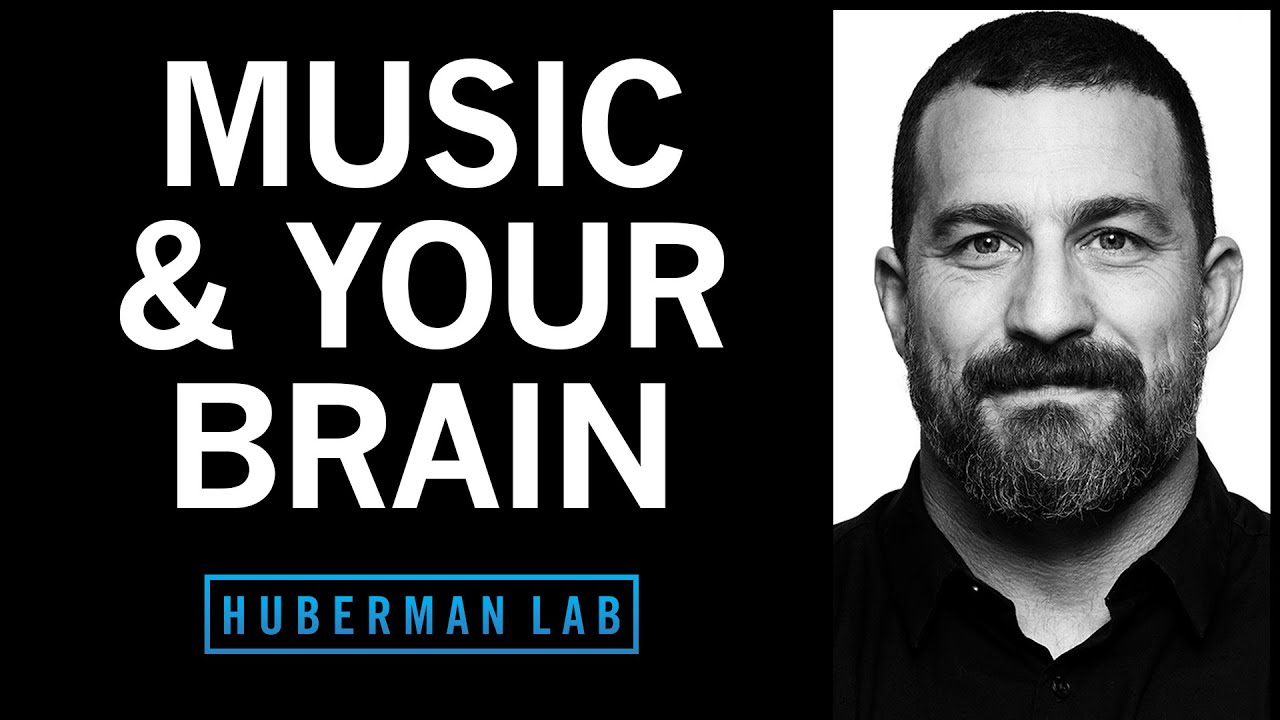
How to Use Music to Boost Motivation, Mood & Improve Learning | Huberman Lab Podcast
Andrew Huberman
Music functions as a profound neurological phenomenon rather than merely an external auditory stimulus, activating nearly every region of the brain and engaging neural ensembles that make both the body and mind part of the instrument itself. Andrew Huberman explains that while language excels at describing objects and facts, music uniquely describes and evokes emotions with immense nuance, conveying feelings like longing, awe, or delight without using words.…
EN
Jul 30