YouTube Transcript Downloader and AI Video Summaries
Paste a YouTube video URL to extract its English transcript, download the subtitles as text, or create a concise AI summary.
1. Paste link
Enter a YouTube video URL.
2. Find subtitles
Automatic English subtitles are detected.
3. Download
Save clean subtitles as a TXT file.
Recent summaries
2267 videos · Page 49 of 76
Stephen Kotkin: Stalin, Putin, and the Nature of Power | Lex Fridman Podcast #63
Lex Fridman
In this episode of the Lex Fridman Podcast, historian Stephen Kotkin explores the nature of power through a comparative analysis of Joseph Stalin and Vladimir Putin, arguing that while all humans crave security, love, and adventure, some possess an extraordinary drive for unconstrained authority. Kotkin explains that absolute power corrupts because it removes external checks on decision-making, leading leaders to make mistakes without challenge or input.…
EN
Jul 30
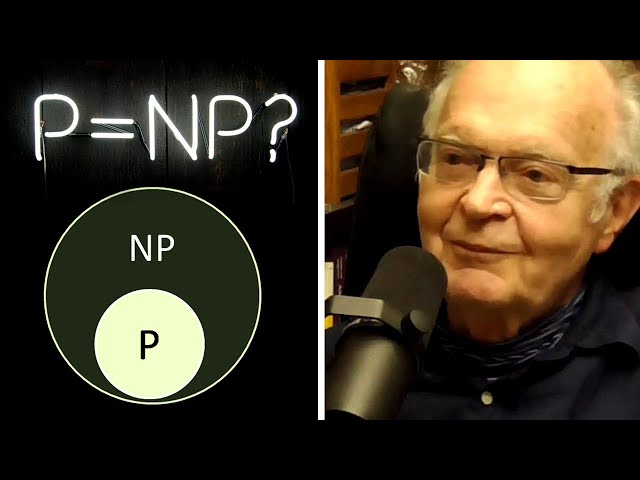
Donald Knuth: P=NP | AI Podcast Clips
Lex Fridman
Donald Knuth addresses the popular intuition surrounding the P versus NP problem, specifically challenging the notion that if a solution exists for difficult problems, it must be simple enough for someone to eventually discover and write down.…
EN
Jul 30

Stephen Kotkin: Stalin's Rise to Power | AI Podcast Clips
Lex Fridman
Stephen Kotkin presents a compelling narrative of Joseph Stalin's ascent to power, framing it not merely as an individual triumph but as a product of specific historical circumstances and contingencies rather than inevitable destiny. The transcript highlights that Stalin was largely shaped by events beyond his control; he spent World War I in exile in Siberia without participating in the conflict or influencing the radicalization of peasants seizing land after the fall of the Czarist regime.…
EN
Jul 30

Grant Sanderson: 3Blue1Brown and the Beauty of Mathematics | Lex Fridman Podcast #64
Lex Fridman
In this episode of Lex Fridman Podcast #64, Grant Sanderson, creator of 3Blue1Brown, explores the nature of mathematics with a focus on notation and its profound influence on human understanding. Sanderman argues that while basic arithmetic concepts like counting are universal across intelligent life, more advanced mathematical structures involve significant choices regarding how we model reality.…
EN
Jul 30

Deep Learning State of the Art (2020)
Lex Fridman
The lecture series opens with a reflection on the origins of artificial intelligence, tracing its roots from ancient philosophical dreams to engineer human cognition back to 1943 and the foundational work of figures like McCulloch, Pitts, Frank Rosenblatt, and Alexey Grigorevich Ivakhnenko. The speaker highlights the conceptual engineering breakthroughs that led Geoffrey Hinton, Yoshua Bengio, and Yann LeCun to receive the Turing Award in 2019 for making deep neural networks a critical component of computing.…
EN
Jul 30

Lex Fridman: Best Way to Understand the Mind is to Build It
Lex Fridman
In this discussion, Lex Fridman reflects on his initial motivations for entering the field of artificial intelligence, tracing them back to a desire originally rooted in psychiatry. As a young person, he envisioned becoming a psychiatrist not merely as a clinician but as an engineer capable of manipulating and exploring the human mind through dialogue.…
EN
Jul 30

Lex Fridman: Recipe for Progress in AI (Hard Work)
Lex Fridman
In this segment of the discussion, Lex Fridman addresses the ongoing tension and skepticism surrounding deep learning within the AI community. He acknowledges that while there is some valid criticism regarding the limitations of current deep learning models, such doubt must be maintained in moderation to remain healthy for progress.…
EN
Jul 30

Daniel Kahneman: Thinking Fast and Slow, Deep Learning, and AI | Lex Fridman Podcast #65
Lex Fridman
In this episode of Lex Fridman Podcast #65, Nobel Prize winner Daniel Kahneman explores his seminal work on human cognition and its implications for artificial intelligence. Drawing from his decades-long research with Amos Tversky, Kahneman introduces the dichotomy between System 1—fast, instinctive, and emotional—and System 2, which is slower, more deliberative, and logical.…
EN
Jul 30

Grant Sanderson (3Blue1Brown): Is Math Discovered or Invented? | AI Podcast Clips
Lex Fridman
Grant Sanderson explores the enduring question of whether mathematics is discovered or invented, proposing instead a cyclical relationship between human invention and universal discovery. He argues that while humans invent mathematical frameworks to make sense of observations from the physical world, these inventions are constrained by genuine discoveries about how reality functions.…
EN
Jul 30
Daniel Kahneman: Deep Learning (System 1 and System 2) | AI Podcast Clips
Lex Fridman
In this discussion on artificial intelligence, Daniel Kahneman contrasts current deep learning systems with human cognition using his framework of System 1 and System 2 thinking. He argues that modern deep learning is primarily a "System 1" product, characterized by rapid pattern matching and high predictive accuracy rather than genuine reasoning or causality.…
EN
Jul 30

Ayanna Howard: Human-Robot Interaction & Ethics of Safety-Critical Systems | Lex Fridman Podcast #66
Lex Fridman
In this episode of the Lex Fridman Podcast, roboticist and Georgia Tech professor Ayanna Howard explores the complex intersection of human-robot interaction (HRI) and ethics within safety-critical systems. Drawing on her background at NASA's Jet Propulsion Laboratory working with surgical robots in the early 1990s, Howard argues that true perfection in robotics is not defined by zero-error accuracy or rigid adherence to rules, but rather by a robot's ability to adapt socially to human imperfections.…
EN
Jul 30

Daniel Kahneman: How Hard is Autonomous Driving? | AI Podcast Clips
Lex Fridman
In this discussion, Daniel Kahneman addresses the complexities of robot-human collaboration, specifically focusing on semi-autonomous vehicles like Tesla Autopilot and general task automation. He argues that in any system where humans interact with advanced machines capable of significantly assisting them, the human role often becomes superfluous within a short timeframe. However, he acknowledges a critical exception: scenarios where the machine encounters problems it cannot solve but which are solvable by humans.…
EN
Jul 30

Privacy Preserving AI (Andrew Trask) | MIT Deep Learning Series
Lex Fridman
Andrew Trask, a researcher and author of *Grokking Deep Learning*, presents privacy-preserving AI (PPAI) technologies designed to solve the critical problem of data scarcity in machine learning. Currently, researchers often cannot answer vital questions regarding sensitive health issues like dementia or diabetes because accessing private datasets is legally restricted and logistically difficult, forcing them to rely on easily accessible but less impactful public data like handwritten digits.…
EN
Jul 30
Paul Krugman: Economics of Innovation, Automation, Safety Nets & UBI | Lex Fridman Podcast #67
Lex Fridman
In this episode of the Lex Fridman Podcast, Nobel Prize-winning economist Paul Krugman outlines his vision for an ideal economic society that prioritizes a robust safety net and strong environmental regulations over absolute perfection or total wealth equality.…
EN
Jul 30

Efficient Computing for Deep Learning, Robotics, and AI (Vivienne Sze) | MIT Deep Learning Series
Lex Fridman
Professor Vivienne Sze from MIT addresses the critical need for energy-efficient computing in deep learning, robotics, and AI applications, highlighting a stark disparity between human brain efficiency and current artificial systems.…
EN
Jul 30
Cristos Goodrow: YouTube Algorithm | Lex Fridman Podcast #68
Lex Fridman
Christos Goodrow, Vice President of Engineering at Google and head of search and discovery for YouTube, joins Lex Fridman to discuss the immense scale and responsibility behind one of the world's largest recommendation systems. With approximately 1.9 billion users watching over a billion hours daily—more than Netflix and Facebook combined—the platform serves as both an entertainment hub and a critical source of education in fields ranging from math and physics to philosophy.…
EN
Jul 30

YouTube Algorithm Basics (Cristos Goodrow, VP Engineering at Google) | AI Podcast Clips
Lex Fridman
Cristos Goodrow, VP of Engineering at Google, explains that the YouTube algorithm operates through two distinct mechanisms: search and recommendation. For searches, the system utilizes sophisticated technology from Google to match queries with content based on both syntactic matches in titles or descriptions and semantic understanding derived from video metadata like watch history after a specific query. In contrast, recommendations rely heavily on collaborative filtering over many years of development.…
EN
Jul 30

David Chalmers: The Hard Problem of Consciousness | Lex Fridman Podcast #69
Lex Fridman
In this episode of Lex Fridman Podcast #69, philosopher and cognitive scientist David Chalmers explores the simulation hypothesis not merely as a sci-fi trope but as a serious philosophical tool for understanding reality.…
EN
Jul 30

David Chalmers: What is Consciousness? | AI Podcast Clips
Lex Fridman
David Chalmers defines consciousness primarily through the lens of subjective experience, or what philosophers term *qualia*, describing it as the rich inner movie of visual images, sounds, emotions, and thoughts that constitute first-person perspective. He distinguishes this from "access consciousness," which involves information processing available to reasoning, and identifies the central mystery known as the hard problem: explaining how physical processes in a brain generate these subjective feelings at all.…
EN
Jul 30

Joe Rogan Podcast Theme Music (Guitar)
Lex Fridman
The opening segment of this audio recording features a heartfelt tribute to ten years of *The Joe Rogan Experience*, delivered with an acoustic guitar performance that serves as both music and message. The narrator, who identifies himself as a scientist, expresses deep admiration for the podcast's host, highlighting his open-mindedness and genuine curiosity as qualities that have profoundly influenced him over the last decade.…
EN
Jul 30
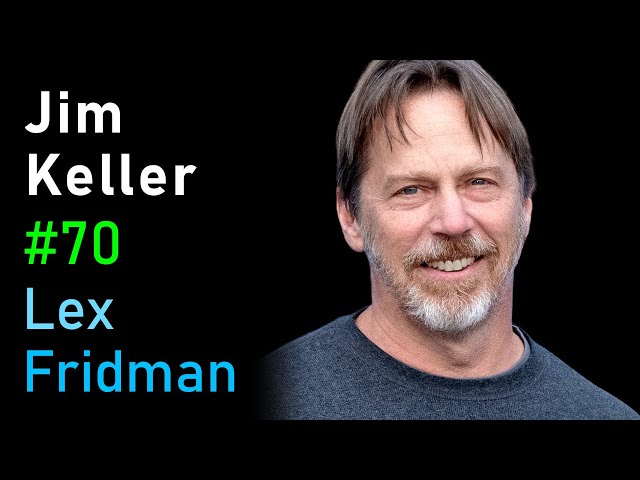
Jim Keller: Moore's Law, Microprocessors, and First Principles | Lex Fridman Podcast #70
Lex Fridman
Jim Keller, a legendary microprocessor engineer with experience at AMD, Apple, Tesla, and Intel, joins Lex Fridman to explore the intersection of computer architecture, human cognition, and first principles thinking. The conversation begins by comparing the human brain to modern computers; while both utilize distributed information storage, traditional architectures rely on global memory coupled with computation units that fetch data sequentially.…
EN
Jul 30
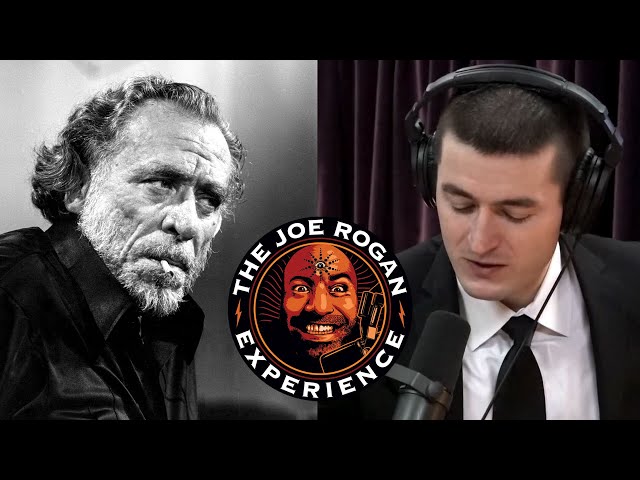
Roll the Dice (Go All the Way) by Charles Bukowski | Joe Rogan Experience
Lex Fridman
In this powerful reading of his poem, Charles Bukowski delivers a stark and uncompromising message about the nature of true commitment and artistic or personal pursuit. The central argument presented is that one must either commit entirely to their path or not attempt it at all; there is no middle ground for those who wish to achieve something significant.…
EN
Jul 30

Jim Keller: Elon Musk and Tesla Autopilot | AI Podcast Clips
Lex Fridman
Jim Keller, a key figure in Tesla's early Autopilot hardware development, engages with Elon Musk to discuss the fundamental challenges and trajectory of vehicle autonomy. A central theme is the distinction between building specialized equipment versus understanding first principles; while cost trends for established technology approach zero once the design is solved, true innovation requires asking "what do I actually want" rather than making tweaks to existing constraints.…
EN
Jul 30

Favorite Boris Pasternak Poem of Buvaisar Saitiev | Joe Rogan Experience
Lex Fridman
In this segment of the Joe Rogan Experience, Buvaisar Saitiev shares his personal ritual before every competition: reading a poem by Boris Pasternak, the renowned Russian poet and Nobel Prize laureat known for writing *Doctor Zhivago*. Saitiev explains that he chooses to read from Pasternak because the author's work embodies the specific ethic required in combat sports.…
EN
Jul 30

Moore's Law is Not Dead (Jim Keller) | AI Podcast Clips
Lex Fridman
For over five decades, Moore's Law has served as an inspiring benchmark for engineers, originally defined by Gordon Moore's observation that transistor counts double every two years.…
EN
Jul 30

Jim Keller: Most People Don't Think Simple Enough | AI Podcast Clips
Lex Fridman
Jim Keller argues in this podcast clip that most people lack sufficient depth of thought, often confusing a simple list of instructions with true understanding. He illustrates this distinction using the analogy of making bread: while a recipe provides specific steps like adding flour and yeast to an oven, deep understanding encompasses the underlying biology, supply chains, physics, and thermodynamics involved in baking.…
EN
Jul 30

Vladimir Vapnik: Predicates, Invariants, and the Essence of Intelligence | Lex Fridman Podcast #71
Lex Fridman
In this episode of the Lex Fridman Podcast, Vladimir Vapnik, a co-inventor of support vector machines and statistical learning theory, explores the fundamental distinction between engineering intelligence through imitation and understanding it as a science rooted in pure ideas.…
EN
Jul 30

Jim Keller: Abstraction Layers from the Atom to the Data Center | AI Podcast Clips
Lex Fridman
Jim Keller outlines the fundamental architecture of modern computing, describing a complex hierarchy of abstraction layers ranging from atomic materials like silicon and metal up to massive data centers. At the hardware level, atoms are assembled into transistors, which form logic gates and functional units such as adders or instruction parsing circuits. These components combine to create processing elements, with contemporary computers utilizing roughly ten to twenty coherent processing elements per chip.…
EN
Jul 30

Scott Aaronson: Quantum Computing | Lex Fridman Podcast #72
Lex Fridman
Scott Aaronson, a professor at UT Austin and former MIT faculty member specializing in quantum computing and computational complexity theory, joins Lex Fridman to explore the intersection of technical science and philosophy.…
EN
Jul 30

Scott Aaronson: What is a Quantum Computer? | AI Podcast Clips
Lex Fridman
Scott Aaronson explains that quantum computing represents a profound intersection of computer science, physics, engineering, mathematics, and philosophy, proposing a new way to harness nature based on principles established since 1926. At its core, quantum mechanics describes the world using amplitudes—complex numbers rather than simple probabilities—which can be positive or negative and even complex.…
EN
Jul 30