YouTube Transcript Downloader and AI Video Summaries
Paste a YouTube video URL to extract its English transcript, download the subtitles as text, or create a concise AI summary.
1. Paste link
Enter a YouTube video URL.
2. Find subtitles
Automatic English subtitles are detected.
3. Download
Save clean subtitles as a TXT file.
Recent summaries
2267 videos · Page 42 of 76
MIT 6.S094: Computer Vision
Lex Fridman
The MIT 6.S094 lecture on Computer Vision establishes deep learning, specifically neural networks trained with supervised data, as the dominant force in interpreting visual information from raw sensory inputs like RGB images.…
EN
Jul 30

MIT 6.S094: Deep Learning for Human Sensing
Lex Fridman
The lecture focuses on applying deep learning methods to human sensing, specifically within computer vision for autonomous driving contexts. The core argument is that while algorithms are exciting, real-world success depends fundamentally on data collection and annotation rather than just algorithmic innovation.…
EN
Jul 30
MIT AGI: Artificial General Intelligence
Lex Fridman
In this introductory lecture for MIT's Course 6 on Artificial General Intelligence (AGI), Professor Josh Tenenbaum outlines a mission to engineer intelligence by grounding high-level philosophical questions in current engineering realities and limitations. The course aims to balance the popular "black box" view of AGI, which focuses heavily on future societal impacts like robot takeovers or utopias, with a rigorous scientific approach that examines how difficult it is to actually build human-level systems today.…
EN
Jul 30

MIT AGI: Building machines that see, learn, and think like people (Josh Tenenbaum)
Lex Fridman
Josh Tenenbaum, a professor at MIT leading the Computational Cognitive Science group and part of the Center for Brains, Minds & Machines (CBMM), argues that current artificial intelligence systems lack true general-purpose intelligence because they rely heavily on deep learning for pattern recognition without possessing common sense or flexible reasoning.…
EN
Jul 30

Ray Kurzweil: Future of Intelligence | MIT 6.S099: Artificial General Intelligence (AGI)
Lex Fridman
Ray Kurzweil, a leading futurist and inventor with over 30 years of accurate predictions, delivered a lecture on Artificial General Intelligence (AGI) at MIT's course 6.S099. He outlined his thesis that the human neocortex is organized as a hierarchy of modules rather than distinct regions performing different functions, a concept supported by recent neuroscience evidence showing repeating patterns of about one hundred neurons across three billion such units in humans.…
EN
Jul 30

Sacha Arnoud, Director of Engineering, Waymo - MIT Self-Driving Cars
Lex Fridman
Sacha Arnoud, Director of Engineering and Head of Perception at Waymo, presented a comprehensive overview of the company's decade-long journey in developing autonomous driving technology, emphasizing that safety is the primary motivation behind their mission to make mobility safe, easy, efficient, and accessible.…
EN
Jul 30
Lisa Feldman Barrett: How the Brain Creates Emotions | MIT Artificial General Intelligence (AGI)
Lex Fridman
Lisa Feldman Barrett, a distinguished professor of psychology at Northeastern University and author of *How Emotions Are Made*, challenges the prevailing misconception that emotions are universal, biologically pre-wired circuits triggered by specific facial expressions like scowling for anger or smiling for happiness.…
EN
Jul 30

Stephen Wolfram: Computational Universe | MIT 6.S099: Artificial General Intelligence (AGI)
Lex Fridman
Stephen Wolfram opens his discussion on Artificial General Intelligence (AGI) by recounting a pivotal moment in 2009 when he demonstrated Wolfram Alpha to Marvin Minsky, a pioneer of AI who had previously dismissed such systems as mere toys.…
EN
Jul 30
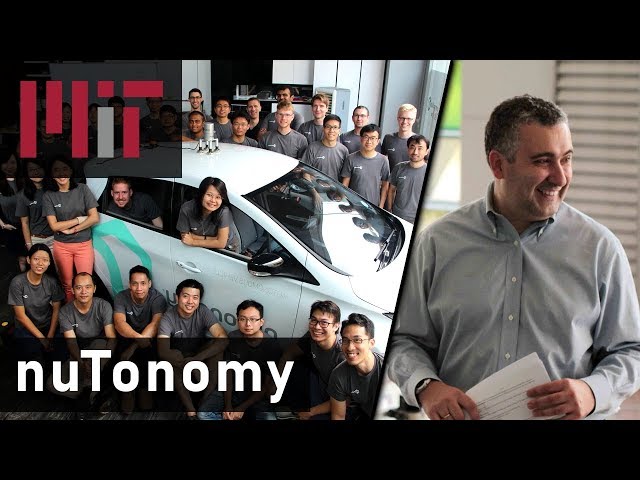
Emilio Frazzoli, CTO, nuTonomy - MIT Self-Driving Cars
Lex Fridman
Emilio Frazzoli, CTO of nuTonomy and former MIT professor, argues that while safety, convenience, and improved mobility access are common reasons for pursuing autonomous vehicles (AVs), they merely improve upon the status quo rather than fundamentally changing transportation.…
EN
Jul 30

Sterling Anderson, Co-Founder, Aurora - MIT Self-Driving Cars
Lex Fridman
Sterling Anderson, co-founder of Aurora and former head of Tesla's Autopilot team, shared his decade-long journey from MIT research to leading autonomous vehicle development at both Tesla and his new company. His work began with DARPA-funded projects focusing on "intelligent copilots" that blended human control with automation using homotopy-based path planning rather than fixed trajectories.…
EN
Jul 30
MIT AGI: Cognitive Architecture (Nate Derbinsky)
Lex Fridman
Nate Derbinsky, a professor at Northeastern University and researcher in cognitive architecture, introduces AGI (Artificial General Intelligence) not merely as systems that mimic human actions but as agents capable of persistent operation across diverse tasks they have never encountered before. He contrasts this with current machine learning models like Alexa, which often fail when asked to perform novel functions because they lack the ability to learn new skills on demand.…
EN
Jul 30

MIT Advanced Vehicle Technology Study (MIT-AVT)
Lex Fridman
As part of the MIT Advanced Vehicle Technology Study (MIT-AVT), researchers are instrumenting vehicles with varying levels of automation to deeply analyze driver behavior and system interaction. A primary focus is placed on a Tesla Model S, which serves as a testbed for advanced instrumentation designed to capture comprehensive data regarding human-machine dynamics.…
EN
Jul 30

MIT-AVT: Data Collection Device (for Large-Scale Semi-Autonomous Driving)
Lex Fridman
The MIT Autonomous Vehicle Technology study focuses on collecting vast amounts of naturalistic driving data to advance semi-autonomous vehicle safety and performance, utilizing a specialized device known as RIDER developed by Dan Writer and Michael. This hardware system is designed for reliability across multiple vehicles and varying weather conditions over extended periods, integrating three cameras, an IMU, GPS, and CAN bus messages from the vehicle itself.…
EN
Jul 30

Max Tegmark: Life 3.0 | Lex Fridman Podcast #1
Lex Fridman
In this episode of Lex Fridman Podcast #1, MIT physicist and professor Max Tegmark explores the intersection of cosmology, artificial intelligence (AI), and consciousness. Tegmark argues that while there are billions of Earth-like planets in our galaxy alone, we may be the only civilization capable of building advanced technology within our observable universe due to a "Great Filter" likely located behind us or ahead of him.…
EN
Jul 30
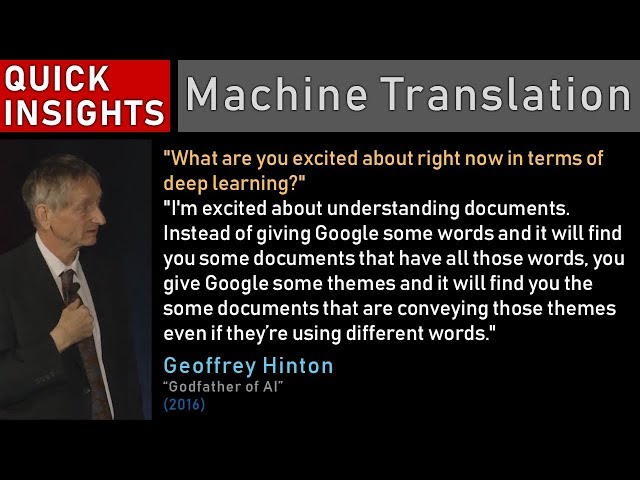
Geoffrey Hinton: What are you excited about in deep learning?
Lex Fridman
Geoffrey Hinton expresses significant enthusiasm for recent advancements in deep learning, particularly within the realm of machine translation. Although he notes that he has not made direct contributions to this specific area himself, he highlights that some of his students are actively working on it.…
EN
Jul 30

Ilya Sutskever: OpenAI Meta-Learning and Self-Play | MIT Artificial General Intelligence (AGI)
Lex Fridman
Ilya Sutskever, co-founder and research director of OpenAI, delivered a comprehensive overview of deep learning's theoretical foundations and its practical applications in artificial general intelligence (AGI). He began by explaining why deep neural networks work so effectively: they function as circuit search engines that find the shortest program capable of generating specific data.…
EN
Jul 30

Christof Koch: Consciousness | Lex Fridman Podcast #2
Lex Fridman
Christof Koch, a seminal figure in neurobiology and president of the Allen Institute for Brain Science, argues that consciousness is not merely an emergent property of human intelligence but likely pervades all biological life through natural evolution.…
EN
Jul 30

Steven Pinker: AI in the Age of Reason | Lex Fridman Podcast #3
Lex Fridman
In this episode of the Lex Fridman Podcast, Steven Pinker addresses fundamental questions regarding human nature and the meaning of life, arguing that while propagating genes is a biological imperative for our DNA, attaining knowledge represents a primary aspect of what humans consciously value.…
EN
Jul 30

Yoshua Bengio: Deep Learning | Lex Fridman Podcast #4
Lex Fridman
In this episode of Lex Fridman Podcast #4, Yoshua Bengio explores the profound differences between biological and artificial neural networks, highlighting a critical mismatch in how they handle credit assignment over long time spans. While current recurrent neural networks can manage sequences with dozens or hundreds of timestamps, humans effortlessly assign credit to decisions made years ago based on new evidence, effectively updating past interpretations without catastrophic forgetting.…
EN
Jul 30

Black Belt Speech | Lex Fridman
Lex Fridman
In this profound reflection, the speaker articulates a transformative realization gained through years of rigorous mathematical study and academic pursuit. Despite holding a PhD and identifying deeply with the label of being a nerd, they acknowledge that their most significant lessons regarding life and the human mind were not found within traditional school settings but rather in the quiet introspection following those experiences.…
EN
Jul 30

Vladimir Vapnik: Statistical Learning | Lex Fridman Podcast #5
Lex Fridman
In this episode of the Lex Fridman Podcast, Vladimir Vapnik, a co-inventor of support vector machines and statistical learning theory, engages in a deep philosophical dialogue regarding the nature of reality and machine intelligence.…
EN
Jul 30

Guido van Rossum: Python | Lex Fridman Podcast #6
Lex Fridman
In this episode of Lex Fridman's podcast, creator Guido van Rossum reflects on his upbringing in post-WWII Netherlands and how early exposure to Dutch literature shaped his worldview before he turned to technology as a teenager.…
EN
Jul 30

Jeff Atwood: Stack Overflow and Coding Horror | Lex Fridman Podcast #7
Lex Fridman
Jeff Atwood, co-founder of Stack Overflow and author of Coding Horror, argues that what primarily motivates programmers is the intrinsic joy of solving puzzles through a brute-force process rather than fame or fortune. He illustrates this with examples like the "shuffle problem" in casinos and the Monty Hall paradox, demonstrating how empirical data can resolve intuitive errors without needing deep theoretical insight; simply running simulations reveals the correct answers.…
EN
Jul 30

Eric Schmidt: Google | Lex Fridman Podcast #8
Lex Fridman
Eric Schmidt, former CEO and chairman of Google, reflects on his lifelong passion for technology which began in the 1960s with model rockets before evolving into a fascination with programming during the 1970s. He describes the transformative moment when he realized that coding allowed him to build things that did not previously exist, creating something unique bearing his own name.…
EN
Jul 30

Stuart Russell: Long-Term Future of Artificial Intelligence | Lex Fridman Podcast #9
Lex Fridman
In this conversation, Stuart Russell reflects on his early work in artificial intelligence during high school and university, where he developed chess programs using limited computational resources like punch cards to run meta-reasoning algorithms that could beat him at games like backgammon and checkers.…
EN
Jul 30

Pieter Abbeel: Deep Reinforcement Learning | Lex Fridman Podcast #10
Lex Fridman
In this episode of the Lex Fridman Podcast, Professor Pieter Abbeel from UC Berkeley and director of the Berkeley Robotics Learning Lab discusses the intersection of robotics, deep reinforcement learning (RL), and artificial general intelligence.…
EN
Jul 30

Juergen Schmidhuber: Godel Machines, Meta-Learning, and LSTMs | Lex Fridman Podcast #11
Lex Fridman
In this conversation with Lex Fridman, Jürgen Schmidhuber recounts his lifelong ambition to build machines capable of recursive self-improvement and solving universal problems. His journey began in adolescence when he realized that building a machine which learns to become a better physicist than himself could multiply human creativity infinitely. This vision led him to propose "meta-learning," or learning-to-learn, where an algorithm inspects and modifies its own structure to improve itself recursively.…
EN
Jul 30

Tuomas Sandholm: Poker and Game Theory | Lex Fridman Podcast #12
Lex Fridman
Tuomas Sandholm, a professor and co-creator of Libratus—the first AI system to defeat top human players in heads-up no-limit Texas Hold'em—discusses how this game has become the premier benchmark for imperfect information problems in artificial intelligence. Unlike perfect information games like chess or Go, poker involves hidden cards that create uncertainty about opponents' states, making it significantly harder for algorithms to solve.…
EN
Jul 30
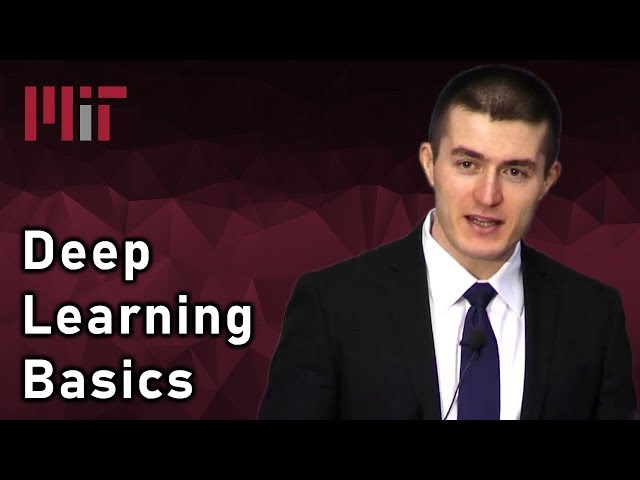
Deep Learning Basics: Introduction and Overview
Lex Fridman
Welcome to an introduction and overview of deep learning, a field dedicated to extracting useful patterns from data with minimal human effort through automated methods. The course highlights that while machine learning news often focuses on methodology published in prestigious conferences or blogs, the true challenge lies in applying these techniques to solve real-world problems by asking good questions and organizing appropriate data.…
EN
Jul 30

Deep Learning State of the Art (2019)
Lex Fridman
The lecture outlines the state of the art in deep learning as of 2019, emphasizing significant breakthroughs that occurred between 2017 and 2018 rather than just benchmark results on standard tasks like ImageNet or NLP. The speaker identifies 2018 specifically as "the year of natural language processing," comparable to the Imagenet moment in computer vision driven by AlexNet in 2012.…
EN
Jul 30