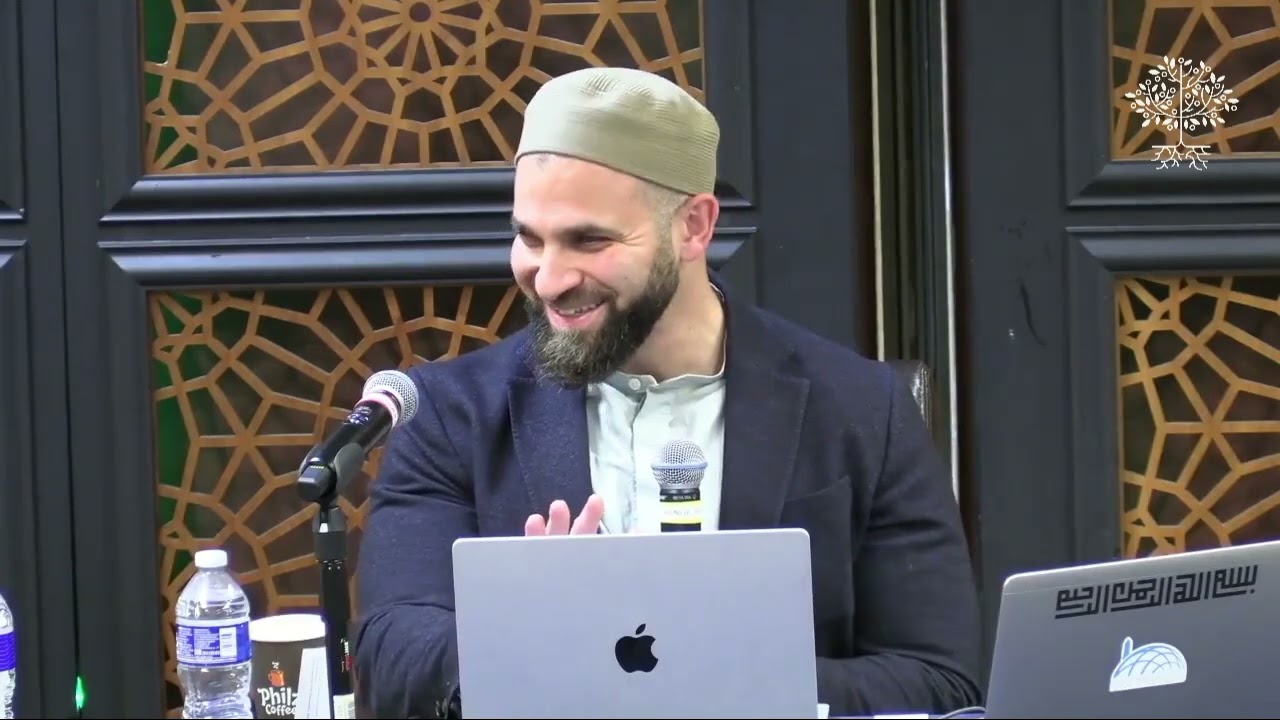
Your Day Doesn’t Begin in the Morning: The Islamic Rhythm of Rest & Work | Dr. Mazen Atassi
Watch on YouTubeVideo summary
The video introduces a significant paradigm shift in how we perceive the start of our daily cycle, arguing that for an Islamic worldview, the day does not begin at dawn but rather at Maghrib, the moment of sunset. This perspective aligns with the historical Islamic tradition where the sighting of the new moon marks the beginning of a month, establishing a rhythm where night precedes day. Consequently, the period immediately following sunset is designated as the ultimate time for spiritual reflection, including dhikr, dua, and istighfar, before one rushes to pray the Maghrib prayer. This approach emphasizes immediate engagement with worship at the start of the cycle, contrasting sharply with the Western habit of delaying prayers until later in the evening or treating them as an obligation to be completed after a long day of labor.
This shift in timing fundamentally alters the relationship between rest and work, suggesting that healing, comfort, and communion with Allah and loved ones must precede the toil of earning one's livelihood. In this framework, the feminine energy of rest (Yin) naturally leads into the masculine energy of action (Yang), whereas modern Western culture often demands that individuals "earn" their sleep by finishing all tasks before resting. The speaker illustrates how this flawed approach leads to self-abuse, where people stay up late to complete unfinished work, only to suffer from fatigue and anger when they miss Fajr due to exhaustion. Instead of viewing rest as a reward for productivity, the Islamic rhythm treats it as a necessary foundation that allows one to fill their cup with energy and peace, ensuring they are ready to face the next day without burnout or reliance on excessive stimulants like coffee and Red Bull.
Ultimately, the teaching advocates for harmonizing human life with the natural rhythms of the sun, honoring its beauty without worshipping it, and recognizing that true productivity stems from a well-rested state rather than forced endurance. By accepting that we are borrowing time from tomorrow or simply filling our capacity today, we can avoid the cycle of overworking until midnight and then struggling to function the next day. This adjustment corrects an aberration of fitra, restoring a balance where work is done with intention and clarity, followed by genuine rest that recharges the individual spiritually and physically. Embracing this rhythm allows for a life that is not defined by frantic busyness but by a sustainable cycle of worship, connection, and purposeful effort aligned with nature's design.
Read the full video transcript
And what I talk about with people is
that, also another like paradigm shift
that I'd like to share with you all is
that the beginning of our day is when?
When is the beginning of the day?
Someone say it clearly.
Fajr. Any other thoughts?
Tahajud. Any other thoughts? Over here.
Maghrib.
Maghrib. It's Maghrib. The beginning of
our day is Maghrib.
In the history Islamic paradigm, when
the moon is sighted of a new month,
that's the beginning of the month,
beginning of a day.
Maghrib is the beginning of the day.
Night precedes day.
Think about that.
The beginning of the day is sunset.
The day has ended.
The end of Asr, that's why the end of
Asr is actually a very powerful time for
dhikr
and dua and istighfar cuz it's the it's
the it's the ultimate time of the day.
It's the end and then Maghrib is the
beginning.
And you rush to pray. The sunnah is to
rush to pray. The first thing you do
after the the day starts is pray.
It's like the emphasis the most
emphasized
of all the prayers to pray immediately.
Maghrib. I believe in other some
madhahib it's like really makruh to push
it even like 5 10 minutes. Like you
really have to pray if you can as soon
as possible cuz the first thing you want
to do in the beginning of the day is
pray.
Yes.
No.
As soon as it's in it's in. But it's
like Dhuhr, you have to wait. Like the
sun's going up for Dhuhr. When it's at
its zenith, it's uppermost part, you
can't pray yet.
You have to wait till it kicks over. One
smidgen and then that's Dhuhr.
But as soon as Maghrib is in you can
pray. But you want to avoid praying
right before Maghrib. Like as the sun is
setting it's makruh. Like in the Hanafi
school it's makruh to pray after asr,
actually. Even though even though asr
even sunnah prayers.
Uh but no, it's it's better to avoid
before maghrib any prayers. Cuz you
know, the people that worship the sun,
which I've been laughing all weekend,
you know, about kind of really rational.
When you step outside and you study
nature, it's like of all the things to
worship, if I didn't know about Allah,
I'd worship the sun, too. Sun's amazing.
It's just the warmth, the heat. It
governs the whole rhythm of life on this
planet. It's ajeeb, it's really
beautiful. Of course,
we don't worship the sun, folks.
We worship the Lord of the sun. We don't
like things that set.
But subhanallah, yani the sun's amazing,
yeah. And we want to be able to work and
honor and harmonize with the sun, align
with the sun. That's what this
teaching's all about. So, night precedes
day.
Night precedes day, yeah. Which means in
some way, energetically, what this means
is that your rest precedes your work.
Your resting, your healing, your being
comfortable and with in communion with
Allah and your loved ones
precedes toiling in the world and
efforting and gaining rizq and, you
know, sweating and
doing this energy, the yang energy of
the day. Yin precedes yang. Jamal
precedes Jalal.
Feminine energy precedes masculine
energy. But we learn otherwise as
Americans, as Western people. It's like
you start the day at fajr. That's the
beginning of the day. The sun comes out.
And then you work work work work work.
And then at the end of the day,
you um
go to sleep. Like and you have to almost
like earn your sleep. Like I didn't
finish my work yet. I can't go to sleep
until I finish my work.
But you have to almost like earn it.
Where for us, it's no, no. Like you've
already won into the next day. You're
borrowing from tomorrow. Or you're
borrowing from today, technically.
When you stay up late and doing and
doing this when the night has already
come in
and the next day is ticked over,
whatever you were able to accomplish at
the end of alhamdulillah, thank you
Allah, put away your work and then now
it's time for rest. It's time for being
with family, being with your Lord, and
getting to sleep on time so that you can
fill your cup for the next day.
Yeah? So, we abuse ourselves when we get
things wrong.
You can see the self-abuse, you know,
cuz what happens? Oh, I didn't finish my
work today so I got to stay up till
midnight to finish my work and then I
have to like decompress. I have to like
watch Love is Blind for an hour and then
at 1:00 I know, you don't I know these
things.
And then at 1:00 I'll go to bed and
then, you know, maybe I'll get Fajr,
maybe I won't cuz I'm sleeping at 1:00
and now it's in the summertime Fajr is
at it comes out at like 5:00 something,
right?
And then you're waking up maybe at 7:00,
tired.
You're angry about missing Fajr and like
self-loathing. You didn't get the full
cup.
You have a long full day ahead of you
and now you're just binging Red Bulls
and coffees all day trying to make it
through and then somehow maybe you get a
second wind at like 7:00 8:00 p.m. and
then now you're like using that second
wind until 12:00 1:00 again and you keep
doing that.
We keep doing that.
This is an aberration of the fitra.