Video summary
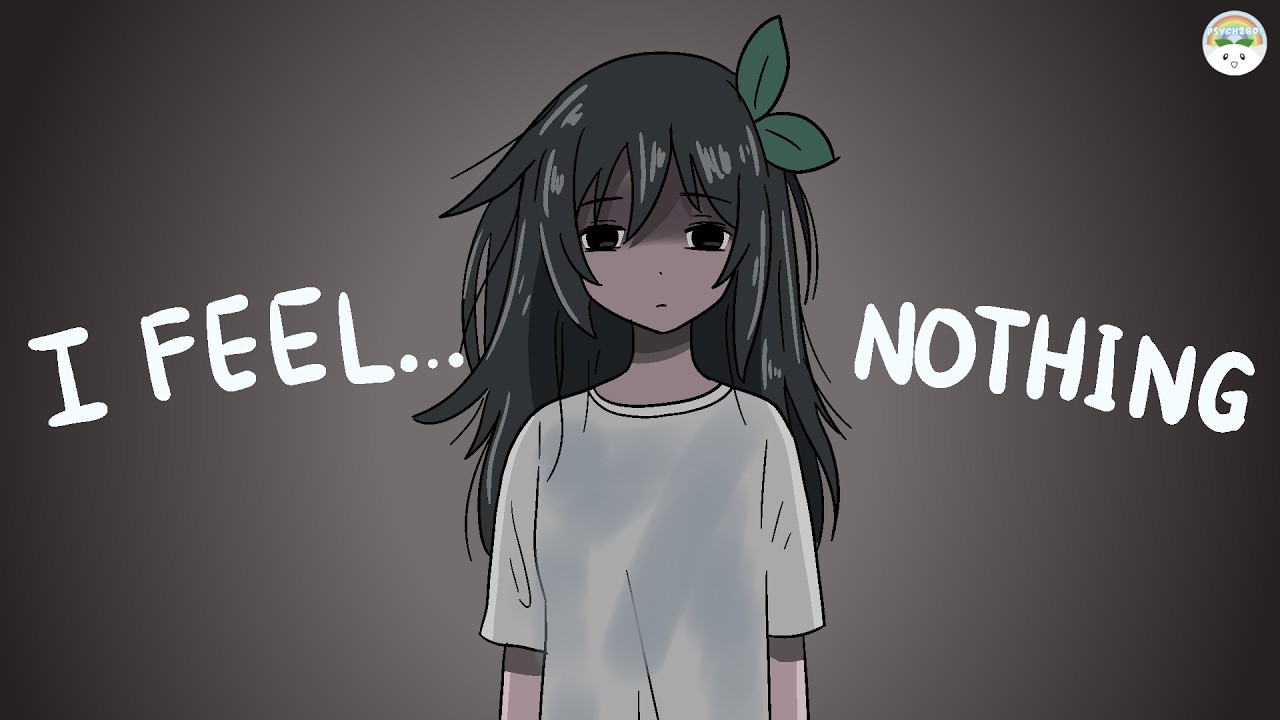
The video explores the increasingly common experience of feeling emotionally disconnected from oneself, where individuals struggle to identify or articulate their current feelings despite outwardly functioning normally. This state is not characterized by a lack of emotion but rather by an inability to access it due to long-term suppression or adaptation to overwhelming circumstances. Often stemming from a history of needing to remain calm during crises, past difficulties in expressing needs, or simply the relentless pace of daily life, the mind has learned to prioritize action and stability over internal awareness. Consequently, the vital connection between one's actions and inner emotional state begins to fade into the background, leaving people with a sense of emptiness, confusion, or unexplained reactions that they cannot fully explain.
This disconnection serves as a protective mechanism rather than a failure, as the brain attempts to help individuals function when things feel unsafe or too overwhelming by creating distance from intense emotions. While this strategy may have been necessary for survival and getting through difficult times in the past, it eventually leads to a point where one no longer feels like themselves because they cannot recognize their own emotional landscape. The result is frustration and an inability to self-soothe effectively, as taking care of oneself requires knowing what one needs—a piece of information that becomes inaccessible when emotions are buried or ignored for too long.
To begin healing this rift, the video suggests starting with small, manageable steps rather than demanding immediate clarity on complex feelings. Instead of asking "what am I feeling," individuals are encouraged to notice physical sensations like tension, heaviness, or calmness and simply sit with them without needing to label them immediately. The goal is not necessarily to understand every emotion perfectly right away but to create a safe space within oneself where honesty about uncertainty becomes acceptable. By acknowledging that the distance felt was a result of trying one's best to navigate life under pressure, individuals can start to gently rebuild their connection to themselves and allow for more than just mere survival each day.
Ultimately, the message emphasizes that worthiness of care does not depend on having clear answers or fully understanding one's emotions before seeking support. It is perfectly valid to admit "I don't know what I feel" while still recognizing that something exists beneath the surface. The video concludes with a reminder to be gentle with oneself during this process, acknowledging that returning to emotional awareness takes time and permission. By allowing ourselves to pause and check in without judgment, we can slowly reclaim our inner world and find warmth again, proving that even when feelings seem distant or confusing, they are still there waiting to be rediscovered at a pace that feels safe and sustainable.
Read the full video transcript
When someone asks you how you're
feeling, do you ever pause for a second
longer than usual? You're not hiding
anything, [music] but you genuinely
don't know what to say. You search for
an answer like, "Fine, tired, just
[music] a bit stressed." Something close
enough, something that ends the
conversation, but the truth is you don't
really know what you feel anymore. From
the outside, nothing really seems wrong.
You show up, you respond, you keep
things moving, but inside it's unclear.
Not quite sad, not quite okay, not even
numb in a way that you can explain, just
something distant, [music] something
hard to reach. Today we're going to talk
about what it means when
you can't seem to understand your
emotions anymore. So, [music]
not knowing what you feel isn't the
absence of emotion. It's often what
happens when you've had to ignore your
feelings for a long time. Maybe you're
the one who always has to stay calm when
things get overwhelming, or maybe
expressing yourself didn't go well in
the past, or maybe [music] life just
kept moving and you didn't have the
space to stop and ask, "How am I
really?"
>> [music]
>> So, your mind adapted. Instead of
checking in with how you feel, it
learned to focus on what needs to be
done, [music] what's next, what's
expected, what keeps things stable. And
over time, that connection to yourself
can start to fade into the background.
There is a cost to that.
>> [music]
>> When you don't recognize your emotions,
they don't disappear, they just become
harder to access. You might notice it in
subtle ways, like [music] struggling to
explain what's bothering you, feeling
disconnected during moments that used to
matter [music] to you, or reacting
strongly to something and not
understanding why. Sometimes it feels
like a kind of emptiness, [music] and
other times it feels like everything at
once without clarity. And it can be
frustrating. Like, how do you take care
of yourself when you don't even know
what you need? Before we continue, we
want to say this.
Thank you for being here, for watching,
for listening, and for being a part of
this space with us. [music] Thank you
for your comments. We read as many as we
can. Definitely a lot of the ones you
think we don't see. And hearing your
stories and your experiences [music]
means more than you probably realize.
This community exists because of you,
and we're really grateful that you're
here. You matter.
Okay, back to the video.
If you've lost touch with your feelings,
they're not gone. It just means that
your mind has been trying to protect you
as our minds love to [music] do. It's
the only way it knows how. When things
feel overwhelming or unsafe, [music]
our brains don't always process
everything fully.
Sometimes it [music] creates distance
instead.
It's trying to help you function, and
for a while it works until one day you
realize you don't [music] quite feel
like yourself anymore.
So, how do you begin to reconnect
>> [music]
>> with something that feels so far away?
It doesn't have to start with
understanding everything. It can start
with something much smaller. So, instead
of what am I feeling, it's what do I
notice right now? A bit of tension,
[music]
a sense of heaviness,
a moment of calm.
Where do you feel it in your body?
>> [music]
>> Let yourself sit with it without needing
to label it right away. And over time,
those little moments of awareness can
build that connection [music] back.
The goal is to feel safe enough to be
honest with yourself again, even if that
honesty sounds like I don't know what I
feel, but I know something is there.
That's a start.
And on a final note, you don't need to
have everything figured out to be worthy
of care. You don't need clear answers to
deserve patience, and you don't need to
understand your emotions completely to
begin taking care of yourself.
If you've been feeling disconnected
[music] for a while, be gentle with
yourself. That distance didn't come out
of nowhere and it didn't come from
nothing. It came from trying to get
through things the [music] best way you
could.
So, maybe now you're allowed to do more.
More than just get through the day.
Maybe [music] now you're allowed to come
back to yourself.
We've been thinking about creating more
videos on how to manage your emotions
and building on that guided meditation
series [music] for different feelings
you might be going through. You can find
a bunch of them on our homepage and
[music] if there's anything you'd like
us to work on next, feel free to leave a
comment. We'll try to create something
based on what you need. Again, thank you
for the support, for being here, for
letting this space [music] exist with
us.
And thank you for those perfect timing
messages.
>> [music]
>> They give us those strange mix of
feelings, a bit of warmth and a bit of
sadness at the same time cuz it means
this found you at a moment that you
really needed it. But, we're really glad
that we could be there for you in those
moments. [music]
We'll see you in the next one. Until
then, take care.