Video summary
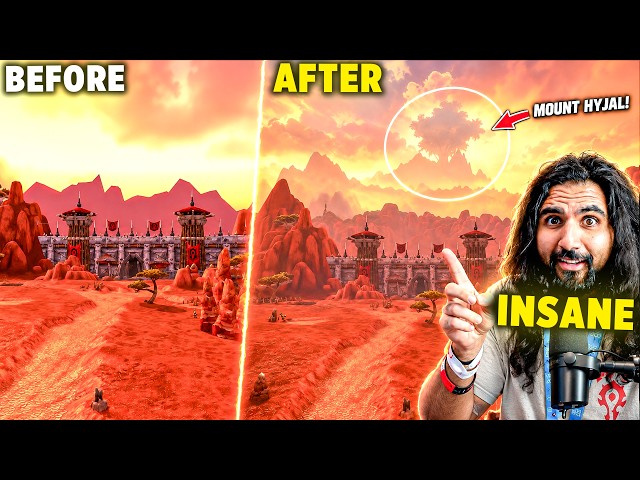
The video panel titled "WoW Forever Makes Azeroth Feel MASSIVE" explores Blizzard's ambitious plan to evolve the visual landscape of World of Warcraft while preserving its timeless essence. The discussion is led by Matt Haymon, a lead environment artist with fifteen years of experience on the game, and Jason Scott, a software engineer specializing in graphics and engine technology. Their primary goal is to combine the original vanilla version of Azeroth with the nostalgic memories players hold of it, effectively merging reality with imagination. This approach involves introducing brand new zones like Zephris Isle and Riverglades, expanding existing areas such as Dalaran, and meticulously updating over forty existing zones to breathe new life into them without losing their authentic character.
To achieve this vision, the development team implemented significant advancements in rendering technology across three key areas: fog, lighting, and water. Historically, fog was used merely to hide distant objects due to technical limitations on view distance, but with new volume fog systems, developers can now creatively control atmospheric depth, create pockets of mist, and simulate wind and particle effects. Similarly, the lighting system has been overhauled to include dynamic shadows that react realistically to the sun and moon's positions, along with global illumination that allows light to bounce naturally off surfaces. This creates a more immersive environment where colors from leaves and terrain bleed into shadows, making the world feel alive and cohesive rather than flat or artificial.
The presentation also highlights sophisticated updates to water rendering, which now features realistic wave movement influenced by wind, natural flow around rocks and land formations, and advanced reflection capabilities that mirror the entire environment including sunrises and sunsets. Artists have full control over water density, color absorption, and transparency, allowing them to create bodies of water ranging from murky rivers to crystal-clear lakes. Throughout these technical upgrades, the team adhered to a strict artistic principle of authenticity, ensuring that every change respects the original art style and the specific mood of each zone, such as maintaining the arid, red-rock feel of Desolace or the eerie atmosphere of Duskwood.
Ultimately, the panel concludes that these visual enhancements are not just about adding pretty filters but about fundamentally recreating the lighting and atmosphere from the ground up to match player expectations. The developers emphasize that while the spectacle of new graphics will hook players initially, the long-term success of WoW Forever relies on maintaining the core gameplay integrity that has defined the game since 2004. As they prepare for the November 4th launch, the team invites the community to provide feedback during the beta to ensure the final product feels right, balancing the desire for a massive, living world with the deep-seated love fans have for the classic experience of Azeroth.
Read the full video transcript
Uh, I want to go ahead and watch this.
This is the WoW Forever, the classic
plus evolving a timeless world panel.
Uh, so we're going to watch this and
react to this. I didn't get to watch
this when whenever we were at Blizzcon
because uh, I was trying to play the
game and I was like, look, I I can go
back home and I can react to this. And
also, I thought I had two days at a
computer, but I only had one. So, a
little little miscommunication there.
Anyway, let's watch.
>> What's up, Liz Con? I want you all to
imagine Duskwood. You all know Duskwood,
right? It's a dark, creepy forest
crawling with spiders and wolves
>> haunted with undead ghouls and
skeletons. The guards of the night
watch, torches in hand, patrol dangerous
roads, keeping their eyes out for a
certain abomination.
There's dilapidated buildings, abandoned
farms. It's a terrifying place.
Now, now that you have that image in
your head, let's take a look at the real
thing.
>> Dusk Squad is like my favorite zone.
>> Boom.
>> One of those, too.
>> There we go.
All right. So, we have classic Duskwood
here, right? Darkshshire Town Square
around 2 in the morning. It's awesome,
right? Iconic. Definitely a fan favorite
zone, but it might not be as dark or
creepy as you remember. When I remember
Duskwood, I imagine the light of the
full moon illuminating an eerie cold
fog.
There we go.
>> World of Warcraft fog ever, dude. I'm
just going to let that sit for a couple
seconds. Yeah,
>> I do think this looks insane.
>> I remember graveyards teeming with
skeletons. The dim warm glow of torches
are sick.
>> I love it.
>> Thank you. I remember the silhouettes of
terrible creatures lurking in the fog.
this feeling of dread and danger around
every single corner. And of course, most
of all, I remember constantly looking
over my shoulder in the Raven Hill
Cemetery, hoping I don't run into this
guy and potentially lose another one of
my hardcore characters.
>> Now, this is the Duskwood that I
remember. And this is what we're so
excited to talk about here today. how
with WoW Forever, we are evolving our
timeless world. But before we jump into
that, let me bring my buddy Jason out
onto the stage and we'll do some quick
introductions.
>> I do I do think some of the new tech
looks cool.
>> So, my name is Matt Haymon. I'm a lead
environment artist on World of Warcraft
and I've Thank you. Thank you.
And I've been at Blizzard working on WoW
for 15 years, which sounds like a long
time, right? But believe it or not, 15
years ago, we were starting production
on Miss of Pandaria. But don't worry,
I've been playing WoW since it launched
back in 2004 when I was in high school.
>> And my favorite way to play WoW is
Hardcore Classic. But I cannot wait
until hardcore hits WoW forever.
>> Hi, my name is Jason Scott. I'm a lead
software engineer. I worked with the
graphics and engine team. I've been with
World of Warcraft for about three years,
but that was after more than 20 years in
visual effects and animation for film
and television, both on the art side and
on the technology side. But my personal
history with WoW goes back a lot farther
than the three years I've been at
Blizzard, all the way back to the beta.
>> I was going to say he's yelling
>> back to May 20.
>> This is my actual WoW beta invite. You
can see the date right there. So, my
appreciation for WoW long predates my
being able to work on the game itself.
All right, back to Matt.
>> All right, thanks Jason. So, what does
it mean to evolve a timeless world?
Well, as I'm sure you've seen so far at
the show that uh we're making some
aesthetic changes to the world of
Azeroth. So, let's start by looking at
our overall visual goal for WoW Forever.
Azeroth as you remember it. Sounds cool,
right? But what does that mean? Well, we
wanted to take that original vanilla
version of Azeroth and combine it with
the version that lives in our heads,
where our experiences, nostalgia, and
our imagination all shape the way that
we remember it.
So, how did we go about doing that? What
did that process look like? Well, first
we started by looking at all the content
coming to WoW Forever. We knew that we
we were going to have a bunch of brand
new zones that players have never seen
before, like the Zephris Aisle, starting
zone for the new Skyborn race, which is
still playable here today. If you
haven't checked it out, it's literally
right back there.
And then we have the Riverglades,
another brand new zone coming to the
coast of the Eastern Kingdoms, right
next to the Red Ridge Mountains. Players
will probably check this out around the
mid, you know, level 30 area.
And then we knew that we wanted to
expand and alter some of our existing
areas, like how the city of Deran is now
fully present right here next to the
Altra Mountains, no longer hiding in its
purple bubble.
And then of course, finally, we have all
of our existing zones, around 40 of
them. That's theore. So, you've probably
heard this before a couple times here at
the show, but we consider the world our
main character without
>> I like to consider it as a cast of
characters with each and every zone
having its own unique color palette,
mood, atmosphere, its own. It's
>> kind of crazy.
>> So, that created a bit of
>> they kept the same textures and stuff,
but they just changed a lot that players
never seen before. And a lot of fog has
always been there. simultaneously
take our existing zones and breathe new
life into them to really turn them into
that version that you imagine
teams collaborated to develop a bunch of
new rendering updates for WoW forever
that would help us enhance the look of
the world and then of course we would
create new art assets to build out these
new spaces, our new zones, our new
dungeons, and our new raids. Now,
changing a world that players have
cherished for such a long time has
risks. And so, we wanted to make sure
that we approached it carefully and
responsibly. So, we developed a guiding
artistic principle that we followed
every step of the way. Everything must
be authentic. Everything we create,
everything we change, everything we add
must be authentic. Authentic to our
world, authentic to our art style, and
most importantly, authentic to all the
memories that we have of that vanilla
Azeroth.
>> We're not here to change things just for
the sake of change.
>> We know that you all love the vanilla
world, and so it's really important to
us that we respect that. Now, let's take
a look at a quick example. Here we have
vanilla duratar outside the gates of
Ormar. Everyone loves duratar, right?
Duratar fans, maybe. Okay, cool. Now, as
an artist, it might be tempting when I
get new tech or new tools to go in and
just change everything because it's fun
and exciting. As an example, maybe the
whole zone is changes to have a cool
blue atmosphere. It feels natural and
realistic, but that's not durar. Yeah,
>> we could go even more extreme and change
the atmosphere to a foggy green
atmosphere.
>> But again, neither of these are
authentic to Duratar.
>> The correct approach is to go in with
purpose and lean in and push the fantasy
that Duratar already has. Yes, that was
good.
>> Is an arid but vibrant landscape
>> full of red rock canyons, dry cracked
earth, and a hot sweltering.
>> I love this.
>> You see, authenticity was so important
to creating a durar that players
remember.
>> You can like look up and you see Hyel.
>> Now, authenticity was equally important
or maybe even more important when it
came to creating new assets for WoW
forever. You see, our models and
textures are the foundation of WoW's art
style.
>> And here's the thing, hypothetically,
let's say you don't know what Hyel is.
I'm going to go back for just a second
here. You don't really know what Hyel is
and you're you're like a level like five
orc and you're running up here and
you're like, "Oh my god, no, I'm going
to Ogmar." And you just look up and you
see the the wall of Ogar and you and you
and you look up and you're like, I don't
know what the hell is in that mountain,
but I want to get there. That's insane.
This world is huge and and you can feel
how big the world is. That's a good
feeling. That's that I I actually think
this
they did a very good job of this.
>> Equally important or maybe even more
important when it came to creating new
assets for WoW forever. You see, our
models and textures are the foundation
of WoW's art style. And it's an art
style that has changed over the years
with every expansion. But for WoW
Forever, we wanted to maintain that
iconic vanilla look. There's an edge and
grittiness to the way those assets look.
We're creating assets that maintain that
timeless iconic look. And we're bringing
in new rendering updates to help breathe
new life into our world. So now to give
us a more detailed look at those
rendering updates, I'm going to pass it
over to Jason.
>> Thanks, Matt. So
to achieve the visuals we wanted for WoW
Forever, we were able to innovate in
several different rendering technology
areas. And each of these was chosen with
a goal of being authentic, as Matt said,
with enhancing the look of the game so
that you can be that much more immersed
in the world of Azeroth. So, we're going
to look at these technologies in three
groupings.
Fog,
lighting, and water.
And now, each of these is actually made
up of multiple technologies. We're going
to use these groupings to help
illustrate things. As I talk, we're
going to play some examples. You have a
better idea of what it is.
>> Fog enjoyers.
>> And there's one more thing. These aren't
just individual items, individual
components that we decide to work on.
Our artists and our engineers
collaborated to bring them all together
with the goal of giving us the look of
WoW forever. Let's get into the details.
All right, first let's talk about fog.
Fog has been integral to WoW's look
since the very beginning.
>> And if we look at some examples from
vanilla WoW, we can
>> any fogers
>> use that to understand how we've used
fog over the years.
>> We've used it in a variety of ways to
create zones like this one. a gloomy,
spooky, dark swamp like Dust Walla
Marsh. Fog helped us create the mood and
the ambiance we wanted to provide for
the players. Or we might create a zone
like this one where we make we use fog
to make a light and airy atmosphere here
in Dun Maro in the mountains around Iron
Forge. We could use fog to to create
vistas or give a sense of depth. And if
you didn't know, each zone had its own
unique fog created by our art team.
But if we go back to the beginning, back
to the launch of WoW, we use fog out in
the distance for very particular purpose
>> related to game performance.
>> So if you didn't know,
>> we have limitations on our view distance
or our draw distance at the beginning.
>> True.
>> That's the distance at which from the
player, we're not really able to draw
what's what else is out there in the
world. And so in order to not really
show that to the players, we would hide
that in a wall of fog.
And we have some other examples of this.
As we stand in the parish,
>> why not dust?
>> You should be able to kind of look over
and see into durar maybe a little to
Ajara, but we need to be able to control
those sight lines for those reasons. And
over the years, we were able to improve
that view distance and work on that fog
and improve it, but we didn't want to be
bound by any technical limitations
anymore. We wanted to creatively control
what we were able to show you out in the
distance. And in addition with fog, we
wanted to have pockets of fog that maybe
you could walk through. We could
surround a player or maybe we could hide
things in the fog. We wanted to be able
to shine light through it or have it
have shadows or have it move have dust
and dirt and particles and texture.
>> So funny.
>> And now all these things could be done
in a systems called volutrics or
volutric fog. And so it became our goal
to replace our original distant fog with
this new volume fog technology.
>> And Wow Forever has given us that
chance.
>> Our engineers and our artists have
worked together to develop a system to
control fog like we never have before.
Now we can increase that sense of
creepiness.
>> I think this looks so good. Actually,
this actually looks This looks better
than retail to me, dude.
fog
>> and
we could see the effect of wind in a
zone. We can feel the texture of dust.
>> We can see it sweep across the plains of
the western plaglands.
>> If you didn't know, each zone has its
own unique wind as well.
>> Dust.
>> We've also been able to adjust that
sight line between the zones that we
were talking about. And so now when we
do stand.
>> Okay, by the way, this actually looks
incredible.
But
it's just
it's so funny how much he talks about
fog. It's just funny.
>> Here in the barrens and we do look over
into Duratar. We can start to make out
land formations. We can see start to see
into Ajara. And as we look up, we can
even see Nordrasil at top Mount Hyel.
This gives us a sense of the expansive
world that we have in Azeroth.
Now, another example of this is back in
the wetlands, but now we're not bound by
that view distance. Now, we can see the
backs of the mountains of Dun Maro.
As we stand and we look across Menville
Harbor,
>> that looks good.
>> Look across the Bon Bay, we can start to
make out the violent citadel of Dallas,
>> huh? You start to make out
so good, dude. I love how they did that,
dude. That looks
one of the biggest visual changes in
WoW's history.
>> You know what's the craziest thing about
this? All of this exists. I mean, I
guess down you don't actually see it,
but this exists in the current world
of Warcraft, but with fog,
the power of fog, it makes the world
feel so much bigger.
It's so cool.
>> In some of these examples, you might see
rays of light were commonly called god
rays. And you can see this really
vividly here in Ashen Veil.
It's so good.
>> These rays of light come from our
ability to shine light through the fog
in a process called scattering. You can
see this on the path with the lights on
the path as well. And the size and the
shape of those rays come from what's
blocking the light or simply what's
casting shadows into the fog,
whether that be from the trees or
mountains or anything else. Now, these
rays are incredibly beautiful, and we're
so excited we get to bring this kind of
imagery to the game. So, this is a
natural place to go to our second set of
technologies, lighting. Right. So, as
you saw in Ashenville, we have some
beautiful new lighting that comes with
our new fog. But in trying to achieve
the lighting, we realized there were a
couple of additional areas we needed to
adjust. So, I'm going to use some
time-lapse footage from the Badlands to
help explain what I mean. All right. So,
here we have the Badlands in vanilla
wow, and we're showing some of the sun
and the moon as it sun sets and rises
behind the mountain. At the risk of
destroying the illusion, we're going to
point out a couple of things, a couple
of attributes to help illustrate what we
needed to adjust.
>> Okay. Okay.
>> In order to talk about lighting, you
need to be able to talk about shadows.
In fact, there's two pieces of shadows
we're gonna talk about. So, let's start
there.
>> Well, yeah, the shadows kind of look.
First is if we look at the mountain, we
see as the sun and the moon go up and
down behind the mountain, you'll see a
little bit of some rays that we had, but
they're not really getting properly
blocked or oluded by the mountain. The
second is if you look at the shadows
from the tower, as the moon and the sun
change position in the sky, those
shadows don't do anything, right? And in
fact, those shadows shouldn't even be
there some of the time because the
mountain should be shadowing as well.
Now, these kinds of qualities came from
the fact that historically
our suns and moon's position in the sky
did not actually line up with the light
we were casting into the world. Now,
we've known this from the beginning and
a lot of you knew this, but with our new
fog, this is going to become really,
really obvious,
>> right? And while we did change that
history and get some of the light to
change position, it didn't really change
that much and achieve what we wanted. So
now let's look at miles forever.
>> Oh my.
>> You can see as the sun starts coming up
to dawn and streams of light just come
popping over that mountain.
>> Let's see that fog, boys.
Holy.
>> We get similar rays from the moon as
well. And you can look at those shadows
from the tower and from the mountain as
they're getting properly cast into
>> foggy. Let's look at another similar
example this time in Mulgore. All right.
Again, vanilla wow as it basically was
on day one.
>> And you can see those shadows from the
trees.
>> We need to make a picture. We need to
make it a fog emote.
>> And again, later on, later expansions,
they did move a little, but not very
much. And now again, wow forever.
So to achieve this
to achieve this we needed to change a
couple of things. The first thing is we
need to make sure everything in our
world was properly shadowing right. We
needed to make sure the mountains the
terrain the land formations were
properly blocking the light as it was
coming into the world.
>> It looks so we needed to make sure that
the position of the sun and the moon
more closely aligned with the light that
was coming in. Now, there are still some
creative and artistic choices we make,
but this is so exciting. It makes the
world that much more alive, but there's
another lighting.
>> I don't think this is too retail because
I think this is better than retail. Like
re like retail doesn't have this. Am I
Am I crazy? I like at least maybe the
last time I played retail, I I didn't
notice any of this anything any anywhere
close to this. Like it's it's like a
completely different art style than
retail. I mean, you want fog. You don't
got fog. Not like this. We got fog,
dude. aspect here we have to talk about.
With all these new shadows from our fog,
from our terrain, our world had a chance
of getting a little bit darker. So,
let's talk about what that means. So,
here in Elwin Forest, there's always
shadows, whether it be from trees or
something else. So, we're going to make
sure you see where those shadows are,
right? And what we've done historically
is we've filled in those shadows with a
kind of a flat low level of lighting
called ambient lighting. And that's
meant to simulate how light from the sky
or light that bounces around the world
fills in the dark areas, fills in the
shadows. But that ambient light never
quite accomplished what we were really
wanting. You'll see it is quite flat. If
you look under the stable, for example,
it should be significantly darker in
there because there's less opportunity
for light to bounce inside. What we
really wanted was a way to calculate how
lighting was bounced around the world.
When light hits a surface, it picks up
the color of that surface or they have
there's less opportunity in a dark area.
Right? This system where we have light
that indirectly bounces or indirectly
illuminates something is naturally
called indirect illumination or global
illumination. Right? So let me show you
what that means in Wow Forever. Now when
we use our global illumination system to
fill in those shadows, we get such a
more natural integrated immersive look,
immersive view to everything that's
going in. You can even see some of the
red light as it bounces off the top of
the stables and hits the sides of the
chapel. You can see green light as it
filters through the from the sunlight
filtering through the green leaves into
the shadowed area behind the tree.
Right? And you can see in the stable
there's it's a lot more naturally dark,
right? So that there's because there's
less opportunity for that light to
bounce around in there. So now if we
compare these so you can see how it was
with our ambient light versus with our
global illumination system. You'll see
how much more life it brings as we look
at that
back.
>> Now we can actually visualize this. We
have an example from Stranglethorn Veil
and I've added to the bottom left a
visualization of the light that's
bouncing in the world. Right? Not the
sunlight but just light that's bouncing.
And you can see as the light bounces
around, it picks up so much green. And
you can pick see little patches of red
and brown from the path. As we go down
deeper into the jungle, you'll see how
much naturally it gets dark from the
light. And you'll see patches as the
sunlight punches through and picks up
more of that color that's coming
through. This allows our artists to
craft the style, the lighting that we
want in the zone. And as we place
objects into that environment, they're
more naturally reacting to however
everything sits.
Here's another example. This time from
the border between
>> they even got fog in real life, dude.
That's how crazy this freaking lighting
is.
>> Barren and Ashen Veil. And this is
time-lapse footage. So you can see how
our global illumination system changes
as the time of day changes. You'll see
as how light starts to come through in
the screen right side. And you'll see as
more and more light bounces around the
scene, picking up colors from the green
leaves, the red leaves of Ashen Bale and
just filling in those shadows so much
more naturally.
So, as you can see in our world, our
light comes from the sun or other lights
that we place and then the rest of the
dark areas are filled in by the sky and
light bouncing around the world from our
global.
>> Look at the sky. Look at look at right
here. And we built a custom rate tracer
built on a mix of existing ideas and new
technologies and we're very very proud
of it. But the most amazing thing is
while we've designed this and it runs on
our recommended hardware requirements,
we've been able to optimize this and
this runs completely on our minimum
hardware requirements as well. So all
WoW forever players get to enjoy this.
Now, as we travel down the South Fury
River here in Ajara,
>> it's a natural place to go to our third
set of technologies, water. All right,
>> water is another rendering technology
where we wanted to bring more life to
the game. And there's a few
characteristics we wanted to here. We
wanted to work on the movement of the
water from waves, wind, and the flow of
water. We wanted to work on the color,
enhance that, the look, uh, how light
hits it and the transparency when light
comes off it. and we wanted to work on
the reflections, how and what water's
reflecting.
So, let's first talk about movement. And
I'm going to have some examples play
through to show some of the controls
that we can do that we can use. And we
did have some movement in original WoW
in vanilla, but it wasn't quite what we
wanted.
>> I I also I really do like the old style
water.
I like the old style of water in WoW. I
like it a lot more than retail.
>> Show some of the controls that we can do
that we can use. And we did have some
movement in original WoW in vanilla, but
it wasn't quite what we wanted.
>> I think this water that they're doing
for Classic Bus, you throw some fog in
the background.
>> Damn, that looks good. And now we can
control the size of waves. Whether we
might want to adjust that based on the
size of a body of water,
the depth of water got yourself a stew
cooking.
>> We can adjust the wind. Again, we said
there's unique wind in every zone.
>> And so we can pick that up and react
appropriately,
right? And we can see all these things
that come together to give the different
kinds of water life that we want.
Another type of movement we have is the
flow of water. And you can see we did
have some simple kinds of flow or
movement in the water, but didn't really
flow as a river. But now in Wow Forever,
we can have those rivers flow down as we
want them.
They move following the path of the
river.
They bend around rocks and land
formations. as they hit rocks, it
creates foam and has some textural
qualities. So, we can see as it
interacts with the environment.
>> Here's another example here in the Red
Ridge Mountains
>> and we see how big this river is, how
the water completely flows around
>> and our artists have full control over
this even against gravity because we
actually have some magical rivers in
Azeroth that go uphill. So,
but now let's
>> Why did nobody laugh at that? That was
funny. That was a Was that
>> we'll play some examples of the controls
that we can have
>> and we worked with Art to
>> open up the controls. We wrote a
completely new water shader.
>> I'm so excited about that.
>> Do some paint overs to show what we
might want to be able to change.
>> We can affect the density of the water
and how light is absorbed and how it
changes the colors of objects underneath
the water. We can change how light is
reflecting hitting the surface of the
water and at different depths to be able
to control the color to give us whatever
kind of body of water we want from murky
to crystal clear.
And all right, onto our last part,
reflections.
Again, we didn't really reflect anything
at the beginning. We couldn't.
That's right. I have time-lapse footage
here. So, we can see even as the time of
day changes, nothing was being
reflected,
right? But as always, if we look here in
WoW forever, now we can properly reflect
our entire environment with us. We can
see it as the time of day changes
timelapse footage properly reflecting.
We can see it with the ripples and the
movement of the water
>> and all put together.
Now I should also mention we can also
reflect the sun and the moon
>> and this has been a lot of fun for us.
We can see again how it was at the
beginning
>> and now we can get these amazingly
gorgeous
>> sunrises sunsets.
>> Oh my gosh in the water.
So, that covers just some of the
rendering technology we've been able to
introduce into Wow Forever.
>> So, there's so many more areas we've
been able to work on, but let's look as
we put it back together, Matt.
Thank you, Jason.
>> So, good.
>> Cool [ __ ] Yeah.
All right. One thing I want to emphasize
is that this isn't a filter or a switch
that we just flip on and everything
looks magically different. We went in
and meticulously recreated the lighting
and the atmosphere from the ground up.
We took our original 1.12 vanilla debug
client and used it as reference as our
ground truth. We stepped through every
single time of day from midnight to 2
a.m. to noon to sunset to evening
everything and tried to match and
recreate the original vibes that every
single zone had. Now, how about we go
through that process together and build
our own zone?
So, let's bring back our old favorite
dusk wood. Yeah.
>> Yeah.
>> All right. So, here we have Duskwood. Uh
there's no lighting, no fog. We just
have flat models and textures. Like I
said before, this is our foundation of
WoW style. So, let's turn down the
lights and just add a little bit of
moonlight to the scene.
Here, you can see it's dark. If you're a
fan of really dark nights in WoW, this
is probably what you've been looking
for. And
>> wow,
>> I think it looks cool, but torches
playable. It's a little too dark. So,
let's bring in a bit more light. So,
we're going to bring in some point
lights. These are
>> the torches.
>> Lights that go on all of our different
sources, our windows, our torches, our
lanterns. It helps provide some visual
breakup,
>> some color distinction,
>> and honestly, it just looks really cool.
Now, let's bring in that global
illumination that Jason was talking
about. So, our moonlight is hitting the
ground. It's bouncing and it's lifting
up our shadows a bit, adding a bit of
color.
Just adding in fog makes the entire
space feel darker. Your ability to
perceive details in those dark areas
just get completely vanished.
>> That looks so good.
>> Now, let's bring in some of the light
scattering that Jason talked about. So
now our moon is actually illuminating
the fog, giving us those creepy god rays
here in dark.
>> So good.
>> So now let's add some movement, some
variation to the fog. We're going to
bring in some noise to create that
creepy, eerie, moving mist,
but we're not done yet. So, we're going
to add in a little bit of ground fog to
really amp up that spooky vibe.
>> It looks so good, man.
>> We're getting close to being done, but
now we're going to bring in some of our
post-process effects, some bloom, some
color correction. Really push things,
right?
It looks cool. It's punchy. It's
vibrant. But we've probably gone a
little bit too far. We've probably moved
beyond
the wow style. We have too much
contrast. Can't really see what's going
on.
Things back. Make sure it's aligned with
an authentic version of Duskwood.
>> All right. So, here we calm down some of
the saturation. Turn down some of the
bloom.
>> Things are looking pretty good. So,
let's check it against our original
classic version of Duskwood.
And now let's flip it back to WoW
Forever.
We still have Darkshshire.
>> That's crazy, man.
I I I do actually think it looks really
>> creepy. It's still moody. It still feels
like the place that we remember, but
it's really pushing that haunted spooky
fantasy. But there's one step left that
every artist should go through when
lighting a zone, and that's taking the
player perspective. It's really easy to
light one shot like this and make it
look cool, but it's important that we
run around the game. We look at all the
different areas and make sure things are
working cohesively.
Like Jason mentioned, here in the open
in Dusk or in Darkshshire, you got a lot
of moonlight, but as you move into the
forest, as the canopy of the trees are
overhead, there's going to be less light
to bounce around. Things are going to
get darker. Things are gonna get
spookier. You might just want to find a
torch.
>> So good
>> to carry along with you. And as you can
see here, as you walk out,
>> that was the original design intent
behind Dusk, by the way. They wanted you
have to have a torch.
>> Who knows what mysteries you're going to
find.
Now, this is the approach that we took
for all of our zones in WoW Forever.
Like I said, we went through and we
tried to authentically recreate the
look, the vibe, the mood, the
atmosphere, all the characteristics that
make up these familiar places. And I
want to assure you, it's not just pretty
sunsets. Every time of day has a
different feeling.
>> As long as it's authentic to the
original,
I think we did a pretty good job.
Oh, good.
>> Let's wrap it all up.
>> So, as we wrap, Matt and I want to
acknowledge we didn't do all this just
the two of us. We had a very dedicated
team who were so passionate about
crafting all the creative artistic
decisions and all the underlying
technology that brought all this
together. A lot of that team is here
today, so we'd love it if you give them
a round of applause as they're here in
the audience.
So, with that, we are thrilled that we
got to share our effort on evolving the
look of WoW Forever. And we're so
excited for you to be able to go and
experience this yourself. We hope you
got to play the demo while you're here
at Blizzcon.
>> We hope you get to play the beta when
it's released next week.
and we are so excited for you to enjoy
it when we launch WoW Forever on
November 4th.
>> We hope you find your own visual
surprises in our timeless world of
Azeroth.
>> I never met them, but I like their
>> Thank you all for coming.
>> Thank you all.
>> Man, that was a good presentation, man.
Explaining how how all they wanted to go
through and do the uh do the new
lighting and everything. Dang, that was
good. That was so sick, man. That was so
sick. I I can't wait, man. I I think I
think this is going to be I do believe
that there's a long ways to go and I
think that there's a lot that needs to
be kind of done in order to in order to
nail the game down and make sure that it
feels right as far as the gameplay cuz
there's there's a hook and a spectacle
to the game and it's the intrigue of
going to these zones that are have now
been opened up like the Riverglades and
Hyel and all these other places, right?
Spectacle of the new lighting and and
all that, right? the intrigue of the new
class design. Oh, like paladins have
holy strike, right? Mages have arcane
blast, all these different things. But
the real like a meat and potatoes of the
game play is what's going to keep people
playing. All this other stuff is the
spectacle, right? It's going to get
people hooked in. It's getting everybody
super excited. But the gameplay is stuff
that is is a lot more intricate and
maybe people aren't going to get quite
as excited about until they actually get
their hands on it. And that's the thing
that I've from from the beginning have
always been the most concerned about is
like I I'm I think that the game needs
to make sure that it feels right. I'm
very excited for November 4th. I I think
it's going to be really fun. I think the
early levels, everything, and just
really seeing how the game progresses.
Hopefully, like they do have it right.
After playing the demo at BlizzCon, I
feel indifferent. I think they're in the
right direction and I feel like it's way
better than what I saw months ago and
way more refined and it's it's in the
right direction. I actually didn't feel
that way, but like you can tell like
they they really took a lot of the
feedback to heart and I really hope that
we can see the the continuation of
things moving in that direction and it
really starts November 4th. So, uh, if
you are playing the beta, kind of giving
that feedback and really like knowing
like, okay, like this is the stuff we
need to talk about. It's super super
important. And it's important to be able
to to to get that messaging right in a
way that is not only understandable, but
it's convincing. It's like, hey, this is
why we need things the way that that we
ask for them. You know, make sure to
follow my stream. It's SVN TV on Twitch.
I also stream on YouTube. Follow my
Instagram, my Discord, my Reddit, Tik
Tok, Facebook, even my Rumble. I started
streaming on Rumble. So, I I multiream
there, too. I multi stream on kick. I
stream pretty much everywhere. Twitter,
everything is SFAN TV. And uh so, thank
you guys for watching. Leave a comment,
like, subscribe, all those different
things. And come be a part of the
community. So, uh there's a there's a
long history of Vanilla WoW here. I
mean, I've been doing this for 10 years,
kind of like pushing for Classic WoW
from the beginning. And, you know, even
talking about Classic Plus years ago,
like we're finally getting it. It's it's
it's super super cool. So, uh, even
though we do a lot of things, uh, we're
always going to have a a strong big
heart for Vanilla. Wow. So, anyways,
thank you for watching. We'll see you
guys next time.