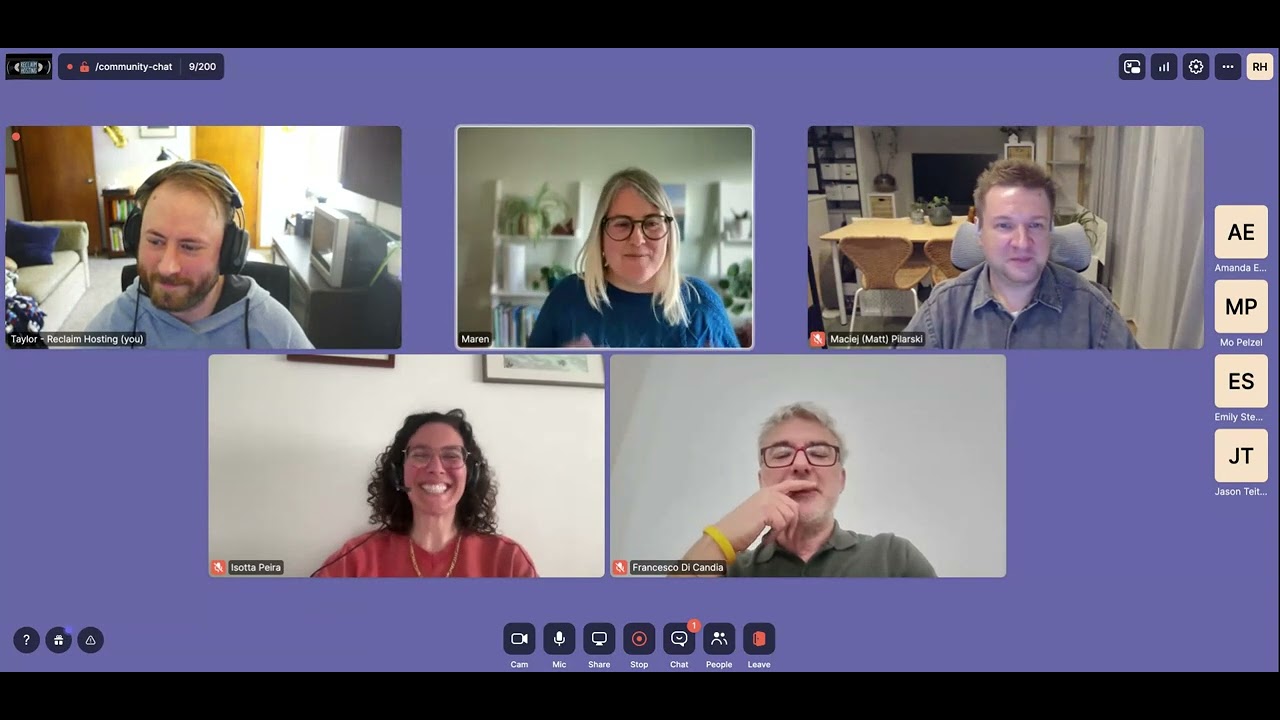
WordPress.org educational initiatives and how to learn with WordPress: Community ProfDev Session
Watch on YouTubeVideo summary
This community-focused session highlighted several key educational initiatives designed to expand open-source learning through WordPress.org, with a primary emphasis on the newly launched WordPress Credits program. Introduced following a successful pilot at the University of Pisa in June 2025, this initiative aims to democratize publishing and help students transition into professional careers by contributing directly to projects like translations via platforms such as Slack, GitHub, and Track. The program offers flexible modules ranging from 150 to 50 hours, allowing educational institutions to integrate these open-source contributions into their existing curricula for academic credit while providing mentorship that guides learners through the contribution process.
Complementing this core offering are two additional programs intended to foster broader community engagement and skill development: Campus Connect and Student Clubs. Campus Connect serves as an entry point featuring hands-on workshops led by professionals or organizers, often supported by funding and certification opportunities to encourage peer learning and competitions. Meanwhile, student-led groups known as Student Clubs enable peers to organize campus events around shared interests such as maintaining archives, running accessibility projects, or managing student newspapers; these clubs currently number 14 globally and are essential for building local communities of practice. To ensure educators can effectively lead these efforts, a new Faculty Training program has been developed to equip teachers with knowledge regarding open-source philosophy, WordPress governance, and specific pathways for contribution through its modular design.
The panelists emphasized that the long-term success of these initiatives relies heavily on scalability driven by mentorship and high student retention rates rather than just raw metrics like hours contributed. With over 60 mentors currently active in the network, graduates often remain engaged after completing their studies by organizing events or mentoring new contributors, which keeps the ecosystem dynamic and evolving. The collective goal for this expanding educational framework is to reach at least 22 institutions worldwide by the end of 2026, though the team has shifted its focus from quantitative targets to prioritizing meaningful impact within each community they serve.
The session concluded with heartfelt acknowledgments directed toward all attendees, speakers from the WordPress Foundation, and specifically Francesco Nauta for their participation in advancing these educational goals. The hosts encouraged audience members to express digital appreciation through applause emojis before the guests reiterated their gratitude for being invited to share insights on how universities can better support open-source learning environments. This collaborative effort underscores a commitment to creating accessible pathways for students globally while strengthening the WordPress community's capacity to innovate and preserve knowledge effectively.
Read the full video transcript
So, let's start with our few um kind of
just welcomes and um Taylor and I might
just introduce ourselves briefly and
then um we want to give a a quick
overview of what's coming up later this
summer. I'm Marin Deep and I work with
Reclaim as a consultant and we do a
whole lot of community outreach and prof
sessions and workshops and I'm really
excited to have our speakers here today
to talk about WordPress education
initiatives. Um, Taylor, do you want to
introduce yourself, too?
>> Yeah. Yeah. I'm I'm Taylor. I work at
Reclaim and uh I uh work on with our um
infrastructure team as well as kind of
our um we're we're a small company, so
we all do kind of a lot of things at
Reclaim. Um, and I'm really excited for
the session today because obviously, you
know, us at Reclaim, we're always um
thinking about how um uh these types of
tools, WordPress, open- source tools,
web hosting tools in general, can kind
of meet uh educational needs. So, I'm
really excited to hear what the
WordPress foundation folks are here to
talk about.
>> Awesome. Well, um, however you're
watching the session, whether it's the
recording or whether you're live with us
here in the room, we wanted to welcome
you all. Um, and we have a whole panel
of speakers with us today. Um, so in a
moment, we'll hand over to you guys and,
um, hopefully meet and have a lot of
discussion in the session today as we're
talking about these different
educational initiatives and how to learn
with WordPress. But before we do that,
um just to say that we have two more
dates in the diary for upcoming sessions
and like this one they are focused on
particular topics that we get asked
about a lot in our community. The first
one is coming up on May 20th and that
will be accessibility in action and
we're going to look at the editorially
plugin and also do a live review session
where we're looking live at questions
from the community look at a page and
kind of figure out the um things that
could be improved upon and our colleague
Alexis is going to join us for this
session and um and run you through this
demo and then at towards the end of the
academic year on June 16th, we're going
to return to a topic that we talk a lot
about, particularly as an academic year
comes to an end, which is archiving and
preservation. And we're going to look
at, you know, long-term archiving and
maintenance, but also kind of strategies
for when things wrap up and how to keep
what you want to keep and how to
responsibly dispose of what you don't
need anymore. So, that's a little bit of
a kind of house cleaning um session at
the end of the year.
Now for those of you who are joining us
maybe for the first time or welcome
back. Um remember that you can connect
with our community throughout these
sessions but also throughout the year.
We have our ATTE Discord server where
everybody is welcome and our events
calendar is always up to date with
everything that's coming up and if you
can't stay for the whole session or
you're watching the recording obviously
on reclaim TV.
Right. So these are um lots of ways to
connect with us and now we're ready to
hand over to our speakers. So I'm going
to stop sharing my screen and allow you
to get take over and maybe to kick us
off with we just go around the room and
introduce ourselves. So um Franchesco,
why don't you maybe kick us off with
introductions and then we go around the
room all the speakers and um when we're
ready.
>> Thank you. I'm Franchesco. Nice to meet
you all and u I'm involved in the
WordPress community since years ago and
I'm kind of organizer of uh some work
camps in Italy and in Europe. I'm
actually I'm one of the three global
lead for the World Camp Europe for the
next World Camp Europe that will be in
Krakco in 50 days more or less
and um and also uh couple of months ago
I was involved with from Mizota about
this WP credits project that started
uh yeah 10 months ago more or less and
now is growing up and is going to to be
one of the by me most important project
in the WordPress uh uh community and I'm
really really uh happy that I'm one of
the uh admin of this uh this project.
I'm involved in other thing in the
community but today I think that the
most important thing is that uh this
this project will be will be our the
most important thing
Thank you and welcome. Great to have you
with us. Um, do you want to um introduce
yourself next and then we come to M.
>> Yeah, sure. Uh, thank you so much Marin
for hosting the session and for having
us over. So, thanks a lot Taylor for
supporting the the session. Um, I'm Isa.
I'm based in in Spain, but probably you
can tell that I'm Italian. It doesn't
matter the language I speak since I say
hi Italian and yes [snorts]
and I've been around in WordPress
community since 2022. I work at
automatic and I'm sponsored to dedicate
full-time a week to the WordPress
foundation nonprofit project and I
currently lead WordPress credit credits
which is one of the four education
programs uh from the WordPress
community. So I'm excited to uh share a
bit more about all kind of things that
we we've been doing it with you all
today. Um thank you.
>> Fantastic. Great. And Matt, welcome as
well.
>> Yeah. Thanks. Thanks for having me. Uh
my name is uh Mache. Feel free to call
me Matt. It's the easier version, I
think. I've been with the Workers
Community since 2007, so it's been a
while. Uh but I actually started um
contributing around 2014. So that's been
a while. My first event was World Camp
Europe in Sophia and it opened my eyes
to to the whole community and how a
powerful concept it is. So since October
last year, I've been supporting uh ISO
uh with the credits program. Uh I've
been working for at this point for 10
years almost with with automatic. So,
it's been a while, but uh since last
year, like I've mentioned, since
October, I've been supporting Minnesota
fully with with the credits program, the
educational initiatives.
So, um thanks for having us tonight and
we're happy to share more details about
them.
Awesome. Well, welcome you all. I know
you're joining us all from all across
the globe. So, fantastic to [laughter]
have you with us. Um, if you want to try
bringing the slides back up um, and
sharing your screen, then I think we're
ready to jump in. And everybody in the
room who's joining us live, if you have
questions throughout, please post them
in the chat. Taylor and I will keep an
eye on the chat. And um, there'll also,
I'm sure, be some time for discussion
and questions um, later once we have
heard the presentation.
>> Of course. One sec here, please. Okay,
I'm receiving a thumbs up. So awesome.
[clears throat]
Thanks a lot. Um
have one uh well prepared um quick
overview of all the programs that we we
run but please feel free to share
questions, comments in the chat. We will
also have space at the end for more
discussion because we would also love to
hear from you if you have had experience
with uh opensource programs in education
which I believe many of you would. So,
okay, since um we're all um part of the
WordPress community, I'm going to I'm
going to be very very brief about okay
the importance the why why we want uh
WordPress to enter formal education
which is something that until now has
been done by so many teachers and warper
professionals around the world but it
was never back up with former program
from the WordPress foundation. So this
time last year um we got to a point
where with the within the foundation uh
it was decided okay let's give it a try
and try to have a more um a more
structured way to offer students and
teachers opportunities within our
communities.
It all revolve around uh the goal to
democratize publishing in a new way
because so far we always we all know
that what is the mission of WordPress we
never formalize it under okay why this
should be important for students why it
is important for students to understand
what is open source what is the
difference in uh having a website using
WordPress or using other uh other tools
What is the main difference between a
website like a website presence versus
social media for example and most
importantly we want to show students how
they can enter the professional world
after graduating. So we want students
regardless of what they're studying to
see that there are opportunities for
them to create their own career in
WordPress world and in a remote
environment even if they're not
developers which is still a a sort of um
mindset that we can find in many
students and and institutions.
Last year we when I say we I refer to
the WordPress community, the community
team and the WordPress foundation. We
launched uh four main programs WordPress
credits. I'm going to then explain uh
details of each one of them but we can
say that we divide in contribution
program. So WordPress credits focus on
contributing to WordPress, contributing
to the contribution teams, WordPress
campus connect and in this case we talk
about workshops happening on campus
where students learn WordPress skills,
WordPress students clubs which is a way
to enable students to organize their own
event on campus. And so this way we want
to encourage the peer-to-peer learning.
And then faculty training which is a
program uh that aim to enable teachers
to run and lead WordPress education
programs for their students.
Um WordPress credits was launched in um
June. Last year it was announced rather
than launch in June 2025 at work camp
Europe and we had the first pilot with
the University of Pisa in Italy. The
pilot included only students from
translation and communication
and we have a few student testing the
testing the the curriculum testing
uh processes and helping us building the
structure itself. Um the
main part of this program is that in in
addition to teaching students WordPress
skills because we help all students um
gain basic WordPress skills and setting
up for many of them their first website.
What we want them to do is to show them
that they can train other types of
skills by contributing to WordPress.
This is why we piloted with the students
of translations to show them that hey
you might not know that but you can join
the WordPress community translate
WordPress and see that your translation
are immediately available for thousands
of users uh using WordPress in your
language. So this is uh this is the
project we took with this program. Uh it
started at the beginning. We launched a
150 hour program and the idea was to
facilitate the internship experience for
students who are looking for something
different. Um we received a great
feedback from diverse types of schools.
So we started receiving requests for
different like to different modules and
to adjust to less fewer hours or more
hours. So right now we are also piloting
a module of 50 hours. So for schools uh
colleges that just require students to
complete 50 hours of practice within two
or three weeks. And so we are we are
piloting this format. The students are
paired up with mentors from the
WordPress community and so they have
always somebody with them helping them
navigate the contribution uh the
contribution spaces because students are
requested to be active on Slack of
course depending on what type of
contributions uh they might be um active
on GitHub or on track. So they need uh
they need to learn how to jump from one
space to another and also how to
communicate and work in a remote
environment. And what we ask from
institutions is to recognize the time
that students have spent on this program
either as credits or as part of their
curriculum. So if a if a college or a
school they require students to complete
a specific amount of hours on um
practice work in exchange for uh for
credits. This is a way for them to
introduce this program to the students.
In other cases, schools are embedding
this program into a course already
active. So this is this is very
flexible. We intentionally build it in a
flexible way. So depending on the school
needs this could fit in one approach or
another. And for the students um the
main benefits from mentoring this
program is that they would be also
trained at different skill sets because
the the program is divided into
different steps and in every steps there
are actions required to students so they
can be more prepared to enter the job
market once they graduate from from
college or from schools. We
intentionally ask them to be proactive
in taking specific actions. We teach
them how to work in a reliable way
without micromanaging but also teaching
them how in a remote environment in a
company um they would be expected to
share weekly updates. We request them to
to manage their own project. So they
learn time management, project
management and another other
transferable skills that are going to be
relevant in their life even if they
decide not to continue their career in
the WordPress world.
I'm going to pause a second in case
there were some comments or or question
also feel free to unmute yourself or
Marin if you want to jump in and stop
me.
Um and we were just posting the link to
the WordPress credits in the chat as
well. U one question I had was around um
you know at what sort of level like in
terms of the program for students what
when in their educational journey do you
think does this fit best like is this
mainly aimed for undergraduates or you
know like what when is the what is the
level best?
>> [sighs]
>> um more than a specific level. We're
seeing that it experience changes a lot
depending on the student mindset.
Meaning that if somebody is
um proactive or they are okay with like
taking step outside their comfort zone
and trying to communicate in such this
person big environment like the
WordPress community this is where they
have mo the most benefit because we've
also had some very very young students
with zero experience with WordPress.
doing incredible amazing job with great
results. And we've also had um older
students with excellent academic careers
and yet they faced many challenges
because they they couldn't um they
couldn't take the step and for example
ask a question in a channel on Slack and
so they they felt a little bit blocked
by okay if my mentor is around and I
need something I can proceed and I can
progress rest easily, but if I'm left
alone, I'm stuck. So, this is
Yeah.
>> Oh, that's really helpful. Yeah.
>> Yeah.
>> I I I think I think
>> Yeah. I think we also try to uh figure
out that first with the in institution
when we do an onboarding call with a
university or any institution that we
start the collaboration try to figure
out what would be the best students
group the age group to get started with
because on on some universities uh the
first year for the students can be very
busy with on boarding into the the the
the courses that they participate in. So
we don't want to also add the credit
program on top of everything what they
they do. So when we do initial calls
with those institutions, we try to also
figure out the best approach uh when to
introduce the program that will work
best for them and of course for the
students.
>> Great. I know Franchesca wants to come
in here as well.
I'm I like to to to
say that this is not only program about
WordPress, but it's a program about how
to to be in the open source world and
how to use tools. So the students are
able to use tools like Slack to connect
with other people to ask things and to
to be involved in a in a big project. So
may maybe he start the student starts
doing translation that is not WordPress
related at all and then they they
discover that they are able to to to
programming or stuff like that. So this
is this is important because it's a kind
of big project that grow with the
students. It's not only about about
WordPress.
>> Well, thank you all. That's really
helpful. Um I'm hoping if anybody else
wants to jump in with a question, they
just post it in the chat or raise your
hand. But for now, Esot, I'm going to
hand back over to you.
>> Okay. Thanks.
All right. So, let's jump to Campus
Connect. Campus Connect is a event
series
uh supported driven by the WordPress
community team. So the same team that
supports work camps and meetups. Um this
was born by an initiative from the atm
community in India back in 2023 when the
community was exploring with event
organizers what type of types of new
event formats could help the community
reach new and different audiences that
weren't covered almost at all with work
camps. And so they they tried out
workshops on campus on multiple days uh
where the commitment uh with the schools
it's a little bit different that what we
usually have when we organize a work
camp for example on on campus. In this
case for campus connect we require a
deeper collaboration with the with the
teachers and the idea is to provide
students with um workshops hands-on
activities on campus facilitated by
WordPress professionals. It could be uh
one day half day or multiple days
events. And the idea is from students to
be working together and learning from
professional. The topics it they may
vary because depending on the schools
their needs and the students experience
with WordPress. It can be a workshop
absolutely for beginners or it could be
a very advanced one. It depends on the
need. um for this type of events uh
there to organize and to apply to
organize this type of events is not
requested. Preview experience organizes
WordPress WordPress event. There is an
application form to fill um it can be
filled by a WordPress organizer who want
to organize something locally in their
in the college they have collaboration
with or it can come from a teacher,
somebody who has never been to a war
camp. they found out about this
opportunity and then can apply. By
applying
they have the the support of the
WordPress community team, meaning that
they would receive uh a website, they
would receive funding to cover
eventual needs to offer, I don't know, a
little bit of food, snacks or or drinks
for the students during the workshop.
And they would also rece all students
would also receive if needed a
certification of of attendance. And for
the institutions uh
we want we're trying to encourage and
push more institution into organizing a
like an official campus connect when
they're thinking about offering
workshops to the students. also because
this is a great uh way to introduce
students to like the next steps in their
career. So if they are if they are teach
learning WordPress fantastic they have a
chance to hear from multiple voices they
might be um they might be learning from
their teachers and additionally
WordPress contributors who have been
contributing to such a huge program for
many years. So this is also a way to
offer schools um a way to enhance the
quality of uh of the programs and the
teaching that is provided to the
students. And for students well the
feedback that we're getting so far is
that first of all it's fun because
usually they spend like the normal
normal class uh classes at class time is
different. So they get to spend time
with their peers doing something
different, hands-on and also in a very
practical and [snorts] fun way. And also
um I like that you you mentioned earlier
about students competitions because in
many cases at the end of this workshop
there are also competitions among
students and so it becomes also
something um a little bit more dynamic
than usual uh workshop where somebody's
facilitating and others just following
along.
Um, now I'm gonna stop a second here to
see if probably Magic wants to jump in.
>> Yes. What is also great is that the
campus connect uh goes hand inhand with
the credits program uh because it can
work both ways. Uh the institution can
start with the campus connect event and
lay ground for the credits program uh in
the future. introduce the students to
the credit program which they can start
if they express interest and at the same
time students who participate in the
credit program uh might have a need to
actually organize a campus connect event
to go deep deeper or explore any
particular topic they they would like to
dive deeper and thanks to that event and
the community engagement we can bring in
local community members and specialize
in various topics or particular topics
the students would like to explore and
connect them and build this relationship
that uh
strengthens those this this bonds with
the community and introduces even more
the students to the wider WordPress
community and the ecosystem. So it's
both of them uh working alongside there
are various ways um how the students get
involved in the the educational
initiatives but overall they they they
support each other.
>> Oh that's really interesting. And
Franchesco I know you want to come in as
well. So um
>> yeah yeah yeah I was um um in next week
I will have a campus connect in in Pisa
University that maybe can start having
uh can transform to have some people
some students in WP credits. This is a
demonstration how this kind of events
are connected. This kind of products
sorry are connected because when I go to
to a university with a campus connect
event I can reach more students and also
universities
um teachers and uh organizers and admin
that can be interested in the credits
program. So the campus connect is a kind
of uh way to have more people more
students in the in WordPress credits.
>> Oh, that sounds really interesting. And
I'm wondering like because many of our
um administrators and and maybe even
some here in the room um you know they
they are busy people and they have a lot
going on each term. So um if they're
interested in in learning more sort of
how long is the application process and
what would you say you know in terms of
um like the the time scales how long
does it take to kind of organize um
something like that typically?
>> Well applications are um are vetted and
processed by volunteers. So I always
recommend to apply with at least
1 month and a half or two months and a
half in advance for
the the recommendation is 3 weeks. Now
being absolutely honest, it's volunteer
work. So if you already know that you
want to have uh you want to have a a
workshop
in your classroom on for a specific like
you know already right now that you want
to have it in June, I would apply the
sooner the better because uh most of the
work is on the volunteer side rather
than the the organizer. Still if all or
all applications arrives at the same
times and volunteers have to manage by
like date h you already know that you're
going to you're going to have an event.
I would recommend the sooner the better.
Um if not in general between five and 3
weeks you should be you should be fine.
A good news about it is that we are
working
different contributors
um we are kind of joining forces to see
how can we reduce the um the timelines
how we can make the application process
smoother for those who applies and those
who are processing the application
because this is a very
a very delicate Great uh aspect of
organizing event is making sure that
whoever is uh representing the WordPress
community by organizing event is also
somebody who respect and embrace the
code of conduct like safety for those
who participate in events is a main
point. So when uh uh when we only had
war camps, one of the requirements for
organizing war camps was to have been
already an active member of the
community. And so it would be okay
somebody who already have taken uh
trainings on uh like community
expectations, the standards um and the
code of conduct. Now since we open up to
also organize events from people who
have never been part of the community uh
of course it is important to vet their
online presence and ensure that we're
not authorizing like approving people to
host events under the WordPress
community and maybe it turns out that
there are people whose their online
presence doesn't align with the code of
conduct.
>> Oh that's a good point. Yeah, I hadn't
appreciated that. Thank you for um for
telling us more about that. That's
really helpful. Um okay, any other
questions or comments before we move on
to the next initiative?
Okay, I think looks like we're good. So,
um let's continue and then we'll have a
bit more question and answer time at the
end as well.
>> Okay. Okay, sounds good.
So let's move on students clubs. Okay.
Uh [snorts] for students club what
we what inspired us was uh to allow
students to recreate sort of meetups
environment. So a place where students
would be able to organize events and
activities for their peers. So with
WordPress credits we see students
working uh with experienced contributors
campus connect we have professionals
facilitators teaching students WordPress
with students club we want the students
to be the facilitators to be the
teachers and at the end to becomes
community leaders so be able being able
to create and grow their own communities
on campus.
Um
this uh program was launched um at first
uh paired with campus connect. So uh in
occasion of a campus connect event uh if
students were interested they also would
have launched a student clubs but then
we saw also interest from other
institutions and students who
didn't need um a workshop at that
specific moment but who wanted to uh
give it a try and create a club. We're
also seeing this on with with a few
WordPress credit students. So they
joined the community entering from
another erh another door and they
thought hey but I would love to create a
space on campus to share with other
students what I'm doing. If there are
multiple students from the same uh
college they can also gather and work on
their WordPress credits program
together. And so also as a way for them
to um
to become leaders or being able to learn
and teach um per from peer-to-peer. In
this case uh the application is is very
easy and the students we require when
the contact of one faculty member
because also students of course they're
at some point they're going to leave uh
they're going to graduate. So what we
want to ensure is a continuity and uh
they get a website of course to create
uh to create and brand their clubs to
announce their events and for the
activities they can do any type of
activities uh that they want. Of course,
if everything under uh respecting the
code of conduct and the nonprofit
um the nonprofit goal of of the events
for the from the institutions we ask
them to provide a space of course for
the students to gather
>> and I see match face and so I understand
[laughter]
>> I cannot hold it. Yeah. Because uh what
is amazing about the students club it
this feels like a very organic and
natural form of starting something a
group of friends group of people who uh
is interested in something and would
like to build something together. So
this this is a perfect way to get
started with uh all the uh educational
initiatives. uh they share an interest
they would like to work together on uh
something. So they uh create a club and
then they spread the they they energy
around particular project that they
decide to work together and the next
step is growing all those things bigger.
But this is very uh natural process to
get uh people together and start working
on something amazing in the future.
Are there already any um student clubs
that have been established or is there's
a new initiative?
Yes, there are already um I'm going to
check the actual number but there should
be already between um more than five
five to 10 clubs. I'll be able to tell
you in a second.
Erh but yes this started well campus
connect was launched more than one year
ago and alongside with campus connect
the first clubs started to uh to pop up.
So
>> Oh wow fantastic. Well, once you check
um we have a comment in the chat as well
from Alexis who suggested that um these
initiatives are could really well align
particularly for admins who are using
domain of one's own um to kind of
explore as an introduction to WordPress
when students are learning how to use
the NUC panel and also especially for
campuses who are having issues with
bringing student interest in kind of
attracting more student engagement
and kind of being a stepping stone for
what we call our um domain of one's own
zone program. So that sounds really
interesting. Thanks Alexis for that
comment as well. And um yeah, we did
want to mention as well, we um Alexis
actually spearheaded like a a women's
showcase recently and we have our
student showcase coming up that's
launching next week and we have a whole
range of student projects who I think
this could really um work well with. We
um we had like a student newspaper for
example um that were running um their
own kind of newspaper and also um a
student project about history um where
they were building kind of an archive
for their community um as well. So
there's a um a whole range of student
projects that we've started to showcase
and I think the student clubs could be a
great way uh for some of these project
groups to kind of you know um get more
credit for their WordPress activities
and kind of come together. So that
sounds super interesting
for sure.
>> Yeah. Sorry. Yeah.
>> Oh no, don't worry. I didn't even
thought when like all these programs
were popping up about um like students
journals and uh these type of activities
because coming from Italy student clubs
and extra like class time activities on
campus it's something absolutely uh
unfamiliar to me. I started learning
more about all these type of activities.
Well, one year, two years ago when we
were discussing uh these these programs
and there are so many like it it blew my
mind to see how in different countries
students are empowered to create and uh
and collaborate together. While in
Italy, at least in a public system in
Italy, it the system is or was extremely
top-down. So you go to school, you stay
in class, you listen and then you go
home, you study at home alone and then
you get back and you take an exam. So I
love to see that the situation is
completely different in in other
countries and there are lots of of
opportunities for them and they're
actually encouraged to pursue these
opportunities.
Oh, thank you. Yeah, that's really
inspiring. Yeah, I think um we have a
couple of student radio um initiatives
as well, student newspapers. We had a a
site called the diplomacy lab. Um and
also um as I say, a few other uh
projects around accessibility and and
students teaching other students. Um, so
I think there's definitely some um some
opportunities to approach projects um
who to learn more about these
initiatives. So that sounds exciting.
Um, awesome. Okay, so thanks everybody
for comments and questions. Um, have we
got one more initiatives to cover? Is
that right?
>> Yes. Yes, we have. I dropped a message
in the chat because I checked and I have
to correct myself because we currently
have 14 student clubs active. So this is
uh this is way more than what I
mentioned at first. Okay. So let's cover
the last point. Faculty training. This
is a brand new program. It was launched
in the past weeks and the goal of the
program is to enable teachers to run and
lead WordPress
official WordPress communities
initiatives on campus or with their
students. So basically um they go
through a training divided into
different topics. So they can learn
about contributing to WordPress if this
something that they are new to. They
learn how these the different programs
works deeply. So the the different the
differences between campus connect
student clubs, WordPress credits. Um the
goal is for them to understand what
could be a better fit for the students
or depending on their needs, the
different needs of the students, what
type of programs they could uh they
could start offering them and also of
course a way for all teachers out there
who are interested in collaborating more
with the WordPress community to also
enter more active actively the community
spaces if they are already teaching ing
WordPress, but maybe they're not on
Slack. So, they're not on the WordPress
community Slack and they're not uh
they're not talking, chatting,
contributing, and creating with with
other contributors.
This is uh this was the last program
launched and also the idea is to bring
in more teachers who are already
teaching WordPress to their students and
help them find new ways to keep doing
their work of course and and find
inspiration also from what others have
been doing and hopefully also help
bringing together more teachers around
this program so they can also uh share
feedback uh learn from each other get
inspired.
I'm going to stop in case there are any
question or anybody else wants to jump
jump in.
Well, I'm sure um Taylor might have some
questions here because the uh educator
uh training is one of the things we're
really interested in and you know we
want to really promote. But I was very
excited um about the the range of topics
covered and um yeah that sounds
fantastic and you say this is a a new
initiative alto together like I um I was
just checking out the link that Mark
puts posted in the chat and there's a
lot of um new offering there.
>> Yeah. Um I'm sure if I'm going to wait
in case match or Franchesco wants to
jumps in. If not, I'm going to
>> um Yeah. So, basically the link that I
shared is part of one of those pathways
that is presented in the um um
facilitator training because there are
two two uh ways how to um get engaged in
that. One pathway is the safe uh uh
guided course that I shared the wing uh
link to. The other one is someone that
has already existing knowledge and like
would would like to um share their area
of expertise and get connected with us
and also help us to with all those
educational initiatives.
>> Yeah. [snorts and clears throat] Um
thanks Met. Uh about the the course,
yes, it is brand new. uh it was launched
a few weeks ago and we started
collecting
content and think about the possible
structure uh and the goal um of this
course when we saw that the other
education programs were growing fast. So
we thought about um solving two future
needs. Once what happens if we keep
getting students, more students, more
students, more student and there are no
more volunteers around. So the community
is huge but it's not uh it's not
endless. So what if in 6 months in 12
months we're going to have not 300
students on WordPress credits but
10,000 at the same time and what if
there are institutions wanting to or
students requesting to have more
workshops
we need to find a way to enable more
people running these these programs
worldwide. So on one on one hand
>> [snorts]
>> um all the I'm going to sorry I'm going
to uh stop sharing I'm going to share
in
another tab. Okay going to share this
tab so you can see what I'm looking at.
So the course as you can see it's very
complete and it covers everything that a
person who doesn't know yet how to lead
any of these programs
needs to know needs to learn in order to
start uh to start offering this to the
students. So on one side we were
thinking about okay the sustainability
of the education programs on the other
end we were thinking okay what if there
is a college out there who like where
teachers and the organization they
really want to run these programs but
they don't want necessarily to uh be
told when they should start who are
going to mentor them or if their
students have needs that we don't know
about and so they prefer the students to
work only within like a specific circle
of people. Okay, this is this is
completely fine but how can they do it
if they don't know how to guide the
students or how to lead this this
initiative.
>> [snorts]
>> Um this program is uh of course uh it's
long is detailed and it covers
everything that is needed starting from
okay open source what is open source
what are the main um like the philosophy
the collaboration how does uh governance
works in open source and in the
WordPress project what is WordPress
they're going to see WordPress related
skills they're going to learn about
contrib contributing to WordPress um the
education programs their impact what
their aim to what are the results that
we're seeing from this and then they're
going to deep dive into each program of
course we expect diverse um type of
profiles to come in here so if you're if
you're a teacher and you already work
with WordPress you know what is open
source you know WordPress skills okay
you can just skip the part that are not
relevant to you and jump to what you
want to uh what you want to learn. You
don't have to do all the models at once.
You can start with what interests you
the most right now and then in six
months in four months you want to okay
uh learning more about another program.
Okay, you can go there and just cover
the part that interests most you.
Okay,
I'm going to going to get back to
to the presentation. But uh that was it.
Uh we we covered why this program are
important, what they bring to students
and also to the teachers involved. And
at the end here, we already shared all
the links, but in case anybody want to
take a picture of here, we have uh the
same links that Marin share in the
shared in the chat. So,
thank you so much.
>> Oh, fantastic. Oh, thank you everybody.
Um Taylor, sorry you were jumping in
there.
>> Oh, yeah. I just I I had a couple
questions. Yeah, thank you. Thank you so
much. Um this is a really amazing uh
program to hear about. Um and I'm I'm
kind of curious um uh kind of my main
question and is I'm curious about if you
can share anything around sort of um
sort of goals for the program in terms
of like I understand kind of some of the
like what you're hoping folks can get
from it. That makes sense to me. But I
do I'm kind of curious about the scale
you all are kind of hoping for with this
because um I think that kind of
I don't know if you have any like
literal numbers or things you can share
or whatever but but yeah I'm just kind
of curious about that because I see some
folks um you know the the uh
participating institutions right now but
I that's that's kind of um one thing
that is um interesting to me is how do
you all um imagine that might uh scale
over multiple campuses and things like
that.
>> Of course, this is a very relevant
question. Um for WordPress credits, at
the end of last year, we set a goal for
our team to reach by the end of 2026 at
least 22 institution globally. Er,
we were probably miscalculating
because we we are already we already
have almost well 20 not almost we
already have 20 institution confirmed
and it's only April um but more than
numbers actually because at first we
focused a lot on numbers of institutions
number of students number of hours of
contribution
put into the program and now we are
reconsidering a bit
not like like numbers of course are
important. We still want to reach more
students and also have um
have the program active in different
regions.
But we're also trying to when I say we
in this case I talk I refer to the admin
of the program and also the whole team
of mentors. We have more than 60 mentors
collaborating and with us and following
students and so we are trying to
understand
better what are the types of
contributions that are meaningful to the
students and to the WordPress project
more than just okay pure hours because
you can be in a space for 10 hours and
have an impact an enormous impact on so
many people or in so many aspects. of
the project and you can also stay around
500 hours and just be there but not
being active. So this is this is one of
the points that we are currently
learning from and we're trying to figure
it out how
ours can translate into meaningful
contribution to WordPress itself. But I
see that Franchesco wanted to to add
something. So I'm going to
>> yeah sorry I was I'm only want to say
that uh the most important thing is that
some of our students that already
finished our course are contributing in
organizing events.
H I have a students that finished the
course and now are organizing work camps
and are in the organizing team of work
camps that or other students that are
still contributing to to our community
translating or uh doing uh um social uh
uh stuff for our event. So as I is says
most important thing is that people stay
around the community even if they finish
the course. It's the the the goal of
this kind of uh um organization
and now we are we are having this kind
of students that even they finished are
still around our community
>> and uh th those students will also help
us to shape the future of the project uh
because they allow us to stay relevant
up to date with what's happening.
um they bring new perspective, new
approaches, completely different mindset
to how to organize the community or how
things function. So uh not only they
learn from us uh about how the community
works functions but uh we also learn
from them a lot how to adjust and modify
and grow the community so it stays
current and relevant and it's keeps the
project basically alive.
>> Yeah, that's amazing. It might even be
kind of cool to over time kind of keep
track of of sort of student
contributions to this actual initi like
itself. Not even the broader which is
obviously the whole point but um you
know sort of in in an open ed education
kind of way of you know have we had
people contribute to the course and
learning materials and things as well.
>> Well, we're nearly out of time. Um, so
this is the the moment to ask any final
questions or comments and also give our
panelists an opportunity. But I just
wanted to say thank you. It's it's been
so inspiring to hear about these
initiatives and you know all of us
working to engage the coming generations
in open practice, opensource
technologies. you know, um whenever
Taylor runs workshops around things, um
well, we're hoping to get, you know, the
next generation um literate in digital
um ways of being open and being safe. We
always kind of really appreciate hearing
from other initiatives and kind of
hoping we can promote those as well. And
I'm sure everybody in the room feels
that as well. So, any final comments,
Taylor? Any last bits from you before we
just give a round of applause and and
draw things to a close? No, I don't
think so. I just thanks so much um to
our uh uh folks from the WordPress
Foundation who were able to join us
today. Really appreciate it.
>> Yeah,
>> thanks so much.
>> And thank you everybody who's tuned in
and learn the live recording. If you are
here, you can find your applause emoji
so we can show some digital
appreciation. And um yeah, we just want
to say thank you to Franchesco Naut and
thank you so much for joining us guys.
It's been really fantastic to have you
with us.
>> Thank you for having us.
>> Thank you for for having us.