Video summary
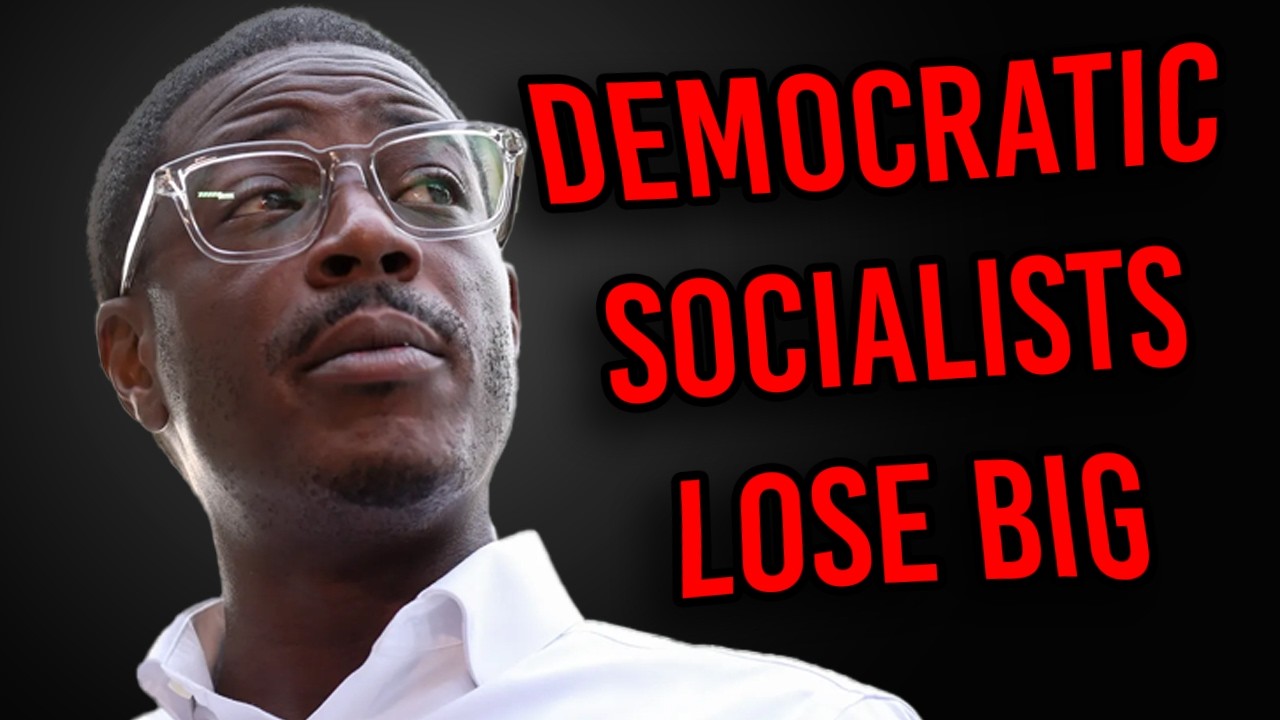
This week saw significant primary elections across the Midwest, particularly in Minnesota and Wisconsin, offering a clear window into the shifting dynamics within American politics. On the Democratic side, there has been a noticeable surge in enthusiasm for far-left candidates affiliated with groups like the Democratic Socialists of America (DSA) and figures aligned with Bernie Sanders and Alexandria Ocasio-Cortez. However, this trend faced a notable setback in Wisconsin's gubernatorial race, where moderate Democrat David Crowley defeated the favorite, Francine Hong, who was backed by socialist leanings. Despite polls predicting a victory for Hong, she lost narrowly without even securing endorsements from major progressive leaders like Sanders and AOC, highlighting just how far left the party has moved to alienate its own establishment base.
In contrast to Wisconsin's upset, Minnesota saw progressive Peggy Flanagan win her Senate nomination, illustrating that while the Democratic Party is trending sharply toward socialism, it is not a one-way track where socialists dominate every election. The political landscape in these states remains heavily influenced by intense hostility toward Donald Trump and his poor favorability ratings among voters who might otherwise lean Republican or independent. This anti-Trump sentiment serves as the primary engine for potential Democratic success in November, even though overall public support for Democrats is currently low due to dissatisfaction with issues like inflation and economic management. The speaker argues that while Americans dislike both major parties, they hate Trump more than Democrats, which provides a crucial advantage for Democrats despite their unpopularity on other fronts.
Looking ahead to the midterms, the speaker predicts a "blue wave" driven by high Democratic turnout motivated by hatred of Trump rather than overwhelming love for the party itself. The analysis suggests that while Republicans may suffer from low voter enthusiasm and potentially lower turnout among their base, Democrats will likely win but not by an overwhelming margin because they lack broad national support. This is evidenced by the drop in the Democratic lead over Republicans in favorability polls, which has shrunk significantly since 2018 when Democrats held a ten-point advantage before gaining forty House seats; today that lead stands at only three points as voters increasingly reject both "woke" culture and socialist policies for failing to address practical economic concerns.
Ultimately, the transcript concludes with a sobering assessment of the American political binary: two parties that are widely disliked yet destructive in their current forms leave citizens feeling stuck between ineffective choices. The speaker emphasizes that simply being productive or innovative does not automatically translate into political viability; voters ultimately judge candidates based on their ideas and character as leaders. With Democrats currently dominated by voices pushing toward socialism rather than centrism, they risk further eroding support among the American public who are frustrated with rising prices and economic instability. Unless the party shifts back to more moderate positions that resonate with mainstream values, it is unlikely to regain significant traction beyond what anti-Trump sentiment alone can provide in upcoming elections.
Read the full video transcript
this week or yesterday, there were a
series of primaries in uh in the Midwest
uh you know, primarily in primarily in
Minnesota and Wisconsin.
And um you know, this is where the
Democrats and Republicans choose their
candidates. And more than anything, it
gives us an indication of how the
parties are trending, right? uh we saw a
a big increase a big increase in um
kind of far-left candidates on the
Democratic side. Certainly, it seems
like the energy, the enthusiasm is with
the candidates affiliated with the
Democratic Socialist of America, the
anti- you know, rapidly anti-Israel
uh and and aligned with the Mdani AOC
Bernie Sanders wing of the Democratic
Party. Uh yesterday finally they they
took a bit of a hit uh in uh in uh where
was it in Wisconsin where in I think the
um gubernatorial race uh in Wisconsin a
um David Cwley who is considered a
moderate Democrat an establishmentback
Democrat uh defeated the favorite who
was a democratic socialist Franchesca
Hong. So, um, uh, it was really, really,
really close, but in spite of what the
poll suggested, which was that Hong was
going to win by a relatively big margin,
uh, Kohley won. Now, I I don't know. I
don't think we should make a big deal
out of this. Um, because
a few things, one, uh,
Francisco Wong was way out there on the
left. Way out there down the left. So
the fact that she came within point4
points of the guy who won
I mean it again suggests this general
dramatic shift to the left within a
democratic party. uh and I don't think
this is necessarily true of all people
who vote Democratic, but it is true of
the people who are excited about voting
Democratic and therefore the people who
are voting in the primaries and the
people who are kind of shaping, I think,
the future of the Democratic party.
So, uh Francisco was way off to the
left. She was so far to the left that
Bernie Sanders and AOC didn't actually
endorse her. So she got within point4
points
without
even I mean she left by a little bit
without the endorsement of the big big
names within kind of progressive
far-left
politics. So so that's how far left the
Democratic party has gone. U on the
other hand in Minnesota a progressive
Peggy Flanigan won the Democratic Senate
nomination. Um, and again, Minnesota and
Wisconsin, while they are sometimes
could go either way, Democratic or
Republican, they are mostly Democratic.
And given given the uh hostility in
these states towards Donald Trump and
Donald Trump's just just abysmal
um, you know, favorability right now, I
think these states are going to go
Democratic uh big time in um come uh
come November. Uh, let's see. A a a
crazy Republican. Can't even believe
this guy actually made it to the
primary, but he was so uh you know, not
only did he make it to the primary,
he got um he got um
he got Trump's endorsement
and lost. That's how good he is. That's
Mike Lindell. Those of you who don't
remember Mike Lindell, Mike Lindell is
the pillow guy who used to do the pillow
commercials. Remember Mike Lindell?
Anyway, Mike Lindell, crazy Mike Lindell
who who was at the forefront of the u
you know conspiracy that the election
was stolen from uh from Trump in 2020.
He led the troops.
uh he even uh he did this u he made this
declaration and if anybody could show
him I can't remember how it exactly
phrased but it was something like if
anybody could show him that uh you know
the data actually suggested that Trump
won uh and could could could uh could
demonstrate that his accusations of
fraud the specific accusations that
Lindell had made were all false he'd
give them $5 million Anyway, somebody
took him up on that. Actually, a
Republican
from California who I know. And um
Lindell refused to give him the $5
million. It went to court and uh and I
think the the uh the court declared that
Lindell owed him $5 million and had to
pay him. I think it then went to appeal
and maybe it was reversed on appeal. But
um yeah, I mean Lindell is a complete
nutcase.
A complete nutcase. Maybe he's an
inventor, but he's a nutty inventor. And
when it comes to politics, the guy is a
cook. Complete and utter cook.
Anyway, he lost. He lost. So, um, this
is a case, a rare case, a rare case in
Republican politics where Trump's
endorsement didn't actually help. Uh,
well, it helped because he probably
would have lost by a much much much
bigger margin.
Real Spark says, "Shouldn't objectives
who believe in productivity support Mike
Lindell?" That seems like a little bit
of dropping the context
as a businessman. Yeah, cool. Good for
him. But as a as a as a governor, as a
politician, the fact that he's
incredibly productive, I don't support
Trump, even though Trump maybe uh you
know, made a lot of money in business.
Not sure he did. Uh, I I you know, you
don't support businessmen automatically
in politics because they're businessmen.
You don't support inventors
automatically because they're inventors.
You don't support smart people
automatically because they're smart. You
don't support productive people
automatically because
they're they're productive. In politics,
you support people based on their ideas
and their character. what kind of
governor, what kind of senator, what
kind of congressman you think they will
be.
So again, um
Mike Lindell is a complete nut job and
while maybe he can he he he he invented
some fabulous pillow and maybe he's good
at sales, the guy's a nut job and I
wouldn't don't want nut jobs in
politics. We've already got one in the
White House and I think that's more than
enough. more than enough. Um, so yeah, I
mean the left is not uh, you know,
dominated by uh, socialists
indefinitely. It's not a one-way track.
They're not winning every single uh,
primary election. And Trump is not
getting his way in every single
election. Uh, mostly left is moving to
the left and the right is solidified
under Trump. But uh there are exceptions
and this primary yesterday uh showed
that um
all right let's see uh
the election in November I I you know I
it's hard to tell exactly what the
numbers are going to be in terms of um
wins losses and so on. uh primarily
because
you know Congress in particular the the
House of Representatives in particular
is uh district by district and we would
have to go in and analyze district by
district. So even though I think right
now people hate Democrats
but the thing going for Democrats is
people hate Trump and Republicans even
more than they hate Democrats. But
Democrats are not supported. The
American people do not support
Democrats. This is why there's going to
be, I think, a a blue wave. There's
going to be a Democratic victory, but
it's not going to be overwhelming
because there's just no overwhelming
support for Democrats right now in the
country. I mean, and the more they shift
left, the more they shift towards
socialism, they more the more they shift
towards just being wacky, anti-American,
uh, the less support there will be in
the country for them. So, Democrats are
not popular. The only thing that is
going to drive Democratic success in
November is that Republicans are less
popular. I also expect that the midterms
will have relatively low turnout,
particularly among Republicans. So, I
think what's going to happen is the
Democrats,
particularly on the far left, are super
enthusiastic
and they're motivated by the hatred of
Trump and and by their sense that they
can be incredibly successful.
So, I think you're going to see a uh
significant advantage in the midterms uh
for the Democrats when it comes to
turnout. Um,
while Americans seem to hate the
Democrats and hate the Republicans, the
Democrats
are energized and enthusiastic. And you
can see that in the primaries. Many more
Democrats are coming out to vote in the
primaries than our Republicans. the the
the Democrats uh think this is an
opportunity for them to to really uh you
know establish control of a Congress but
they also think that particularly the
fall I mean the far left thinks this is
the opportunity to take control over the
Democratic party. So uh one of the
consequences of the Trump presidency one
of the many really bad consequences of
the Trump presidency is the lurch to the
left. you know, they just as Obama
there's a sense in which Obama created
MAGA.
Um,
Trump is creating DSA, the the the crazy
leftists.
Is the video buffering? Did somebody say
the video is buffering? I have the best
internet connection I've ever had,
better than home, right here. And it's
wired, so it's not even Wi-Fi. So, if
this is if this video doesn't work, I
don't know what works, right? This is
this is like the best video ever. Should
be. We'll see. Uh we'll see what the con
if the connection holds and how good it
is.
All right. Anything else? Um
I mean,
among registered voters, Democrats are
favored by three points over
Republicans.
Uh but once you ask people how motivated
they are
or put it another way once you ask the
people who are vote who who are
motivated to vote many many more
Democrats are motivated to vote than
Republicans. Again, both parties are
disliked and and Democrats, in spite of
unbelievable
bad ratings for Trump,
uh, Democrats are only leading
Republicans by three points. They should
be leading by a lot more than that.
But once you look at
those who are certain to vote, right,
absolutely certain to vote, motivated,
uh they lead 53 to 45, so they lead by
eight points.
Um
so uh
I mean I think the bottom line is in
spite of Trump, Iran and the economy,
Americans
you know, don't favor the Democrats
because the Democrats don't have
solutions to any of those problems.
So,
you know, this is u
this is again that the challenge we face
in this country. We have two incredibly
um
we have two parties that are that are
not liked that are ineffective that are
destructive that that are you know
hurting America and there's just no
choices. It's everybody said it's a
binary choice. It's a b yeah it's a
binary choice. she got stuck between
these two and I think given that given
it's a binary choice um
you know Democrats are likely to win but
they won't win big. I mean last year uh
you know no in 2018 in 2018
uh in Trump's first term Democrats
gained 40 seats in the House of
Representatives
and they had a 10point lead
in advance of that election. Now the,
you know, they have a what a a a um
a three-point lead.
So, um
and and again, the reason is that that
they're making, you know, that they're
so bad. They're just so bad that
Americans see it. It's it's why Trump
won the second election. It's cuz
Democrats was just with all woke and
everything so bad and now they're
replacing woke with socialism and that's
not playing well. That is just not
playing well. Uh the Bernies and the
AOCC's that's not where America is. It's
not what America actually wants.
I think if the Democrats ran ran with
more centrists
um I think they would have a much more
larger lead. But the fact is that the
dominant voices in the Democratic party
right now are the Mum Donnies of the
world. That's who we hear about every
day.
So I mean justifiably voters are saying,
"Yeah, inflation's a problem. Prices are
a problem."
But we don't trust Democrats to do much
better than Republicans in dealing with
any of that.