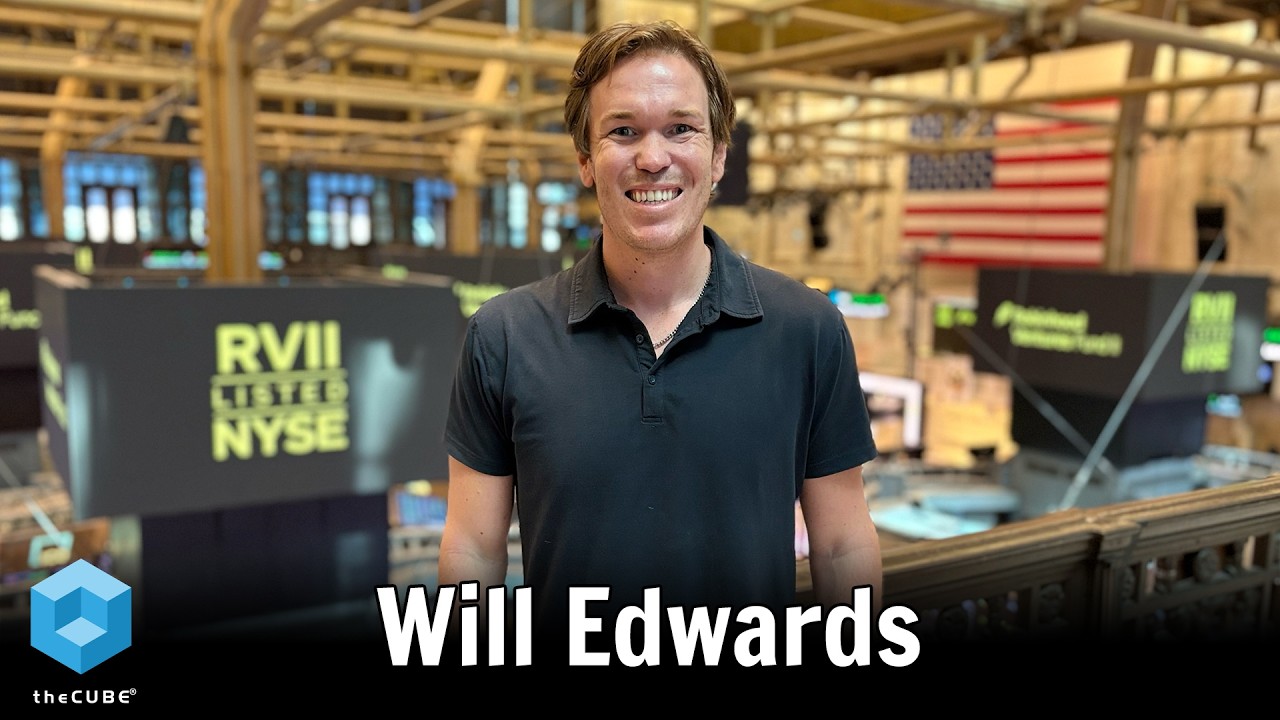
Will Edwards, Firehawk Aerospace | theCUBE + NYSE Wired: Defense Tech
Watch on YouTubeVideo summary
Will Edwards, CEO of Firehawk Aerospace, discusses his company's revolutionary approach to rocket propellant production, which has fundamentally altered defense manufacturing timelines and costs. Traditionally, creating the energetic materials needed for artillery motors and missile systems required a complex process involving giant mixers and ovens that took 15 to 60 days and cost tens of millions of dollars in equipment. Firehawk disrupted this status quo by developing an innovative method that produces storeable pellets instead of liquid resin, reducing the entire production cycle from weeks down to just six hours. This shift not only makes the process significantly cheaper and safer but also allows for rapid scaling, positioning Firehawk as a critical supplier capable of meeting the urgent demand for munitions in modern warfare where cheap drones are neutralizing expensive traditional weaponry.
The company's strategy mirrors that of Nvidia by focusing on becoming an essential infrastructure provider rather than just building end products; Edwards envisions Firehawk as the "Nvidia of defense" that powers other companies while simultaneously manufacturing its own rockets and systems. To execute this vision, Firehawk has established massive production facilities in Mississippi and Oklahoma, with plans to expand capacity from 40,000 small-diameter counter-drone rockets annually to over 125,000 within a year. By controlling the upstream supply of propellant, they can integrate their motors into existing government platforms like Hydra 70 rounds while offering partners flexibility that legacy manufacturers cannot match. This approach addresses the current shortage of munitions caused by high-value assets being overwhelmed by low-cost drone swarms, ensuring that American allies have access to safe, effective, and affordable rocket systems.
Beyond mere production speed, Firehawk emphasizes a culture of agility and interdisciplinary innovation that breaks down traditional manufacturing silos. The company leverages advancements in thermoplastics, 3D printing, extrusion technologies, and AI to create multi-purpose assembly lines capable of switching between different product types within hours rather than months. This flexibility allows them to not only meet strict safety and performance specifications but also continuously improve upon existing systems by adjusting chemical formulas and polymer ratios on the fly. Edwards notes that this new era of defense tech requires a convergence of physics, chemistry, robotics, and artificial intelligence, creating unprecedented opportunities for engineers who might have previously been limited to single-discipline roles in more rigid industrial environments.
Looking toward the future, Firehawk is actively recruiting talent across Dallas, Oklahoma, Mississippi, Alabama, and other locations, seeking hungry young engineers eager to contribute to a mission greater than just profit. Edwards encourages students currently studying mechanical engineering, chemistry, or physics to pursue internships with companies like theirs that are at the forefront of this generational shift in defense technology. The company's patriotic motivation drives its team to work long hours and solve complex problems related to storing energetics safely while supporting troops on the battlefield. As private capital and government support converge around these new innovators, Firehawk stands as a prime example of how American entrepreneurship is revitalizing domestic manufacturing by combining deep technical expertise with bold strategic thinking to secure national security needs.
Read the full video transcript
Palo Alto Studio Connection Silicon
Valley and Wall Street. I'm John Fost
here with Dave Volante, my co-host.
Hello, I'm John Furry with the Cube. We
are here in the Cubes NYC studio. Of
course, we have our PaloAlto studio
connecting Silicon Valley to Wall
Street. This is the NYC wired
programming communities defense tech
series we just started. There's a lot of
interest in how physical AI and how some
of the digital and physical things are
coming together that's powering a lot of
the defense the warfare the war
battlefield and also how decisions are
made. AI is a big part of it but also
the physical piece of it is our next
guest is here to talk about Will Edwards
CEO of Firehawk Aerospace innovative
approach again another example of the
speed game we're seeing in this era.
Will thanks for coming on the cube.
Appreciate it.
>> Thank you so much for having me.
>> You know I love love what you do. I want
you to explain what you guys do as a
business, but specifically you guys have
really cracked the code on uh speed to
market, which I think is a huge and the
numbers are pretty big. So share what
you're working on.
>> Yeah, absolutely. So, you know, Firehawk
has a few products, but at our core, the
thing that we really innovated on was
the production of rocket propellant.
That's about a 15 to 60 day process
typically that requires pieces of
equipment that are cost tens of millions
of dollars and a lot of people working
on it. Uh we've cut that process down to
about 6 hours by changing how you
actually make the propellant, what the
end result is. So instead of having this
liquid resin that's uh mixed in a giant
KitchenAid mixer for several hours and
then it has to bake for several weeks,
we just make this unbelievably energetic
pellet that is storeable. And then from
there we can advance manufacture that
little pellet and make artillery motors.
We can make small diameter missile
motors. We can make rocket assisted
takeoff motors. But it's extremely
cheap, uh, extremely efficient and and
much much safer than traditional
processes. And our vision was if you can
control the source of the propellant
production, then you can go upstream,
you can build the motors, and then you
can build the full rocket systems.
>> So you crack the code on the supply side
on the propellant, then go in and custom
make that for the actual product.
>> Exactly. So we've been flying rockets
with our with our customers. We are
providing uh different motors to uh
again some of our partners and you know
next year we should be the third biggest
producer of propellant in the country.
>> That's awesome. What kind of results you
seeing? Take us through some examples. I
know you had recent uh wins but what's
some of the results on the product
itself? Are people like wow that looks
just as good if not better than the than
the previous generation?
>> Absolutely. I mean so for for one of our
products like artillery motors we should
be the biggest producer of little motors
for artillery rounds in the country next
year and we are seeing significant one
volume increase in the production of
them uh but also we should be able to
cut prices quite a bit and so we formed
a really strong relationship with
General Dynamics. We're working with
them directly to assist them in in what
they're building out at Mosquite with
their M1128 rounds and it's just it's an
incredible market that that really needs
to be served and and we're excited to
partner with such a great company.
>> You know, technology always impacts
every vertical. Obviously in the defense
tech, Department of War there, you know,
there's challenges. Old school Patriot
missiles kind of like get taken out by
drones. Yeah. um these new warfare
techniques and you know I was talking to
a group of investors and entrepreneurs
here at the New York Stock Exchange a
couple months ago and the the narrative
was we don't have enough munitions.
>> Absolutely.
>> So because the people are firing
everything 10,000 zillion drones
>> coming in they blow all their
>> big weaponry Yeah.
>> out [laughter] on these little I call
them the the Kmart drones, right?
They're like cheap. They're but they're
you know they're small and they're
inexpensive. So you're having high value
cost rockets.
>> Y
>> taking out cheap stealth weird drones.
>> Absolutely.
>> People see that all the time.
>> So the game's changed. You now can meet
that demand. Help meet that demand.
>> Yeah. And that's actually why we bought
a 636 acre rocket facility in
Mississippi. We're able to make 40,000
small diameter lowcost rockets. Uh and
those are designed for counter drones.
Um it's it's it's huge. So we're
actually working to expand that facility
to where we can make a 100 plus thousand
of these rockets a year instead of tens
of thousands.
>> But yeah, I mean when you look at it,
the really you need high volume, lowcost
systems, those are the systems that are
really really difficult to make
sometimes. And the way Firehawk produces
its propellant is just perfect for
making these systems.
>> You know, I love innovation like this
because it reminds me of when I was
growing up. You had the main frames and
you had the personal computer. their
computers but one's smaller than the
other. The revolution happened. It's
very innovative for me. You had an
approach that no one was taking. You saw
things differently. So the big
monolithic expensive process and
manufacturing but propellant you
essentially bring it down to like I
won't say offtheshelf but like low cost
compared and now the results are the
same. So you're you're different. So
take take us through that journey. You
must have been misunderstood for a long
time because most people don't see the
new thing coming. the old guard. We were
like, whoa, what's how did that happen?
Yeah, you're just
>> that came out of nowhere. Explain the
story because I think this is an example
of why American manufacturing people are
that are thinking differently about
things are making it happen.
>> Yeah. So, you know, we really got
started in 2019 with the idea that you
can make rocket propellant a different
way. You don't have to use what the
traditional binder HTPB. You don't need
those giant mixers. You don't need
ovens. And so for for years and years we
were known as like sort of the the weird
people walking around with Lego plastic
saying we can make rocket fuel out of
this or rocket propellant. Um and so the
industry didn't accept that because you
know it's two reasons. One there they
these people have decades of tribal
knowledge. They've learned how to make
propellant the way they do it and in a
lot of cases it is the right way to do
it that way. Uh but at the same time
these companies have billions of dollars
of infrastructure and then billions of
dollars of backlog to meet. So and this
infrastructure is again the way we made
rockets 40 40 years ago. So they didn't
really have the flexibility to pivot and
start producing in a new way like we did
as a smaller company. So we were, you
know, I would say very misunderstood.
And then to be honest earlier on when we
were were saying, "Hey, we want to be a
propellant producer." That didn't really
interest a lot of these uh VCs because
what they want to see at the end of the
day is like, "Show me the full missile.
Show me like the end product that
everyone's going to shoot and we can
paste it everywhere." The problem with
that is where are you going to get your
propellant at the end of the day? If you
haven't scaled your propellant uh
capacity as your own company, then
you're just going to go wait in line at
Orbital ATK or at Aererojet Rocket Dine
to get their propellant because they're
the only ones who've really scaled.
>> It's kind of like Nvidia. If you don't
have GPUs, you really can't do AI.
>> Thank you. That's that's [laughter]
actually one of the the things I've been
saying to investors is like, we want to
be the Nvidia defense because they're
all these amazing new defense companies
building these phenomenal systems. And
I'm like, listen, we'll be the company
that powers you, but at the same time,
we're going to build our own missiles
out of Mississippi as well. And we have
great partners. And I I again what what
it happens I'd love to get your vision
of how you're going to execute because
Nvidia was called the GPU company for
many many years. U they're an AI
infrastructure company. Yeah. Um they
are not they have GPUs, they got
inference, they got Vera, they got
Reuben, they got networking with KV
cache, they got Nemo. I mean they and
they got the Omniverse. I mean Nvidia's
got all these capabilities. So it sounds
like you're kind of going down that
route. So what's the vision? Because you
already got the propellant scaled that
you nailed that one. Now you're going
upstream. Now you're making
>> Yeah.
>> the rockets.
>> So it's sort of like Nvidia's story when
you know when they were providing their
product essentially for free because
they wanted people to use them and then
they realized that it's a platform that
you can build on top of. So that's uh
that's what Firehawk is doing. We're
producing this propellant and our motors
to integrate into these existing
platforms that the government already
needs, you know, hundreds of thousands
of, some of them hundreds of thousands a
month of. And so our vision is we'll
provide the propellant, we'll provide
you it in high volumes and at low cost.
But again, since I have the Great Plains
Arsenal in lot in Oklahoma, which will
be the third biggest producer propellant
in the country and then I have a huge
facility in Mississippi that can make
rockets, what we're really doing is
we're supporting, we're merchant
supplier to the people who are building
the systems, but at the same time, we're
taking everything that we know and learn
and we're going to build our own rockets
for other partners. And you know, our
vision is we want to be a good partner
to the rest of the industry. We let them
build what they're going to build,
figure out a way to ease their supply
chain issues with our motors and
propellant, and then at the same time,
as we're tackling these markets, we're
going to enter them as we continue to
grow. And honestly, it's a it's a
multi-billion dollar year opportunity
for these small diameter systems that
we're working on.
>> You know, it's funny, we weaved in
Nvidia, but you also got to add in the
geopolitical scenario where in America,
if you go back five years ago, there was
not a lot of conversations around
American manufacturing. Um yours is just
another example of what we're seeing
across the board. Yeah. Entrepreneurs
innovating and not stuck in hey let's
just build the factories the old way
with robotics.
>> Yeah.
>> I mean there's unlimited opportunities
for scaling and building out more
things. Um so this is a great example. I
love what you're doing. Take me through
your culture. What's it like there? Now
I'm sure you got a lot of people now
that you're hitting escape velocity so
to speak. What's it like at the culture?
What kind of problems are you guys
trying to solve? What's some of the
business challenges? Lay it all out.
>> You know what we found out is like uh
until our facility in Oklahoma, which
we'll start commissioning buildings in
October, is done, uh that's the
propellant facility. We don't have a uh
demand issue by any means. We have a
capacity issue. Uh it takes a lot to
store the energetics, the amount of
energetics we're producing. We need
bunkers. We have to make sure we're
doing everything by the book. Uh
obviously, we get audited by the
government to make sure we're doing
things safe. So, we have a culture
really focused on moving quickly. I
mean, my team is working 6, seven days a
week. Uh, that's what I love about these
people is they love the problems they're
working on. So, they can be out in West
Texas flying rockets or testing motors
uh on a weekend and it's just part of
>> they're rocket scientists literally.
>> Yeah. Yeah. So, like there it's just a
culture of listen I'll say this, our
motto is obey the steel. You know, if
you're going to go to war, you must make
your enemies obey the steel. So, we
really want to make sure that we're
providing something that America and
America's allies need. And that's the
real motivation for Fire because we've
been told by the customers, we need more
of these motors. We need more of these
of these rocket systems. We're one of
four companies named onto the Hydra 70
rocket second source uh OTAA. And these
are things that they use every single
day and they save lives if we have a lot
of them. So, my team is very patriotic
and just excited to be building.
>> Yeah, it's great. Great stuff. Well,
talk about uh reliability because you
know in manufacturing is always the 59s.
Um how does that look on on the results?
Reliability is critical.
>> Oh yeah.
>> How do you guys stand on the reliability
front?
>> Well, we work very closely with all of
our partners both in government and in
industry to make sure that we're
building everything towards spec. uh our
processes have been thoroughly looked
through by our partners and um to be
honest we're meeting the performance
metrics and in a lot of ways we're going
to work to improve the performance
metrics of existing systems. So think
about like uh for artillery motors we'll
meet that performance uh need
>> but for small diameter rockets that
travel 6 1/2 7 mi we have the
flexibility by using different polymers
using um our advanced manufacturing to
actually extend the range of existing
systems. So obviously first goal is meet
safety and performance characteristics.
But then after that since I have such a
flexible assembly line that can turn on
a dime in 24 hours I can go from making
artillery motors to to missiles. Uh we
can use that same flexibility to change
the to change the ratios inside of our
formulas and actually increase the
performance of something that hasn't
changed in 40 years.
>> So you have a good good foundation on
the product side. You have essentially
continuous improvement in place. I mean
because this doesn't sound like you have
any challenges. It's more you meet the
requirements, continuous improvement.
You'll probably keep sharpening the saw
on that one. What about the momentum?
Can you share just u anecdotally because
you guys really came out, worked hard,
grinded it out, then you get the product
hits, business starts kicking in. What's
some stats? Can you share I mean as much
as you can publicly what the momentum
looks like and some of the stats? Yeah,
I mean I I I wish I could share all the
contracts that we're winning right now,
but sadly like that's we're on tight
lockdown. Even some of we've had some
extremely successful uh uh firings with
with different partners recently. Again,
can't share that, but what we're seeing
is the demand for the product is growing
extensively. So, we're getting a lot of
federal support. We're getting state and
local support and then just plenty of
investor interest because you know great
planes you know in law in Oklahoma that
propellant facility it'll be a national
asset and then what we're doing in
Crawford Mississippi we're increasing
that from 40,000 rockets per year to
125,000. So and and that's not coming
from our wish and hopes and dreams that
these programs one day grow and turn
into something. This is existing need
with uh the capacity. It's just not
being met.
>> Okay. What's your plans going forward?
What's your focus? What are you
optimizing for?
>> Uh volume and cost. We're looking to
make the product as cheap as possible
for our customers and make as much of it
as we can. And then also just great
partners. So really the I'm impressed
with the primes are really leaning in.
Even the the new like neo primes like
the the 15 to 20 billion companies.
They're really leaning in and looking to
work with industry to help prop up these
new companies. And I I couldn't be more
bullish on defense tech. You know, I
love this area because it's it it has
tech involved. Um there's needs for it
to have safety, but it's a generational
shift. Share your perspective on the
industry because you're seeing the new
call them neo provider call next
generation u uh creators and suppliers.
You're seeing kind of SpaceX disrupted
NASA. Everyone sees how great that was
and there's other things there. But
there's a new culture of innovators.
>> Yeah. describe the dynamic because this
is not your, you know, beltway bandits
kind of situation where you got these
contracts. There's still some big primes
out there, but but and they have to do
the big things, but there's still a new
culture. We're seeing it uh in Silicon
Valley. You're seeing it all over the
US.
>> Um it's technologists, engineering
across all disciplines, physics and AI
coming together in some most cases, but
this is a new culture. Share your
thoughts on that because I think this is
really notable. Well, it's that so so
there there are two major culture shifts
that I've seen um even in the past like
four years and one it's the primes want
to lean in with the new companies and
before that was not a thing. They would
not do that. They would say we have our
own process. We're sticking to this. But
now you're seeing them deploy tons of
capital and actually giving relatively
large programs to these new companies.
But at the same time it's private
capital is leaning in. This is like uh
this is like back in World War II when
you're seeing all the like you know Ford
industry and Kaiser put their money at
risk to start building for the United
States. Thank god I don't have to get on
Twitter and see like a new e-commerce
app or whatever. I every time I get on
LinkedIn or social media I see a new
nuclear company, a new missile company
and it's all being backed by large
family offices by the banks by the big
VC firms
>> and it's just it's exciting. The private
market has reallyown brought a lot to
bear
>> and the government's leaning in.
>> The government is leaning. This this
administration has been absolutely
terrific for these new companies to
really prop themselves up over the years
>> and it impacts the economy. I mean the
jobs you're creating are huge. We're
seeing this in robotics and I think also
what is notable in the culture shift is
that the manufacturing dogma of single
assembly line
>> build out the big monolithic thing.
>> Yeah.
>> You have multi-purpose capabilities. You
just mentioned it. Robotics, you're
seeing I can manufacturing one widget
today that's like this. Maybe do
something the next week here without
refactoring much.
>> Yeah, exactly. Like I mean we can change
up uh our our assembly lines for a new
product in 20 24 hours. Traditionally
how they do it today, I mean that would
require hundreds of millions of dollars
and like it would go down for 6 months.
So yeah, we're really bringing
innovation, but we're we're getting to
take parts from different industries
like new, you know, the advancements
happening in thermoplastics, in 3D
printing, in uh extrusion technologies,
in radar technologies. There's so much
happening and so much money that's
building up these new um industries that
allow us to actually
>> build the product cheaper and faster and
work just as well. It's it's it's a team
effort. You know, I want to I want to uh
you to speak to the younger generation,
some people that are in high school or
college, because you know, I remember
back in the day, even up until recently,
maybe a decade ago, if you were a
chemical engineer, you did that. If you
were a mechanical engineer, you did
that. If you were a double electrical
engineer, you did that. Physics, you did
some stuff over here, you could be a
mechanical engineer or a chemist. You
could work on some of these problems
because of interdisciplinary needs.
Absolutely. And so the people coming out
of the uh those engineering programs
whatever they are
>> a lot of mechanicals go to the drones
obviously but you're seeing people
actually have huge growth opportunities
>> and there wasn't a lot of huge
opportunities for
>> the kids coming out of college in those
disciplines over the years. So now it's
like
>> not just defense tech you got robotic I
mean the whole sector
>> of physical AI is multi-disiplinary. So
I know I see a lot of opportunity. I'm
sure you agree. What's the message to
that younger generation coming out?
Because they're like, "Okay, I went to
school for mechanical engineer. I went
to XYZ school. Where do I look for jobs?
Where do I go?"
>> I mean, this is like so much right now.
Like, we get hundreds of internship
applications every single year. Uh, and
and we we love having our interns here.
So, one, try to get an internship while
you're still in college. That's that's a
great way. We've hired a lot of our
interns ultimately. But two, like
listen, if you're able to complete your
engineering degree or or whatever
discipline you're working in and then
you're just excited to go work on
robotics or AI or or rockets and
propellant, uh these companies are eager
to hire hungry people who are going to
put in the time because, you know, the
mission is is is greater than just
building a huge business. Obviously, we
want to do that,
>> but it's supplying something that that
the US desperately needs. So, we're
finding these 20-year-old kids
>> are loving that opportunity that they're
working for the war fighter. And, you
know, it's like artillery. I I'll go
back to that's so important. Like that
that's the most used system in Europe.
They shot 16 million rounds in a year
and a half. It's the most effective
system to be used. And that's something
that we just need more of. And and the
more you have, this the safer you can
protect the troops or the safer you can
keep the troops. So, uh,
>> save it for everyone, particularly
countries.
>> Um, great to have you on. Definitely
follow up. Again, who doesn't like to
build rockets or to work on anything do
space? If you're an engineer, it's a
great time to be in this market.
>> We're going to be hiring a lot of people
in Dallas and and Oklahoma and
Mississippi and Alabama. So, come, we'd
love to to hear from anyone.
>> Tell them you saw this interview go
right to the top of the list. Will,
thank you so much. Congratulations on
the on the entrepreneurial journey and
your success.
>> This is the Cube and the NYC Wired
program. I'm John Furry, your host of
the Cube. Defense tech. It's just
physical AI happening right in front of
us, but it's the techniques, it's the
methodologies that are different for the
modern era. That's what we're going to
be telling more of these stories around.
Thanks for having us.