Video summary
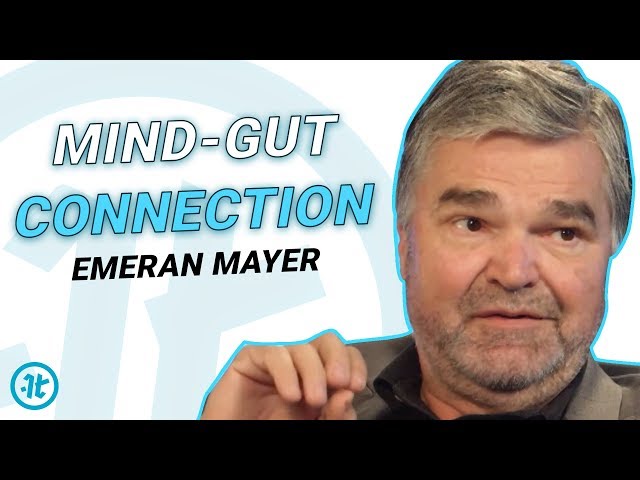
In this episode of Health Theory, host Tom Bilyeu interviews Dr. Emeran Mayer, a UCLA professor and author of *The Mind-Gut Connection*, to explore how the gut functions as a "second brain" that interacts bidirectionally with the central nervous system. Dr. Mayer explains that for millions of years, the human body has evolved into a tight-knit unit where stress signals from the brain directly alter gut physiology via the autonomic nervous system. When an individual is stressed or emotionally upset, these signals change transit times and peristaltic activity in the gastrointestinal tract; chronic stress can fundamentally rearrange the gut's ecological habitat by altering its composition and function. This dynamic means that negative emotions are physically represented not just in facial expressions but also within the complex internal environment of the gut, which houses trillions of microbes acting as chemical factories for both the immune and hormonal systems. The conversation highlights a critical feedback loop where brain signals influence gut microbes, whose resulting metabolites then travel back to reinforce emotional states, potentially creating a vicious cycle underlying chronic depression. Dr. Mayer notes that while 95% of serotonin is manufactured in the gut under microbial influence rather than just stored there, this molecule plays a vital role in sleep and pain sensitivity by communicating with brain centers via the vagus nerve. He challenges traditional views on diet and disease management, pointing out that conditions like Irritable Bowel Syndrome (IBS) were historically mislabeled as psychosomatic because medicine failed to account for these microbiome disturbances. Furthermore, he discusses the limitations of probiotics in restoring lost diversity; while hunter-gatherer populations can regain high microbial variety through dietary shifts between meat and plants, Western societies may have permanently lost "keystone species" due to a long-term decline in exposure to diverse environments and diets. Dr. Bilyeu shares his personal journey with his wife Lisa's digestive issues, illustrating the complexity of treating conditions like Small Intestinal Bacterial Overgrowth (SIBO) alongside other factors such as gut lining deficiencies. They discuss various dietary interventions, including the ketogenic diet, which has shown mixed results depending on individual responses to inflammation and brain fog versus hunger management. The interview also touches upon the controversial use of fecal microbial transplants; while highly effective for *C. difficile* infections where the microbiome is wiped out by antibiotics, it remains difficult to apply in cases like autism or IBS because those conditions represent a different stable ecological state that resists being pushed back to a previous configuration. Additionally, Dr. Mayer critiques the overuse of antibiotics in treating chronic gut issues and advocates for personalized medicine approaches driven by advanced sequencing technologies from companies like Viome. Looking toward the future of healthcare, both speakers emphasize the necessity of shifting away from dogmatic treatments toward an understanding of the brain as a supercomputer that constantly monitors homeostasis across every cell in the body. Dr. Mayer introduces the concept of the "brain connectome," a project aimed at mapping neural networks to better understand how the brain regulates physiological threats, arguing that current medicine often ignores this regulatory role despite its centrality to health. He suggests that meditation and cognitive behavioral therapy can help break negative cycles by calming the autonomic nervous system, though he notes that microbiome sequencing could eventually predict which patients will respond best to specific therapies or diets. Ultimately, Dr. Mayer concludes that while exercise is crucial for cognitive function and stress reduction, optimizing diet remains equally vital for maintaining a diverse and resilient gut ecosystem capable of supporting overall well-being.
Read the full video transcript
The brain sends signals to the gut
microbes, changes their behavior,
um their function, and then these
metabolites, you know, that
that we know they probably go back to
the brain and reinforce it and create
this this vicious cycle of um brain-gut
microbe interactions that
I personally think underlies chronic
depression.
Everybody, welcome to Health Theory.
You're here because you believe that
human potential is nearly limitless, but
you know that your ability to actually
actuate your potential is at least
partially based on your physical body.
As such, both of us are here to learn,
and my obsession is with helping people
optimize their minds, and my goal with
this show is to introduce you to the
people and ideas that will help you do
just that. I'm Tom Bilyeu, co-founder of
Quest Nutrition and Impact Theory, and
today we're joined by Dr. Emeran Mayer.
He's a UCLA professor, brain-gut
microbiome expert, gastroenterologist,
neuroscientist, and Amazon best-selling
author of The Mind-Gut Connection. In my
quest to solve my wife's digestive
issues, I came across this book, and I
was totally blown away and wanted to
bring him on to see what more I could
learn. So, without further ado, Dr.
Emeran Mayer. Thank you so much for
joining us today.
to be on the show.
pleasure to have you here. Um as I was
telling you off camera, sincerely, my
journey to help my wife get into a
better place um has been massively
impacted by your book, which I think is
really incredible. And by way of a
primer for people, how exactly does the
gut influence our overall well-being?
Well, I mean, writing this book has been
a new experience for me. I've been a
scientist on studying the communication
between the brain and the gut for
um
most of my career. The concept is that
multiple parts of our body
interact with each other, and the brain
sits over them like this supercomputer
that makes sure the the interactions are
okay. And if everything works in
harmony, we also feel good as a
as a as as a byproduct. So, they're not
you know, evolution didn't really select
that we feel good. It's but
but evolution selected all our systems
so they work perfectly and when they
work perfectly, you know, we have a
sense of well-being.
So, my wife Lisa um just about God,
almost two and a half years ago now uh
started saying, "I don't feel well." And
then started vomiting like really badly.
And so, we thought she had the stomach
flu and couldn't eat when she first had
it. Everything upset her stomach. And by
stomach, I mean gut.
And then in trying to like figure this
all out, we realized that she had lost
diversity in her microbiome. And so,
okay, how do we rebuild from that? And
a very long process. We tried a lot of
things, but the one that like when we
when we were advised to do it just did
not seem possible that it could be
useful. And then I've heard you talk a
lot about it was um she was advised not
to eat if she was stressed.
And to to do like almost a meditative
eating. To breathe in a meditative
fashion while she ate. Why on Earth
would that matter?
Well, I mean, the answer to that is is
actually fairly simple. So, when you
imagine that the brain and the gut are
connected and have always been
connected, you know, um
millions of years in evolution, this has
always been a tight-knit unit.
That um
if an organism is if a if a person is is
stressed, it will send down signals to
the gut. It will change a lot of things.
So, this so-called autonomic nervous
system
can change the transit time, the
peristaltic activity in different parts
of the GI tract in different ways. So,
it's stress will slow down the stomach
but speed up the intestine.
severe stress can lead to these very
powerful contractions, secretion of
fluid, secretion of what's called
antimicrobial peptides, mucus. So, you
have to imagine that when you are
stressed, your gut is different,
completely different from when you're
not stressed or when you are when you're
relaxed. So, this is not only that it
affects the gut, but it also affects the
microbes because it's their home. So,
um that environment that they live in
and they thrive on, if that all of a
sudden is changed or is chronically
changed, I mean that's really the main
problem.
I mean, if you are stressed, you know,
for 5 minutes because
um you were almost hit by a car, you
know, that that's not a big deal really
in terms of that balance.
But, if you're chronically stressed, you
have a chronically altered uh
composition of of of your gut. So, now
when you eat something, it it doesn't
feel right. You get symptoms, you get
bloating, you get cramps.
Um it triggers these reflexes
in the gut to, you know, to for things
to move through faster, could result in
diarrhea.
And one thing you've likened it to,
which I thought was really helpful for
somebody that's just sort of starting to
wrap their head around this, is you said
we have facial expressions when we're
angry, when we're scared, and if you
think of those states as being something
internal that's now represented by the
muscles in the face, those same internal
states can be represented in a similar
fashion by the gut. And that if you get
them in a state that is their version of
the angry face or the scared face or
whatever, um that they're actually, like
you just said, they're producing
different metabolites and things like
that, which can have a pretty profound
effect. And that that image for me of of
thinking of my gut states as being as
reactive as my facial reactions. And are
they as reactive like that, as fast as
the face can respond?
In my in my book, I also mentioned this
these observations by um by
physicians in during war times, you
know, when they had somebody had like a
fistula that somebody they could
actually see their intestines moving and
blood flow. So they noticed when
somebody walked in and that that wounded
soldier got upset instantaneously saw
changes in the contraction and in the
blood flow. So this
what I said earlier, you know, if if
that happens every once in a while it's
probably not such a big deal.
If if it happens chronically, it will
rearrange the whole habitat and
ecological system in in in in your gut
and
somebody you know we always know that
negative emotions are never good for
anything really. So
the Buddhist principle is that there's
no good bad emotion
and so they but they clearly affect your
health. I mean it's not just that you
feel bad, you know, it's
but I would say you know
it's it's many parts of the body that
reacts to emotions like your heart rate
and
the difference is
the gut is the most complex system
that's affected by this and the gut has
the microbes. The heart doesn't have
that you
blood vessels don't have that
any emotions it's not such such a new
thing that is a physical representation
of of of your emotions just as it's like
in your face in your muscles. The impact
on on on the overall organism is much
greater because you know you have the
system sitting there with the trillions
of microbes that all little chemical
factories you have here
the biggest part of your immune system
the biggest part of your hormonal system
it's all sitting there and when the
signals go down from the gut it changes
the whole interaction. One thing that I
really want people to understand that I
was blown away by in your book and I
mean it's right there in the title so
maybe I shouldn't have been as sort of
awestruck by it as I was but that
there's a feedback loop going both
directions. So, the gut is is as you've
called it and I'm sure is it's called in
your field, the forgotten organ, right?
So, that if you took all the microbiota
in your body and condensed it down, um
which we can't even see it. So, the fact
that once you condense it down, you
realize just how big it is, about the
size of a liver, if I'm not mistaken,
which makes it one of the largest organs
in your body. Um if you were to flatten
it out, it's bigger than a basketball
court. Yeah. So, it's this massive
sensing organ, which I never realized.
It actually has the ability to taste,
though not it it's the same receptors
that we have on our tongue. It has the
ability to smell.
Um and so, it's it's taking in all these
cues that it's reading from the food,
and then it's speaking back to the
brain, and then the brain is speaking
back to it. And that through the
millions of years of evolution, it's
gotten really good at communicating with
us.
It's a big system.
Um but, it's not the one that generates
emotions. It's It's a system that
completely takes care of your gut
activity and your daily function. So,
anything that you do with in food
ingestion, this system can handle,
unless you get stressed or emotionally
upset about something,
then the big brain interferes with that.
A lot of people when they're stressed,
they don't feel it. Women feel it more
likely than men do. When there's a
change in that gain in in that
sensitivity, then all of a sudden,
patients develop all kinds of symptoms,
you know, from
from fullness, bloating, abdominal
distension,
um
intolerance to certain food items.
Is that why IBS was originally
considered a psychosomatic problem?
Yes, I mean, this this term
psychosomatic, you know,
I mean, today we we call it mind-body
medicine, but the psychosomatic medicine
movement was
had had had had had a wrong basic
concept that
that all these diseases were brains
were brain diseases. Now we are we look
at them as you know, the brain got
microbiome
um
uh disturbances or alterations in in in
in the balances. So, one of the things
really why um
you know, many of these stress-related
disorders become chronic
because that system that normally keeps
things in balance is altered and accepts
a difference a different steady state a
different stability state. And
once it has this new stability state,
it's it's stuck in that and it becomes
chronic and and it gets
it'll change its set point. So, it if
you're first starting to get stressed,
it tries to get back to a neutral set
point, but if you're always stressed,
always stressed, always stressed, that
basically becomes the new normal.
Absolutely.
What is the function of that? So, this
this terrifies me as somebody who has a
wife with microbiome issues that once
you get it out of whack, like it's hard,
but if you manage to get it out of whack
and it's got its new set point, how do
you get it built back up? And I read
something terrifying which basically
said if you look at us as a species over
time, there's this like stair-step
declination of diversity um in the
microbiome. And so, if you if you know,
your let's say your great-grandparents
were here, your grandparents were here,
your parents were here, but you're here,
if in your life you experience a
decline, you can get it back up to where
you started, but as far as I can tell
from what I've read, nobody thinks you
can get it back to where your
great-grandparents were. Why? I don't
understand that. Why can't I just take a
probiotic?
Yeah, so this is this is a a big issue
right now. You know, so there was a
recent paper starting from this
um a population that that can do it. So,
the Hadza in in East Africa in Tanzania
Rift Valley.
So, these are some of the last remaining
hunter-gatherers. I think it's only a
couple of hundred left that live that
lifestyle.
And their microbiota their microbiome
diversity
has a seasonal variation. So, they found
that they do it if they test them in
summer and winter
and
what what's different in summer and
winter with these people is they they
switch from a
um more plant-based diet to a more
meat-based diet. Their microbiome
changes with these dietary changes. When
you look at them at the state when they
don't have their high plant intake
um it looks like ours, almost the same.
Woah.
This is the same species in the same um
types of microbes.
Then when they go to the the the
plant-based diet
it regains its diversity. So, they still
have the ability to go from from our
level back up to the high level. There's
thousands of species that do not are not
that essential and you can lose them.
But if you lose one of those keystone
species then the whole system gets
altered. So, it's it's possible what
happened in Western society
when developing countries that we lost
some of these keystone species and so no
longer have this ability to to to
return. Um
I think it's going to be one of the
biggest challenges really to
Yeah, and so
to find that out.
If I can't do it through probiotics,
could I and I actually seriously I put a
date that if my wife wasn't better by
and thankfully she is sort of beyond the
critical threshold now, but if she
hadn't gotten better by X date, I was
going to take her somewhere to get a
fecal transplant.
It is that a possibility? Like is that a
way to
At the moment the answer is is no. So,
there's many ongoing studies now,
clinical trials with fecal microbial
transplants in uh so as you know,
there's one condition where where it
works perfectly, it's the best the best
treatment in this when all your normal
microbes are wiped out is um
um C. difficile colitis. It's um so you
get this some people get this when they
receive antibiotics in the in in in in
the hospital. So, it works really well,
but
you have to remember
that in in that situation, the normal
microbiome has been wiped out pretty
much. So, you start from scratch.
All the other conditions where it's been
tried, like inflammatory bowel disease
and
irritable bowel syndrome and autism
spectrum disorder,
you have an altered microbiome, but it
it's it's it's in another stable state.
You know, it's it has assumed another
ecological stability state and it's it's
very difficult to push it away from
that. There are studies going on where
people get repeated and of course these
courses of antibiotics and then
fecal microbial transplant like in in in
autism spectrum disorders,
that's been tried. Um
Um and the hypothesis there was that the
microbiome is playing a role in autism.
Yeah, which is somewhat questionable. I
mean, autism starts really in in in in
utero. You know, the
the abnormal growth of the brain. So, if
if anything, I think it's
potentially the microbiome and the
metabolites of the mother that affect
the the the child's brain development
and
Um so, that's kind of my theory about
this.
But a lot of desperate parents are doing
these these transplants themselves. Then
our our diet is clearly another thing.
You know, it's um
the more
plant-based fiber you eat, the greater
the the diversity of your microbiome is.
And this is sort of where this whole
concept of, you know, the the
plant-based diet comes in. That the
metabolites that these microbes produce,
the more you feed them what they have
evolved for in evolution to break down
these complex fiber
components of of of plants, the more you
feed them that, uh the larger their
number will get and the more of these
healthy metabolites they will, you know,
they will produce.
And it's it's kind of interesting to me
on the one side from a gut microbial
diversity
gut health standpoint
it's um
it would seem very easy to say what's
what's the best diet for people. But but
then clearly we have others, you know,
um
like in IBS is like this FODMAP diet
which actually takes out a lot of the
the fiber and these oligosaccharides.
Um we have the ketogenic diet, you know,
which obviously is wonderful to lose
weight and if you have diabetes to to
you know you know get get your
hemoglobin A1C down.
But but they're certainly not what the
microbes for their health and diversity
like, you know, so I mean to sum the
whole thing up I I I think we're
beginning now to understand that there
are situations where
the diversity can oscillate depending
what we eat.
Um let me ask you, what's the role of
the gut in depression and anxiety?
It's it's very interesting. I mean
there's studies going on and you know,
we would
we're planning to get involved in this
where large-scale studies with a dietary
intervention like um
you know, a Mediterranean type diet in
like in in 600 people, you know, where
you look at the brain and the microbiome
before and after that dietary
intervention. Particularly with a focus
on uh cognitive performance and
cognitive decline.
And
my guess is that over time
um
there's there's there's definitely
influence. Now the ketogenic diet I I
find still find that puzzling, you know,
like so a lot of people say oh it's when
they started this they completely felt
different, the brain fog was gone.
It's in some ways paradoxical cuz it's
not the good thing for for for your
microbes necessarily. But that's the
situation where people report as they
immediately felt better or different.
So, I've used a ketogenic diet very
extensively in my own life and then my
wife has used it in her recovery as
well. And so, I'll walk you through what
each of us experienced. So, my
experience is not with a lifting of
brain fog or anything like that, but a
profound difference in the way that I
respond to hunger. So, if I'm on a high
protein diet, I'm never high carb. I
haven't been high carb in more than 10
years.
So, my average daily carb intake is
probably less than 30 g. And entirely
from vegetables. So,
what I see is when I get hungry if I'm
high protein, I have a declination of
performance. I'm not able to
concentrate. I get slightly irritable.
Maybe I get a headache. I certainly
don't want to concentrate. Like if
you're going to give me that there's any
willpower component to this, my
willpower is way low when I get hungry
on a high protein diet because I'm
burning glucose.
Now, my wife's experience has been the
anti-inflammatory effects cuz she has
often self-reported that her gut feels
swollen. She doesn't know how else to
explain it. She's like, "It just feels
swollen." So, you know, she eats
something and it's going through her
system and it just feels irritated and
inflamed.
And when she does a ketogenic diet, that
is significantly reduced.
However, she'll still have bouts of what
sound like typical IBS symptoms, right?
She'll um
uh she'll have diarrhea, she'll have
cramping, bloating, pain, like all of
it. And be like, "What just triggered
that? I was doing perfectly for let's
say 4 days and now all of a sudden
eating the same thing, all of a sudden
she has like some big episode." So,
clearly not a silver bullet for her, but
has been a big part of what we do
to to maintain her inflammation levels.
Yeah, so I mean, I I say, you know,
now with with the gut microbiome
science, I think there will be a whole
revisiting of of dietary
recommendations. Even though initially I
was a skeptic of the ketogenic diet, but
I mean you have to listen to to to
people. I mean, in some ways it that
tells you more than
than than the mouse experiments, you
know. So, if people feel better,
obviously there must be a reason why
that is the case. I think nutrition and
diet is just entering a phase of
of real scientific rigor now, which it
didn't have in in the past.
Um and that's largely driven by the
interest in the microbes, cuz you want
to understand what the microbes do, you
know, they live off what we eat. So,
it's it's going to be essential to um
to you know to to to to sort this out.
So, really fast, going back to
depression and anxiety, the the question
that I most want to ask you, why on
earth is 95% of the serotonin, which I
think of, I mean, you know, SSRIs,
right? Selective serotonin reuptake
inhibitor, which is used for depression,
which is all about the brain,
why is 95% of serotonin stored in the
gut? And what does it mean? Cuz you you
say it's stored, but I don't remember
you following up on like what does it
mean to be stored versus used? Is 95%
used in the gut? Or like what what is
serotonin's role in all of this?
Um it's it's a story in in in in
progress, you know. Um I mean, I wish I
could give you the answer. I I asked
myself the same question. Why
why would, you know, evolution design us
in a way that that that molecule that
plays such an important role in in sleep
and well-being and pain sensitivity? Why
why would all this be at the gut level?
And is it manufactured in the gut and
stored in the gut? Or manufactured
elsewhere and stored in the gut?
No, it No, it is manufactured in the
gut. So, there's a hormone tryptophan
hydroxylase from
dietary tryptophan. Um
that's that's taken up
um by these cells and
interestingly, so we now know of last
couple of years this has come out
that this enzyme that that converts
tryptophan into serotonin
is to large degree under the influence
of microbial signals. So that the
microbes
can actually
you know, influence how much serotonin
that you synthesize, that you produce.
Um and ultimately also how much is being
released. When they're stimulated by
microbial signals or by contractions of
the gut or by some food product
the serotonin is being released on the
synapse and sends a signal through the
vagus nerve into your brain and into
emotional regulation centers of the
brain. So
that's really the the main communication
pathway between um the serotonin the the
microbes, serotonin signals and and you
know, brain function and emotional
function. You know, so for example, if
you eat a a diet high in tryptophan and
then people have taken tryptophan
supplements
Mhm.
which really should be good for you in
some ways because the microbes
if if they see more tryptophan
they send more signals to these
serotonin cells to produce serotonin. So
you would have a very simple
antidepressant. You initially think
that's yeah, that's the answer, you
know, like there's a change in
gut microbial enterendocrine cell
communication and that that somehow
plays a role in in depression and and
and anxiety. Unfortunately, it's not
that it's not that simple. I think
depression probably starts at the brain
there's some vulnerability
then
it's becomes manifest during periods of
stress or trauma. The brain sends
signals to the gut
microbes, changes their behavior
um their function and then these
metabolites, you know, that
that we know they probably go back to
the brain and reinforce it and create
this this vicious cycle of um
brain gut microbiome interactions that
I personally think underlies chronic
depression.
And I've heard you say that you think
meditation may actually play a role in
that. Like what what's your belief about
mechanistically what's going on? Like
why would meditation help?
Our hypothesis was
that um
meditation changes the the activity of
your
autonomic nervous system that
signals back to the gut.
Um clearly if you're in a state of
relaxation or mindfulness
will be less sympathetic or less stress
signals going to the gut. That changes
the microbes and metabolites and then
that would
in some ways you know break that that
that that cycle. But we did another
study with
with cognitive behavioral therapy in
patients with with irritable bowel
syndrome and as we had anticipated you
know patients do quite well. So about
60% response rate on that
with this cognitive behavioral therapy.
The only thing that we found is which is
interesting that
your gut microbial composition when you
start out the therapy
in some ways predicts if you're going to
respond to it or not.
Wow, I've never heard that before. So
you're saying that you could sequence
the microbiome and say either you have a
setup that matches people that have
gotten a lot of benefit out of this or
you haven't. And potentially do you know
what biome is doing in terms of
sequencing?
Yeah, actually I'm
I mean I should disclose I'm on the
scientific advisory board of that
company and if you do that biome test it
could and you have suffering from IBS it
could predict you know if if you're
going to respond to to what type of
therapy diet or um mind base or
or or medications.
I mean that technology and that approach
I think has
has the potential to really break the
current paradigm and the the current
practice of medicine.
Yeah, I'm really intrigued to see what
big data is able to pull out of this,
especially with that hypothesis that you
just put forward, which should be
perfectly answered by that. If we can
see set states and then they have
predictive abilities in terms of
outcomes, then if we can use big data to
really work back, what actually is the
causative rather than just the
correlative
element of that be really fascinating.
All right, I want to do a segment now
called gut check. Huh? Nice and clever.
And I give us the top whatever number
two, three things that are going on
right now either at the individual
person level or at a societal level that
have massive
gut health implications that people may
or may not be aware of.
The food industry has played a big role
in
um
providing us with nutrition that's not
good for us. So, all the processed foods
and the high sugar and high high fat and
Um so, there's a
a pending I mean, an ongoing paradigm
shift as well.
So, many of the
the CEOs of these companies have
There's some very visionary um CEOs of
some of these big companies that have in
mind the the the benefit of of the
consumer, not not the benefit of the of
the shareholder. So, I think that's a a
very exciting thing and the change in
the in the in the food that we eat and
the awareness of people and the response
now of the the people that produce these
foods, I mean, that's that's clearly a
you know, a big thing.
I think the um
the antibiotic use in terms of a
negative example, um I think that's
still unabated. I think that um
Yeah, you know, some pretty dramatic
changes will have to
will have to happen to for for this to
really
fundamentally change it in in OBGYN and
pediatrics and adult treatment. There's
people that recommend antibiotic
treatment for IBS, which I personally
think is in some ways crazy in a time
where we all know that, you know, we we
don't want to harm the microbes. So, to
give repeated doses of antibiotics for
which gives you a marginal benefit,
transient benefit, um I I think it's
really irresponsible. Well, I mean, I
would say the third thing is that there
are now a massive effort to see if
how the the the the microbiome
the the wisdom that's in that system,
how they can be utilized to both for
diagnostics, um but also for
personalized medicine. It's conceivable
that um
doing that test, um
it has more predictive value, diagnostic
value than
doing your annual physical and your
Wow.
your regular blood test. Potentially,
you know, it's um
and at different stages of life. So, if
you do this on a pregnant mother, you
could predict the risk for autism. If
you do it in an infant, you could
predict um how this infant later will,
you know, if he's at a high risk of of
developing depression or And, you know,
the the this potential clearly has been
recognized by by people like at at Viome
or you biome or
um Day Two. So, I mean, there's there's
many players now. Not sure who's going
to win that race, but it's it's there's
a huge potential this could
revolutionize medicine.
Yeah, the so we've leveraged um
Viome very heavily. So, we happen to
know Naveen personally. He's been on the
show Impact Theory a couple of times.
Great dude, really like him.
Yeah, he's a really good guy.
so, he's allowed us to access the back
end and work with some of the people
that they have. And And the thing that
is has been so terrifying, and the thing
that I'm pushing him that is the problem
he has to solve, is that the massive
complexity.
So, for instance, what we realized was
Lisa has SIBO, but she also has a
deficiency in um
the uh the variability, the variety of
um species that she has in her gut. She
also has uh
diminished lining of her gut and
probably has some gut leak. So, it's
like, okay, you can't attack them all at
once. So, there's no one simple solution
that's going to solve everything. And if
you took the antibiotics for SIBO, which
like you were saying is the traditional
recommendation, well, the problem is now
you're going to exacerbate all the other
problems that she has lower down in the
line. So, working on these like one at a
time, right? Okay, so first we have to
address SIBO. And what do you have to do
to do that? That's already insanely
complicated.
To tie this up with um one thing that I
just could not wrap this interview
without talking about, it's something
you introduced me to. I'd never heard of
this before. And while I think you mean
it specifically in reference to the
brain as an analogy, I think it works
for the complexity that I'm talking
about, which is the brain connectome. Um
what is the brain connectome? What does
it mean? And maybe most interestingly,
what is the paradigm that it totally
shatters?
The brain connectome project is
something that's been
initiated by the National Institute of
Health um
and it's it's based on the idea that um
seems like obvious that every cell in in
the brain is connected with each other,
and that there's there's networks of the
brain that are connected with each
other, and it's like a massive
supercomputer, really, the way it's
organized.
And um there are people that do
you know, with fiber tracking, with
brain imaging, different modalities of
brain imaging,
that study this phenomenon and
ultimately will be able to
get a much more accurate description of
the functions of of of our brain, which
it's still pretty primitive the way it
is right now, you know.
Um
and um the impact will be I mean,
clearly there's a race on in
understanding
the brain and its potential and its role
in disease. And so, for example, that
whole idea that the brain is a
it's not just a cognitive machine and an
emotional machine, but its primary
function probably being the
supercomputer that surveys every cell in
your body constantly on a millisecond
millisecond time scale and monitors for
potential threats to its homeo to the
homeostasis of the organism and then
responds, you know, based on its memory,
its experience, um but but also based on
on on inborn patterns
um to overcome that perturbation. So,
understanding how the brain does that,
this regulatory role, I think will also
revolutionize medicine. I mean, it's um
as you said earlier, you know, medicine
until
I mean, even today in 95% of medicine
does not take the brain into account in
in health and
That's crazy.
Uh which is crazy. It's the most
powerful machine, you know,
in in the
well, certainly on this planet, that you
would not take this into account in in
your theories of
how the body functions and is is really
amazing to me.
Mhm.
But but that is changing. I mean, so the
the connectome project is one of those
areas that is really pushing ahead and
and will
will establish the
the correct role of the brain in in in
you know, in our
physiology, and our health.
Mhm. I love that notion of of a
connectome of being far more
interrelated, and I think that's the the
thing that was the big breakthrough for
me, is far more interrelated than our
metaphors and our analogies up to this
point would lead us to believe, which is
the exact issue that we're having with
digestion, right? You've talked about
people have historically thought about
it as this machine, uh kind of like a
car, and it's like if you take care of
it and give the right fuel, it'll last
about 75 years, and you know, with
having to address the occasional
infection or whatever, but
but not understanding the role that
communication plays, that there's the,
as you said, the bidirectional
communication of the brain to the gut,
the gut to the brain, um that so much of
our immune system is housed in the gut,
right? And oh man, when I read this in
your book, I almost flipped out, that
the reason that so much of our immune
system is in our gut is because of its
encountering potentially deadly, um
bacteria in the food that we eat.
Yeah.
And I thought, oh my god, like it was
one of those that should be patently
obvious, but never made my radar until I
read it. And I think what you're working
on is is so critically important in this
moment. I because it's affected my life,
um I know just how important, and I I
worry that um Lisa and I are sort of the
the tip of a spear of what's coming,
which is really terrifying if we don't
get a lot more answers. I think there's
going to be an immeasurable amount of
suffering, and
um yeah, so getting some of these
answers is is incredibly important, and
and your book has really been a a
touchstone for that. All right, before I
ask my last question, where can these
guys find you online?
My my personal website, emeranmayer.com.
Um that guides you then to all the other
uh areas.
All right, my final question, and this
admittedly is meant to be hard, cuz I
want to force you into a binary
situation where you can only choose one
thing,
um what one thing could people do
additively or subtractively,
uh reductively, I guess, to have the
biggest impact on their overall health
and well-being?
Yeah, so with the one thing, that's
makes it difficult. I would, you know,
I would probably start with the exercise
part, um but right after that or at the
same level, the diet part. Um
I did not see that answer coming, I'll
be honest.
Really?
Yeah.
Well, the exercise part
Diet, yes. Exercise, no.
The exercise part is because,
you know, there's so many studies, um
the benefits on cognitive function and
um
slowing the the
cognitive decline and um
stress reduction and change structural
change in the brain. So, sorry I
disappointed you with the exercise, but
No, no, I love that. Being surprised is
the best possible answer.
Yeah.
That's awesome.
Dr. Meyer, thank you so much for coming
on. It was a real pleasure.
Guys, if you haven't already discovered
him out in the wide world, if you
haven't read the book, if you haven't
gone to his Facebook page, his website,
Instagram page, go check it all out.
He's really somebody that is at the
absolute forefront of discovering this
and what I love about him and what I
think is is just so apparent in the talk
that we had today is he's not dogmatic,
he's really trying to discover the
answers. He has a deeply inquisitive
mind and something that we didn't get to
talk about in the interview, he was
meant to take over a chocolate business,
uh which was in the family for
generations and he left that because he
had a deep uh passion for his
inquisitiveness around the subjects that
we talked about today and that shines
through in everything that he does and
you get the sense of somebody really
trying to discover the truth and that to
me is what the show is all about. We are
going to succeed or fail based on our
ability to really look at a lot of
different hypothesis and build a
worldview based on that rather than
presenting dogma. Um so, just incredibly
grateful for you coming on the show
today. It was really, really amazing.
Guys, dive into his world. I think that
the connection between the mind and the
gut is just absolutely critical. Uh and
you've got to figure that that one out
for yourself for sure if you want to be
able to optimize your mind and live the
best life possible. So, thank you guys
so much for joining us today. And if you
haven't already, be sure to subscribe.
And until next time, my friends, be
legendary. Take care.