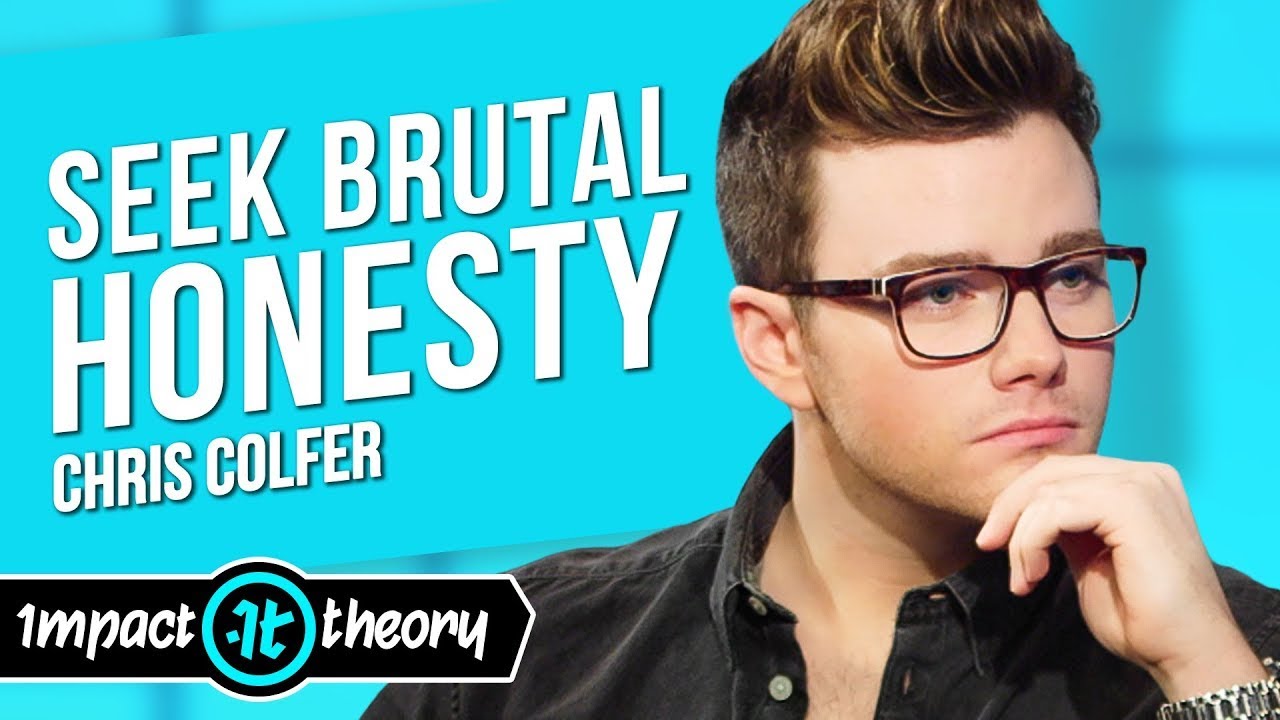
Why You Need People Who Won't Coddle You | Chris Colfer on Impact Theory
Watch on YouTubeVideo summary
Chris Colfer, best known for his iconic role as Kurt Hummel on *Glee*, joins Impact Theory to discuss how he transformed a childhood defined by severe bullying into a multifaceted career spanning acting, writing, directing, and producing. Growing up in a conservative environment outside Fresno, California, Colfer faced relentless harassment due to his high-pitched voice and eccentric behavior, leading his mother to homeschool him during middle school when the abuse became unmanageable. Despite these early struggles with dyslexia—which he only discovered later—and being told by adults that his singing was useless or inappropriate for a male actor, he found solace in fantasy literature like *Harry Potter*. These stories provided an escape and therapeutic value, allowing him to imagine himself as someone courageous who could "slay dragons," which eventually inspired him to become a storyteller himself. Colfer's journey from victim to empowered creator is deeply rooted in the concept of antifragility—the idea that stressors can make one stronger if survived rather than broken by them. He recounts how his grandmother, though harsh and critical enough to crumple up his early manuscripts, instilled in him a belief that he could achieve anything; this "delusion" became the secret ingredient for his success. While acknowledging that hardship often destroys people, Colfer emphasizes that those who push through adversity learn resilience and strategic thinking. He contrasts himself with others who might be coddled to avoid pain, arguing instead that honest criticism is necessary for growth, even if it feels traumatic in the moment. This mindset allowed him to navigate the entertainment industry's roller coaster of doubt, including fears about being typecast or failing after *Glee*, and ultimately secure creative control over his YA novel series, *The Land of Stories*. As a writer, Colfer aims to stimulate imagination as a defense mechanism for children against reality's limitations. He explains that fantasy worlds offer pure escapism where characters can be whatever they want to be, fostering compassion and curiosity in young readers. His books often feature portals into magical realms like Wonderland or Hogwarts because he personally craves environments where one is appreciated and loved rather than judged. When asked what trait made him successful, Colfer identifies "delusion"—the unwavering belief that his goals were possible despite evidence to the contrary—as a direct result of his grandmother's influence. He also reveals an honest vulnerability about still feeling insecure regarding singing and drawing, talents he admires but feels unable to master perfectly, highlighting how even celebrated artists can harbor deep insecurities alongside their achievements. Looking toward the future, Colfer expresses a desire to make the real world more bearable by bringing magic into people's lives through his various creative ventures. He is currently working with 20th Century Fox and Disney to adapt *The Wishing Spell* from his book series into a major motion picture that he will helm himself, proving his ability to evolve beyond acting alone. Although he would choose writing over singing if forced to pick one path due to lifelong stage fright, he remains open to charitable music projects in the future. His overarching mission is not just personal success but using storytelling as a tool for empathy and resilience, encouraging others—especially young people facing bullying or self-doubt—to realize they have the option to walk away from toxic environments and rewrite their own narratives.
Read the full video transcript
I'm in a weird place right now because I
played a bullied kid on national
television, you know, 20 million people
a week watch me get pushed into lockers
and and thrown on floors and you know,
called [music]
called
called queer, called you know,
all these negative things [music] and I
experienced all that my myself in in in
real life
and I really like I I let people know
that that was you know, one of the
reasons why they are
[music]
maybe connecting to my performance so
much was because it was coming from such
a real place and I let people know that
I was I was bullied horribly [music]
when I when I was a kid. I was bullied
so badly in middle school that my mom
actually took me out of school and and
start homeschooling me just to because
because the harass the harassment got
got [music] so severe.
Um, but I'm at this weird place right
now where I feel like
I'm so not a victim anymore that that I
kind of I don't know maybe that's my
ego. I don't know. I think I think I get
[music] I get tired of being associated
with with someone who who
is bullied because I I don't allow that
to happen anymore [music] at all. I'm
I'm proud of kind of where I'm at at now
because because the minute I see someone
who tries to take advantage [music] of
me or or or or is isn't kind, I I I have
the
[music]
the option to walk away now, which I
didn't I didn't when I was a kid.
[music]
Hey everyone, welcome to Impact Theory.
Today's guest is a multi-hyphenate
creator best known for his star-making
turn on the smash hit television series
Glee. For 121 episodes across six
seasons, he played Kurt Hummel, the
openly gay teenager with the
unbelievably beautiful voice. It ended
up being the role of a lifetime, but the
combination of having grown up in a very
conservative family from a small town
outside of Fresno, California, and
getting cast fresh out of high school at
the age of just 18, the idea of taking
the role actually terrified him. But,
take it he did, and millions of people
tuned in every week to watch him and his
fellow cast members perform. Along the
way, he earned not only a massive
following of ardent fans from all over
the world, but he won a Golden Globe, a
Screen Actors Guild Award, and three
People's Choice Awards. But, being a
world-famous actor with one of the most
recognizable voices on the planet was
not enough for him. And, since departing
the show, he's not only continued his
Hollywood career as a triple threat who
can also write, direct, and produce,
he's managed to turn himself into a
number one New York Times best-selling
author with 15 published books to his
name. He's even working with 20th
Century Fox and Disney to turn his first
book in The Land of Stories series, The
Wishing Spell, into a major motion
picture, which he himself is slated to
helm.
All of this would be amazing and
completely dazzle anybody at any age,
but it becomes truly mind-boggling when
you consider he hasn't even reached his
30th birthday yet. So, please, help me
in welcoming the man Time magazine named
as one of 2011's 100 most influential
people, the incredibly talented Chris
Colfer.
Thank you so much.
you doing tonight? Thank you. Welcome.
Thank you, guys.
[applause and cheering]
Thank you.
Can you just come with me everywhere and
and repeat that?
That was the plan. I thought if I write
this well enough, you and I can go to
comic cons together, which is exactly
what I want to talk about. I think that
you and I share
maybe a vision on how story can be used
to impact people. Certainly, hearing you
talk a lot about, um, as a kid, sort of
coming up with stories, and that being a
big part of your formative years, is
something I can very much relate with.
What is it about storytelling
and Comic-Con in particular that is
interesting to you? Oh gosh, well I
think it's all a matter of fantasy,
isn't it?
Um for for me I I I always loved um
superhero uh novels and graphic novels
and movies and I I loved uh uh
stories about witches and wizards
because in those worlds you get to be
whatever you want to be. Um and uh I
think sometimes there are so many
limitations in reality that uh those
kinds of stories can be very very
encouraging. Um in a fantasy in in a
comic book a mouse can can slay a dragon
if it's courageous enough. Uh and that
can be very very therapeutic for those
of us who haven't quite slayed our
dragons yet. Mm, that's really
interesting. As a kid, when did you
start to feel ostracized? I know that
you talked about being bullied as a kid.
When did that kind of stuff start? Oh
gosh, at birth. I think [laughter] my my
nuclear family was very small, but my
extended family was very large and uh I
was very much the runt of that family.
So I was I always was kind of the person
that got made fun of the most because I
was the youngest. Uh
so yeah, start started at home and then
and then uh things just got worse when I
when I went to school. I uh I was a very
very eccentric kid. I do not know how my
parents did it. I I I think of some of
the things that I did and and said and I
I I don't know how I was not how I was
not killed. Um uh but yeah, and I I was
I was very different. I um
growing up my my dad was really funny
and uh I remember trying so desperately
to to be like him because I thought if I
if I if I learned to make people laugh,
I would be on their good side instantly.
Um and I think I tried that a little too
much. I I think I I think I alienated a
lot of friendships when I was early on
in in in like like elementary school
because of that. Was it like an Andy
Kaufman kind of humor approach or what
was it about that that alienated people?
there was a style to it. I think I just
any any for me anything was fair game. I
just wanted to make people laugh because
to me if you can make people laugh, you
you were their friend instantly. Um and
then as I got older, I think I that
interest sort of changed into
storytelling because I I think as a
young person,
writing was the only way I could get
anyone to listen to me and or or or to
hear me out without someone wondering
what was wrong with my with my voice.
Um and so that became a very a very
useful tool as I as I got older.
So
uh your voice then, which of course now
you've become incredibly famous for and
it becomes the thing that just singles
you out so rapidly and you've such an
amazing singing voice. But that was like
a a
a sore real sore spot for you growing
up.
Oh, it was it was what I was made fun of
for the most growing up. It's actually
gotten much deeper as as I've gotten
older, believe it or not.
But
that was the quickest way someone could
uh
could insult me.
And they did. I I grew up in a very very
conservative town where, you know, being
different was not accepted. It was it
was
you know, just just having a
high-pitched voice was like you were you
were you were the outcast just for that.
So I remember people, even adults, even
teachers would would would would give me
these looks when they would when they'd
hear me speak and
and I I I was I was a very talented
singer and I I could sing
I could sing like song Defying Gravity
like no one's business. I could I could
sing all of the high parts in The
Phantom of the Opera.
But that meant I was useless to any
choir director or any drama drama
teacher.
Interesting. So you weren't I always I
guess sort of imagined that your real
life was very Glee-esque in that you
were singing all through middle school
and high school. It it was. I I and I
definitely did. I I I sang in the choir.
I I I quit choir because I I got tired
of standing. Um
[laughter]
I was in a lot of school plays. I I was
never I was never the lead role or or or
anything. I I was always I always had
had small roles in the in the
background. Um, but um,
yeah, I know. I mean, it was it's
interesting. I I think um,
I think uh, I hope I hope I hope I'm not
patting myself on the back. I think I
played that character in Glee very, very
well, and and people
uh, really do think I was
playing myself. And and and and although
we were experiencing um, very, very
similar things, um,
uh, I was very I was very different from
that character. Um,
I'm much more cynical than that
character.
[laughter]
That's interesting. In fact, so I'm glad
you brought that up. I heard you in an
interview, somebody asked you if you
were a character from Game of Thrones,
who would you be? And you said, "I want
to say that I would be the mother of
dragons, but I think I'm actually
Cersei." Yeah. What did you mean by
that? I I'm sorry. I just She's a woman
who knows what she wants, and and she
goes out and she gets it. I mean, she
you know, her methods and her her
strategies a little questionable, you
know, but uh,
I think that's fair to say. But I just I
know I I I love anyone with the with the
with the drive. And um, I remember when
I was in senior year of my high school,
uh, I was chosen uh, to put on my own
show. It's called the senior show. Um,
and every year one senior in the in the
drama class got selected to to basically
put on whatever they wanted. And and uh,
usually they uh, they would do like SNL
type, you know, variety sketch kind of
kind of shows. Um, but I was like,
"Nope, I'm writing a musical." And uh, I
gender reversed uh, Sweeney Todd, uh,
and called it Shirley Todd, um, uh, so I
could be so I could be Mrs. Lovett. So I
was Mr. Lovett. Um, and uh, because we
were all seniors, no one wanted to do
it. Uh, I end up I end up blackmailing
all of them to to to be in it. Um, and
uh, it was a great show. Walk me through
how that drive and ambition has
manifested in your life. Um, is that
something you value in yourself? Is it
something that you're skeptical of in
yourself? Cuz you When you answer that
question, then I fully understand that
it was a little tongue-in-cheek. But
when you say that I am, you know, I fear
that I'm actually Cersei, Um, is there
part of you that is very cognizant that
there is a line that you can cross with
drive and ambition or Oh, I think so. I
think I've never quite gotten to the
point where I was so ambitious where I
was I was causing harm, but
I I think I think ambition is is uh so
much of who I am. Uh maybe to a fault,
but never never to to the point where I
where I feel like I'm I'm harming anyone
or or or or anything. Um I think growing
up ambition and hopes and goals and
dreams, that that was literally all I
had. My my family didn't have much money
and and I didn't I I wasn't good-looking
and and I wasn't athletic. Um
I I I I I I I I I I I I I I I I I I I I
I I I I I I I I I I
In that I can be somewhere else one day,
I can be bigger than this, I can go
places. Was that the sort of savior
mechanism?
I I I I I I I I I I I I I I I I I I I I
I I I I I I I I I I I I I I I I I I I
Give me some examples. Who were people
Oh gosh, Harry Potter, I guess. That's a
good one. Um
What is it you like about Harry Potter?
Oh [sighs] god, what Oh my god, it's
like
Harry Potter is like my religion growing
up. So it's a hard hard to hard to
answer. Um
I don't know if it was actually him
because I When I was reading Harry
Potter, he he wasn't even he wasn't my
favorite character by by a long shot. He
I I loved Ron, Hermione, and Professor
McGonagall. Those are the characters
that I loved, but I think I think Harry
Potter just in general was um when I was
a kid I that was just the first time I
ever remember enjoying reading.
I had dyslexia. I was not a good reader.
I
I needed reading glasses to read and I
didn't find that out much later in life.
So reading physically hurt me and
it wasn't until I was in junior high
school when I I told the teacher that
and they said well you really should get
your eyes checked and I did and lo and
behold I was I was far sided. So Harry
Potter was was was a huge introduction
to literature for me
and it inspired me to to be a
storyteller myself.
So
I think it's interesting that you didn't
find Harry Potter to be the most
compelling character. I find that a lot.
I even find that sometimes when I'm
writing that making the main character
the most interesting the most intriguing
when they have so much sort of heavy
lifting to do can sometimes be difficult
where is you can make a side character
be a little more flippant. They can be a
bigger personality and very specific
flavor if you will.
What was it about Iran or Hermione or a
Professor McGonagall that actually
really drew you in and how were you
using what you were reading as a way to
deal with what you were going through
and so the
let that hang in the air for a minute
because one thing that I heard you say
which I think is really interesting is I
was bullied pretty relentlessly but it
is not a daily thing for me and that if
people didn't ask me about it in
interviews I wouldn't even think about
it.
That is so extraordinary that you've
been able to get out of that. So part of
what I want to package up for the
listener
at home right now is like how do they
take
anything it doesn't even have to be a
fictional story but what were those
things that you got from those
characters even if it was just escapism
and then you were you leveraged that
breathing room to center yourself or
whatever it was
but how did you use that to not be
diminished by the bullying?
Hmm, [snorts] was yeah
well, think it's it's it's all about
vulnerability.
To to tie those two questions together,
I think
one of the reasons why audiences respond
to secondary characters rather than the
lead character is because the lead
character usually, if it's written
really well,
you know, shows its heart their heart on
their sleeve. And you relate to them
with vulnerability with with you know,
with their fear and and with their with
their desires where
the other characters you're not quite as
connected to them so they can just be
um they they they are pure escapism.
They they are they are they are
the people that you want to be because
because you're not quite as familiar
with with with their with their
challenges as you are the main
character.
Um but yeah, and and to and to and to go
back to what you said about bullying is
I'm in a weird place right now because I
played a bullied kid on national
television, you know, 20 million people
a week watch me get pushed into lockers
and and thrown on floors and you know,
called called
called queer, called you know,
all these negative things. Um and I
experienced all that my myself in in in
real life. And I really like I I let
people know that that was, you know, one
of the reasons why they are
maybe connecting to my performance so
much was because it was coming from such
a real place. And I let people know that
I was I was bullied horribly when I when
I was a kid. I was bullied so badly in
middle school that my mom actually took
me out of school and and started
homeschooling me just to because because
the harass the harassment got got so
severe.
Um but I'm at a this weird place right
now where I feel like
I'm so not a victim anymore that that I
kind of I don't know, maybe that's my
ego. I don't know. I think I think I get
I get tired of being associated with
with someone who who is bullied because
I I don't allow that to happen anymore
at all. I'm I'm proud of kind of where
I'm at at now because because the minute
I see someone who tries to take
advantage of me or or or is isn't kind,
I I I have the the option to walk away
now which I didn't I I when I was a kid.
But I feel like I have to at a certain
point I have to stop talking about it
because I've told so many million I've
told millions and millions of kids
around the world that that is something
you get to leave behind.
Um, but because because of my
circumstances I I don't get to leave it
behind because I'm always asked about
about about it. And it's a good thing to
talk about because because it's still
it's still going on, but um, at a
certain point I feel like I'm doing I'm
doing the kids who look up to me a
disservice when when when I when I keep
talking about it because it does maybe
for them does seem like it doesn't it
doesn't leave me. Does that make sense?
It does, definitely. If these were going
to be the last words that you ever spoke
on the subject of healing from being
bullied, what would you want people to
understand? Like what was your process
to close that chapter, to feel good
about yourself, and
I'm definitely putting words in your
mouth, but to be reborn in some way
where that is is not who you are
anymore? Well, I think it's it's it's
really just knowing that that you you
get to move on from it. That that that's
the thing is is you you look
adolescence is the toughest time in your
life, I think, because you are you have
you have no freedom, but you have all
the responsibility. You are
expected to make adult decisions, but
you don't get the benefits of of of of
being adult, and you are literally
trapped in in an environment high
school, unless you're home schooled,
where you are around you have no control
over who you're around, and and um, the
probably the one of the most the
lesson or the the bridge that I've
crossed in my life that has given me the
most relief is knowing that I I don't
have to be in any environment that I
that I do not want to be in. Um, and I I
think that would that would that would
be the message that I'd give the kids
uh, who are being bullied, but also also
look, the world is is is is full of
Like like they bullies bullies
they they they they do go away to a
certain point, but there will always be
people in your life that that uh, you
don't you don't like that that are that
are mean that are that are rude, and and
um,
I think sometimes when you when you when
you do go through a period of
harassment, especially when you're
young, you do learn how to how to
overcome that and how to um
maybe not have maybe not have peace with
um maybe have some inner peace. Uh it's
not really outer peace cuz you can never
really control control the world around
you, but but you you do you do you do
learn a lot. You learn a lot of good
communication skills, I think. How do
you think about identity creation? So,
um I think a lot about the notion of
really deciding what story you're going
to tell yourself about who you are. And
that in that story, whatever you're
repeating to yourself is going to become
your reality because you're going to see
that over and over and over.
Um was is that a tool that you use? Like
I know that people originally it was
hard for you to convince them that you
could write. So, they were like, "Well,
you're obviously very talented actor,
you're very talented singer,
but can you really write?" So, did how
in in when people are telling you that
you're not good enough, which is crazy
to think there was ever a time where
people thought that about your voice,
but if people were telling you about you
that about your voice, you obviously
overcame that. And then they're telling
you that about your writing, but you
overcome that. So, how do you leverage
or maybe it's not narrative or
self-narrative, maybe it's something
else, but how do you get the courage to
do things that people are telling you
you can't do? That's such a such a good
question. Um
You know, what's so interesting is is I
have been told I I I can't do something
my entire life. It's It's almost now
it's like a right of passage for me.
When when someone tells me I can't do
something, I I go, "Okay, there's
there's proof that I that I can do it."
But it was never it was never about my
ability um
if I recall. It was It was It was always
about
basically the world's just not ready for
you yet. Um you know, I was told the
world's not ready for someone like you
to start singing. You know, you sound
like a girl, no one wants to buy an
album from a from a guy who sounds like
a girl. The world's not ready. The
world's not ready to see you as an
actor. No one's going to go want to go
to a movie theater to to see someone
like you act uh or see someone like you
on on TV. Uh, uh People actually say
this to your face?
to my face. Oh, yeah, I know, it's
crazy. It's crazy. It it it
And I mean now now hindsight's always
always it's always a gift, but but yeah,
no, I I can't believe these people
I've never felt the need in my entire
life to tell someone they couldn't do
something. Sometimes I tell them, "Well,
that's going to be a challenge, and you
got you got to be ready for this, this,
and that." But but I've never ever had
the need or the desire to to nip
someone's dream in the in the bud.
What's your initial emotional reaction
when somebody says that? That I can't do
something?
Yeah. Oh, it's it's I'm kind of numb to
it now because because I I um
Well, and
I have to be honest, like like one of
the reasons why I've accomplished so
many things is because I've been very
lucky. I've I've had um I've had many
opportunities that that were just
I just happened to be in the right place
at the right time. Um uh I did have to
that? Um yes, I do, but I do also
believe that I had to build on that. I I
had to I had to create this the steps
that I took. I had to form my own ladder
from you know, I had to use that as as
as a as a stepping stone. Um and uh that
that I that I think I I can take credit
for as as using one experience
uh my my glee experience, using that to
to go into so many different um ventures
was was because I I
I luckily uh
have I've always been I you know, the
story of the grasshopper and the ant,
I've always been the ant. So, uh I'm I'm
very proud of myself for for creating
those opportunities.
Uh I've always been I'm always been one
to work hard uh even even when uh when a
reward or or or luck comes my way, I've
always been one to try to turn that
blessing into a blueprint. That That's a
really interesting take on you, and as
much as I researched you before you
coming on, there's a nuance in here that
I didn't pick up, which I really
uh I'm super excited by in your story,
so nervous?
No, no, no, for people that don't know
the like the details of the grasshopper
and the ants, a great little parable
about this grasshopper who's playing
around and like, "Oh, there's plenty of
time. It's summer. Everything's
abundant. It's all good." And he's
playing the fiddle or something if I
remember right. And all the ants are
like preparing, preparing, preparing and
they're like socking food away and
carrying it back and they're just
working like dogs through the whole
summer. And they keep telling him like,
"Hey, it isn't going to be like this
forever. So, you better get ready."
is coming. Right. And so, becomes like
that ultimate parable about
make hay while the sun is shining,
right? The time where you think it's
party time's actually the time to buckle
down and do the work. And dude, writing
your intro I was like, "What the fuck?"
Like the number of things that you've
done is
15 books?
It's amazing. It's wonderful,
man. And like hearing you, one thing
people will not appreciate unless they
actually go watch the videos,
you get heckled in the most beautiful
way whenever you go to speak. Like the
audience I've never seen audiences that
like reactive to
almost every word out of your mouth
elicits like this audible reaction from
people in the audience. You've obviously
touched them with your writing. You've
obviously touched them with your music
and your acting.
But it's really interesting. So, the the
drive, the being the ant, I think is is
super super interesting. So, when did
you realize you're the ant? When did
that crystallize as a value for you?
And
why do you think that's important if you
think it's important for other people?
Well, gosh, I think it it crystallized
for me um in uh the midst of glee
um because I was finally in in in a
position that I had been told my entire
life. I I was someone like me would
never be in this position. And the
minute that I had that position um and
and people found out that I was
uh a gay actor playing a gay character.
Um
I had an an avalanche of doubt, not not
my own, but from other people saying,
"Well, you know, this is
I think one of the first one of the
first critiques I that was ever written
about me was um you know he's great on
the show it's a shame that he'll never
do anything else again.
Just because based on other careers and
and other other actors that had that had
come and
I think that really
put a fear in me that they were correct
and I I was so honorary at the time
being a young person I was like no I I'm
not going to I'm not going to go gently
into that night you know I'm I'm going
to do whatever I can
to make sure that I that I um always
have always have a place at the table
and so yeah I guess I guess my a lot of
my drive used to come from from proving
people wrong and now I think it it it it
does come from
uh
wanting just to make the world a easier
place for for for someone like me. I
think that is that is what I'm driven by
now.
Um what was the what was the second part
of your question?
Well even more interesting you just said
something that I really want you to
invite people into understand cuz I
think it's incredibly powerful. I get
that you you don't do it anymore or
maybe not as much. Take us back to
you're young you're being you know
hounded by people intentionally or
otherwise where they're telling you
you're not going to be able to do it. At
one point I know you're getting death
threats. So
how do you use the chip on your shoulder
to prove people wrong which I'll call
sort of a dark energy. How do you use
that to create something so incredible?
I had had a bucket list from the time
that I was five and that I think that
truly is the the the greatest blessing I
think I have ever received in my life is
just having
a list of things I wanted to do to keep
me motivated and I don't know where it
came from I don't know how I developed
it so young but
I from my earliest memory I I knew that
I wanted to act and I knew that I wanted
to write
and and then it was it was it was it
made life a lot easier I guess because I
guess I just I knew what I I knew what I
what I wanted to do and um I was very
lucky because I had a grandmother who
just believed in me to a fault. Like she
would tell me you're here you're here to
do this. It's going to happen. It's
going to happen. And even when I would
get
Was she talking about the writing or the
acting?
Both. Both. She really made me think
that anything that I wanted to
accomplish could happen. Um and uh I've
said this before but I but I think that
is the greatest gift you can give a
child even if even if you don't think
that that it that it is possible. And
many years later my grandmother told me
uh told me I I I can't believe you got
it all done. Like I didn't I like I was
encouraging but I never thought you
would actually get it all done but you
did. And and I'm like well well thanks.
I think it was it was a it was the
delusion that that you installed in me
that that made it all work for me.
You've said that your grandmother was
your first and toughest editor which I
think is amazing. Do you think that like
I'll I'll ask a two-part question. Part
number one
are you actually glad when she didn't
think your story was good enough that
she would crumple it up, throw it away,
and so you can do better? Are you
actually glad that happened cuz it had
to be kind of hard.
Yeah. So that's part one. And then part
two of the question, would you do the
same if you had kids? Oh my god. Oh.
Well, I think the first part is uh yes,
I I I now I am I am glad that uh my
grandmother did that. Uh because it
actually made you better? Uh I think it
did. Yeah, I think I think it did. And I
I think um
it it also
I don't know. It's so weird and I've
never put this I've never put this two
and two together but I think
that experience actually uh
made me
seek people who are seek honesty um in
my career rather than just someone who's
going to tell me everything that I want
to hear.
Um because I know I know the honesty is
what is is what gets you from A to B. Uh
the coddling doesn't. Um so yeah, I
think I am glad that she that that she
did that um as traumatic as it was uh in
in the time. Um and I uh I would say no,
I don't think I I
I don't think I could ever do that to to
a kid and that's that's uh that's one of
the reasons why I on in all honesty
don't want to have kids is because I
don't think I could I could I could uh
I would be such a coddler. I would
coddle them to death. They would be
useless to the world.
[laughter]
So,
yeah, so yes and no to these questions.
That is exactly how I feel about having
kids. Like I
I know it's the right answer. Even in my
own life, it's been the things that were
super hard that actually like I have
been in
There have been times in my business
career where I've been involved with
people that I would just call straight
abusive. Yeah, oh yeah. Oh yeah.
And so it's like okay.
This is actually making me better. It's
horrible and I do not like it. But the
gyrations it makes me go through
mentally toughening up, getting more
strategic, having to sharpen my skill
set. All of those things have made me
better.
But yet now as an employer or if I were
to have kids, I wouldn't do that to
somebody else. Even though I know that
for some subset of the people, it is the
right answer.
Right. Right. Like I don't think you get
somebody great that doesn't go through
the hardship. But my problem is hardship
destroys so many of the people that it
touches.
Yeah.
So I'm always so interested to meet
people like you that like on the other
side of it, they're
they're so empowered. Yeah. Yeah, some
people one critique will just will kill
their creativity. Will kill it for for
for forever.
Um and it's another reason why I'm I'm
glad my grandmother was was harsh with
me when I was younger because I think
I'm
um I'm I can deal with criticism a
little bit better uh because because I I
had it when I was when I was very young.
Um but you know, I'm the same way with
with business it's interesting cuz you
can always you can always hire a bad
cop. You can be the good cop and you
guys have you guys work with a bad cop
who's going to who's going to do that
for for people.
Um but with when it comes to when it
comes to families, I feel like it's a
whole different thing. That's that's you
you know, you need both parents to be
everything all at once and I would be
the exact kind of parent I I I would I
would not give my kids any freedom. I'd
would put trackers on them. I would I
would just I would be the worst. I'd
make I'd make I'd make Joan Crawford
look like Carol Brady. I I would be
terrible.
That's amazing. That's at least you're
very self-aware, so that's good. Um I
want to go back to drive and ambition.
So, you've accomplished a lot and
obviously it'd be very easy for somebody
that has your kind of resume this young
to just sort of tap out and coast on
that for a while um and then end up
behind the eight ball because they don't
have any career momentum. How do you
stay hungry?
Oh god. Um
it it is tough. It is because because
sometimes it's you know
espe- especially in the entertainment
industry. The entertainment industry has
a way of building up and knocking it
down and building it back up. It's it's
such a roller coaster of of emotions and
and it's it's it's it's a business that
is based on on uh on creativity and
opinion. So, naturally that's a it's a
tough environment to to to be in.
Um
I I I know because I cuz I do go through
these periods where I think I'm done. I
I I th- th- this fight is too hard. Uh a
few a few years ago we we started
shopping around uh the Land Stories
adaptation to to studios and I was very
very adamant that I uh I I wanted to to
to direct this. I I I had written I had
screenwritten in the past and and worked
with some great directors and I had
screenwritten in the past and worked
with directors that I that I felt did
not capture what I what I was going for
at all. And that is such a
miserable place to be in. To to see
something you've created uh you know
being driven in the in a wrong
direction. It's It's like watching
someone else parent your children. I I I
can imagine. I I can only imagine.
Um and so I was very adamant that no, if
this is if this is going to come to
life, I want to be the person to bring
it to life and I want to validate all
those images that that that that the
readers and I have created together. Um
and um there was a period when we we
went to so many different studios and
every because it had done well, every
studio wanted it. They just didn't want
to to give me the the the creative the
creativity in the the control over it
cuz I hadn't done it before.
Um and at a at a certain point I I I it
was right when I'd come to terms with
okay, you know what? This is this is not
going to turn into a movie. I I I could
not live with this being a bad movie.
And I I unfortunately just I don't trust
someone else to to make it a good movie.
So, I'm just going to come to terms with
this not being a movie. And of course
that was when the phone rang with
literally the next day. Um and uh 20th
20th Century Fox uh uh uh gave me that
opportunity. Um so, but there are
moments like that where I I I do I have
many moments where I just want to give
up. But I think you have to go through
those moments. I think you have to go
through those moments where you where
you want to give up. Um I think that's
part of the process. Tell me more. Why?
I don't know. I would love to tell you
more, but but I'm not sure I know.
[laughter]
I I said that. I think I think that was
right what I said. Um I know I think
that especially when you're when when
you're in a creative position, I I think
the the depths are are just as important
as as the highs. I I I think that that
just it just broadens your your spectrum
as as as a creator. And um
you know, I I I I think it's it's those
moments of despair I think that really
made me a better writer because now I
can write characters that that are in
despair. And people who are reading it
who are actually in despair relate to it
and and and and helps them. Um so, yeah,
I I think it's
uh life, eh?
[laughter]
[snorts]
Yeah, I have a theory about what it is
that makes that worthwhile. So, the
human mind is
is
So, Nassim Taleb has this idea of
becoming antifragile. And the best
example of a system that's antifragile
is the immune system. So, something that
is weak obviously breaks easily.
Something that is tough or resilient, uh
it can take a real beating and it will
last a long time before it breaks, but
it's ultimately still defined by its
breaking point. Something that's
antifragile actually gets stronger the
more that it's assailed. So, the human
immune system is that, right? So, when
you're born, it's like everything makes
you sick and blah blah blah. But, every
time you get sick, your immune system
learns about that invader, and so the
next time it can thwart that invader,
and that's how you get sick a lot less
as you get older. So, that's an example
of a system that by attacking it, you're
actually making it more powerful. So, I
think the human psyche
when done in sort of careful conditions,
is the same. Now, you can break it, just
like you can get so sick you die.
But, if you are hit with these like um
stressors, and there's a whole name for
it, the the um hormesis. So, you get
this hormetic response, right? Something
is bad, but not so bad that it kills
you, so it actually makes you better,
right? So, if it doesn't kill you, it
makes you stronger, but this is like
really on a biological level. So, when
you're going through this despair, the
bad news is that maybe something like
eight out of the 10 writers that
encounter that, it kills them forever,
and they never go back to it. But, the
two, like you, that make it and they
push through, they become a better
writer, or they're more relatable, but
they're also more resilient, and they
will have learned a trick, a path. So,
one thing I think that's so critically
important is
when you hit a hardship and you overcome
it, what you just learned, your nervous
system learns at a deep limbic level, is
that there was a path here, even though
I couldn't see it in the beginning. And
so, the next time you hit an obstacle,
like the next time you want to do a
project, and they're like, "No, no, no,
no, no, no." You're like, "Yeah, yeah,
I've been through this routine before,
and if I really believe it, and I stay
true to it, eventually, like people are
going to break."
And I think that is it's a dangerous
game, and it really is something that um
I often liken it to the inner cities.
The inner cities destroy most of the
people that they touch, but the
occasional Jay-Z comes out, and they're
just unstoppable. It's unfortunate for
some people what, you know, it
you you want to apply that that phrase,
"What doesn't kill you makes you
stronger" to to to the mental side of
things, too, but sometimes what doesn't
kill you makes you suicidal. Um and it's
really up to you to Well, is am I going
to let this kill me or am I going to let
this motivate me? And
um and I I sometimes when I hear people
say this, I want to throw things at
them. So, I'm going to say it I'm going
to say it uh with with very tongue in
cheek, but sometimes it really is it's
it's a choice. Um
It's not a choice I don't know.
Sometimes I don't think
your your Sometimes I I don't think your
your your point of view or your your
your um interpretation of something
you're going through can be a choice.
Sometimes things are just so tragic that
that um
you you you just have to feel whatever
you're feeling so it so it can work out
work itself out.
Talk to me about your
going into YA novels. So, I know that
you go there cuz you've said that that's
it was so impactful for you growing up
and it's the space that you love to be
in.
Is there anything that you're any kind
of relationship you're trying to forge
with your reader? Is there anything that
you want them to get out of it? Is it
pure escapism? Like, how do you approach
it as a writer? It really I think it
really is just escapism for for me. That
was what I enjoyed reading the most when
I was a kid. Um and it's it's
kind of like where where I'm how I'm
wired. I'm I'm kind of wired to live
part-time in reality, part-time in a in
a fantasy world. Um
uh and I I think when I was a kid fan
like things I said earlier, the fantasy
really impact me more than any other
genre that I that I had read. Um and I I
think stimulating imagination is one of
the greatest things one of our best
lines of defense that we can that we can
give to the next generation coming. Um
because I think that's where you know,
if if you inspire people to be more
compassionate and more curious, then I I
think the world is is is on the right
track. How do you do that? How do you
inspire that curiosity?
Oh, gosh.
I don't know. I don't [laughter] know. I
I I don't know. I I I try to write the
kind of books that I would like to read
as as as young person. I always joke
that I used to write my reading level
and it works out. Um
I don't know. I I I think I think I
think I I think I think about the books
that I read as a kid not just the Harry
Potter series but every book by Bruce
Coville and every book by Eva Ibbotson
and and and just like that that
like like like that um
prelude to to to a book. That that is
like
that's where I I think my soul lives is
my favorite part about writing the book
is is right before I actually sit down
and start writing and I'm just
daydreaming about it and I and I'm
curious about oh what what what is this
world where is this world going to take
me? Who am I going to meet? What am I
going to learn? What kind of fun am I
going to have?
What's the end result going to be?
And
I think every kid every time they they
pick up a book
and they read the first chapter that's
kind of where they're at and I think if
more people lived there we would
I think the world would be a much better
place.
Like I said I I think imagination is the
greatest tool in the whole world.
What is it about imagination? Are you
using that in a Einstein way of
imagining a path forward or is it just
the relief from your day-to-day life
where you can escape into a fantasy
land? What do you mean by imagination? I
think I think for me imagination is is
is uh
uh what you can create nothing and make
something from nothing is what is is
what you know nothing plus imagination
equals something. Um and
that's also the the same definition of
magic that I use in in my books. So I
think imagination is is the most magical
thing we have in the real world. There's
a notion in your books of portals of
being sucked into the story world.
Mhm.
That made me feel like I might be
getting an insight into you as a person.
What is it about the notion of portals
that
was so enticing that you base so much of
your story around that. Oh, probably cuz
I just I hate reality so much.
[laughter]
God, I mean I I think I just I would if
I had the the choice of of visiting
Wonderland or Neverland or Hogwarts or
Narnia, I wouldn't in a heartbeat. Like
like there it would be there would be no
question in my mind. Um
uh
Yeah, how
funny. It's like a therapy session. Um
[laughter]
thanks. I don't have to go to this week.
Thank you. Appreciate it. Um but
[snorts] uh no, I think I think it's
just I think it's just escaping it. I
think it's going someplace where
where you you can you can be
appreciated. You can you can be loved
and and um and you you can have
adventures and and fun that you you just
maybe aren't available available to you
just yet um in in whatever your
situation is.
Yeah.
So, as you
progress, obviously there are a lot of
doors and things open to you. If you
could only ever write or sing, but not
both. So, if you write, you can never
sing again. If you sing, you can never
write again. Which which path would you
choose?
Oh, write. That's so that's so easy.
That's I mean I can I can write in my
pajamas. That's, you know, I I I
Singing has always terrified me,
strangely enough. Interesting.
Yeah, I um The performance element or
element, absolutely. Yeah, um
uh yeah, I I've always had horrible
stage fright, even when I was a kid and
I used to just sing at um in choir at my
you know, my grandma's church or or
something. Um
uh yeah, and I I remember we did we did
a this huge glee tour. We did I think
like
70 performances in in a 2-month span and
we did like I it was it was insane and
and I sang I sang live every single
uh performance cuz I was trying to get
that fear out of my system and uh it
didn't work. It didn't work. I was I was
just as terrified on the last night as I
was the first night.
Interesting.
know.
Um
I don't think about it very much um cuz
cuz I just don't really think of it as a
as a possibility. I don't know why I
don't. Um,
I I you know I I I I've always wanted to
maybe do um,
like a maybe a cover album that that
that has some kind of charity aspect to
it where I you know I cover some songs
and the money goes to you know the the
LGBT center in LA or or the Trevor
Project or or um, Make-A-Wish or
something. Um, I would love to do that.
Um, but um, it's it's it's that's a it's
a tough thing to accomplish in the the
music industry. So interesting.
When was the first time that somebody
told you that your voice was just
extraordinary? Extraordinary?
Extraordinary. They cannot fathom.
I I think this right now. Are you
serious?
Yeah, thanks.
The first time I heard you sing I was
like, what?
Yeah, thank you.
Um, uh, I mean you know people have been
very kind over the years sending me
letters and and tweets and and and and
whatnot. Um,
I don't know. This is this is very this
is very deep. This is we we we we
scratched the surface of something here,
yeah. That's super.
But it's so interesting because like I
said I I I have I have been
I've been
told my my whole life that I couldn't do
other things like writing and and and
acting and and not and and for whatever
reason I always had a a deaf ear to to
those things. But I for whatever reason
I I I accepted that the the critiques of
of of this of the singing.
I am literally beside myself with shock.
So, there are two gifts that I It's
interesting that I call them gifts. Talk
about therapy.
Um, there are two talents that I have
hang-ups about because I want them so
desperately, do not have them, and as
much work as I've done around getting
rid of a fixed mindset, these are the
two things that I think if you really
wanted that bad, like why don't you put
in any energy? And the truthful answer
is because I don't think that I would
get good.
Mhm. Um, I would get better. I recognize
that, but I don't think I would ever get
good, and that's singing and drawing.
Mhm. And I remember before
[clears throat] I met my wife, I said,
I can describe who she is, and she will
either be able to sing or draw. And of
course my wife can draw. World class
artist. Absolutely ridiculous. Yeah.
Yeah, like that I so love that skill
set. So,
hearing you [snorts]
sing and thinking okay, wait a second.
Like
A, you're on a show. You win a Golden
Globe. You win a bunch of other awards.
Like Arden fan base. It's It is so
[snorts]
fascinating a glimpse into the human
condition to think that that's an area
that you're still like, "Yeah, I'm not
sure if I could do it."
Yeah, it's funny. I used to say I think
I'm the only person in the world who
doesn't consider myself a singer. Like
when I'm introduced places and people
say, "Oh, well please welcome to say
singer Chris Colfer." I'm always like,
"What? All right. All right. Cool. I'll
be I'll take it. I'll take it. But yeah,
it's so yeah, it's it's really it's
interesting. I should I should yeah.
Huh. Well, maybe maybe maybe this this
interview will change that. Maybe I'll
get an offer. Yeah, dude. I mean that's
super super intriguing. My my wheels are
spinning. Um where can people find out
more about you?
Oh gosh. Um
America's Most Wanted. Oh, no. Nice.
[laughter]
Let's see. The landofstories.com is a
good place. Ataleofmagic.com is a good
place.
And yeah, then I I guess just
hit me up on social media. Yeah, and and
interviews like this.
Perfect.
Before I ask my last question, I
actually want to sneak in a little bonus
here. What do you What is the trait that
you have that's made you so successful?
You know, the first word that came to
mind was was delusion.
I'll take it. I think yeah. I think it's
delusion. I I think like I said earlier,
I think I I owe that to my grandmother.
She she truly made me believe that every
single one of my goals every single one
of my goals was was was possible. And I
believed her and and because she gave
that to me as a kid, I think I
I I That's really what That was the
secret ingredient to my success. I'm
good with that.
Yeah. All right. What's the impact that
you want to have on the world? Oh my
gosh. Um I I think I just want
I I want to make
uh
the real world reality
uh just a little bit more bearable for
for for people.
Um and I I want to bring a little a
little magic to to uh to people's lives.
It's a great answer.
Yeah.
Guys, there are a few people that I
think have the breadth of creativity
that he has. He's really doing
extraordinary things. So, if you only
know him from TV or you only know the
books, to really look at his life across
all the things that he's doing and
hopefully we will very shortly see the
results of him as a producer and
director uh and screenwriter of his own
translated work. That'd be pretty
extraordinary. So, I highly encourage
you to give him a follow. Uh check out
his book series. Uh it's all very very
impressive. If you haven't already, be
sure to subscribe. And until next time,
my friends, be legendary. Take care.
Chris, that was amazing, dude. Thank
you, man. Scott, but what is it within
my power? It's
[music]
whether it's getting the proper sleep,
whether it's learning your lines,
whether it's researching the character,
whether it's watching movies for
reference, whether it's picking up a
subject matter as a person to [music]
study, or working out, or eating
healthy, or