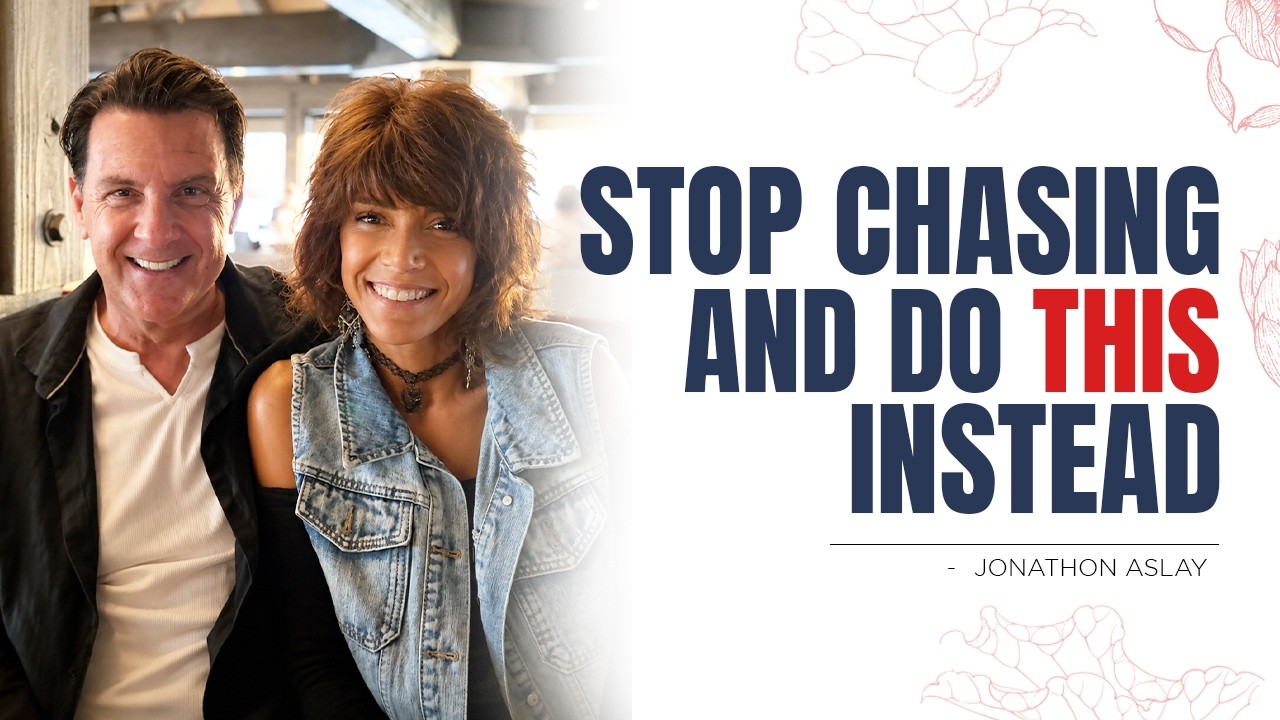
Video summary
The concept of "deentering men" is presented as a transformative self-love practice that accelerates the journey to finding deeper love by shifting a woman's focus away from seeking male validation, approval, or attention as the source of her identity. Historically, women were conditioned to view marriage as a necessity for financial survival and were taught to prioritize their husbands' happiness above their own needs, often suppressing assertiveness to avoid being labeled difficult. This dynamic has evolved significantly since the mid-20th century as women gained economic independence and entered the workforce, yet cultural conditioning persists in the belief that a woman's worth is tied to being "chosen" by a man. By centering one's own values, needs, and emotional well-being, relationships become an addition to a fulfilling life rather than its foundation, allowing individuals to maintain sovereignty regardless of external circumstances.
The video outlines several key shifts required to adopt this mindset, starting with trusting one's own voice over male approval and avoiding the trap of filtering choices based on desirability to a partner. It emphasizes the importance of not overinvesting emotionally or physically early in a relationship before trust is established and character is vetted, noting that chemistry alone does not guarantee long-term success. Furthermore, women are encouraged to stop letting their moods be dictated by a partner's inconsistent behavior or lack of emotional availability, recognizing that such reactions often stem from a fear of abandonment rather than genuine connection. By maintaining personal routines, friendships, and priorities, a woman ensures her life remains the main event, preventing the relationship from becoming a side story where she abandons her standards or identity to accommodate another person.
Ultimately, the goal is to move from a mindset of performance and hope to winning someone over to one of discernment and alignment with personal standards. Instead of trying to fix or guide a man into being what one wants, the practice involves observing actions rather than words and asking whether a potential partner consistently meets established criteria for a healthy relationship. This approach liberates women from the exhausting cycle of trying to be chosen and instead focuses on whether they can genuinely choose someone who aligns with their values. By cultivating this internal sovereignty and self-love, individuals create space for authentic intimacy based on mutual respect and emotional maturity, rather than relying on outdated patriarchal structures where one party must constantly prove their worth to the other.
Read the full video transcript
This self-love practice helps you find
love faster. We're going to dive into
this conversation that's a conversation
about desentering men. If you haven't
heard about it, it's been out for a bit
of a bit of time. Um, you familiar with
desentering men?
>> Not until our recent conversations
around it.
>> What do you know about it?
>> Um, the little I know is kind of what
I've practiced, which I believe is not
to make the man the center of your life.
Yeah.
>> Yeah.
>> Yeah. Center yourself as your life, you
know, hence why it's a self-love
practice. And I'm going to actually read
from my notes of what I wrote about
desentering men.
>> Deentering men means shifting your focus
away from seeking male validation,
approval, or attention as a source of
identity, worth, or direction. It's
choosing to center your own values,
needs, and emotional well-being. So any
relationship becomes an addition to your
life, not the foundation of it. And
we're going to give you some seven ways
to actually it's a self-love practice to
center yourself. So where was this
birthed um desentering?
>> Well, you know, we've been watching um
well you I was watching with my kid.
kind of came along for the ride. But um
Bridgetton season 4 and and uh you sat
down and it probably more from a
curiosity standpoint than anything
>> of the whole life in Victorian times or
>> whatever that was early 1800s. But um
>> the idea of which was all of society or
at least high society their big uh end
goal was to be married.
>> Yeah. Yeah. And uh the whole uh you know
scenarios that are posed are all about
you know finding love and getting the
guy.
>> Getting the guy.
>> Yeah. Yeah. Yeah.
>> So um I think it's an interesting foray
to look at the difference between what
was and what is.
>> Yeah. So I put together some examples of
coming back to where this was birthed
like why this happened this need to
desenter from men because throughout
history I mean to some degree men have
been the leaders men have been believe
me men have been the problems in our
society on a lot of different ways. So
from that vantage point let's lean into
this conversation. So the first one is
marriage as survival. A woman's
financial security depends depended on
her husband and she was taught to choose
wisely, keep him happy and avoid
conflict.
>> Yeah.
>> So to some degree coming back to women
being conditioned like that was the
prevailing narrative for hundreds if not
thousands of years, right? It's all
about, you know, landing the guy for
financial security.
>> Yeah.
>> And and it's literally the definition of
patriarchy, like what you know,
>> being part of the
>> the uh the male the men's club and you
know, those type of things. We didn't
have that option.
>> So, you know, and why this is so
important is literally the shift began
in the 50s and 60s when women went to
the workforce more so than they did
before. and now reached a level of
independence where women are not
dependent upon men
>> for the most part. Yeah. I mean some
still need to be or would like to be.
>> Yes. That and certainly we're in midlife
so it's a little bit different dynamic
and I always say midlife is after baby
making years and before retirement. So
from this vantage point, most of the
women I met, you know, single and dating
after my divorce were women who were
able to take care of, as you always put
it, their own red wagon kind of thing.
>> Carry your own little red wagon.
>> And and honestly, on some level, you
know, as a man, I'm very grateful for
that because it doesn't put the 100%
responsibility on me. Uh particularly
after going through uh a crash and that
sort of thing. Someone said, "I
disagree. Bridgetton on the surface
looks like it's about getting the man.
However, it turns on its head and the
reality is about getting the woman who
turns on you." Yes.
>> Um, interesting. And and by the way, I
was the one I watched Bridgetgerton last
night and I was like, "God, this is so
focused on the balls and getting, you
know, the women, you know, parading
themselves around the men." So, um,
>> so I just wanted to put that out there.
So the second example is the notion I
think women were instilled with the
belief of good girls are agreeable.
>> Yeah.
>> And what I wrote down women were
rewarded for being polite, accommodating
and easygoing while assertiveness and
strong needs were labeled difficult.
>> You know um you know women who are
strong are intimidating, they're
difficult, they're high maintenance and
that sort of thing. Yeah. So to some
degree again this comes back to the
conditioning of why this happened why
the movement I think it's called the
desentering men movement was birthed
because on some level this conditioning
is so innate right from a cultural
perspective.
>> Yeah.
>> What are your thoughts on that?
>> I you know I think the the point that is
being made here is that we're in very
different times.
>> Okay. And uh when I look at my friends
and people I know and then I look back
at the generation of our parents and our
grandparents it was it was you know it's
been different for every 40 and 50 years
you know preceding
>> and you know I think the movement has
been fast but I think the real key here
is that men are still stuck in that
protective
mode or at least that's what protective
you know that that's what we're we're
we're still hoping for.
>> Okay.
>> And in a lot of ways, I think it's
changed in that women have become
independent, careerminded, things like
that.
>> And so, where do the where do the two
things meet so that we can adjust to our
our times today?
>> Okay, that's a good point. And to some
degree, all a man had to do in
relationship is well, my job is to
provide and protect. You take care of
the cooking, the cleaning, taking care
of the kids. And for us in midlife, it's
a little bit more of emotional support
and things like that, but that's their
only there's no emotional responsibility
in the relationship if it's centered
around provide, protect. The other
notion is that women tied their worth to
being chosen.
>> Oh yes.
>> You know, the fairy tales, the movies,
the media, and that sort of thing. When
a woman wins when a man picks them has
been the narrative for so long. And you
know, it fascinates me because I want to
share some I'm going off script for a
second. I want to share something. You
know, it's interesting how as a dating
coach, one of the top questions I get
from women is like, where's this
relationship going? As if the man
decides her fate.
>> Like the man like, by the way, ladies,
let me just say something. You know, if
you want a man to lead your
relationship, you're giving the job to
the wrong person.
>> Well, and that goes back to, you know,
even Victorian times. They were the
provider and protector, and they didn't
have to have the emotional responses and
the vulnerability and the availability
emotionally to be able to
>> connect in that way.
>> They they had to be the provider
protectors, but now it's like we don't
necessarily as women need provider
protectors.
>> There's no doubt. And and this kind of
begs going into intimacy. You know,
oftentimes intimacy was just sex, right?
>> It it wasn't about the emotional
connection between two people. And I
think in today's environment,
>> regulating our emotions, understanding
our emotions, being able to express
ourselves is kind of the foundational
piece of a relationship.
>> Definitely.
>> And men have been getting away with just
being stoic and saying, "I'm not going
to share anything. I'm doing the
providing protection.
>> I think the reality is they've always
sucked at it.
>> Yeah. Yeah. Yeah. Yeah. [laughter] No
doubt.
>> And now they're getting called out on
the table because we're looking for it.
We didn't have to look for it before.
>> Yeah. So, coming back to emotional, the
next one was emotional, physical labor
was always a woman's responsibility.
Women were expected to manage the
relationship, regulate emotions, soothe
conflict, offer uh often at her own
expense. And also there was the physical
labor, the cooking, the cleaning, the
taking care of the kids and everything.
That was throughout history that's
always been the woman's job,
>> right? But it's not anymore. I mean,
that is very very clear to all of us.
Sassy ladies talking about
>> uh it's funny to hear the term that it's
a movement desentering men. I agree with
you. I've never
>> it it hasn't been my mo either. And yet
I think that there are little pieces of
that that's this that still have entered
my life. For example, you and I were
talking about the being chosen part.
Yeah.
>> You know, I consider myself I I mean
I've always been the one that has
>> felt like I, you know, I was poking
holes. I was doing the choosing, that
type of thing. But all of a sudden when
something happened where the roles were
a little bit reversed or something where
I thought I was being chosen but
>> but then you know he would say something
or do something and I'd be like wait a
minute that
>> that wasn't really you weren't really
choosing me on that you know and my
hackles went up and I was like oh I'm
not being chosen wait a minute and I
would sort of grab for him a little bit
more
>> in that way. So there is
>> well I think part of it is there's the
need to [clears throat] feel safe in a
relationship.
>> Yes.
>> And when you don't feel chosen there's
this abandonment potential going on. And
so and I I think we're more hyper aware
now more than ever before. And I think
that's part of what's going on is the
the need for a stronger emotional
connection is that the security that
once used to be kind of standard like my
my parents when they got married divorce
was not an option. They were together 66
years. Now
>> you didn't meet my mother by the way.
>> Okay. [laughter]
Married 10 times. No, I'm just kidding.
Uh no. Um Oh, okay. So, but you know,
there's this idea that it's always been
coming back to the emotional labor, the
physical labor of the relationship
outside of providing, protecting has
always been a woman's responsibility.
And and by the way, I'm not it's not
it's a mutual, it's a shared experience,
and it's not one-sided. Okay, let's keep
going. Okay.
>> Beauty as currency.
>> Let's say more. Uh, from pinup culture
to modern social media, attractiveness
became a primary tool to gain and keep
male attention.
>> Well, that's still I mean, in a lot of
ways, we are we are there in spades when
when we're swiping on the dating apps,
we're first looking at pictures.
>> Yeah. Yeah. Well, I think where it's
going is there's such a push for woman's
beauty as not just to gain a man, to
keep a man. It's all I mean, look at
Cosmopolitan magazine, social media, all
the different things centered around to
some degree a woman's worth is based on
her beauty. Wasn't in the past about her
ability to develop resources, right? So,
I'm just saying that there's so much
conditioning. I mean, to some degree,
you know, wear wearing makeup, you know.
>> I mean, you know,
>> lipstick is designed to plump the lips
so you can get the guy's attention.
>> Yeah. I know. I mean, these days I would
say women wear makeup because it makes
them feel good. They're not I mean, yes,
you know, they want a guy to go, "Yeah,
you look awesome,
>> but that's not necessarily why they're
doing it."
>> But I I I think it's coming back to the
idea of conditioning. It's just been
such an ingrained conditioning. Let's
keep going with the rest.
>> Yeah. And and to to your credit, you
know what I'm also saying around the
being chosen part, I I've never thought
of I needed to desenter men because I've
always been fairly sovereign.
>> Yeah.
>> And yet when I thought I wasn't being
chosen, I immediately went into an
emotional, you know, skittish. Yeah.
Right. Um and and and I think that we're
all capable of of putting someone else
at in our lives to have them be more
important.
>> Yes. In other words, Yeah. making it
about their needs. Exactly. And by the
way, the reason why I believe it's a
movement per se in the sense it's just
creating awareness around these
indoctrinations centered around it's,
you know, the men are the leader of the
relationship. You know, it's all based
on making him happy. I mean quite
frankly ladies I created a channel that
was centered around un women seem to me
seemed obsessed with wanting to
understand why men do this why men do
that instead of the sovereign piece is
why why am I even entertaining this
relationship should be the question and
again in a minute we're going to give
you seven self-love practices to um to
adopt in your life last last two is
stand by your man has been conditioning
and your your milestones are based on,
you know, whether you were married,
whether you had a successful marriage,
that sort of thing. So, it's just
suggesting that the conditioning has
been around and it's the idea to like
abolish that and work on your
sovereignty.
>> So, I said we're going to share seven
things. Um, the first one is trusting
your own voice over male approval.
You're no longer filtering your choices
through will this make more make me more
desirable. You choose what feels right,
what hon what honors your values even if
no man is watching or approving.
>> Absolutely. I think, you know, this is
this is where I believe we tend to lose
ourselves in relationships where um we
want the man to initiate. We want the
man to lead and so some women literally
will go, "Okay, you do all of that and
I'm just going to lay back and you know,
and it's, you know, they they they couch
it, so to speak, under he's in his
masculine. I'm being in my feminine and
those types of scenarios. But I think
that it's
>> it can be insidious towards
>> not being not choosing yourself first,
not Yes.
>> making the decisions that actually have
you be aligned in the choices.
>> Yeah. And you're also from a dating
perspective, you know,
>> by the way, dating is a process of
getting to know another human being.
It's a vetting process. And we've
adopted at least in, you know, for quite
a few decades, it's about attraction and
romance and entertainment and physical
connection. And it's not about whether
or not this person genuinely has
character. More importantly, is that
character going to last throughout the
relationship when you're allowing the
man to be in charge of the relationship?
You know, I've heard women like I've
heard story after story where the man
was in charge of the money and he blew
it all, you know, in a marriage or
something like that or he made such bad
choices. Why would you want to give your
sovereignty, your power to another human
being?
>> Yeah. No,
>> you know, just because it feel look at I
listen, I get how so many women would
wish men plan and pay for dates. I get
that piece. Again, I'm a big proponent
of it's a taking turns process
>> partly because you don't want like I
think when you give it all to that
person and you're giving your power to
that person, you could be setting
yourself up for fail, you know, problems
later on down the road.
>> Yeah.
>> So, okay, number two, no longer
overinvesting early. You don't
[clears throat] give access, attention,
emotional depth before it's earned. You
let connection build instead of trying
to accelerate it.
I mean, you and I have talked about
bringing our representatives to the
first second date.
>> Yeah. Yeah. Yeah.
>> And it's and and this is what you and I
did differently, which is really coming
from a place of like curiosity, getting
to know the person and and really
digging into that before making
decisions that are like, "Oh, this could
be my guy."
>> Yeah.
>> Before ever even thinking, "Oh, this
could be my guy."
>> Well, and and also before trust was ever
built.
>> Yeah. like you know thinking this could
be my guy. What's interesting is because
we centered our early stages of getting
to know each other from a friendship
vantage point. Yeah. that what ended up
happening was through that mutual like
through that mutual shared you know
getting an understanding of your values
my values are you know whether or not
our lifestyles are compatible and our
emotional maturity
>> that once the chemistry was ignited it
got you know was able to take off yeah
we're so hyperfocused at least I've
witnessed this and I think there's a big
shift happening that chemistry doesn't
equal relationship success it's time to
slow down the physical part and really
build on the emotional part.
>> Yeah.
>> But here's the problem. Men are not good
at the emotional side,
>> right?
>> You know, we we've been stifled since a
very young age at being emotional
communicators, being be able to identify
our feelings. So, to some degree,
>> I think that's changing though.
>> I I look at our sons. I think it's
changing.
>> Yeah. And certainly now men are seeking
therapy, you know, for that inner
eight-year-old that we saw earlier. Um,
but I'm bringing this up is because part
of the desentering is also about women's
empowerment to, you know, the topic I
said self-love. And by the way, my book
is called What the Heck is Self-Love?
Anyway, uh you can get a copy of the
book listed below. It's about really
developing that relationship within
yourself.
>> Yeah.
>> Okay. Let's go through the other uh four
really quickly. Your mood isn't
dedicated by his behavior. A delayed
text doesn't derail your peace. You stay
emotionally regulated instead of
reacting to inconsistency.
>> Yeah.
>> You know, that seems to today, you know,
>> you know, inconsistency
uh it it is it it harbors the threat of
abandonment. inconsistency,
>> insensitivity, lack of emotion, lack of
um sharing how they feel, all of those
things that at one time perhaps culture
said was okay. Yeah.
>> As long as you're providing, but now
they're not necessarily doing that.
We're on equal foot footing. And we want
the equal status of them being open and
emotionally vulnerable and and
emotionally available. And I think the
reality of it is that
our mood gets dictated by their lack
thereof.
>> Oh, that's a good obstac
if we should be feeling safe.
>> Yeah.
>> All of those things.
>> That's such a I didn't even think of
that in that that line item. Yeah. is
that so much inconsistency and lack of
emotion from a man affects your mood
basically because you're not feeling
safe in this dynamic. So, okay, let's go
through the other three real quickly.
Keeping your life intact when you meet
someone. You don't drop your routines,
friendships, or priorities just because
you like them. Your life remains the
main event, not the side story.
>> Yes.
Um, we talked about this when you and I
met is that we had reached a point in
our life where we were happy where our
life was at and we weren't you didn't
abandon your painting, you know, because
I mean, yeah, we make accommodations
like, hey, do you want to go out at this
time? And you might have had something
else planned. Yeah.
>> But there's a big difference between
abandoning yourself and your life for
somebody versus it being a mutual
exchange.
>> Absolutely.
>> Yeah. I think, you know, I think the
we've talked about my my terminology
around this that they have to be sweeter
than my solitude. Yeah. Yeah. And what
that really meant to me was that I was
it wasn't only that I was focused on the
man being sweeter than my solitude, but
that my solitude was already sweet.
>> Yeah.
>> And what that means is that I I was at
the center of myself. I was at I was
balanced and centered and felt
sovereign.
>> Yeah. Um, and and in that sovereignty, I
was
knowing I had a knowing that I I was in
the right place always. And if the man
came along,
>> and I shouldn't say if, I was kind of
looking at it when the man came along,
>> um, it it was going to be a beautiful
thing. But in the meantime, I wasn't
going to give up or lower those
standards
>> of where my sovereignty
>> lines were. And I sadly as a coach, I've
witnessed a lot of women believe that
their happiness arrives when a man
arrives. Like, where's my guy? Where's
my guy? Where's my guy? Where's my guy?
Like, literally, I've had
>> I've had clients say that repetitively.
And I'm like,
>> look, the most important relationship
you're ever going to have is the
relationship you have with yourself.
Yeah.
>> You know. Okay. Number five, observing
instead of managing. You stop trying to
fix guide a man into being what you
want. You watch, you listen, and you
believe his actions.
>> Um,
>> what is it Oprah says?
>> What she say?
>> She says something like, you know, they
may tell you who they are, but um, they
will indeed show you,
>> reveal who they are. Yeah. Yeah. Yeah.
So, you know, we can go on and on on
these two. I'm going to wrap up this up
and we'll take questions in a second.
Um, dating from deser dis discernment,
>> not desire alone.
>> Attraction matters, but it's not the
driving anymore. You're actively
assessing alignment, values, lifestyle,
and emotional maturity. What I've been
saying for years.
>> Yeah.
You know, I I I gather a word in the
beginning of every year, as many people
do, and it's been alignment for a very
long time.
>> Yeah. And I think alignment is we've
been saying it from the standpoint of
being aligned with another person.
>> Yeah.
>> And at one point I chose the word, but I
chose it specifically toward me feeling
aligned within myself in terms of the
the self-love, in terms of um
discernment, in terms of setting up
boundaries. And I think if if more
people came from that level of alignment
that they are aligned in themselves and
in their own
>> sovereignty.
>> Yeah. Well, values
>> values and boundaries and
non-negotiables and standards and things
like that
>> that um really strong in them where they
aren't wavered when a man maybe isn't
answering the calls, maybe isn't saying
where the relationship is going, maybe
isn't like
>> do you make a stand for yourself?
>> Yeah. you stand up and you go,
>> you know, something occurs to me and I
want to share the next one, the number
seven one in a second.
>> You know, this conversation is still all
about men,
>> you know, like it's it's well, but
>> to some degree, I mean, we're talking
about what men don't do, right?
>> Right.
>> You know, and and to some degree, we're
even giving attention to it is a is a
centering of the men. Again, the purpose
of this video is really to invite your
own empowerment, your sovereignty, your
self-love, and we're using men as the
backdrop or relationship as the
backdrop. Go ahead.
>> While still
>> allowing in
>> a relationship that works, that's in
alignment with you.
>> Yeah. Not giving up on men, not
abandoning the idea of having a
relationship. And the last one,
self-love piece is to let go of the need
to be chosen.
>> Um, you're not performing, proving, or
hoping to win someone over. You've
shifted into, does this person meet my
standards for a healthy, happy
relationship?
That should be the standard. Does he
meet my standards
>> continuously?
>> Yeah.
>> Because I think when we get chosen,
we're like, "Oh, this one's going to
work." and we go on a few dates and we
get, you know, we get to know them a
little bit more and we go, "Oh, this
one's kind of working." And as it goes a
little further, you know, oh, it's not
only it's working, but there could be a
future here. And we forget like way back
in the beginning, we were like, you
know, they were talking a lot.
>> Yeah.
>> Like maybe they talk too much.
[laughter]
>> Okay.
>> You know, and you forgot that maybe you
didn't really want to choose them.
>> Good point. So what's And by the way,
think about chosen. You know, men have
used romance as their entry point into
the physical connection of a
relationship. Yeah. And as soon as
they've had the physical connection,
what happens to romance?
>> Oh, yeah. That's
>> it kind of goes out the window. So,
again, we chose you. Like in a man's
mind, we've chosen you once, that's all
we need to do. And you were just talking
about choosing on a regular basis.
>> Yes.
>> Um, I'd love to hear your thoughts on
this conversation. The self-love
practice helps you find love faster by
desentering men. Um, post a comment
below. We'd like to hear all your
thoughts. As always, if you find value
in these videos, please hit the like
button. Please share this video. Please
subscribe to the channel and hit that
notification bell so you can be notified
of new videos. And if you want to
connect with us directly,
there's links below. Schedule a
discovery call. Join the group Midlife
Love Mastery. Follow us on social media
and get the books I recommend.