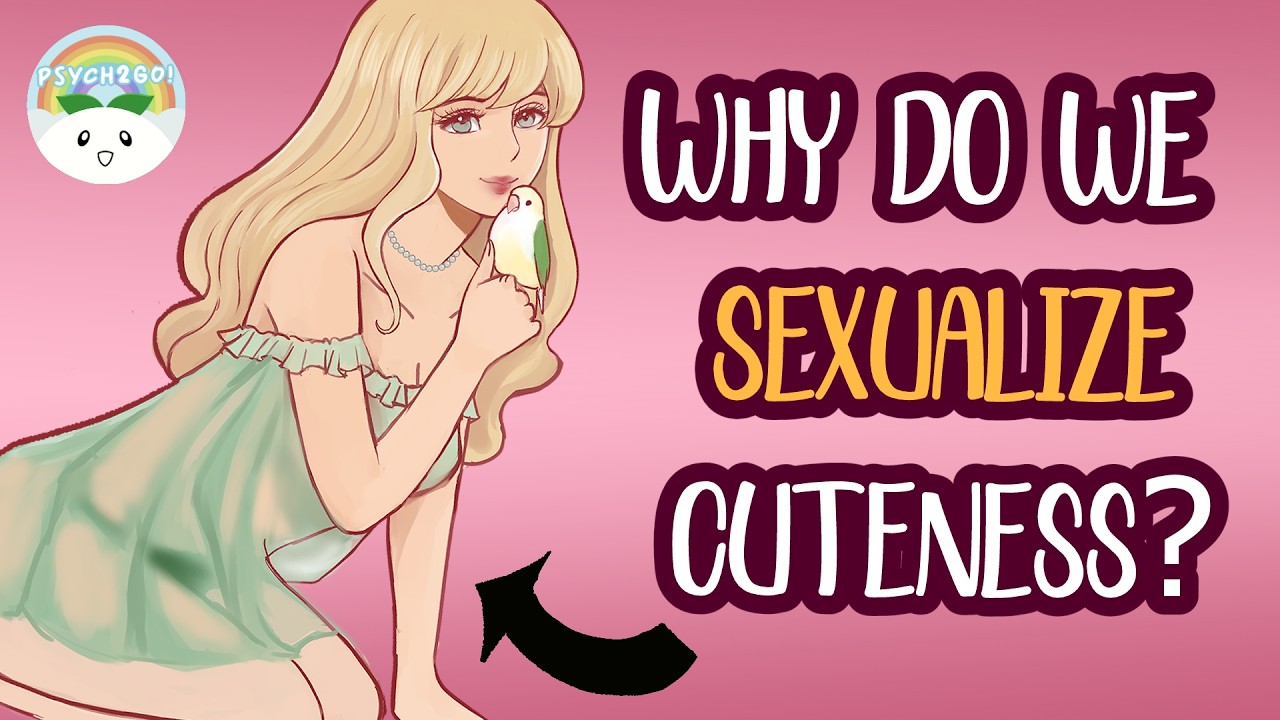
Video summary
Our brains are biologically wired to respond to specific features such as large eyes, soft voices, and small bodies with an instinctive sense of protectiveness, a phenomenon known as the baby schema. When we encounter these traits, whether in infants, animals, or cartoons, our brain releases dopamine and oxytocin, creating feelings of joy, connection, and a desire to care for vulnerable beings. This biological response is essential for human survival and helps us nurture young life. However, problems arise when these innocent features are exaggerated, stylized, or mixed with adult characteristics in media and advertising. In such contexts, the natural emotional response shifts from genuine care to attachment and eventually to sexual desire, blurring the line between wholesome affection and objectification.
This cultural shift often frames innocence as a form of attraction, particularly affecting how society views girls and women. From a young age, females are frequently praised for being cute, sweet, and quiet rather than confident or intelligent, teaching them that being lovable requires remaining soft, unthreatening, and small. Conversely, boys are often shown that attraction involves protecting someone who needs them, reinforcing a dynamic of control rather than equality. Consequently, cuteness evolves from a simple aesthetic into a performance where vulnerability is idealized, and assertiveness or maturity in women is subtly devalued. This creates a blueprint for relationships where one partner feels safe to dominate because the other has been conditioned to shrink themselves to fit a fantasy of helplessness.
The sexualization of cuteness becomes especially dangerous when it equates being desired with a lack of agency, submission, and immaturity. Trends that glorify "baby voices" or submissive behaviors can normalize the idea that real people should be treated like characters in a fantasy built on control rather than respected as whole human beings. This dynamic infiltrates dating, social media, and personal relationships, encouraging some individuals to suppress their true selves to feel desirable while others crave partners who will not challenge them. It is crucial to recognize that there is nothing wrong with being gentle or loving soft things, but it becomes harmful when cuteness becomes a mandatory requirement for love, especially for women, preventing them from aging, speaking loudly, or taking up space without fear of losing their appeal.
Ultimately, understanding the psychology behind why our brains react to cuteness and how culture twists that instinct allows us to unlearn these confusing messages and protect the genuine magic of connection. By separating affection from domination, we can stop shrinking ourselves just to feel safe or desirable and instead seek love that sees us fully, acknowledging our growth and humanity. Recognizing these blurred lines does not ruin the innocence of cuteness but rather safeguards it by ensuring that our reactions are based on authentic care rather than societal conditioning. We must ask ourselves what we are truly reacting to in media and relationships, and who gets hurt when the boundaries between innocence and sexuality become indistinct, fostering a more compassionate and critical perspective on everyday life.
Read the full video transcript
[music]
>> Psych2Go is a digital media organization
that raises mental health awareness by
presenting psychological topics in a
digestible and relatable manner.
Please share our content with those who
need it.
>> We all know the feeling. You see
something tiny, round, soft, and
adorable, and your brain instantly
[music] lights up.
It might be a cartoon character, a plush
toy, or even a real person with wide
eyes and soft features and a sweet
voice.
But somewhere in the mix of aww and
protectiveness,
things can [music] get blurry.
Because sometimes cute starts being
framed as [music] sexy.
The aesthetic of innocence starts being
sold as attraction. The same features we
associate with babies, round cheeks,
high voices, [music]
helplessness, start showing up in music
videos, ads, and influencer culture.
>> [music]
>> And instead of triggering care, they
start triggering desire. Today we are
unpacking that. Psych2Go's mission is to
make psychology more accessible
>> [music]
>> and break down complex topics into
relatable conversations.
In this video, [music] we explore how
cuteness, often seen as harmless or
wholesome, can be subtly sexualized in
media and culture.
By understanding how this affects our
views on attraction, identity, and power
dynamics, especially among [music] teens
and young adults, we hope to spark more
awareness, compassion, and critical
thinking in everyday life.
So,
>> [music]
>> why do we sexualize cuteness? What's
going on in the brain when innocence and
attraction overlap? [music]
And what does this mean, especially for
people growing up in a world that sends
such mixed messages? [music]
Let's break it down.
Why are we wired to react to cute
things?
Okay, so our brains are hardwired to
respond to certain [music] features like
big eyes, soft voices, and small bodies
with instinctive protectiveness. It's
called baby schema and it helps us care
for infants and vulnerable beings.
When we see these traits, the brain
[music] releases dopamine and oxytocin,
creating feelings of joy, connection,
and responsibility.
We're not just reacting emotionally.
We're having a biological response meant
to help [music] our species survive.
This works even when the cute thing
isn't a person. Cartoons, animals,
plushies, [music]
our brain still lights up. But when
these traits are exaggerated, stylized,
or mixed with adult features, the
emotional response can shift.
Instead [music] of care, it becomes
attachment. And when society sexualizes
those traits, our wiring [music] starts
getting confused.
When innocence becomes a fantasy.
Cuteness isn't just about how something
looks. It's about how it makes us feel.
>> [music]
>> We associate it with vulnerability,
gentleness, and emotional safety. But
when those traits get idealized,
especially in girls and women, it
becomes something more than just a look.
>> [music]
>> Becomes a role, a performance.
In pop culture, the most desirable
characters are often the ones who are
soft-spoken, [music]
innocent, or shy.
They're easy to care for, easy to
control, easy to [music] love, as long
as they stay small.
That messaging starts young. Girls grow
up being praised for being cute [music]
more than confident, for being sweet
more than smart.
They're told, directly or not, that
being lovable means being soft, quiet,
and unthreatening. Meanwhile, [music]
boys grow up being shown that this is
what attraction looks like. Not
equality, not partnership, [music]
but someone you can protect, someone who
needs you. Over time, cuteness [music]
becomes more than an aesthetic. It
becomes a blueprint for how to be and
how to want. The problem with
sexualizing vulnerability. Here's where
things get complicated and a little
dark.
When we sexualize cuteness, we're also
sexualizing things like helplessness,
submission, [music] and immaturity.
That creates blurred lines, especially
around love, control, and power.
For girls and women, it sends the
message [music] that being desired means
not being assertive. That if you're too
bold, too confident, too grown, you're
not lovable anymore.
And for boys and men, it can train
attraction to focus on people who feel
safe to dominate.
People who won't challenge you, who
won't say no, who stay small,
emotionally and physically. [music]
It's a dynamic that can sneak into
dating, social media, even the way
people pose in photos or speak in
relationships. [music]
It teaches some people to shrink
themselves and others to crave that
shrinking.
This gets especially harmful online when
trends like baby voice, [music] soft
girl, or submissive and breedable
circulate fast without always showing
where those ideas come from. Real people
are not aesthetic choices.
There's nothing wrong with loving soft
things, and there's nothing wrong with
being gentle, shy, or cute, but it gets
dangerous when cuteness becomes a
requirement for being loved, especially
if you're a woman. Or when real people
are treated like characters [music] in a
fantasy built on control.
We are allowed to grow.
We're allowed to [music] speak loudly,
to age, to take up space.
And we're allowed to want love that sees
us [music] fully, not just when we're
small and sweet, but when we are whole
and human. When we understand why our
brains respond to cuteness [music] and
how culture twists that instinct, we can
start unlearning it. We can separate
affection from [music] domination, and
we can stop shrinking ourselves just to
feel safe or desirable.
Cuteness [music] is powerful. It speaks
to something deep in us, the desire to
protect, to connect, to care.
But when [music] cuteness gets mixed
with sexuality, we have to ask, what are
we really reacting to?
>> [music]
>> And who gets hurt when those lines blur?
Understanding it doesn't ruin the magic.
>> [music]
>> It protects it.
Have you ever noticed this in media that
you grew up with? Or in how people
expect you to act? Let's talk about it
in the comments.
>> [music]
>> And don't forget to like and subscribe
for more content that dives deep into
what we feel,
>> [music]
>> why we feel it, and how culture shapes
it all.
Take care, and we'll see you in the next
one.