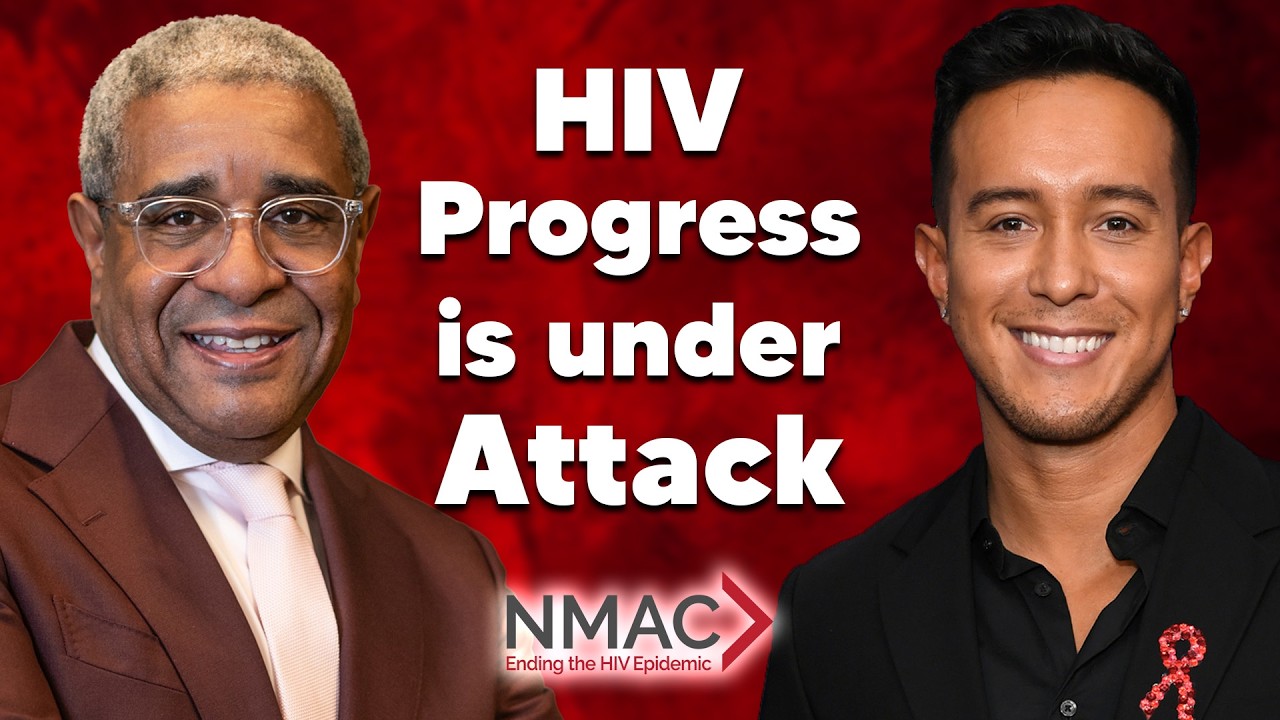
Video summary
The current landscape of HIV/AIDS efforts is facing significant challenges as support for ending the epidemic erodes both within the United States and internationally. This regression is driven by the dismantling of crucial US aid programs like PEPFAR, which strips essential logistical support from global initiatives, alongside aggressive attacks on Diversity, Equity, and Inclusion (DEI) principles that undermine HIV science and data collection. Critical government safety nets such as ADAP, the AIDS Drug Assistance Program, are also under threat, leading to service interruptions, clinic closures, and individuals being forced to miss their life-saving medications. While there was a temporary reprieve in funding last year, the resulting uncertainty has created havoc within the community, disrupting ongoing research into vaccines and cures as well as vital implementation science studies that determine the best ways to reach rural populations and engage young people in urban settings.
The interview highlights a concerning disconnect between federal rhetoric and action, particularly under the current administration. Although the Ending the HIV Epidemic initiative remains in the President's budget, there is a palpable confusion or lack of understanding regarding how HIV prevention, the Ryan White Care Act, and other programs fit together to save lives. This has led to proposed cuts of nearly $800 million for CDC surveillance and prevention, which are essential for monitoring disease hotspots and ensuring public health safety. The situation is further complicated by political rhetoric that frames proven medical tools like PrEP as threats to traditional values or encourages risky behavior, ignoring the reality that preventing new infections saves money in the long run by reducing hospitalization and medication costs. States like Florida have already begun restricting access to these programs due to budget pressures, a move that could serve as a negative model for other states struggling with rising healthcare costs and flat funding.
Despite these obstacles, there is a renewed sense of urgency and hope emerging from the community, fueled by new medical advancements and a resurgence of activism. Pharmaceutical companies are developing long-acting injectables and weekly treatments that make adherence easier, offering a technological solution to the logistical challenges faced by patients. Simultaneously, activists who may have felt complacent during periods of progress are stepping back onto the front lines, driven by the fear of rolling back decades of hard-won gains. The upcoming United States Conference on HIV/AIDS in Anaheim aims to bring together healthcare providers, people living with HIV, and community organizations under the theme "United and Unbreakable," focusing on implementation research and clinical best practices. This gathering seeks to empower attendees while highlighting the incredible work being done by Native American communities in Southern California, ensuring that diverse voices are included in the collective effort to end the epidemic.
Ultimately, the trajectory of the HIV epidemic over the next five to ten years will depend heavily on whether the United States can restore political will and increase investment to match the progress made by other nations. While European countries like England and the Netherlands are already reaching epidemic control, the US risks falling behind without immediate action to protect its programs from being dismantled. The path forward requires community members to engage directly with their lawmakers through storytelling at town halls and state health department meetings, ensuring that the human impact of policy decisions is felt in Washington. By maintaining continuity in services, defending scientific research, and leveraging new tools for treatment and prevention, the community can strive to not only recover lost ground but also build a future where living with HIV is viewed as the beginning of a new chapter rather than an end.
Read the full video transcript
We've seen the continued erosion of
support for ending the HIV epidemic,
both domestically here in the US, but
also abroad through the dismantling of
US aid, stripping funds and logistical
support for PEPAR, the war being waged
on anything considered DEI, undermining
HIV science and data collecting, attacks
on long-running critical HIV government
programs such as ADAP or the AIDS drug
assistance program, and more. 2026 seems
to be a sobering inflection point that
will determine what trajectory the HIV
epidemic will take moving forward.
Joining me today is someone with a
unique perspective having worked both
inside and outside of the US government.
I'm Raif Dazzy. Thank you so much for
tuning in. Today I'm going to chat with
Harold Phillips, the CEO of ENMAC in
hopes that we can get a better
understanding of exactly what is
happening in the world of HIV here in
the US and abroad and gauge the
near-term outlook. Harold Phillips
currently serves as chief executive
officer at ENMAC, formerly known as the
National Minority AIDS Council, where he
oversees the administration of policy,
leadership, development, technical
assistance programs, communications, and
advocacy efforts to help address the
disperate impact of the HIV epidemic on
the minority community. Prior to joining
ENMAC, Mr. Phillips served as the
director of the White House Office of
National AIDS Policy, or ONAP. In this
position, he led the effort to set the
administration's domestic HIV AIDS
priorities to ensure America's response
to the HIV epidemic was accelerated,
comprehensive, and reflective of the
lived experiences of those at risk of
and living with HIV. Mr. Phillips held
prior positions at the Health Resources
and Services Administration's HIV AIDS
Bureau, HERSA, and HAB. He was the
deputy director of the Ryan White part B
and AIDS drug assistance programs or
ADAPP and worked with Ryan White HIV
AIDS program recipients, planning
councils, providers, and patients.
Harold has a master's degree in urban
and regional planning from the
University of North Carolina at Chapel
Hill, an undergraduate degree from
Kalamazoo College in Michigan, and he is
a person living with HIV. Hey Harold,
good to see you. How are you?
>> Good to see you. Thanks for being thanks
for having me out with you. Yes.
>> I mean, thank you. Uh this is such a
privilege and an honor. I've seen you
multiple times at various conferences
and meetings and stuff like that. So,
it's nice to finally be able to to do
this.
>> Yeah. Finally. And we're both looking
good in blue. We've been lots of
different events together and seeing you
online and the content that you're
putting out there and really helping to
normalize conversations about living
with HIV. So, thank you for that work.
>> Much appreciated. Thank you. Um, so I
I'll start with the general question
that I ask a lot of my interviewees,
which is, "What is your assessment of
the current state of the global HIV AIDS
epidemic?"
>> Well, you know, it's so interesting
because this year marks our 45th
anniversary of the CDC's first report of
what became literally became known as
AIDS. So, it's 45 years of the HIV
movement this year. And you know, we've
been at a point where we have new
prevent HIV prevention tools such as
long- acting injectables. We know that
oral prep really works. We know that
getting into treatment and staying into
treatment and getting virally suppressed
means that somebody can't pass HIV on to
their sexual partners. And so, we've got
the science, we've got the tools, we
understand the medicine, they're easier
to take. And yet we've got a government
that is rolling back a lot of our
progress or attempting to roll back a
lot of the progress that we've made both
in addressing the HIV epidemic and
they're rolling back um the general
appro science-based approach to public
health. Um it's impacting us here in the
United States. It's impacting countries
in other places in the world. The
president's emergency plan for AIDS
relief has been one of the greatest
successes of the United States in
partnership with countries around the
world in addressing the HIV epidemic and
bringing their epidemics under control
in many cases. And yet due to um our
government, there have been service
interruptions. There have been
individuals who've had to go without
their medications. There have been
clinics closing around the world and
it's been really threatening our
progress.
>> Okay. A sobering insight into the state
of things.
>> Yeah. Yeah. I mean, one good thing is
that, you know, last year the US
Congress did put money back in the
budget for our programs, but so we did
get funding, but there were all of these
interruptions and there was all this
uncertainty that really did um create a
mess and create havoc uh within um the
HIV community um not only here but also
around the world.
Yeah, I think it's a little
underappreciated just how important
continuity is, not just for like
services and, you know, making sure that
especially with HIV treatment. I mean,
you can't just like skip a month or two
and then hop back on the train. It
doesn't exactly work like that. Um, but
all the wraparound services and then the
science too. I mean there's so many like
uh studies and research that was going
on that you can't stop like you have to
start over if you if you stop it.
>> Absolutely. You know the research comm
community was hit really hard with this
and not and not just our research toward
a vaccine or a cure. they were
definitely hit hard but also something
we call implementation science like what
is the best way let's say to reach um
people in rural areas or which is what's
the best way to talk about HIV
prevention to young girls in an urban
setting you know those kinds of studies
were really things that were being uh
funded through our government but in
partnership with community- based
organizations on the ground and we would
take some of those lessons learned
learned and really try to bring them up
to scale and help replicate them across
the country and also across the globe.
So, a lot of um that work also got
interrupted and stopped um as a result
of a lot of the changes last year.
>> Okay. Gosh, there are so many different
um uh routes that I want to go here and
questions that I have for you. But uh
before we dive even deeper, I would like
to get an idea of like, you know, kind
of where you came from, how did you get
involved in HIV?
>> Yeah. Wow. So
if you really want me to go back like
many a few decades um you know I I I
think initially for me it's uh it's been
an interesting journey um as sort of a a
a young activist sort of involved in
LGBTQ
uh movements as well as um I was doing a
lot of work in the reproductive health
space and marching to pro protect
women's rights to uh abortion access as
needed um and health care. And then um
and then the HIV epidemic came along and
it really um became personal for me
initially um when friends were getting
sick and dying or friends were getting
sick and weren't really saying what they
were getting sick from. Um there was a
lot of stigma and discrimination
as well. um some of it's still pre
prevalent today. But um that was uh
extremely
um upsetting and concerning.
And I first started working on HOPWA
issues, housing opportunities for people
with AIDS um and and using my master's
degree to enter into that space and to
figure out how to provide rental
assistance and shelter uh plus care to
individuals living with HIV. And from
there uh started my work uh at INMAC
back in the day uh working with
organizations and then later joined the
government where I was working both with
the health resource services
administration and the Ryan White
program and then leading EHE the ending
the HIV epidemic initiative which then
led me to working in the White House as
the director of the office of national
AIDS policy. Um and and also during
those days and in that work also um part
of my journey was my own serial
conversion. And so my own personal
experience then became part of how I
thought about and approached policy and
program decisions both on a federal and
national level.
>> Yeah. Well, thank you for sharing that.
That's um
>> that's really insightful. And did did
your own diagnosis
alter your perspective on what you were
doing in any meaningful ways?
>> Absolutely. Um I can remember
um the moment I was doing some work post
diagnosis
and being hit with the realization that
this wasn't just now about other people
or people that I cared about. This was
now also about me. I was looking at some
data and I was thinking, you know, next
year I'm going to show up in that data
as a newly diagnosed individual. And and
having to sit with the serious of that,
but also thinking about it gave me in
many ways it gave me a new fire and a
new sense of urgency regarding the work.
uh in that you know I I always cared
about the work and was always passionate
about it but once I serial converted it
it really felt a lot more personal like
this is about me too. This is about
services. I am now part of this
community in a very different way than
previously. And so, um, I do feel like
that did sort of help guide me and
ground me in the work a little bit more
and in a different way if that makes
sense at all.
>> Totally. Yeah. So, as you said before
entering your role as CEO at ENMAC, you
were the director of the Office of
National AIDS Policy or ONAP at the
White House during Biden's presidency.
What can you give me a just an overview
of what that experience was like? I know
so many people have just have no idea of
the inner workings and um especially
being someone living with HIV and
diagnosed I that just now that I'm
thinking about it is so profound to have
somebody actually living with HIV in
such a a critical role.
>> Yeah. Yeah. Well, thank you for that. It
it was um definitely the honor of a
lifetime um to be chosen uh for that
role. And and what that role does
is the office of national aids policy or
the ONAP director because we love our
acronyms here in Washington. So the ONAP
director in the White House is
responsible for working with the
domestic policy team uh in helping to
shape the nation's HIV response. And so
by that I mean we developed a national
HIV strategy that President Biden
released on his first World AIDS Day as
president. And as part of that strategy,
it called for departments within HHS,
within HUD, the Department of Labor,
uh, to all work together and coordinate
and and sort of make sure their work was
aligned with the president's goals for
ending the HIV epidemic in the United
States. It also served as a call to
action for the academic community, the
faith-based community, community- based
organizations to all line up behind the
president's strategy for ending the HIV
epidemic in the United States. And so,
it was a huge honor as a person living
with HIV to help be a part of developing
that strategy and figuring out how to
move it forward. um and and helping to
make sure the pre the community was
informed about this strategy and that
the community had a place in helping to
figure out what should go into it. There
was a lot of community input uh over
those six months that we spent
developing it too,
>> right? And I know that the ending the
HIV epidemic initiative must have been a
large part of the overall strategy. Um,
it's confounding because President Trump
launched the initiative in his first
term and now seems to be doing
everything to oppose any progress in it.
[laughter]
>> What happened? Why
>> is that the question helping make sense
there?
>> Yeah.
>> Yeah, it is. It is conf it is um
frustrating and and confounding all at
the same time. So in 2019, like you
said,
pres then President Trump started the
ending the HIV epidemic initiative. Um
and and actually to his credit, he was
the first president to say, "Hey, we can
end this thing knowing that, you know,
we have all the right tools both for
care and treatment and for prevention."
And as part of that, I'm going to put
additional money into services designed
to help people learn their status, get
into care, additional money in
prevention in communities, and we're
going to focus on the areas of the
country, including seven rural states
that are most impacted by HIV. All good
stuff. All great. And you know, and we
were able to move that forward. And the
program has been successful too, which
is the thing that like gets me.
The president in this administration
continues to support the initiative. And
I say that because it continues to show
up in his budget. So back in April,
early April, the president released his
budget for 227.
and and the president's budget is
usually I you know people are like you
know Congress really approves the budget
and sets the budget but when a president
releases a budget it really shows what
he and his administration care about and
what the priorities are and like you've
been saying the ending the HIV epidemic
initiative continues to show up in
President Trump's budget. It continues
to be and I think he and the people
around him are aware that that
initiative is part of his legacy good,
bad or indifferent, it's part of his
legacy
and so it shows up.
They also continue to support the Ryan
White program and continue to flatf fund
it where I think they get confused or
there's a lack of understanding and this
is where we need the community's help
with making sure Congress continues to
understand this is what's the role of
HIV prevention and so he they keep sort
of zeroing out or cutting down HIV
prevention funding and I don't think
that there's an understanding about how
HIV prevention, the Ryan White Care Act,
and [clears throat] the Ending the HIV
epidemic initiative all fit together.
You know, how we fund health care in the
United States is this patchwork of
different programs. And I don't think
they quite get that in the Trump White
House. Um, so we need the community's
help to make sure that Congress
understands it because last year,
Congress did put the funding back for
HIV prevention. And so which is great um
but we still have this problem coming
out of the White House. And I think
that's the confusion that you sort of
see and we sort of hear about when we
look at what is the president
supporting. And then also what is he
saying you know because there are
certain groups where HIV
uh impacts those groups more than
others. the LGBTQ populations, the
transgender populations, and then there
are other things that the administration
are doing that lead to the eraser and
disenfranchise of those communities that
also doesn't line up with the
initiative.
So, yeah. So, it's a little
schizophrenic here in Washington.
>> Yeah. I I wonder on the prevention side
of things you what you especially what
you just mentioned with DEI and LGBTQ if
there is some sort of because I've seen
this sort of rhetoric play out before
where
for example the the idea of supporting
something like prep um could be seen as
encouraging
like just gay sex- w without any kind of
um discretion. And so
prep is seen as this like enemy to
puritanical Christian, you know, the
reason why we're put on the earth to
have to get married and have babies, for
example.
>> I wonder if that's kind of like a,
>> you know what I mean?
>> I you know, I I I think that is most
definitely a part of it because we we've
heard those same kind of arguments in
the reproductive health space. So like
myopristone is going to like encourage
people to have random sex and with no
consequences and you know without um you
know folks getting pregnant which is
studies have not shown that is that is
true at all. Um, you know, it
>> yeah, there are a lot of myths, a lot of
mis misconceptions around HIV prevention
and the tools that we have right now and
and quite frankly, we need to do a lot
of work to educate folks to really
understand um and to get them, you know,
to to really be in favor of of not only
the understanding the effectiveness, but
understanding that by preventing folks
from acquiring HIV, we ser we save in
long-term cost, cost of medication, cost
of hospitalization, cost of care. And so
it makes sense to invest in HIV
prevention.
>> And you mentioned community. Um what's
the community's role? I remember when I
went to AIDS watch for the first time
last year and we were getting ready to
go on the hill and we were doing our
training and um there was really an
emphasis on uh on those of us meeting
with our congressional representatives
to really utilize storytelling and how
impactful that is. Do is that the same
sort of kind of draw for community here?
>> Absolutely. And I would say and I would
encourage folks to not only think about,
you know, storytelling and meeting with
your members of Congress here in
Washington, but at home, you know, this
summer they're going to be doing a lot
of town hall meetings back in
congressional offices. Um, you know, we
we joke here in Washington that often,
you know, members of Congress get on
planes on Thursday night and they leave
town and go back to their districts uh
or their home state over the weekend.
They're there. And I think community has
a great opportunity to go to those
offices, to go to those town hall
meetings, and to use storytelling to
talk about the impacts. They really um
need to understand
how the decisions that they make here in
Washington are impacting people at home.
Um and so the people, the services, the
families. Um, and I think being able to
tell those stories is really important
and impactful. Here in at INMAC, we try
to when we have the opportunity to bring
folks in to work with them to learn how
to use their sto to use their stories
and use their lived experiences to
influence policy and program. That means
so much more to members of Congress than
just me, some dude here in Washington
that may not vote for them because I
don't live in their district or I don't
live in their state and and I'm here
talking policy and facts, but somebody
who can give that lived experience about
here's how this impacts me at home, that
goes a long way. Okay, I want to talk
more about ENMAC and the annual
conference that you guys host and put on
the also known as USCA or the United
States Conference on HIV AIDS which is
the largest HIV conference in the US. Um
how
considering all the things that we've
been talking about h how do you see the
role shifting this year and in years to
come? What gaps are you guys trying to
fill or how are you trying to empower
those that are attending?
Yeah. So, thanks. That's a great
question. So, this year our conference
is going to be in Anaheim, California in
September. Um, and the conference is
going to do a couple of things I think
that are different and and both
exciting. Um, because this is the 45th
anniversary of the AIDS movement, our
theme for this year's conference is
United and Unbreakable. And so, you
know, I it's a chance for it usually is
a chance for us to bring the HIV
community together. And by community,
I'm I'm not only talking about people
living with HIV, but people at risk for
HIV, but also our community of health
care providers, those that are working
clinics, those are working at C in CBOS,
those that are working as case managers
and peer navigators. And it is an
opportunity for us to come together to
learn new skills to learn the latest
that's going on both in terms of HIV
prevention care and treatment but also
sort of the policy. And this year we're
also going to focus on bringing some of
the implementation research to the
community and we're also focusing on a
clinical track as well so that we can
make sure that our workforce is using
some of the best practices. So, the
conference itself, uh, there are usually
over 2,000 participants. Um, this year
with us being in Anaheim, I think it's
going to have a regional Southern
California flare to it. Um, so that's
going to be um, an exciting aspect of
it, too. And I think a lot of people
also don't realize that in the state of
California, they have the largest number
of federally recognized tribes and
Native Americans in Southern California.
So, you know, Southern California, we
usually hear a lot about the
African-American and the Latino
community, but we're also going to be
showcasing and highlighting the Native
American community, too, because of our
location in Southern California. And
they've done incredible work on working
to end the HIV epidemic and addressing
STI and viral hepatitis. So hopefully
we'll get to lift up some of those uh
examples and models for the rest of the
country to think about as we all work
collectively to end the HIV epidemic.
>> Okay, awesome. Yeah, Anaheim is right in
my backyard where I grew up. So it'll
it'll be a nice treat to just uh drive
our tour guide and tell us what not to
miss [laughter] then other than Disney
which everybody
>> Disneyland's going to be across the
street I'm sure.
>> Right. Exactly.
>> Um well, okay. Okay. And I saw that you
have developed something called the HIV
situation room in MAC. Can you talk a
little bit about that? That sounds
intriguing.
>> Yeah. So, this came about as a response
to a lot of the things that were
happening here in in um Washington with
the new administration where we did like
a these short sort of newsletter policy
briefs just to let everyone know sort of
what the situation was here in DC
because things were happening so fast.
if you recall sort of after January 20th
uh of 2025 and there were a lot of
changes and there were a lot of things
that were happening and the situation
room newsletter was just a way to let
people know what was happening and also
ways that they could get involved and
really sort of do something about it
because we were getting a lot of uh
emails or phone calls from members of
the community going well what can I do
about this and so the situation news
room newsletter was our way of sort of
putting making sure that was out there.
>> Is that something that's ongoing?
>> Yes, that and an Inmax newsletter. I
would encourage uh any of your viewers
and listeners to check out uh InMax
website uh nmac.org
and um sign up for our newsletter and
and those policy briefs as well. I think
they're a great way to stay in touch of
what's happening here in the news and
and also ways you can get involved.
There's also information about how to
get involved in some of our leadership
and empowerment trainings as well um
that we that we frequently do.
>> Okay, great. Yeah, I'll have the links
any links that we mentioned, including
that one, down in the description box
below this video when it goes live.
>> Cool.
And okay,
so I mean we're we're trying to
reconcile with potentially
uh nearly 800 million in proposed cuts
to nationwide prevention and surve
surveillance at the CDC.
How does the community continue to
diagnose and respond if the data
gathering infrastructure that's been
there for so long is being dismantled?
Yeah, I think you know like I said
earlier about really informing and
educating lawmakers about the impact of
surve
also need to do the same thing when it
comes to surveillance. You know our and
and we saw this a lot we saw this a lot
during co like our surveillance system
needs help. It needs support. It needs
federal funding. um it may even need
state and local funding in order for it
really to get where it needs to be. Um
and this is not the time to cut back on
uh surveillance and in disease
reporting. And so I think it's the
community really needs to make sure that
our voices are heard among lawmakers so
that we can try to protect and defend
against some of those cuts.
And hopefully what we're seeing with
measles might be a kick in the butt too
to make sure that we're monitoring.
>> AB:
>> Absolutely. Absolutely. you know, we um
measles, everything from flu, um you
know, COVID, uh imprains
of imp
um making sure that folks are getting
vaccinated against and that we sort of
have the surveillance report so that we
can know where some of our hot spots
are. Um it's it's all so important. Um
and it it and it is something that you
know when when public health works I
think many times people think you don't
see it and it's not important but it is
sort of working behind the scenes and it
is important that we continue um
continue support for it. Florida
recently changed the qualifications for
ADAPP or the AIDS drug assistance
program in the state as well as limiting
some of the benefits of the program too.
Have you heard any
immediate impacts of these changes? I
know there was I mean there was a lot I
saw read a lot of articles talking about
all the things that could go wrong, but
I'm just curious to know what the
latest. It was a huge push between both
community and the press to get the word
out about the changes in eligibility in
the Florida AIDS drug assistance program
that we're going to to um
cut off access to life-saving
medications to thousands of Flidians
living with HIV. And so there was a huge
push between both the community, the
press, and working with lawmakers to um
get um funding reinstated so that those
11,000 people have access now through
the end of June. Um so that is an
example of where rapid advocacy and work
with lawmakers really helped to make a
difference there. Um but we are which is
great. Um, and I think that past June on
starting on July 1, we're gonna have to
see what happens with the program and
and funding for the program. But Florida
is, I think, like many states, facing a
time when we're seeing increased
medication cost, increased insurance
cost, the loss of the ACA premium tax
credits, and they're all and flat
funding of the AIDS drug assistance
program. And so as more people are
having to rely on that program, program
is stretched. The programs are stretched
and um without an increase in funding,
people are going to lose access to
life-saving medications. Um and we
could, like we started talking about at
the beginning, see a lot of our HIV
gains rolled back, which is not
something we want to do.
Do you think that this is kind of
working as a model for what people are
hoping to do in other states as far as
limiting ADAP um limiting the benefits
of ADAP using it to to justify you know
paying for other things in the state?
Yeah, I think you know um there was a
report that came out just recently that
talked about there are 23 states where
they are feeling you know for lack of a
better word they're feeling squeezed
either more people are coming into the
program and they don't have enough money
to serve them all or they're having to
look at other measures to try and cut
down costs so they can maintain access
to medications for all the people they
currently have enrolled. So there 23
states that are feeling this pressure.
So you know hopefully um they don't use
Florida as an example because part of
the challenge in Florida was
um it has local laws about a public
notification process when you change
eligibility and and at first that wasn't
followed but then they had to take some
other steps. But I think it's really
important, especially any consumers that
are are people living with HIV who are
uh listening to your program, that they
really
um attend your state AIDS drug
assistance program meeting to find out
what's going on with your program, to
find out what pressures your program
might be under. Um because I we really
are going to have to work in
collaboration with state health
departments to figure out how do we
maintain coverage and access to
medication for people currently in the
program and then what do we do about
future growth of the program and have
those conversations with lawmakers.
>> Is that is this something where in the
past the government kind of just signed
off and said okay if you need an
increase in budget here it is. it kind
of just happens and now it's not
happening and that's why we need to have
these discussions or
>> for years the Ryan White program has
been flatfunded.
>> Okay.
>> And and you know and just like and I've
I've used this example with folks too.
So just imagine you had $20 in your
pocket 10 years ago. Imagine what you
could buy with $20 10 years ago. Now
think about that same 20 bucks in your
pocket today. You might not even be able
to fill the you can't fill the tank up
with gas for sure. You can't buy the
number of groceries that you put in that
bag today is not the same as what that
$20 would buy 10 years ago. So just
think about that. So even though the
Ryan White program under Ryan White part
B is like a $1.2 billion program,
$1.2 2 billion in what it could buy 10
years ago versus today is not the same.
And at the same time, we've been doing
what I would say is a good job of
testing people and trying to link them
to treatment. So we've had more people
coming in to the program and our buying
power has shrunk due to the increase of
cost of medications, increasing health
care costs, and then the loss of premium
tax credit assistance. So the program is
really strained right now.
>> Yeah, that's such a good point because
I've heard arguments made about how oh
it's just going up and up and up every
single year without restrictions. how
that's fiscally irresponsible, but like
inflation, hello.
>> It's much higher than what CPI is saying
it is.
>> Um,
>> and that's why I use that example of
like $20 in your pocket 10 years ago
versus $20 in your pocket today, right?
>> Yeah. You don't have the same buying
power.
>> How do people figure out where they can
go if they want to attend their state's
ADAP meetings?
So, one of the places to go, um, if you,
um,
I would say each state health
department, um, has a Ryan White program
and, and I would start by googling that
and going to your website and finding
that piece of it out. Um, if you're
living and you're watching this from a
major city like a Miami,
like a San Francisco or a San Diego is
an example or a New Orleans or Memphis,
you can Google your Ryan White program
in that city and then find out about
sort of when your planning council is
meeting. Those are great ways to get
involved and at least um hear what's
happening and going on. They also on
their websites are supposed to post
their meeting notes. So even if you
don't want to go to a meeting, but you
want to sort of find out more, you can
look for the um meeting minutes on the
website and and do a quick read and find
out what's happening and then maybe
you'll be inspired to go uh go to a
actual meeting.
>> Okay, cool. And I was just thinking
maybe chat GPT or Gemini can help narrow
down that search a little bit too.
>> There you go. a a good use of AI.
>> Yeah.
>> Um Okay. So,
all things considered, what is your
outlook on the fate of ending the HIV
epidemic? Maybe not just in the US, but
globally in the coming 5 10 years out.
I there are a number of countries many
of them were pepfar funded and many of
the pepfar funded countries have looked
at ways to continue within their own
country to continue those programs. In
the next 5 to 10 years we are going to
see other countries reach epidemic
control or ending their HIV epidemic
before the United States.
And and it pains me as a proud American
to be able to say
or to have to say they're going to get
there before us. Um um but I'm excited
that they're going to get there because
maybe that will show us what is actually
possible with both political will,
determination and funding. Um,
I think for us, um, if we don't see some
increased investments and and political
commitment to this, we're going to we're
going to fall backwards. Um, some of our
progress is going to going to roll back
downhill in the United States. But I
think other countries are going to sort
of show us the way. And I think we we're
already seeing it in some European
countries. Um in in England for example
um they are reaching epidemic control. I
think the Netherlands was another one
that may be sort of reaching epidemic
control in in their country as well. Um
and so you know it can be done. Um but
yeah it's going to take the United
States a little while longer.
Well, for those of us who are here in
the US, uh, how do we continue to to
have hope and strive for progress in
light of what's happening?
>> I think, you know, at the same time, I
the thing that excited me uh because
INMEC just had the biomedical summit in
Chicago um back in [clears throat] in
early April. The thing that excited me
is that people are finding new and
different ways to collaborate
and to to meet community needs. Um, and
that I [clears throat] think is
exciting. I think I'm also excited about
the ways that um conversations about HIV
and the conversations about health are
showing up on social media. Um and um
the ways that folks are combating some
of the stigma and the misinformation are
also exciting. Um and so that those are
the things that still give me hope. Um,
and I think that, you know, pharma is
coming out with lots of of new and
exciting products for both HIV
prevention, like the six-month
injectable long acting. I mean, they
pharma is also working on long acting
treatment. Um, like imagine
[clears throat]
instead of having to take an HIV pill
every day, once a week,
that's I'm like I'm jazzed about that.
I'm like this that would be great. You
know, there's stuff all sorts of things
that I do once a week that, you know,
incorporating that into my routine
rather than my daily routine because to
be honest, if I change my daily routine
in the slightest way, I'm sort of
delayed on taking my medication or it's
like, oh my god, I forgot. like my god I
ran out of my bedroom and didn't or I
was running late and I left it on the
dresser man what you know and so being
as as our farmer partners continue to
make this easier on us I think it's
going to be um that gives me hope as
well for the future and and knowing that
hey they've invested a lot in this
they're not going to let the government
give up on us
>> yeah You're so right. There's been such
a response. I mean, I think initially
people were just sort of dazed by what
was going on, but now you're and that
was part of the argument too about
social media. It's like there's all
these really elevated podcasters and and
pseudo intellectuals, pseudocientists
who are spouting all all this
misinformation. It's like, where are the
people w with reason and logic and and
science speaking on on social media? And
you're really starting to see them rise
and gain a following and have louder
voices. And then like activism is really
taking root again and people are
becoming nimble like you with your
newsletter just we kind of became maybe
complacent in some ways because things
were moving along and now it's like
people are are charged and fired up. I I
I don't remember if it it was Peter
Staley or someone else at Croy at one of
the plenaries saying that it's like, you
know, all the act old activists were
like this old rock band that had retired
and now they're kind of like dusting off
their instruments and like you're
getting ready to do another final tour
again. [laughter]
>> Absolutely. Absolutely. That that is
that is so true. And I was just talking
to a friend of mine from Florida who had
pseudo retired and then you know when
the crisis happened he like put on his
shoes got off the sofa you know started
you know going back to Tallahassee and
you know the thing for for for a lot of
those activists the thing that really
got them is they spent decades of their
lives fighting for this movement and
they had done dedicated so much time and
energy and effort to this and they don't
want to see it dismantled. They don't
want to see us roll back to those days
where, you know, people were were we're
were dying in mass numbers and so
they're like they're coming off the
couch.
>> Yeah.
>> Well, as we wrap up, is there anything
else you'd like to share that we haven't
been able to address yet?
Well, I think um the thing I would say
is definitely you mentioned USCA
uh and our theme of united and
unbreakable 45 years of the HIV
movement. Uh please definitely check out
our website to um find out more about
the conference and ways that you can
engage in the conference. We are working
on both our program, our plenary. Um,
for those of you that are in the
Southern California area and want to be
part of the host committee, there are
opportunities to get involved and engage
there. Um, and I would say thank you so
much for what you do. um in and like I
said, normalizing our conversations
about HIV and being, you know, hopefully
a role model and an inspiration for
other people who, you know, may feel
like this de the the news of um of them
learning that they're HIV positive
doesn't necessarily have to be the end
of of your life. It can be the beginning
of your life and put you on a a path to
something new and and something where
your story can help influence other
people. So, thank you, Ry, for doing
what you do.
>> Absolutely. And and a diagnosis can even
lead you to a life that's even greater
than you ever thought possible before.
>> Exactly. I never thought I'd end up
working in the White House and being a
gay man living with HIV and talking to
the president about life with HIV. The
president of the United States is like,
>> yeah, that's that's huge. Thank you for
everything you've done and continue to
do. Um, it's really inspiring for me.
Um, and I'm looking forward to attending
USCA this year and sharing uh that
experience with everyone as well.
>> Thank you.
>> Everyone at home, please like this
video, comment, give me your questions.
I'm happy to follow up too. Uh, don't
forget to share this with anyone who
might find value in this content. Those
are the best ways that you can help
support me and my channel. Harold, thank
you so much everyone at home. I'll see
you next time. Cheers. It's a buy.