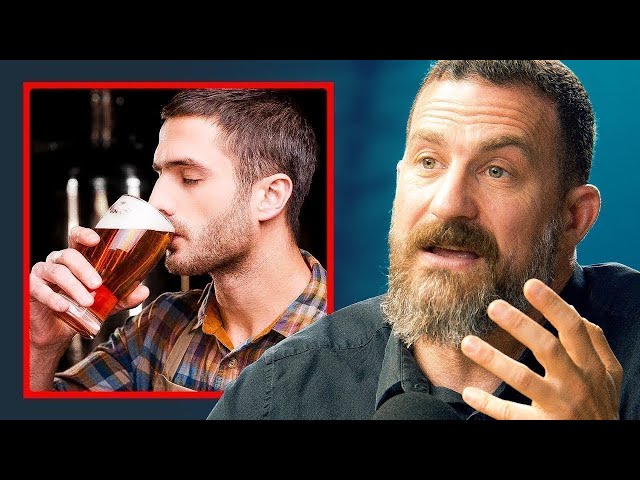
Video summary
In this discussion, Dr. Andrew Huberman addresses his previous episode regarding alcohol consumption and its associated health risks, noting that it provided many listeners with a justification to reduce or eliminate drinking from their lives. He clarifies that while he is not an anti-alcohol crusader, the data indicates that for non-alcoholic adults, two drinks per week represents roughly the upper threshold before significant health issues arise; beyond this limit, risks such as elevated breast cancer rates in women increase substantially. Huberman shares his personal history of being sober three times and maintaining a thousand-day streak without alcohol, framing sobriety not merely as a cessation of substance use but as a productivity tool that offers more consistency, time, and financial resources to focus on meaningful activities. He emphasizes that he provides facts rather than directives, allowing individuals to make the best decisions for their own health based on evidence regarding cancer risks and overall well-being. A significant portion of the conversation focuses on the social stigma faced by non-drinkers and why drinkers often dislike those who abstain. Huberman explains that society frequently assumes people who do not drink have a problem, yet he argues this is unfounded as he does not suffer from excessive glib inhibition or require alcohol to function socially. He recounts experiences where declining drinks was met with comments like "that's so boring," attributing the friction to drinkers feeling that non-drinkers take the fun out of social gatherings by removing a substance they believe loosens inhibitions and enhances party vibes, particularly in college settings. However, Huberman challenges this notion, asserting from his experience as a club promoter that nothing good happens in nightclubs after 1:00 AM; instead, there is often messiness, fights, stumbling, and poor decision-making. He suggests that non-drinkers can capture about 80% of the enjoyment of an event by leaving early or engaging with others who are not intoxicated, thereby avoiding the negative behaviors associated with heavy drinking sessions. Huberman further contrasts alcohol with other substances to illustrate its lack of unique benefit compared to alternatives like psilocybin. He notes that even when taking a macro dose of psilocybin (around 0.75 grams), he maintains sharp thoughts and better mood than after consuming alcohol, which leaves him feeling sloppy and muddy the next day despite having fine heart rate variability recovery. This comparison highlights how alcohol's effects have been folded into human life through tradition, anchoring bias, marketing, and cultural rituals that equate holding one's liquor with masculine ideals, even though such consumption crushes testosterone levels over time. He observes a stark difference between young drunk individuals who may seem energetic but are actually in the early stages of decline versus older drinkers who often appear infantile due to years of excessive use, suggesting that alcohol is not necessary for having a good time and that better ways exist to socialize without it. The dialogue also shifts toward broader lifestyle factors influencing mental health, specifically circadian rhythms and light exposure, which Huberman argues are critical determinants of well-being. He cites a recent study involving 85,000 subjects showing that the ratio of sunlight received during the day to artificial light at night profoundly affects brain and body function; insufficient sunlight or excessive nighttime artificial lighting is linked to depression and anxiety. While he encourages people to dance late into the night occasionally as part of life's festivities, he strongly advocates for getting morning sunlight immediately upon waking, a practice that benefits both adults and children equally. To mitigate the disruptive effects of modern light environments without sacrificing social enjoyment, Huberman recommends practical adjustments such as dimming lights at home, using red-light functions on phones to eliminate blue light exposure before sleep, or switching devices to grayscale mode—a trick he credits his friend Rick Rubin for teaching—as effective ways to protect circadian health. Ultimately, the conversation concludes with a balanced perspective that acknowledges alcohol's role in many cultures and festivities while urging individuals to critically evaluate its necessity against other methods of social engagement and relaxation. Huberman points out emerging trends where people are combining traditional socializing with health-promoting protocols, such as eating nutritious food together or visiting venues like Russian baths on Wall Street that offer hot saunas and cold plunges alongside optional alcohol shots. He asserts that many current mental health issues in young adults stem from disrupted circadian rhythms caused by excessive screen time and artificial light rather than a lack of social connection. By understanding the physiological impacts of light sensitivity—where eyes are less sensitive to bright morning sun but highly sensitive to dim nighttime lights—and adopting simple habits like outdoor breakfasts or window-facing indoor activities, individuals can significantly improve their mood and sleep quality without incurring any cost, effectively reclaiming control over their health outcomes.
Read the full video transcript
coming back to the discussion about
alcohol which is one that you tried to
interject with Berton I think your
episode that you released last year yeah
back end of last summer yeah I think
that really opened a lot of people's
eyes to some of the risks of alcohol
I've been kind of flying the flag of it
as a tool for productivity for quite a
while to avoid alcohol yeah that I think
when you entirely or or do do you drink
at all uh I've brought it back into my
life now but I did six months sober
three times and then thousand days
without alcohol too um but yeah I'm
seeing right now a huge push back
against unseen
unintentional drinking and I think that
yeah your episode last year opened a lot
of people's eyes to it thanks I mean
again I I don't tell people what to do I
give them the facts so they can make the
best decisions for them I mean it's very
clear that unless you're an
alcoholic and provided you're an adult
that you know two drinks per week
maximum um is about the upper threshold
Beyond which you're going to start
getting some health that's called that's
called a warm-up to a warm-up in England
yeah so I you know I've never been a big
drinker I don't drink um I I'm lucky
that it's not something that's that's a
strong draw for me you know I have
friends that are recovered alcoholics um
and you know their lives are so much
better as a function of being sober but
for non-alcoholics I mean I think
everyone should just know the uh the
health risks especially women where the
risks for breast cancer and other types
of cancers are are elevated so very much
and what was interesting to me about the
response to that episode is that I think
many people took it my the impression I
got was that many people took it as
permission to finally stop drinking or
drink less because they didn't enjoy
drinking and as you so you know
beautifully put out on social media you
know drinking is one of the few
activities that if you don't partake
people assume or accuse you of having a
problem and it's just wild I mean like
why would that be and I think that I
think also make once actually I was out
to dinner with a colleague years ago and
I declined drinking that even I was just
talking to the the visiting speaker and
um she said God that's so boring and I
well first of all I don't have a problem
saying what's on my mind without alcohol
right I don't have I don't have a
excessive gabic inhibition um so I'll
say what I want to say um you know as uh
as best I can but you know I think
drinkers don't like people who don't
drink because it takes the fun out of it
for them because there is this idea
that's you know prolific on college
campuses like if everyone's drunk that
somehow like the entire like Vibe of the
party is going to take on a new new
flavor and frankly I remember I went to
a college UC Santa Barbara where at the
time people drank a ton a ton discovered
alcoholics you right um and I used to go
to parties sometimes I look around I
thinking like everyone here is just
blasted like if anything happens
drinking did you drink in college yeah I
drink in college but not that often I I
had a habit and I don't recommend this I
had a habit of going out about once a
month and I would tie one on you know
absolutely infrequent but binge yeah I
never you know I my tolerance to alcohol
was always such that I would get drunk
quickly and then sober up really fast so
I was drinking late into the night um
but then I'd sober up really fast now of
course we know the sleep you get after
even one drink is vastly diminished
every single person that's got a aura or
a whoop strap something is feeling you
right now um and I think that alcohol to
me um never felt good I never liked it
and it was a recipe for you know there
was a lot of fights there was a lot of
you know there were a lot of bad stuff
happens when people are drinking too
much drunk driving to say nothing of
poor decision making I mean I to me it
just feels like there's so there are so
many better ways to have a good time
that that that alcohol isn't necessary
but I do understand that it's a big part
of many cultures and I do understand
that for for many people it's so part
and parcel with um relaxing and with
festivities and with feeling comfortable
and with drawing a boundary between the
normal day and the rest of the day
that's interesting there's a ritualistic
aspect to it yeah there's a sort of it
divides the day in an interesting way so
I'm not judgmental of it I but um for me
I mean I'll go to a party where people
are drinking and just hang out I'm
perfectly good dude I've stood on the
door of a thousand club nights in my
career right as a club promoter and I
can promise you for the people that are
thinking I like the sound of this
justification this excuse that I don't
need to drink anymore Dr hubman has said
that you know maybe it's not for you
maybe it's not as
enjoyable nothing good happens in
nightclubs after 1 in the morning I am
patient zero I have the I Am the Doctor
of late night parties okay like that's
one of my expertise nothing good happens
in the nightclub it's this sort of
messy sloppy
fights and kissing people you shouldn't
and and and stumbling all over the place
and stuff if you go out and you don't
drink and you go home at 1: in the
morning I think you probably get to
capture about
80% of the enjoyment of the event that
you would have done had you have drank
pre-drinks gone out done the whole thing
and I got a bit of push I got quite a
bit of push back from a a sobriety
Community a few years ago I did this
thousand days sober as a club promoter
which was I guess I could kind of big
deal in some regards for like pushing
the sobriety Community forward but I was
never doing it because I had a problem I
was doing it because it gave me more
consistency and more time and more money
to spend on things that I cared about so
it was a a productivity tool like like
the pomodora technique right or going to
bed on time or something and um they had
a little bit of a problem they had a big
problem with the fact that I said there
is something to the enjoyment of
drinking on a night out I think anybody
that says alcohol has no role in
improving the quality of a night out
ever just hasn't been on enough good
nights out right there there are ways
that it can improve kind of loosens
people up it can reduce their
inhibitions if you want to go and dance
you know you're dancing at a rave or or
at a festival which I think there's one
going on quite close to here um if
you're there it's really great
but if alcohol wasn't so widely
distributed I think people would ask a
lot more questions it's like you can't
see the wood for the trees right you you
don't question it's such a it's baked
into the the fabric of of just human
life every single time that I take a
like a macro dose but low of psilocybin
one where I can still function what is
what is um 75 75 to one gram of so
that's about it's a little less than
half of the macro therapeutic dose for
for intractable depression which is
something like 2.2 grams or so so you
can still hold a conversation depending
on what strain you've got but every
single time that I do it
without fail a thought comes into my
mind which is why does anyone drink
alcohol why does anybody do it because
I'll go to bed my HRV my recovery is
fine the next day maybe I'm a little bit
tired like I've had a lot of like
activation I've been super
energetic very little hangover on the
evening I don't do stupid things it
makes me want to say nice things to all
of my friends my thoughts are sharper
than they were before sometimes they're
silly but they're sharper and then you
compare it with alcohol and it's this
kind of sloppy muddy
very unile it's it's just I I I totally
get what you mean when you've taken a
little bit of time away from it and you
look at it in the harsh light of day the
effect that alcohol gives you just
aren't that enjoyable and it's been
folded into people's lives through
tradition and through just anchoring
bias and continuation yeah and marketing
you know the idea that like someone can
quote unquote hold their liquor is such
like a it's been um made synonymous with
you know masculine ideals it's like I
mean it's it's kind of crazy because we
know it also it crushes testosterone
levels what's interesting is that um you
know I I forget who said this but you
know there's a very different picture of
a young drunk versus an old drunk you
know someone who's been just drinking
for too many years it's not a pretty
picture sus they become infantile they
become really infantile and um you know
again I'm I'm not the anti alcohol
Crusader we did I did that episode not
expecting much of a response actually um
that CHS just how out of uh out of touch
sometimes I can be I think just to
reiterate it man I think it gave people
the excuse MH what you did is you gave
people the justification you legitimized
them it's like the best bucks tell you
something that you already know it was
like they everyone always lots of people
always had an idea I probably shouldn't
be drinking maybe I don't enjoy it that
much maybe these aren't my friends
they're just my drinking Partners maybe
I don't like the way that I feel the
next day maybe my life could be better
if I sto
drinking there's the justification well
I'm happy to hear that for those folks
you know now the information is out
there I've um I was accused several
times uh on Twitter SLX of um taking all
the fun out of parties in the at least
in the Bay Area but I'll tell you I grew
up in the Bay Area the good parties
ended a long time ago but they still
exist you know I mean I think there you
know and when I say other ways to have
fun I don't mean like oh everyone should
sit around and do math or read
Neuroscience although for me that's fun
um you know I think I
think in a broader sense I think there's
a shi nowadays that people really think
about you know how to engage socially in
ways that are interesting I mean perhaps
it's a again a sampling bias because of
the topics that I cover and who talks to
me but like in the Bay Area there are
these Russian Bas in New York there's
spy 88 by the way they don't pay me a
say this by I like to go this uh Russian
B down in Wall Street you go there and
you know got hot saunas and cold plunge
and people are you know young people are
there enjoying themselves and they
actually serve alcohol so they'll have
sometimes they'll do like little gimlets
of of vodka or something there and so
you know people sometimes that's part of
the tradition the most Russian thing
that I can think of shot of vodka whilst
hot right so that and you know and
they've got theories as to how that can
help and listen I think some of those
Traditions can really be wonderful but
you know people are starting to combine
socializing with health promoting
protocols and you know going out and
eating good food together like eating
really wonderful food um with the social
component the you know I I'll go into
the grave talking about getting morning
sunlight something that maybe we should
talk a little bit more about and people
like roll their eyes I'll just say
there's this incredible study now just
out in nature um mental health published
about 80 that has
85,000 85,000 subjects showing that the
ratio of getting a lot of sunlight
during the day to getting minimal
artificial light exposure at night it
really sets the tone of your overall
system and is and is associated with
brain and body that is and is associated
with better mental health outcomes
across the board and the inverse right
if you're getting too much artificial
light at night or not enough sunlight or
both is associated with everything bad
Elevate depression anxiety Etc now I do
believe people should get out and have a
good time don't avoid the bright lights
of a city or a club have a great time
like dancing socializing those are great
reasons to stay up too late and get
minimal sleep or sleep in the next day
great reasons so every once in a while
sure 20% of your life you're going to do
that and probably some percentage of
time is also going to be raising kids so
you're up because you have to to keep
keep them alive which is important to
our species so thank you but I think
people you know forget that yes you can
go outside and get morning sunlight and
which I highly recommend people do that
as as most people know but I mean so
many benefits on mood and mental health
and improved sleep that just and it's
completely zero cost you know but I
often get accused of okay well but what
if you have kids like how do you do this
well you take the kids with you because
guess what they need it too you you take
them outside you eat breakfast outside
or at least facing a window indoors it's
not going to be as good as having the
window open or being outdoors but even
if the sun's on the other side of your
apartment building I mean these things
have an outsized positive effect on
health
and I'll wager both upper limbs anyway
uh that many many many of the mental
health issues that we see nowadays in
young people and in adults is the
consequence of disrupted circadian
rhythms because of a lot of time in a
two-dimensional screen space which I'm
not condemning I spend time on and put
out most of my content on social media
and YouTube Apple Spotify right um and
in addition to that to the lights are
too bright at night and they're not
getting enough sunlight during the day
and an important thing to understand
about our circadian Health you know
circadian system in health is that
throughout in the morning and throughout
the day your eyes are less sensitive to
light and you need more of it in order
to get what you need okay broadly
speaking and at night your eyes are far
more sensitive to artificial lighting
and you need far less of it in order to
disrupt your circadian system in bad
ways disrupt your mental health now does
that mean you have to walk around with
sunglasses at night and you know Dim All
the Lights in your your house well no
but you could afford to dim them a
little bit um you could afford to switch
to the red light function on your phone
there's actually a triple click red
light function on every phone that um
maybe I'll pass the the the throughput
of what to do to your phone it's which
allows you to El exibility functions on
on iPhone mine goes to mine goes to gray
scale when I do that yeah you can yeah
so you can have it switch to grayscale
or to purely red uh you know eliminate
the Blu is a trick that my friend Rick
Rubin taught me I was like oh this is
great you know you don't you know you
don't necessarily have to purchase Blue
Block glasses or anything like that
we'll get back to talking to Andrew in
one minute but first I need to tell you
about ag1 ag1 is a product that I've
been using every single day for over
three years now Dr huberman himself is a
massive fan because it is the most
comprehensive foundational daily
nutrition supplement on the market my
digestion is so much better since I've
started using ag1 and I genuinely can't
remember what life used to be like but
when I stopped using it I do not like
the way that my body feels since 2010
ag1 has led the foundational nutrition
Revolution continually refining their
formula to create better smarter ways to
elevate your health ag1 is the
supplement I trust to provide the
support that my body needs every single
day and that's why they've been a
partner for so long if you want to take
ownership of your health it starts with
ag1 you can get all of this with your
first purchase a free your supply of
vitamin D five free travel packs free
pots shakers and that 90-day money back
guarantee by going to the link in the
description below or heading to drink
ag1 /wi isdom that's drink a1.com
wisdom thank you very much for tuning in
if you enjoyed that clip with Dr hberman
you will love the 3our episode that you
can watch right here go
on press it