Video summary
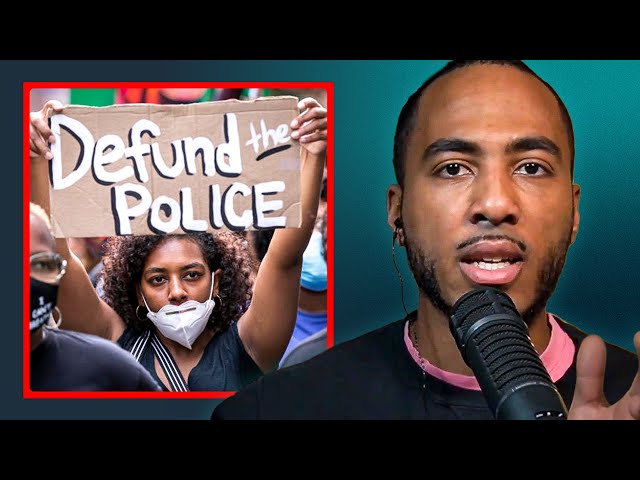
Looking back at 2020, Coleman Hughes argues that the collective reaction to George Floyd's death was driven more by a desire for performative empathy and signaling than by an accurate understanding of systemic issues. He suggests that many people felt compelled to apologize or make reparations without grasping the underlying reality, leading them to implement policies like defunding the police based on incomplete information. A key factor in this misperception is the American media ecosystem, which rarely reports on similar incidents involving white Americans; for instance, Tony Tempa died under circumstances nearly identical to Floyd's—knee-on-neck and loss of consciousness—but his death received almost no attention because he was white. Consequently, when such events occurred against Black individuals, they were viewed as isolated examples of racism rooted in slavery rather than part of a broader pattern that also affected other demographics. Hughes contends that the movement to defund the police disproportionately harmed the very communities it aimed to protect while simultaneously elevating Black elites who did not face similar risks. He cites a 2020 Gallup poll showing that only about 20% of Black Americans wanted less police presence in their neighborhoods, with 80% preferring the same or more; yet, defunding proceeded anyway despite this clear public sentiment within the community itself. The result was catastrophic: 2020 saw the single greatest year-over-year increase in homicides in America over the past century, a surge directly linked to mass police retirements and de-policing strategies. These excess deaths were not evenly distributed but heavily concentrated in poor, predominantly Black neighborhoods where law enforcement presence had been most critically needed. The speaker highlights a profound irony that many supporters of defunding failed to recognize: wealthy individuals living in gated communities with private security details often advocated for gutting police forces specifically designed to serve impoverished areas. Hughes points out the hypocrisy of people displaying "defund the police" placards while relying on their own private protection, illustrating how empathy toward a video clip can override rational thought and evidence-based policy making. He references his conversation with Joe Rogan regarding this contradiction, noting that such behavior represents a disconnect between one's opinions and deeds—a gap he believes has never been wider in modern discourse. Hughes also addresses the role of social incentives in silencing dissenting voices during the frenzy surrounding George Floyd's death. He explains that anyone attempting to present realistic crime statistics or poll data from Black neighborhoods would have faced immediate backlash; a Black person doing so might be labeled an "Uncle Tom," while a white person would be accused of racism, leaving no viable vector for truth-telling. Even Sam Harris released a 90-minute audio piece urging caution that was widely criticized despite its accuracy. This dynamic reflects the internet's obsession with looking good rather than doing good, where caring words often mask harmful actions without fact-checking their real-world implications. Furthermore, Hughes draws parallels between the medical establishment's handling of COVID-19 protests and the police response to racial injustice, noting how quickly principles were discarded based on political narratives. Early in the pandemic, right-wing activists protesting lockdowns were denounced by major institutions for jeopardizing public health, yet weeks later, massive pro-racism marches received blanket approval with claims that racism itself was a pandemic. Hughes views this hypocrisy as evidence of elite institutions losing faith and prioritizing optics over safety. He concludes that historians will likely record the summer of 2020 not just as a moment of global protest but as a cautionary tale about how unexamined empathy, combined with media bias and social pressure, can lead to policies that cause hundreds or thousands of preventable deaths among marginalized groups.
Read the full video transcript
looking back on 2020 it was almost like
a collective apology from people that
didn't really know what was going on we
feel like maybe someone's been racist
somewhere maybe this George Floyd thing
is indicative of some huge big
underlying problem oh my God I don't
know that makes me such a piece of
I I I'm not I don't have my finger on
the pulse empathetically sympathetically
I I I I'm not a good person what can we
do to not only signal that I'm not one
of
them whoever them are but also to make
reparations to fix this problem I need
to I need to make sure that these poor
minorities are okay and let let's bring
a bunch of impetuses along a bunch of
procedures a bunch of a bunch of
initiatives that people can do yes so
the the one of the reasons people had
that sense is
because because the
media the national media in America does
not report when there are police
incidents with white Americans it just
doesn't become news and it's partly
because of the media it's partly because
there's less of an audience for
it so for example there was a guy named
Tony Tempa who died in a way extremely
similar to George Floyd with an
officer's knee on the top of his back
for about 13 minutes and they're
cracking jokes as he's losing
Consciousness saying wake up for school
Tony just really uh terrible behavior
for a group of police officers and he
died whole thing was caught on video you
can look it up on on
YouTube almost nobody to this day knows
or or or cares about it because it
didn't catch fire because he happened to
be white this was just a uh two or three
or four years before before George Floyd
So when you have a media ecosystem where
those stories are unseen
now when you see it happening to a black
person everyone assumes that this kind
of thing only happens to black people
because they are black and then it
becomes an example of racism that ties
into the whole Legacy of slavery Legacy
of racial inequality and really
infuriates people and so people in 2020
they lost all reason they didn't ask
whether all the policies they were
implementing had anything to do with
helping black people uh the kinds of
black people that are poor and from poor
uh backgrounds like George Floyd instead
they promoted black people to the heads
of uh board Boards of publicly traded
companies as if those are the same kinds
of black people that need help like
George
Floyd uh in essentially they made the
Black Elite even better off than it was
before while at the same time uh
defunding the
police for or neighborhoods where black
people need them the most okay at the
time of the summer of 2020 Gallop pulled
black Americans with three simple
questions do you want more police in
your neighborhood the same police
presence in your neighborhood or less
80% answered the same or more only 20%
wanted less police and that was the
position a very minority position within
the black community of the black lives
matter movement the defund the police
movement and so forth police were
defunded in many cities in America and
then later refunded um in many cases by
popular demand within the black
community in certain places and the end
result was that 2020 represented the
single greatest increase in homicide
from year to year in America in the past
hundred years okay that is a a shocking
fact that most people don't know and it
was a direct result of the reaction to
George Floyd's death the de policing the
the uh Mass retirement of the police the
general sentiment of anti- police and it
hurt nobody more than the black
community because those homicides were
not equally distributed in nice
neighborhoods and less they were highly
concentrated precisely in communities
that are disproportionately black and
disproportionately
poor I taught Joe Rogan yesterday on his
podcast about luxury beliefs from that's
been recently
repizo police is patient zero for this I
mentioned that I was walking through
Austin and saw a house that has a defund
the police uh placard in the garden and
a private security sticker next to the
front door in the
window
yeah the fact that people like that
don't see that irony is really
depressing to me I mean there are
literally people that have their own
private security detail okay who
supported defund the police there are
people in gated neighborhoods who pay a
premium just so that strangers can't
come near their house not even in their
house but near their house who want to
want to gut police
forces in that are you know for for poor
neighborhoods this is amazing and that's
that's what happened in 2020 and more
importantly that's what can happen uh in
particular in America on the left when
people when people only obey their
empathy towards a
video and suspend the rational thought
that should come with that okay this
video is horrible let's all agree that
what is actually the best way to move
forward let's not just rage let's
actually think uh look at evidence and
not be so Hasty with supporting policies
that might backfire for the very people
you're trying to help I think it would
have been very difficult during the
summer of 2020 to have put out uh
realistic crime impact statistics um
what the actual polls are saying from
Mostly black neighborhoods I think
anyone that posted that it would have
been very quickly lambasted as some
white supremacists race denial you don't
care you don't understand you don't
know I that would have been the smart
thing to do but the incentives all
aligned to not have I mean who who was
going to be the person that does that if
it was a black person they'd be accused
of being an Uncle Tom if it was a white
person they'd be accused of being a
racist right that there's there was no
Vector in which that narrative could
have inserted itself I don't think yeah
I mean Sam Harris tried to I think he
released like a 90minut 90minut audio
pull back from the brink yeah pull back
from the brink which was very good one
of the best for the people that haven't
listened to it even now it is it is one
of the best like monologues I think that
I've ever heard that thing is phenomenal
it was spot on in my view uh and I'm
sure he took a lot of flak for it uh as
as my friend Camille Foster likes to say
people like me and Camille have the
melon and force field which is you know
no one is going to call me a racist they
make as you say they might call me an
Uncle Tom or a traitor to my community
and so forth to which I would
respond what what could be more of a
betrayal to your community than not
speaking out when you know that policies
are being adopted that are going to lead
to
potentially hundreds or thousands of
excess deaths for black people cuz
that's what happened the internet is
obsessed with the prioritization of
looking good over doing good mhm
completely obsessed with it because the
distance between our opinions and our
Deeds have never been greater so it's
very easy to hide behind words that
sound caring and and and just and
forthright and charitable and
understanding and the implications of it
what actually happens kind of no one
really ever fact checks that is he was
the guy and I'm sure he had good
intentions who could have foreseen that
defunding the police would have
negatively impacted black people well I
don't know if if you'd used a little bit
of a little bit of second order thinking
a lot of people foresaw it a lot of
people talked about it at the time me
included uh but mostly we were ignored
because of the the frenzy
around uh around the moment I mean it's
very interesting to live through a
moment that I think will be written
about uh by historians yeah um uh we're
we're fairly close to the same age we
haven't gotten too many of those I think
but it will you know the summer of 2020
we we we have to acknowledge what
happened uh a man died in police custody
in a city
Minneapolis not one of the Cities
frankly that is known by
non-americans and there were Pro test
not just in America all around the world
London Newcastle I'm from the northeast
of the UK in and even more surprisingly
in non-english-speaking
locations I think as far as Japan if I'm
not
mistaken um so this is this was
obviously it had something to do with
the pandemic and the fact that you know
everyone was stuck at
home uh you know I don't know if you you
recall this but I I do remember just the
palpable sense of I don't get to move my
body every day I don't get to go out and
when there're when you finally have an
outlet for that uh I think the
floodgates kind of opened do you think
that the same outcome would have
occurred had it not been for Co no no I
think I think it would have struck a
chord no doubt but I think it would have
been like on10th as as
crazy um but you know the the other
thing that many people have point
pointed out is just how quickly the
principles of the medical establishment
disappeared and buckled so what I mean
by that is in early covid there were all
of these protests by
right-wing uh kind of activists and and
citizens around lockdowns right there
were protests uh outside where people
didn't want to be locked down and and
they went outside and I I can't remember
whether they were wearing masks or not
but those were roundly denounced by
every important Medical Institution in
the country because they were
jeopardizing uh her immunity they were
killing Grandma
events absolutely yeah mass mass mass
cont Mass spreading events or whatever
they yeah yes uh and and then literally
weeks weeks later when you had
thousands or tens of thousands of people
marching in the streets
shoulder-to-shoulder all over the
country the whole medical establishment
just turned around and said n it's okay
because it's for racism right and even
some of them said when you when you
think about it isn't racism a kind of
pandemic
also and people watch this uh
understanding that Elite institutions
are capable of such hypoc hypocracy of
such you know such a loose relationship
with their own principles and lose Faith
this episode is brought to you by
element stop having coffee first thing
in the morning your adenosine system
that caffeine acts on isn't even active
for the first 90 minutes of the day but
your adrenal system is and salt acts on
your adrenal system element contains a
signs backed electrolyte ratio of sodium
potassium and magnesium with no sugar no
gluten no coloring no artificial
ingredients or any other BS it plays a
itical role in reducing muscle cramps
and fatigue while optimizing brain
health regulating appetite and curbing
Cravings the orange flavor in a cold
glass of water is literally the best way
to start your morning I've done it every
single day for over three years now way
before they were a partner on the show
and I love it best of all there is a no
BS no questions asked refund policy so
you can buy absolutely risk-free and if
you do not like it for any reason they
will give you your money back and you
don't even need to return the box right
now you can get a free sample pack of
all eight flavors with your first box by
going to the link in the description
below or heading to drink LM n.com slod
wisdom that's drink LM nt.com
slod wisdom thank you very much for
tuning in if you enjoyed that clip you
will love the F length podcast in all
its Glory which is available right
here go on press it