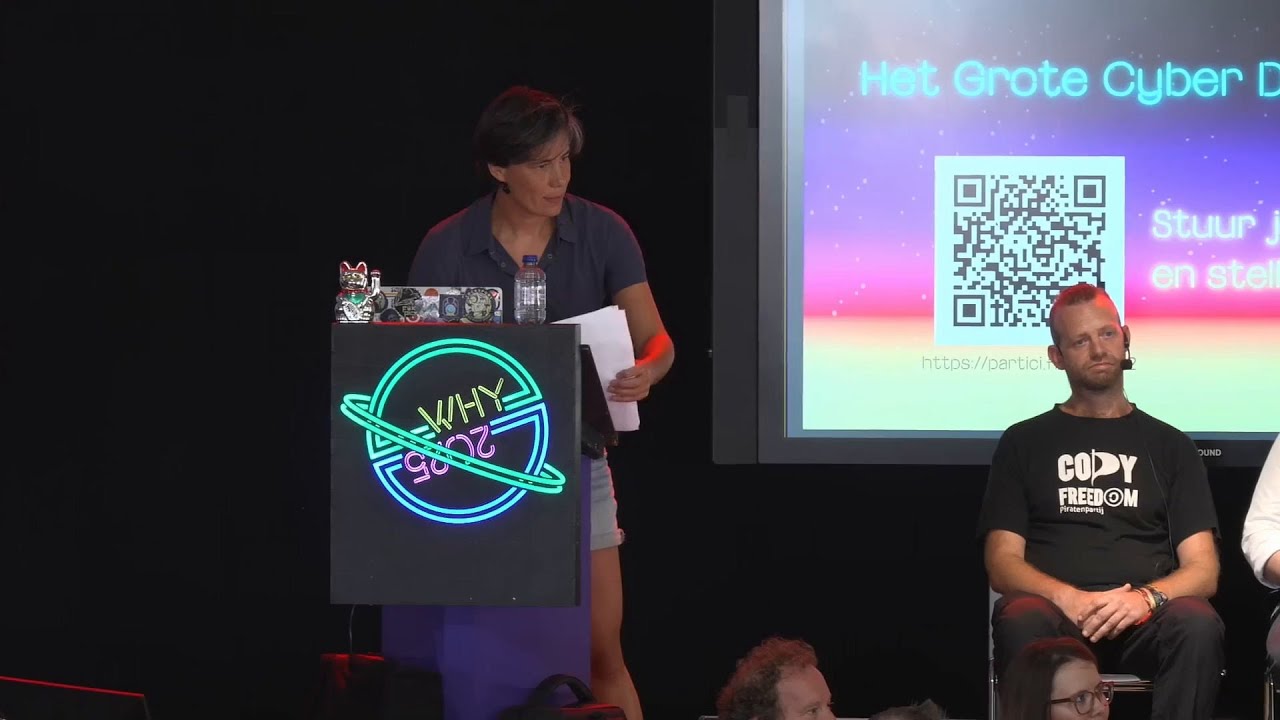
Video summary
The debate on why 2025 matters centers on finding a delicate balance between fostering innovation in artificial intelligence and ensuring robust regulation to protect civil rights and national security. Participants from various political parties and expert consultants agree that neither broad bans nor leaving the sector unchecked is viable; instead, they advocate for precise, fine-meshed rules similar to physical safety standards like non-toxic paint on toys. A critical tension exists regarding government capacity, with experts warning that current administrations lack sufficient in-house digital expertise, often relying too heavily on expensive external consultancies which leads to knowledge loss and reduced purchasing power. Consequently, there is a strong push for establishing dedicated centers with top-tier technical staff capable of guiding decisions on whether the state should build systems internally or regulate market offerings, rather than outsourcing critical infrastructure like European digital identity wallets without oversight.
Significant concerns were raised about cloud sovereignty and data security, highlighting the dangers of dependence on U.S.-based providers that could potentially access Dutch government communications without consent. To counter this risk, a domestic "Plan B" for a national cloud is proposed as economically viable through competitive bidding models, yet political inertia persists despite public support for such autonomy. The discussion also firmly rejects weakening encryption to create backdoors for governments, arguing that systemic security violations undermine human rights and democratic principles; however, exceptions under strict judicial oversight for specific criminal investigations are deemed acceptable. Furthermore, the debate addresses legislative feasibility, noting that many digital laws remain unimplemented due to complexity and poor coordination between agencies like those handling NIS2 directives, urging legislators to ensure new rules are practical enough for municipalities and businesses to execute without falling into a compliance swamp of overlapping regulations.
Beyond technical specifics, the session explored the power dynamics inherent in relying on large technology companies versus promoting open-source alternatives and cooperative development models. Experts warn that concentrating too much influence in tech giants threatens democracy, suggesting solutions include government leadership in defining ethical frameworks while ensuring societal literacy about AI's dual nature as both a helpful tool and a potential source of harm like generating criminal plans. Successful collective action is cited through organizations like SURF for higher education, which reduces redundant tendering costs among municipalities, though skepticism remains regarding whether joint tenders truly improve outcomes or merely consolidate power among fewer providers. The consensus suggests that current procurement processes often yield identical offers regardless of effort, reinforcing the need to break these cycles and start constructing practical domestic solutions rather than engaging in endless debate loops.
Ultimately, the conclusion emphasizes that informed political decisions must be backed by specialized knowledge rather than relying solely on external consultants who may lack deep technical understanding or cultural context. There is a clear call for better-educated policymakers within parties and committees to address shortages of cybersecurity experts, potentially involving citizen engagement at local levels where much digital transformation occurs. The shared concern among all participants revolves around maintaining sovereignty, security, and democratic values in an increasingly globalized tech landscape, with the urgent need to stop theoretical discussions and begin building domestic capabilities for cloud infrastructure, enforcement bodies, and ethical AI frameworks that align with European cultural contexts rather than blindly adopting American or Chinese approaches.
Read the full video transcript
[Music]
Welcome to the uh big debate. I will
not be moderating that debate, but you are very
welcome. We are very happy that we
have found politicians who are willing to
stand up for this in this debate.
The debate will be moderated by Saar
Sleeger, whom I hereby would like to uh
announce. He's going to uh take
over here. Uh, we are also very happy that
Saar is willing to step in at the last minute
. Jeroen should actually
still have that, but unfortunately, due to
the circumstances, it has been traded. So
we are very happy that Saar wants to do that.
Saar, thank you so much and that is very kind. And
may I have a welcome round of applause for Sam.
Thank you.
And I am a journalist, and I was
actually planning—this is my first
Y—to be present here as a kind of fly on the
wall and see
what is being discussed here by
all the hackers present, to get good ideas
for stories.
But now I'm standing here and it's an hour, so
probably everything that can go wrong will go wrong
if you can help me.
If the experts can help me, if the
politicians can help me. All help is
welcome. But look, I think we're going to
make a good debate out of this, because I'm
interested in what's going to
happen politically over the coming weeks and months. Well, that one
was too. So uh, I would say I'm going to just go do chairs
first, we're going to do some chairs in a bit.
I need to take a quick look. I think I'm going to
organize things a bit here,
but may I already ask the politicians
onto the, uh, stage? Uh, I'll start with
Astrid Oostenburg.
And now
Erik Kent from Vol.
Hi, welcome, you're always welcome. And Heiske
van de Linde of the VVD. I
hope it fits, because we see
quite a lot of people on that stage. Um,
I tried this, but it's not going
well anymore. Jan, am I saying this right?
Jan is busy. Yes.
[Applause]
So
then take So from D6 or maybe I should then
and then Sebastian van het Eren from GroenLinks
and we’ve added someone else,
what’s his name again from the
Pirate Party.
Come in, and uh, I introduce myself here.
This is Matthijs
Matthijs Pontier. Matthijs is also
enough. And a round of applause after all.
But of course we aren't going to have this debate
with politicians alone, because,
well, how interesting is that really?
We also have experts. How many experts do
we have? Three or five.
Well, the expertise found itself in a
corner. You know
what? The experts may
sit here for a moment. Right
, next time.
Yes,
[Applause]
the experts, uh, I introduce themselves in
more detail once we are underway.
Otherwise, you have to keep clapping for so long,
and nobody likes your hands. And
[Applause]
good. Uh, what we are going to do then, we have
five propositions. Uh, we have uh time,
police. We have four, or maybe
I thought five, experts. Am
I missing something? Oh wait, uh, Breng,
that's coming too, right? Uh, another chair,
please. Um, let's see
. Yes. Um, roughly what we're going to
do, roughly, you know, we have
five propositions there. Uh, one of the experts
will introduce these statements, and
then we, the ladies and gentlemen of the
police, will respond to them. You can also
respond, but how again? There was
an online option to comment.
Who can tell us that? Well, at
some point you can have a different
QF code.
Oh, something is wrong.
[Music]
Signal Angels.
The signal angels that collect
questions coming in via signal. Ah
yes, okay. So the signals that keep an eye
on the signal. Uh, they will
occasionally ask questions from the audience, so
from you or from the people
watching online. That is also possible. towards the shield,
eh, those who can adjust to the experts
or to the politicians. And I believe that the
politicians, um, or the experts, if they
think this is completely nonsense because
it is being said now. What do you do
then? Maybe someone can
demonstrate it briefly. Yes. Yes.
Yes, this is a kitchen ladle.
I don't know exactly, there is something more going on
, but
actually, I don't know exactly how myself. Okay, just a quick note
before we begin.
I'm still a bit in the
Liposuction myself, so I'm just
relaxing a bit right now. I will briefly
introduce myself. I am Sleders. I work with the
Arpus program or Vtrl.
Um, and I am here because I came here to
Y—I mean, because I am always
interested in safety and
safety policy. And I always
wonder, the moment measures
are announced to
protect us, to protect national security
, then I always wonder
whose safety this protects and
whose safety it does not. And
I thought: "Well, there are a lot of people here
who have something to say about this subject
." So that is how I got here. I
suggest we um take a look. Oh,
a QR code is appearing on the screen. That is being
fixed now. And if you know those QR codes,
you can ask your question there. They go
to the angels. The sting is caused by
the bee, and then that question is asked.
possibly wise. Um,
I suggest we start
with the first couples. I need to
check.
I'm just thinking for a moment, or could you
suggest something more detailed? I haven't done that yet.
No. Is that okay with you? I am pleased
that you are here. That you have
interrupted holidays, returned from beautiful
paradises.
I propose that we start with the
first statement. I'm just
checking who in heaven's name would introduce this into what
grounds is he going to lay? Aren't you
first on the list or not?
[Applause] Do
n't know what the statement is. No, I have to,
you have to explain the statement
.
Oh oh, I was told that the
propositions would be presented by the
experts. They have no idea what they are going to
talk about. So I am going to figure out what
the propositions are. And perhaps you can
digress a little bit more. Okay, okay. Okay. Uh, let me just look
. Yes. Oh, is
regulating AI or letting go in growth. Is
he doing it? Okay.
Micropone
exp. Yes. Yes. Okay
, that's great. Ah, uh yeah, well,
regulating or letting go and growing, that is of course just
a super
false dichotomy anyway. Uh, because it’s not
regulating and growing or letting go, and it just all
collapses nicely on its own
. That possibility is actually still quite there. You always have me with
you. Um, so, and yes,
from my expert role as an AI
consultant and AI lawyer, I say:
"Regulation is indeed necessary
because we also have male protection
here in Europe and in the Netherlands. And
I, I am not sure if we
want to head towards the end of America or
the end of China. And if we
don't want that, then of course we have to
say something about it."
Thank you, Nelke. Which of the politicians wants to be the
first to, uh, respond to this? I found
himself Erik, see you Erik, thinks it's good. Yes
Erik, tell me.
Uh yeah no I think
test cautiously test. Yes, can you hear
me? Yes, no, I think regulating is a
good idea. Um, we are of course already doing that
with the AI Act, and I am
glad that uh, one of the main points
in the AI Act is that uh, we need to work
on uh, yeah, the understanding of, and I think
we are really in a uh, yeah, a sort
of hype right now from Select Pelly. So
that you focus on, uh, a bit more understanding in
society of what it actually is,
but also what it isn't, what
the limitations are, and what the
risks are. I think that is very
important, because it isn't going away.
And I'm not saying you have to embrace AI,
but in a time when AI is everywhere,
you do have to start thinking, well,
which skills are actually becoming more
important. And
spotting [ __ ], for instance, is a very good
example. Then ask questions like, uh, what is
important then, but what do you find
important?
I think it is important that we do not
go along with everyone getting into that high.
Um, I see AI companies now, uh, that, if
I just ask, "But what
exactly is AI about that project?" Because I think it's just
visualization. Very
nice, matured in real time with all kinds of
external data sources. Then you
also see, like, yeah, that's right. But otherwise,
we don't want a prize and we won't get
funding. Well, I think that says
something about the hype we're in.
And I think it is good when regulating
that we therefore focus very strongly, also within the
education group, on knowing the risks, knowing the
dangers, and also knowing the application. I
mean, uh, uh, there is actually a lot of beauty involved,
and what, what does the VVD think about that? Well, what uh
is uh
is that uh what I say there as a liberal
is hard to hear or uh Okay, for them
it is easy to hear. So then uh what
[Music]
I
yeah
talk for a moment look we like this if it
is clearly audible. Okay.
[Music]
No, microphone.
You have to,
yes, do that. Just... uh... what I don't think about it,
I wanted to
say, is... is that just like in... uh...
in physical life, uh... obviously you
need regulation to ensure that
you protect human values and safety and
things like that,
but that you have to be very strict in what
you... uh... regulate. and what you allow. And
I think that when it comes to
developing new medicines or
new products, we prove to be very capable
of enabling businesses to
innovate, and that digitally we
should not be so afraid to
let companies innovate as well, under
the right agreements. It must be possible to
test and try out much more,
also in collaboration with the government. But you
can trust the company that once
agreements have been made,
everything will work out. No, as the government, you must
be present in the process
where testing and trialing take place
. You are a discussion partner
in that, just as you are for
companies that... uh... get new food
regulations, right?
No, but as a government, we are sometimes too
afraid to participate in innovations. And
how should the government act in this regard,
and also make it more possible for testing to take place,
and ensure that
we make test kits available and
help facilitate testing.
We could really be more collective in that regard
. Hmm hmm. Um, if there are
opinions among experts in the meantime, then
I'd like to see a handshake. Okay. Cannot look you in the eye
. Uh yes, the Pirate Party here.
Uh, uh, could you just... or could you just take a look?
Your microphone might need adjusting. microphone.
Yes, that one works.
Uh yeah, I am the lead candidate for the
Pirate Party, but I also have
a PhD in AI. Uh, and in my post
I also focused on the ethics of that. And uh,
what is in any case very important in
this regard is the
role of the government to ensure the frameworks.
So that companies are allowed to
violate civil rights. Uh, that they
must abide by the rules of a
democratic constitutional state and other
legislation. If I look at how things are going at the
moment, then in very many
cases that is of course not the case at all. So you
definitely need to start regulating. Uh,
you really have to look at simultaneity too, in
the situation we are in now. How can the
government and businesses
look together at whether they
can develop good alternatives, specifically within Europe for example,
that comply with those civil rights?
Uh, but it certainly needs to be properly
regulated. That is the role of the
government, which
Yes. And I also think it is important
that we make society more valuable again to
combat the consequences of it. Because
Pandora's box is simply open. If you
take a good language model that
isn't, uh, limited, you can simply ask: "Okay,
I see Brenno looking back. Suppose I
want to kill Brenno the winter. Give
me a step-by-step plan on how I
can do that in such a way that the chance of me getting
caught is minimal." A
[Music]
No, but AI is fantastically capable
of helping you do things at a much
higher level that we
previously couldn't have imagined. We
were surprised when, uh, CSI as a
television series showed what technicians look out for
. If you use the power of AI
to manage criminal masterminds,
we as a society will
become resilient against it, and no amount of
regulation can prevent that. So I think we should
realize it that way as well. Yes, of
course we need to regulate.
Of course, we must start protecting our privacy
, but we will also have to
learn that this genie can never be put back in
the bottle. You
nod.
You nod. Can
you hear me? Yes, um yes, I'm cutting
partially. Um, look, and where we, where we are going,
and and uh, we started
from a uh, a cautious position
of learning, and so on. And I understand that,
but I think it would also be
good to first have a conversation
about where it is going and where
it might lead. So I was very happy
with these words, because we are of
course moving towards a
society where everyone
is basically hyper-intelligent, uh, thanks to
the tools. And uh
hyper intelligent. Well, you can do that
in the sick at like
[Applause] just take
the microphone off for a moment. I'll get it back in a moment
. But holds up a small sign. Yes. Yes.
Not everyone here is hyper-
intelligent.
I understand what you're saying. I
really am taking it away. Developing The idea is that
the boundaries of what we can do are naturally
being shifted, and uh, I think we do
need to take that into account
and be aware of it as well
. And at the same time, I see that
the regulations are, well, searching for their footing. Um, we
have always been used to the regulatory environment
that things really lag years behind
developments. And now there is suddenly
a call for guys to please catch up on this
quickly, because
we find this really dick-tastic and scary. Um, and I
understand that call, I get that. Yes,
because in America, they are
pulling out all the stops to get rid of that AI
. Yes.
How should we respond to that, then?
Should we say that it
is important that you
understand that it all
takes place within a specific context? Uh, a
cultural context is not taken into account
in an L-model that is made in America
or in China. So
I understand very well that here
internally in Europe with our own communes, it is
very important that we
have models that fit our
society in our way. Yes.
And in that regard, we really need to take a big
step forward, and not so much in
just thinking and shaping the world, but in actually making a
step forward to
develop those kinds of models and
ensure that they become available
to the people.
I do see that regarding the PV as well, if I
may add what I
hear there in our conversation now—actually
two different elements. You have
the component if it is accessible, is
good for the general public, and you
have developed this component. If we
look at
drug development, for example, there is an entire phase
called the development phase where it is
not yet on the market or
available to the general public. In
that phase, you can, uh, uh,
I think you have to dare to allow a lot of innovation,
within the boundaries that you can't just
obtain it openly, and that it
can be used by people who don't know
what they are choosing. In addition to that,
I think—and this applies not only to AI but
to a great many digital
applications. The general public in
the physical world can, um, uh, understand very well
when you translate safe behavior.
And we all know that when we
buy peanut butter at a supermarket,
you can safely load it onto the boat.
Whereas if you, uh, grab a little something at a small street,
you
really have to take a look for yourself at how it's
prepared there. And I just heard as well
that things were imminent here and other
things need to be, uh, paid attention to. Uh
no, but seriously. Um, uh, it's
much harder digitally. I think that we,
as politicians, are not discussing that enough
. How do ordinary householders know
what safe behavior is? Yes,
what are safe. I think we
actually get the impression from the government
that it is too present in a number of places
, but that it is also
absent on a number of points. Okay
. Just a moment before I saw, just be honest, and
then I'm going to... or well, may you first just
say... uh... as to do.
No no, I always always really like to listen first
to everything that is being
said, and then I process that in
my head. We are talking about different
things. You get it, uh, because you, uh,
I now have two, I now have two, uh, microphones.
How sweet. Uh, of course we have AI and
generative AI. Um, you can see the one thing
as a sort of uh assistant who uh just
gives some instructions. Um, and then you should
n't, well, you can ask how do
I kill Bren, make it easy, and
then he feels more and more with the [ __ ] knife,
you know. But of course, you
also have the solution where all the data
that is correct has been put into it. So if we
start by learning what is, uh, good data, and
what is bad data? Completely agree with
those LMs. The only annoying thing is,
as a woman, I'm wondering... what kind of salary can I roughly
ask for? Women are
advised to ask for less than
men, so I think the model
isn't fully trained.
So you are saying that we also need to, uh,
maintain control over which data that should be
done?
Certainly, because I think you can
steer there, you can set frameworks there, and
then you focus on ethics. But you're going to talk about
this technique; it wasn't
invented yesterday, it's been around for a very long time. Everyone
uses it every day. In any case,
if you are
driving somewhere, AI has already decided for you: "
Oh, you are leaving now, you are going there." Uh,
what happens on the way? List
all the data contained in it. Um, so you're
not going to stop it anymore, but you
can regulate it.
But do you also see that in the problem
you actually point out at the beginning—that
we are now talking about AI,
but we are talking about AI, yet by
not really going into the nuances of
what that AI is, the debate is actually almost
decided from the outset? Will be the
next blockchain eh debate? Yeah,
you know, we're wrong. Should you be politicians,
or should you leave that to other people?
Should politicians even be
talking about uh things like that at all? Yes, exactly. Yes,
you have to help, in any case, I think
.
So maybe it's just a few
seconds. But that is exactly why I started with
that story about literacy. Because
if you indeed think about, uh, large
language models, yes, language is simply something
where, throughout the entire history of
humanity, we have always found it perfectly normal
that there is an
intention behind it. A person with ideas
and you want to put them into words. And
now it is very difficult to deal with words
that are simply statistically free
without intent. While only for
the law of us all, or at least
of all, good of all
. Well, no
. Yes, from everyone, but that
is also that part of regulation. Uh, I do
n't think we're coming back. Yes,
I see a uh
hello, I am and I am even sitting
thank you. As is often the case, the expert is
not on the stage, but underneath it, as is usually the case
. And uh, I listened very carefully
to everything that was
said previously, and I triggered a point about
how politicians all become literate,
and the answer was no. Well, that's
[ __ ].
Everyone becomes AI here. We need to regulate that in a
very fine-meshed and precise manner
. Don't regulate too much, don't
regulate too little, but we need to get it
exactly right. So if you want to
do that, you have to be an expert. That does
not mean that every individual
politician needs to be an expert, but
it means that the Dutch government
needs to say again: "Okay, we are setting up a
real expertise center A on this with
top
MVN people."
And I don't hear anyone saying that. I hear
everyone saying: "Yes, we need to regulate so well
." Who is going to do that, then? Because
at the moment, I only see the government
hiring people with extensive
policy experience. Even if you
are a nuclear energy expert, say: "Hey,
we'd really like you to have 20 years of experience
with the House of Representatives." Then you would have
become a nuclear energy expert in the evenings. Uh, but I really hope that if
you continue with this debate—I am
all for that one-off regulation,
but if you don't say alongside it: "Okay,
we are going to hire 1,000 people for that, and for
once they won't be policy scaffolds,
but real substance people with
PhDs." Oh, you are really
appreciated. I would do that. Thank you
.
And otherwise just take this one, you were of
course absolutely right, because it is
no different than, uh, sewage or
housing construction, which the police don't do themselves either;
fortunately we have experts for that too.
That is not
Erik, it is a microphone, exactly what
makes Erik. Between, uh, we have to, I need to be here and good
policy, but we also have to work ourselves
and that is a bit off for me too. But that’s what you want,
well, I don’t use language models to
write my text, because I do
n’t think it’s suitable there at all.
So you want to do the creative things yourself
. But translating the audio,
that's what I do use it for, so to speak.
Precisely. The difference between different
types requires different
accounts. Just a quick question from
earlier, and if I pay well,
hire thousands of highly specialized people to
regulate this. Who is for that? I
think we need to have a completely
different debate with each other first. Namely,
the relationship between market and government.
It is nice that we here in the Netherlands
think that we can arrange something with 1,000 super good people
. I think you already said this
in your opening. So the question is: do we choose
American AI or Chinese AI? It's nice
that we in the Netherlands are
doing something for our little frog country.
Precisely that relationship between market and
government. We will have to discuss that
. Taking a position ourselves, and then when
we say we are really taking the helm, it
makes sense to bring in experts
. Now, experts in scaling
say yes, we provide the advice, but we
still leave the power to the market. It makes absolutely no
sense.
I'm going at the period. I'm going to leave it at that for now,
sorry, because uh, we're not getting our
stand finished. I would like to ask. It
is possible to ask questions
online or in the room. And if all goes
well, those angels are involved.
Angels. I don't know exactly where, you know.
Oh, there is a microphone. Have
questions even come in online as well? Ah
, okay. Um,
are there any questions? If anyone has questions,
I have room for one question and that person may use
the microphone. Who is first?
Good. Yeah
, knuckle. Next time we'll do that a little
differently, but um
okay, tell me briefly who is where and what
is briefly.
Yes, I mainly taught people. Uh, a
question about the power shift
resulting from AI. So enormous
security power goes to the tested
company. He is on the button to determine which
side the answer with uh of LM's problem is on.
And what is the answer there? Do you have the
question for someone in the money sector? No
, who wants to?
Who wants to?
Matthijs, uh, I'm not that either.
Yes, just like technology, it
has the potential to give a very small
group of people a lot of power.
And actually, with almost all problems in
society where you look, if that
small group of people has too much power
, then things go completely wrong.
And what you can do as a government, in any case,
is try to distribute that power as
fairly as possible by
looking at other models. By
looking more at cooperative models. Uh, by going open source, uh,
doing it. So, uh, also developed things uh, that
are available to everyone.
everyone can continue unwinding on it. And now
those big tech companies are
in such an easy position that they
can actually, in fact, extort us, and uh
yeah, that has to be easy, and we can
break through that way.
Oh, I see. Yes.
Look, what makes you so special.
Um, and because I really go along with
your story about so-and-so. What makes it so beautiful,
so special, is of course those
lamps, you know, you just ca
n't ship those. You don't know what
has all been sensed. You don't know what
he's going out for, so
modeling on that based on a large group of
people is just difficult. Hops, you can still,
uh, you can just still, uh, go
look like, hey, sit through it, etc.
But for the NL, it is going to be a bit very
difficult. And what I worry about is a
genuine concern, and I have
no answer to it. What I ensure is that, regardless of the type of
institution, whether government or
business, it is, it does not matter what kind. The moment
someone simply has access
to develop something like that and bring it to market
, you therefore also have control
over the narrative. If you have control
over the narrative, you therefore have
power by definition. And the question is where and to
whom do we grant power at this moment?
And I establish that.
Uh, just a quick question here too, a few... well, uh,
Rondroos... well, um, I'm shocked,
because there are six people sitting here with a monthly contract
who only have to say: we
ban the
use of transatlantic systems in Dutch education,
make law for it... uh, I think that's
just a year, you have it.
Who among you would be willing to start
banning transatlantic systems? That
is... uh, what do you mean? So you're basically saying there are
systems that we don't want in
Dutch education, that it
remains mandatory.
Yeah, look, I just saw that you wanted to
say z, so this, uh, well,
I'm going with two microphones again.
First of all, has anyone ever heard of Stuart
Onership?
Ah, still standing here.
Look, there's Stubert. Oh, we're already starting with that
. Um, I'm one of not everyone, well
, I'm one of the
DVD scammers. As most people know, in the
middle academy, we are now going to
organize a commercial event for younger
DVD Works. But we are going to do that under Stewart
ownership. So everyone who
goes to work for DVD Works becomes, uh, CEO,
becomes an owner. The moment you step out,
you no longer have any say
over the company. The company remains in
the hands of the employees.
ensures that you can never sell your soul again
. That there will never again be
shareholders who say:
"Yes, a nice product has been developed. Now
we are going to deploy it commercially and we are going to
poison all those children's... uh... heads." Because uh, get the [ __ ] out of
Google. We don't say it often enough. I
said it as an MP, and then
you get all kinds of parties saying, "But they
also do a lot of good things." They make
really good ones. They give free things to
children, but even now, 12 years later,
we are sitting here having the same
debate. So yes, I waited and
I executed it. Okay, I uh I'm doing
very well.
[Applause]
Yes, but we are going to continue with the second
proposition anyway, because I think we
can fit another one in there now as well. So, um,
fear not, because of the second theorem. Um, for that, uh,
I'm inviting Head in a moment.
I'll get the microphone already. I will
briefly read out some statements. The proposition
is: Reprogram the government.
Do it yourself or keep outsourcing.
Rom, tell me. Yes. Yes.
Stand up for a moment so, uh, they can see.
I am very, very,
because, uh, I think, you know, I'm going into a
little bit of depth. Who knows Rik
Maas?
Rik Maas.
Head Teacher. Al Teacher Amsterdam came
up with the neglaks model and thought that if
you have enough directorial knowledge,
you can conquer the market, which
is positive. The only way to
have self-knowledge is to do enough yourself
. And that means those 1,000 people
mean much more than 1,000 people. And
if you do a lot yourself, you can
also assess whether the things you do
n't do yourself are going well. Whether the people
in the market have a bit of quality. So as far as
I'm concerned, do a lot yourself and
let others do what isn't very important, but check it thoroughly.
I am
[Applause]
place
who argues for the opposite well
this week surprising. No. Um, I wholeheartedly agree
that you really need to
understand what you need to turn on.
But the illusion that,
as a government, you should and could do everything yourself
. I think that is
simply not possible, and I do
n't think you should want to do that either. Um, uh,
because it's about way too much
. Because digitalization is in
almost everything we do. As the
government might say, "I'm going to
do all of that myself." But I just said
in the first part: We are like
we are absent on crucial things.
And if I may draw a parallel
with the physical world. As a politician, for example, I handle
the spatial planning portfolio in my municipal council
. I don't know if you
know this, but when we
handle spatial planning—you know, designing the physical
space—and we turn something into
a 30 km/h road, then we have to
ensure that the physical design of that
road aligns with the behavior we expect
from people. So you recognize the 30 km/h road
by how it is constructed. And so that is
not a highway.
I feel that we, as a government, are not
taking these kinds of design choices and design responsibility at all in the digital realm. We
collectively do not think enough, and we are
not yet systematically considering how
we should organize our collective digital interactions—
that shared digital life—
so that ordinary
people who are not particularly digitally skilled,
or those of you in the audience,
know what to do, wherever they
are. That is what you, as a government, must be about; that is what
you, as a government, must be about.
As a government, you do need to possess the necessary
expertise in-house at this moment to make those decisions
. So we need, uh, uh, we need to
bring the right knowledge on board. But the
question is, for example, how
many people need to have there? I will
give you the answer. An answer, a
subject that Ron and Rik know each other from
. Building a European
digital identity wallet.
As a government, you need to understand
what that is and what you
need to do to be able to create the right rules
. But I don't think that the
government should build a European digital
identity wallet itself. Just as
I also don't think the government
should build cars.
Why? Um, no, uh, well
, that sounds a bit like let
's outsource Digide to the market. Uh uh
let's not have a status of
uh masterbell anymore.
Um, that's very honest, I think you really
should build into it and that it
should be open source and available to everyone
, so that other people can
see what they think is best.
But that's fine too, it's something you decide.
Why is it [ __ ]? Yeah, so it's
[ __ ] that you shouldn't do that yourself,
because if you want to regulate it, you have to be
able to, you have to do it.
But what if the find system doesn't work, or does
it not work? listen
eco. Within the ecosystem and the
responsibility you have as a government, you have to
think about—okay, means of
transport are emerging, if I
may compare it to that for a moment. You have to
think about that, and you have to consider whether you
have the responsibility to also
facilitate additional public transport for people who do not want to
use what they can obtain through the market
. And that could be the
argument for offering a government wallet
. So you have to
choose your position very carefully. What are you all
about and why do you do it? Because otherwise
you will start doing things for the wrong reasons,
and thereby, for example,
release innovations from market constraints. And that would be a
shame. And then you're really limiting
innovation, aren't you? Uh K, for example, you had
13
seconds.
Yes, we have to—I just heard we have a bit of a stupid
power problem where we
still have to switch. So
maybe if you talk, wait a second
and then come,
yeah, uh, yeah, I'm going to pay attention to the word
ecosystem, because I completely agree with that
. And there are indeed
various models that you
can pull more towards yourself. And I think
Surf is a very good example. Uh,
we don't have that for the municipality yet. So
for the municipality, and I say also in the
municipal council now. So I am
fully seated in the House of Representatives, but am now on the
municipal council, because it has just been indicated to the VNG
that we are going to purchase jointly.
Whereas what the entire higher education sector is doing
is simply acting as a joint ICT
service provider. Just a quick surf. What does
Surf do?
It is the joint ICT
service provider for higher education
in the Netherlands.
And we don't have that. Oh.
[Applause]
V [ __ ].
Yeah, a serving player for a bit by the way,
I think. Paul, if you put your pole here.
[Applause]
But but it is the one, uh, the VNG does
the V, the VNG is already doing this. And um, that is
n't always a, uh, a divided success, is it?
And the baiting given safely in the
past has
not always been so festive.
I see a VNG, by the way, so maybe that is actually
quite good. Yes.
Our
Yes, good afternoon. I am KT Vierbergen and,
uh, when I am not at Y, then I am at
the VNG, uh, a policy advisor and
dossier holder on digital security and
also strategic autonomy. Very happy
with this debate. And uh, the VNG already has
framework agreements for digital.
They tuned it to the ZXI again. Before that,
we already had them on uh
digital forensic investigation and on uh
cicurty advice. We already have that for
telephony as well. And so, in that way, we have
already gained a lot of experience
to do that on other parts as well.
And that is also the role of VNG. The only thing is,
you have to settle that with our members now.
We recently
made an agreement with all members in a resolution, and
that means that all municipalities
stand behind this to say that, digitally speaking,
the code does not matter to 80%
of our IT, whether, uh, what kind of system
is behind the parking meter or behind the
baling. We can also do that together.
So we don't have to do that separately 342 times
. That is a very big
decision, because it means that we
can start collectivizing,
organize differently, work together much more intelligently,
and take enormous steps in that direction
.
And have you taken that berry yet or? Yes,
we adopted that at the General Meeting last June,
with all members. After that, the
NDF, the National
Digitalisation Strategy, was
sent to the House by the
State Secretary for Digitalisation, in which
we are also very keen to participate. We see
good cooperation in that, but
certainly joint purchasing in a smart way,
where expertise is also deployed smartly, and
thereby our responsibility lies with the municipality. So we
already have experience. Let's see.
I see here.
Yes, there is just one more point I
wanted to make. In my view, there is
no greater poison for
government ICT than tenders.
[Applause] I
think I'll just look
into that tender in a moment, because
several points have been made.
But a very large market
of procurement consultants is now becoming very
sad. Uh,
that actually also underscores the
words that Rond spoke earlier. I come
from a medium-sized congregation, and
actually, for every service—for
every service that an ordinary congregation
has—you hire an external consultant. The one who
writes the tender, the one who runs the
tender. You end up with roughly the
same offer subject to the same
conditions. Even though, well,
everyone puts time, money, and effort into it
. And the question is: did we really have a
good conversation? And that question is:
can you, as a municipality,
ask the right questions at a high level? I think it is
right as well. No,
we can't do that. But the other question, uh,
is of course the question: yes, we are going to
organize collectively. But are you going to
do that collectively as well? What is that question
again? Which one does it go to, a
company? One company, a collective of
companies. Are we going to do it ourselves or together
? That question definitely needs to be put on the table
.
Yes, there are two points. We have the
tendering point, if I am not mistaken,
and the point is, do we all need to want to
do that collectively? Am I right? That can be
said upon viewing.
I would like to briefly mention tenders. Simply
because it is so alive there. Is there
anyone for this, uh, because those tenders
are for nothing right now, of course. I
mean, we want to keep the budget somewhat
in line. Um, has anyone ever uh
predicted? Do
you like a microphone? Yes.
No, I have a microphone. He does
. Yes. Okay
.
Well, I was just in the middle of a sentence about having to
think in terms of ecosystems.
And then step one is indeed
joint tendering, but you can certainly
look at which things
we as the government need to provide more direction on,
to determine how
entrepreneurs can subsequently build on that. Uh, if
you look at ESS, they have
built a kind of data platform based on, let's say, a
standard, so they use Ideas
intervality. But can entrepreneurs
really help build everything you want to
have? And I think that tendering is
ultimately also a way to let the entire
society—including entrepreneurs—help
build the direction the
digital world is headed. And also
outsourcing a little. Yes.
And this is exactly what Surf does,
because they build all kinds of open-source
packages that already exist. they uh uh also
provide stream, they again uh contribute
to the projects, and
ultimately that is what it is about
education. But the rest of the whole
world can then build upon what they are
working on.
You're not acting as if I
can separate the government from... no, really,
oh sorry, you are... uh,
um, you, as a government, are not an
island. Together, you are
society, together with those
companies as well, with enthusiastic, uh, uh people
who want to
contribute to developments and innovations based on their professional expertise.
I have driven an incredible amount of value,
truly driven by the conviction that things
can be better, safer, more privacy-friendly,
um, service providers—I have met
at companies, and they simply exist and
want to participate. And what you above all
need to do as a government is open your eyes
and let them into that conversation.
and not be afraid to, uh, for the, uh, uh,
the conversation about, well, what rules
should we actually, what agreements should we
make with each other to do this well for our
society. You can
do that together perfectly well. To collaborate.
Collaborative lecitivization
says here. Mert, I saw that you were just now
.
No,
no. Oh, I found a nice little thing, because
we have to, uh, move on to the next
station soon. Oh, wait. Uh, a short thing.
You do your thing and then we move on to the next one,
I suppose.
[Music]
Yes. Oh well. I would like to ask one more question
, because the question is, of course, the
government does have certain tasks, so who
dictates what we are talking about,
and who sets the standard? Because you can
always do that in consultation. Or perhaps,
as the police, could please take the lead on that
and have a conversation
about what should be included? Because so that we
can talk about how we do it. Um,
you notice you are frustrated by it,
because you say you miss that right now,
because you want to have the conversation,
and who is sitting across from you then, and who is
telling me right now
how things are going,
who feels the conversation
from the government at this moment?
The antennas,
but with those companies and tendering agencies,
to see what standards you include in your
tender. But do those
civil servants know? They are not well enough
informed about what actually happens. Do
n't you need more experts there? Yes.
No, what are you doing?
Yes, as an expert, you need to know. You must,
if you must, this, this is a part of you,
so you must know what you are building. You need to
know what you are creating as a civil servant. You
need to know what it is about. You need to
know the world of digitalization.
But you also have to make choices,
for example, whether to build a wallet ourselves
or leave that to the market
. And I hear the VVD saying here: "Well, let's
just leave that to the
market."
The VVD says nothing. He does say it is possible through
Mar. Okay
, very briefly what you want to say. Then
I just want to mention what I said: if you, as the
government, take a position and
act as a market regulator, then you say
car manufacturers build cars. We
determine the rules that cars must
comply with before they are allowed to be driven safely, and we
also determine the rules for who
may drive which means of transport under which conditions
. That is where you are present as the government
. And within those preconditions,
companies may then
surround cars.
And I say, regarding digitalization, does
n't politics now dictate how, uh, heavy that
car can be, how much, uh, gasoline it is allowed to
consume? And so, right now, we have
car companies in the digitalization phase
making cars that are too heavy and too aggressive
. Okay, that is exactly my point. And that
is exactly what we, as far as I am
concerned, shouldn't just start
building a car ourselves right now and say
this is the only car you are allowed to drive
around in. We need to seize that higher
position. We shouldn't dare to have a vision
on what we consider
responsible and what not. Silly and may I just...
I want to stop by for a moment
because I hear here... actually I think... want to hear it again... yes, take a look
. Yeah, just mentioning it
because I'm curious,
maybe there's a panicked person there. But you
also mention, in any case, that there must be
people who provide guidelines. What do
we all want? What do we stand for?
I think that's kind of what you're here for, too
. And I just heard us saying, "
Hey, the government needs experts who
can determine what is good." And then
I heard who in the room has
yeast for more experts in the government
who can determine what is needed. Who's
there, Ken?
I belong to the people of the Netherlands. Oh, that is...
Oh, okay. No, take it easy. I just wanted to uh read it to you for a moment.
Yes. Yes, because uh indeed uh uh they are
all political questions as well, so those
naturally have to
come from the box representatives in
collaboration with those experts anyway. Uh, but
above all, the government simply needs to start doing much more
itself. You had a very
good, uh, counter-lighting the other day. The consultant
rules. Well, then you basically have the
story that, uh, only those being
removed are no longer with the
government. are working with an expensive
consultancy firm that then has to
be hired by the government, causing
us all to spend a lot of taxpayers' money
while lacking in-house expertise.
Uh, that also makes purchasing more difficult,
because that knowledge is not always
available. Well, I think purchasing is
better in some places than others
, but I speak to people who say that
if we have a contract for the government
, we know we can easily charge two or three
times more. So then I think, well, at least something
isn't quite
right there. Uh, I've been
in the waterschot for a while myself too. Um well,
you might have read that, but a
number of things didn't go quite right as well
. Um, it turned out that in a
Waternet foundation that actually
operated outside the representation, the
influence on the figures was arranged therein, and
the tax system was purchased
with which we had no tax books.
That has uh led to uh quite a few problems
uh. In the end, we were
able to repair that, well, as much as possible.
Also, by the way, with thanks to the block blowers
who played a uh important role in that
. But there you also see that that
purchasing, uh, yeah, that is just quite
tricky sometimes if you
also, uh, don't have the knowledge for it in-house
. And if you do have that knowledge
and you have the knowledge to
do it yourself, then, uh, then of
course it just goes a lot better. And that
collaboration is indeed also an
important point. Um, for
example, from the Water Tribe, we go
do things together in the Water Tribe House. Uh, together with municipalities as well; we
might have quite a bit to discuss with Hilvissem about that soon
. Um, and also indeed
in Europe, uh, also mainly just governments
cooperating. That way, you can actually uh
arrange things much better, and then you
also have uh enough uh
negotiating power to do it that way.
Definitely went home with the knowledge.
Thank you. Yes. long-standing cooperation
has spoken about cooperation. I
heard online that questions are also
coming in.
Um yes, a whole lot of questions have
come in, more than 50. And I
also want to emphasize that it is still possible
. I've just made a URL of it
, because you can't see it on
the screen anymore. And that URL, pay attention, I'm going to
mention it once. Maybe again
. MnOT.nl/debat. Then you'll get there
. That is mnot.nl/debat.
But what could cause the biggest stir is
not so much the question that the people in the
room have not yet forgotten what the
mood was. They already left, so why do
you have to acquire that knowledge yourself, uh,
by doing the same thing? Yes,
they say we definitely have to do that. But whether we
do it ourselves or not, how are we going to enforce all
those new digital rules that are yet to
come? So, especially the people
here on the stage, how are we
ultimately going to enforce this if there are no
rules regarding whether we do it ourselves or not?
Sorry, you can take a break for a moment. Yes.
Sometimes
this question has received the most photos
. So everyone sending in questions,
uh, you can also vote on which question you
find most important. This one was about
enforcement. A great many lives are coming
. How are we going to enforce that?
How are we going to enforce that? Who? Or Erik.
If you ask in your tender for
a type of software that also adheres to the
over-standards that Alsert uses, I think it
makes this problem much
smaller.
Yes, no one
is it someone who disagrees with it.
Oh, wait a minute. Our microphone.
Look, before you start enforcing, you have to
search them first. I work for, among
others, a water board where currently
more than 25 laws and policies in the
field of digitalization
need to be incorporated into how that organization
carries out its work. That is incredibly complex, and
new rules or insights are added almost every month. I think
that people in The Hague also need to
realize that it must be feasible
for the organization during implementation. Whether
that concerns government organizations or
the business sector. But we
also still have to work all of this out
together. You also need to watch out because I
see a sign. Before you have to
interrupt for a moment.
Uh oh, the microphone is coming out of there. Oh,
sorry. You may, uh, stand and look
.
Microphone is off. Help with the microphone.
It is absolutely true that a great many laws have
not been implemented. Um, maybe
that is also because it is sometimes
started a bit late. I hear that certain
municipalities have not even started
implementing the legislation
stemming from the two. We won't know that for another five
years or so. Um, the
second thing is the whining. Because I
really think it's whining that so many laws are
coming. The structure originating from Europe
is crystal clear. It's the same every time
. And there is a, uh, there is a
distinction in level in the legislation,
uhm, what you need to do. And hey, it goes
up a layer every time. If you want to
know what the congregation must do in 5 years
, you must start reading the Torah now. Then
you know exactly. So I find the rush
in aviation to be a problem, and the rules are
constantly changing as well. You don't hear anyone
complaining, because they understand very well. And
then it breaks.
[Applause]
And and so I completely agree with
because you can know. we only notice
in practice that there uh for the
implementing organizations—and we are talking
briefly about both the large
implementing organizations such as a uh an
SVB or a UV or a RUO, but also uh
municipalities, water boards, provinces and
the business sector in
sorry
COA Cola Koa uh
yes and there are many more uh
abbreviations. No, but the point is that
I agree with Breno that it could be
possible. You just see that things
run incredibly sluggishly in practice because that is precisely
where a piece of expertise is lacking, and
because legislators and lawmakers do
not always consider how
different laws fit together and
interact with one another. And I believe that we,
as policymakers, have the
responsibility to do better in that regard as well
. Okay. Is that you? Do
you have a round of applause? Yes. Okay. Uh sorry,
we are going for the proposition, but there is a
lot to say about it, but I would like to
discuss a few things for uh the
next proposition. And I will
try to repeat it once, so that
you remember what the thesis
was again. I only just managed to get my love in the picture
, but that didn't quite work out. The following
statement is about Cloud Coatwijk. And uh,
is that about a separate matter behind the
dikes, or loss, uh, remain loss, or
take loss, keep taking loss, keep
taking loss. Well, cloud or not, Bert, can you explain
that in detail? It's stated there.
Yes, I hadn't counted on this. Uh
look, we were climbing onto a
situation where the Dutch government is highly
prepared to place 100% of its new
projects in America, and where
it would become impossible for the
Ministry of Finance to even
send an email to the Dutch Central
Bank without permission, without
permission from America, and without the
knowledge of America. That is really
very strange when you can get the Americans on board with your own communication all
day long
. Well, we are heading towards that a little
less rapidly, but only
slightly less rapidly. And at one
point I said, isn't it madness
that we, as a country or even as a continent, are
saying, "Look, we ca
n't actually talk to each other anymore, except through
America." And that if we want to send a private message,
we
will have to find an old typewriter in an archive and
send someone out on a motorcycle to deliver the message.
My position at the time was that this cannot go on any
longer. We must have a plan B.
Something that at least still works
if the really big American one stops working
. Um, the House of Representatives
adopted that motion. The Cabinet said:
"Yes, great, we'll do it." And uh, and later
they did ask you to keep quiet for a moment, mind you,
but let's... Yeah, Bert, what, what are we
actually supposed to do then?
Well, I didn't have the answer to that either
, so that is a good question. But
I do think that we, as Europe,
cannot say: "Yeah, uh, we've become so
addicted to American
stuff. We've just
given up." And so we must find our way
back.
[Applause]
I feel like I have a pretty good idea of
what's going on in the room.
And also a bit of a murmur that I know
what I read here, well, and maybe it is there, uh,
where, right, I would formulate it as the statement
. Um, if I formulate the proposition
that we just keep the cloud
in, simply continue using
Microsoft, Google, and everything else for the
government. That's fine. Is any of you
there?
Exciting. I
see someone who hasn't been working very much yet
. I want to know the time, or
what do you think? Should we build that pass ourselves?
Of course we should build it ourselves,
and of course we should just
do that as soon as possible. And it really is just
5 right now, and I still do
n't understand why we haven't taken action
. I think perhaps
we shouldn't do this solely from the Netherlands,
but
should perhaps tackle it at a European level. It would be very nice
if there was a choice, so that there isn't just one
package, service, or service provider listed.
But that a range emerges by the age of 30 from which
you, as an organization, the
business community, or the government, can choose.
Um, um, uh, that would be a beautiful ideal
.
But it is going to be a lot of hassle.
Everyone is used to Microsoft; everyone
likes working with it.
[Applause]
The people around me, huh
. You are saying that wrong. Everyone is
used to working around things. Not just "
if only" but still being able to... The Netherlands can
build Europe a cloud that
is functional, so that we can
continue sharing great documents. Yes,
absolutely. The technology is there. is very
easy to organize.
You can simply get most main products from the
internet. That is really a
matter of doing it.
And what's more, what's more, why do they keep comparing themselves
to everything Microsoft or
356 has built? Why ca
n't we come up with something better
? But I'll pick you up at the American
station.
[Applause]
We're just going to do that. Why is that, uh,
need? Don't believe this one. Is he doing it
now? Yes, then it is the
counter-question. Has the political reach reached
50 billion per year there? Yes
, absolutely. I
think this is the point I
actually want to make regarding the performance,
but it fits in here too. Is this a
difference between principles and the practice
of politics? Because in principle
, saying it out loud is nice and
logical. When you have to prove it in practice
, things get incredibly
hot again. Well, I have
thought about it. We can solve this problem with a single clause in every
government tender
. Anyone who
offers a government service or who
offers a service to a government
registers and is not subject to
U.S. regulations or other
regulations that require access to another country
.
We can seriously write that down in one sentence
.
However, the consequence of this is so
far-reaching that we have to rebuild our entire
architecture system
and that the costs are mounting. And so
we dare to rattle off the consequences of those of
the principle. Well,
so in Dutch politics it is easy
to say: "Yes, we choose the
principle." Utterly uttered,
but maybe not so very much. Well,
that is exactly the situation we are in right now
. We are looking at the baseline
information security for governments. Uh, it
is a beautiful principle that all
governments must have taken basic measures for
digital security
. But we also agreed:
"Yes, it is a principle, but it
is also comply or explain." So if you
try your best, it's really
good enough.
I may nod very hard at you.
Yes, I also don't know where to
begin in this whole discussion, because
this... Yes, we've been talking about this for years
. Uh, it's not called Cloud Kotwijk for nothing
in the uh, we used to have Radio
Klootwijk. And why? Because our radio had
made it to the roadworks. We were no longer allowed to
communicate. Then the Netherlands
said, a small uh village in resistance
said a world-class sort of, right
? About,
approximately. We are making our own uh
radio connection. We have now done that here
on the premises as well. We have Loren
Brian and say. But we can do this. We
are a tech. We have
developed an incredible amount in the Netherlands. Uh, I think WiFi
comes from here, and some other
inventions. Bluetooth, we really are
smart. And I think you have to
start small, but think big. So
start covering with that cloud Kootwijk.
Put your money where it is, because
everyone finds it important. And here they just
say, of course
we're going to give 50 billion. Well, I wish you all the
best. I was in that room, not even
€10 could be spent on anything
. So, have a nice match, but anyway.
I say that we just need to
stop talking about it for a change. We just have to start
building. We are here at a
big hacking conference where SOWS are all
building things. We build the
most bizarre things. I am standing at the back of
the field where tonight with all kinds of
fire and we have built a whole fire out
of real fire. We can do that together
. We can also just start a nice
home. Stop talking. And
yes, we are going to begin. We are going to begin.
[Applause]
I agree, I am thoroughly with
what we are going to do. But the
ground I wanted to break for a moment was for, once again,
not us as organizations
and governments, but all those ordinary people
in the country who need to understand what
they should make use of, what they
can choose from. If I
compare it for a moment to the product safety
of children's toys, you have to
understand that some products
are made with safe paint, and that if you
buy from them, you might
already be poisoning your child. We
really have it. So we have to say no if we
have to do it. I had that more often just now, you know
. Does anyone have something to
say about it? Certainly has something, definitely, definitely has
something to say about that. Because, of course, it
starts with education. Uh,
we used to always have those Postbus 51 commercials.
Well, then everyone had learned that they should
n't do something. What Bronel has already
said about 25 times. And he is right about that too
. We create legislation. We
believe that children need to learn. We
believe that adults
should keep to the right. And everyone feels like it's way too
complicated. And that
starts with politicians who constantly, in every
debate, two or three people show up,
which, well, is practice. So it's all too
complicated. Then things are
said: "Oh, this isn't about me." The
government, because we were just talking about
government... outsourcing,
tendering, you name it. But
something is also going on internally within the
government. We spend I don't know how much
money on Microsoft and it just has us
by the throat.
As a government, we cannot even stop because they have
completely encapsulated us, and
warnings have been issued for years. So we can
say all the time: "Everyone in the Netherlands just needs to, uh,
figure out how technology works." No, it
starts with. For once, you make sure you
start regulating. Make sure those big
companies stop us from coming to
catch us at the Schotte. I think one
once said and so I did
n't say one but said and. And I think we
need to reflect on the fact
that in this digital world it
is much more difficult—well, when it comes to
physical products, we can control the
channels through which people
can obtain those products much better
together than in the digital world.
So how am I going to... my question is actually how are
we going to make sure that
uh I see you uh calm down [ __ ]. Well, you
yourself give some examples from Theu.
We are not very good at
regulating where people get their physical
belongings from, but perhaps
we should. Because the rule
that toys may not contain toxic paint
exists, and they are allowed to
sell them here, so you can get them.
Maybe we should
do something about that.
You are not. So
I do agree with that. That is
precisely the point where I say that we,
as politicians, must take a stand on
what we allow and what we do
not allow. Where do we draw the line? Where are
we performing? Where do we enforce? How do
we ensure that the norms and values
we consider important are actually
implemented? Yes, I think I think
I am stuck
somewhere in the broken record,
because I hear in the time we have to
come up with all sorts of things, we all do
things and then do them. But I think
we have devised excellent legislation, excellent
legal systems together. The only thing that
needs to happen is for someone to
enforce this. And that just
absolutely never happens.
And no no no no uh we were
just played ourselves here.
[Music] Is
he doing it? I think I
'll ask the question again after all.
So, are you prepared to set up a very large
enforcement organization?
More money is going to
that short, and then we'll just go to the
hall.
You don't need to organize your own large organization for
this. There are other
solutions; if you look at other
countries, how do they organize themselves when they
have a huge disadvantage in
another market? That is how you need to
organize it. Okay
.
A good example is a country that said:
"Guys, we are lagging behind on this technology
. I am making so many billions of euros
available. You are going to, uh, uh,
you can bid on that. You are
going to develop this. We are going to do it,
and we will let you go." Uh, 200
organizations get to do it, and
the best 10 that survive get to have the
market. That is a good way to
ensure that you, so to speak,
organize technology in your country. But you do have to
do this together. And just a
short break. We're just going to catch the
crook. Then we're going... I see a
very... question here, so uh... let's go.
I don't know where. It
all sounds really beautiful, doesn't it?
It is all absolutely true.
But the question remains about Ronet itself.
And then, where are we going, and what are we going to
do then? What are we going to do then?
[Music]
Come. The
microphone has a microphone dourt, if I'm not mistaken
. Yes, we'll keep
what we're going to do ready for now while we try. We are first going to look at, well,
what the critical infrastructure is—
what we say is—if we do
n't have that under control after a while and it
starts to falter, then the plan is going to be a real
mess. We are going to start with that.
We are going to build that ourselves. That is the short
term. In the long term,
we look at the
Eurostack, and then, as is already
happening throughout Europe, we look at what each country is
good at, and we will fully focus on that
so that we achieve digital autonomy in the long run
. But that weather does
n't like to say in the short term:
Cloud Kotwijk, what are we really
dependent on, and we are going to
start with that right now. Step-by-step
. Let's see... uh, we'll just keep going for a bit
. Everyone here has a
microphone, because I see the governing body
of the Dutch municipality has something to
say. Uh, there is a microphone. Oh,
here is the microphone.
I just want to say something about handling. Yes. Okay
. I would like to say a few things about enforcement
and string a few things together. Rus
has just spoken about legislation
coming to the Netherlands and to all
member states. Cohesion in that and the manner
of, uh, feasibility, you know. I consider that
very important from the perspective of the duty of care
. Is it feasible? Is it
feasible and affordable together? Well,
then in the Netherlands we see that this
is delegated to various ministries, and
various ministries are also setting up their
own supervisory bodies. To
give an example, the NIS 2 you
just mentioned is being developed in the Netherlands
by the Ministry of Justice in collaboration with the Ministry of the
Interior. The Ministry of Interior
determines that the government
falls under its full scope. That is public
administration, but there are a number of
direct, uh, let's call them domains
, processes underneath, such as, uh, in
the public domain, that is, uh, uh,
yeah, such as, uh, uh, everything with
traffic systems,
water, all water. Uh, those are
all separate domains that the municipality is
also involved in.
And those will all become separate
intermediate holders. And uh, so we are now
operating in a sort of compliance swamp. And
my question is: will that make us
safer as the Netherlands?
A compli
also uh uh sets its own rules uh uh just
ask.
So my question is, if we are talking
about what we can regulate from a
political perspective? How can we make it feasible
? And how can we ensure that for the
municipalities that indeed know that this
knowledge is coming—that it
is explorably feasible—it is not affordable. We aren't
getting a single cent for
carrying it out. And uh yes, and that we then have to be able to do so in coherence
. And then
we can also look at new
solutions together. Like noise, a new
solution arising from collectivization.
We need to leave a law [Music] for a moment
because we are going to the last
statement, because I think if we
try to answer this question well
we will be at the end of this session in no time. I would still very much
like to
implement a dismay. But not before we
ask online one more time has geek. Is there still a
sprint left? Yes yes yes yes
definitely. Uh, then questions keep
coming in via mnot.nl/debat.
And uh, if we keep going for just a moment,
we'll be at 100 questions. That is also a
nice little alarm going on,
very wrong to most of them now...
well, I have to ask it anyway on behalf of the
audience, for everyone here on the stage,
just a quick question, and that might
also be very important for the
future. Is there really expertise present in every political party present
here
? People with a background and
a solid education in privacy and
security? Because we think we are going to
need it badly in the coming years. Yes.
No, are politicians, do they even understand
anything about this at all? That they studied something else,
security.
Let's just take a look at who
is currently in the House, because I mean, the
majority of the parties are
not in the House at the moment.
At this moment, through our digicon, we support
our thematic community and our
European thematic support for
Mariek. And I myself now stand as
cybersecurity, and
whether you look at the whole thing, uh,
is there enough of a package in those parties. Uh no, but
you can already see that after the turnout in the
debates in the permanent chamber's digital
affair.
What to do then?
The turnout. So which parties are
present at all at debates of the
Standing Chamber on digital affairs? That already
shows that everything is in order.
Not
last time, I think there were five
parties present.
Was the tourist information office? They aren't present here either
. VVV. Yes, I think it was there
. WW
I think uh no WW. Well no, no, not
NC. Yes
, NC does. Yes.
Andar
seniaren, yes, but well, this is
Frisian time again. Of course I want that
commission. Yes, that one
,
we're moving on. Uh, short, short response.
Moving on to, I think
. Yes, mine works. So what
? You know, I've had this discussion for a
very long time. I became a former chamberlain in
2012. I had all the expertise, and I was
simply dismissed as a privacy issue.
Crazy that internet lunatic who said every proposal
I submitted was too difficult and
they didn't understand it. Um, so the question is, do
you really need to put experts in the room?
Now I stand outside the chamber and I am being
asked for advice by almost all of these parties, and I give advice, and
then I hear MPs saying things that make
me very happy, because they are
actually my own words, often, so
yeah, but then I think, let's all just
stand around it. I mean, it is
very easy for the police to
happen to me for quite a long time. Um, I am now
in a more luxurious position again
because I have, uh, placed myself outside of it
, more as an advisor. But I do
think that is important. So we
can, because you can't know everything
about every subject. What I
find really important, and I agree with you on this, is
that there is such a debate and it is
about our fundamental digital rights, and there are
three or four parties involved. That
my heart, my digital heart, helps there, then
simply. Yes, so then
we are sure. In any
case, there is more attention. So that's it.
There is more attention, but it also depends
on us; we are voters, right? So we
really need to take a look at who is actually
on the committee. Who really speaks on
my behalf? Who actually says the
right things? You don't have to agree with it
. Then you don't vote for it. But I
'm done with party voting. I
only vote for people. So maybe still
.
Maybe it's to
do more volunteer work, right? local
politician with knowledge and who knows, uh, right?
And I'll just do it quickly—we've shortened it, a good 10
minutes for the last statement, so we'll
go through it fast. But I also just want to, uh,
open it for a moment.
calls it Crypto 2.0. But anyway, uh yeah, we're going to
Rosalie, another proposition is: encryption
is too strong. The government must be able to access our
devices.
Rosalie van Beet van Zord je toe. Yes. Um, it's uh
great. I actually hear
two things. Yes. Grypty too strong.
Well, quantum computing is
coming. So, well, that's a bit of a thing
you're dealing with. Um yes, that is the first
question you have to sit down with. What is
the vision and what is being done with it? Yes, how do
you want to pre-rain that. Do you only want the
side of things with that, but yeah, is it
strong, yes or no? And do they really need to be included
? Do we want to give the government the power—
essentially the master key—to buy access to your
devices? Is that really
responsible, and do we want that?
But is it the kind of explanation
from the government that is currently
not yet on our devices? The government further
devices. What is the status now, I think?
It is simply empty words for the
masters. You're not allowed to just join in,
but it is more like, yeah, do we just want
that, yeah, no
wait, do you guys not understand what
uh?
No, it was just a uh, you know, okay.
Oh, I think Ko said it’s
with Microsoft now, isn't it? Yeah,
says the government, or at least
the US government, can also use our
devices. Um, do you want anything else? Yes.
Yes, you could say America or
other companies can indeed
join, but it is about the fact that the
government is allowed to be involved. Anyway, we
have a situation where the government,
police, and the informants who are allowed to
step in by phone. Yes, there are also for our
digital traffic, yes, they have to be for our
safety, right? Who knows, uh, maybe the
police, maybe the security services will have to start
watching again.
Is that uh that is a very good is a
good police. Yes. Okay
. Uh, not where your pirates are? Yes.
Start there. Uh, secure communication
is just, let's say, important for
whistleblowers, for journalists, for
litigants, for lawyers who
want to communicate safely with clients, and
for a healthy democratic debate where
people feel free to
discuss things without being afraid
. Uh uh
for activists and outside uh as uh
fact as a mut happy. It says what I
mean.
I think that I think that this one this is uh
Ren Oh, you get that other microphone
with it. That, uh, that other song. Yeah
. And uh no,
[Applause]
you have, you have of course had that dragnet
uh that we successfully brought up,
at least the referendum that
too little has been done with yet. Uh, you have
chat control, which we
have blocked several times. Um, but what, uh, now again? Uh, there's
another vote on it in October. Um, we are very
happy that the NVD is now also saying: "It is
life-threatening to uh break encryption uh
or find ways to
circumvent it. Uh, but a whole lot of
other member states that uh, while the
new chat control proposal is really a lot more
serious than uh the previous one just a
day. Well, so it is uh uh, do you know
people in those countries, do you have contacts
with politicians there? Uh, be sure to let them
know that it is important to uh
take a stand against chat control.
Um,
yes, no, I think
then I think it is clear. I
also think for whom I actually wonder
is that someone who thinks that the
government should be able to empathize more, both
in the room and on the stage? Who is in favor of the
government being able to empathize more?
Is anyone in favor of more government ours? No.
Okay. Gets
I think that we must respect the rule of law
. So chat control or any
of the building in of backdoors is
a violation of our human rights.
European hope for human rights has long since
made statements about that. So that he in a democratic
constitutional state The fact that the world pavilion is lying there is a
disgrace. And at the same time,
things are happening for which it is good that the
government can indeed look at individuals based on the
protection of the judiciary and the
rule of law.
Gosh, did you really have such bad
ideas that it is good that the government
intervenes, but that is based on
individual aspects in which the
rule of law may do its work
in certain cases.
Ministers of Light may indeed get involved. Just now, no
one's hand was on it, was
early on or over and more were allowed to
look along, but still, it is already lame.
It is different. It is different. Okay, just explain to
me for a moment how it is different. Who
explains this to me?
Okay, Erik. House.
That is something we do want. But
want people to have houses invaded
? But
waiting in, that is something you just do
n't want at all. Not.
No, but if there is someone
you suspect committing a crime, and
you say we are going to do a house
for that. Then you go into the house and
then you try to make as much noise as possible
.
But also, uh, the physical house, but
also the digital house. Oh dear.
No. Is that that The proposition?
The physical. Well, the digital home.
If it is secured, then that isn't possible
. But
okay,
I'm going to try to make the comparison a bit,
uh, everyday, domestic way.
We have letters. Yes. Uh, and the new
proposal says: "No, we are not breaking
the letter secrecy." We are
not forwarding the letter. "We're just looking over your
shoulder while you write it."
And why is this such a good comparison?
You are allowed to open mail in case of suspicion
under many conditions, but then
you are simply allowed to open the letter. If we make
this comparison,
everyone understands what it is again. Because a
government looking over your shoulder
while you write a confidential letter—none of
us want that.
So we don't want—understand that correctly.
We don't want the government watching
while you receive the letter. At
what moment do you send it?
And again, at the moment—at that moment—at the
moment that you
are concretely a suspect in the investigation—it may be
opened under all kinds of conditions. That
is exactly the comparison you are
making.
But how do you do that then? That isn't possible.
But that is simply not possible.
No. Yes, so so that is
not possible here. And in a constitutional state, that is too
bad, then no one for someone else.
Yes. Yes. Okay. Very much so. Uh um well
look if you want moderation.
We'll make a closing
round of this. I will look at it when he is talking
about and then uh we are with
the enemy, we are up to date.
I think the explanation just now
was very clear and indeed too bad it was
removed. Only I am looking a bit
further than today. Tomorrow there is simply
a quantum world
where we really have to start thinking about
what encryption means. And
[Applause] I'm
sorry I don't want to keep too much to myself, [ __ ],
but I'm going to
do it now anyway. Uh
we have the post. Oh,
okay. Thank you. Uh the [ __ ]. Uh we
have the quantum computer. One it does
n't exist, but anyway imagine that
it does exist. We have had
post-quantum encryption for a long time. So uh signal
signal uh has nothing on the post side either and the
quantum computer can't do anything with it. So
everyone who starts talking about quantum computer
who says: "It's all going to
change." They don't have the attitude of saying
thank you very much.
I think the explanation you surrounded is
clear. Under no circumstances do you want the
government
looking over your shoulder at
everything you are writing, so that they could
proactively see if you might be
able to do something. going to do what is
not allowed. That is not okay. But if you
are the subject of suspicion and those
safeguards that have all been
reserved, it is completely justified that intervention takes place
. Um, why, what also
applies there—but we have talked about that
before—is that we therefore have to
ensure that we have the right expertise and the
right people sitting within those
intelligence services,
security services who are capable of
being smarter than the crook. Because otherwise,
we will lay that. So
we need wishes on the right
side of the law. And that also applies
to ethical hackers or other
experts who help us to be able to act even in those
difficult digital cases
.
Yes, thank you. Then you are sold, one
minute. Last comment. Yes, when
regulating digital technology,
you shouldn't just look from the
perspective of the sort of
controlling government of what we do
and don't want in society. But you
need to have that hacker mindset of how
this technology can also be used
for a different purpose than what it
is intended for. And then it turns out when it comes to
police files, when it comes Regarding
backdoors, that weak stuff is always a bad
idea.
Uh, I'm just going to defend
the police, because it is said they need to
be smarter. But we have
known incredibly smart people working in the
government who also think very smartly
about encryption. And that's absolutely true,
it does make your work
a bit more complicated sometimes, but they are super
smart in online research, forensic
research, and what they don't know, they get
from this community. Because in the Netherlands,
we have incredibly great
cooperation between the government and the
hacker community. Because I just heard
someone say, "As far as I'm concerned, that doesn't exist
." You are the hacker or you are a
[ __ ] criminal. That is what you
think.
You have made your point about this too. Do
you have anything else to add?
Pirate Party today. Think about it for a moment,
you too.
I'll just repeat what I just said.
Love a politician. They mean well.
Please help raise the level of the
subject to the right level
. The fact that there
is a committee with too few people on it
. The fact that at Radio
Kotwijk they have no idea have. But what do we
really need to do? Uh, we police
need help. We
even enjoy being helped. So
please, love the politician.
A
[Applause]
discount on the last point.
Surveillance is much more efficient than
mass surveillance anyway. So first go look at where we are
actually going to keep an eye on people
and take a look at that. Uh,
other things I'm going to
talk about for a moment, because regarding
enforcement, you
need enforcement capacity and you have to do
things in-house, so that you do
n't get blackmailed by big
companies and that you don't, uh, that you do
n't have to enforce on them too strictly
because otherwise they might
fire you.
Yes, let's place
a country for bids.
All sorts of country, uh, the Hendr naturally
always has a lot to say about The
Hague, but there aren't
municipal elections after that. And my
appeal to all of you would be:
please become active locally. Get
involved locally in your own municipality, in your own area. Because a lot of what
needs to become digital influence in society
simply happens on the ground at the
municipality.
So sign up on. Join in.
What, what is the feeling online? What was, what was
alive? Well, the feeling eh in the
room that eh actually did sense a
bit when you hear people speaking, but
I also have a whole weekend of questions that
might add a little extra to that.
I think it will be fun. We have
now lost a number of races to the US,
the media race, the cloud race, the race
we are SVP losing. But
historically speaking, we in Europe are
good at writing good laws.
Shouldn't we then, just like your letter regarding
end-to-end encryption, apply a fundamental right
?
what I think of what the politicians.
We are not going to find that out right now
, because we are past our time.
May I ask for a warm round of applause
[Applause]
? Oh yes,
and of course a warm and hearty round of
applause, leader.
[Applause]
Thank you all very much for
coming and for your enthusiastic
reactions, and until the next session.