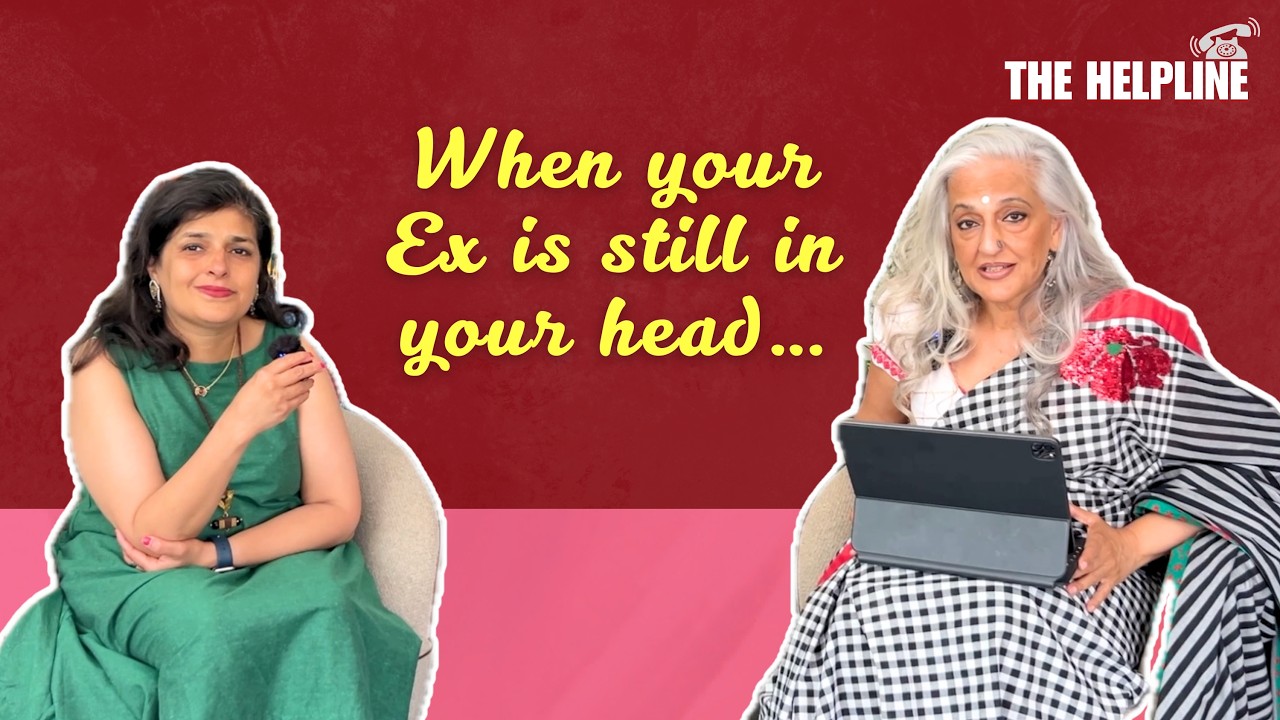
Video summary
The video addresses a poignant question from a 36-year-old man who feels emotionally stuck in his past relationships despite having moved on physically to an arranged marriage eight months ago. He describes feeling disconnected and unable to maintain sexual feelings for his wife, noting that imagining someone else instantly reignites desire, which he identifies as a psychological rather than physical issue. His mind constantly drifts back to previous partners, leading him to blame himself for past mistakes while simultaneously fearing that the current relationship will fail because it lacks the effortless chemistry of his former ones. The hosts commend his self-reflection and willingness to take ownership but highlight a common human tendency: when facing challenges in a present relationship, we subconsciously edit memories of ex-partners into perfect highlights, ignoring the struggles and reasons those relationships ended. This creates an unfair comparison where the past seems like a beautiful valley while the current marriage feels like a difficult mountain climb, causing him to undervalue his wife's patience and support.
To overcome this mental block, the experts emphasize that desire is not automatic but must be built through conscious effort, particularly in arranged marriages or new partnerships where trust and romance need cultivation from scratch. They suggest practical steps such as scheduling 15 minutes of daily skin-to-skin cuddling without sexual intent to rebuild physical connection and familiarity with one's partner's body. Furthermore, they advise distinguishing between accessing a "library" of pleasurable sensations versus obsessing over specific ex-partners; the goal is not to replace an ex but to recreate situations that bring pleasure—such as wearing certain clothes or engaging in specific activities—with current partners so those positive associations become linked to them rather than past relationships. This approach helps normalize arousal triggers without implying a desire for someone else, shifting focus from "what went wrong" with the past to "what feels good" now.
A significant portion of the discussion focuses on performance anxiety and the destructive cycle of pressure that arises when intimacy fails repeatedly. The man's inability to feel aroused is partly attributed to turning sex into a test where every touch carries the weight of previous failures, causing his mind to wander out of his body in a state of "spectatoring." Instead of worrying about whether an erection will happen or if he is thinking about someone else during intimacy, the hosts recommend focusing entirely on sensory details like temperature, texture, and smell. By keeping interactions light-hearted, fun, and free from judgment, couples can lower defenses and allow arousal to develop naturally without the interference of fear or guilt. The advice extends to communicating openly with partners about these struggles in a non-blaming way, framing issues as shared challenges rather than personal failures, which fosters empathy and reduces the tension that inhibits physical connection.
Ultimately, the conclusion is that moving forward requires stopping the obsession with the past and giving space for new experiences to take root. The hosts share an anecdote about how even intense heartbreak fades over time once one stops dwelling on it and engages in life again; similarly, memories of ex-partners will lose their grip if not constantly fed by attention and comparison. They encourage viewers to stop chasing desire as a goal that must be forced or aligned perfectly, and instead simply spend curious, open-minded time with their current partner discovering new joys together. Whether through hiking, cooking, or simple conversations about daily life, the act of being fully present builds intimacy organically. The message is clear: while past patterns may influence us, we have the power to break them by focusing on self-reflection rather than blaming others, and by investing effort into building a vibrant, pleasurable future with our current spouse that stands independently from history.
Read the full video transcript
Hi everyone, welcome back to our podcast
the helpline. I'm back here with Dr.
Anita Madan Beel to talk about another
question that's come in. Now um this is
not an unusual question. It's something
that we get quite often. I just like the
way it was written. I find it's really
interesting because this question has
come from a man. He says he's 36 years
old and um it's actually got so much
nuance to it. he's really thought about
it and I thought that was pretty
amazing. So it says that um he really
wants genuinely to be guided on how to
save their marriage. He says that before
he got married, he had several what he
calls casual flames and also
[clears throat] one very serious
relationship that ended because of his
mistakes. And he says that although I've
moved on and had an arranged marriage
after that last year, I feel that I've
never emotionally moved on from my past.
Before marriage, I knew my wife for a
few months and I was attracted to her.
However, our marriage, after our
marriage, I started feeling emotionally
disconnected and uncomfortable. And the
biggest issue is that I am now unable to
get or maintain sexual feelings for her.
If I imagine someone else, I get it
immediately, which makes me realize that
this is psychological rather than
physical. He says that whenever he's
with his wife, his mind keeps going back
to his past relationships. He constantly
blames himself for the mistakes that he
made back then and then he keeps
thinking if I hadn't done that would my
life have been different and these
thoughts have now started impacting not
just his marriage but everything else in
his life. My wife he says has been
incredibly patient, understanding and
supportive. She has never pressured me
but it has now been 8 months since our
marriage and we have had virtually no
physical intimacy. I feel guilty because
I know that she deserves a happy married
life and I don't want this situation to
hurt her or our relationship.
>> Firstly, it's a great question and I
love I love the reflection on it. I love
the ownership like that he's taking
ownership as much, you know, rather than
blaming, he's taking ownership and the
motivation to fix it. I think that's
always missing when we um you know a lot
of times people come up with problems.
Uh but there isn't like the motivation
or the dedication to change it or
self-reflection
>> or the realization that this is
something that's happening and he
actually wants to do something about it.
But having said all these wonderful
things, I also see a certain pattern
over here which is like an age-old
narrative, you know, and I want to go
over a couple of those things with you.
So there's the guilt that he feels.
There's that whole nostalgia about the
old relationship. There's that whole
thing of um I maybe wasn't ready, but I
still got married and all the things
that we don't answer for guys. And I
think it's really important for us to do
that. So can we actually start with this
idea of when people remember their old
relationships
>> and everything seems so wonderful
because the present relationship has
challenges in real time the old one is
just beautifully edited filtered
highlights
>> yeah you know the grass is always
greener on the other side in many ways
and I think and in some ways it's a good
thing when we remember relationships we
might remember the good parts the good
memories memories, the beautiful times
and everything. What we don't remember
is the the fights that we had, the
reasons we broke up for, what didn't
work. And obviously those feelings are
uncomfortable. So a lot of times we like
you're saying it's beautifully edited.
What we keep are the amazing memories,
especially when we are trying to find
reasons to not make this work. you know,
and I think we need to remember that
like why are we false pos like editing
it for positives rather than negatives,
right? Um, and a lot of times we do that
subconsciously because in another time
when we're ready for a breakup, we're
editing it for only bad times. But when
we are looking back at it and there are
problems in the current relationship,
we're editing it for only the good
times. Yeah. And so what we're
remembering is the times that worked,
what worked in the relationship, what an
amazing time it was, and then like you
were saying, we cannot help but compare.
So I think that I mean, if I was
actually to say that when it comes to
this idea of remembering the old
relationship and thinking, "Oh, that was
so amazing. It ended because of my
mistakes. This present one won't work
for me. um even though I love this
person, they're wonderful, but that was
so much better. What exactly do we want
people to do about that?
>> So, I I I think one comparing doesn't
help uh in a lot of ways.
>> Unfortunately, we all do it, right?
>> We all do it. But I think um like you
were mentioning it's really important to
stay in the present and look at this
relationship because there is something
that's not working now. Um and helping
it and saying you made mistakes then so
it's better not to make mistakes now. Uh
so I think one it is definitely let's
see the person for themselves because I
think that we can find better solutions
in this relationship rather than
thinking about the past. We also I think
we need closure somewhere and closure is
really important um and we don't we
never think about it. So I think even if
it means
talking to a friend or processing it for
yourself or writing a letter to your
exartner, you don't need to post it, but
just writing a goodbye letter or
journaling it or you know sending a
voice note that you never send. So what
we are looking for here is closure.
We're not looking for restarting a
conversation. So I think sometimes that
helps as well because you really need to
kind of get somewhere to say that
chapter is over you know and then you
can focus on the present. A lot of times
I feel people keep staying in the
whatifs uh and then they're unable to
come to today. Also, I think it's
fantastic to be able to reflect on your
past and say, "Oh, I regret that I
didn't do this." But what is that regret
feeling like? What is the purpose of
that regret? You know, I think it the
challenge today is always difficult and
there's a challenge today, right? So
when we are climbing a mountain and it's
really difficult, we just imagine the
last relationship as a valley you know
we just think oh my god that was so
beautiful it wasn't challenging there
was nothing there so we should have just
rather than take on this challenge we
should have just stayed but what we
forget is that there were challenges in
that relationship as well it's just that
we don't remember it
>> yeah and if it's not so I always think
that you know if I start regretting
something at some point you have just
say okay the decision I made at that
point and I regret having made that
decision I've learned something from it
and I've moved on but you haven't
learned anything from it then you're
just I don't know it's like
self-indulgence
>> and also I think sometimes what we
forget is you know regret is an
interesting thing I always especially
when it comes to parenting I always tell
people that you make the best decision
with the information you have at that
time So a lot of times parents would say
now in hindsight I think or now in
hindsight but you have a different
information today at that point in that
minute the information. So yesterday you
can regret it because maybe you have
different information or you have
changed or you realize but in that
moment you had with all the information
you had in that moment you made the best
decision. So I don't think we should
feel guilty or think because if you had
the extra information maybe you would
have made a different choice. So I also
think it's interesting you know the
counselor always says that um you can
build up desire right and to build
desire you need to be very present. And
even though this guy is present
physically he's definitely not present
emotionally. So each time he goes to
her, his mind already starts to think,
"Oh, I feel desire for so and so, but I
don't feel desire for her." He's already
sort of thinking
>> conditioned.
>> Yeah. He's already conditioned himself.
He's already said um that she actually
doesn't bring out that attention in me.
She doesn't bring out that attraction in
me. And you know, we've always said that
this has to be built up. It's not
automatic. You cannot walk into a room
and say I feel this chemistry for you
and this chemistry is going to last
forever and ever. In the same way that
chemistry will eventually change as
well. Everything changes. How can we
convince people that to carry on a
relationship which is going to be
successful and intimate and pleasurable
always that you have to put that much
effort into it?
>> Yeah. And and so I I was thinking, you
know, in many ways, if you think about
it, when we start
a relationship, a romantic one, an
affair, uh there's sparks, there's
chemistry, there's energy and
everything. And and all of that is
initially and then we need to work on it
because life happens and you get busy,
right? And so interestingly, if you
think about it, that's the phase he's in
where there was spark and there was
energy. He really I don't know there was
one long-term relationship, but other
than that there were affairs or flings
as he calls them. So in many ways he's
remembering those ide parts, right? Cut
to we come to an arranged marriage and
things are slightly different here. It's
not like there isn't energy or there are
not sparks. Yeah. Because I sense that
he was attracted to her.
>> Yeah. So there is but there is you know
it it is a new setup. It's a new it's
it's something like an contract or
arrangement that has been made. So
intimacy has to be built here. Trust has
to be built. Romance has to be built.
Love has to be built. And I think we
need to really invest in those you know
and how much of it you know sometimes we
just because it's a contract we get into
life and it becomes like a family thing
rather than saying let's go for a date
night let's go out for a trip let's go
out for a weekend you need to make a
conscious effort to keep that chemistry
in the relationship otherwise it's
really easy to you know come home and
just you know normal life happens and
then we expect more. So somewhere and
especially in arranged marriage systems
where it's very easy for it to become a
like a familial scene very quickly um
rather than a couple scene. It's really
important to keep the energy and to keep
the romance and to build it. We do have
several chapters in the book which
actually are dedicated to exactly this.
So, I say this every time, but please go
and get yourself a copy of the book.
Read those chapters. They're so useful
and they would really actually help your
relationships. I think that's really
important. And one of the things I would
really like to add once again to build
up intimacy, physical intimacy, it's a
it's an exercise that I've used
personally. It's an exercise that I've
suggested to people. It works
beautifully. is where you have your 15
minutes every day
>> of alone time skin-to-skin cuddling. So,
no clothes, you have your skin-to-skin
cuddle where you're not talking about
sexual stuff. You're literally just
talking about your work or what you did
during the day, but you're doing this
skin-to-skin so that you learn how nice
or good it feels when the body connects.
When you feel each other's skin, when
you feel that closeness, that is where
intimacy develops. And honestly, if
every day 15 minutes feels too much,
even if you schedule it for like three,
four times a week, I think it would be
really helpful. And also like when we
say intimacy, we're talking about small
things that build relationships and
build um trust. You know, it's about
holding somebody's hand. It's about
kissing them on the forehead. It's going
and giving them a hug before leaving for
work. You know, it's it's those small
things.
>> Cooking together.
>> Not more than that.
>> But but like what we're saying is that
when we're talking about building this
relationship, we are not talking about
oh let's do a elaborate candle light
dinner and fancy restaurants and
everything. We're talking about small
gestures that actually build a
relationship, build trust, build
communication, build intimacy, come home
and have a conversation about how the
partner's day went because that's how
you'll build your communication skills.
If you're not talking to each other, not
suddenly one day you can't have serious
relationship or work issue, you know,
conversations. It's about building those
things which we need to start doing.
When we have that intimacy, when we have
that trust, when we have that last uh
love and lust, uh the charge will
happen.
>> Yeah. And you know at that point to
consciously say to yourself, oh no, I'm
not going to say, oh, it's not working.
Oh, I felt so much more with the other
person. It's a new relationship. You are
building a new one. So at that point you
do need to focus on what you are doing
with this person. You need to find the
pleasure with them rather than thinking
oh but you know what's the point because
it was so much more back then. It's
really important. Your mindset is really
important.
>> Absolutely. And I think because uh this
person spoke about they feel they made a
mistake. I feel maybe there is some
processing to be done and that's why I
spoke about the closure. So maybe if you
need to go to a therapist, if you need
to speak to a friend, just you know
process what happened, what do you
regret? Um and in many ways it is really
important
uh you know to build what you need from
the new relationship in many ways and
and that we cannot stay in the past. We
can build those with communication in
the new one. You know it's not it
doesn't mean that because it was this is
a new relationship and it was arranged
marriage or whatever that you cannot get
what you need in this relationship. But
you need to work on it and you need to
communicate it with your partner who you
say is being very patient and helpful.
You know, sometimes when there is enough
trust, then there can be a conversation
about um you know, what mistakes you
made, what are you and I'm talking from
a personal reflection point. Talking
about the other person does nothing. It
doesn't help anything. It's talking
about yourself to say, "I wasn't good in
making commitments. I was too scared to
like own up to my issues. I couldn't
share my emotions. We're talking about
being able to talk about your
selfassessment,
not about the other person because
that's useless. But yes, if there is
selfassessment,
then you can prevent that from happening
in your new relationship. So basically
what she's saying is that at some point
um where you you talk about your whole
relationship but not like Anita said
talking about your exartner and saying
>> you don't go and say she was very sexy I
had great sexism. No
>> that's not the conversation that we're
having and it's not also the fact that
they used to do this and I didn't like
you know none of that. It's the
self-reflection. So yes, I had a past
relationship where I would do this. I
would make the make this mistake and I
don't want to do that again. So I think
that's
>> Yeah. So it's about saying we had a
great relationship but I was so scared
about commitment or they kept asking me
to talk about my problems but I was
unable to or I was you know I didn't
want to settle and I just decided um I I
I didn't want to work on the
relationship. So you're doing more
self-reflection because what we are
working here is is there a p pattern
being you know repeated. So, if somebody
has commitment issues, for example, they
didn't commit to that long-term
relationship and now they might be
sabotaging this current one by, you
know, once again not committing to this
one, right? And that's like a pattern we
would see in therapy to see, okay, is
there something being repeated here is a
pattern. And so, um, so that's something
that you can do for yourself. So what
we're communicating with the current
partner is about our self-reflection,
our self assessment um and what's
happening. What I want to add to that
and we've said this a lot of times
having arousal because you think of a
time that was really amazing for you
that's part of your library. So I would
also distinguish between are you
remembering a sexual experience in your
life that was very pleasurable and
that's giving you arousal or are you
thinking about past partners? There's a
big distinction between these two
things.
>> I'd like you to talk a little bit more
about that.
>> What happens? How do we get aroused?
Right. We get sometimes we get aroused
because we are physically
uh arousing our partner by touching them
by feeling them by you know a thing and
that physically we're leading to arousal
many times and this happens a lot with
women we need to imagine something to
get aroused and that's another way
people get aroused and we would remember
and so Sema and I have spoken about
about how we all have a library of
things that we go to. So in that library
many times there is an image there is a
place there is you know an act that has
felt very pleasurable to us and we go to
that library right so it is more like
thinking oh I've enjoyed sex on the
beach and we always go back to that
visual of that sex on the beach and it
automatically gives us arousal that's
going back to a library of what has
given us pleasure. But if we are going
back to saying let me recount all the
times I have had sex with that partner
or how sexy that partner looked or you
know so that's a big distinction and
what happens is a lot of time people go
back to what gave them pleasure and then
they feel guilty because they think
they're thinking about their exartners.
But what you're actually accessing is
things that gave you pleasure or made
you feel aroused. What also becomes
important is what we need to add to the
library are images, situation, places
where we feel aroused with the current
partner as well because if we don't
create that new library then it can get
complicated. There's a huge difference
between looking back to uh the pleasure
that you had with somebody or the
pleasure that you had in a particular
situation.
>> Yeah. So the point is you could go with
the current partner to the beach and
have sex and now you have a new image in
your library where there's sex on a
beach but it's with your current
partner, right? So we have replaced the
phase because what was really arousing
for you was having sex on the beach,
right? So it's about saying or if you
like somebody wearing something, right?
And that's what has given you arousal.
So if you recreate with that with your
new partner. So we're replacing the
library with situations,
occasions, acts that are pleasurable to
you or that are part of your fantasy
that you are recreating with your
current partner. So now you have more
access to those images rather than
recalling your exartner. And just
because you want to now do the same
things which were fun or arousing with a
new partner, it doesn't mean that you're
trying to replace the person into
another person. You know, there's also
that because a lot of people get very
worked up about the fact that, oh, you
did all this with your ex, now you want
to do it with me. That means that you're
actually seeing them and me and you
don't really want me. It's them that
you're still looking for. I think it's
really important to remember that there
are certain things that arouse us that
turn us on which give us pleasure and it
can actually come from a very um a very
good space as well. Well, if we're
trying to recreate everything we did
with an exartner, that's problematic.
But if if we are coming from a place of
these are few things that arouse me, you
know, I like being touched in a certain
place. I when I see somebody wearing
something, you know, some people have a
foot fetish or they have like I like pe
people in short dresses or long dresses
or low cleavage or high cleavage or a
sari or a mini skirt, whatever you're
saying that what you're looking at it is
what is your pleasure point. And so what
you are recreating in your library is
what gives you pleasure. But if you're
trying to recreate moments with your ex
partner with the new partner, then
that's problematic. So once again, is
the intent coming from have you thought
about what is pleasurable to you? And
you're communicating with your partner
and saying, I get very aroused when
somebody wears this. I get very aroused
or when somebody does this or I get very
aroused if we have sex in this position.
So you're communicating and you're
replicating what gives you pleasure and
and if we think about it what gives you
pleasure will happen with each partner
because that's what gives you pleasure.
You know it it obvious you can evolve
you can learn. You might be surprised by
you know a partner and what they have in
offer but at the same time if somebody
likes a certain position they will like
that position with each partner.
>> Yeah because that's what gives them
pleasure in many ways.
>> Sure. You touched upon something earlier
uh which I think is really important.
It's the performance the performance
pressure. And I think that actually when
people get to a point in their
relationship where they absolutely
cannot um let's say feel excited like
this guy says that I can't feel excited
when I'm with my partner. I can't have
sex with her. And that's becoming an
issue. And I think what often happens is
that you you get so caught up with that
idea that I can't do it that the next
time you come together you actually
can't do it. So each little kiss, each
little touch carries pressure now.
>> Yeah. So you know and and and honestly I
I think that's what's happened in this
relationship because I feel like there
was chemistry there was spark and very
innocently what happens and a lot of
people come to us who might have
erectile difficulties or vaginismas or
whatever and they would say oh we don't
know why it's happening and when you
actually work with them they remember
that one incident when they couldn't get
an erection for for whatever reason or
the relationship didn't work out or like
they couldn't have sex but because they
remember that incident each time they
start engaging a thing the erection
stops and they and many times they would
say how can that one time 9 years ago
impacting me today right but what but
exactly what you were saying what
happens is that as soon as we have and
it could have happened innocently They
had charge. They had energy. They had
built up the first night, but they were
exhausted. So, they tried having sex on
the first night. And because they were
exhausted, the spark wasn't there. The
energy wasn't there, and they didn't
have sex. But now, the fact that they
didn't have sex on the first night, when
they're ready to try the next time,
their mind is just going to, oh, what if
it happens like the first night? I was
so excited about the first night, but I
couldn't perform the first night. I
couldn't have sex. I had no energy. It
could happen again. If it happens again,
then the person would get upset. Oh, I
think maybe I should not even try. And
then they don't try. And now this is two
nights that it hasn't happened. That
becomes three, that becomes four, that
becomes 6 months, 8 months. And and then
what we're trying to overcome is so deep
that becomes so problematic. We need to
be more empathetic when it doesn't
happen few times. We just have to
normalize it to say it was low energy,
there was hesitance, it's new. The more
we normalize it, the less we make it a
bigger deal. The more we make it a
bigger deal, it becomes really difficult
to overcome it. And I think in this case
that each time they go back to having
sex or they think about it, the pressure
of saying, "Oh my god, we haven't done
it 8 months." Will
>> and will it happen this time? Um, oh my
god, what if I don't get an erection
because I don't get those feelings? So,
she's also waiting to say, "Okay, today
it's going to actually happen. Will it
lead to sex? Will it just stop at a
kiss? There's so much pressure. There's
so much um fear and and what happens is
that it breaks the arousal circuit. So
you don't feel aroused because you're
overwhelmed by the pressure and in all
probability you're only you know that
being present that you were talking
about the kama sutra and you can speak
more about it. We always that's where we
work on about the mindfulness about
being present because rather than
getting aroused by our partner's body
our partner's feel our partner's voice
we are in our head and [clears throat]
it's the word we call it is spectatoring
we are outside our body and mind and
we're looking and saying why erection
why erection are you feeling I feeling
did you get an erection are you having
the feeling are you feeling it are you
not so we are actually outside. We're
not present. We are not really feeling
the touch. We're not really feeling the
body. We are just looking at it from the
outside. And so because there's no
connection, there's no feeling.
>> Made it made it into a test.
>> Yeah.
>> Yeah. So yeah, you know, when you were
saying about the kamutra, the fact that
it says that you need to build this up
for a good joyous love making. So you
would do lots of different activities.
It doesn't matter how long it takes, but
the idea is to be present with each
other. Not that, okay, I'm going to try
this. Okay, let me just try this
quickly. Hopefully, it'll happen. Oh, I
don't I don't want to feel guilty about
it. I don't want to do this again.
Instead, if you were to actually spend
that time, spend that time talking to
each other, spend that time telling each
other's stories, spend that time um, you
know, I don't know, cooking together,
going hiking together, all that time
that makes you feel like this is really
good. This is the person I want to be
with. And then that builds it up slowly.
Especially if you perceive that there is
a problem there, you're going to build
it up slowly to that point. And then you
you know that's where you're present
with your partner. You're actually there
and then you move forward rather than
saying okay I'm going to kiss you. Did I
get an erection or not? Damn, it hasn't
happened.
>> Or am I going to kiss you? Oh, did I
think about my girlfriend in this kiss?
Or which one came? Oh, this one came or
now the girlfriend is here. Oh [ __ ]
it's not going to happen. Rather than
that kiss felt nice, those lips were
beautiful. That tongue felt warm. Oh, I
now let me that hand is going over my
back. This back feels really nice.
Rather than focusing on how we are
feeling now, how we are feeling with
that touch. That touch is feeling good.
That touch is feeling warm. That touch
is feeling cold. I like that tingling
feeling. rather than staying with the
feeling in the moment. You know, that's
what builds the arousal is when we are
present and we can feel we can feel the
temperature, the tension, the touch, all
of that, the smell. But if we are then
rather than being present, then we're
not noticing if the tongue, you know, if
the kiss was warm, cold, the breath, we
are in our head thinking, oh, you know,
this is coming back. It's not going to
happen tonight. Now she's going to be
upset. Then both of us will be upset.
Then what will I have to do tomorrow?
You you gone.
>> Um so you can be physically in a
relationship with somebody but in your
head you're in a relationship with
somebody else.
>> I mean it literally feels like that and
it's so it is so not going to fix
anything.
>> Yeah.
>> Absolutely. So I think what I want to
ask you as a last question because I've
been listening very carefully to what
you've just said because we answer this
question so often and I've been thinking
back to what he actually wrote to us and
I'm now starting to wonder that this
disconnect that he's talking about this
uh thing that I don't feel this much
attraction for my wife and I'm thinking
back so much to how much attraction
there was to my ex and so on. Is this
disconnect coming from the fact that he
is constantly obsessing about his
exartner because his mind is inhabited
totally with the exartner and he's not
giving it any space for this
relationship to grow or do you think
it's coming from the fact that he wasn't
emotionally mature enough to have
entered this relationship because it
could be either right
>> or both or neither you know as in I
think if if this was a person in therapy
with us, we would be exploring these
multiple arenas of where to go to,
right? We would be trying to figure out
is it that something happened in the
past relationship and there's pain from
it or there is hurt from it or um they
blame themselves for it and because they
have uh not processed it or not worked
through it. uh those patterns are
impacting the relationship today. So
once again coming from self-reflection
not commenting on the other person. So
are there things that you feel you
didn't do right and now those are
impacting or is there something
happening in the relationship the
current relationship where very easily
you're projecting it to the idea that
I'm remembering the exartner and that's
why you know so a lot of times there
might be issues within the current
relationship but we are not ready to
deal with it they might be uncomfortable
so we project it onto other issues. It's
very convenient to say, "Oh, I keep
thinking about my ex-girlfriend and
that's why this is not happening." Uh
because I think facing reality
about the issues in the current
relationship could be very hard, you
know, to face or come to reality. So
sometimes we also project it. But so if
you if this person was in therapy with
us, we would be we would have taken a
history of what happened in the past
relationship, what's happening, what's
working in the current relationships,
what is not working in the current
relationships, how should we work on the
current relationships and and really
keep it to the present. you know um what
we can
bring to our present is patterns but
bringing past people into the current
relationships is never helpful and I
agree with you wholeheartedly. I think
that we have an idea in our heads that
if you want to feel a desire, if you
want to feel attracted, you've got to
make it happen. Like you've got to chase
it, you've got to force it, you've got
to align it so that it happens for you.
And we forget that it actually starts
with literally just spending time with
each other with an open mind. You know,
my advice to you would be stop worrying
about what is happening or not
happening. Whether you've had 8 months
of intimacy or not had 8 months of
intimacy, whether you feel that you're
getting sexual feelings from looking at
her or being with her or not, but that's
not happening. Literally just go and
spend time together. Be curious about
her. You know, have a meal together
without discussing the meals that you
had with your ex or without thinking
about them. Um, go out for a hike
together. But I always think going
hiking together is a great way to um
connect with each other. But go and do
that and focus on the feeling of
enjoyment that you get from that. If you
kiss, think of how pleasant that kiss
feels. Like you were just saying, think
of be be there in the present. Think of
how good that kiss felt rather than
worrying about what a past kiss felt
like. actually spend time with each
other trying to discover all the things
that you like about each other rather
than worrying about what isn't
happening.
>> Yeah. And I really have fun with each
other. The more the fun, the more
present you are. Um the more you will
actually engage with this person,
discover them, allow them to discover
you. And you know what you can speak
about them is that this is the issue
that I'm having sexually in the sense of
my mind starts wandering. Can you help
me bring can we play some music? Can we
focus on each other? If you feel like my
head has gone somewhere else like bring
me back laugh about it, joke about it.
So the thing is the more we keep it in
the fun realm, the easier it becomes to
get engaged. The more we make it this is
such a big issue you know once again it
becomes an issue then the pressure comes
in. So focus on fun make it lighthearted
be light with each other and get your
partner to help you uh and help each
other and the more you do that the
easier it will become. I just want to
end on a very personal story that years
ago obviously it's very long ago now um
I was desperately in love with somebody.
Oh my god, I couldn't think beyond this
guy. I lived breathed at that was him in
my head all the time. And then we broke
up and for months I just literally I
couldn't think beyond him. It felt like
my entire life would go just dreaming
about this guy. remembering him and then
one day he disappeared out of my head.
Literally I forgot I forgot everything
you know and um sort of a few months
later he rang me. You know in those days
we used to have those landlines and
there were no mobiles and I didn't
recognize his voice. I'd forgotten him
that much and he was so offended that he
never of course called me back after
that. But the point I'm trying to make
is that we always feel that the X in
your head is such a big thing. But the X
in your head is only there till you give
them space. Honestly, it doesn't matter
how much you think you're in love with
somebody, it passes. You forget them and
you move on to other things.
>> I would actually I would like I would do
a quiz with something and I'm obviously
not saying like an X of 5 days or one
year, but now like if you would look
back, you would have images that you
remember once again, images that gave
you pleasure. I do. Yeah. So, you would
remember, but you wouldn't remember them
exactly or what you would remember the
setting, the place, the person
of moments that gave you pleasure. When
you think about the past, right? It's
not going to be like, oh, I remember
this or I remember that. One of the
things that I remember so vividly and
maybe too much information, but I will
tell you anyway. Um, I remember always
putting on my nicest lingerie for him.
And I remember I'd get so excited about
showing him that new bra that like I had
gone and buy really beautiful ones to
show him as well. And I still remember
he'd be like, "Yeah." And
[clears throat] but it was me like I
wanted to do that and it is a habit that
I have developed ever since. I like
beautiful daughter.
>> Yeah.
>> I liked certain ways that they were able
to kiss. Nothing to do with them
anymore. But Mina,
>> but what we need to remember is is is
that it gave you pleasure,
>> right? It wasn't so much about the so
the other person might have you might
have felt aroused by like they might
have felt aroused by that or something
like that. But then that's in your
library you know your library is when I
wear beautiful lingerie I feel aroused.
So you go back to now we can go back to
this and say oh my exboyfriend expected
me to wear beautiful lingerie so now I'm
remembering my ex-boyfriend each time I
wear lingerie please distinguish it's
you are wearing it because it gave you
pleasure and you realize so somebody
might have made you realize or given it
to your library and that's okay thank
you to them for doing it but that
doesn't mean you're you know It's them.
It's you and what gave you pleasure and
what continues to give you pleasure.
>> So I think we will wrap up by literally
saying that um it's not you know when we
obsess about a past relationship it's
because we've put it into our head and
we're thinking about it. So if you
actually want to move on you need to
stop obsessing about it. You need to be
more in the present and you need to
actually think about this relationship
and what is happening rather than what
happened in the past. It is literally
about making that effort and it is an
effort but it is in your hands.
>> And good luck. We hope this video helped
you and you can implement some things
that we suggested um and uh you know
keep sending your questions if there are
more.
>> Absolutely. If you need to get in touch
with Anita uh for therapy or for
consultation, she is on
>> my website is cultureandapy.co.uk.
>> And if you need to [cough] write to me
about your questions, I am on
info.sema.andgmail.com.
We will try and do our best to respond
to whatever you write and you know
whichever number of questions that uh we
can manage. If you enjoyed this
particular um chat, please do comment,
like, subscribe and until we meet again,
take care. [music]
[music]