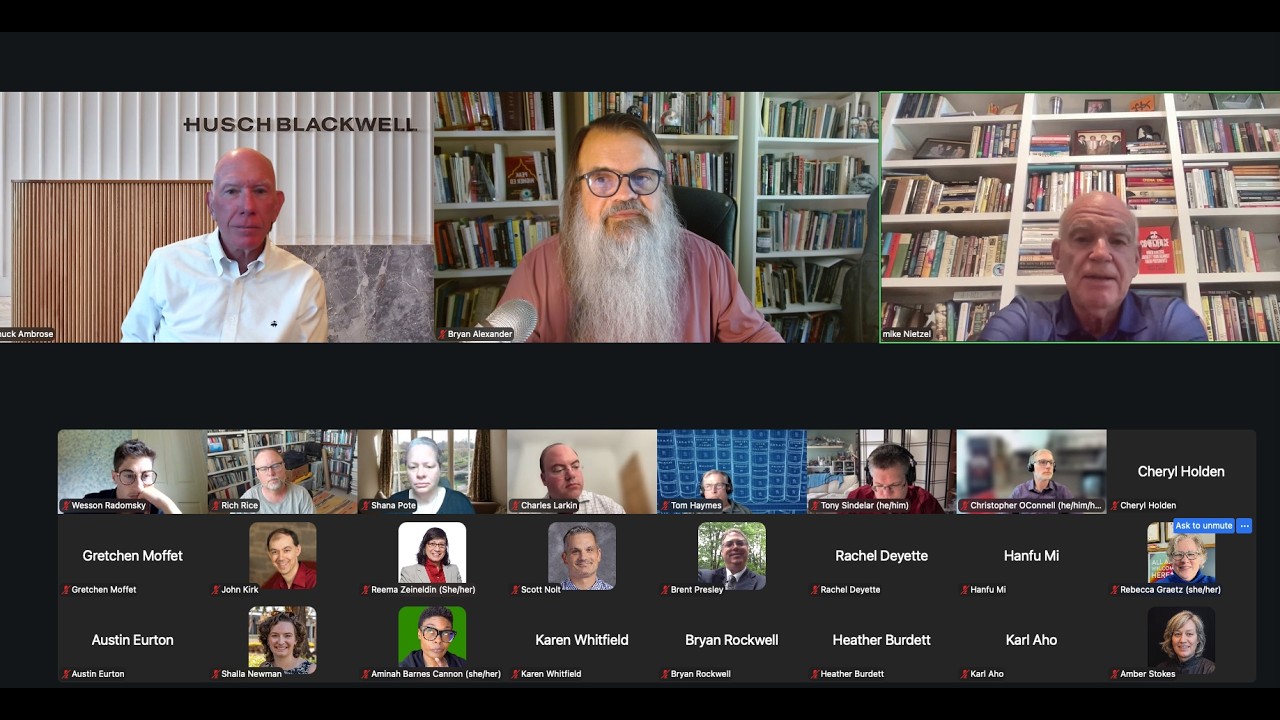
Video summary
When college faculty members cast no-confidence votes against their university presidents, these actions represent formal expressions of dissatisfaction directed specifically at the highest administrative leaders rather than departmental heads or deans. Although such votes were once considered rare occurrences in higher education, they have become increasingly common due to a convergence of systemic challenges including the pandemic, campus unrest, and severe financial difficulties that strain academic institutions. The frequency of these votes has risen as university presidents often bypass traditional shared governance processes while faculty bodies grow more willing to intervene on contentious issues; this trend is further influenced by a declining proportion of tenured faculty, which alters overall governance responsibilities but correlates with an increase in specific voting mechanisms aimed at holding leadership accountable.
The primary drivers behind no-confidence votes are rarely isolated incidents or single policy disagreements but instead reflect a complex mix of concerns such as financial mismanagement, institutional restructuring, personality clashes, and the mishandling of crises like protests or pandemics. Among these factors, budgetary decisions and overall financial management stand out as the most likely catalysts for future contention, given the ongoing fiscal strain that affects academic programs and hiring practices. A significant theme emerging from this discussion is a lack of transparency; many leaders express surprise at receiving no-confidence votes because they feel disconnected from the financial realities driving institutional decisions, such as high enrollment numbers paired with low net tuition revenue. While some institutions view these votes merely as symbolic gestures without legal consequence similar to parliamentary systems, data indicates that in over half of successful cases against a president, the individual leaves office within a year if the vote is taken seriously and supported by the governing board.
To prevent such conflicts regarding substantive management issues—excluding instances of misconduct—the authors propose ten recommendations categorized into three key areas: improving governing board composition so faculty hold voting membership or serve as liaisons, implementing ongoing mechanisms for all campus members to participate in budget setting and monitoring, and regularly evaluating shared governance structures to ensure faculty senates retain decisive decision-making roles. The session emphasizes that mere data transparency is insufficient; institutions must foster deep ownership among stakeholders regarding resource allocation to prevent crises driven by operating deficits rather than balance sheet issues. Furthermore, silence from presidents during times of uncertainty or federal legal assaults risks being interpreted as complicity, necessitating greater communication about how resources translate into tangible outcomes for the university community.
Ultimately, addressing these growing tensions requires a commitment to enhanced shared governance and better financial literacy among all stakeholders involved in higher education administration. The discussion concludes that no-confidence votes should be recognized not just as destructive events but as constructive accountability mechanisms that can strengthen institutional health when managed through transparency and open dialogue. Historical examples from institutions like Leslie University, Henderson State University, and the University of Kentucky illustrate how legislative actions attempting to diminish faculty senate power have often sparked backlash rather than silencing dissent, reinforcing the importance of maintaining robust shared governance structures. For those interested in exploring these topics further, the authors encourage following their work through various digital platforms or purchasing their book *No Confidence* directly from Johns Hopkins University Press for a discount.
Read the full video transcript
Greetings and welcome to the future
trends forum, a weekly conversation
about the future of higher education. In
this recording, we explored the question
of what actually happens when campus
presidents lose their faculty's
confidence. Our guests were the authors
of a new book, No Confidence: When
College Faculty Turn against Their
Presidents, out from John's Hopkins
University Press, Michael T. Nitzel,
President Emiritis of Missouri State
University, and Charles M. Ambrose,
senior education consultant at Hush
Blackwell Consulting.
We began by describing what a no
confidence vote looks like, which led us
into a discussion about faculty
governance. Next, we branched out into
topics including tenure unions, the role
of staff, different reasons for holding
a no confidence vote, possible outcomes
after a winning such a vote, the
importance of transparency, how this
process is changing, and more. There are
links in the show notes. And as always,
the comment box stands ready for your
thoughts and questions.
Well, this looks like the top of the
hour, so we should begin. Let me welcome
everybody. Welcome to the Future Trends
Forum. I'm really glad to see you here
today. We have two splendid guests
talking about a really really important
topic and I'm looking forward to our
conversation. The topic here is no
confidence votes. When faculty vote no
confidence in a president, how does that
work? Where does it come about? How is
that changing? Um we have with us the
authors of a terrific new book out from
John's Hopkins University Press that I
strongly recommend, No Confidence. uh
which is among other things. First of
all, a great guide to the whole process
where they define the history. Uh they
find a lot of examples of no confidence
votes. They analyze how they work and
they have a great breakdown about the
mechanisms by which they work and also
the causes of no confidence votes which
we're going to be talking about. But
it's also and this might sound like a a
narrow topic or this might sound like
we're looking at a pretty unusual event.
Most colleges and universities don't go
through these votes, although we'll hear
about that in a minute. But also because
thinking about no confidence votes gives
you a real good cut through a university
or a college's operations. It helps you
think about for example the role of
tenure faculty senates. It helps you
rethink governance. It also helps you
think about the different crises
afflicting higher rate which we've been
talking about in the future transform.
So enough of that background. Let's
bring up to the camera our our two
awesome guests. Let's start with Chuck
Ambrose. Good afternoon sir. Hey Brian,
always good to be with you and uh thanks
for having us. Look forward to this
discussion.
>> Well, I'm I'm really glad to see you
always and uh I'm grateful to you for
making the time especially for having uh
co-written this book. Chuck, what are
you going to be working on for the next
year? What's ahead for you? you know,
um, of course I'm, uh, engaged with Hush
Blackwell Consulting after 25 years as
either a college president or a
philanthropy CEO and, uh, just, uh, like
all of you, right, trying to find, uh,
the the keys to to what sustainability
looks like. Uh, here we are in August,
right? I I know that feeling. Some of
you have already had startup or students
arriving back on campuses. Uh many of
you are holding your breath just to see
uh what fall is going to look like, but
then we're in it, right? And uh I saw
somebody refer to last week just kind of
the the seasonal rhythm of colleges. And
uh again, um my adrenaline's up even
though I'm not campus based right now
for for what's ahead. Uh you know,
unfortunately, Brian, you know, some of
the some of the categories that we put
into the kind of that no confidence
bucket are the ones that are going to be
most challenging, right? just uh taking
scarce resources, allocating to the
outcomes and uh trying right to do
what's uh the promise of college for the
students we serve. So uh I think it's
going to be an exciting year. I think
for some it's going to be one of those
defining years.
>> Wow. Wow. We're going to definitely
circle back to that. Um but I expect you
will be very very busy and much in
demand. Um well, let me uh ask one more
question though, Chuck. Where have we
found you today? you you found me uh in
a little haunt cause called Tabernach,
Colorado, where uh I uh I spend a lot of
time. Um I work virtually uh through
Hush Blackwell's office, the link, which
has over a thousand people virtually. So
I just disclosed something that I
usually don't. They don't know where I
am, Brian. So u [laughter]
I could I could be anywhere.
>> Yeah, you you can you were in a
previously undisclosed location.
>> Perfect. I I'll keep it at that.
>> I like that. Um well, over to your
co-author, co-conspirator and colleague,
Mike Nitsel. Hello, sir.
>> Hey, Brian. Good to see you. Thanks for
having us on.
>> Always good to have you back. Always
good to have you back. So, let me give
you the two questions. First of all,
Mike, where have we found you besides in
the presence of a mighty bookshelf?
>> The mighty bookshelf is in my home
office here in Tulsa, Oklahoma. uh where
I do where I spend a lot of my day too
much of my day.
>> Understood. Understood. And then uh
that's the spatial question and the
temporal question is what's ahead for
you for the next year? Uh are you also
going to be on the road helping uh all
kinds of universities and colleges? Um
or what are the what are the ideas and
the projects for you?
>> Well, I'm going to continue to write my
regular contributions to Forbes uh which
uh occupies quite a bit of my time. I
try to keep up with the latest
developments in higher ed through that
column, particularly focused on finance,
faculty affairs, university leadership,
philanthropy. So, I'm going to continue
to do that. Uh, and there may be some uh
manuscript uh scenarios in the future as
well, but that's one we're still working
on.
>> Well, I mean, more books from you guys
is definitely a good thing. Um, but also
your Forbes columns are remarkable.
They're so clear, so lucid. Um just, you
know, a real model of academic writing
for a journalistic audience. So,
>> thanks. Appreciate that
>> to people.
>> Yeah. Well, um gentlemen, you uh have
just come out with this book about no
confidence votes. And I'm wondering if
we could just quickly start. And by the
way, for everyone who's new to the
forum, uh I'm going to ask a couple of
questions to our good guests, but then
it's going to be over to you for your
questions and your thoughts. So, as they
start to speak, think about what you'd
like to know uh and what questions you'd
like to put to them, what ideas you'd
like to run past them. Uh so, the first
one is a scoping question. Uh when you
were talking about no confidence vote,
if I get this right, you're talking
about no confidence votes given by the
faculty of a college or university, not
necessarily by a department or other
unit within a university, but
entity representing an entire faculty
such as a senate, right? And you're
talking about no confidence in a
president, not in some other official.
You
>> That is exactly right. These are votes
taken either by the faculty at large or
by a duly constituted representative
body that speaks for the faculty
>> and uh they are directed either at a
university president or chancellor. Mhm.
[clears throat]
>> No confidence votes do occur with deans
and occasionally, although very rarely
with department chairs.
>> No confidence votes are taken by alumni
associations um by um student groups as
well. But we we focus on the one that we
think has the most consequence and that
is um a no confidence vote against the
university's chief executive officer.
Sometimes those are accompanied by no
confidence votes also directed against
the board, the governing board,
>> but we didn't include any votes that
were solely against governing boards.
they had to have the the president or
the chancellor represented as a target
for us to include them in our
discussion.
>> In in your discussion, you have a whole
bunch of case studies, a whole bunch of
stories of of different no confidence
measures that were attempted or taken
and their impacts and and boards play
such a role where they either prove
decisive in backing their president or
or they they don't. Um I'm I'm curious.
One of the one of the struggles in your
book is describing how difficult it is
to get good data on this that some
people have been working on gathering
evidence. Um but one of the issues is as
uh Larabe wrote uh higher education in
the US is a perfect mess. It's so
disorganized and autonomous and it's
difficult to get good data. Um but
you've you've drawn some interesting
conclusions that uh for example uh no
confidence votes are more likely to take
place at public institutions rather than
private. They're more likely to take
place at medium and largesiz
institutions rather than small ones. Um
they're also more likely to occur where
uh faculty are unionized um than
otherwise. Um but I'm curious looking at
your broad sweep of experience because
both of you have such wonderful
experience. How are no confidence votes
changing? You know, what kind of new
patterns are starting to emerge?
>> Yeah, it's a that's a great question,
Brian. And, you know, one of the I think
Mike and I started the book writing as
two former college presidents who had
served together and had, you know,
multiple roles um in the state of
Missouri as colleagues and and uh we
left. Um, I would say, Mike, with our
perspective broadened and changed a
little bit, we tried to somewhat
dissuade our own bias about no
confidence votes as former CEOs. Um,
>> and um, you know, Mike was really the
first to say, you know, not only is the
data maybe a little uneven, but it is
accelerating u frequency. uh there's
some causal uh just like many of the
inflection points we're feeling both
systemically and structurally in higher
education uh really that the the the
pandemic right was somewhat of a an
accelerant uh and then of course uh now
there's many more accelerants that just
the headwinds uh Brian that colleges
have not necessarily been accustomed to.
It's never been smooth sailing uh from a
shared governance standpoint, but uh
this is kind of an extraordinary set of
forces that uh put them square and
center of the potential of of trying to
manage change. Right.
>> So we we did perceive Brian that they
were on the upswing. Uh it doesn't mean
that they're common still, but they're
becoming let's say less rare. Um and if
you look at when there was a noticeable
uptick
at the beginning of uh this decade, you
had the COVID pandemic.
Uh you had then a few years later some
significant campus unrest.
Uh and then you had just a host of
serious financial difficulties
>> indeed
>> plaguing colleges that they had not
faced before. And those three kinds of
situations
uh we found to be at the root of of
several no confidence votes and we think
uh account for the fact that they have
been on the upswing.
The other pattern that I would mention
is you do have
presidents being more willing
to shortcircuit
traditional
forms of
uh shared governance within institutions
and you also have faculty bodies being
more willing to weigh in on contentious
issues. That's a mix that gets uh
translated into an increased frequency
of no confidence votes.
>> Yikes. Um I mean that's that's just a
description of increasing friction. Um,
>> and there's the there's also the longer
term trend that that I'm so glad that
you both uh dwell on, which is the uh
decrease decreasing proportion of
faculty at a given institution who have
tenure and thus governance um
responsibilities.
>> Correct.
>> Yes.
>> Um I I want to I usually just ask guests
two questions, but I I I like this book
so much I I'm wondering if I could just
put one more out there um for you.
There's um you have a great anatomy of
the causes of uh no confidence votes.
This is uh this is on page 39. Um and
just I want to make sure that people
heard this because this is so um so
useful uh as a framing device. you
include uh reasons for or types of no
confidence vote causes uh shared
governance concerns, financial
mismanagement, institutional
restructuring and budget, personality
clashes, uh which really loomed large I
think in the story, uh mishandling of
the COVID pandemic, unpopular personnel
decisions, and you've got a couple of
really powerful stories about that.
personal misconduct, which we we do see,
um disagreements over the handling of
campus protests and safety, uh
especially came up uh during the uh Gaza
protests,
>> correct?
>> And then poor planning and leadership.
Um so I I I just thought by that that
one paragraph, you managed to sum up so
much of contemporary college and
academic life right now. Um, but I I'm
wondering if you could with those
categories, which of those do you see
looming largest? I mean, is it
personality clashes? Is it uh financial
um challenges and cutting? What What do
you see really driving the no confidence
votes of the near future?
>> You want me to take a first stab there,
Chuck?
>> Go ahead, Mike. I'll follow on. Uh
Brian, I think um
the the the c first of all, let's be
clear that we do try to emphasize that
many no confidence votes reflect a
mixture of those categories that you
just enumerated. They they're not pure
categories. They're they have fuzzy
boundaries. Uh and uh in the rationale
that faculty give for the vote, they
often point to more than one particular
kind of concern. Although there may be a
straw that sort of breaks the camel's
back, it's it's pretty multiaceted
behind many of these votes. If I were to
bet on the one that's going to continue
to cause the most contention, it would
be budgetary decisions, financial
management of the institution. Uh
because I think that universities are
going to continue to face us a tough
financial future. And so when you
encounter uh uh financial strain that
immediately begins to implicate
academic programs, athletic spending,
um you know, the hiring and firing of uh
adjunct and contingent faculty as
opposed to full-time or tenure track
faculty. It touches on a lot of third
rails. Uh so I think that's the one
that's going to continue to be uh the
most interesting and the most numerous.
There are the occasional misconduct
ones. Those aren't all that interesting
except for sort of the juicy details.
Sure. Because in many of those cases the
I think we felt the vote was entirely
justified. You know the president had
been out of line had misbehaved
seriously. uh and so it was it was clear
that the faculty was taking a principled
stand on on something that did and
should have mattered to him. But yeah,
if I were to say which one I think will
carry the weight the most weight in the
future, I think it's going to be
financial management and and
disagreements about that.
>> Yeah. Yeah. Thank you. Thank you,
>> Brian. there there could be a little
nuance uh as your intro uh kind of
illuminated by institutional type um you
know the more resources you have perhaps
uh the decisions over how you allocate
them one of the things that um you know
I think is prevalent when it's financial
crisis there is a a pervasive fear or
angst that kind of uh washes over um
both faculty and staff
>> um and and one of the things we learned,
Brian, especially from our faculty
voices, faculty leadership,
um, university senate, uh, leadership.
uh they gave us kind of a
characterization of perhaps some
cultural um you know
I would say nuance among the faculty of
you know there's always there there's
always those that will raise concern
think otherwise be right on the front um
somewhat of that u faculty expectation
right to analyze and question everything
uh you know another you know probably
activates when things uh become come
questionable in terms of program
reductions, eliminations, hiring
freezes, travel. Um, and then there's
those that just want to put their head
down and do their work and hope the
storm blows over. Um and uh we um we
really found that the the angst and and
somewhat of the the emotional um not
just stress but energy uh is shared
fairly equally across an administration
as it is a faculty when they're
attempting to to find their voice. I I
noticed several questions about uh if
not unionized, is there a place? Um you
know, we left this book saying yes,
there is a place, right? This is uh part
of it. And um which you know, may
surprise some people. Um because uh you
know, at one side we had voices uh like
Brian Rosenberg say that you know, a no
confidence vote is actually a vote in
the confidence in higher education
itself. you know uh and the whole
systems of tenure and shared governance.
But then we had others right that were
literally uh rolled up sleeves
attempting to say this is the means by
which we hold each other accountable as
a community. Uh and uh if we share
information and and know the problems
we're trying to solve perhaps together
we would be better positioned to
actually move an institution forward
rather than tear it apart.
I was impressed by how some of the no
confidence presidents um spoke in those
terms even during the process. Um uh
Ston at NYU for example saying that the
the negative feedback can be
constructive and and help with their
leadership. But I don't I don't want to
dominate the floor here friends. This is
u this is the space for your questions.
And uh Chuck already found one of the
questions and I want to give it um its
own space here. This is from our friend
Tony Synindelar in New England who said
he's curious about what no confidence
votes looked like at schools without
unions. Uh he adds a prior institution
he was at felt like it basically had no
mechanism for this. Perhaps it was
lopsided in the shared governance model.
So I'm cur I mean you think what what
are the differences between a unionized
faculty voting no confidence versus
faculty without a union doing that?
>> You know you'll find that most no
confidence votes are pretty organic
there. It's not that universities have a
>> a u long list of governing regulations
about how to do a no confidence vote. Um
frequently it starts as a discussion in
a faculty or university senate. They may
uh propose a resolution. The senate
votes on it like it would any other
resolution and the results are
published. Other universities do have a
a more detailed script and they identify
who can vote in such a matter, how the
votes are to be counted and how the
results are to be distributed and
published. So there's a wide range of
mechanics involved in how these are
taken. For the most part, universities
ma make up the the faculty make up the
procedures as they go. And I don't mean
that in any kind of pjorative sense.
this isn't a a common occurrence. Um so
I think they they proceed according to a
kind of um traditional regular faculty
voice process at most institutions. If
they have formal mechanisms, they'll
follow it. If they don't, it'll grow out
of a resolution and a vote taken on that
resolution.
You have one story about uh one
institution where the faculty wanted to
know confidence vote but found that they
didn't know the procedures. So the first
thing they were going to do was launch a
committee that would investigate that
and determine a course of action and
then and then relay that to the faculty
which which I thought was um almost
charming but also very very practical um
you know showing how rare these these
moves are and how they want to do it
carefully.
>> Correct. And and I would emphasize that,
Brian, we found that the process by
which no confidence votes are taken for
the in the vast majority of cases,
uh, it's done soberly,
seriously, uh, and with a a a great deal
of concern about the implications of the
vote. Um, so they're not they're not
light-hearted matters by any means and
they're not taken friv p frivolously by
those who uh initiate them.
>> Thank you.
>> And Brian, several of the the the
comments that uh well, I'm going to go
back to something Mike said. Um they're
not a single issue type of event.
Usually there's there there's many steps
prior that should uh give notice to an
administration or a CEO or a board that
something's happening, right? There's
these usually by the time they culminate
into a formal no confidence vote uh have
had plenty of foreseeability, right? um
and and probably plenty of means to
somewhat diffuse or at least attempt to
uh diffuse uh some of the the concerns.
Um and of course I I don't want to jump
ahead to some recommendations, but the
comments about transparency are very
real, right? Uh and you know, from a a
leadership standpoint,
um you know, one of the most common uh
comments around a no confidence vote is
well, we didn't know, right?
uh we had no idea, right? How did we get
into this situation? Uh what do you mean
we've got the highest enrollment and
lowest net tuition uh in school history?
Right? Uh because as learning
institutions, we really don't teach
people how all of this actually comes
together and actually works. And Mike,
that was again one of those other uh I I
think we knew it. Uh but quite the the
the outward revelation that if we really
uh not just transparency but much more
of the elements if you go to most
doctoral programs in higher ed go and
look and really see how much strategic
finance is actually embedded in how we
teach people to lead colleges, right? uh
take that into a department level uh
into a program level uh how many
students you have, how long you keep
them, uh how much they're willing to pay
for your program. We we really usually
don't talk about that in terms of how to
help, right? How what I do every day
actually matters. Uh and um again, there
was a comment uh that may be as equally
important for staff
>> uh as it is for faculty. Um so that's
why you see some of them germinate in
climate surveys.
Uh you certainly see telltale signs in
leadership 360s, right? When um boards
are willing to actually assess uh by
soliciting the community's thoughts
about leadership. Um Mike, we've seen
referendums that don't really kind of
fall into an NCV kind of category, but
uh have some of the same impact. Um, of
course, social media also has a an
increasingly prevalent role in kind of
activating a campus. So, uh,
>> there's um, usually you know what's
coming before uh, it arrives.
>> You should know. Yeah.
>> Yeah. If you didn't, should should you
have known or or did you know? Chuck and
Mike, I mean it, among other things,
your book and this conversation, I think
is is wonderful material for anybody in
a leadership position now or seeking
such a position. Uh we have questions
that are coming in through the chat. I
want to make sure we get a chance to uh
tackle all of them. Uh our good friend
uh Carl Ajo um observes that one outcome
of Texas's crackdown on faculty senates
in public institutions is that it's
likely harder for such faculty to hold
no confidence votes. That that's not a
question, that's an observation and a
good one. But I'm wondering if Mike or
Chuck if you want to uh respond to that.
>> Well, I um that cuts both ways. A a case
that I'm very familiar with because I
was there for 32 years is the University
of Kentucky
>> where uh the president and the board did
on their own what some states are doing
through legislation and that is it
basically demoted the faculty senate
um from a policy making body to purely
an advisory one
>> that got them a no confidence vote very
quickly overwhelming vote against
President Capaludo for his role in
demoting the faculty senate. Uh so
I think that uh the question or the
comment is correct in that the intent
behind some of the legislation is to
squash faculty uh voices. It doesn't
necessarily result in that. In some
cases it has spurred a backlash. the
Kentucky case, I think, being one of the
the more prominent ones. Uh, and that
led to a a strong no confidence vote
against Eli Capaludo.
>> Auburn would be another Yes.
>> case in point. Um, certainly Texas. Um
and uh Mike, wouldn't you say that
Kentucky has kind of evolved or devolved
into even the governor kind of stepping
in and saying, "Hey, maybe things aren't
going the way that they should for our
flagship."
>> If we were writing the book today,
the Kentucky chapter would uh now
include the governor saying, "I'm not
sure I have confidence in the president
and the leadership of the University of
Kentucky."
>> This is Andy Basher, right? Danny Basher
be because of the university's
well several things really. It's not
just one but one is the demotion of
faculty and silencing of faculty voices.
>> Yeah, that was quite a striking
statement. Uh I was impressed by that.
Please Chuck, go ahead. I
>> Well, and I I was just going to add I
mean again we're living out uh some some
interesting circumstances. Uh maybe
[clears throat] some of us would say are
are rare. we've not seen before, but
just like a campus voting, no confidence
in Michigan State's board, right? Uh and
uh as Mike said, there's an interplay
there between uh the president um whom,
you know, is going one day and coming
back the next and a board. Um I I think
you have some of those same dynamics uh
in campuses like Auburn and others where
um there's nowhere else to to really
direct uh hey you know who are we and
where are we headed uh as a public
institution than to uh include the board
governance, right? So um and and you
know actually many of the comments
actually you the the thread pulls all
the way through right from governance uh
to senior leadership to transparency
right to stewardship to fiscal integrity
um you know Brian one thing that we've
said is unfortunately um alongside no
confidence votes other tools like
financial exigency and and others I I it
it I don't think many presidents wants
to circumvent
uh all of the policies and processes and
even some of the traditions and culture.
But when you come right down to it, uh
the dissonance between culture and
structure for an industry that has a
hard time presenting enough revenue to
pay its expenses is is where we find
ourselves,
>> which is not a good place. and and
combined with the friction that you two
described, I'm it seems like we'll see
more of this. Uh thank you. Thank you
both. We we have uh we have more
questions coming in from the other end
of the no confidence uh process.
Christopher Okonnell asks, "What do you
usually see as the outcomes of a no
confidence vote? Is it possible for
example for a president or chancellor to
continue in their role successfully if
they receive a vote of no confidence?"
>> Yeah, great question. And there is some
data on this. Um
the it's it's typically the case that no
confidence votes are described as
symbolic or merely symbolic or having no
legal consequence.
Uh it's not like a vote in parliament
where if you get a no confidence vote in
parliament, you're out.
However, the data suggests that in more
than half the cases,
a president who's been the target of a
successful no confidence vote in half of
those cases is out of office within a
year.
So, they may be symbolic, but they're
influential. They're consequential as
far as presidential tenure is concerned.
Uh, and I think to directly answer
another part of the question, yes, some
presidents survive. In fact, they've
survived multiple no confidence votes.
>> Wow.
>> Yes, there there are presidents who've
have been uh enough of a lightning rod
to have no confidence votes aimed at him
more than once. Uh, so yes, they do
survive. Their survival typically
depends on first not being arrogant
about what the no confidence vote means,
taking it seriously and second
having a board who stands up and uh and
announces their support for the
president. Those two things tend to be
vital. Presidents need to take that vote
seriously and respect it and perhaps
talk about changes that they're now
going to make. uh but without the
support of a board, they're really on
shaky legs.
And I think that's why you see that
while it's easy to to dismiss them as
just symbols, they they pack a punch. No
confidence votes pack a punch.
We're we're mostly talking about the the
US situation here. Um, we've got a
question coming up for another country,
but um, but I'm curious, you begin your
book by discussing uh, no confidence
votes in the British Parliament and the
history there, but is there is there
anything like a good no confidence vote
in the US outside of higher red that we
should look to for a model?
>> Oh, yeah. I mean, you know, you have no
confidence votes in in uh in against
school superintendent.
You have it uh against co coaches
occasionally,
>> public companies, right? Shareholders.
>> There we go. There we go. Excellent.
Excellent. Thank you. Thank you. Sorry
to distract with that question. Uh uh
Chris, that's a a terrific question to
ask and uh again, I recommend the book
as it explores stories like this. We
have a related question coming from
Reema Zenalden uh who asks, "Have you
seen occurrences of votes of no
confidence ahead of closures of an
institution
uh and Tony Synindelar gives an example
almost of that?" He says he knows that
Leslie University in Massachusetts has
had multiple no confidence votes.
They're still going but in significant
financial straits.
you know, and Mike was kind to do this,
Brian, but since I had experienced one
and he had not um
>> Oh, boy.
>> from somewhat of extraordinary
circumstances. I mean, I think most
people who are aware of the the
Henderson State story in in Arkansas
would say um you know, we were in a very
unique position where a state system and
a governor was basically trying to save
an institution and it's really uh
directly uh related to the the question
from from Ireland. um you know in the
the pre-closure
um you know it's a unique opportunity to
come in uh at the request of a system
head and have to tell the governor uh
well if we don't restructure and uh
literally reduce about 40% of our spend
in 5 months I can throw you the keys of
the institution and about $80 million of
debt and the state can figure out what
to do with it right um and it tends to
kind of uh up the political resolve to
support uh whatever was being
recommended for for somewhat of
restructuring
and at the time when you're trying to
save an institution uh which uh you know
in reflection many times I I've looked
back and said it would been easier to
close than restructure uh just because
of the the the human toll uh but to
release 45 tenur faculty members uh on
one day um and eliminate you know,
academic programs. Um, you know, the the
no confidence vote I experienced was by
an executive committee of the the the
faculty senate, 13 of 15 had just been
notified that they were going to lose
their jobs, right? Um and uh one would
expect right that um the reaction would
be well I mean I think one of the
elements I I would underline to to all
of us participating is there's a real
human toll right to the stress an
institution goes through to uh one put
its place uh in in in the mission of the
state but people's livelihoods the
community's livelihoods the largest
employer uh within a community. So, um
the
it's just like change making uh on the
offense. Uh the only two things that
really impact that is time uh and and
resources. And the less resources you
have, the less time you have in the
bigger decisions, which tend to magnify
people's response. Um and uh aligning
those Charles, I mean just going in
terms of uh you know the political
resolve. One quick example, uh we
utilized an academic portfolio to to do
a unit cost of instruction to make those
decisions. Well, we didn't have the
money to fund it. So the governor did,
right? Because he realized we needed the
data. That plays into this whole
transparency,
you know, element. So if your
institution has a transparent and open
and datainformed sets of decisionmaking
and people know how to use them, the
chances of getting into a no confidence
vote situation are are are greatly
reduced. Right. Um when you have to do
it in crisis, um not so fun. Uh, but one
thing I've been able to tell campuses
over the last couple years, Brian, that
I I I think has been a revolution or at
least a revelation is they can be used
for good just as equally as they can be
used for cost containment, right? To
invest in programs, feed the things that
drive you. And if you have that buy in
by faculty and faculty leadership to hey
we can actually share in progress not
just feel the pain together uh then
again the chances of no confidence votes
become less.
>> That's quite a quite a struggle quite an
effort to to facilitate such a process
by which everyone is on board with that.
on the on the question of financially
troubled institutions and no confidence
vote. Goddard would be a very
interesting example. That's institution
that has had struggled for years
financially. It had two or three no
confidence votes in different presidents
as it struggled to to stay afloat. And
someone asked a question about Lesie uh
University. That one's interesting,
Brian. I believe Leslie's president had
three no confidence votes.
>> Oh my gosh.
uh I think her name was Steinmeire and u
uh so there people do come back to the
well uh with their discontent when
things aren't aren't going well. Whoever
asked the question about Leslie can
correct me but I think it she faced at
least three no confidence votes and I
believe Goddard has closed.
>> It has.
>> Yeah, it has.
So,
but but that's a good example of one
where financial struggles really um took
a toll on multiple leaders.
>> Yeah, it's one of several schools in
Vermont to have closed.
>> Yes.
I I do think since we're on the the
future trends forum that you know as we
look ahead Brian right um and this is
something that that Mike and I uh again
our resolve is much higher today than it
was even when we finished the book um
that if it it comes down to really the
bottom line it's going to require more
shared governance not less right it's
going to have more ownership in
decisionm
but that's going to require us, right?
Again, to create the environment where
we understand u what drives, right,
resources, what helps make good
decisions. Um and uh it it really
requires a different set of
competencies. I said this uh to Eric
Kellerman at the Chronicle about a month
in to to the Henderson story. Uh this
was my third presidency, but it was a
different job than I had ever done
before. Right. I mean, it's it's as if
the the capacity to make decisions and
and the tools and skills I needed
totally different. Well, I I can't say
that. I I I take that back. I'm going to
go back and say many of them I learned
uh as a young president at a small
Methodist college in North Carolina. Um
so, some of the some of the data, some
of the the tools we we've always had
access to. Uh but the hard decisions, we
kicked those cans down the road as as
long as we could. U and when you run out
of cans, then you make these decisions
that can turn a campus and its culture
upside down.
>> Well, thank you. Thank you for this. I'm
I'm and I'm I'm impressed and admire
your equinimity in discussing both that
experience um and and also your research
along these lines.
Um, we have a few questions that I want
to bring together, but I also want to
draw attention to a couple of points in
the chat for everybody. Uh, there is a
um, I think somewhat tongue and cheek,
but also instructive uh, thread about
ethics professors getting in trouble for
behaving unethically. Um, and so Mark
Hbert Wilson, our good friend, has
actually shared some research in this,
which is good to see. Um but we also
have um uh Charles Larkin um is des has
been referenced already in our
conversation. Uh he mentions um his
experience at the chair of as a chair of
a board of trustees at a university in
Ireland and he adds this the univers
excuse me the union was behind the vote
with lots of procedures. This had media
coverage and created political and
regulatory pressures. Uh what I was
wondering from Mike and Chuck is what
was their experience in the role of
political leaders, regulators and
officials on the survival of the CEO
when such votes happened. I I'm I'm
thinking you know we have so many
interesting stories of this. I'm I'm
reminded of um in uh Alabama uh
Birmingham Southern College uh which was
you know running running out of
financial runway went to the state
government and the state government
could have helped them survive and and
ultimately decided not to but but uh
Charles mentions media coverage and I'm
thinking about the role of social media
of digital media in general. You've
already both spoken a little bit to
this. Would you have anything more to
add about that?
Well, you know what's fascinating is
there is a playbook, right, on how these
script out. People try to follow some
strategic communications and some
strategies that that that work through
this. I'm always taken by how quickly,
as Mike referenced, a board will issue a
um affirmation of leadership soon
thereafter, a no confidence vote. You
know, it's just the steps you take. Um
and and I think sometimes that may
minimize right their their subsequent
impact that perhaps maybe a conversation
face to face or some engagement with
leadership or an openness to I think one
of the more radical suggestions we make
is to make sure that you have voting
faculty uh members as a part of your
board. Right? So, some of those uh
stakeholder groups actually sit across
the table from each other and make
decisions uh not just talk about the
decisions that that they're going to
make. Um I I I do think um and I I hate
to reference this because it's it's full
of interesting examples, but chapter six
in our colleges on the brink uh book is
chocked full of examples of the
resistance. uh not the formal no
confidence votes, but uh it's everything
from the weaponization of students uh
about losing their programs to uh as my
good friend from Scott Carlson once told
me, I'm just glad my name doesn't rhyme
with duck because the hashtag that
people attached to my um uh most social
media post were not too nice, right? Um
and uh you know um but again I I'll
reference the question uh to have
political alignments from those that
govern institutions and allocate
resources all the way throughout uh a
campus is is critical uh when uh you're
trying to solve uh the wicked problems.
Oh, Ryan, you're on mute.
>> Uh, sorry. For those who haven't seen
this, uh, we hosted, uh, Mike and Chuck,
um, um, a few years ago talking about
their book, Colleges on the Brink. So, I
put a link to that uh, in the chat. Um,
and Charles, thank you for for expanding
our conversation both geographically to
uh, to the British Isles, but also
institutionally. And Charles adds, "Oh
dear." Uh, to contextualize, quote,
"It's never a fun moment when the
minister's special advisory calls you
for a WTF conversation, followed by
threats of appearing before the public
accounts committee of parliament."
Unquote. Uh, indeed. Indeed. We have we
have more questions that approach us
from a few different angles, and I I I
want to share one, and this came from a
a longtime forum participant who
couldn't make it today for a schedule
conflict. This is uh a splendid
psychologist Dr. Anjanna Duta and she
says in her experience faculty protests
are typically a last resort. They happen
when educators feel in consistently
unheard misunderstood and unsupported.
Increasingly universities seem to
prioritize athletics, housing,
facilities and technology at the expense
of investing in their faculty and their
core mission which is to educate
students and which cannot be done
without genuine attunement to faculty
needs and training.
So that was a a question but that was an
observation. She wanted to offer her
perspective as a faculty member.
>> Yes, I agree with that. Um
[clears throat] a kind of odd recent no
confidence vote was at the University of
Kansas. And I say odd because of the the
way it was conducted against the
chancellor Doug Gerard. Uh but at the
root of that was a lot of discontent
over excessive financial commitments to
interccogiate athletics. A problem
that's only going to grow um as
universities continue to spend more and
more money uh on compensation for
athletes. But the the the diminishing of
faculty senates
uh and the and the attempt by
conservative legislators in particular
to silence faculty voices
uh I I think can have a um a kind of um
confounding effect here making no
confidence votes more likely because
it's it's like a last resort. uh I if
you don't have regular kinds of
exchanges with administrators, if you
don't have faculty who are routinely
involved in helping guide the budget of
the university, if they're not
knowledgeable about where revenue and
expenses sit for the institution, um
then that does tend to breed the
conditions where dissatisfaction,
resentment, and finally a kind of revolt
against the administration are more
likely.
Indeed. Um thank you uh thank you for
this. Um you gentlemen, you two have
struck quite a nerve. Um the the
questions in that are that are following
now um really show just how powerful an
account this is and and what a what a
powerful tool thinking through uh no
confidence votes is. We have two quick
uh information questions. Uh, our dear
friend Tom Hayes in the Houston area of
Texas wants to know when was the first
no confidence vote in a in a university
or college president.
>> Ah, [sighs]
I'm not sure what the first one was. we
they do go back into the 1980s and
>> um some of the more uh notorious were uh
against John Silber uh John and John
Ston. Uh but I'll follow up and get back
to you on that, Brian. I'm not sure when
when we to give the the first first
place prize to the
>> Yeah, Mike. We may have to ask our good
friend John Thielen to to help us with
that one.
>> Yeah.
>> Yeah. This uh
>> great question
>> exactly.
>> Um no, it's a good question. In fact,
maybe uh Oh, I'm blanking his name.
There was a researcher that you cited
who did graduate study work on no
confidence votes and the chronicle used
his research. Um
>> but we have a his master's thesis. Uh
yes. and he had the first database
basically that chronicled no confidence
votes. Uh and I think the chronicle
actually
uh in its followup to that got o over
200 examples. Our book focuses on about
75 where provide some details about
them.
>> Uh but it's up around 250 at least.
>> Thank you. Um and another uh uh
information question comes from Kyle
Krauss who asks are votes of no
confidence primarily faculty-led or what
is the prevalence of faculty staff or a
college non-administration towards the
administration president chancellor as a
whole putting forth a vote
>> we only considered in our book
faculty-led no confidence votes. Uh you
occasionally have alumni groups that
take them. Um you've had one in the past
two weeks uh towards the president of
Kentucky State University in H.B.CU.
>> Yeah.
>> Um in Frankfurt, Kentucky, where the
alumni took a vote. You have student
organizations, student government who
sometimes take them as well. In the case
of student government, they typically
don't do it
uh without some cover or being
accompanied by a faculty vote, but we
only looked at ones that were u
established and conducted by a faculty
body
believing that those were the ones that
were most representative of the of the
kind of phenomena we really wanted to
focus on.
>> Okay.
Thank you. This this is this is
terrific. Uh, by the way, also I want to
give a shout out to a few people in the
chat. Uh, when I asked about other
examples of no confidence votes in the
American situation, Alice Martinez
described u a kind of revolution
happening in the Los Angeles school
district today. So, she and Mark Corbett
Wilson have added some very useful
details for that. But Mark Corbett
Wilson who was very very busy in the
chat also added a fascinating document
which is uh Whittier College um doing a
no confidence vote and publishing uh its
results of uh who voted for what. Um so
I take a look at that link friends. It's
a it's a fascinating uh fascinating
case.
>> Um I'm conscious of running out of time
and so I want to make sure that we hit
all themes. There was one that we
touched on but I think we could do a bit
more of uh which has to do with
interhead.
>> I don't know if this was the first but I
believe in our book the earliest no
confidence vote we at least focus on was
John Silber at Boston 1976
>> 76 okay Tom was guessing it was sometime
since 1945. So so you're you're both on
the on the same on the same track there.
Uh a friend of ours uh elsewhere in the
British Isles in Scotland uh Vei Decki
asks, "What are your thoughts of
financial transparency? Is that
insufficient to prevent a note a vote of
no confidence without procedural
transparency such as active
co-governance and predecision? And can
procedural inclusion measurably persuade
campus stakeholders to avoid a vote of
no confidence even during severe
financial retrenchment?
>> Yeah, I think u the the devil is really
defining what that procedural engagement
really looks like, right? Um
>> because um you know one of the first
steps uh in a school restructuring is to
have a thorough review of your policies
and procedures, right? Just uh there
there's some uh structural policies that
won't actually allow you to save enough
money to uh reallocate uh to to restore
uh operating margins, right? So, uh, you
can actually start going down a road,
uh, that can cause quite a bit of of
turmoil and still not get to the
financial objectives that you're trying
to meet to to be viable. Um, and, uh,
you know, that's a great question that,
uh, you know, I would push even a little
further. It it's not just being
transparent with data and procedurally
aligned. Um but we have to have some
incentivizing performance. we have to
have some ownership uh in resource
allocations much deeper into
institutions because without it right
you're you're really expecting you know
um and I'll give you just the the two
common elements you know your operating
statements not your balance sheet so uh
you can still have resources and and not
be able to make money uh and budgets
don't equal cash
>> right
>> um and and so people are making
decisions every day uh and allocating
resources every day that may be moving
an institution much closer to the kinds
of crisis where no confidence votes uh
erupt, right? Um and uh that's that's
actually the the narrative and and and
certainly the the operating uh cultures
that need to flip. Um and uh you can't
expect campuses to to understand that if
you don't inform them uh and have good
data. I I know you've seen uh you know
the there are certain faculty unions
that are employing people to actually
argue uh against uh institutional data
uh to justify maintaining. But at the
end of the day, uh, you know, if you
don't bring in as much money that goes
out every month and you have to use your
savings account to to pay your
operating, someday that's not going to
end well, right? So somehow you have to
in the smallest institutions with the
smallest endowment, that's why you have
to manage uh your cash uh because
usually cash does not lie or can't be
interpreted or argued with. Yes, there's
a there's a lot of things to mitigate
that, but it takes a much deeper
ownership uh Brian and engagement uh in
making decisions than what we're
accustomed to uh at least on this side
of the pond.
>> I understand.
>> Uh Brian, you uh raised a question about
a database. Sean McGinness,
>> that's it. was the graduate student who
who
developed the first database of no
confidence votes and that served for
many years as kind of the authoritative
list of them. So for your listeners who
want to pursue this, it's MC Kinnis,
I believe Shawn McInness,
>> shout out to Sean for doing that work.
>> Um we have uh we had two questions come
in from Alice Martinez and these will
take us towards the end. Um and they're
they're closely related. Uh first she
asks, should we expect more transparency
from presidents during times of
uncertainty such as now?
>> Yes.
>> And uh every campus I have an
opportunity. I said you've got as much
stake in in knowing where you are
current state and how you're going to
get to to future state. And uh don't be
afraid to ask questions. Um and uh
especially how we allocate resources.
And I'm saying that as a former
president. I I would expect and and hope
that my campus cared uh so much that
they would challenge uh decisions on the
basis of how how do you translate those
to outcomes? So that's a simple answer.
Uh Brian, yes.
>> Yeah, I I agree. I I would say there are
some circumstances and we're seeing
those play out right now where if your
university is under assault by the
federal government in the form of a
lawsuit or as Harvard recently has been
or or others. I think there are some
legitimate limits to what a president
can say publicly about
>> sure
>> what's going on. Having said that
though, I would also say the president
ought to say as much as he or she can
because silence is going to be
interpreted as compliance
>> or complicity
>> which these days
really pisses the faculty off
>> and in the financial realm Brian the
only power we have to affect real change
is truth right so presidents that's a
choice right presidents have and and
we'll see it here over the next couple
weeks, right? Record enrollments. Well,
how how's that translating to actually
net revenue, right? Um, so those are the
kinds of elements where transparency and
uh engagement and knowing where you are
and and and what we need to do are
really critically important.
>> Well, thank you. Thank you. And and uh
we have some nice comments coming in. Uh
Charles Larkin says, "Knowing your cash
position and EBITDA is critical." Uh
Mark Wilson, who is on fire when often
found Shawn McKinnus' homepage as well
as his database. Um right there. So
that's in the you know, we can see that.
Um Al, I want to give Alice Martinez the
last question because I know the answer
to it. Um she asks, "Does the book talk
about what presidents can do to avoid a
vote of no confidence? Are there common
best practices besides the obvious?" And
I know the answer because the answer is
chapter six uh where uh Chuck and Mike
go through a series of 10
recommendations uh that I think are
really really powerful and and practical
things that can be done right now.
Everything from giving a faculty member
uh on a vote on the to doing a kind of
audit or annual reflection on on
governance. Um based on our conversation
so far, Mike and Chuck, is it are there
any of these recommendations that really
stand out for you that you want to make
sure people take away with them?
Well, you're right. We talked about 10
of them in the last chapter. I I'd put
them in in three categories, and you've
alluded to them, Brian. One is governing
board composition and functioning. Um,
we think that faculty should have voting
membership on governing boards. That is
often not the case.
um because the rationale has been that
they'll be too captured by
self-interests to be good board members,
>> right?
>> We don't find that any longer to be a
very convincing uh argument. Uh so
certainly the composition of boards need
to take u this into consideration. We
also think that um having faculty if
you're not going to have them be formal
members of boards having them be uh work
as liaison to board in some kind of
official capacity we think uh is maybe
the next best thing. The second category
has to do with building more campus
competence in the finances and budgeting
of the university by having
uh ongoing mechanism whereby faculty and
staff and and students have a role in
the budget setting and monitoring
process.
Uh and the third is to do uh
institutional assessments of how your
shared governance is working. Um
look for areas where a faculty senate
can be given some decisive
decision making uh role rather than
trying to roll it constantly back and
have the faculty senate become less and
less of an influence. Um, so those three
categories are where we spend a lot of
our time with recommendations about how
universities can prevent the preventable
votes of no confidence. Now, those don't
address things like misconduct where,
>> you know, you do something bad enough to
earn a no confidence vote,
>> you're going to get one. uh but for the
more uh substantive matters ones that
involve the actual management of the
institution those three categories I
think are pretty important.
>> Well, I think that's a fantastic
fantastic moment to end on. We've we've
blown past the end of the hour by a few
minutes because you two are awesome and
there have been so many great questions
and this topic is so important. I I I
want to wrap things up with just quickly
asking
every book you two write is important.
Uh, how do we keep up with the two of
you? Uh, Mike, I know we should just
follow you on Forbes, uh, and look for
your comments.
>> Please do. [laughter]
>> And, and how else can we keep up with
your work?
>> I tell you, just, uh, connect with us on
LinkedIn or or, um, Mike's a little bit
more active on on Twitter. We are
willing to engage, Brian. Uh, if you'll
DM us or or we'll share emails. uh would
love to have conversations uh about any
kind of supports uh that that we could
provide um just conversationally. We
love learning right from each other and
uh you know I um I have to say this
Brian because I'm so appreciative Mike
and I just have struck uh the right
balance. Mike uh can get thoughts on um
and written word in ways uh that I envy
every every project we work on. Uh and
uh we do have a podcast series edup uh
insights. Um you've been a guest Brian.
So the edup arthur insights we focus
specifically on journalists writers uh
thought leaders u that express you know
through media u where higher education
is going. So uh lots of ways to connect
and we'd we'd love to do it with each of
you.
>> Yeah. I post my articles on X and on
Blue Sky so people can follow them there
and I'd love to hear from them about
what they think.
>> Excellent. Excellent. Um, lots of ways
to keep up. And in the chat, by the way,
uh, if you want to grab a copy of the
book, No Confidence, I just put in a
discount code, uh, as well as a link to
the, um, to the John's Hopkins page, so
you can grab it for, uh, some money off
there. Um, friends, we have had a
wonderful hour plus of conversation. Uh,
Chuck, Mike, thank you for doing this
important, accessible work. Uh, and
thank you for spending an hour with us.
Uh thanks as well to the whole forum
community uh for all of your great
thoughtful resources, questions, your
stories, your experiences. Um now we
have a whole bunch of sessions coming up
uh over the next uh few months uh
including uh interactive session where
we're going to do uh role playing based
on the scenario. There's a lot to cover.
I'm looking forward to all of it. Uh in
the meantime everybody, as the fall
semester comes rushing forward, I hope
you're all well. I hope you're safe and
sound and you're well prepared for what
the fall semester brings. Take care
everybody. We'll see you next time
online. Bye-bye.