Video summary
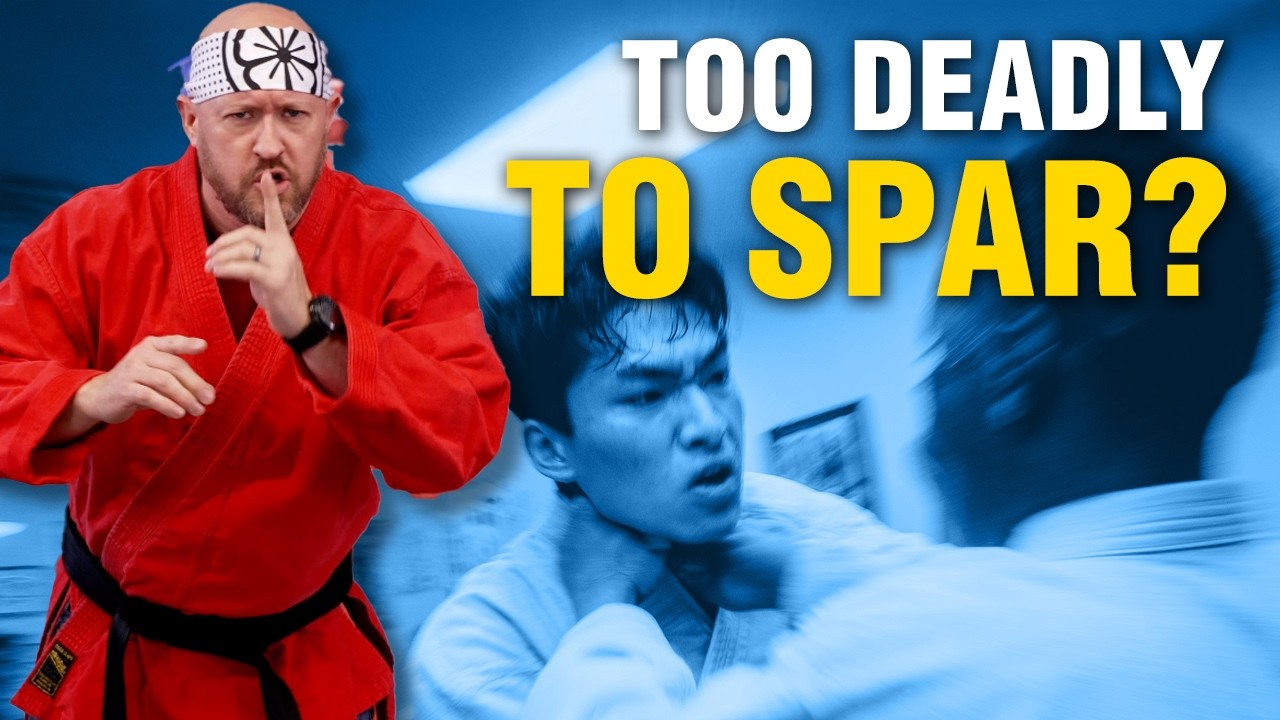
Many martial arts instructors claim that their techniques are so ancient and dangerous they cannot be sparred safely, often presenting this as a badge of honor or proof of elite status. However, this assertion is frequently exposed as a significant red flag rather than a sign of mastery. True skill in combat sports like Muay Thai or Brazilian Jiu-Jitsu relies on precise control over power output, allowing practitioners to spar at full intensity without causing serious injury. When an instructor insists their art is too powerful for sparring, it often reveals that they lack the ability to teach students how to safely receive techniques or manage impact, which are fundamental components of any legitimate fighting system.
Furthermore, excuses regarding "forbidden" moves like eye gouges or throat strikes do not justify avoiding pressure testing in a real-world scenario. While these vulnerable targets exist in many systems such as Krav Maga and traditional Karate kata, they can be trained safely using modified applications, protective gear, and controlled drills that focus on timing and positioning rather than inflicting permanent damage. The most effective military combat programs, including those used by the US Marines or developed for Soviet forces like Combat Sambo, rely heavily on full-contact sparring to prepare soldiers for high-stakes conflict. Therefore, a school avoiding resistance training is likely hiding deficiencies in their curriculum or admitting that they cannot prove their methods work against an active opponent.
Ultimately, the refusal to spar should be viewed as a marketing gimmick designed to sell a fantasy of being a deadly warrior without providing tangible proof of effectiveness. Legitimate self-defense requires building both offensive and defensive capabilities through repeated exposure to resistance, which builds confidence and proper reaction times under stress. If a school promises to teach you how to fight but refuses to let students practice against fully resisting partners who are using their own techniques simultaneously, they are likely offering an untested system that wastes time and money. The next time an instructor makes this claim, the best approach is to respectfully ask how they would pressure-test these specific moves against a resistant opponent; their inability or refusal to answer directly will reveal whether you are in a place dedicated to genuine martial development or merely selling a mythological image of combat prowess.
Read the full video transcript
We don't spar at our school.
Our techniques are way too dangerous.
Our techniques are ancient in secret.
They only work for masters. Bull.
Here we use pressure points that could
disrupt your energy and kill you
instantly.
[laughter] Oh, okay. He will only bull
drama in the dojo. Who would have
expected that? How many of you have
heard that one before? You walk into a
new school, all brighteyed and bushy
tailed, and the instructor lays that
line on you with this dead serious look.
I mean, it sounds impressive, right?
It's got that mystical vibe like you
just found the secret scrolls of some
forbidden art. But what if I told you
that this line, this mantra of the
supposedly elite, is [music] one of the
biggest brown patty sandwiches in the
entire martial arts world? Today, we're
tearing down that very claim. We're
going to look at why it's a massive red
flag, a convenient excuse for not
pressure testing [music] and why the
people who say it might not be the
masters they claim to be. But why should
you give a flip? Well, normally we're
more open-minded on this channel and
we're always looking for the good. But
there are a few topics that we draw a
hard line on and this is one of them
because understanding this lie is
critical to finding legitimate training
and not wasting your [music] time and
money. And there's also a simple
question you can ask a school as to
gauge if they're legitimate or not, but
we'll get into that in a few minutes.
Let's tear this myth apart.
Our techniques are too powerful. VB,
practice safely.
This is one of the typical go-to excuses
a school will use on why they don't
spar. The problem is that logic is
completely backwards. Real martial arts
skill isn't about being able to unleash
hell. It's about having a thermostat,
not just a light switch. A martial
artist who can only go all out isn't a
master, they're a liability. Look at an
art like Muay Thai or Hiroshin Karate.
These guys are full contact,
worldrenowned, known for their toughness
masters. They they spar with no pads.
They're hitting each other with shots
that would easily drop you, yet they
spar constantly. How? They prove that
even the hardest styles are built on a
foundation of control. It's the same
with pro boxers or Muay Thai fighters.
They can generate knockout power in
their sleep, but they spar thousands of
rounds without killing each other. They
use gear, they have timing, and they
know the difference between 30% power
and 100% power. The ability to control
that dial is the true sign of skill.
Claiming you can't control your
techniques. It's just another way of
saying you're not skilled enough. It's
an admission of failure. It's not a
badge of honor. These techniques are way
too dangerous to practice on a partner.
Safety and training isn't a one-way
street. A lot of time a technique is
called too dangerous simply because
students were never taught how to
properly receive it. In judo what's the
first thing that you learn? How to fall.
It's called uki. A judoka can get
launched across the room with a massive
throw and pop right back up because
they've drilled slapping that mat and
dispersing the impact thousands of
times. It's fundamental. In my own
temple training, we do the same thing
with our technique lines. You learn how
to take a hit, how to move with the
force, and how to absorb an impact. It
conditions your body and maybe even more
importantly, it conditions your mind so
that you don't panic when you get hit.
So, if an instructor tells you a throw
is too dangerous to apply, what you
should really be hearing is, "I'm not a
good enough teacher to show my students
how to land safely." It's not a sign of
a badass technique. It's a sign of lazy,
incomplete [music]
curriculum.
Our techniques are practiced for
warfare. It's life or death. All
right, this line for me just [music]
ends this whole debate. If any system is
truly designed for life or death
highstakes conflict, it's the ones used
by modern military. And guess what? They
all spar. Look at the Marine Corps
martial arts program or MCMAP. It's
literally designed to give a Marine
options ranging from non-lethal
restraint all the way up to deadly
force. And sparring, grappling, live
fire drills are the bedrock of their
entire program. They know damn well you
cannot prepare for the absolute chaos of
combat without simulating it. The
Marines and Army will often spar with
their rifles and bayonets.
Or look at combat sombo, an art cooked
up specifically for the Soviet Red Army.
It's a brutal mix of judo wrestling and
striking built for one purpose to be
applied on the battlefield. Its
effectiveness was proven through decades
of intense full-on competitive sparring.
So let me get this straight. Soldiers
who are preparing for literal war rely
on sparring to test their skills, but
your local dojo strip mall karate is
somehow more deadly and can't be sparred
safely. Really, really, really.
All our moves are illegal in sparring.
Ah, yes. The last desperate argument
from the too deadly crowd. The dirty
fighting excuse. Oh, we can't spar, they
say, because all our art is all eye
gouges, throat rifts, and groin strikes.
Okay, first of all, I train in kempo,
and there's a lot of Kempo out there
that repeat this, so I'm not oblivious
to that. These moves aren't some big
secret held on by one special art. You
find strikes to vulnerable targets all
over the place. The boonkai for
traditional kate kata is filled with
them. Krav Maga is practically built on
these moves, and they still use sparring
and stress drills to train. Everyone is
capable of poking an eye or kicking to
the groin or pulling hair. Second, you
don't actually have to maim your
training partner in order to practice
this principle. You can aim for the
forehead instead of the eye socket. You
can wear a damn groin cup. You can drill
the entry, the control, and the position
of a technique without following through
and ending someone's life and career. A
real fight is almost never won with a
single sneaky eye poke. It's one with
timing, positioning, balance, [music]
fundamental skills, all the things
sparring is designed to build. Hiding
behind dirty moves as an excuse does not
spar is just admitting you don't have
those fundamentals down. And if you
think that BJJ guy is not going to bite
you or go for an eyes in real situation,
you're in for a rude awakening [music]
or more likely a really deep nap. If you
run a martial arts school, you know the
drill. Class ends, you get off the mat
and running the business is a completely
different battle. I've spent years in
the martial arts. I've helped my
instructors run their schools. I have
seen the frustration. I'm a business
owner myself. No one has to tell me how
much time and tedium it takes to run the
logistics of a business. And here's
where we'd like to thank Shopify for
sponsoring this episode because they are
providing a special promotion on their
platform which can help you run your
school. It takes payments, sells
merchandise, and you can just manage
your whole dojo in one app. There's a
link in the description below. If you
click on it, they're going to give you
the first three days for free and the
next three months are only a dollar a
month. That's $3 for 3 months to get
hours back of your life. And who
wouldn't want to do that? So, cut down
on the tedium, try it out, click on the
link, and get back on the mat.
Real martial arts skill is about
control. Good training prepares you for
both giving and receiving techniques.
The most serious warriors on the planet
spar to get ready for the highest stakes
there are. And the whole dirty moves
thing is just a flimsy excuse. The
claim, "Where to the spar?" is not a
sign of a legit badass martial art. It's
a marketing gimmick. It's a sign of a
system that is untested, unproven, and
probably ineffective. And it should make
you question if you're in a dojo that
builds actual martial artists or one
that just sells you the fantasy of being
one. So the next time an instructor
tells you their artist too deadly the
spar, let them finish, nod respectfully,
and then ask them this. So how do you
pressure test these techniques against a
fully resistant opponent who is actively
trying to use their own techniques on me
at the same time? Their answer or the
rambling defensive non-answer you're
most likely to get will tell you
everything you need to know. Now, I want
to throw this out there because I'm sure
there are several people watching who
are not training in order to fight. And
this is a valid point. There are a lot
of non-combative reasons a person may
join a martial art. It could be for a
cultural experience, exercise, rehab, a
hobby, making friends, all valid
reasons. But if the school is promising
to teach you self-defense or make you a
fighter, then they damn well better be
sparring. What's the wildest excuse
you've ever heard for not sparring? Drop
it in the comments down below. I want to
hear the stories because I'm sure there
are some doozies out there. Now, let's
talk about some of the biggest lies
karate schools will tell you.