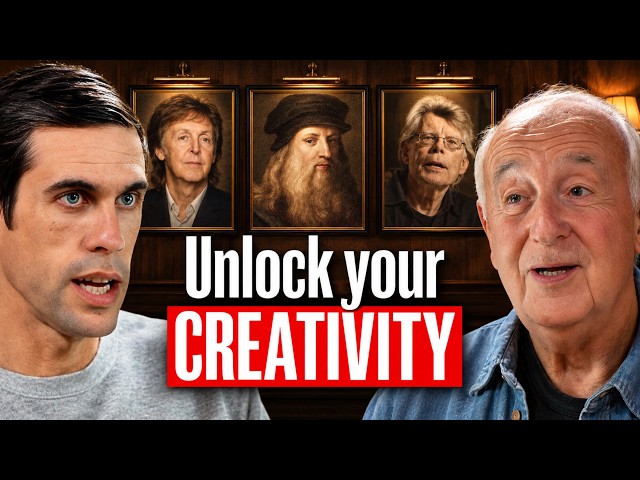
Video summary
Steven Presfield explores the intersection of his creative process, spiritual beliefs, and the practical realities of writing historical fiction, viewing his work as a channeling of a muse from beyond our dimension rather than merely a product of brain function. He firmly believes in reincarnation, drawing upon personal experiences with past life regression that revealed an overwhelming love for a brother he had buried in a previous existence, which deeply informs his character Telmon, a warrior spirit punished by heaven to live multiple lives as a soldier. This new book serves as a prequel delving into Telmon's origins and motivations, while the inclusion of a deaf-mute girl character humanizes the violent gunslinger, providing him with a genuine emotional connection that contrasts with the often male-dominated genres currently declining in popularity.
The discipline required to craft historical fiction involves balancing rigorous research with the necessary license to invent specific details like equipment or minor plot points to serve the narrative, a practice Presfield compares to how constraints such as genre conventions actually enhance artistic quality rather than hinder it. He emphasizes that creativity is an inherently otherworldly act that must not be surrendered to external resistance, whether that comes from world events, personal despair, or the temptation to equate political involvement solely with running for office. Instead of succumbing to these distractions, writers must hold onto quotes and ideas that may later prove significant, describing this practice as a form of time travel where past selves guide future work, much like ancient epics embedded in our cultural DNA.
Practical workflow strategies are crucial for maintaining creative energy, especially as age reduces one's capacity from four hours to about two hours of focused work per day. Presfield advocates for establishing routines that involve handling administrative tasks early in the day to preserve mental stamina for deep creative endeavors later, noting that stopping before exhaustion is vital for sustaining long-term productivity. This approach extends to the broader purpose of both fiction and non-fiction, which he frames as capturing the essence of truths and lessons even when literal accuracy is impossible, using historical contexts to allow earnest discussions of honor and virtue that modern settings might not permit.
Ultimately, the conversation highlights the tension between ethical speaking out and avoiding labels, critiquing the irony of how historical expulsions fueled American strength while warning against alienating audiences from Stoic philosophy through excessive political discourse. By selecting books together and reflecting on figures like Mark Aurelius and Epictetus, the discussion underscores that life is a warfare and a journey far from home, where souls wander for murder and karma plays a significant role in our destinies. Whether through the lens of a fictional warrior or historical leadership models like Regulus and Cato, the goal remains to distill universal lessons that resonate across time, bridging the gap between elite tastes and public desires while maintaining the integrity of the creative spirit.
Read the full video transcript
to ask myself, we all ask ourselves, how
does the world work? But I absolutely
believe that there is at least another
dimension directly above us where the
muse lives. We as writers, that's what
we kind of access. That's what we
channel. It's our job to connect to
them, to open ourselves up to them.
>> Steven Presfield, one of my favorite
writers. There are very few people who
do historical fiction better than Steven
Presfield. his new novel, The Arcadian,
which is incredible. It's part of this
series he's working on.
>> Working on the Telmon book when I once I
know it's a western. Yeah.
>> I know there are certain beats I have to
hit.
>> Yeah.
>> And each time I say, "Oh, I I'm going to
be constrained by this." And but you
know, when you don't do it, if you don't
have a gunfight at the end, Yes.
>> it falls flat. Right. We're self
disempowering. these uh demons that are
out there, these physically real human
beings, that's what they want.
>> Yes,
>> that's that's the end state they're
trying to drive us, you know, into quote
that uh is at the start of this book is
something I carried with me for like 40
years. I don't know if I ever told you
this, Ryan. No, no, tell me. Anyone who
commits murder, who takes another life,
and including soldiers who kill in war
in an honorable cause, three times
10,000 years that soul shall wander, an
outcast from felicity.
>> Do you believe in reincarnation?
>> I do. Absolutely. Tell me about that. I
hope it's true. I definitely believe
fiction. Not even as teaching. I think
it's it's more than that. You know, it's
a character. It's a human being. You
have a choice between the fact and the
legend. Print the
How is your day set up? I find I'm most
productive
creative in the morning and then it sort
of peters out like around lunchtimeish.
>> Uhhuh.
>> I can maybe do a double shift if I
really want to, but usually all the good
stuff's in the morning.
>> Uhhuh. Do you like take the kids to
school and then come back and that kind
of thing? So, usually I split with my
wife. Like this morning I had like a TV
interview at 6:00 in the morning or
whatever, but usually I I take the kids
to school. I I run in town and then I
try to get to my desk as soon as
possible, like 8:30, 9ish.
>> And then um
>> your desk here in your office here?
>> Yeah. Yeah. Yeah. I find if I'm not at
the desk working in the morning, the
every hour I'm waiting to get started is
substantially decreasing the quality of
what I bring to the table.
>> I mean, I used to be exactly like that.
Now, for whatever reason, like I go to
the gym really early, I come home and
then I I have to like take care of my
correspondence and [ __ ] like that then.
Really? If I if I don't because like
when I finish work, I'm like I've had
it, you know? Yeah. Yeah.
>> So, I just crash. So, I have to get, you
know, the administrative stuff out of
the way. Then I I usually don't get to
work till like maybe 10:30 or something
like that.
>> See, what I'm my thinking is, do I want
to bring my best self to the
administrative work? Like, I'm I'm
definitely fried when I stop writing or
doing whatever the deep work is for the
day. I'm not my best afterwards, but I'd
rather be halfassed in a meeting than
than schedule some breakfast thing, be
all about it, and then come to the
office and
>> Yeah. I don't know. Well, it used to be
like that for me, but now it isn't. It's
like if I don't do that administrative
stuff, I'll never do it,
>> right? Yes. Yeah. But maybe that's a
sign you just do.
>> Maybe I need an assistant. Yeah. H
>> How old are you?
>> 82.
>> Do you still find you wake up, you're
like raring like you you want to sit
down and do the creative work?
>> Yes, I do. But going to the gym, I feel
like it's hell on earth, you know?
I feel like it's somebody else in my
body, you know, that
>> Yeah. Yeah.
>> I even find like I I'm I'm not really
old, but I find that like
>> I'll say
>> what I what you can feel the decline,
you know, like every year there's just a
you're just a little bit less.
>> How old are you now, Ryan?
>> Almost 40.
>> Oh my goodness. Wow. You look like
you're 23. So, you know,
>> but you know, like I I I even the like
I'm freshest in the morning, but I could
I can gut it out in the afternoon.
>> I used to be able to I could work
anytime, anywhere, you know, and now I
I'm much the routine becomes more
important as the
>> ah yeah
>> as the skills
>> was always important to me. But what I
find is I used to be able to work for
four hours.
>> Yeah.
>> Flat out. You know, now two hours, you
know, like even at my best maybe two and
a half. Yeah. Yeah.
>> And I'm just I'm fried. I have to stop.
>> Yes. Well, that's an interesting
question of that like I'm fried. I'm
going to stop. There's a certain amount
of self-awareness and a humility there.
And then also though the person who says
like you're tired after two sets at the
gym, you don't want to like when do you
listen to the voice that says like
you've gotten the best of what you're
capable of and when do you listen to the
other part of you that's like no, you
push past the voice.
>> I I always listen. I I stop when I start
making typos
>> and you know I can really feel it you
know
>> and then it's like
>> point of diminishing returns you know
then it's just bad [ __ ] you know.
>> Yeah.
>> Plus I think like you want to leave a
little in the water in the well you know
for tomorrow you know.
>> Didn't Hemingway say you're supposed to
stop in the middle of a sentence.
>> Did he say that? I don't know.
>> It was the idea of you stop halfway
through a sentence so you know what to
do tomorrow. like you know you you're
starting with a little bit of momentum
cuz you're like
>> I don't know if I stop in the middle of
a sentence but I do want to know what's
going to happen tomorrow
>> if I can't
>> I kind of like leaving it's like I got
to clean this up in the morning. So
that's something that my warm up is like
fixing these little things
>> and and because sort of that momentum
and that enthusiasm and that sense of
progress is so important. Now, but do
you have a between books thing, Ryan, or
are you always working?
>> I'm always working. I got that from you.
You
>> I mean, I am too, but I always wondered
how it is. Yeah. Yeah.
>> I think sometimes there's a little bit
of a period where you're researching and
thinking about the next one, but I tend
to find that when I'm on the downhill
slope of one project,
>> my mind is getting excited about the
next one. And so,
>> you can you can time it pretty close.
You can go from vine to vine.
>> Yeah. We we vine to vine. I like that.
Yeah. So, I guess we we're we're on the
same page on that one.
>> Are you already on the next one?
>> Not only am I am I on it, but I've
finished it.
>> Wow.
>> Uh or the next Telmon book.
>> Yes.
>> Yeah. But then I have another one
another sort of war of art type book
that I'm
>> starting on now.
>> So, you've got one in the can and you're
starting the next one. So, you're ahead.
>> Yeah. Yeah.
>> So, let's start let's talk about Telmon
a little bit. I don't know if I wasn't
paying attention. I it was very obvious
to me that he's the same that that he's
a reincarnation of the character from A
Man at Arms.
>> Yeah.
>> But I didn't I didn't know he appeared
in the other books.
>> Ah yeah.
>> Have you been doing this a long time?
>> Yeah. But the first he was in he was in
Tides of War and he was in the Virtues
of War. Yeah. So that's probably 15
years ago. But as a minor character.
Yeah. And then I sort of for like 10
years I thought I got to do something
with this character, but I couldn't
figure out what it was. So he was sort
of, you know, asleep for about 10 years
and then with a man in arms I thought,
okay,
>> for a couple hundred years thousand of
years.
>> That's that's his thing. Anyway, he
evolved out of the two characters in
those two books and then got its own
book and now he's got two more.
>> Did you watch the second Gladiator
movie?
>> No, I didn't.
>> I thought it was pretty good, the the
new Gladiator sequel. But there was
famously a script floating around for
many years written by Nick Cave,
musician,
>> that had Maximus
because he dies at the end. So, what are
you supposed to do with the character,
right? Yeah. And and the device was that
he is this reincarnated warrior spirit
for like every gener shows him as a
modern marine.
>> They didn't see that.
>> No, but it just it's a it's a
fascinating device when you have a the
character and the ethos of the
character. Can they transcend their
singular space and time?
>> Uhhuh. Well, for me, yeah, the the the
the concept of the thing, as you know,
is that he has committed a crime in the
deep past and is being punished. Yeah.
By heaven for this. And his punishment
is to be live lifetime after lifetime,
always as a soldier. Yeah. Always
killing and being killed. So that gives
you the sort of the the license to track
his evolution.
>> Right.
>> Like the new one that I've that I've
just finished is a prequel. M
>> like way back in time
>> before A Man at Arms or between A Man of
Arms and
>> way before Man and Arms like set in an
era where the continents drifted apart
that far back.
>> Wow.
>> in history.
>> Like a prehistoric character.
>> Well, not prehistoric, but in my concept
of what that time was like, there were
great civilizations that had tremendous
access to the occult powers that we've
lost. Yeah. And the civilizations are
gone now. totally, you know, under the
land, whatever.
>> And the same character Telmon is sort
of, it's like the young Telmon.
>> So, this is his origin story.
>> Sort of. Yeah. Maybe I'll go back and
have even more of an origin story. But a
lot of the kind of points of view that
he has about fighting only for money.
You can sort of see in this book where
that all came from,
>> right?
>> Yeah. Which is fun. You know,
>> do you believe in reincarnation?
>> I do. Absolutely. Tell me about that. I
hope it's true cuz I don't want it just
to end.
>> Yeah.
>> But you you know I mean you have kids
right and when they were born they came
into this world with their own
personality right
>> and even with their own calling right
their own destiny in a way. Same thing
with kittens and puppies and I'm sure
horses and everything like that. So it
does make you wonder where does that
come from?
>> Yeah. You know that what is that
Tennyson's I think it's Tennyson
Werdsworth intimations of immortality.
Do you know that poem where he says
>> we come into this life not
naked or something like that but
trailing clouds of glory do we come from
God who is our home. So if it's good
enough for Wdsworth it's good enough for
me. Well, when I was reading the book, I
was thinking of that famous Patton poem
that he wrote where he believes he's the
reincarnated spirit of all these
different warriors.
>> Yeah, that was such a great scene in the
movie Pat. Yeah.
>> You know, some version of that happened
in real life.
>> Really?
>> Yeah. So, in in the movie they're in
North Africa or Europe or it's some he's
like this is where Rome and Carthage
fell to describe
>> it. Yeah. Yeah. Yeah. North Africa.
Yeah. between the wars, he was touring a
battle from the Battle of the Wilderness
in the Civil War.
>> Oh.
>> And he's being told the how the battle
went by uh the the the tour guide and he
says, "No, no, no. That's not how it
happened." And he starts to he was like,
"I know. I was here as a boy. He was
born well after the Civil War."
>> And the Dosen's kind of like, "What's
happening?" He's being corrected by
Patton. And then finally, they're
interrupted by this old man who says,
"No, no, no. He's right. I was here.
That's how it went. This Civil War
veteran intervenes and and sides with
Patton.
>> Wow. What a great story that is.
>> And and so for Patton, I think obviously
there's some element of the the movie
device in here, too. For Patton, that's
proof that, you know, he was this
reincarnated spirit. I would argue he
just really loved history. So Patton's
dyslexic
>> and so growing up, his parents take him
out of school and they just read to him
orally
>> till he's like 12. And I think he
embibes these stories and his
imagination and it become it becomes a
part of him. So whether it's literally
>> do you believe in reincarnation?
>> I mean I don't I'm not so mystical as
that but I do think there's some some
way at the very least through story he's
able to live multiple lives. I I
certainly believe that literature is a
form of reincarnation because we're able
to take these lessons and these ideas
and make them live again and then we can
add their experience into our own lives.
That's something Senica said that
through the study of philosophy we annex
all of the wisdom of the past into our
own sphere.
>> So I I believe in that. Do I believe in
literal reincarnation? I don't know. uh
>> it's not anymore uh out of the
possibility to me of the other sort of
religious ideas. So
>> ah yeah well and also in the movie
Patton there was a thing about uh the
German officer that was supposed to get
into Patton's head which says he's going
to invade Sicily because Alabiades
invaded Sicily. That's what the next
thing is going to be. Yeah.
>> I don't know that whether there was any
truth to that at all but it's
interesting.
>> It's funny Jet Lee was here yesterday.
you know, the kung fu master.
>> Oh, really? Wow.
>> And he some interesting people in here.
>> He he believes in reincarnation. And he
was saying the proof of that for him was
as a young kid, he gets sort of selected
to be in this sort of Chinese school of
martial arts. All the kids are are
selected for their physical attributes.
But why did he pick it up faster than
the other kids?
>> And he believed it was past knowledge
that he was drawing on.
>> Uhhuh.
Interesting, huh? I mean, I've done past
life regressions, you know. Have you
ever done that?
>> No.
>> It's uh,
>> you know, they sort of, actually, this
was a friend of mine who did it for me
who was a hands-on healer. Yeah.
>> And you, they put you on like a table,
like a massage table, and kind of work
on you to get you deep deep deep deep
deep into that state, you know, and then
they say, "Okay, now you're going to
come out into a place. Tell me what you
see."
>> Yeah.
>> And you start to see stuff, you know.
Yeah. And you and you talk. And uh I've
uh actually in the new Telmon book I
started off with a something that really
happened to me in a past life
regression. So you know and and a
feeling in it. I'll give you sort of the
short short version of this. I was on an
ancient battlefield
>> and I was a like a kid
>> and I was looking for the the fight was
over. There were bodies everywhere on
the battlefield and I was looking for my
brother and I couldn't find him and I
knew he was dead because he he would
have found me if he was alive. M
>> so the short version of it was I I
buried him on this battlefield and as
this is taking as we're doing this past
life regression
I felt although he was dead
waves of love coming
>> wow
>> from him like I never felt in my life
not even close
>> from any you know overwhelming
and so I just thought I don't know what
that means but there's something to that
and I I remember my friend who was doing
that when we kind of came out of it. He
said, "You can always go back to that.
You can always access that
>> that love."
>> Yeah.
>> But I have not been able to.
>> Huh.
>> I I many times I've tried
>> but it's it sure made a made a
tremendous impression on me because
never in my life in real life have I
felt anything like that.
>> Do you have a brother? Uh, I do have a
brother. Oh, but this brother in the
thing was actually my friend that was
doing the hands-on healing with me. So,
which he's always has felt like a
brother. Anyway, who knows what it's all
about. But in any event, I that really
made a deep impression on me like
there's got to be something to this.
>> Well, at the very least, I think there's
something to the kind of mystical
supernatural thing you're talking about.
Like I was just reading an early copy of
Robert Green's new book, which is all
about sublime experiences. No, I'm
really looking forward to that one.
>> It's so It's so
>> We've been waiting for like seven years
for this.
>> I know. I know. And And when you read
it, the the amazing thing is when you
read it, you're like, I see where this
is what I told him. I was like, I hope
this comes off as a compliment. I see
the seven years.
>> Uhhuh.
>> Like like I see why it took seven years
because it's just at another level.
>> Like the the writing is better. or not
that he's not an amazing writer, but in
one of the scenes he tells the the story
of the temple of Demeter and the the the
mysteries that they would go and and it
really feels like you're there, which is
funny because in another sections is
about historical sublime, like how you
can connect with history that you
haven't experienced. So, it's all very
similar to what we're talking about
here, but just the ancient relationship
with those sort of things you can't
explain and the sort of
>> what you're talking about the we we live
in a hyperrational objective.
>> Yes.
>> Sort of distilled world that that kind
of tries to keep all that stuff at the
move.
>> Yeah. You know, God bless him for even
thinking of doing writing a book about
the sublime. Who else would think about
that? Yes. I mean, nobody, right? and
you know so such a great contribution
you know to have a mind like his you
know that's going to really commit God
bless him
>> but do you think that because I mean you
believe like you you say a prayer to the
muses you believe in reincarnation
you you believe in uh the Don like the
the voice that talks to you uh what what
does all that mean to you like that's
clearly an important part of your both
your sort of practice as a person but
also your creative practice
Well, it means like
what is I I ask myself, we all ask
ourselves, how does the how does the
world work?
>> Yeah.
>> You know, and and like you say, our
dumbed down world says, "Oh, we're only
this body." Da da da da.
>> But I absolutely believe that there are
is at least another dimension.
>> Yeah.
>> Directly above us where the muse
>> lives, you know, angels, whatever. and
that we as writers and I'm really
interested to hear what you say about
that.
>> That's what we kind of access. That's
what we channel. That's where the books
come from or movies or everything like
that. But a part of me, of course, is
really skeptical. I'm, you know, I'm
born here. I'm I have a material body.
So, I really try to reinforce within
myself the reality that there are other
forces and other entities out there that
are on our side.
>> Yeah.
>> And are aiding us. And it's our job to
connect to them, to open ourselves up to
them. And so if that's the sublime, I
don't know what what you call it. It's
the divine anyway.
>> Yes. There's something beyond us that we
don't control and can't fully conceive
and certainly can't comprehend. I I'll
concede to all that. You know, there's
there's something I mean, just one of
the ways you're in touch with that as an
artist or a creative or anyone that
makes something is that sense of like
where did that come from?
>> Yeah.
>> You know what I mean?
>> I mean, look at what you've created
here. You know, a kid from Riverside,
right? You know,
>> uh Sacramento.
>> How did this or Sacramento? You went to
school in Riverside.
>> No, that's true. But I just mean like
like just where did those words come?
like you're sitting there and you're
almost like
you're typing the end of a sentence that
you're in the middle of. Like how like
this goes back to Plato like how do you
know how do you know this?
>> Yeah,
>> there's there is something
fundamentally
otherworldly about the the creative act
because it it's coming from somewhere or
something. Even if even if you want to
just tell me it's this emergent thing
happening in our brains, it's crazy.
>> I mean, you've heard so many stories
about like musicians that are driving
down the freeway and suddenly a song
>> Yeah.
>> completely rushing to get it down.
>> Yes.
>> How does how does anybody I mean it
could be the subconscious, you know, I
suppose,
>> but I don't I don't know. That's what I
don't uh
>> I mean but even the subconscious it's
pretty like so it's like your brain and
then you have another part of your brain
and it's just like
>> there was this theory that at one point
our brains like you know we have two
hemispheres of the brain. Have you heard
the the bicameal mind theory?
>> No
>> it was sort of popular and then
discredited but it's kind of this out
there theory that like at one point we
had two brains and you know now our
brains they they communicate with each
other right? But but like what if they
didn't like what if if they were
separate and and like the ancients would
hear the voice of God like go do this or
you need wooden walls or you know all
the the different things. What if that
was just one side of the brain talking
to the other side of the brain but they
they didn't recognize it as such.
>> But even that's insane. Like the idea
that that like you can know something
and not know it. Even your idea of the
resistance, it's like I want to do this
and then there's some part of me that
doesn't want me to do it and then I can
make myself do it. That's crazy. What
how is any of that work? It's there's
something just
>> unfathomable about that.
>> Yeah.
>> And what do you think, Brian, about your
own
>> I mean, a big part to me of writing is
grinding
>> when it ain't coming, you know, and the
floodgates aren't open. Yes. Do you
experience that as well?
>> Oh. where it's not going well or it's
not fun
>> or it's just, you know, the muse isn't
really there pumping it into you, but
you still got to do it, you know, and
>> I'm kind of in the middle of that right
now because I'm doing a very different
kind of writing and I'm doing a
biography
>> and so who?
>> Uh, Stockdale.
>> Oh, good for you.
>> Yeah, I'll tell you all about it. But
I'm not making an argument,
>> right? like I'm having to portray a
chronological narrative
>> of a person's life and understand why
they did what they did. So it's a slower
pace of writing because
>> it's not that emergent of like what do I
want to say or what's interesting to me
I have to it. So each sentence is a lot
slower
>> and it's more methodical and so I'm
having to exercise a different kind of
discipline to do it. you're limited by
that it's a reality that you're talking
about. You can't just make it up.
>> If I know, hey, I want to talk about
this
>> and then I don't know what that is, then
I have to go find that thing.
>> That's the, you know, like it's like,
okay, I'm describing like right now he
flies these top secret missions over
Laos right before the Gulf of Tong.
>> He's not still alive, is he?
>> No, he's not. But I have hours of oral
history and I have all but but it's like
okay so so it's like oh he he mentions
off-handedly in a letter flying these
missions over Laos and now it's like
>> even if I want to write five sentences
about this I have to go understand the
whole thing from start to finish what
kind of planes they were flying when it
was why it was what did he know what did
the and I was actually thinking about
that when I was reading your book
because
>> historical fiction unlike I would
imagine literary fiction is So based in
fact, I felt like I was able to notice
in your book just how hard you had to
work for each one of those sentences.
Uses aside, you had to know what this
part of Spain looked like and how horses
operated, all of that. You can have all
the creative desire you want, but if you
don't have the raw materials,
>> although in historical fiction, you can
make up a lot of [ __ ] that nobody knows
you're making it up, you know,
>> because they're not going to actually go
look up.
>> Nobody's going to say, "Hey, that's not
how it happened." You know, but actually
what you're doing is I guess it would be
narrative non-fiction. Sort of like uh
Blackhawk Down where you're you're
limited by what actually happened. Yeah.
But yet you really don't have the
license to like put words in anybody's
mouth. Right.
>> Right. Right.
>> Um
>> or even feelings in their head.
>> Yeah.
>> Or you know if you want to say it was
sunny,
>> you have to see if it was sunny or not.
>> Yeah. Is Joe Berley working with you
doing research on this thing? Ah
>> he's doing amazing.
>> Ah that's great. I you know it's great
that you guys have connected and that
that he's helping you. Yeah, cuz I'm
sure this is helping him tremendously on
whatever the next phase of his career
is.
>> I think so. But it's it's like I just
logistically don't have the bandwidth to
go through boxes and boxes of papers.
>> It does. Yeah. Yeah.
>> But but then
>> other than Robert Caro, you know.
>> Yeah. The turn every page thing is good
in theory.
>> Yeah.
>> And then that's a lot of pages.
>> That is a lot of pages. Yeah.
>> Yeah. But yeah, I have to read all these
letters and stuff. It's been but it's
been fascinating to sort of go through
this person's life,
>> but I don't think you're making that
much up.
>> It's real.
>> Maybe it pretends it it No, the point is
that it feels real. That's it.
>> Yes. But like when you're describing, I
don't know, a horse charging a group of
soldiers or an escape through the
mountains, is that all coming from in
here or do you have pictures in the
sense like how are you putting me in 15
16th century Spain?
>> I could just give you one example. Yeah.
Have you ever read the memoirs of Baron
Marau?
>> No.
>> M A R B O T.
>> No.
>> Oh, fantastic book. you know, and he was
a in the Napoleonic Wars, he was a
Hassar, right, with a great Shico things
and everything. And he tells one story
about he had a a horse, a mayor named
Lieette who was like this crazed battle
horse and how Lzette would like kill
enemies on the field, bite them, pull
them off the off the back the horse, and
trample them, you know, and and he
couldn't stop her, you know, and so I
thought, well, I stole that, you know. I
I immediately recognize it. Yes. You
know, so I guess you draw from a lot of
sources, but there's one thing in there
I talk about a particularly cruel kind
of snafle bit that they use in this kind
of and that's completely fiction, you
know?
>> It just seemed like uh it seemed like we
needed something like that cuz I wanted
to contrast it to this horse that
doesn't need a bit or a bridal or
anything. So anyway, I'm not sure.
>> But but if you don't know horses, you
don't know that that's not real.
>> That's true. On the other hand, I don't
really know horses, but I've I've so
I've made up a lot of stuff. But to my
amazement, I just was talking to a
friend of mine who is a real and he
said, you know, that's exactly what it's
like. And when I go really
>> So do you think does part of the
reincarnation thing for you is that how
you suddenly know 15 century Spain? Like
you're drawing on some?
>> I don't No, I wouldn't go that far. I
think it's just, you know, fiction just
making something. I mean, you have a
horse that you need to have him do
something, you know, so you make him do
it, you know, and try to make it
realistic, you know.
>> Yeah.
>> But, you know, back to grinding for a
second.
>> You know, Robert Green, this is one of
the things I love that he talks about
tedium.
>> Yeah.
>> That that's a huge part of any, you
know, wildly creative thing. You know,
I'm sure on the sublime, he was grinding
many, many months, you know. Well, he
talks about in the intro of the book
because so he had I don't think I'm
spoiling anything, but so he had he had
planned to go on this sort of
exploration of the sublime, exploring
the world, traveling all these places.
Then he had this stroke a few years ago.
>> Yeah.
>> And so he's not housebound, but but his
world is much more constrained.
>> You know, he used to like to ride his
bike and do all this stuff and he can't
all that stuff is harder. He had to sort
of turn inward. I mean, he has he can't
type, so he he writes by hand.
>> Uhhuh. And he was talking about how the
book itself
forced him to create the sublime within
himself.
>> Ra like it's easy to feel sublime
looking at the Grand Canyon, I guess,
right? Or traveling over the jungles of
Peru or something,
>> but it's harder to
>> do it in your backyard.
>> Yeah.
>> And so that for the tedium for him was
just like the imagine writing the book
out by hand. I
>> Yeah. I can't I I literally cannot
imagine mine wouldn't be readable for
starters, but um
>> I that's not how I need to I move stuff
around to I have to use a word
processor. But doing it when you don't
want to do it is obviously
>> uh it's it's again it's easier when you
have the momentum and everything's going
well and it's flowing. But those I find
those days are few and far.
>> You're an inspiration to me because I
know that you're doing the same [ __ ] I'm
doing. you know that you're facing the
same stuff and and and overcoming it the
same way, you know. So
>> So I had a resistance question for you
as I was talking to this person. I know
I won't put them on the spot, but she
was she was saying like because of
everything that's happening in the
world, she's having trouble being
creative. Like everything's terrible,
everything's depressing, everything's
pissing her off. And she just hadn't
been able to write. And I was both
sympathetic and then also angry about
this. Like I was I was like you can't
surrender in advance like like I was
like you can't let them take this from
you. That was my feeling.
>> But then I was thinking about it more
and I was wondering if that
>> that felt like a a form of the
resistance for me. Like despair as a
form of the resistance. It doesn't
matter. You mean
>> Yeah. Or but I I've felt it too. It is
like despair as like it doesn't matter.
despair as in because everything in the
world like like allowing that external
stuff to get in and take from you the
thing that you're supposed to be doing
or the work that you're meant to do.
>> I would say that's exactly it. You know,
it is it's a it's a form of resistance.
If Victor Frankle can do, you know, what
he did under the conditions that he did
had to do it,
>> you know,
>> but it is easy to fall into that. But
that's in and in many ways I think that
these these uh demons that are out
there, these physically real human
beings, that's what they want.
>> Yes.
>> That's that's the end state they're
trying to drive us, you know, into where
we're where we're self disempowering.
>> Yes.
>> You know, because it's just the [ __ ] is
just so thick, you know.
>> Well, that's what I was thinking. I was
like, if an authoritarian president came
to you and said, "You can't write your
book or I will kill you."
>> I think most people would. I mean some
people would okay I won't do it but
other like I think a real artist would
would I'm going to do it even more now
right you know like you would
immediately fight back against overt
censorship or control
>> and then here
>> you're doing that voluntarily like by by
by letting them get in your head or
depress you or distract you. You're
actually letting them take the thing
from you but without without force.
>> Like you say it's surrendering in
advance. Yeah.
>> Yeah. which we're all doing a lot of,
you know, in any event. I mean, to me,
these past few years, what's kept me
sane is being is able to work.
>> Yeah.
>> You know,
>> right.
>> And I hang on to that, you know.
>> Yes.
>> If I wasn't able to do that, it wouldn't
be it'd be a bad situation.
>> Yes. And and I think it's like the work
is more important than ever. Like Yeah.
Don't don't surrender it without a
fight. Like and if you like I guess the
Stokes would say too like you're letting
them take the most important thing like
they can the Stokes would say you know
they can throw you in jail they can take
your property they could ban or burn
your books but if you let them take the
sort of the one thing that's actually
yours which is like the act itself or
the creativity itself that's behind the
walls of the citadel. So so yeah that
only comes from surrender
>> praise. Yeah. Yeah. And also I think
what it whatever it is that comes
through Stockdale or whatever it is
whether we know it or not it's an answer
to that to that external world and
probably in a better way than if we were
writing an essay or something like that.
>> It it's being shaped by what's
happening. It's inherently a response to
what's happening in the world. Often in
ways that you don't fully understand.
>> Yeah. In fact, I would say always in
ways that you don't at least I don't
understand. Yeah. Until it's out there.
Yeah.
>> Yeah. Because when we look back at
fiction from a 100 years ago or 200
years ago, we see how much it's a
reflection of the spirit of the times or
rebellion against the ethos of the time.
>> And the the person was probably much
more interested in just like solving the
puzzle of the they they didn't fully
understand they were representative of a
time and place
>> and that they were teaching lessons to
the future necessarily.
>> Let me ask you a question here on the
subject of this podcast.
>> Yes.
two parts.
>> Okay.
>> How do you decide or or the on who the
guests are and then that's part one and
maybe it's just because they apply or
they want, you know, will you take me on
the show?
>> And then is there an overarching
intention
that unites or are you just trying to
squeeze the lemon out of each person
that's that's before you and the that's
in the table? Well, you know, it's I
think with every medium, there's always
the sort of constraints of it. You know,
a TV show's 22 minutes or, you know, and
you got to keep people going or they
don't, you know, stream it or watch the
commercials or whatever. You know, a
novel's got to be a certain amount of
>> there's there's constraints of the thing
that you're thinking about. So, at some
level with a podcast, you're like, are
people going to want to hear from this
person? You know, are there going to be
good clips because everything is now
clipped. So at some level you think
about all the the
>> do you actively reach out to certain
people and and invite them.
>> So you also have your own individual
interests and curiosity. I want to talk
to this person. I read this. I thought
it was good.
>> And then there's also like who do you
have access to? I would not have woken
up on a random day and said, "Hey, I
want to talk to Jet Lee."
>> But like he was going to be in town for
a book signing and I thought
>> maybe he has something interesting that
I've never heard before. So I think for
me it's more you know and then obviously
I sometimes am thinking like how
connected are they to stoicism or
>> you know am I a fan of their work but so
it's kind of a multi-
>> sort of set of boxes you're hoping
someone ticks and then I'm also like is
it is it going to be fun for me to talk
to because I have to it's going to take
an hour of my life or or
>> preparation on top of that. Yeah
>> totally. But is there an overarching
intention through the the the podcasts?
>> Sometimes. I think it's more like uh
there's a handful of points I think it
would be interesting to get their
perspective on and so I'm sort of
walking them through that.
>> Do you listen to a lot of podcasts?
>> Um not really. No.
>> Huh.
>> Uh I probably should. I feel guilty that
I don't. But I don't have, you know,
hours or three hours or whatever it is
to listen to.
>> I don't listen to many three-hour
podcasts. I'll I'll tell you that.
>> Yeah.
>> It's an interesting medium because I
think it feels like you're being
informed about something,
>> but oftent times you're just listening
to two people [ __ ]
>> Uhhuh.
>> So, you know, I I try to not do that.
>> Uhhuh.
>> Um, it's an interesting medium. And then
I also am like I feel like I'm
collecting as part of what Daily Stoke
is all these different things. And then
sometimes I'm I don't realize that, oh,
okay, later I have this idea. I want to
do a a deep dive on a certain topic and
then I actually oh you know what I
talked to Steven Presfield about that
three years ago when he was on and then
I can take that and sort of put it into
a larger framework. So sometimes you
don't
>> I kind of also see it as a form of
research
>> like you're you're just gathering and
accumulating and you don't
>> you don't totally know where it's going
to go until much much later. Do you know
about Brian Graasier and how he used to
like invite himself to people
interesting people's Yeah. So that's a
bit like I would imagine hosting a
podcast, right?
>> Yeah. Yeah. You're baking into your life
regular indepth
creative, curious, you know.
>> Yeah. perspective widening
conversations, which like
>> the fact that you also get paid for it
and it grows the like all those are
extra benefits, but just like having
some good conversations a couple of
times a week is good.
>> Yeah.
>> To me, the only part of it that feels
like work is when it's not checking that
box. Like when I'm like, why am I
talking to this person again? And then I
I only agreed cuz like they have a big
name or a friend was like, I think
you'll really like talking to them and
then I do and I don't like
But the other thing I would imagine
that's great about it is you're actually
talking to the person. Yes.
>> You're not just watching a video clip or
something like that, you know. Yes.
>> And
>> who knows what goes on, you know. Yes.
On on other levels, you know, if they
had the Dollaly Llama hunt or something
like that, you know.
>> Yeah. And I think at le definitely for
my generation, but I think societywide,
>> we don't just like
>> call someone and talk on the phone for
two hours, you know? like it's just not
really culturally how we communicate
anymore.
>> And you know, you think about like even
this book I'm working on now, every week
from basically the day Stockdale left
for the Naval Academy to when he was
shot down, he wrote a multi-page letter
to his parents.
>> Really? and and they wrote obviously
he's responding to letters which I don't
have but but like that kind of
communication is really a thing of the
past.
>> Yeah. Unfortunately. Yeah.
>> And so just that kind of indepth ongoing
conversation I find that the one of the
nice parts about having a podcast is
that it's baking that into the life with
a professional justification.
>> Yeah. You wonder what did people write
about? Was it like journaling when you
were writing?
>> He was I mean it's amazing. He's just
describing everything that he's going
through and his feelings and his
thought. Like it'll be interesting.
Biographers of 50 years from now, what
will they draw on?
>> Text messages, emails.
>> Will they?
>> You know, there's there's in some ways
there's more material, but also less
material because you're not sitting down
and really capturing
>> Yeah.
>> the moment.
>> It's been a long time since I actually
sat down and wrote anything like in
depth, you know, like to your parents or
something like that. what I'm thinking
about. You know,
>> when I whenever I go on trips, I I write
postcards to my kids, just like little
little things. They used to be excited
when they would come in the mail, and
now they don't get it. So, now I I don't
even mail them. But, you know, I have I
I have I have this sort of collection.
>> How old are your kids now?
>> A 9-year-old and a six-year-old.
>> Oh, wow. I remember when it was two and
five or something.
>> It's crazy. It's
>> Wow.
>> You know, I had this weird experience
the other day. I talked to someone and I
remembered meeting his daughter. She had
just gotten her driver's license. And I
was like, "How's your daughter doing?"
And he was like, "Oh, yeah. You know,
she's in the Air Force. She's a fighter
pilot." And I go, "Whoa, when did that?"
And he was like, he was like, "We last
saw each other 10 years ago."
>> Wow.
>> And I was like, "Oh, I have a I
basically have a 10-year-old."
>> And it was like in in my mind, my kid
hasn't gone from driver's license to
fighter pilot. My kid is still the same
as he was rough. You know, like, you
know, where time kind of sneaks up on
you?
>> Yeah. It was a like I didn't think so
much time had elapsed that someone could
go from like barely a teenager to
>> flying at 18 or whatever.
>> But that time had happened because we
measure time differently according to
like how we're experiencing.
>> Kids are kids stay kids for a long time,
you know,
>> and then suddenly they're not.
>> Yeah.
>> And that was
>> Yeah. This one and the last one, they
both have a basically a a young girl
roughly the same age. Yeah.
>> Why why do you think that character
spoke to you?
>> Oh, that's a great question. I'll give
you sort of a longish answer. Both the
Arcadian and the man at arms are
westerns essentially. They take and and
they follow the conventions of a western
>> and the character of Telmon is a
gunslinger, right? He's a man of
violence that's sort of fixated at a
kind of a lower level of uh evolution.
>> Yeah. And in westerns there almost
always is a vulnerable character. Yeah.
Maybe a child, maybe a woman
>> that the hard like even the seven
samurai which is a a western, right?
They have the villagers that they're
going to defend, you know, against the
bandits. So that's what this young girl
character is for Telmon. She's the one
who kind of humanizes him.
>> And the the first person that he has
actually had a real relationship with.
>> And so that's actually
for like 10 or 15 years. I was I knew I
wanted to write a book only about
Telmon.
>> Mhm.
>> To give him his his book, but I couldn't
find the way into the story. And somehow
I had the thought that just popped into
the muse, you know.
>> Yeah.
>> A girl, a deaf mute girl.
>> Yeah. and what that would bring out in
him and then that the deaf mute girl is
like a a warrior in her heart and so she
becomes like you know his kind of alter
ego in a way. So that sort of split the
diamond for me as soon as that happened
right
>> for a in a man at arms. And then in the
Arcadian I thought part of my belief in
reincarnation is that we don't travel
alone through time but we travel as part
of a little constellation of other
>> Yeah.
>> beings, male, female, older, younger,
and we're all kind of living out a
destiny together. Yeah.
>> So I just thought I'm going to bring her
absolutely back. you know, yes,
different, but you know, with the same
sort of relationship.
>> And it's like he's having to learn the
same lesson kind of over and over again
or get to a higher plane by learning a
different version of the same lesson
with
>> we all have to learn lessons over and
over and over, you know?
>> Yes. Yeah. It's like you're it's like
you're playing the video game to this
level and then you're playing it to a
little bit further, but you're starting
over at the beginning each time.
>> Yeah. And then I realized as as I'm
working on this, I flash back to The
Legend of Bagger Vance, the book, not
the movie. Yeah.
>> And I realized that's about
reincarnation. And it's about the same,
which I didn't even realize at the time.
And it also is a a constellation of
characters moving through lifetimes
together. So I guess I must believe it
somehow. It's in my DNA somehow, or at
least I think it makes a good story.
>> So will the third one also have a young
girl?
>> Uhhuh. Yeah.
>> Interesting. So that he's faded to sort
of meet this same
character or muse.
>> Yeah. Although it's a little different
in the in the in the upto-date one.
>> Yeah. But but but the idea is that this
encounter is what he needs in each of
the journeys to be
>> Yeah.
>> Like every uh this is obviously very
different, but it's like the Bond movie
has
>> Yeah. You know, there has to be this
character and this character and this
character and then they're reenacting
some version of the same
>> Yeah. sort of arc even though it can it
can end differently and different things
can happen but like these are the
ingredients you need to to make the
thing work just every western has
>> conventions of the genre yeah
>> yes David Epstein do you know who that
is he wrote this book called range
that's really good he's a sports
journalist is really great I'll give you
but his his new book is called inside
the box
>> and his point is that actually it's the
it's the I think the subtitle is the
power of constraints
>> and his point is that you think you want
total artistic freedom or you know
unlimited resources but it's actually in
like in literary fiction or genre
fiction like it's the constraints of the
genre that are create the emerging
quality of the art. Yes,
>> the a haik coup being a classic example
of like the poem is only possible if
>> you can do 575 and and it's
>> incredibly limiting but then also
explosively
>> powerful in what it enables. It's it's
really interesting how those genres do
have those hard and fast rules and I
know like for me if I'm if I'm like
working on the Telmon book when I once I
know it's a western Yeah.
>> I know there are certain beats I have to
hit.
>> Yeah.
>> And each time I say I'm going to be
constrained by this and but you know
when you don't do it
>> Yes.
>> that if you don't have a gunfight at the
end Yes.
>> it falls flat. Right.
>> Yes. So, it also can help guide you
through the story because you say to
yourself, "Well, I know I have to hit
this beat. I know I have to hit that one
in in this order and so you sort of can
can lay it out."
>> Yeah. And it's it's interesting how
sometimes the artist is is aware of the
conventions or sometimes they call them
tropes, which to me feels a little
judgmental as a word, but but like
sometimes they're independently
discovering them a new, right? Like some
you you hear George Lucas bases Star
Wars on the hero's journey, right?
>> And then it's like but was JK Rowling
doing that or did she just intuitively
sense you know based on her having read
other story? Like some sometimes it's
very conventional in the sense it's
aware of the conventions. Then other
times the person that's just where the
piece of the puzzle goes and you you're
discovering it again. It's by sort of
instinct. Like in a man at arms, the
characters go uh enter a landscape
beyond the law, which is kind of the
Sinai western convention, the Sinai
desert, right, to where they're going.
>> And as I'm writing this thing and
they're just entering the desert, for
some reason I popped into my head, they
encounter a character. It's a man
covered in bees, you know,
>> bees like
>> bees buzzing around, you know, and he he
kind of gives him a little gift and he
tells him a little something. And later
on, I was reading, I think, in Joseph
Campbell, the concept of the threshold
guardian.
>> And I thought,
>> yes, it just
>> instinct just made, you know, I thought,
oh, that's now I really I'm glad that
guy was there, you know, right? And he
needed to be there. So, it does, I
think, work that way. JK Rowling
probably is just, you know, going on
instinct. I need somebody to do a little
something here and it works.
>> You could argue maybe that's the
reincarnation thing, which is
generations and generations of people
telling and retelling and
>> Yeah.
>> like the story of the Odyssey is like in
our DNA at this point.
>> Yes, it is. Yeah.
>> I was just reading this article that was
like all the epics that we don't know
about. There's the the collection of
epics that we know and some were
discovered later like Gilgamesh was
discovered in the 1800s even though
people had known it for thousands of
years.
>> But it was saying that there's all these
epics that we know the titles because
they appeared or different references to
them like we we have a segment of it
here. What the hero's journey isn't like
oh these five stories right it's it's
like
>> thousands and thousands of works of art
most of which were lost. Even the
epigraph I I love epigraphs. Your
epigraph on this book. The second one's
Mark's sur which we should talk about.
But they just discovered 30 lines of
empeted
this week.
>> Well, really they discovered it in like
>> See, that would be exciting to you and
to me a piece of papyrus. They just they
discovered 30 new lines from
>> I can't wait to see where it is. What?
And I think they discovered it like in a
jar that was or in a mummy something
like they because they would use the old
Greek pieces of paper in Egypt. They
would buy them and reuse them and they
found them wrapped in mummies.
>> Wow.
>> Yeah. Isn't that incredible?
>> Huh? Do you do you know what the piece
of paper was about or what the quote was
about?
>> I was reading it. I'm not uh
>> where can I find it?
>> I I will send it to you. But you're just
like, "Wow, this is still happen. We we
have only a fraction of the collective
creative
>> fruits of humankind.
>> Only Joseph Campbell knows all those
stories. You and I don't, you know.
>> Yes. Yes.
>> Your book starts with a Markus epigraph
which is one of my favorite quotes. Life
is warfare and a journey far from home.
And I the first time I read this took it
as being metaphorical.
>> And then 10 years ago or so, I gave a
talk in in uh in Budapest and I was
flying into Budapest. And so I was like,
I know nothing about Budapest. I was
like, I should read about it. And so I'm
reading about it on the airplane. This
is embarrassing, but I'd already written
two books about stoic philosophy at this
point.
>> And it hit me that Mark realized he'd
been to Budapest.
>> Oh,
>> as I'm reading like the Wikipedia page,
wait,
>> we're so far from Rome. This is insane.
How could the how could the emperor of
Rome
>> been in Budapest? And go down this
rabbit hole, I'm looking at this map of
like the known travels of Marx. I mean,
he dies in Vienna and and I go, "Oh,
that that quote that life is warfare and
a journey far from home." Like, it hit
me in a new way because I had the
physical manifestation
>> of how far he had traveled.
>> And and then I realized I think he was
being a lot more literal
>> than than I took that quote to mean.
>> Oh, I took it the the opposite way.
Okay. Okay. I thought I I know the guy
traveled long ways, you know, journey
far from home. And to me, talk about
reincarnation. Yes. I mean, I sure I
think the same metaphor you thought. I
thought far from home is our our place
among the stars, you know, and life
here. We're down in this purgatory with
its warfare.
>> Oh,
>> and we're a long way from our real home
>> beyond the stars, you know.
>> That's a very interpretation.
>> Saw it. Now, maybe he he probably didn't
mean it that No, I mean I think it's
probably working on on a bunch of
different levels and and he probably
also means like life is fighting and
arguing and struggle and you know it's
lonely and you're takes you away from
home but I mean he spends the majority
of his reign or large chunks of his
reign you know fighting with the Roman
army in these frontier provinces
>> and and you go I I think it works on
both levels but you go oh this guy
wasn't dealt the hand that he wanted to
be dealt.
>> He had a nice palace. had a great way of
Yeah.
>> But he didn't get to live in it.
>> Yeah. Yeah.
Yeah. That's so true. Yeah. Wow. But he
sure made the most of it, you know.
>> But I I mean what I took it to mean as
an epigraph was is is like some version
of the hero's journey that it's you got
to fight for things. It takes you far
away from where you want to be and and
it's also in a way a battle to get back
home.
>> Yeah. Yeah. And the other epigraph just
uh for anybody that's a writer here,
this is a a quote from Impedicles who
I'm not even sure who Impedicles was
just he was a Greek philosopher
>> a preoccratic philosopher who I was just
reading about went for because of this
discovery. Do you know how he died?
>> No.
>> Pedicles believed this is this is one of
the dangers of the muse stuff we've been
talking about. So he believed that all
his works were a gift from the gods and
that he himself had become immortal
through his gifts and creativity. And so
he died throwing himself into a volcano
to prove that he was a god.
>> Oh wow.
>> So you got to be careful. The the line
between uh note to self stay away from
volcanoes.
>> The line between uh mysticism and
insanity is thin. But in any event, the
quote that uh is at the start of this
book is something I carried with me for
like 40 years. I don't know if I ever
told you this, Ryan. No, no, tell me.
>> I I I don't even know where I discovered
it,
>> but I read it and I thought, "This is
fantastic." Whatever. And I thought
there's a story in here, but I had no
idea what it is. And I just kept it with
me forever. And what the heart of the of
the quote is for is he empetedly says in
this really high-flung archaic way
anyone who commits murder who takes
another life and including soldiers who
kill in war in an honorable cause three
times 10,000 years that soul shall
wander an outcast from felicity. And so
I thought there this is k this is
justice this is karma. And I thought,
this is this is my character, Telmon.
Yeah. So, when I finally put those two
together, I thought, oh, he's led these
pre these many lives. Yes. And this is
why
>> he's serving out his sentence.
>> He's serving out his sentence. Not that
he was an evil guy. He was just a
soldier that fought in war.
>> And
>> so, anyway, if you're a writer and
you've got a quote floating around in
your head, hang on to it. Yes. Because
it may, you know, come to fruition at
some point when you can't predict it. I
mean the obstacles is the way came
because I wrote down this passage in
meditations and I thought oh there's
something here and then you know many
years later that became that book and
there's something magical about that too
where you save something and then it
pops into your head oh this is exactly
where I can use that thing that I've
been keeping
>> something in us recognizes something
even if we can't put our finger on it
you know this is a value hang on to it
you know
>> I think that's time travel certainly
your past self is flashing forward
forward and giving you something in the
future, right? Like for me, it's not
cards when I'm I'm like, how did I know?
>> How did I know that this was exactly
what I needed? When I was writing
Courage is calling, I decided I would
the third part I would talk about the
300 Spartans. I would tell that story.
And so, you know, 2020 when I'm working
on the book, I go, okay, so obviously I
have to go back and read Heroditus and
his story. And, you know, I open up a
book that was at that point 20 years old
for me or no, not 15 years old. And
how did my college self highlight and
underline the exact passages
>> that I would need to write a book that I
had not even conceived there? I that
gets me very excited when that happens.
That's time travel to me.
>> Do you I have to ask you this question.
>> Okay.
>> Do you ever think of about getting into
politics?
>> Not really. Um, I've been asked
>> I'll tell I'll tell I'll tell you about
it off the offline, but um, why?
>> Well, because you sort of are bordering
on politics now. Yeah. And being
outspoken about the political situation
now. And it certainly wouldn't surprise
me if there was there were many people
out there who thought that Ryan
Holidayiday guy should, you know, I wish
he'd run. I'd vote for him, you know.
But then again, I'm if it were me, I
would think, well, you can probably do
more good in other ways than being
trapped in Congress or something like
that, you know. But I but I wondered if
you're thinking in any of those terms.
>> Do you know what the the word idiot
meant?
>> Yes, I do. Yeah.
>> It means like not being involved in
public affairs. Yeah. It it is weird
that that there's something about our
like on the one hand if you speak out
about what's happening in the world
people go like why'd you have to get
political as if like you know defending
sort of basic values is is the same as
lobbying for a a tax bill you know like
that doesn't strike me as political that
strikes me as ethical sometimes. Yeah.
So on the one hand people are like don't
get political and then when people go
you know we should get involved in
politics we seem to think that means you
have to run for office as if you can't
contribute and be involved politically
in other ways. It's like all or nothing.
There's something weird about that.
>> Yeah. But like say Timothy Snder.
>> Yes.
>> Yeah. He's not running for office but
he's very definitely contributing.
>> Yes.
>> To the debate.
>> So what do you think about him moving to
Canada? I don't like that.
>> I I actually applaud that. Okay. Uh
because, you know, this is for real,
>> you know, and you know, he's on a list.
He's on a lot of lists. Yeah.
>> And there there are people who are
thinking, "How are we going to get this
motherfucker?"
>> Yes.
>> And uh so I hope Canada's far enough
away. I don't know if he actually did he
move there or he just took a job
teaching at uh
>> Well, he gave up tenure at Harvard or
whatever. Yeah. So, as far as I
understand it, I don't know. It is weird
to even think that reprisal and
persecution is part of the political
equation now.
>> Yes. But
>> and it is. Yeah. Uh-huh.
>> And you think of all of the Jews the
that later that came to the states, you
know, in the 30s and even somebody like
Billy Wilder or some of the, you know,
the movie director that really
contributed. True. And what would have
happened had they not?
>> Yeah. you know, which is another
pathetic thing that they they came here,
now people are leaving here, you know,
that's a whole other
>> No, I mean, you could there there is
something darkly ironic about the Nazi
war machine being ultimately undone by
the people that it pushed out,
>> you know, like like the their inability
to deal with people that they disagreed
with or disliked or were different drove
was an enormous brain drain that that
fueled America, not just for the 5 years
of of the war, but but for the rest of
the 20th and the 21st century. And now,
>> yeah, now we're
>> labeling everything as woke and, you
know, silly because we don't like it.
And, you know, driving those people out
of the armed forces, driving those
people out of public life, driving them
to move to other countries.
>> It's the biggest self-own.
>> Yeah.
>> Since then.
>> Yeah.
>> It's a huge strategic and cultural
error. Yeah. On the other hand, speaking
of Timothy Snder, you know, I I maybe
I'm reading you wrong, but you were
thinking like if he stayed here, that
would be a a different statement, you
know, to fight from.
>> I don't like the don't obey in advance
guy moving to Canada before
>> they've actually rounded anyone up.
>> Yeah, that's that's you know, I I'm of
two minds there, too. You know,
>> it's like I understand it on a personal
level on
>> It's a statement, though. It is a
statement that uh that's powerful. you
know,
>> it's a canary in a coal mine
>> kind of a thing that you don't like. But
anyways, to go to your question, I do
think about that like I think it's very
important to be engaged politically to
not just pretend that what's happening
isn't happening and to speak up and to
be involved. I just think it's, you
know, it's interesting. Today I have to
vote some for some reason in this small
town we have to vote like every three
months. It's like some primary runoff
and mayor thing and I was like I don't
know if I have time. And then I was
like, you know, we talk about being
engaged and then 50% of the population
doesn't even vote, right? Like like the
mayor of this town, the election is
going to be decided by like a few dozen
votes, you know? And and so
>> it is interesting how we tend to I think
we focus too much on geopolitics and
national politics and not enough on
>> the local school board and all that kind
of thing. Yeah.
>> Yeah. Where the actual decisions get.
>> Yeah. Right. Yeah.
>> Yeah. Anyway, I was just curious what
you were
>> No, and I I I do sometimes wonder too if
talking about these political things
pushes people out of being interested in
stoicism. They would have found a lot of
value in the philosophy, but maybe we do
have different views on, you know, some
basic policy issues. So, there's a
trade-off, but at the same time, I do it
feels weird not to say what you think
because you're worried about losing your
audience.
>> Yeah.
>> So, that strikes me as a painful act.
Yeah.
>> What about you? You don't you talk about
it sometimes.
>> Not as much as I I think maybe I should,
>> but I I I look at it, you know, I don't
know if I'm making excuses for not doing
it or not, but somebody was talking
about a point of leverage. Where can you
place yourself where you make the most
of what you're doing? And there are, at
least this is what I tell myself. Maybe
I'm just rational, but there are so many
voices,
>> ominous thunder goes in the background.
Yeah. so many voices out including yours
that are saying what I believe. Yeah.
And am I gonna help by just repeating?
Maybe I'm I'm waiting for a moment, you
know.
>> Sure. There's a book in the books I'll
give you. Um Steven Greenblot, who's
this amazing Shakespearean scholar, he
wrote this book called on tyrants or on
it's similar to Snyder's book, but it's
it's a look at Shakespeare's political
plays.
>> Uhhuh. And he talks about at the
beginning that Shakespeare sort of makes
one contemporary political reference in
his life and it like immediately lands
him in jail really
>> and almost gets him sort of
deplatformed.
>> So he decides in that moment like never
again.
>> Uhhuh.
>> And yet almost all of his plays are
statements on government and personality
and rights and courage and virtues. And
so basically his argument was that he
just slightly subsumes his political and
moral and ethical beliefs in he he
decides it's much safer to talk about
Roman politics as a means of making
political commentary on you know
Elizabeth and England and and
>> aren't we glad he did?
>> Of course. And and by the way if he had
mostly talked about Elizabeth in England
would we still be talking about him 500
years later? And so I think most of the
political writing I do is in the Stoics
themselves and talking about the values
and the ideas.
>> Politics and morality are really you
know in many ways the same thing. You
know
>> I don't know if everyone believes that
>> certainly these days they are I think
you know
>> Yeah. And and I think the founders
obviously believed that you couldn't
separate the two. Like it was
inconceivable to them. It was funny. I I
just did this event at Stanford with
General Mattis
>> and watching he's such a calm contained
guy and and he was like someone was
asking they were asking him about the
political situation he goes you know
things have been bad before he's like
this country almost elected Aaron Burr
you know and he it was like he got
really excit like you could tell how
animated he was but but the point was
that the founders believed that you
really couldn't let people without honor
or virtue anywhere near the levers of
power or you'd have big problem.
>> Yeah.
>> And that's I think why we're in the mess
that we're in.
>> Yeah. So true. So true. They couldn't
they couldn't inoculate us in advance
against that, you know, and that's what
that's the sort of the crack that let
the you know the cancer into the into
the body politics.
>> That's right. Yeah. John Adams said a
country without virtue in the people
would go through the constitution like a
whale through a net.
>> Ah
>> and so you get some singular figure who
doesn't have shame, who doesn't feel
compelled to be honest, who who embraces
corruption and cruelty and
>> and all of a sudden you find
>> it's like they're speed running through
all these checks and balances.
>> Okay, so the last thing I wanted to talk
to you about, I was reading someone.
They were talking about that young men
aren't reading enough fiction. That like
sort of muscular masculine fiction
used to be, you know, you have your
Hemingways and your you had these great
sort of larger than-l life writers. Not
only was that an aspirational occupation
for people, but that the fiction was
speaking to what it means to be a man,
what it means to be a human being, and
that that's not what it is today. like
most most of the best-selling fiction
writers are women and most of the
fiction is written for women.
>> I I would put you up as an exception to
that. But how do you think about the
role of fiction in people's lives?
>> Wow, that's really interesting. I
haven't even thought about that, but
it's it is true. You think about James
Jones, you know, from here to eternity
or John Irving and all the stuff that he
did. And actually that sort of male
writer has now really really fallen into
disrepute. It's like it's a bad thing,
right?
>> I just reread all James Salter's novels.
>> Do you know who that is?
>> Yeah.
>> Like a fighter pilot who leaves he's
like a he has a Russian MIG to his name.
Like he and he he leaves the Air Force
to be a a novelist.
>> That's not a career trajectory so much
anymore.
>> Yeah, it sure isn't. But I certainly
think those those pieces of fiction were
formative for me.
>> Yeah. I mean, now it's like male fiction
is sort of like telling the story of
your struggle with drug addiction or,
you know what I mean? It's
>> No, all the all the novels are about
young novelists living in
>> Yeah. Really? Or they're serial killers
or whatever they are. You know, I wonder
what that's about. I haven't really
thought about that. I mean, it's I guess
it's the masculinity quote unquote has
been so,
you know, whatever deplatformed that
it's almost embarrassing. It's like for
me writing Gates of Fire and setting a
story in ancient Greece with the
Spartans,
the part of the reason I did that was
>> so you could talk about honor with a
straight face.
>> Yes.
>> If you wrote a contemporary story
>> Yeah. and some character says something,
you know, well, we have to stand, you
know, you it they get laughed out of the
room, you know, but yet
readers, particularly men and women too,
want that, you know,
>> so
>> to put it in ancient characters mouths,
that kind of dialogue and write written
in sort of an archaic
>> format, it works. Finally, you can say
something like that and then people are
moved to tears, you know, and people
are, you know, so it's like if you'd
written a non-fiction book about honor
that might have sold, even if it was a
big hit, it might have sold 50,000
copies or 100,000 copies, but you put it
in a novel and it's sold millions of
copies over it and it would have been
very much of its moment, right? Like if
you'd written that non-fiction book, it
would When did you write Gates of Fire?
1998 or six or something like that.
>> It would have a 90s feel to it, you
know, and you read Gates of Fire because
it's it's not just a novel, but it's a
novel set in the past. It has a a
timelessness to it that allows it to
reach
not just a bigger audience, but I think
as you said, reach reach them in a much
more earnest emotional way.
>> I think it I think it does. Or or books
like that. You know, the idea of like
when you said writing a book about
honor, I mean, it's like I wouldn't even
dream of it, you know? That would be
lame.
>> Yeah. It would be couldn't be Yeah.
>> Well, and and there'd probably be some
imposttor syndrome as the author. Like,
who am I? Yeah, right.
>> Who am I to lecture Jim Mattis? You
can't he's like the only guy or you know
Craven or somebody like that. That's
about the only people who could do it.
>> I mean, even am I I I don't do fiction
exactly, but I I try to tell stories
about the ideas.
>> Uhhuh. because it'll it's a way in as
opposed to
>> Do you ever think you will write fiction
someday?
>> I have a novel idea. I want to tell you
about it.
>> Not on camera.
>> Not on camera. I'll I'll
curious about your advice on it. But
yeah, the novel as a way of of teaching
is obviously how we learned most lessons
for all of human history. I think you
miss something when that goes away.
>> Yeah. I I think I didn't answer your
question, I think, but I definitely
believe fiction not even as teaching. I
think it's it's more than that, you
know. I mean, now, of course, we have
movies like Star Wars has certainly
influenced
>> sure
>> bazillion people or Harry Potter or
something like that,
>> but a novel obviously lets you get into
the head
>> in a way of of a character or multiple
characters that you never could in any
other medium other than maybe movies.
Yes. You know,
>> and that's where it's all, you know,
that's what makes people really learn
something, I think. You know, really let
it sink in. Yeah.
>> Like a legend, like a myth, you know?
>> It's a character. It's a human being.
>> Yeah. And you you get to see the fight
because then to carry you through the
novel, it's usually like the two virtues
or values or whatever it is fighting
each other out.
>> Mhm.
>> Who are you rooting for? Who's going to
win? What's going to happen? Where's
this going to take this person? That's
that's what the novel allows us to do.
>> And you get involved emotionally, right?
You start rooting for somebody, oh my
god, don't let that happen. You know,
that kind of thing. Yeah.
>> And that's where things sink in. Plus, I
don't know, from my point of view, it's
just fun, you know.
>> Yeah. Yeah. I did this piece a couple of
months ago where I I wasn't talking
about novels so much, but I was I was
talking about some of those poems like
Long Fellows, A Psalm of Life or
Invictus. In the 19th century and 20th
century, there were these kind of like
even muscular masculine like earnest
poems too about like the struggle and
the fight. I mean Kipling's famous
obviously has a lot of racist poems too,
but but if is such a famous example of
like an encapsulation, a distillation of
like the values you want a a young
person to do. And like
>> I don't read a lot of poetry now, but if
I walked to the poetry section of a
bookstore, that's not what most of the
poems would be about.
>> Yeah. I'm sure most of them would not be
for young men.
>> Yes. Yeah. Too bad
>> it is. By the way, I saw
>> I don't know it was on a talk show or
something. It was Michael Kaine.
>> Yes.
>> And he read Did you see this?
>> Yes.
>> When he read that uh if
>> Yes.
>> And it was, you know, brilliant. I mean,
brought you to tears, you know.
>> Oh, man. I had this crazy experience.
Anthony Hopkins read a couple of my
books and he would for a while he was
emailing me and I I told him that I was
reading one of these poems to my kids
and and he sent me audio of him reading
it. And you just like when you have a
poem and then it's read by some like
incredible voice
>> like when you like Yeah. If by Michael
Kane is crazy. There's a bunch of like
really like poems you thought you got
emotionally
>> and then a really good voice. It's
amazing. It just hits you at this whole
other level.
>> Yeah.
>> Especially on the podcast.
>> No.
>> But I um
>> better get him.
>> I would have him on in two seconds.
Yeah. I'm in his memoir.
>> He wrote about one of the exchanges. It
was
>> someone was like, you know, you're in
>> that can't possibly be real. But yeah, I
think the novel I just feel like so much
modern fiction is like these kind of
unlikable anti-heroes
or it's like
>> where did that come from?
>> Whiny losers,
>> you know, who are in publishing
>> trying to It's like I don't need to read
any more novels about aspiring novelists
cheating on their wives in New York City
or whatever it is.
>> But I think done right, there's
something earnest about the medium
that's very moving. But they tend not
like yeah you hear about these novels
that win these awards and then you look
at the sales and you're like sold like
>> 6,000 copies, you know, it's not even
actually speaking to a a large audience.
Not that that's always the metric of
whether it works or not, but like
>> you know
>> your your your Fcott Fitzgeralds and
your Hemingways and those they were
trying to speak to people.
>> Yeah.
>> You know, and they did. And there are
I've never quite understood this
phenomenon that there are certain
writers and movie makers too that are
like the darlings of the critics, you
know, and
>> you can never shake shake that in any
way. Yeah.
>> And
>> I don't know. I don't know what it's
sort it's it's woke.
>> Yes.
>> In some sense. Yes.
>> Although I'm not sure, you know, in a
bad sense. You know,
>> your novel will sell more copies than
most of the books reviewed in the New
York Times. most of the novels reviewed
in the Times over the next three or four
months, right? Because you have an
audience, you've done this a long time.
>> I hope so.
>> Yeah. But they would never think to
review this novel.
>> Oh, yeah. No chance. Yeah.
>> And and so I do think that does create
some of the media backlash and some of
the resentment and and where it's like
the things that is celebrated in the
media or in the culture or the elites is
not even close to matching
>> what people want and like and know is
good.
>> Yeah. But there has to be kind of a
middle area too between Sure. You know,
but it's also like when movie critics
write the 12 movies you should see,
right? You never heard of any of them,
right?
>> Or what nominated for best picture is
like a bunch of movies you never even
heard of.
>> Yeah.
>> Yeah. There's a obviously there's a a
space for discovering
great underappreciated things. But
there's also something I think about the
medium or the culture where the the
people that are writing novels are
almost deliberately not trying to speak
to a wide or
>> or the critics that are praising these
things are trying to show how smart they
are.
>> Yes.
>> That they get something that you and me
don't get, you know.
>> Yeah. Yeah. But I think generally people
should read more fiction and fiction
should reach a larger general audience
and I think
>> although I understand why people don't
you know
>> what do you mean
>> I think people will say oh it's made up
it's not real I want something that that
uh you know and you know stuff to argue
against that but except madeup stuff a
lot of times is realer than real
>> it gets closer to the the the big
truths. Yeah, when it's right, it is,
you know, it does.
>> I would put in the middle category, I
talk about Plutarch a lot. Like most of
what Plutarch tells us is probably not
true, right? Or you read um history of
the Pelpeneisian War. None of those
speeches happened
>> like like the words.
>> Yes. The words of the
>> How do you know that?
>> Well, because he wasn't there.
Ah I mean the way I heard it was that he
went to great pains if he wasn't there
to talk to people who were there and who
were
>> what I mean is that there was never a
recording of paraphysis funeral oration
right so so so what we have is
Thusidities's version of it
>> which I I would say gets
>> close or closer to the the the the big T
truth
>> even if it's not the literal
>> recording and so so what I mean is that
I think also historians have taken as
their job to capture literally what
happened and everything has to be
footnoted and if it if it can't be
footnoted or verified they'll spend a
lot of time trying to to disprove it
>> when really the the purpose of history
is actually the same
>> purpose as literature
>> do you know what I like the purpose is
to capture the essence of what happened
and to communicate the lesson of the
event and the personality and the
struggle.
>> I mean, you must be dealing with this
with the Stockdale book, you know, every
day, right?
>> But I even think in in the stories that
I'm writing in the book sometimes I know
it didn't literally happen that way or
there's this story that I tell in right
thing right now. Do you know the story
of Regulus, the Roman general?
>> Yeah. Who turned himself in after
Yeshua. Yeah.
>> And and
>> that is an amazing story. Yeah. There's
not that much proof that it happened.
>> It's a story told over and over and over
again in these different ones. Catis is
another great example. You know the
story of Catus. He's the Roman general.
Rome Rome's army is basically captured
or on the verge of defeat. And so
there's an old Roman general named Catis
who they make dictator of Rome to save
the country. And he he leaves his
retirement. He saves the Roman army and
he lays down his powers. 17 days later
>> and returns to his farm.
>> And it's this myth Catis that that
Washington is referring to when he
resigns his commission and then when he
leaves the presidency. So it's not like
we have monuments and and scrolls and
documents.
>> There's not a lot of historical evidence
for Cats. But it doesn't matter because
generations of Romans believed in the
myth of CNAS to the point that it it was
true enough that 2,000 years later
>> Washington makes it as a model. So
>> if it wasn't true, it should have been
true.
>> Exactly. Exactly. It's like if it wasn't
true, you would have to invent it.
>> And and so Regulus another so so I'm
telling the story as
>> per the ancient sources. I'm telling you
what the ancients believed. I'm not
adding details and inventing things, you
know, I'm I'm making it real by
describing, I don't know, the wind at
his back. I, you know, I'm I'm coloring
the story, but I'm I'm not telling the
story and then going, "And by the way,
this is [ __ ] and you're an idiot if
you believe it." Because I think the
essence of that story is really
important. Yeah.
>> I think there's there's non-fiction and
fiction and then there's there's
actually kind of a fluid. What is the
thing from uh the man who shot Liberty
Valiance? The quote of if you have a
choice between the fact and a legend,
print the legend. I forgot whether that
was a line from the movie or it was a
true
>> Sure.
>> newspaperman said that or I don't know,
>> right?
>> But I'm from that school, too. Yes.
Print the legend. You know, it's a lot
more fun. But yeah, the purposes of
those
>> across those three different types, the
mission is the same, which is you're
supposed to teach people things about
the human experience. I think ultimately
>> if not, why are you doing it?
>> Yeah. Like Braveheart is a great example
of that. You know, who knows what the
actual story of William Wallace is.
>> Yes.
>> But I'll take the movie anytime.
>> Yes. Well, this is amazing. Want to go
pick out some books?
>> Yeah, you bet.