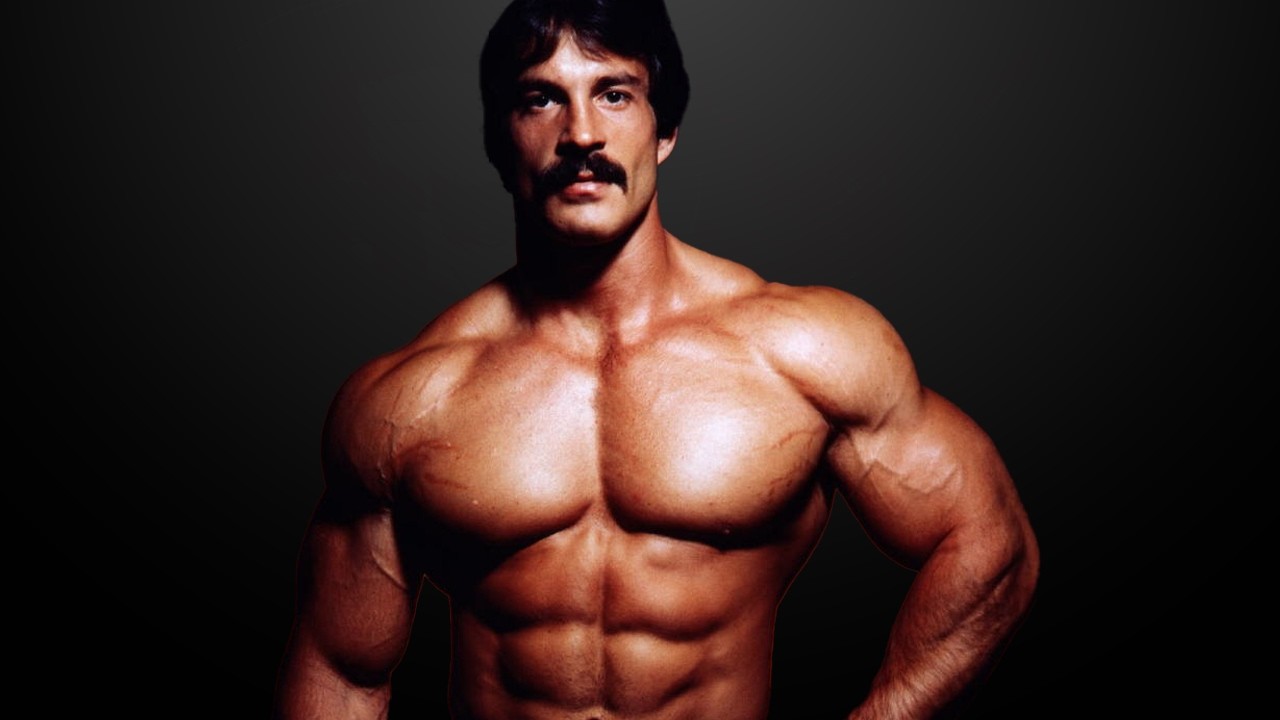
Video summary
Mike Mentzer's journey from a successful bodybuilder to a philosophical adherent of Objectivism marks a profound shift in his worldview during the early 1980s. After discovering Ayn Rand's ideas, he sought to align every aspect of his life, including science and physical training, with the principles of reason and rationality. This intellectual evolution provided him with a coherent framework that contrasted sharply with the commercialized and often pseudoscientific nature of the bodybuilding industry at the time. However, this period of ideological purity came at a steep personal cost; by the late 1980s, Mentzer faced severe poverty after refusing to compromise his principles for the "powers to be" like Joe Weider. Compounded by the deaths of his parents and his own descent into paranoia and mental illness, he experienced homelessness and hallucinations, believing that industry rivals had sent assassins after him.
His darkest moments were characterized by a struggle between madness and reason, a conflict that ultimately found resolution through both psychiatric intervention and philosophical grounding. Following suicide attempts and a psychotic episode that led to his arrest for possessing illegal substances, Mentzer entered prison, which he surprisingly viewed as a blessing due to the structure it provided and access to proper medical treatment. During this time, he studied extensively and began to use Objectivism as a therapeutic tool against his delusions. A pivotal moment occurred when his friend John Little helped him confront his belief that he had met God by pointing out Rand's arguments against the supernatural, effectively using philosophical logic as a form of medication for his mind. This process allowed Mentzer to gradually return to reality, demonstrating how his commitment to reason served as an anchor during his most vulnerable times.
In the 1990s, Mentzer emerged from prison as a highly productive writer and trainer who became a unique voice in the fitness world by integrating high-intensity training with philosophical discourse. Unlike typical bodybuilding magazines that focused on selling supplements and image-conscious advice, Mentzer's columns challenged readers to reject external validation and instead look inward for their identity and happiness. He famously distinguished between "first-handers" who create their own values and "second-handers" who live by others' standards, urging athletes to stop serving as servants to their own images. His influence grew significantly through his website, which reportedly garnered a million views per month, allowing him to reach an audience larger than Ayn Rand's radio listenership at the time. Even in his final years, he remained articulate and supportive of Objectivist institutions, maintaining a legacy that transcended the physical realm of bodybuilding.
The tragic conclusion to Mentzer's life occurred in the summer of 2001 when he suffered a heart attack at age 49, followed two days later by the death of his brother Ray from a similar cause, an event that sparked police investigations but was ultimately deemed a freak medical occurrence rather than foul play. Despite his physical decline and the loss of his family, Mentzer's enduring appeal lies in his story as a principled outsider who refused to compromise his values despite nature or circumstance winning against him. He represents a rare archetype combining the strength of a man of action with the depth of a thinker, inspiring people not through steroids or specific training methods, but through his unwavering ambition to live by reason and his benevolent character. His life serves as a testament to the power of maintaining one's principles even in the face of severe adversity, leaving behind a legacy that continues to resonate with those who value integrity and rational thought over conformity.
Read the full video transcript
see what type of rabbit holes people you
enter with the Yaron and Nikico's
dialogues.
Anyway, so from 19 so in the early 80s
the main thing is he discovered
objectivism and he decides that from now
on he needs to view everything science
bodybuilding under these the principles
of objectivity of reason and so on and
so forth. Again, many of these things
were there instinctively, but now he
gets he gets a more coherent worldview.
And from 1981 to 1984, he writes and
edits for existing and for new
magazines. He's creating programs. So,
he's training people and he's creating
tapes.
Now, the late 80s was the darkest period
in his life, and we don't know that
much, although he's open about it. So he
experiences poverty mostly because he
doesn't want to work with the powers to
be of bodybuilding. He doesn't want to
he is not excited to work with the Joe
Wider Empire.
Grief his father his mother had died in
the late 70s. His father dies in the
late 80s in ' 87
and he finds himself literally homeless.
But he's a he's like the Trump on the
train who has dinner with Dagney. He's a
he's a homeless person with dignity. So
he doesn't want to he tries to be so he
for example he enters hotels and he
finds leftovers from trays from
conferences or from room service and
this is how he goes uh on on feeding
himself. The most important thing of
course during that time is not the
homeless. It's it's the mind problems.
He descends into madness into parania.
He has a this complex that he's that Joe
Widther has sent assassins for him.
>> Who is Joe W?
>> Oh yeah, Joe Wider is the
emperor of bodybuilding. He's he's the
guy who runs basically professional
bodybuilding. He also had the all the
magazines, the connections with Arnold,
the connections with all the big money
in bodybuilding. So Joe Wider and his
and his brother, I don't remember the
name of his brother, they were the
biggest institutional names in in
bodybuilder. And they didn't
particularly like Mike Mensah because he
was very heterodox and he was telling
hey the
most of these magazines want to send you
cra to sell you crap like protein
powders which and stupid programs that
are not going to actually make you
jacked because they have nothing to do
with science anyway. So madness,
parania,
suicide attempts and instit
institutionalization in psychiatric
hospitals
after the suicide attempts and prison.
Prison because in one psychotic episode
he enters the gym, the people get
scared, they call the he doesn't become
violent to people, but they call the
police. The police arrest him. They find
in his blood
amphetamines, who knows? But things that
are by that point not legal. And he goes
to prison. But prison is a blessing
because now he has structure, he has a
roof, and he can take he can be properly
treated for his mental illness. And in
prison, he studies a lot. So he comes
out of prison after some months in a
much better condition and actually the
last the decade from 1989 to 1998 is a
very productive era. His writing his
training
some of his trainee include figures like
Dorian Yates six times Mr. Olympia and
great guy, very motivating guy to if you
want to hear his story, I think he's
from uh he's from the UK definitely and
uh he's still struggling with mental
health.
Very interesting. In one incident of
Parania,
so he so he he could call John Little
and say in a very serious tone, hey, I
might disappear for a few weeks. I'm now
employed by NASA and I'm going to the
moon to meet meet Bill Clinton and solve
all the problems of the earth
and the a way for his friends and men
himself to put himself back into normaly
was actually often objectivism. So at
some point men has the parania that he
met a person and that person is God.
And John little what he does is he takes
OAR he finds the re the relevant
passages in oper about the impossibility
of God and he he goes to men says hey
and mentor is like oh yes and slowly he
returns
>> really he returns to Yeah. Yeah. And if
you
>> that's crazy.
>> Yeah. It's it's absolutely moving and
actually John Little includes
even the passages he has saved the
passages. So for for example I'll just
read the two passages from Pikov. The
idea of the supernatural is an assault
on everything man knows about reality.
It is a contradiction of every essential
of a rational metaphysics. And when men
would hear this, it would be like, oh,
it would be almost like you know a
medication for the mind or someone else
is God the designer of the universe? Not
if a is a the alternative to design is
not science, it's causality. And these
things would ground man. would be kind
of oh yeah it's it's almost yeah
obviously you know it's it cannot
substitute the treatment he was getting
but it was a very grounding experience
so big picture here
>> most people when they hear Mike mention
an objectivism they think that men a red
eye run and he wanted to be this kind of
hero and that's why he started
bodybuilding it's quite a different
story it's it was almost like a
grounding experience and a like a a
balming effect for his mind when his
mind was
at its worst in terms of in terms of
suffering. So through these struggles
though he's still very productive. He
writes books in the in the '9s. He has
many he has many clients and
his brother has also is also someone who
is very much into iron rant Ray Menser
actually his first daughter was called
Dagney I think definitely he had a
daughter Dagy I don't remember who was
first doesn't matter and he discovered
in Rand actually I think before Mike and
Ray Mens so
>> so so how does how does objectivism at
this point uh enter into his writing and
into uh into the ideas he's conveying
because he becomes kind of a messenger.
A lot of people discover
>> exactly but how how does that actually
happen?
>> That that's where I was uh getting at.
So in the ' 90s
he writes a lot. He back in the day
people who are into fitness they don't
watch a video YouTube videos because
there's no YouTube. buy magazines in the
big magazines usually there's a there's
a Mike Menser column and very often in
this column he doesn't even write about
bodybuilding he writes [clears throat]
about stuff around bodybuilding for
example
he he
let me read a few lines so that people
understand what time of message he was
giving so he doesn't use the term you
know firsthander But listen to these
lines.
A man can spend his entire life
compulsively engaging in activities that
prove his masculinity. When a
bodybuilder must reassure himself again
and again with his muscles and his
victories, his body becomes a crutch. So
long as he continues to look outside of
himself, he will never satisfy his need
to prove himself a man. His only
salvation lies in being able to reject
these false gods and have the courage to
look inward. A great deal of strength is
required for a man to end his search for
identity. Listen to his inner voice and
decide what makes him happy. So he has a
whole column dancing around the term of
firstander versus secondhander. He says
bodybuilding should not be how you look
to others. You should not be someone who
>> is a is is a servant of his image to
others. So imagine now you you read a
magazine mostly like meattheads right
there and suddenly you find these lines.
You find someone talking about
self-esteem about being a first hunter.
So this is how Mike Menser becomes the
entry point for Rand. And I mean not in
this excerpt that I read very often he
actually sites Iran. He sites
>> in the magazine articles
>> in the magazine articles and in the late
90s he has his own website and he
claimed in an interview that at some
point his website had 1 million views
per month.
>> Wow. And he says of the not in terms of
not in terms of in a bad way he says I
actually have a bigger audience than
Pikov. So he was conscious that he and
he says you know he's very reverent
towards Pikov but as a matter of fact
says yeah I actually have a bigger
audience than than Pikov although Pikov
back then had the radio. So, so he was
he was at his peak, let's say, as a
public figure. And this is how people
would come through the
the the mentions to Iran in his articles
and in his in his personal website and
in his interviews. It's very difficult
to to find an interview of Menser
without explicitly mentioning an Rand.
And even if he doesn't mention it, the
way he speaks is so unusual for a
bodybuilder that people were attracted
that hey this is and he was such a
articulate and good speaker. I wrote on
Twitter a few weeks ago, I would
encourage every young activist to listen
to these interviews on mentor and see
how you can use some objectivist
concepts in a way that apply to a
different field and in a way which is
organic and helpful to the audience. So,
so I find him quite a good and
captivating speaker.
That
>> that that's great. Um,
>> speaking of speaking to Mike Menser,
>> do you know anyone who has spoken to him
on the phone?
>> Yes, I had a conversation with Mike
Mensah on the phone.
>> I don't know when exactly, but it was it
was a few months before he died. Uh, he
died in 2001, so it must have been
either in late 2000 or early 2001. Uh I
was in the Iron Man Einran Institute
offices in uh in those days where we
were in Marina del Rey in uh in Los
Angeles and uh you know I got a phone
call out of the blue from uh from Mike
Mensah. I vaguely knew who he was. I
didn't know much about him. I was never
attracted to bodybuilding. It was never
never something I found interesting. And
uh but I I knew there was this guy Mike
Menso was an objectivist and uh I I
didn't realize he was so
uh influential in a sense of attracting
people to to objectivism. I I I I didn't
know that. Uh so he wanted to talk. We
we talked to the phone and he he
expressed his appreciation for what the
Institute was doing, his support for the
institute. Um it you know I I I don't
think I was relatively new. I started
the job in um technically January 1,
2000. Uh I went full-time, I think, and
moved to Southern California in uh that
summer. Uh so I'd been on the job for
very little time. It this is certainly
before 9/11. Uh and uh so I I you know,
but he wished me luck and and expressed
his support and yeah, he was very very
friendly and very positive. And then I
remember that just a few months after
that, you know, just heard the the
horrible news of of the fact that he had
uh he had passed away. So, um
>> I have more questions about your
dialogue, but yeah, let's let's
>> if I known who it was, if I had a
connection, I'd probably remember more.
But it wasn't a big deal at the time,
right? because I I didn't have an
appreciation for who he was and what he
had done. So, uh yeah, I I haven't
retained much of that conversation.
>> So, back then, most of his audience was
people from the bodybuilding world
throughout the throughout the world. So,
it makes sense that he hadn't penetrated
say the general the general culture.
Mike Menser dies in the summer of 2001
and it's like a name Greek tragedy
two days after so he dies of heart
attack and most people say ah steroids
he actually had health problems which
were quite complicated
and he found them almost by coincidence
after an injury and then his brother Ry
needed kidney dialysis
and this was in some ways inherited from
someone else in the family. So, you
know, everyone will say, "Oh, it's the
steroids." We don't know that. But in an
ancient Greek tragedy style, Mike Menser
dies
in one day. Two days later, his brother
has a heart attack and uh and dies. And
yeah, both the two the two brothers die
within three three days. And Mike was
49. His brother was slightly slightly
younger. His brother was also a
impressive bodybuilder. He didn't reach
the level of Mike, but uh yeah, they
were uh they were always very very very
very close.
>> Yeah, it looks like the police found it
strange that the two brothers died so
close to one another. And actually,
there was an investigation. There was
there was a a police investigation into
this, but they could find no, you know,
no nothing at the end, nothing
suspicious. It was just it was just one
of these freak events that are very very
rare.
>> Yeah, there were freak events but it's
again it's it can be explained. So men
had a couple of mini
>> history related problems. So that's the
the medical history was quite clear.
>> Yeah. And the brother also had the
serious serious kidney kidney problems.
Anyway, so this is the this is the the
story of his life. So when you had that
discussion,
what makes it even more moving for me
when he called you from what we know he
had very serious problems. John Little
says there were a couple of times in the
last months where he would visit him in
hospital and he was surprised that men
was still alive
>> and yet when he exited the hospital
again he tries a new series of training
videos him training people because by
that point by the way he had given up
training. He looked like a fat uncle.
But yeah, so he always had this will to
be productive even at the darkest of
times.
>> How did John Little get to know him?
>> [sighs]
>> you know
>> through bodybuilding
in terms of and he find him an
interesting person and that's how he got
to to know him and he was very close to
they became close when men had his in
the late 80s his parania incident so
what he would do is he would call John
little in the middle of the night and
little would talk to him till men would
fall asleep he had serious issues with
sleeping
>> and he was he was his anchor to to
reality. So yeah, I
>> I definitely I definitely encourage you
to read the book. It's also a very nice
audible uh audible how it's called the
audio book. It's narrated by the guy who
narrated the 5 a.m. club. He has a very
distinctive voice. So both so John
Little again I don't know the guy. I've
never spoken to him. I think he did a a
service to all of us having maintained
Menser's legacy with the videos in his
channel Heavy Duty College I think it's
called and with the with the series of
books and he does it with respect also
the book is not a high geography
it doesn't hide anything about the
mental health struggles the the parennia
and even some things that were mistaken
that cost Manser maybe being even a
bigger figure in the B in the history of
bodybuilding
>> and they and and John Little has kind of
promoted this particular methodology of
training again with body by science with
McDuff uh McGuff John McGuff who's the
doctor who teamed up with John Lto to
write that book he does consider himself
an objectivist so I know I know John
I've met him um I met him in South
Carolina, not far from Clemson, he comes
to events at uh when I'm when I give
talks at Clemson, he comes uh so so he's
uh and he trains people out there in the
highintensity super slow, he has a he
has a gym in um in Greensboro, South
Carolina. Um so what are we I mean is
there is there anything here to you know
to to how would you summarize uh this
discussion of Mensah?
>> I would summarize it by a question. Why
is of all the people in the golden era
why is Mike Menser still today such an
intriguing figure to so many people? His
interviews have ten of thousands of of
views. I think it's a combination of a
few things. The first is everyone likes
the story of a principled outsider.
Unfortunately, as opposed to Ror men
didn't win at the end.
>> Yeah.
>> The powers to be so to speak won or
nature won, however you want to to put
it. But he was a guy of principle. And
again, this combination of bodybuilder
and thinker, there's something very,
it's a rare archetype, but at the same
time, such an appealing archetype, the
thinker, the man of the the man of the
mind and the man of the of the muscle,
thought and action. And this was the
ideal that he wanted throughout his life
to
serve to to live it. Actually, not to
serve it, to live it. And people find
appeal to it. Then I think there's
something very very healthy in the stuff
that so many people find Mike mentioned
today inspiring. It has nothing to do
with high intensity training. It's
nothing to do with steroids. Whatever.
There's something genuinely moving to a
guy who had to overcome all these
struggles, all these demons, but never
lost at least his ambition to live by
reason and to live for the things that
he had chosen that were his biggest uh
his biggest values. He was not a show
off. He was a benevolent guy, a great
guy and a big inspiration
for many people including my myself.