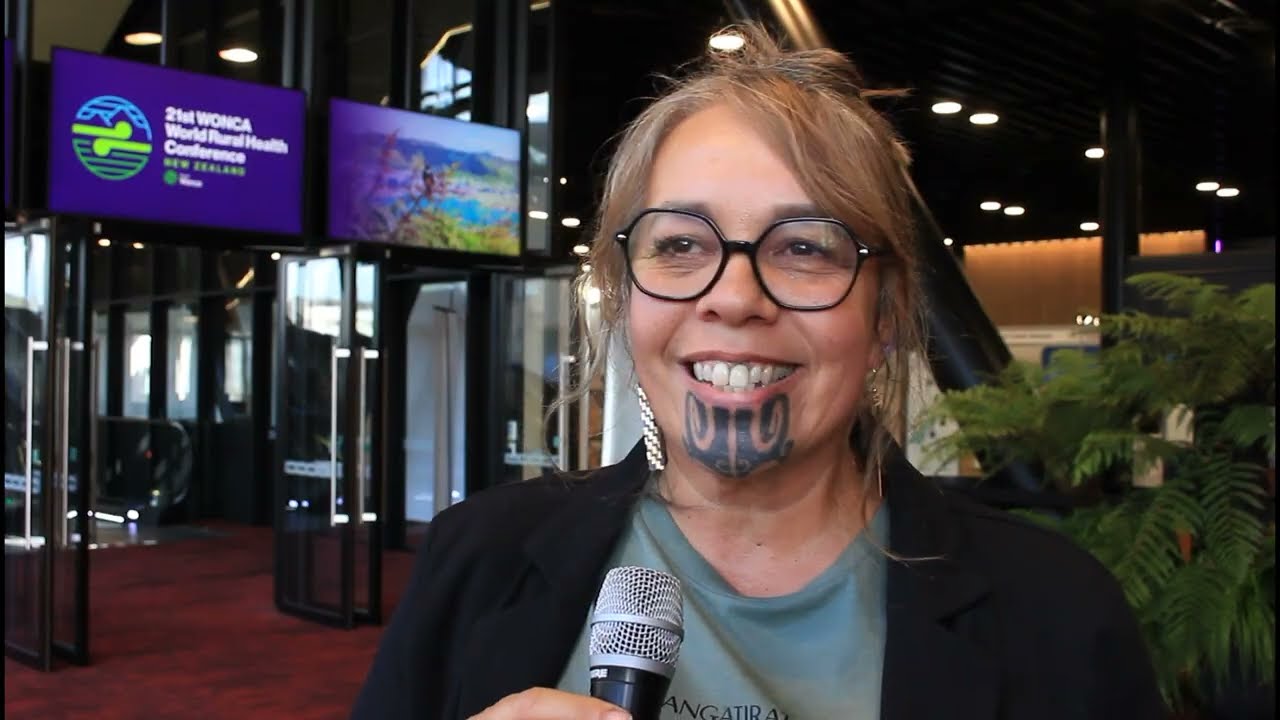
What will you take home from Rural WONCA 2026?
Watch on YouTubeVideo summary
The Rural WONCA 2026 conference highlighted the profound sense of global camaraderie among healthcare workers from diverse backgrounds who share a common commitment to rural advocacy and community service. Despite significant differences in local practices and geographical locations, attendees found deep inspiration in the shared values of generosity, humility, and a flat organizational structure that encourages collaboration rather than competition. This environment fostered lateral networking, allowing established professionals to connect with peers at various career stages to jointly develop innovative projects, thereby dispelling the myth of isolation within rural communities worldwide. The event reinforced that while faces and places vary, the underlying passion for serving one's community remains a powerful uniting force across the globe.
A central theme emerging from the discussions was the critical importance of long-term planning and sustained effort to achieve meaningful improvements in remote health outcomes. Speakers emphasized that effective change requires thinking in decades rather than years, focusing on longevity and the enduring impact on future generations. This perspective was closely tied to the concept of community-led innovation, where local people identify needs and act without waiting for government directives. The conference affirmed that while advanced technology can enhance efficiency, human connection remains at the very heart of rural medicine, necessitating a shift away from institutional frameworks rooted in imperialism toward more inclusive approaches that respect diverse knowledge systems.
The integration of Indigenous knowledges with Western medical practices emerged as another pivotal takeaway, challenging participants to engage in difficult conversations about history and systemic racism. Keynote speakers urged attendees to sit with the discomfort of realizing how past service might have inadvertently perpetuated harm, advocating for a curriculum that honors ancestral ways of knowing alongside traditional learning systems. This approach extends beyond clinical settings into personal lives, challenging doctors to address their own family distress stories and vulnerabilities as a blueprint for healing future generations. By bringing these personal and historical narratives to life, the conference aimed to create a ripple effect of empathy and understanding that could transform healthcare delivery globally.
Ultimately, the most significant lesson from Rural WONCA 2026 is the necessity of fostering environments where hard conversations can occur among patients, staff, policymakers, and colleagues alike. The event demonstrated that true progress in rural health depends on valuing the well-being of Indigenous peoples and recognizing that healing begins within families before it can spread to communities. As participants returned home, they carried with them a renewed strength to continue their advocacy work, armed with new connections, alternative perspectives, and a deeper appreciation for the interconnectedness of rural healthcare workers everywhere. The consensus was clear: by embracing discomfort and prioritizing human connection over rigid structures, the global rural health community can build a more equitable and resilient future for all.
Read the full video transcript
One amazing thing that I got to take
away from this conference is just
meeting a variety of people with a huge
vast array of different backgrounds and
experiences working in rural healthcare
from all across the globe and you can
see that there are a lot of differences
in how things are done but there's a big
commonality in advocacy and working
together in community which I thought
was really inspiring
>> a sense of really deep camaraderie.
It's uh wonderful to meet and uh you
know belong to a tribe of people who are
engaged um not simply in the rhetoric of
strengthening rural primary care but
also in the practice of it and who are
uh willing to kind of journey uh
throughout their lives doing this.
despite the diversity in faces and
places where everyone is from, there's
so much goodwill. And I think when you
work in rural places and spaces, you
know, the generosity, the generosity in
their time, the willingness to help
others. So, I think that's kind of a
uniting force here at Rural Wonka. And
it's really cool, you know, it's um I
guess also it's a lack of egos, you
know, it's just a a very flat structure
and people willing to share. So it's
just a nice place to be. I getting a
strength I guess from finding common
ground and meeting others who agree with
that and who are promoting that in many
different ways. So it's been wonderful
to to hear that and I feel a great uh
improvement in the strength to go home
and continue with that focus. One thing
that I'm going to take away from this
conference is lateral networking. So I
think a lot of the time uh we focus a
lot especially at the stage of my career
that I am at where I'm not fully
established but I'm not as young as I
used to be. Um we focus a lot on
climbing the ladder but actually this
conference has reinforced that there's a
lot of people who are my peers who kind
of who get the rural message and that I
can work with them to bolster myself to
get support and to actually bring forth
some really cool and interesting
projects. connection with colleagues,
spending time talking to people and the
real thing I'm learning from New Zealand
people and the Maui is connection to
country, connection to culture,
connection to civilization.
>> It really is just all boils down to
community. um the people in our
community delivering services by the
community for our community um on the
ground and
the passion that people have for that
and not waiting for the government to
show us and tell us what to do. The
services that are innovative and are
working really well are ones that people
in the community have they've seen the
need and they've just gone on and done
it. getting to know all the people that
I didn't know before uh from around the
world that have a similar interest and
passion in uh disability policy making
um improving the lives of rural folks
with disability. I think this conference
has just really helped to disprove that
fact that we're isolated in our rural
community across the world actually
there's so many people who have so many
similarities in terms of being rural and
what that means to them no matter where
they're from. We're really actually
connected um more so than ever. One
thing, okay, there are a lot of things,
but one important thing is keep pushing,
keep pushing, keep pushing.
>> Meaningful improvements that really
stick, that really make a difference,
that are really worthwhile improving the
health for people in remote rural
communities.
You need to be thinking, planning and
acting in decades, not years. This is
about longevity. I think the most
important thing that I would take back
is the grace initiative and you know
what a wonderful way to collaborate and
network. From the keynote yesterday uh
Dr. Diana Marie was talking about
uh having hard conversations and opening
up the space to have hard conversations.
This applies to work with patients and
clients but also with staff and
employees but also with potentially
policy makers too. this rural Wonka
conference in particular, I like the
fact that there have been other health
professionals, not just family medicine
doctors present and also other types of
professionals that work in the
community, researchers. Um, and I think
through conversations,
the best part about this is getting
their maybe alternative perspective on
what's happening in the healthcare
system.
sometimes maybe some hard conversations
about, you know, what we as doctors
could and probably should be doing
better. How human connections are at the
heart of the rural medicine and yeah the
advanced technology can help us um like
improve our efficiency but uh the human
connections are always at the center of
our work. I think for me there's been an
affirmation that um indigenous
knowledges plural and western knowledge
cannot be integrated and the importance
of ensuring our students understand the
significance of the indigenous
knowledges especially when they're
working with our remote communities in
Australia.
>> Many of the plenaries have been
outstanding. The session yesterday by by
Mark and Dr. uh Diane uh um was
exemplary. I do not think I have
actually attended uh a session like that
at a medical conference or a health
systems conference ever. Just the some
of those ideas about uh learning as
movement. How do you use uh the
epistemology that uh exists in
traditional learning systems, indigenous
learning systems across uh the world and
in this case the Maui culture was really
eye opening, very inspiring and it's uh
um their book is probably going to
become a spiritual curriculum for me.
I think that it's really important that
we understand that the institutions,
health, education, social sector,
justice are all founded on imperialism
with the idea that there is a superior
one knowledge system that is dictating
how we operate inside health. when we're
trying to talk about our knowledge
system from an indigenous perspective
that you understand that they don't fit
into the western box. We wanted in our
keynote for us to realize that it starts
by us being able to have uncomfortable
conversations about our histories to sit
with that and to not avoid the
discomfort but actually sit in the
discomfort. It's quite a violent process
to think that your years of giving
service to your community, to your
people who you value has actually been
perpetuating racism. That's quite a
violent process. So our our message was
we care about each other. We're
connected to each other. How come we
can't sit with each other and talk about
the discomfort that we experience when
we're operating with another way of
knowing? I think we're moving. I do
think it's slow. I think the health
system could be a lot faster. I think
that's where the compass is directed at.
I don't think it's about one particular
place like youth mental health or
assisted dying or traditional herbal
properties. I think it's the value base
of those indigenous people. And here in
Alteora without doubt it is orang papa
not well-being not mental health.
Bring our histories to life. Bring our
ancestral ways of knowing to life. Bring
your personal distress stories to life
because they will be your descendants
stories that you use as blueprints that
they will feel connected to. To all of
the family doctors operating around the
world, I implore you, I challenge you, I
hope that you consider the distress in
your families and what it's like for you
when you avoid sharing your most
vulnerable stories with your family.
You're expecting your patients to do it.
I challenge you to sit with it in your
families because if you can do it in
your families, you're growing a new
tomorrow. And those family members are
patients of family doctors. If you can
do it with your family, imagine the
rippling effects across the world.