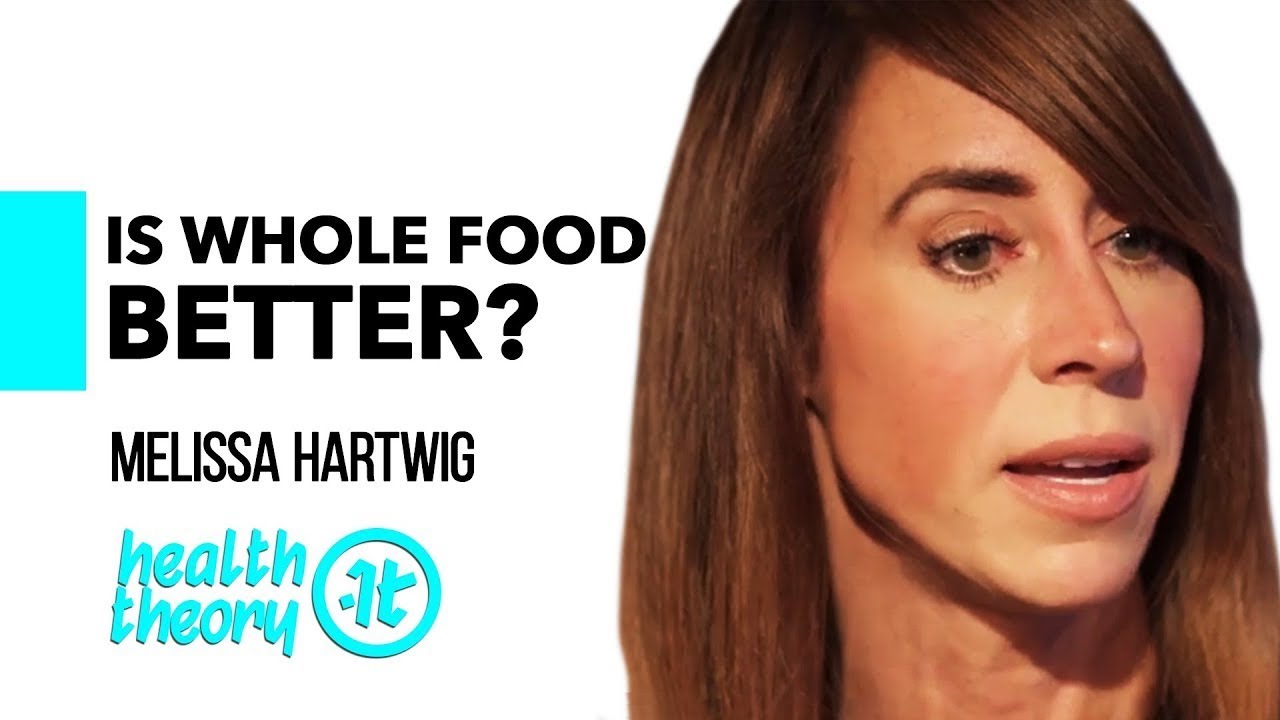
What the Food Industry Doesn’t Want You to Know | Melissa Hartwig on Health Theory
Watch on YouTubeVideo summary
Melissa Hartwig, a multiple New York Times best-selling author and former drug addict who has spent nearly two decades helping millions change their relationship with food, argues that true self-love is often obscured by media-driven decadence like buying expensive treats or indulging in guilt-inducing foods. She distinguishes between superficial coping mechanisms—such as eating chocolate to numb stress—and genuine self-care, which involves finding authentic joy and connection without the subsequent shame cycle. Hartwig emphasizes that many people struggle because they confuse the object of desire with an emotional need for connection; therefore, effective recovery requires pausing to analyze what a behavior represents rather than just suppressing it. She advocates replacing numbing habits like overeating or shopping with genuine social connections, noting that while digital communication creates an illusion of connectivity, in-person interaction is essential for reducing stress and building empathy. The foundation of Hartwig's approach involves shifting from a restrictive diet mentality to a growth mindset centered on identity rather than behavior change. Instead of setting goals like "I will eat healthy," she encourages individuals to adopt the internal narrative that they *are* a healthy person, which naturally guides their decisions regarding social situations and temptations. This psychological shift is critical because relying solely on stopping an addictive behavior without addressing underlying issues in self-worth or mindset often leads to relapse; Hartwig learned this through her own recovery from drug addiction, where she initially remained clean only by abstaining while still engaging in other unhealthy habits like smoking and caffeine consumption until she fundamentally changed her environment, friends, and sense of value. To facilitate lasting change, Hartwig introduces the Whole30 program not as a weight-loss diet but as a 30-day experiment to reset one's relationship with food by eliminating common inflammatory ingredients like added sugar, alcohol, grains, beans, peas, soy, and most dairy products. The process relies on strict black-and-white rules rather than moderation because the brain struggles to regulate cravings for highly processed foods designed to be overconsumed. Participants are instructed to announce their commitment publicly, prepare meals in advance, and plan responses to potential social friction or emotional triggers. Upon reintroduction of excluded foods one by one after the 30 days, individuals can identify specific reactions through an "N-of-1" trial method; for example, some people may discover that dairy contains casomorphins which bind to morphine-like receptors in the brain, causing mood swings despite being perceived as a comfort food. Navigating real-world challenges requires practical strategies and emotional resilience rather than logic alone when dealing with defensive friends or family members who feel threatened by dietary changes. Hartwig advises asking questions like "is this worth it?" to evaluate whether avoiding a preferred but problematic food is necessary for one's quality of life, distinguishing between genuine physiological reactions and mere preferences. She also highlights the importance of self-compassion, noting that she had to shed her persona as the perfect "Whole30 Melissa" after her marriage ended because maintaining an image of perfection was unsustainable and disconnected from reality. By accepting imperfection and allowing herself to be vulnerable about struggles like debt or marital issues with trusted individuals, Hartwig found it easier to extend empathy to others, realizing that everyone needs support and does not have all the answers. Hartwig concludes by emphasizing that exercise functions as a form of spiritual practice for her, serving as time set aside specifically for self-care where she can process negative emotions physically before engaging in deeper therapeutic work or meditation. Her personal routine involves hiking alone without headphones to ground herself and connect with nature, followed by a four-part guided meditation at the summit focused on gratitude, lifting others up, defining daily success, and listening to surroundings. Ultimately, her most significant advice for improving health is learning how to cook real whole foods from scratch, as this skill empowers individuals to take control of their nutrition regardless of external circumstances or dietary restrictions.
Read the full video transcript
hey everybody welcome to health theory
today's guest is melissa hartwig she's
the multiple time new york times
best-selling author of whole30 food
freedom forever and several others she's
a former drug addict who turned her life
around nearly 20 years ago and has since
channeled her energies into helping
millions of people change their
relationship with food she's been so
successful at that that the entire food
industry is now being shaped by her
influence and she's partnered with
hundreds of brands to make foods that
are whole 30 compliant that's pretty
extraordinary as somebody who is a part
of the food industry i know how hard it
is to get people to change but what i
want to start with is the impact that
you're having on people at like a really
personal level yeah and one thing that i
found really intriguing researching you
is that you buy flowers for yourself
once a week i do why yeah it's kind of
something that i've been known for
always buy yourself flowers i'm a big
advocate for self-care it's not all
pedicures and treat yourself and like
spending money on things you don't have
and eating food that makes you feel like
crap afterwards like those are not
actually forms of self-love
i like the idea of doing something that
it's just for the sake of making you
happy flowers make me so happy to see a
fresh bunch sitting on my table and i'm
just a big advocate for finding things
in your life that
bring you joy and make you feel like
you're taking good care of yourself why
do you think that's so important and why
do you think people struggle with it so
much i think this idea of self-love and
self-care
has been featured around this like
through the media through advertising
you know this decadence and this luxury
and like well we know you can't afford
it but like treat yourself or you know
the woman like lying in bed just feeding
yourselves chocolate and like that's a
form of self-care but we all know now
where that gets us right it's this
feeling of like
pleasing in the moment in the moment it
satisfies but then there's guilt and
then there's shame and then there's
stress that results in that and that
stress leads to further over consumption
of the thing that we're getting into
trouble in the first place whether it's
spending money or drugs or food or
whatever
i love your notion that there is a bs
type of self-love that isn't really
self-love and you've gone on your
instagram feed i thought it was really
cool you listed out all these things
that you were just talking about where
it's like that's not really self-love
it's not really self-love yeah so how do
you help people find that thing that is
for them
the correlate for you of buying flowers
i talk about food a lot because food is
the foundation of the whole 30 but
whether it's food or shopping or
whatever it is you use for that like in
the moment
numbing or self self um coping skills or
uh to relieve anxiety to relieve boredom
like it's not actually about the thing
right very often it's about what you
think that thing represents for you and
if you are able to through
therapy through self-analysis through
something like the work by byron katie
whatever your practice is maybe it's
through a whole30 where you're just
increasing your awareness around
some of these issues and your emotional
relationship with this thing if you're
able to step back and say what am i
actually looking to fulfill in this
moment right like the idea of buying
myself a really expensive piece of
jewelry
is fine but what i really want is just
to like feel like i treated myself a
little bit and see something pretty and
i can accomplish that just as well with
a bunch of flowers
very often people who are buying things
or eating things or drinking things
aren't actually looking for the thing
they're really missing some form of
connection and so i talk about kind of
that substitute of like it's not about
the cookie it's about the connection and
you know could you get this feeling that
you're looking for by reaching out to
somebody going you know for a walk
meeting somebody for coffee i think a
lot of it is just about pausing it's
about awareness it's about connecting
with someone else and having these
conversations and then you you have to
actually learn other ways to self-soothe
because so many of these behaviors have
been ingrained you know since we were
like kids
you went through arguably the most
dramatic kind of learning a new way to
self-sue that i can imagine going from
using drugs to getting off of that yeah
what was that process like and then what
were some of the actual real mechanisms
that you learned that you're still using
yeah so the process was incredibly long
because just stopping using drugs is
nowhere near enough to actually lead
like a fulfilling life and to be
far away from your addiction what do you
mean by that oh so so many
of our practices around addiction and
recovery
are focused on just not doing the thing
right so when i was in rehab i was chain
smoking cigarettes and drinking all the
caffeine and eating all the sugar but i
wasn't doing heroin so i was doing
better um my first stint out of rehab i
was clean for a year and then went back
to it and you think like wow you have a
year how do you go back after a year of
it's because all i had done in my life
was just stopped using drugs i hadn't
like changed enough about my life about
my mindset about my
self-worth or how i thought about myself
so all i did was stopped using drugs and
like that's not enough
when i went back the second time and
kind of on my own volition and cleaned
myself up that's when everything changed
and by that i mean i changed everything
i adopted a growth mindset that i was a
healthy person with healthy habits i
changed my friends i changed where i
hung out i changed the clothes i wore i
changed the music i listened to
there were just so many aspects of my
life that i knew had to completely
change so that i could
shore up the fact that i was no longer
using with all of these like buffers
so that
if the stress came or if the temptation
came i had all of these like defense
mechanisms built in and i discovered now
in hindsight that like i stopped using
drugs and started shoring up my
self-worth and self-value but i was
using food really similarly to the way
that i use drugs and then when i kind of
got my food stuff in line through the
whole 30 i realized i was kind of using
like money and shopping the way i used
to use drugs and it was really through
an enormous amount of like therapy and
analysis and connection and like just
digging everything out of the box and
throwing it out into the light and being
willing to look at it that i was able to
get to a place now where i feel like
i'm recovered talk to me more about the
growth mindset and the way that you
referred to the growth mindset earlier i
find really intriguing which i forget
the exact words you said but it was
something like
um
not i choose to be happy but you were
like i am healthy i eat healthy or
something like that um i read uh a study
in a book can't remember what book but
it talked about kids
and cheating younger kids and cheating
in school and in tests and long story
short what they figured out is that the
kids who
said i don't cheat
versus the kids who said i am not a
cheater those who adopted the idea that
they were not a cheater actually cheated
less when given the opportunity and i
read this a long time ago and it really
fit in with this idea of growth mindset
being the key to kind of everything that
we often think that our traits are fixed
i'm not athletic i'm not the smart one
i'm not the outgoing one i'm not the
funny one and like those traits are
fixed and set
whereas growth mindset is you know i can
change and i can grow and i can develop
new skills and new habits and and flex
my personality and like become whoever i
want to become
so kind of combining those two ideas
this idea of i am a healthy person right
it's not i'm going to eat healthy or i'm
going to go to the gym it's i'm a
healthy person and so i was able to
frame all of my behaviors and decisions
around this
central notion that i am a healthy
person so when it came time to
you know am i going to go out with my
friends knowing that they're going to be
like out super late drinking and i'm not
going to drink with them but i'm still
going to be tired and like does this fit
my notion that i'm a healthy person and
sometimes the answer is yes sometimes
it's the social benefit i get from that
interaction is going to outweigh that
i'm going to be tired the next morning
but it gives me like a framework
a linchpin something to hold on to when
i'm thinking about decisions and actions
like is this going to serve me i am a
healthy person will this serve me and so
i i created that and kind of clung to
that it's been incredibly helpful for me
going forward in every
aspect of like my career and my personal
growth and motherhood and
um just everything
that's really incredible talk to me a
little bit about what you were saying
um you said that you're going through
this process and you're having to pull
all of this out and really look at
everything how do you transform that
into tactics like i know when you went
through one of your book tours you would
already split with your husband but you
guys decided to do it together you're a
new mom
like you said it was one of the most
stressful times in your life
how exactly did you cope with that and
get through everything like
in that moment for many people that
struggle with addiction that would have
been an easy time to slip back so what
were those buffers that you had in place
i'm a huge fan of therapy any form
whatever you happen to like find take
what you like i've done you know
traditional talk therapy cognitive
behavioral therapy i've gone through the
work with a trained therapist i've seen
i spent time with the shame and shaman i
saw
someone who read my tarot cards like
i've you know worked with an energy
healer like i will
try anything and everything in an effort
to just sort of like
feel like i'm healing from an emotional
and psychological and spiritual level
but i took everything i learned into
practice and what was very helpful at
that moment was the work by byron katie
this idea that it is not the experience
that is stressing us out it is our
reaction to the experience
and i decided to put that into practice
during that time frame and realize that
i could still choose in this moment to
be happy that i was going through
something really stressful that it was
public that it was emotionally
challenging and draining and i was
physically tired but i could still
choose to find the moments of like
happiness and joy
in my day talk to me about how even in
the middle of a storm you can choose to
be happy
well
byron katie and the work has been
incredibly important to me she
essentially kind of asks your it's the
idea of differentiating what's happening
from your story about what's happening
right so
we're here having this conversation and
like
you make a funny face and my story about
it is oh he didn't like that answer i
better change it when really like you
just got a calf cramp or something like
that you know if i can tell myself a
story about a situation i can just as
easily tell myself a happy one as a sad
one so the story was you know going
through this divorce and it was very
difficult and it was very stressful but
my story was oh my gosh all the things
that i thought i had like given up on
the idea of having in a marriage right
like
well you know my marriage just isn't
like this and he's just not like that
and i guess i can live without these
things like i can have those things now
and that was an incredibly freeing
thought and it really helped me kind of
move on from being stuck in like
grieving what i had to
being hopeful and optimistic about where
my life was going i knew it was the
right decision we both did and i just
chose to tell myself a different
narrative about it what do you say to
people that said well you're just lying
to yourself
in any given situation i think you can
still choose how you respond to it
and i think it's you know the the
stressful thoughts that come up i still
question them always can i find this can
i find some truth in this so
you know a difficult situation where
somebody says you know you weren't there
for me or you're being really selfish
the first thing i do is always ask
myself can i find it is this true and if
i can find it then i can at least
acknowledge like you're right i can see
ways that i haven't been selfish i'm
really sorry about that but at the same
time i'm not running off with it
adopting that as part of my self-worth
i'm a selfish person and i'm no good and
i need to put everything in my life on
hold to accommodate this person so
there's there's certainly a practicality
about it but there's also the
acknowledgement that i do have a choice
and how i want to see this and view it
and if i can make a choice that makes my
life that much better why wouldn't i do
that
i love what you said about self-worth
talk to me more about that so
from what you said it sounded like you
see your self-worth as something that
you
construct maybe partly from a story that
you're telling yourself about yourself
but what are elements that you do let
become part of your self-narrative and
your self-worth i think very often and i
fell prey to this for a very long time
our self-worth comes from the stuff that
we like do or have i'm a fit i'm fit
i exercise i run my own business i'm a
single mom i um eat healthy like i am
successful at my job whatever those
things are the danger in that is that if
those go away like who am i
right maybe i break my leg and i can't
go to the gym anymore or you know maybe
something happens at work and i'm not as
successful in my position so what i had
to do a really long time ago
was figure out who i where my self-worth
comes from and but it's the things you
can't take away i'm generous that's part
of my self-worth i give i like to give a
lot to my community and if i have
something to offer and you ask me for
help i want to give that to you
um i'm considerate i think of my friends
and and empathetic and i've had to work
very hard at being empathetic it does
not come naturally to me but i've worked
hard at it and i think i'm really good
at it now and that's part of my
self-worth and these are all things that
again can be part of my growth mindset i
wasn't naturally empathetic but i worked
at it and now i think i'm very good at
it but there are also things that nobody
can take away it doesn't matter what my
life looks like
whether i'm homeless or a billionaire or
successful in my job or you know can't
find it it doesn't matter i can still be
all of these things and those are the
characteristics that i identify with
myself worth now
it's extraordinary um i want to
dive into
that notion of um as you're trying to
pull yourself out of that and you're
determining what are going to be the
things that you're going to make part of
you and you realize i value empathy but
i don't have empathy how do you
train that like that seems so impressive
to me and
i i really think people are going to
hear that and resonate and be like but
how do i yeah go down yeah
i mean
i didn't have empathy for other people
because i had little empathy for myself
i saw emotion as weakness
i saw expression of emotion especially
as weakness gosh i went through a period
of time where like you would never get
through to me you only saw whole30
melissa and she was perfect
um and so
you know if i don't have empathy for
myself in them as some of those
situations it's impossible for me to
actually connect with somebody else
about their situations and if i wasn't
willing to be authentic and like show up
authentically whether it be a one-on-one
conversation or with my social media
community
obviously i wouldn't be able to connect
with anyone so i had to learn empathy
for myself i had to be okay with the
fact that like i wasn't perfect and that
came pretty quickly and easily and it
was a real relief to shed
whole30 melissa and just show up as me
that part was easy but i had to get
comfortable with the idea that like it's
okay to express your emotions and it's
okay not to have it all figured out and
it's okay to share that with people that
you love and it's okay to ask for help
that was a big one you know it's okay to
let people like support you and shore
you up and once i did that with myself i
found it so much easier
to offer that to other people because if
of course you don't have it all figure
out nobody does i don't either and of
course you need help sometimes so do i
so
you know any anything i offer to anybody
else has always had to come through me
first
that makes a lot of sense you talk a lot
about connection which i really love
talking about
somebody who's writing books about food
but that in that is always this like you
need to connect you need to connect i
was reading one of your posts and it was
about food but like your your last piece
of advice was repeated three times
connect with other people connect with
other people and i thought wow that's so
interesting yeah what
what makes that so powerful i think um
especially in today's age of social
media and where so much is done online
we feel more connected than ever i'm on
three different accounts i'm you know
messaging people i haven't seen since
high school i maintain entire
relationships including with the people
i'm closest to like my you know partner
and parents and sister via text message
i rarely get on the phone
i'm rarely facetiming unless it's with
my child
i think we feel really connected but
we're less connected than ever there's
no proxy
for this in person social connection the
stress meeting mediating effects the
oxytocin boosting effects just how good
it feels
to actually connect and
you know we learn skills like empathy
through this connection through mimicry
and through reading body language and
facial expression and the less we do of
that i think the more disconnected we
feel and the more disconnected we feel
the more likely we are to turn to some
of these other behaviors as a way to
like self-soothe or cope or fill a hole
so i encourage people to connect for a
couple reasons one
shame and guilt like live in the dark
secrets live in the dark for me to show
up to somebody in my life and say like
i'm really in debt let me tell you about
what's going on with my finances or gosh
i made a huge mistake at work or
whatever it is we're feeling ashamed
about or uncomfortable that's incredibly
powerful for us to move through them
i think we're denying ourselves the
stress-mediating impact of being
one-on-one especially when we're trying
to make really big changes like changing
our diet which is hard and emotional and
and really intimidating for a lot of
people why wouldn't you want to share
your experience with that with someone
else and ask for their support and allow
them to support you
yeah now that makes a ton of sense so
really fast because i want to talk
you're one of the most extraordinary
examples to me of like the human ability
to change
and i want to talk about it in the
framework of how you help people go
through whole30 so like super fast give
us the what is whole30 what are the
rules and then i want to talk about your
process for helping people actually make
those radical changes yeah so i describe
whole30 like pushing the reset button
with your healthier habits and your
relationship with food so we're not a
diet we're not a quick fix we're not a
weight loss program we're not even
prescriptive the basis of the whole30 is
that there are foods that are in your
diet maybe even the healthy stuff that
could be having a negative effect on how
you look and how you feel in your
quality of life
and the best way to know how these foods
work for you is to pull them out of your
diet for 30 days and then reintroduce
them one at a time very carefully and
systematically like an experiment
so you know all the dietitians say there
is no perfect one-size-fits-all diet and
i agree but everybody then says okay
cool like how do i figure out what works
for me
whole30 is how you figure out what works
for you you do this 30-day experiment
where you eliminate really commonly
problematic foods things like added
sugar alcohol grains
beans peas
soy and most forms of dairy you pull
them out
reintroduce them one at a time after the
30 days is up and then you compare your
experience and that's what lets you
figure out how those foods are working
for you
okay that makes sense so you've talked
about like making sure that you prepare
and that you're really committed and
don't go into it like half ass what what
is the process of making grand change in
your life
habit i mean
from my perspective at least in the
research i've done habit research
actually shows that black and white
rules are easier for the brain to follow
the idea of moderation is very difficult
for many of us especially when you're
talking about foods that are designed to
be over consumed like sugar it's really
hard to moderate the thing that is
constantly making you kind of crave more
so the rules are very black and white
and there's a lot of practical advice we
give to people going into it so it's you
know announce your commitment to someone
i'm doing the whole 30 and i'm starting
on this date because that accountability
and support is going to be huge for you
seeing the commitment through do some
planning and preparation so clean out
your pantry even though right now you
feel super jazzed about the program and
you're like i'm not even going to want
the chocolate
future you is going to be so happy that
you got rid of it when the cravings hit
so you know do some of this basic prep
do some meal prep but i'm also talking
about things like
how to talk to friends and family about
your intentions here because you might
be surprised to find that
the people who should be supporting you
the most get really defensive or really
critical of you trying to make these
changes and if you're not prepared for
that it can really throw you off your
game and i'm talking about thinking
about potentially stressful or difficult
situations and creating a plan for how
you're going to handle them and
thinking about what will i do in the
absence of these foods that i used to
use to comfort or reward or self-soothe
like what else could i do and making a
list and kind of in the beginning
literally going through your list of
things when you feel like you're tempted
and don't want to give in to that
craving so there's a lot of
psychological stuff that you should do
to prepare for something like this too
because it's it's about food but it's
not really about food
why are people defensive
about changes you're making to your diet
i think it's a couple things it's in
part because they think they should be
doing better too and they don't have the
motivation to do it and it's almost like
i'm doing it why can't you do it right
you make people feel a little bit bad
maybe you were there like binge food
buddy maybe every time you guys went to
brunch it was like i don't want the
pancake i don't want the pancake well
maybe we could share it and they're
afraid they're going to lose that right
and then they're going to be you know
the only one who has to make the
decision about ordering the pancake or
not ordering the pancake it's very
emotional sometimes people get very
attached to their
sounds weird they get attached to their
disease or their condition to the point
where you suggesting that you might be
able to improve your symptoms with
dietary intervention is almost like a
threat to them because they've been so
attached and conditioned to it and they
like the idea that this is something
that happened to them and to accept the
idea that they can improve symptoms with
diet also means accepting that maybe
their symptoms
became worse because of some of their
dietary and lifestyle factors and that's
a tough pill to swallow
um there are a lot of reasons but
they're almost all emotional and you're
never gonna win an emotional argument
with logic so how do you win an
emotional argument like so i know you
get asked this all the time and this is
one of the questions i get most asked
when i talk about the changes that i
made in my own life from a diet
perspective is inevitably there's
someone that you love very much and you
know that they're making choices that
are going to end their life quite
frankly far too soon
but yeah if you just try to like hey you
should change that it's obviously
counterproductive so how do you begin to
have those
so you know stages of change model like
pre-contemplation if you don't think
there's a problem there's nothing i can
do to do to convince you that there's a
problem right and if so if at that point
you know if that's where we are where
you don't understand why you would need
to change your diet at all the only
thing i can do is lead by quiet example
that's it if they're in the stage where
they're contemplating making the stage
or maybe even the change or maybe even
preparing but just not pulling the
trigger yet very often what you'll see
are people saying
i would do the whole 30 but like i i
don't have time to meal prep that much
or i would do the whole 30 but i don't
have time to grocery shop three times a
week
and what you you're going to want to
intuitively do is answer that with a
solution oh i'll mail prep for you i'll
grocery shop for you i'll create a list
for you but invariably what happens is
they just come back with another excuse
because
they're presenting something that sounds
very logical but it's really emotional
and at that point in the conversation i
find the most helpful thing to say is
what about this makes you like nervous
then what you're doing is you're opening
up a dialogue and whether that actually
leads to them making the change or not
what you're not doing is trying to like
force feed logic down their throat when
they really need to have an emotional
conversation
you're getting to that thing that you
were talking about earlier where it's
there's something under the surface and
the struggle that i've had is
how do we ever get the change in
behavior if we're locked in like an
identity battle right like the person is
associated with whatever's going on in
their life and
um and this is a big one and i'd love to
hear your take on this like i deserve to
be able to eat this that's something
that i've combated a lot like it's not
fair that i can't eat this and i work so
hard or i've gone through so much
um how do you handle that i deserve
it it really goes like all the way back
to the to how you're thinking about this
dietary intervention from the beginning
so if you're thinking about a program
like the whole 30 or whatever healthy
reset you're doing if you're thinking
about it like a diet like through the
diet lens which is kind of all we've
known up until now up until really
whole30 is
this idea of deprivation and restriction
for the sake of weight loss and you know
requiring like tons of willpower if
that's the framework by which you're
thinking about it then like yeah of
course you're restricting and then
you're going to want to like you know
there are all these um psychological
kind of things that happen in the brain
where it's like yeah you know you see
the end is on the horizon and the brain
sees reward and it drives up this kind
of reward seeking behavior and i think
it goes all the way back to the
beginning with the idea of
you can you know you're you're a
grown-up you're a grown-up with like car
keys and a credit card you can go you
can eat whatever you want you have to
decide for yourself is it worth it and
do i want it yeah you can eat the donuts
of course you can you can eat 12 donuts
if you want to but like
is it worth it when you eat those like
do you is it going to help you look and
feel exactly as good as you want to look
and feel is it are the consequence is
going to be worth it physiologically and
psychologically and and do you actually
really want it because i think very
often we give ourselves permission to or
i deserve to eat this and then we go out
and eat it and we might not even want it
or we eat more than we want to getting
to that place is hard though which is
why i always recommend kind of a reset
first this idea of like getting back to
a baseline where you're in control of
your food instead of food controlling
you and i feel like that really requires
some kind of intervention like the whole
30 like we need help to get back to that
place but then moving forward you can
change the framework where it's not
about
what you deserve it's about you creating
your own rules about what you do and
don't want to eat based on you know the
kind of life the quality of life you
want to live
so do you sit down and talk to people at
all about like what are your values what
what's guiding your desire to change
this because when you talk about that
and you may be the person that talks
most i think
cogently about hey there's no right or
wrong here there's only do you want to
do it in fact somebody asked you a
question about hey i'm going to dinner
at a friend's house and i know they're
going to cook this thing and they're
going to be so weird and like hurt and
upset if i say i'm not going to eat it
you were like well maybe you eat it then
yeah and we have to differentiate
between you really have a reaction
versus you have a preference like
do you talk to people about like really
making concrete like hey my
having a great relationship with my
friend is more valuable to me than
avoiding foods that i just prefer not to
eat yes i do and that's really all
wrapped up in like is it worth it
conversation
so is it worth it is not just um is it
going to make me gain weight i think
that's what the worth it conversation
has always been up until this point is
like oh i'm still trying to lose five
pounds can i really afford to eat this
doughnut and like that is the last
that's not even part of this
conversation it is
you know when i'm done eating it is
gonna make me feel bad about myself
because i know that the last 10 times i
ate it it made me feel bad and like i'm
just kind of blocking that out now or
if if i eat this is it going to make me
feel worse physically then it's going to
make my host happy it's a very big
picture conversation before you start
the whole 30 we have this giant list of
what we call non-scale victories
all of these things that have nothing to
do with body weight that are impacted by
food and it's everything from
you know your skin and your exercise
performance and your recovery and your
digestion to things like your
self-confidence and your relationship
with your um
your family you know your how much time
you're spending with your kids and your
husband and your uh focus and attention
span and you go through before the
program starts and you check off all the
ones that are important to you
so that you can then use that along the
way to say oh yeah this is why i'm doing
what i'm doing and you can go back at
the end and say well yeah that really
did improve and i got all of these extra
things that like i didn't even know i
wanted but now that i have
i'm unwilling to give them up
you said something once
that you think that one of the things
people may realize is they're
reintroducing the food into their diet
is that they're actually having an
emotional reaction to food
said another way that eating a certain
food actually generates in them the
neurochemistry that makes them feel sad
or happy or whatever i've never heard
anybody talk about that before we have
such intricate connections between food
and emotions and pathways in our brain
between like pleasure and habit and
and reward are so closely entwined and
what i find are that
emotionally people eat a food and it
takes them to a place where um you know
for some reason eating this is like well
you know i know it doesn't make me
healthier but like it was totally worth
it it was delicious i ate as much as i
wanted and i'm good with it whereas
eating the same amount of this is like
i'm a big fat pig
i need to go to the gym a million times
to like work this off it like puts you
back in that diet mentality i used to
ask my consulting clients like
what's your first
um memory about food what's your first
memory of food and so many of them were
like you know when mom and dad fought
dad would take me out for ice cream or
uh you know my mom would never let me
eat anything unhealthy so he still had
candy under my bed and like eat it under
my bed all by myself and
it's crazy how much these things come
forward with us into adulthood and how
much we even pass them on to our kids ah
that's really interesting and i i've i
had not heard anybody talk about that
before you hear a lot of people talk
about emotional eating and i get that
and whether it's to celebrate or whether
it's to soothe like
i get foods neurochemical benefit is
really really tremendous but for some
reason it never hit me that oh just like
literally at the food level it's not
just the context oh yeah but actually at
the food level that there is specific
neurochemical reactions oh big time yeah
big time we used to do when we did our
seminars we would ask people uh whole 30
seminars we would say about dairy like
what's the one if you had to give up
dairy for the rest of your life what's
the one food you wouldn't want to go
without i'm not kidding overwhelmingly
in like 150 seminars all but one group
all said the same thing geez
overwhelmingly and and like the research
on this is like not super bomb proof but
it's evidential that there are
factors in cheese called casomorphins
which can bind with morphine-like
receptors in the god and provide like a
feel-good feeling so again
cheese not sue okay i'm not gonna like
you know
live and die by the science on this but
tons of links to seasonal affective
disorder depression anxiety ocd like oh
yeah big time man this stuff gets like
every time i have one of these
conversations it is more complex and i
know how complex it is but even like
seeing just how much this spirals out
and that's what i love about the whole
30 is it's n of one right you're saying
hey
like just because it works for me
doesn't mean it's going to work for you
exactly walk people through that explain
what end of one is explain why it's so
important yes the idea of n equals one
is
this is how you figure out what works
for you you pull stuff out you put it
back in
and no one can take that experience away
and you've got this very kind of
very concrete experience and then you
get to decide what you do with that
that's the most important thing you know
you get to decide like oh i brought ice
cream back in and my migraines came back
like but i really like ice cream so it
might be worth a migraine once in a
while awesome i'm not going to decide
that for you that's your call but at
least you're making an educated decision
which i think is the most important part
there are a lot of really practical
challenges too like you go to a wedding
and you don't know what food is going to
be served or you're at a restaurant you
get accidentally like dosed with
something you know it's happened to me a
couple times like right before a big
media appearance or something where i'm
like really adamant about know this know
that and it shows up and i'm like yep
there's definitely gluten in that and
that kind of stinks because now i'm
feeling kind of foggy so yeah there's
practical stuff with it too speaking of
practical stuff so we this never
occurred to me i can't believe this we
were at a um italian restaurant we've
been there multiple times every time
lisa's like it really upsets my stomach
i don't know what it is yeah so we go
back and she there's a bottle of olive
oil on the table and she says is this
pure olive oil and they said yes and she
said can you just ask the kitchen please
for me if it really is and they come
back and said it's actually half olive
oil half canola oil yeah
which that's yeah pretty common with
olive oil
yeah because she can have olive oil but
she can't have canola oil so how do you
teach people to navigate the realities
of being out and about in the world how
can people like prepare themselves so
for most people
what their their limitations are not
anywhere near that sensitive but i think
really understanding like what you're
because there's there for everybody
maybe there's a list of like hard-nosed
like mine's goat cheese
never under any circumstances will i eat
that because it makes me so sick for
some reason just goat cheese in
particular makes me so sick so like i'm
super adamant about that if if it meant
offending like the pope himself who
offered me some goat cheese i would be
like i'm sorry your holiness but i
really can't eat that i think
approaching it just very pragmatically
like
no you don't have to apologize for your
food preferences you don't have to
explain your choices to anybody it's
just like is there goat cheese in this
salad okay great can you please leave
that off or you know i'm going to ask a
few questions about this because i avoid
certain foods is there this this and
this like the bigger a deal you make out
of it oh my gosh i know i'm the weird
one and i'm so sorry and i know it's so
weird that i'm not eating bread and i'm
sorry i have to ask this question like
the more everybody else is going to
notice
you just just do your thing
yeah respect yeah all right we got to
talk about your guns homie no we got to
talk about it so you've you've
referenced
that working out for you is like going
to church yeah what do you mean by that
it is
time i have set aside just for me so
that's self-care it's like just you know
my time
um it it feels really good for me to
move even if my workout isn't super you
know hardcore or badass like it just
feels good to get in and move it's a
nice transition between waking up and
feeling like i'm prepped for my day and
i have figured out over the last six
months that like i process things stress
um negative emotions worry fear i
process them physically first like i
it's really hard for me to drop into
like a therapy session or some work or
some meditation
if i'm still feeling all of these like
feelings in my body but if i can
physically move first kind of like a
toddler throwing a tantrum i get it out
of my system and then it's like okay now
i can do some of the like finer work i
have access to some of the most
beautiful mountains in the country i
think in my backyard in salt lake city
so i'm outside hiking a lot and that is
it it kind of spans a wide range some of
my hikes are like fitness hikes where
it's like how fast can i get to the top
and some of them are just can i just go
and enjoy and take a bunch of pictures
and like share this with my social media
audience and some of it you know i never
hike with headphones i usually hike by
myself almost always um that's
interesting why by myself not the by
yourself that i get but not even
headphones no this is my time to like
ground and center and connect with god
and i don't want to distract myself with
headphones or podcasts or music like i
get out there the chatter in my head
goes for a little while it shuts off
pretty quick
and then i just like connect and i
ground and i center and i do my hike and
i meditate when i get to the top and
i'll hang out maybe i'll bring a book
i'll eat some snacks i'll hike back down
maybe i'll meet people along the way and
talk but like that is a very it's like
probably the key the center of my like
self-care practice is that outside time
by myself
talk to me about the meditation at the
top what kind of meditation do you do
what do you get out of that yeah uh my
friend todd mccullough of t emac fitness
he's a fantastic friend of mine created
this four-part meditation so it's his
program and he introduced me to it a
while ago and i've been kind of
resistant i've been trying to get into a
meditation practice but could never make
it stick it's this four part meditation
guided and i just do it in my head
i find the guided aspect of it or having
something to think about helps me
stay in it a little bit longer instead
of just sitting and like thinking about
being zen
in the first part i think about people i
think of all the things i'm grateful for
and it just turns into this rolling list
of gratitude the second part you
think about lifting someone up
maybe i'm lifting them up maybe i'm
grounding them maybe i'm connecting them
to me
through my energy and through my light
in the third part you were thinking
about what success looks like for you
today and that's kind of where i find my
like maxim for the day whether it's
to stay connected or stay open or stay
grounded or sometimes these things float
into my head and i have no idea what
they mean but like it just feels right
and in the fourth part you're just
sitting listening to the sounds around
you and i do this meditation in the
middle of my gym
when i'm done working out so there are
people with there are barbells and sleds
being dragged and pull-ups and crossfit
classes and two different musics going
on
and i'm just like sitting in the middle
of the turf with my eyes closed like
listening to everything
and it's been
one of the most life-changing
game-changing experiences to adopt this
meditation practice i'm not kidding yeah
i love that yeah you've said a few times
now like the there's whole30 melissa and
she's perfect and i had to let that go
and is that out of a desire to really be
able to connect with people
i wish i could say yes because that
would make me sound a lot more no it
wasn't
it wasn't it was because whole30 melissa
became impossible to sustain and i hated
myself for it and i thought well the
only way people are going to respect
me and listen to me and think of me as a
leader in this community is if i show up
absolutely perfect and i was all like my
marriage was also a show at this
point and i couldn't let anyone know
that so there were a lot of things i was
also hiding
and it just was way easier to put on
this front but it became impossible to
maintain i felt like an imposter in my
own life
i um could never do it right because i
was never showing up as myself
i was setting standards for other people
that i couldn't even meet because the
image i was portraying wasn't real and
honestly i stopped doing it because i
kind of just broke when my marriage fell
apart and i was like oh man like i
hadn't even told
close friends how bad things had been in
my marriage because it was so important
that i maintain this uniform front of
like
you know we were the whole 30 couple and
we were doing this thing and
and i just when it all kind of fell
apart i was like all right like this is
my opportunity to like let this go and
what ended up happening is i was able to
connect with people more and that was
fabulous and i realized i needed that
and loved that and wanted to facilitate
that but when i did it it wasn't out of
some
you know really well thought out or
altruistic motive it was like i can't
maintain this anymore and i hate it
i love that yeah
all right before i ask my last question
tell these guys where they can find you
online so uh everything is at whole30 um
it's whole30 on social media w-h-o-l-e
and 30. so the website i'm really active
on instagram and that's where i talk
about a lot of this stuff on my personal
channel it's just melissa underscore
heart wig
all right our last question okay if
people could only change one thing to
have the biggest impact on their health
what one thing should they change
i'm gonna be really specific here and
say learn how to cook interesting if
people just learned how to cook if
people cooked more and i'm not even
going to get you know i would say do a
whole 30 but even let's just roll it
back from there if you could only do
like one behavior to improve your health
learn how to cook more like real whole
food i love that
melissa thank you so much
thank you so much great
all right guys like she said whole30 is
a gateway to a much bigger profound and
beautiful universe of somebody who is
sharing truly sharing themselves their
journey inviting you in giving you
tactics walking you through the
difficult things that they've been going
through giving you she said at one point
we didn't talk about it here but she
said at one point that one thing that
she's gotten extraordinary at in her
life is really understanding does she
need to be your cheerleader does she
need to give you tough love like exactly
in what way does she need to deliver the
message so that you're going to hear it
and i think that that is part of what is
so exquisite about her community is that
it's really
it's given in a language that you're
going to be able to hear no matter where
you're coming from and i think she's
pretty uniquely able to touch not only
women but men as well
it's really pretty awesome the kind of
community that she's built so if this is
something that you're struggling with or
if you like that idea of food is that
gateway to really adopting a growth
mindset and really thinking bigger and
going for things like personal bravery i
think that you're going to
absolutely love what she represents so i
highly encourage you guys to become a
part of her community get out into her
world i think it will change you if you
let it i think it will change you for
the better all right if you haven't
already be sure to subscribe and until
next time my friends be legendary take
care
thank you so much thank you guys so much
for watching and being a part of this
community if you haven't already be sure
to subscribe you're going to get weekly
videos on building a growth mindset
cultivating grit and unlocking your full
potential