Video summary
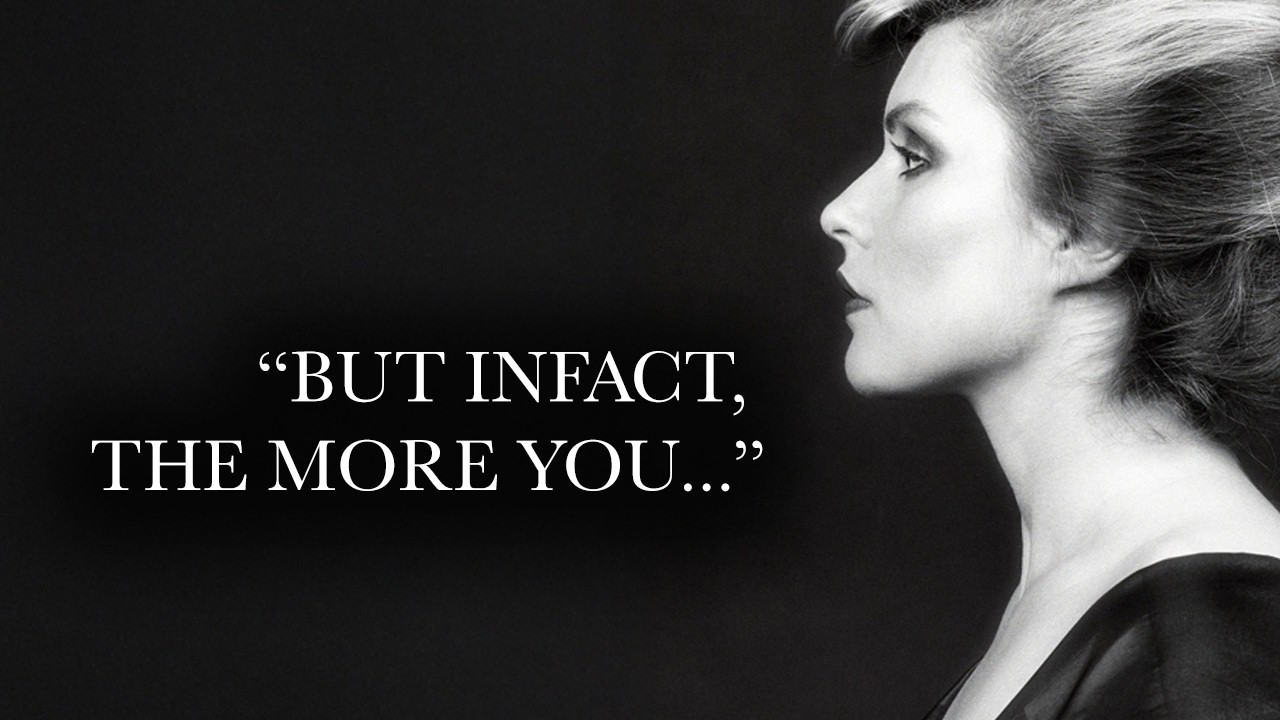
The speaker challenges the common notion that a photographer must take ten thousand bad pictures before becoming good, arguing that simply shooting volume without thought only results in poor work done faster. Instead of relying on muscle memory for technical skills, true improvement comes from training the mind to see photographic possibilities in everyday life. To illustrate this point, the speaker turns to Robert Mapplethorpe, emphasizing his advice that seeing more images makes a photographer better, provided one actively absorbs diverse styles and influences rather than passively consuming them. This approach ensures that a photographer is not limited to a single style but learns to integrate various visual elements into their own work through constant observation.
A significant portion of the speaker's growth occurred during mundane moments, such as commuting in traffic or sitting in meetings, where they practiced taking mental photographs instead of zoning out. By imagining how different scenes would look from various angles and considering lighting and composition without a camera, the speaker developed a habit that made photography an integral part of their daily mindset rather than a separate activity requiring dedicated time slots. This mental practice is free and accessible to everyone, allowing individuals to visualize subjects in their own homes or surroundings, thereby expanding their creative vision without needing expensive equipment or perfect lighting conditions.
The speaker also reflects on their early education, noting that they mistakenly treated practical photography sessions like schoolwork with rigid schedules, which hindered their development compared to those who engaged with the art form more fluidly. They realized that seeking only generic praise from family members was insufficient for growth and that constructive feedback is essential for improvement. By shifting away from compartmentalizing photography into specific "photography times," the speaker learned to maintain a continuous state of visual awareness, ensuring that their mind was always ready to capture an image when an opportunity arose.
Ultimately, the video concludes that photography should not be viewed as a binary switch that one turns on and off, but rather as a constant way of seeing the world where possibilities are always present in idle moments. When a photographer internalizes this mindset, they can hit the ground running whenever they have access to a camera because their mind has already been warming up through observation and mental practice. This approach transforms photography from a task that requires making time into a natural extension of life, allowing anyone to create great images by simply noticing the world around them with an artist's eye.
Read the full video transcript
Oh, back in back in the saddle. I've
been away in Vienna
trying to help running a workshop people
improve their photography. Get more of a
vision about what their actual style is.
And when people are learning
photography, there's a lot of advice out
there about
you know, shortcuts or what have you.
And one often repeated idea is Henri
Cartier-Bresson.
Says, you know, your first 10,000
photographs
are your worst. Now, whether or not he
says
irrespective this is the idea behind
the quote.
It implies, and this is where I take
umbrage with it, that all you need to do
to improve as a photographer cuz this is
the implication that 10,000 pictures
will be the worst and then you'll be
good. Now, I could do this in about 5
minutes.
>> [laughter]
>> I'd just motor drive my way through and
machine gun my way through 10,000
photographs.
But all I will have learned to do in
that process
is take 10,000 poor photographs. I've
just done it quicker. The true skill the
true thing that I think that goes hand
in hand with that repetition but
actually taking photographs is thinking
about what we do when we're taking them.
Can't just train ourselves to have
muscle memory
the technical aspects of photography. We
need to train ourselves to see
photographs. And I'm turning in this
regard to to Robert Mapplethorpe. Now, I
have to be careful with this book
because
you know, Robert Mapplethorpe
some of his work, I think it's fair to
say is uh it's not YouTube friendly.
That'd be one thing.
But a piece of advice
or quote of his rather
that he offered up is YouTube friendly.
And that is
the more pictures that you see, the
better you are
as a photographer. This could also be
misconstrued. This could also mean,
"Hey, if I want to get better as a
photographer, all I need to do is just
look at loads of pictures."
And then you'd have the same problem
if that's all you did.
You would just learn to look at
pictures.
All right, look at books and and you
know, album covers, all these all the
places that we can get inspiration from.
And if you look at Robert Mapplethorpe's
work,
there are
a huge range of influences, of styles,
of approaches, because it's not just his
naughty pictures
that he has taken.
There are wonderful portraits. There are
sympathetic
and beautiful studies of flowers. There
are graphic shapes. This also say he's
not just one-trick
pony.
That's because he's he's looking at
work. He's seeing the
the influences that are out there. He's
He's looking and saying, "What can I
bring into What can I absorb? How can I
then align that with the 10,000
photographs idea?" So, I'm actually
driving myself forward to take better
photographs.
Now, the problem with all of this, of
course, is that
we think
that Okay, Mapplethorpe, he's he's a
he's an artist. You know, he That's he
just All he did was take photographs.
How can we
most of you who are watching this
channel, you you have actual jobs,
you've got families and stuff like that,
and photography is is a small part of
your life.
You want it to be a bigger part, you
want to find time, okay? But the actual
I've [clears throat] I've some time to
go and take some photographs.
It it's it's it's it's a little slither.
What's Maplethorpe doing
that we can also do?
Well, he's not constantly photographing,
obviously.
The studio shoots, they are not the
whole of his growth.
The looking, the seeing,
the absorbing, that is the practice. And
we can do this in our own work. It it is
so it's so much easier
than trying to shoehorn photography into
our lives, because what I
what I was doing when I was younger
is something that you can do as well.
And I I think I've got to attribute a
lot of my growth as a photographer over
that time to this. Now, I used to drive
to Pretoria photo school from Midrand,
which is where I lived.
And it was about a half hour drive on a
good day. Mostly, there's traffic jams.
There's all that kind of stuff over
commute. And I'd be sitting there in my
1967 Beetle.
Right, going along the highway. And
there'd be, you know, slow down.
And instead of just sitting, looking
bored,
gazing vacantly out the window,
I would I would think.
I would think, how does that particular
thing look photographed?
What if I was standing
by the side of the road? What would this
look like as a photograph?
It's constantly
imagining
how things could appear. Do it right
now. Have a look around you.
Okay, what what do you see? Are you in a
in your in your lounge? Cuz a lot of you
watch YouTube on TV, right? So, look
around you. Is there a a bookshelf
behind you know is a TV cabinet.
Are there objects in that room that you
can photograph
in your mind?
To take a mental picture. Because the
great thing about mental pictures
is they're free.
We don't need lots of We have every
single piece of equipment or anything
that we possibly want to have at our
disposal.
Also the exposure's always good.
Exposure's always right. You know, it
that's the beauty of this.
I think too many people and there was
myself included. I felt I look there's
there's a whole bunch of
of lessons at photography school. We had
we had
theoretical lessons the theory and
techniques and the history and visual
communication things like that. But then
we also had practical.
And when I got started I went
the practical sessions that's when we
take the photographs.
And I treated it like that I treated it
like I was school.
It's 1:00 on a Friday so between 1:00
and 5:00 it's practical. Now is the time
to take photographs. When instead I
should have been A
cuz I had time taking actually
photographs and then looking at them and
you know
trying to get some feedback on them from
from people who weren't just going to
sit there and say oh yeah that's nice.
And my parents do watch this channel and
sorry mom and dad but
you guys always just say my pictures
were like they're nice.
And that's that's great. Okay, thank you
very much. But it's not helpful
for me as a student.
I do for me as a So if you are
interested like you don't want to be
around people who actually you know will
lean in with your photography stuff
there is the the TP tribe there's a link
in the description box below and they
very few people say it's nice or just
give you proper feedback.
What I was doing is you know I was
compartmentalizing my photography. Boom
I'm going to do this now
and and this is photography time
and then this is not.
As soon as I stopped
thinking about it like that, as soon as
I went, "Okay, there's that 10,000
photographs." Now, I took
a lot more than 10,000 photographs in my
head.
I looked at a lot of work
both in in books, in movies, in arts,
in album covers, all these places.
Slowly but surely,
all of that started to become one
one just habit.
And I still do it to this day.
That idea that you sit down, you look at
the things and boom boom boom boom boom,
do that. Do that from now on.
Cuz what happens
is that you end up thinking about
photography and practicing photography,
not just as a time
to have
a a camera in our hand,
but rather a mindset. I think if you are
stuck for photography, if you're stuck
in your this Oh my god, I need to take
time I need to make time for my
photography,
then it's difficult if you haven't
warmed up already. If you haven't
if your mind is not in photography mode.
Ansel Adams has has a quote or
and I'm going to get it wrong,
but bear with me,
which says something like, "It's like
you don't just switch this on and off.
You don't go, 'I'm looking and now I'm
not looking.'
As a photographer as somebody who is
visual,
who thinks visually, who sees the ideas
around us, the possibilities for
photographs, this should be always. Not,
'Oh my god, I'm thinking about my
photography. Thinking about my
photography.' But rather
in an idle moment
on a commute
in a traffic jam in a boring meeting
at an airport
at a train station, wherever.
That's
when you can start practicing.
You can use that idle time to just make
the world's greatest photographs.
They're there.
They're idling all around us. And if you
take a net got a schnip in the mind's
eye
then that's when you go "Ah, so cool."
Now the trick of course is to get it
into an actual picture.
I would love for you to stop thinking
about photography as a as a binary
thing. Like it like now's photography
time and and now it's not photography
time.
Let the idea of taking photographs of
just seeing possibility leech into your
your brain and then when you do have an
opportunity to take photographs you
don't need to spend half an hour warming
up, getting in the groove, or what have
you because you can just hit the ground
running.
Thank ever so much for watching. It's
been absolute pleasure to have you here.
If you want to join the CB tribe, as I
said, link in the description box below.
See you soon. Cheers. Bye.