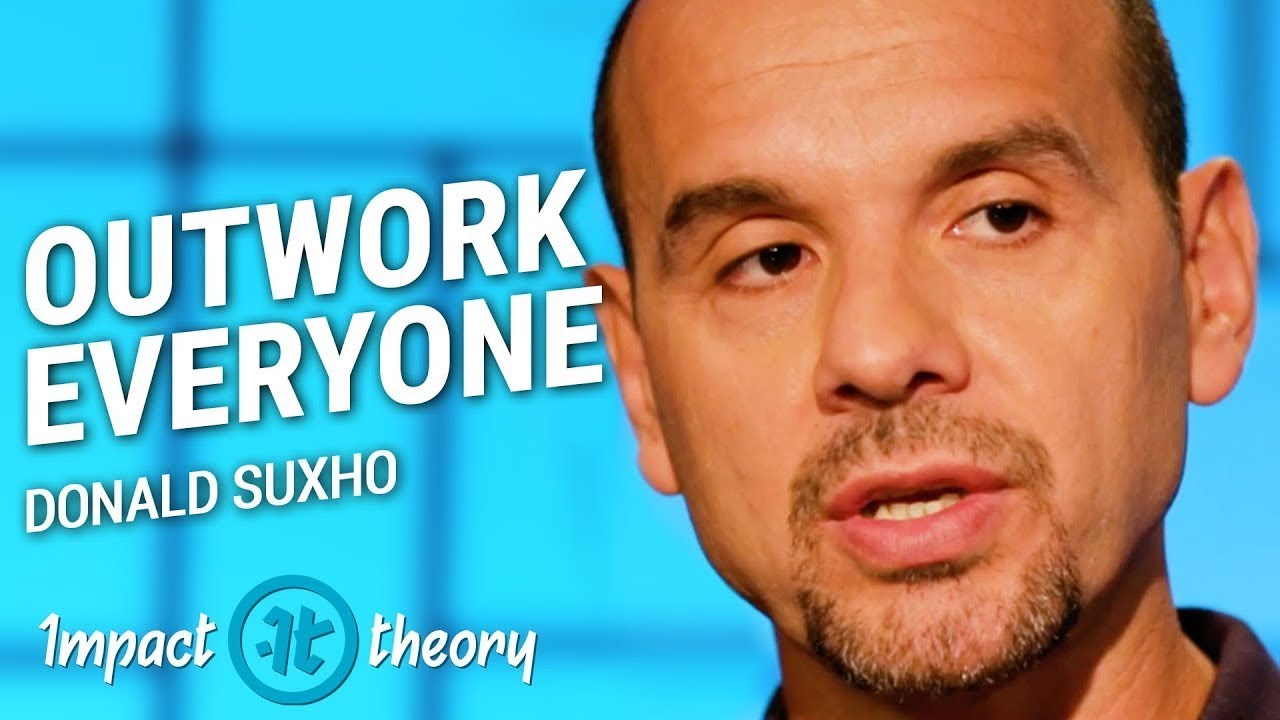
Video summary
Donald Suxho, a decorated former volleyball player and two-time Olympian for the United States, shares his extraordinary journey from growing up in communist Albania to becoming an All-American at USC. His early life was defined by scarcity under a totalitarian regime where food was rationed, creativity was suppressed, and citizens were forced into conformity with only one way of thinking or facing imprisonment. The fall of communism plunged his homeland into chaos, leading Suxho to risk his life smuggling himself over the mountains into Greece on foot while being hunted by soldiers and dogs. Despite his talent, he faced racial rejection in Greece before eventually fleeing to the United States with his family, where he initially struggled with culture shock but quickly adapted through hard work, taking multiple jobs including as a waiter to support himself after learning that American success required self-reliance rather than government provision. Suxho attributes his rise to a specific mindset built on suffering and sacrifice, encapsulated in the "three S's": suffer, sacrifice, and success. After arriving in America at age 17, he realized that unlike in Albania where survival was guaranteed by the state, life required active effort; this realization sparked an intense work ethic that saw him outworking everyone around him to overcome self-doubt. His athletic career peaked when he became a captain for the US National Team and led his club team to victory in Italy before suffering a catastrophic Achilles rupture just months before the 2008 Beijing Olympics, effectively ending his chance at gold medal contention. The injury triggered a period of deep despair where Suxho lost everything: his fiancée left him due to his depression and drinking, he was cut from the national team roster despite being an Olympian, and the 2008 recession caused him to lose his home when its value plummeted by fifty percent while mortgage payments remained constant. Facing rock bottom in August 2008, Suxho underwent a profound psychological shift where he stopped blaming external factors like coaches or economic conditions and took full responsibility for his life's trajectory. He made a pact with himself to never let anyone else dictate his future again, choosing instead to earn every opportunity back through relentless effort rather than entitlement. This renewed determination led him to re-enter the professional circuit on an unpaid contract in Italy, where he worked tirelessly to rebuild his reputation and eventually proved himself as one of the best servers in the world by age 34. He also successfully navigated a transition into business after being hired for an internship at Sports1 Marketing under David Meltzer, enduring six months without pay while learning sales fundamentals from scratch, all while raising two children and managing his family's financial recovery. Today, Suxho operates as the founder of multiple companies focused on sports fitness and English language education, driven by a mission to help other immigrants achieve their American dreams through health, wellness, and cultural inclusion. He teaches that success is not a linear path but requires resilience in the face of adversity, urging his son at USC to outwork peers daily regardless of past achievements or family connections. His core message emphasizes that while people often wish for greatness without taking the necessary steps, true execution demands physically pushing through hardship when it hurts and mentally refusing to give up even after hitting rock bottom. By sharing his story of climbing back from losing everything in 2008 to rebuilding relationships with former enemies like a coach he once berated, Suxho illustrates that defining moments are not about avoiding failure but how one reacts during the darkest times to ultimately achieve legendary status.
Read the full video transcript
People are wishful thinkers, but they
hate to take the steps or they take the
steps and it's hard. You know, change is
hard and people come to certain point
they break. So, everything is making up
your mind mentally and not giving up,
but also physically pushing through your
hardship, you know, when it hurts.
Everybody, welcome to Impact Theory. Our
goal with this show and company is to
introduce you to the people and ideas
that will help you actually execute on
your dreams. All right, today's guest is
one of the most decorated volleyball
players in US history. His rise to
prominence, however, was deeply
improbable. He grew up hard in
communist-controlled Albania and even
though his father was a volleyball
coach, there was very little opportunity
in their homeland. After the fall of
communism, the country was thrown into
such chaos that in a desperate attempt
to find an outlet for his talents, he
was forced to risk his life just for an
opportunity to compete. He snuck over
the mountains into Greece to try out for
a team there and during his trip, he was
shot at, hunted by soldiers, and chased
by dogs. And even though that didn't
stop him, intense racial tensions
between the two countries saw him
rejected without serious consideration
despite his obvious talent. Devastated,
he made his way back home and realizing
that bigger opportunities lay elsewhere,
he and his family fled to the US not
long after. Once in America, he began to
flourish and quickly made a name for
himself on the volleyball court,
ultimately being offered a full ride
scholarship to USC. He was a starting
player there for the nationally ranked
team all four years he was there and set
a number of school records including 164
career aces. He was a two-time
All-American and in his senior year, he
was named the AVCA National Player of
the Year. Following graduation, he
played professionally in both Poland and
Italy and was a member of the US
National Team for 12 straight years. He
played as a captain in two different
Olympic Games and as a professional
player, he led his team to victory in
the prestigious Italian Cup. So, please
help me in welcoming the 2012 US men's
most valuable volleyball player, Donald
Suxho.
Welcome.
Thank you for having me.
Yeah, thanks for being here, man.
Glad to be here. Thank you. Appreciate
it.
So, you're one of the rare people that
I've gotten to know ahead of time,
gotten a chance to sit down and pick
your brain and hear a little bit about
your story. It is insanity. It's
literally insane. And I wore this shirt
in your honor because your life is the
answer to the question, no
what would it take? So, first of all,
tell me what it was like growing up in
communist Albania.
Um growing up, you know, as a young as a
young kid it was beautiful, you know, we
didn't know anything else, you know, um
we had a great family, great sports, it
was very quiet, there's no crime, it was
clean. Um the only thing that I noticed
being young I was always hungry.
Food was scarce, you know, and I didn't
know why, I didn't know why my parents
didn't have enough food, but we were
happy, you know, we were
running around the neighborhoods,
playing sports, hiking on the weekends,
and um you know, going to school, having
a ton of different friends. But every
time my dad we used to wake me up, you
know, early in the morning at 4:35 to go
buy food, and that to me sounded really
strange. Why we have to get food so
early? And I realized that afternoons
when we go to the same store there's no
food left. And I'd I'd I'd watch my dad
just give me his ration of food, you
know, his cup of water or, you know, tea
or, you know, steak we had, you know,
once a week to me because he knew I was
growing, to me and my brother. So, that
was really strange, and
what I remember too growing up there was
was one way of thinking. Uh the
government, you know, we were owned by
the government as I realized, you know,
at the when you know, I was a teenager
was that there was one way of thinking,
one way of doing things, you know, the
government or the city council told you
exactly how to think, how to behave, how
to smile, what music to listen, what TV
channel to watch, and how to react at
school, too, for different types of
news. And that was um
it was very isolating, you know? The
ceiling was really low. There was no
thought process to innovate or create or
wanted to be the best because
uh if you went against the government
rules, then you could, you know, you'd
be thrown in jail. Uh or your parents
would go to jail. So, it was very
surreal, you know, to not have dreams.
So, growing up, we had no toys, uh no
cartoons. We had one TV channel, one
music channel. Everything was made in
Albania, from Albanians, by Albanians.
Didn't know the outside world at all.
And, you know, we had one pair of shoes
or one outfit a year that the government
would give us or you you know, my my
parents would buy it.
And there's no you know, there was no
uh shoes, you know, to go out in the
snow. You know, where I grew up was big
snow and, you know, kind of cold weather
and
I remember every night I'd come back
home from practice or school, I'd just
soaking wet, you know, from socks to
shoes to everything else. And we'd dry
them and wear them again the next day.
So, and um you know, it was just harsh,
you know? It was it was very hard
growing up.
What was it like when you finally come
out from under that and you start to
have dreams and you start to think like,
"Whoa, my life could be more than this."
Was there a moment where you were like,
"Wait a second, I can do whatever I
want."
But I didn't know how. I didn't know
what the world meant. The world was a
chaos for me, you know? As a young kid,
people with guns, people getting shot,
my friends getting stabbed in front of
me, people getting killed, you know? We
have a coffee or talk in a you know, a
coffee shop, people would just drive by
and shoot.
Pure, not because they hated each other.
Just
it was just people were wild, you know?
They didn't know what to do, how to
react, you know? Their brain couldn't
take it, you know? Their mindset was
completely off.
I find that super interesting. So,
especially because you then go to the US
and your first reaction isn't, "Oh my
god, this is amazing." You're like, "I
hate this."
Yeah.
So, help us understand, what do you go
through mentally? Cuz I think this will
reveal the way that the human mind
works. The the hunger for the familiar,
the not knowing what to do when you have
intense pressure and then no pressure.
So,
what you come to America and then what?
What are you going through mentally?
Uh the first month, you know, people
helped us, the church, the cousins gave
us clothes, a house. I was sleeping with
my parents in one room, you know.
And after the first month, my cousin
with a, you know, beautiful automobile
comes in. He's like, "Are you happy? Are
you good?" It's like, "My God, I love
America.
I mean this
this is awesome."
He's like, "Okay, well, tomorrow you're
going to work." I'm like, "Work? Why?"
He's like, "Who's going to pay for
this?"
"You." I'm like, "You have a nice house,
you have a nice car. Like, why am I
supposed to work? I'm 17. I want to play
volleyball."
He laughs at me. He said, "Welcome to
America, son. You got to work and pay
for yourself." So, that changed my life
forever because from that moment on, you
know, till now,
that sentence, like, you know, has kept
me alive, you know, the true capitalism,
you know, the pure capitalism, you know,
you you get up, you work, and you pay
for your own stuff.
You said in communism you didn't have
mindset.
Mhm.
What do you mean by mindset?
Mindset of, you know, um to think,
mindset to get better, to be the best,
to dream, to work hard. You know, it was
a social I mean it was pure communism.
You work certain hours, you going to set
amount of money. The government tells
you, "This is your apartment for the
next 50 years to till you die. You
getting pension, you die."
So, you you come to America, you end up
doing extraordinarily well. What is the
mindset that you begin to build that
allows you to have that kind of
extraordinary success?
Once I saw you, right? Let's say like I
saw Tom having a nice car or seeing like
all these kids have cars and a
girlfriend and flowers and prom and I'm
like,
"Wait a second." Like, you know, like,
"Why you have that and I don't?" And I
start asking these questions to these
people and I realized how the the
process was. You know, I started
learning the American mindset. And
that's when I started detaching myself
from being Albanian to becoming
American. I made a I made a pact to
myself. I said, "If I want to be
successful in America, I got to be
American.
Keep my tradition at home, but once I
step out of the house, I'm going to
learn everything, how to speak, how to
act, how to behave, how to have a
girlfriend, how to work better, right,
and more effective, like I had to
My third job was a waiter at the Greek
restaurant, you know, in in Attic. All
of a sudden, I'm making like thousands
of dollars a month because I was working
three jobs.
And I'm like, "What Is this real? Do I
belong here? Am I American?" Not yet.
But I was on the road to become
American.
How did you deal with that self-doubt?
And that's something that, you know,
we'll get to again when we talk about
your injuries, but like how do you deal
with self-doubt of asking yourself, "Do
I belong? Am I as good as these people?"
Um how do you overcome that?
In my In my opinion, you overcome it by
work. Outworking others, you know, uh I
wanted to be successful, you know, and
self-doubt is you know, it's really dark
places, right? At night, when I was a
young kid, you know, there in Greece or
Albania or Boston, you always doubt
yourself. Even when in the Olympics, you
always doubt yourself, "Am I supposed to
be here?"
And the next morning, I'd get up and say
like, "You know what? This week, I made
X amount of dollars. I'm going to make
more because I want this."
You know, prove you know, I had to I
wanted to prove myself. Uh those people
are making fun of me,
those people that cut me, those people
that told me I'll never make it, you
know, I'd use that and get up in the
morning and outwork everybody else
around me. Once I saw the opportunities,
I said, "There's no way you're going to
beat me. You might be better than me
now, but I'll just pure outwork, you
know, pure get up and outwork you day in
and day out." And one of my dad's
teammates had gone to Greece and sent
letters, you know, by then, we just had
handwritten letters,
and said, "This is one opportunity I
have for your son. Bring him to
Thessaloniki, Greece, which was near my
city.
By car, it was 12 hours, I think, or 14
hours.
So, my dad searched around, and one of
some of our friends used to do this
business,
bring people over the mountain for jobs,
and you know, criminal activities,
whatever you call it, right? And they
said, "Son, this is it. I mean, you we
have no future here. There's nothing, no
there's no money. Uh there's no rule of
law. There's nothing. I mean, what are
you going to do? Play volleyball? No,
nobody was playing sports, right?"
I said, "You got to go."
Um so, we had guns and and you know,
people were chasing us and you know, and
they took us I don't know. We left at
6:00 p.m. We got in at like 7:00 a.m. I
think or 8:00 a.m. I don't remember the
time but we know it was sun.
And as we go over the mountains and
start and we see like this black
Mercedes. It was a beautiful Mercedes,
which was crazy. This massive big
Mercedes.
And then I do the math. I look around.
I'm like, "Holy crap. We got like 12
people. Where are they going to fit?"
So, my body was my He knew. He was like,
"Go first." They go in first in the car.
So, they put three people in the front
seat, about six people in the back, and
the rest was in the trunk.
Woah.
Yeah, I mean, that was that was the way
to go in. And then
it was like a 5-hour drive and the same
thing, you know, because we're
immigrants. As we drive, there's police.
I was like, "Duck, you know?" So, we'd
go like this.
Duck and get up the whole time. 5 hours.
Three people here. This guy was like
just flying on a freeway
and drops us off in the middle of
Saloniki in this city, you know? And I
was like, "Oh,
sweet. Here you know, here I am." And my
cousin picked me up. My dad's friend
picked me up.
And then I go try out for the weekend.
It's so crazy. So, before the camera
started rolling, you and I were talking
about, you know, what does success
demand? And you said, "It demands
everything."
Everything.
So, A, what do you mean by that? And
then B,
so many people set out to be the best.
Why did you actually pull it off? Like,
what is it about you, your mindset, your
work ethic? Like, what is it that
allowed you to see that through?
It takes everything, you know? And what
is everything is your mind and your
body. You know, people are wishful
thinkers, you know? I want to be the
best. I want to be rich. I want to lose
weight. Whatever that, you know, the
wishful thinking is, you know?
But they hate to take the steps or they
take the steps and it's hard. You know,
change is hard, you know? Um changing
your body, changing your mind is very
hard, you know? And people stop.
And people come to certain point, they
break. You know, for me, at young age, I
created this, you know, really massive
amount of discipline, you know?
And also, at young age, we were pushed
so hard physically, you know? And also
mentally from the government. That's why
like when I walked that walk to Greece,
you know?
I had all this, you know, sacrifice I've
done, you know? And I was like,
that is my gold medal there. I'm going
to go for it. You know, in my mind, I
wasn't scared. My body was pushing,
right? I was running. And I was
sweating. I was scared, but I was like,
you know, it doesn't matter, you know?
I'm going to go for it. So, everything
is making up your mind mentally and not
giving up, but also physically pushing
through your hardship, you know, when it
hurt.
That's incredible. And And what it did
for your career, obviously, is is
immense.
Where it gets really interesting,
though, is uh so, you're you obviously
smash records at USC, become one of the
most decorated players the um school's
ever put out. And then you go and you
play in the Olympics, and you guys do
well, but you don't make it all the way.
And then, moving into Beijing, what,
like a year out or so, 6 months out or
something,
Mhm.
um you rupture your Achilles.
Correct.
Talk to me about that.
What happens to your mindset through all
of that?
Correct. Yeah, so to make, you know, to
be in Olympic team is, you know, it's
the most amazing thing for me as a human
being, right? Especially coming from
Albania. So, making that team and
representing USA, the country that first
I hate and second I love to death, you
know? It's a
was an achievement that I'll, you know,
forever cherish, right? But
to be an Olympian, right? You spend 4
years
for 2 weeks, or maybe 1 week, cuz you
might lose and get out. So, it's a, you
know, it's a crazy work work force and
discipline and mindset, right? So, to be
able to play in Greece and then go have
a chance to go to China.
I was blown away by my by my my ability,
right? When you call about self-doubt,
I'm like there's no self-doubt then. I'm
like, man, I know I'm the man, you know?
So, I was the captain. I was at the peak
of, you know, the peak of my career.
Uh we just lost in in Athens and as a
group, we're young group that joined the
team in 2000.
We're young in Athens and then we made a
pact to ourselves that we're going to
win gold in China. We actually made a
plan how, when, why, right? And we went
to work and we went to work on slowly,
you know,
uh build that that foundation. In 2007,
I I was in Italy playing for the best
team. I was the captain making a ton of
money and then I turned
and then my Achilles snapped. I fall
down in tremendous pain because there's
two ways to rupture Achilles. One comes
out, you can walk and go to doctor. The
second one is the hardest thing, it
snaps in half. So, I fall down and I see
my foot hanging
and I can't move my toes. My I mean, my
toes. So, I'm like I'm trying to and I
can't. I'm just crying because of so
much pain and shock. The doctor comes
in, you know, puts his finger in the
Achilles and just, you know, I mean, it
was just harsh pain, you know? It's
like, "Oh, it's your Achilles." And I
knew it then, Tom, that
Beijing is done. I mean, when he said
that, I was like, "No."
And I just burst in tears. I'm like,
man, 7 years
to build this you know, the truly
American dream and hardship it's over in
a matter of 1 minute.
I want to I want to go back. I want to
know more about that process. So, you do
the injury, is there a moment of
self-doubt where you're like, "I'm not
going to be able to come back from
this?"
My self-doubt was like, "I'm done with
USA team."
And that scared me, you know, because
for me that was most important thing.
Not professionally, not the money.
You know, being part of USA team and
that group of guys and that you know,
that amazing tournament. It's just, you
know, there's nothing like that in life,
you know, because I already experienced
it in Greece and now I'm the captain of
the team.
So, that was the number one self-doubt
and that you know, kind of
struck a fear. I mean, I had to sit 26
days with a leg up above your heart, not
move anything. And a lot of thoughts
come to my mind, you know, I mean,
thoughts about quitting at 32.
Thank God it wasn't social media back
then. So,
you know, can be good, you know, good
and bad, right? But, you know, friends
were supportive, but they're like, you
know, man, 32,
you know, maybe take the real estate
test. You know, maybe think about the
future. Maybe think about that. And
then,
once all these people start doubting and
start pushing me away, you know, even my
parents. You know, my my parents were
still conservative in working a small
job, you know, in in a small town. They
say, you know, son, I mean, awesome,
man. You made it. Like, what else do you
want, you know? Like, you're the man.
Like, you know, for Albanian that you're
God.
And I said, but I want to be the best
player in the world. And I didn't
achieve that dream.
You know, since 11, since 9, right? I'm
like, my dream has been to be the best
in the world.
So, why this injury will stop me? So, I
started researching. I said, what is the
comeback time for Achilles? I started
doing a lot of research. And I start um
I made a bet with myself. It was weird.
One of these nights, you know, uh in
Italy, as I got better, I had to wait 2
3 months to fly back to USA.
I was drinking wine, you know, and I
couldn't walk. You know, still with with
crutches. And I said, you know, what?
It's going to be a test between me and
Achilles.
Honestly, I mean, I was like, I made a
bet with myself. I'm like, who's going
to win? So, my mind start working on
that moment on that moment of like,
okay, how long does it take? What work
do I have to do? How to do it? Where?
And then, once I had a plan, I just wake
up every morning. I was the first one at
USA team and ice and stretch and the
last one to go. So, it was just a simple
bet. Me or me or the leg. And I won.
And so, okay, so, how how do you come
out of that? You end up not going to
Beijing. And how did that moment play
out? How How that affect you?
So, when at the Olympic team every 4
years, the summer of Olympics the coach
comes in, brings all the guys, about
30-40 guys that try out for, you know, 4
years and then he sits down and tells
the team who makes it or not. It's a
very, very
ruthless decision, right? Uh
I mean, I had a feeling I was going to
make it, right? But I thought like, you
know what? Maybe I'll be the second
setter, right? And um the coach comes in
and
he said, you know, put the list of the
team and I
I got upset the first time Tom that I
became Albanian, man. I I I the Albanian
of me came out and I just became angry
and loud. I'm like, what the you
know, like why, you know, why the
you cutting me? Like, you know, are you
are you stupid? Are you crazy? And I'm
cursing at the coach. He's like, he gets
it.
Thank God, you know, he took the high
road, you know, just calm me down and we
were just talking for 2 hours and
and I was crushed. You know, like I kind
of
went back to that old mentality, you
know, and that summer I kind of gave up,
you know, at that summer I was just
drinking, playing beach volleyball for
fun. It was weird. It was just very odd
mix of feelings and I didn't know how to
control them.
I had no idea. Back then I was engaged
and then
break up with my with my fiance, too.
Because you're drinking too much and
Everything, man. I was in a dark I was
in a dark place. I was drinking too
much. I was angry. I became this crazy
Albanian guy again, you know, and I was
kind of alienating people and friends. I
started doubting everything, right? And
um my Italian team that I was playing
had a big contract for 3 years, massive
amount of money
and they cut me. They said, "We're not
going to pay you, you know, you're not
ready yet." I'm like, "I'm ready. Look
at me. I'm jumping. I'm running." No,
you're done.
So, that month of August was um
it was very dark, 2008. I mean, it was I
was it was darker than Boston. It was
darker than communism or chaosism. I was
like
I made a dream. I was at the top of the
mountain and then it was
not a roller coaster. I mean, it took a
second.
I was nobody.
Don't you even lose your house in this
period?
2008, I bought a house 2005 and I was
very happy house owner, you know, and
then 2008 recession hit and then my
house devalued 50%. And I'm paying and I
didn't know about financials too much,
you know. So, I'm paying the same
mortgage 2005-2008 and my house was half
the value. I called the Bank of America,
I never forget, because I went Albanian
on the guy, too.
I'm like, "You got to be kidding me.
I'll find you." I'm like, "What am I
What am I doing? This guy is in I don't
know, in Idaho, right?"
And I'm calling this guy, I'm like, "How
dare you take my money like this?" Like,
"Bro, like I cannot help you. You got to
refinance." I couldn't refinance
and I was left alone, you know, lost the
house. I mean,
my fiance left me, which I loved to
death. My USA team cut me. I mean, not
let me, cut me, right? Everything I
worked so hard, American dream, gone.
Lost money, lost my house, everything.
I'm like, "What do I do now?"
I just wanted to kind of get lost,
forget about Europe, USA team, and and
everything. I should have I should be on
my own.
It was the best medicine ever, you know,
because that's where you really find
yourself, when you're on your own.
so then walk me through that time. How
do you find yourself? Because what I
find so interesting about this story is
it's mindset gain, mindset loss, mindset
gained again. And, you know, it'd be so
interesting for people to hear how you
then come back out of this.
Mhm. You got to hit rock bottom, when
they say it, right? And uh I realized
that I was blaming everybody else but
myself.
I was like, "Man, I blamed the coach, my
fiance,
the team, the Italian manager, everybody
but me." First time in my life
that I was
Maybe I become too cocky or confident, I
don't know.
But I realized I was blaming everybody
else but myself.
So, I made another bet with myself. I
said, "I'll never
from this moment on, I'll never allow
anybody or anything else to dictate my
life. It's going to be my way. If I
decide to do something and they cut me,
that's fine, but it is my choice. I
don't want I'm not going to let the
coach cut me or put me on the bench
because he's going to have no reason to.
And I called the coach and I was like, I
want to try out. I was 33, 34. The coach
was like, are you crazy? I'm like, I
want to try out. You put me at the at
the bottom of the list. I want to earn
it back.
And went to work. Instead of getting a
crappy contract, I went to Italy, got a
cheap contract, and I proved myself
again, and I became the best server in
the world.
Wow.
So, I you know, it's
you got to hit that you know, it's about
experience though. I think like if you
don't have that experience, if you don't
um
confident to go through these
experiences, right? People when they
people when people go through tough
times, they protect themselves. They go
into this shell, right? Because and we
as humans, as you know, you know, our
mind, you know, from back back in the
day was was to protect yourself, you
know, from fire, from fighting. So,
human mind is always kind of like being
to you know, risk is not good for you,
you know, to go hike over the mountain,
right? It's bad for you, right?
Everything is bad.
And I was like, no. No, no. I mean, I
could do I have to take this I have to
push myself. I have to
suffer, you know, I have to sacrifice in
order to achieve that success.
Otherwise, I'll never be that guy that I
wanted to.
What does it take to be the best?
Everything.
You can't you're going to have
self-doubts.
You're going to have tough moments.
You're going to have everything, you
know, you're going to have people
talking bad about you, people putting
you down, getting cut, you know. It
takes getting up in the morning and
doing the same thing, you know,
um
I understand people talk about a lot of
mental toughness, right? Um mental
toughness, you meditate and stuff. For
me, honestly, mental toughness is
getting up in the morning and doing the
same thing day in and day out, day in
and day out for whatever it takes,
whatever that goal is, you know? And by
doing that,
you become the best, you know? And it
takes everything. I mean, you have to I
mean, the three S's that I love, you
know, suffer, you know, I sacrifice.
Suffer like, you know, I remember being
in Boston, I suffered.
third S?
Success.
Okay.
Suffer, sacrifice equals success. You
got to suffer, you know, it's going to
be It's going to suck, you know, like I
mean, I worked what? 15 hours a day. I'd
get up, you know,
and then trying to stay in shape.
Imagine that as a year as a 17-year-old
European in Boston who spoke English. It
was a lot of suffer,
a lot of sacrifice, you know, I didn't
have any friends or girlfriend or
any anywhere to go, right? I was just
working, working, working, and then
success came, you you know, later
because I had built this foundation. So,
takes everything, you know, but it's not
for long. You know, people think that uh
to be great or to be something really
good, it's a lifetime. It's not, you
know, because once you achieve that,
it's another thing, right? But by
building that right foundation
day in and day out, you achieve
something, and that leads to another
thing. Opens up to a to different doors.
That's really interesting. So, okay, now
you finished your volleyball career.
What are you doing now? Do you push
yourself as hard? Do you have super high
standards like you did in volleyball?
What does that look like?
Well, standards are always the same, you
know, I want to be uh my motto right now
in the business world is uh my math.
Thank god my math was good. It's not
great because once I passed the SATs,
you know, I aced the SAT, but I failed
uh the the English test, right? So, and
I remember my good math about making
money in the hustle, right? And once I
finished my career with volleyball, I
said, "Well, I'm a two-time Olympian."
People say, "A one-time Olympian is 1%.
Two-time Olympian is 0.5%." I'm like,
"Wow, I must be special." Like, I I got
to be confident of myself. Like, I'm
special, right?
Not because somebody gave it to me. I
earned everything. Well, now that's
finished. I mean, once you finish
sports,
many athletes are depressed. Many
athletes have a lot of problems because
it's hard
to find the same thing. It's hard to
replicate
40,000 people and the adrenaline and the
teamwork and the travel and people
taking care of you, you know, like I
never had to cook. People bought me
tickets and food and I had trainers and
now
you're done and it's gone and you wake
up in the morning and you're like, I got
to buy insurance. I got to talk to my
real estate agent. I got to make an
appointment for my doctor. I got to go
to hospital for my kids, right? I'm
like, I want to be the two-time Olympian
in the business world. That's my That's
my motto. So,
I bugged David Meltzer who you who who
you might know from Sports 1 Marketing.
I bugged him on LinkedIn. I like I was
like, "Oh, yeah, sports marketing." And
I was in Irvine and I saw his company. I
saw his video.
And I'd write him
every every week and and message him on
LinkedIn. "Hey Dave, how are you? I'm
Donny O'Brien, two-time Olympian. I'm
looking for a job." I mean, 3 months, 4
months, he gave up, called me for an
interview.
Had an interview in his office three,
four times and then he's like, "You got
hired." And I went to my wife after 6
months, like, "Honey, I found this great
job, sports marketing. I think I love
it. I don't know."
Till Dave told me like, "I'm not getting
paid because his system is he has an
unpaid paid internship." I didn't know
what internship meant. I mean, I didn't
do anything.
So, I go to the first day and he's like,
"Look, you know, 6 months is unpaid,
right?" I'm like, "What?" He's like,
"You can do it part-time or full-time.
But it's up to you. But after if you
show me sales or marketing, then I'll
pay you." So, I go home with my wife. I
never forget I have, you know, my wife,
I have a
a 2-year-old, I have a 15-year-old boy.
And I mean, I have I'm a dad, you know,
I got to
And this, by the way, was the fiance
that left you.
Correct. You win her back cuz you get
your mindset in the right place.
man. I'm persistent and you know, I'm
persistent. Suffer, sacrifice, success,
right? Whatever it takes, whatever
field. Uh and then we're together,
happy. Like, we have this beautiful
house in you know, in Huntington Beach
and then I tell her like, uh
I'm not going to get paid for 6 months.
Like, "Are you crazy?"
And then she told me this, like, "Are
you crazy?" Because she also grew up in
Russia, communism. I mean, in Greece.
And she's European. For her, America is
like first time moving here. She has no
car. We have one car. And you know, it's
kind of a messy time a little bit,
right? Transition. I say, "Honey, if I
want to be the two-time Olympian in the
business world, I got to learn the
business world. And nobody's going to
teach me because I'm good-looking and
I'm an Olympian. I got to go dive myself
into it. So, I thank God for Dave to
give me the first opportunity and teach
me sales one-on-one. I mean, I was in a
you know,
at his room making cold calls. I was
selling. I mean, I was So, I built
confidence in the the ability to sell
and build relationships and business
development. And I was opening doors to
C-level guys, you know, because I was
because it was kind of the same formula
because I understood in volleyball
world, in the sport world, I made it.
But what is it now? And it's exactly the
same formula. And actually, I feel like
in the business world is
it's not easier, but it's more
accessible because actually in in in,
you know, being an athlete it requires a
lot of physical activity, right? Day in
day out, you get injured, where in the
business world,
that kind of a persistent actually pays
off, you know, bigger in the bigger
terms. And actually, being a good
person, helping others, and building
great relationships.
So, right You say that it's the same
formula. What is the formula?
The same mindset, you know, you
sacrifice, you suffer for success. What
does that mean? Making those cold calls,
following up, you know, being a good
person, helping others, you know,
actually providing value to business,
not trying to make the quick buck.
Mhm.
You know, grinding it, you know, getting
up in the morning and, you know, I I
remember that we had a golf tournament
with Dave in uh uh in Scottsdale. And
they said like we need to find
sponsorships. I'm like, "Okay." So, I
went on Google and typed companies in
Scottsdale and I got their phone number
start calling.
And making phone calls where the other
guys would go for lunch or other guys
would leave early from the office. At
night, I I realized that at at between
6:00 to 7:00 a.m. or 4:00 to 6:00 p.m.
actually, people respond to emails. So,
I'm like, "Okay, cool." So, I'm going to
get up in the morning and write and
leave an email to the CEO or general
manager or the So,
it was the same formula as I as I become
an Olympian
in the business world, you know? And I
use that formula, you know? And now
cuz I want to be that two-time Olympian
in the business world, right? I mean, I
got to work for myself. I I realized,
you know, learning about you, Impact
Theory, and you know, Quest, and your
story, and other people's successful
stories, and one of my cousins told me
like, "Well, if you want to actually
make it in America, you got to work for
yourself." But that's a scary, scary
lesson, man, because that's,
you know, not having that stable salary
and being a dad and having kids, you
know, to provide, it's a pretty
frightening, but I decided to make the
jump. Uh building two companies. One is
a sports fitness with DJ, and the
another one is a English language
centers around the world. Um very
innovative using AVRs as a technology,
and the those are like two Finally, I
find my purpose and passion, honestly.
Finally, after 40 years, I understand
where I belong in the business world.
And building them right now, um locally
and worldwide. So, I'm very excited
about it.
That's really cool. What do you teach
your kids about success?
Um first of all, to get up every day and
outwork others,
you know? Uh being a great teammate, you
know, being a great part of whatever
team it is, you know, whatever wherever
you are, at school, with your friends,
at sports, you know, being a great
person around your teammates, you know?
And uh lastly, it's like don't burn
bridges. I told my kids, you know, cuz I
was I went through a lot of ups and
downs, you know? So, I I you know, I
burned a few bridges by mistake. I you
know, I I mended those bridges now, you
know? I went back and apologized, you
know, because I was in a dark space, but
you know, I said, you know, it's you as
good as the person next to you, you
know? You as good as that mentor or
business person or teacher or coach, you
know? I you know, you know, alone is
very hard to make it, you know? And you
live in a great country like America,
where people will actually help you if
you ask for help, but you got to show
them that you are hardworking and a good
person. And then success always comes.
Whatever that is, monetary or passion or
whatever that is for you, you know? It
always comes if you do that work.
But it's not going to come to you.
Nobody's going to give it to you, you
know. And I tell my son who's 17 and
thank God he's going to go to USC and
play volleyball. I said, "Just because
you go you're going to go to USC, and
just because I went there, the coach is
not going to keep you on the team. I'm
like, "What are you doing this weekend?
What are you doing on Monday? Are you
Are you running? Are you training? Do
you have your research? Are you, you
know, outworking others? Are you, you
know, effectively getting better?" And
he looks at me and he's like, "Huh?" I'm
like, "Well, if not, you're going to be
you're going to you know, you're going
to go to junior college. So, it's your
choice."
So, yeah.
I love that. All right, before I ask my
last question, where can these guys find
you online?
So, you know, social media normal, you
know, Twitter, Facebook, Instagram. I am
capital @dsuxho number seven.
Uh both, so @dsuxho7. That's That's my
number for USA team for many years, so.
All right, sounds good. My final
question, what is the impact you want to
have on the world?
Uh two things, you know, that I finally
found my passion is, you know, health
and wellness and English language. Why
English language? I want to help
immigrants.
I'm an immigrant that was very difficult
here
to make it, you know. It was It was
There was a fine line that either I was
going dark or I was going to be
successful. And I want to be able to
spread this message that, you know, when
things are hard,
when you're in a dark place, there's
still light, you know. It's just a
matter of, you know, switching your
mentality, you know, switching that
thought process and continue to work for
the right thing, you know, especially
you know, in the USA, which is land of
immigrants, you know. I want to be able
to spread that message and help those
people to, you know, to achieve their
American dream, you know, and achieve
that either through teaching them
English, which is, you know, the number
one language in the world, and we need
to, you know, unite through language, so
they can thrive in USA and then USA can
thrive from them. But also through
health and wellness, you know, like I
want people to be active and healthy
because for me sport was number one
reason that kept me alive through
communism, chaosism, and democracy,
right? So, sports, you know, health you
know, sports is part of health and
wellness, you know.
Through those two platforms, I want to
be able to, you know, motivate people to
be active, to be culturally inclusive,
you know, to get better jobs, better
education, and change that mindset, you
know.
Introduce them to the three S's, you
know, and it's not scary.
Just because they sound scary, they're
not scary, you know. It's just the way
you look at them. So.
That's hopefully I made an impact, yeah.
Donald, thank you so much, man. That was
incredible.
Thank you for having me.
Guys, this this to me is just one of
those incredible success stories of
starting with absolutely nothing, having
to literally climb a mountain to get to
the other side, only to be rejected, to
have to find his way in America, figure
out what it's going to take, learn the
three S's, be willing to suffer and
sacrifice in order to make that success
come true, and to be outworking
everybody. Whenever somebody's narrative
that is the punchline, I totally buy
into it because that is really what it
takes, and his life is proof of that.
But, what makes his story so
extraordinary is 2008, when he loses
everything, and he's down on his luck,
and even his mindset is gone, and he
doesn't know what he wants to do. He
hits rock bottom with a hose in Dubai.
It's such an amazing image. And then,
for him to claw his way back, and to
make it back onto the Olympic team, to
have to go back to the guy that you were
pissed off with and berating, and
essentially, of his own admission,
embarrassing himself in front of him,
and getting that chance to say, "Okay,
I'll start at the bottom, and I'll work
my way back up." And to have the same
thing in his relationship, and to build
it all back up.
It really is an incredible story. None
of our lives are like this simple
one-way trajectory. It is always ups and
downs, and it is how you react in the
down that is going to define you. And
the way that he reacted is so powerful.
I hope you guys took as much from that
as I did. If you haven't already, be
sure to subscribe. And until next time,
my friends, be legendary. Take care.
Hey everybody, thank you so much for
watching and being a part of this
community. If you haven't already, be
sure to subscribe. You're going to get
weekly videos on building a growth
mindset, cultivating grit, and unlocking
your full potential.