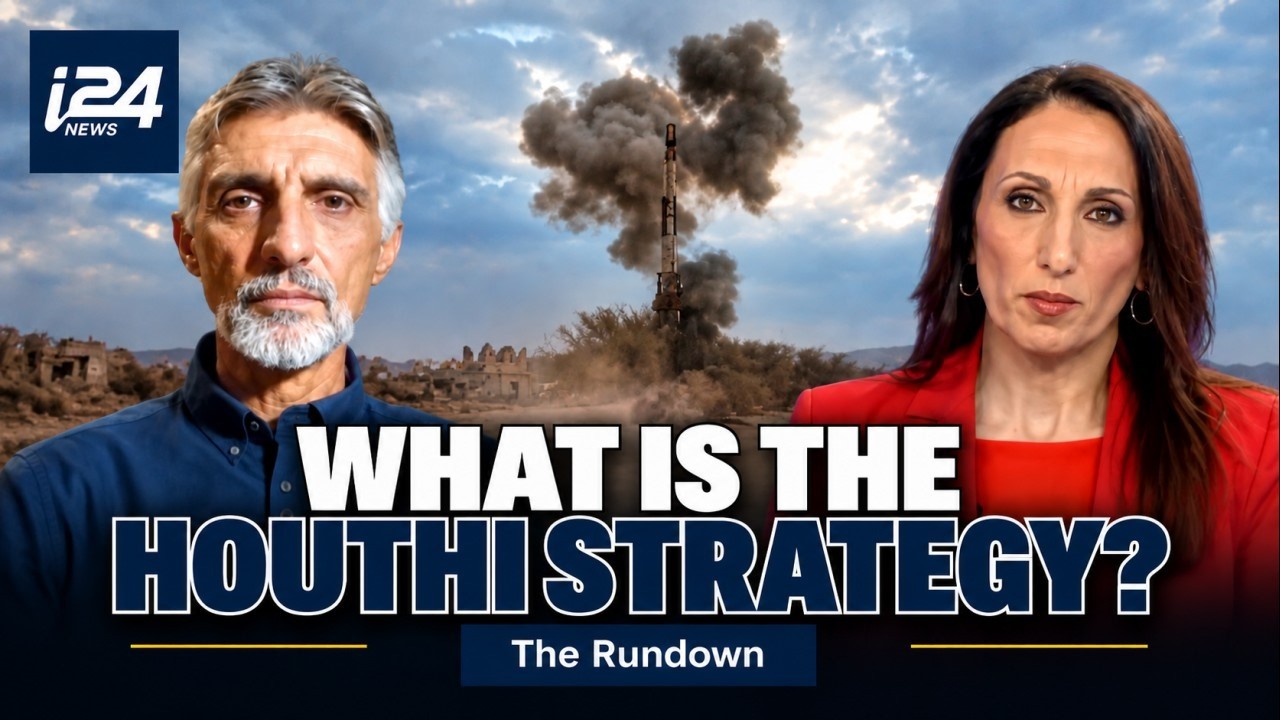
Video summary
The video discusses recent reports of Houthi meetings with US officials in Oman, where the group allegedly promised not to attack American or Israeli vessels. The speaker strongly criticizes this development, labeling it a significant mistake by the US administration for negotiating with what they define as terrorist groups. According to the analysis, such diplomatic engagement grants the Houthis much-needed legitimacy and encourages them to continue their strategy of holding hostages and blocking strategic straits like Hormuz and Bab el-Mandeb. The argument posits that these actions successfully drive up oil prices and allow Iran to strengthen its regional influence, potentially positioning itself above Saudi Arabia or even Israel, a dynamic the speaker suggests is exacerbated by US Vice President J.D. Vance's apparent preference for negotiating with Tehran rather than treating Israel as a steadfast ally.
A central theme of the discussion is the Iranian-backed strategy of keeping conflicts below the threshold of full-scale war to maximize their own benefits while rebuilding capabilities like nuclear and missile facilities. The speaker notes that groups such as the Houthis, Hezbollah, and Hamas have learned this tactic, allowing them to survive and grow without direct confrontation with Israel or Washington. However, the transcript argues that Israel can no longer tolerate this situation, as living in the neighborhood of a resurgent Iran and its proxies comes at a high economic and security cost. The speaker expresses confidence that Israel will soon take the lead in regional actions, potentially coordinating behind the scenes with Saudi Arabia and other Arab nations to form a coalition against the Iranian regime and its supporters, leveraging superior technology and intelligence to deal with these threats.
The conversation also addresses the lack of support from Turkey, Pakistan, and Qatar for Saudi Arabia amidst reports of Israel assisting Riyadh, specifically regarding the trilateral Mecca pact. The speaker is unsurprised by this absence of aid, characterizing Turkey and Qatar as allies of Iran and the Houthis rather than true partners for the Arab world. Citing evidence of funding flows from Qatar to terrorist groups and Turkish support for Hamas, the argument concludes that these nations are effectively "half-terrorist countries" standing alongside Iran during critical moments. The final conclusion urges Saudi Arabia and other regional states to recognize that their current allies are not genuine friends and must choose real partners who share their security interests, a decision the speaker believes Israel has already made in its past strategic choices.
Read the full video transcript
What do you make of these reports that
the Houthis have held a meeting with US
officials in Oman promising not to
attack American or Israeli ships? What
is your sense of this development? It
certainly gives them a certain level of
much sought-after legitimacy, doesn't
it?
>> Hi, good evening. Thank you for having
me here. Yes,
I think this is a great mistake of US
administration, whoever decided that to
talk and to negotiate with terrorists.
And they cannot isolate themselves
because actually US is the most the
country that needed needs most this oil
and to keep the oil prices as low as
possible before the elections or any
other reasons. So, it's it's very it's
very surprising that actually US is
going to negotiate with some terrorists.
It doesn't matter if it's Houthis. They
did it also with Hamas. They did it also
with some Hezbollah figures in in other
months in these last 2 years. So, I'm
very sorry to say that actually this
kind of behavior by USA encourages
Houthis. They see that
this way works. And of course, their
supporter, Iran regime, sees that taking
hostages, these two straits, Hormuz
Strait and Bab el-Mandeb Strait, it
works for them. They can make price
higher and higher and US is going to pay
it. And and also honor them and
make them as a
super
power in this region above Saudi Arabia
or maybe even above Israel if we listen
a little bit to
the Vice President J.D. Vance, we see
that he prefers kind of between the
lines he prefers to kind of be in
negotiations with the Iran regime rather
than
to treat a Israel as an ally. So, for
all these reasons, it's not a good
thing, not for USA, not for Israel, not
for all this region.
And I think
that they have to reconsider their
actions.
>> And significantly, when one looks at the
messaging there, the Iranian-backed
group is not wanting to bring either
Washington or Jerusalem into the fray
here. What does that mean going forward?
Israel obviously keenly watching what is
happening, what is unfolding, but not
directly involved right now. What is the
impact here for Jerusalem?
>> Yes,
the Iranian regime and and also Houthis,
their proxies, or maybe even Hezbollah
in other times in these last two, three
years, they
learned our ways and they try to keep
the war lower than the real level of
war. It's actually what Israel did in
Syria, not being in the real war, but
being in some operations and keeping it
away from themselves, from Iran. We are
in kind of a war with Iran, but we are
not. So, they have some benefits, the
regime survives, and and they become
also stronger, they rebuild their
nuclear facilities or missile
facilities. These are good things for
them. I don't think that Israel can
keep tolerating this situation because
we are living in this neighborhood and
we are also paying a high price for not
only the economic issue, but
making Iran strong stronger again or
rebuilding Hezbollah or Hamas
capabilities. These are the things that
Israel cannot tolerate anymore. And
being under threat again after 3 years
of war, after October 7th. So, actually,
I won't be surprised. I don't know if
this can happen now with this situation
and and this
complicated complicated situation, but I
won't be surprised if actually Israel
will lead or take the lead of some
actions with Saudi Arabia behind the
curtains, with other Arab countries. We
saw some cooperations and bringing up
some coalition against Iran regime,
against Houthis. And Israel actually can
do that, can be the leader of the
region. The other countries just have to
accept that that Israel has the
capabilities, the technology, the
kind of
intelligence or the wisdom how to deal
with these
terror groups. Even Iran regime today is
a kind of terror group. So,
I hope that they come to that senses of
cooperating with Israel and maybe let it
lead these actions.
>> Amidst all these reports of Israel
helping Saudi Arabia, are you surprised
that Turkey and Pakistan haven't reached
out to support Riyadh yet, given the
trilateral Mecca pact? Briefly, please,
your thoughts.
>> No, I'm not surprised at all that Turkey
and Qatar have this
alliance with Saudi Arabia, but they
don't help them and and they don't come
for any kind of
making any even peace efforts or or
compromises between Iran and Houthis and
and Saudi Arabia or Arab countries.
Actually, Turkey and Qatar are beside
Iran regime or Houthis. They are also
kind of
half terrorist countries. We saw the
fundings that come from Qatar to terror
groups or Turkey that supports
Hamas or other terror groups. So, it's
not so surprising that they are in this
day, in this critical day, they are
standing with Iran or with
Houthis. And
as I said before, Saudi Arabia and other
Arab countries in this region, they have
to choose their real friend.
Qatar, Turkey, Pakistan even, they are
not their real ally. And they have to
decide and choose as Israel did its
choices before that.