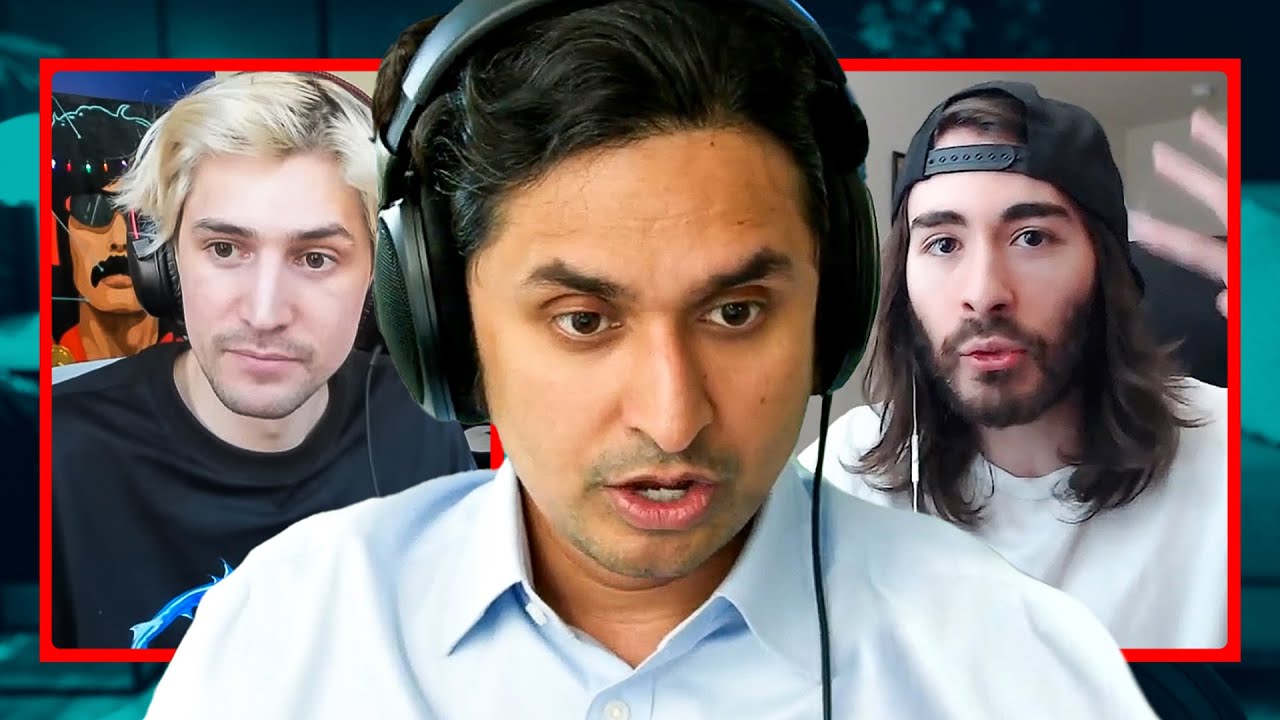
What Healthy Gamer Learned About Mental Health From Penguinz0, Lugwig & xQc
Watch on YouTubeVideo summary
The host of the podcast shares insights gained from interviewing top-tier streamers like Pokimane, xQc, Ludwig, and others, revealing that their online personas often mask a level of sacrifice far exceeding public perception. Drawing on his experience working with high-performers in sectors ranging from MIT startups to Goldman Sachs, he argues that achieving elite status requires balancing spontaneity with the ability to perform fun "on command," effectively turning friendship into a professional commodity where social invitations depend on collaboration opportunities. Unlike bankers who can separate their work and personal lives, streamers sacrifice nearly every dimension of existence, making them uniquely vulnerable because the human brain is not evolutionarily designed to process criticism from millions simultaneously; even if 99% of feedback is positive, a single negative comment disproportionately impacts mental health due to inherent cognitive biases. A significant portion of the discussion focuses on survivorship bias and attrition rates in high-stakes environments, illustrated by an anecdote about a powerlifting coach who pushes athletes with brutal programming that yields two years' worth of progress in one year but results in severe injury or burnout for most participants. The host explains that only those who survive this "battle of attrition" are visible to the public, creating an illusion that extreme sacrifice is necessary for success while ignoring the massive churn rate of individuals who quit due to exhaustion or passion loss. This perspective challenges the common narrative that suffering correlates directly with achievement, suggesting instead that true resilience allows successful people to find balance and avoid burnout rather than enduring unnecessary hardship indefinitely. The conversation shifts to address selection bias in how sacrifice is perceived, noting a psychological tendency for successful individuals to claim they endured immense struggle even when it was not strictly necessary. The host cites research regarding fraternity hazing, where members value groups that demean them the most because admitting such sacrifices were futile would be psychologically difficult; similarly, internet culture incentivizes claiming difficulty as a "costly signal" of achievement and protects against criticism from those who might suggest success can be achieved through flow states rather than grinding. This dynamic creates an environment where individuals feel compelled to exaggerate their struggles to validate their accomplishments, reinforcing the myth that elite performance requires total self-destruction. Ultimately, the host advocates for a reframe in how high performers approach their careers and lifestyles, arguing that one does not need to sacrifice as much as commonly believed to achieve success. He promotes building a healthy, balanced lifestyle that facilitates frequent entry into flow states, which can yield comparable results with significantly less suffering than traditional grinding methods. While acknowledging the competitive advantage of those who can endure extreme conditions—such as going days without sunlight compared to others who cannot—the conclusion emphasizes that sustainable excellence comes from managing mental health and avoiding the trap of believing one must suffer to succeed. The dialogue serves as a cautionary tale against accepting attrition-based success metrics, urging listeners to recognize that heroes are not gods but regular people who have learned to navigate these pressures without neglecting their overall well-being.
Read the full video transcript
you've spoken to some of the world's
biggest streamers people like Pokemon
and xqc and Asthma gold most critical
etc etc Ludwig as well
what are some of the lessons that you've
learned from speaking to people who are
the most online
they've they've won being online they're
the most online people on the planet
what have you learned from speaking to
them
um
wow so a couple of different things the
first is it's not nearly as fun or easy
as they make it look
so oftentimes and I've worked with a lot
of people so you know was in Boston for
a while and working with people out of
startups and stuff out of MIT and
Harvard and just really really hard
working people I work with people at
like Goldman Sachs and Google and and
whatnot and and like there are a lot of
people who work really hard I don't
think people really appreciate how hard
the people who are at the top are and I
don't think people really appreciate the
balance of skills that's necessary
to achieve that so it's some amount of
spontaneity and being able to have fun
on command so these are people who are
in the business of friendship and I
think the biggest thing that people
don't understand is the level of
sacrifice it takes to get there so what
we see is someone who's huge and
recognized and has all these sponsorship
deals and presumably has all this money
and things like that but the levels of
sacrifice because what they really have
to do is sacrifice just about every
dimension of their life
so what we sort of think about even when
I compare them to Bankers is like
bankers get to go to work and have their
professional relationships and they get
to go home and they get to have their
friends
but what we really see with streamers is
they sacrifice on every dimension
so your friends will invite you or not
invite you depending on what the collab
will get them
right and then if you turn some so like
even friendship becomes a part of your
job like the the other thing that I
think people don't really appreciate is
that
the human brain is not designed to deal
with criticism from millions of people
so if we think about like tribal
structures you know if I grew up in a
tribe of 300 people how often am I going
to get criticized
and we have these different biases that
people don't really think about which is
that even if 99 people tell me that they
like me if one person tells me that they
don't like me that's the thing that my
mind is gonna clue in on so now you take
these people who get millions of points
of feedback
and their brain is literally designed
and I've seen this as a streamer myself
where I can see tons of messages
scrolling past faster than I can read
them but my brain can pick out the one
thing that is actually damaging it
actually enters into my conscious
thought and this is where the brain is
processing all kinds of info information
that we're not aware of
and so I think people don't really get
how hard it is
and the beautiful thing is that the
people who are successful are the ones
who are able to find some kind of
balance otherwise you just can't sustain
it and you're like you'll burn out and
then
doesn't work so they're amazing
resilient individuals it's almost like a
battle of attrition in that way
absolutely and most people don't can't
make it to the Finish Line it's like a
marathon That Never Ends there's a quote
from Jason Park in one of my favorites
that says Your Heroes aren't Gods
they're just regular people who probably
got good at One Thing by neglecting
literally everything else
yeah I think that that's probably true I
I think but what I what I see at the
highest levels of performance is that
you usually have to be good at a lot of
things and you can't neglect too much
because it's going to come and catch up
with you eventually absolutely you know
your health will catch up with you yeah
but that's so there's a a guy in the UK
who is a weightlifting coach uh sorry a
powerlifting coach can't get that wrong
and one of my friends started working
with him he works with people for free
he's this Savant programmer unbelievably
smart but he's 78 or something sort of
old guy and he gets unbelievable results
for the athletes he works with he
doesn't charge anybody he's already made
his money he retires he works with
people on invite only and the
programming is ruthlessly hard what I
realized was he was getting around about
two to two and a half years of progress
within one year of programming but the
reason that he was doing this was
because he was absolutely battering his
athletes into the ground now what you
end up with is a scenario where the
athletes who end up Surviving this who
don't get injured who don't get burned
out who don't get too tired who don't
lose passion
obviously are going to have made
unbelievable progress because the
programming's brutal it's more volume
it's more frequent it's high weight it's
higher rpes
and survivability bias or survivorship
bias means that the only ones that do
make it to the End by virtue of the fact
they've made it to the end
have unbelievable progress what you
don't get to see are the attrition rate
it's how many people fell away what's
your churn how many people got injured
how many people gave up on their passion
and this is a lens I need to come up
with a name for it I need to meme this
this is a lens through which I see a lot
of very difficult Pursuits that
basically it it does come down to a
battle of attrition and if there is
somebody that can out suffer you if
there is someone for whom they can go
seven days without seeing sunlight but
you can only go half a day without
seeing sunlight
in some regards they have a competitive
advantage
yeah so I you know I I I'd Express a
little bit of
push back on that so I think that's a
commonly accepted View
that the people who sacrifice the most
get the most
but honestly Chris in my experience with
lots of people and even myself like so
you know I did pretty well in medical
school I didn't study over two hours a
day
like I had caught like I tried it for
the first month where everyone else was
like you know we're gonna go to class
and we're gonna stay at the library 10
o'clock at night 11 o'clock at night and
I was like I just can't do that so I
studied two hours a day and I did fine
and and I think that there's this idea
that
being successful requires sacrifice but
I think there's a huge selection bias
there usually the people who are talking
about the sacrifice they made to succeed
or like there's a selection bias there
the people who were like yeah it was
actually pretty easy for me you don't
actually hear from them
and so there's something almost like
psychological where I see that
you know if you succeed and you made a
sacrifice it's very psychologically
difficult to swallow that you didn't
need to make the sacrifice in the first
place
so oh wow it's it's really interesting
this is like data behind this too
so the way that people value what they
get correlates with the price that they
pay there's a study that was done I
don't remember exactly where I I'm
slipping on the reference but people
actually asked people who joined
fraternities in University
how good is your fraternity and what it
what a really interesting variable is
that the more the fraternity demeans you
the higher the value of the fraternity
even though by some objective measures
like some people have really good
connections but one of the worst
fraternities on campus people were like
this is the best fraternity and what was
their hazing process they stripped them
down naked tied them all to trees and
then were urinated on by other people
and when you go through that sacrifice
you can't psychologically say yeah I
didn't get anything for that I just
sacrificed a ton for nothing and I
didn't need to but look really the work
that I do with people is all about hey
actually you don't need to sacrifice
that much build a healthy balanced
lifestyle get yourself into the Flow
State more often and you can actually
achieve
just as much
by paying half the cost with nowhere
near as much suffering absolutely this
is a really really important Insight I
absolutely love it I love the reframe I
love everything about this I think as
well there is something around an
incentive or there is a disincentive for
people to talk about things not being
hard on the internet first off
if it wasn't difficult then that means
that it's less of a costly signal to you
so the achievement that you have is less
impressive secondly there is so much
more criticism on the internet for you
if it doesn't look like you had to go
through things oh easy for you to say
must be nice for you to say because if
somebody else does find it more
difficult or can't have theory of mind
to understand that it could be done just
through more of a flow state or less
grinding or whatever that means that
you're going to get criticized more
we'll get back to talking to Dr Kane one
minute but first I need to tell you
about manscaped if you're a gentleman
who needs to trim his sensitive areas
and you are still using an old face
shaver from five Christmases ago what
are you doing join us here in the modern
world there are purpose-built tools for
the job and the manscape lawnmower 4.0
is the greatest ball and body hair
trimmer ever created it features a
Cutting Edge ceramic blade to reduce
grooming accidents a 90 minute battery
which allows you to take a longer shave
or if you're just a particularly hairy
gentleman waterproof technology which
allows you to groom in the shower and an
LED light which illuminates grooming
areas for a closer and more precise trim
or if you just want to do it at night
perhaps it's also got a wireless
charging system to help the battery last
even longer but best of all you can get
20 off everything site-wide from
manscaped and free shipping if you go to
manscaped.com Modern wisdom and use the
code modern wisdom at checkout that's
manscaped.com modern wisdom and modern
wisdom a checkout what's happening
people if you enjoyed that then press
here for the full unedited episode and
don't forget to subscribe
peace