Video summary
A quiet revolution is currently reshaping K-12 education, particularly in Florida, where the state has pioneered a universal voucher system allowing families to leave traditional public schools for private or micro-school alternatives. This shift has transformed the educational landscape into an unpredictable marketplace where parents actively choose how their children are educated rather than relying on neighborhood zoning. The movement is driven largely by former public school teachers who, frustrated by rigid regulations and a lack of creativity in traditional classrooms, left to create flexible, student-centered learning environments. These new models often incorporate diverse pedagogical approaches such as Montessori methods, Reggio Emilia philosophy, and Finnish academic standards, focusing on outdoor play, hands-on activities like gardening and drone flying, and highly personalized instruction with low student-to-teacher ratios.
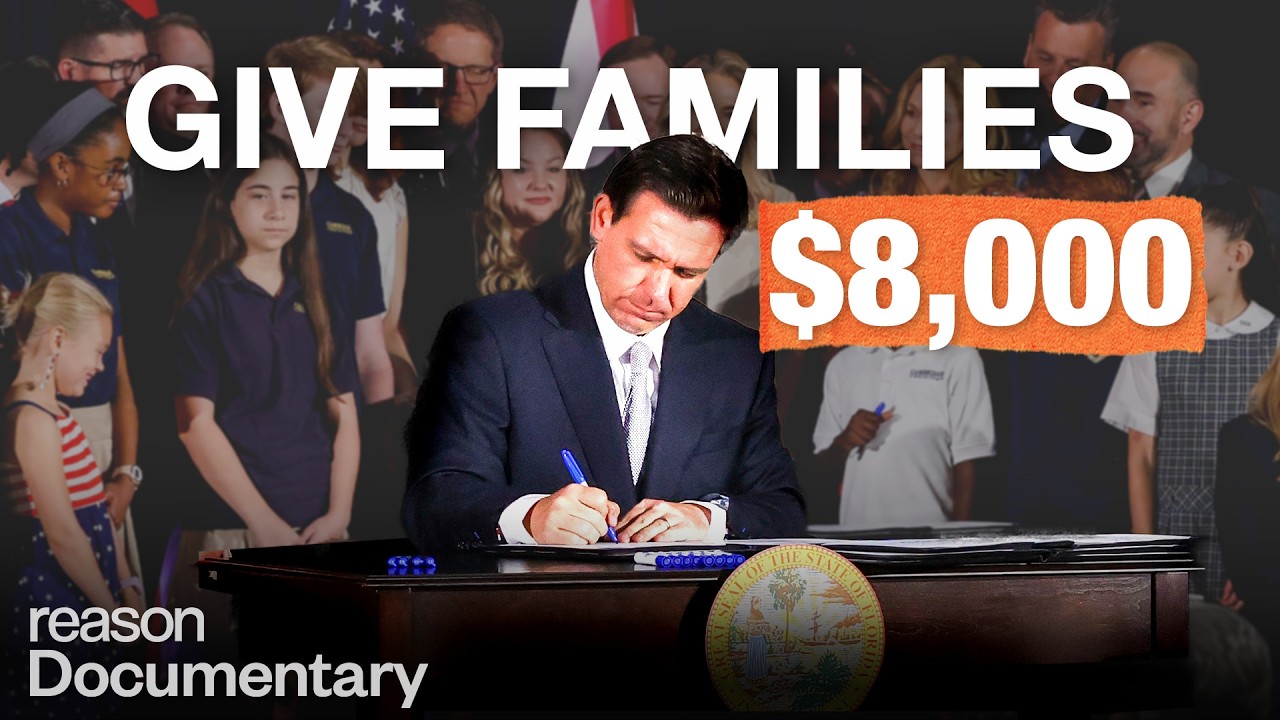
The financial impact of this transition is significant, as Florida's vouchers, worth approximately $8,000 annually, cover a substantial portion of tuition for many families who previously could not afford private education. While the average independent private school costs nearly $49,000 per year, microschools typically charge less than $10,000, making alternative education accessible to a broader demographic. However, this rapid expansion has exposed serious accounting challenges and allegations of fraud within the state's voucher program. State auditors have identified millions in wasted funds, including payments for students who never attended school or cases of double billing, prompting legislative debates over how funding is managed and monitored. Critics argue that mixing district funding with family empowerment scholarship accounts created a chain of financial management problems, while supporters contend that these issues are being addressed through enhanced monitoring and direct verification processes.
The debate surrounding school choice highlights a fundamental clash between the need for accountability and the desire for educational flexibility. Teachers' unions and critics point out that public schools operate under hundreds of pages of regulations while charter schools and voucher recipients face significantly fewer restrictions, creating an uneven playing field. They argue that failing public schools are often kept open with additional funding rather than being closed or reformed, whereas private microschools can quickly adapt to student needs or shut down ineffective programs without bureaucratic hindrance. Conversely, proponents of the current system believe that intense focus on standardized tests stifles innovation and fails to capture the diverse realities of modern learning, advocating for new metrics to evaluate success in these emerging educational models. Despite concerns about waste and regulatory disparities, school choice remains broadly popular among families who demand more personalized options that reflect the complexities of the 21st century.
Looking toward the future, there is a growing trend of collaboration between the public and private sectors, with some struggling public schools planning to integrate microschool-style classrooms within their facilities. This hybrid approach aims to bring the flexibility and innovation of private education into the public system without abandoning the traditional framework entirely. As more families opt out of zoned schools for specialized programs like dance or arts, even district-run schools are rebranding as magnet institutions to compete in this new environment. Ultimately, the evolution of education in Florida suggests a move toward a more decentralized and nimble system where parents hold significant power to direct their children's learning experiences, challenging the old standards that once defined American schooling.
Read the full video transcript
There's a quiet revolution happening in
K-12 education.
>> Ultimately, I got to a point where I
knew that we needed a whole overhaul,
and I could not bring about the change
within the system.
>> A handful of states are pushing school
choice to the max. [music]
>> There are a lot of eyes on Florida right
now. We are the pioneers of this
universal voucher.
>> Here in the Sunshine State, traditional
public schools are gradually losing
students. It's like a slowly deflating
balloon, and the teachers unions say
it's reckless.
>> What we're seeing in Florida, it feels
like an abandonment of public schools.
>> We're finding to have a decent quality
life.
>> But it's not slowing down.
>> Florida, and particularly South Florida,
is the education renaissance. Parents
are getting to choose how they school
their children.
>> Is this the future of American
education?
The students at Wonder here start their
day with farm chores, gardening, and
outdoor play.
>> Uh, I like my school. It's fun. I like
that we have animals and we get to play
outside a lot.
>> teach you how to be more responsible.
>> Like, if you touch something you're not
supposed to, it could end [music] up
costing the life of some of the animals.
>> [music]
>> It was started 10 years ago by public
school teachers Tiffany Tenor and
Jessica Zivkovich.
>> I was teaching second grade at a
different school, and our administration
said that they did not want [music] any
use of crayons, scissors, coloring
pages, any sort of crafting in the
classroom. Like, everything should be
paper [music] pencil. I kind of joke
about it, but I I mean it with
sincerity. It felt like that scene in
Matilda where
Miss Trunchbull is coming down the hall,
and [music] you have to hide all of your
colorful things and all of the fun
crafts and all of the color, because,
you know, that's not allowed.
>> Shoo.
They started Wonder Here as a private
school. Today, it operates out of two
converted homes on a 10-acre property.
The curriculum incorporates teaching
practices from Montessori, the
child-centered educational philosophy
known as Reggio Emilia, and academic
standards from Finland.
There are just 120 students.
>> We have a 12 to 1 student-teacher ratio,
and that allows for our teachers to be
able to personalize each student's
learning, to meet with them one-on-one
each day, to make sure that they are
taking notes and being observant of
their learning behaviors and their
interests.
>> You're going to let us play in your
classroom.
>> Wonder Here began accepting state
vouchers [music] in 2023 after Florida
made them available to all students
[music] seeking an alternative to their
zoned schools.
>> We will be signing legislation, which
will represent the largest expansion of
education choice, not only in the
history of this state, but in the
history of these United States.
>> It's been a huge blessing. [music]
We never wanted Wonder Here to be a
place that was only for students who
could afford it.
>> Florida's vouchers, worth about $8,000,
almost cover Wonder Here's $9,000 annual
five-day tuition. Fenor says 95% [music]
of their Florida students now use a
voucher.
>> [music]
>> Colossal Academy in Fort Lauderdale is
also part of the micro school movement,
replicating the feel of the one-room
schoolhouse with kids of different ages
together in one setting. State vouchers
enable more families to send their kids
here.
>> It's been a godsend, literally. We
wouldn't be able to afford [music] going
here.
>> The vouchers cover about half the cost
of Colossus' full-time tuition. The
average independent [music]
private day school tuition nationwide is
$49,000 a year. By contrast,
three-quarters of micro schools
nationwide charge less than $10,000 a
year, according to a national micro
schooling center survey.
>> Today's emerging schooling models are
nothing like typical [music] private
schools.
>> Kerry McDonald is the author of Joyful
Learning: How to Find Freedom,
Happiness, and Success Beyond
Conventional Schooling.
>> I think that these school choice
mechanisms certainly made alternative
education options more financially
accessible to more families, and that
[music] leads more families to look
around and see what's available to them,
which then of course leads more
potential founders to go ahead and
respond to that demand for something new
and [music] different.
>> Families can also spend money from their
education savings accounts at home
school co-ops, [music]
which became popular when public schools
shut down during COVID.
>> Many of these new schools were created
by former public school teachers who
left the classroom during COVID or
shortly thereafter and began creating
their own learning communities focused
around individualized, flexible, [music]
student-centered education.
>> The founder of Colossus Academy is
Sherin Radigan, a former Chicago public
school teacher. It started as a home
school pod during the pandemic.
>> The pandemic hits, right? It's March
2020,
>> [music]
>> and people just didn't know what to do.
And that was on the side of both the
educators [music] as well as parents.
So, we started with four students, and
the students were like, "Can we go
to the beach?" And I'm like, [music]
"Yeah, we'll in the car." And they're
like, "Can we start driving?" I'm like,
"Yeah, whatever you need." I get to be I
get to be your agent. [music] And that
just completely opened my eyes into the
possibilities of what we should be
calling school, right? And then
everything in the world could actually
be their classroom.
>> [music]
>> The actual academic instruction is a
blend of in-person and self-directed
virtual learning.
The national homeschooling rate has been
increasing at about 5% a year, more than
double the pre-pandemic [music] rate.
Microschooling is also growing, serving
an estimated 750,000
US students, though the line between
microschooling and homeschooling can be
blurry. Microschools serve a
disproportionate share of students with
learning differences whose needs aren't
being met in traditional schooling
environments, according to a 2025 report
by the RAND Corporation.
>> Traditional education doesn't serve
super hyperactive boys that don't want
to sit still, shouldn't have to, right?
That the learning environment needs
[music] to allow and forgive and give
grace for our students that need to
move.
>> 70% of Florida students attended a
district-run public school last year.
That's down from 86% 25 years ago.
>> [music]
>> That means that traditional public
schools have lost a lot of money.
>> What we're seeing in Florida, it feels
like an abandonment of public schools.
>> Andrew Spar is head of Florida's
teachers union.
>> Don't leave. Join us and have that union
form pulled up on your device.
>> There was about $280 million
that DOT withheld from public schools.
Those withholdings were because the
voucher program needed more money.
>> School districts in our state are going
to have to come to the realization
>> [music]
>> that they no longer control where the
money goes and where the students go.
>> Florida State Senator Don Gaetz, a
supporter of school choice, also became
a leading critic of how Florida has
administered its voucher and education
savings account program. After a state
auditor report cited a myriad of
accountability challenges.
>> They cannot locate 30,000 students that
they're paying for.
That's $270 million
>> [music]
>> and we're paying for students, which on
any given day of the week we can't find.
>> Gaetz introduced a bill designed to
reduce accounting fraud by forcing the
state to separate the funding of
vouchers and education savings accounts
[music] from district school funding.
>> I wanted to make sure that Florida's
leadership and our model for school
choice wasn't besmirched [music]
by the way that the family empowerment
scholarship legislation had rolled out.
>> [music]
>> In some cases, public schools are
getting state money to educate students
[music] who are also receiving vouchers.
Gaetz says 1 to 2 million also may have
gone to fund education savings accounts
for students who don't exist. One
private school is accused of taking
voucher money for students who never
attended. According to the state
auditor, more than $100 million
has been [music] wasted.
>> Mixing all of the money that school
districts would receive with the money
for family empowerment scholarships, we
began a chain of accounting problems and
financial management problems.
>> [music]
>> But some school choice advocates oppose
Gaetz's bill on the grounds that
separating out voucher funding will make
it easier to cut.
>> [music]
>> Gaetz says he's not worried.
>> We have a Republican governor who favors
school [music] choice, a Republican
house that favors school choice, and a
Republican Senate that favors school
choice. Who are we afraid of?
>> Spar says public schools aren't
competing on a level playing field.
>> We have 1,408
pages [music] of public school law, but
when you look at charter schools, it's
less than 100 pages. When you look at
vouchers in Florida,
>> [music]
>> it's less than 20 pages of laws uh that
those schools have to follow. So, it
doesn't sound like we have a very
[music] fair system in the state.
>> Gates has a bill to cut down on public
school regulation, but Spar also wants
more regulation of private schools.
>> Why shouldn't they be required to tell
parents [music]
the types of teachers they have there?
Do they have college degrees? Are they
certified as a teacher in the state of
Florida? [music]
>> That's exactly what the founders of
Wonder Here and Colossal say they were
escaping.
Radigan says she's held accountable by
her customers.
>> If you're not good at what you do,
families leave. [music]
They don't stay. And so, then I'm either
forced to change, whereas we have
failing systems that continue to be
funded.
>> Mhm.
>> When a school is failing, they don't
[music] shut it down in a public
environment. They keep it open. In fact,
[clears throat] they throw more money at
it.
>> When we visited Colossal, part of the
[music] students' day was spent
harvesting in the garden and cooking
stir-fry. They also study art, music,
photography, and how to fly a drone.
More regulation and licensing would make
such programs more difficult and
expensive to operate.
>> Adults who are experts really want
access to young people, but just can't
do that in the traditional There's too
many barriers. And you're so [music]
happy to take all that expertise. And
they may be subject experts, but they
don't know how to maybe
>> [music]
>> work with young people.
So, we're helping them with that.
>> Radigan says she can try new things and
abandon them quickly if they aren't
working.
>> If a student wanted [music] drones, they
would tell me on Tuesday and by Thursday
I'd drones. By the next Tuesday, we have
a teacher in, we're doing drones. It's
It's actionable [music] and fast.
>> That flexibility disappears in a more
regulated environment.
>> traditional public, I would have to go
and ask the principal and then they'd
have to check the district and then
everybody needs grades would be doing
drones. And not the four kids that asked
me for it, right? Or the 10 kids that
asked [music] for it and then they're
long gone.
>> The teachers union they're saying
there's not enough accountability.
There's an unfairness. What do you think
of that?
>> [music]
>> It's a new market. You can't use old
standards to measure a new market.
[music]
>> Mhm.
>> That's with anything, right? When you
build anything new, you have to create
new matrices by which you decide
something's [music] successful or not.
We believe in rigor. Other places don't
center that. That is something we
center. We're in [music] a moment now of
innovation and can we use the same old
archaic measurement tools to study
something that's brand new?
>> Voucher and education savings account
recipients do take some standardized
tests for tracking purposes.
But the results don't affect [music] a
private school's rating or funding in
the same way they would a public school.
>> We do not consider those [music] tests
to be high stakes. We just consider them
to be one additional piece of data.
>> Founders at Wonder Here say the
government's intense focus on
standardized test scores
>> [music]
>> has created the one-dimensional stifling
environment they want to [music]
disrupt.
>> The Department of Education really wants
there to be accountability and cohesion
because that's easy to create data from,
but there's a cost to that
accountability, right? And so we're not
[music] opposed to monitoring students'
progress, but it cannot come at the cost
of such a rigid structure.
Children are children. We're humans,
right? We're not like a product in a
factory that can be easily discarded.
[music]
>> Florida has made the wager that if
public and private schools alike must
compete for students, standardized tests
alone will no longer determine whether a
school is failing or not. [music]
Families will.
>> It used to be that, you know, you move
into a community, you're zoned [music]
for that school, that's where your child
goes. Now none of that is true anymore.
Now it's an unpredictable marketplace.
And school districts are going to have
to choose, do they want to be [music] a
collection of buildings that begin to
emptied out and an employment agency for
unions, or do they want to supply
services and goods to parents [music]
and teachers and students?
>> [music]
>> And that seems to be exactly what's
happening. Many district-run public
schools have adapted to the competition
by rebranding as magnet schools and
touting their arts, science, or other
specialized programs. [music]
>> My daughter, for example, does not go to
her zoned high school. She goes to a
high school that she actually [music]
passes two high schools to get to the
high school she goes to cuz they [music]
have an extensive dance program there
and my daughter is very involved in
dance and the performing arts.
>> Do you think it's a good thing that your
your daughter was able to bypass the
school that she would be zoned for and
choose a school that has a dance program
and that that's an option for Floridians
across the state?
>> Yeah, we're not advocating for ending
vouchers or charter schools [music] and
we're not in that position at all. I
will say this, in any situation, you
know, we can experiment and have
>> [music]
>> those kinds of things happen in our
public schools just like you could in a
private school or charter school. The
question [music] is, are we going to
give public schools the ability to do
that? And and that absolutely is [music]
something I support wholeheartedly.
>> Gates, a former school superintendent,
wants to give Florida's public schools
the flexibility the union is asking for.
>> So, I think it's a fair assessment that
public schools are regulated more. Uh,
that's why I support as much [music]
deregulation in public schools as we
possibly can do. Uh, in fact, we have a
major dereg bill moving through through
the legislature this year.
>> And at least one Florida public school
has [music] plans to incorporate lessons
from the private sector. Wonder Here
will run two K-1 classrooms at a
struggling public school next school
year.
>> The parents will opt in. [music] They
will lean into the learning environment
the way our private school parents do.
And then we will do none of the
traditional things. We will not do
report cards. We will do a far less
paper pencil. [music] They will play
outside. We might even get chickens if I
can pull it off. And we will do Wonder
Here inside of a public school. When we
started Wonder Here, our goal was always
to try and [music] influence public
education. We never wanted to leave and
turn our backs and just say, "Well, good
luck, guys." We wanted [music] to do
something that proved that a different
type of learning could exist.
>> [music]
>> So, what about the waste and fraud?
Gates's bill failed in the Florida
House, but the State Department of
Education has begun checking directly
with school districts instead of relying
on parent surveys to avoid paying for
double enrollment. And the nonprofit
that distributes the funds has enhanced
its monitoring efforts and reports that
accounts flagged for possible double
billing fell from 28,000 to 6,000.
School choice in Florida remains broadly
popular. Education savings accounts are
the most popular form of school choice,
according to recent polls. [music]
The future of education looks more
decentralized, nimble, and for some,
micro.
>> All of these beautiful vouchers that are
coming out giving parents the
opportunity [music]
to take their funding and choose what's
best for them and their family. I think
it's powerful and it's a power parents
should have always had. [music]
>> More and more families are demanding
more options for their children's
education, more education models that
are reflective of the realities of the
21st century. I think more families are
saying I have so much personalization in
the other goods and services that I
access, [music] I want that same level
of personalization in my children's
education.
>> Maybe it's too young.
>> Oh.
>> What's that? What's that?
>> What is that? What is that?