What a Career in Public Policy Actually Looks Like | SPPA Stories
Watch on YouTubeVideo summary
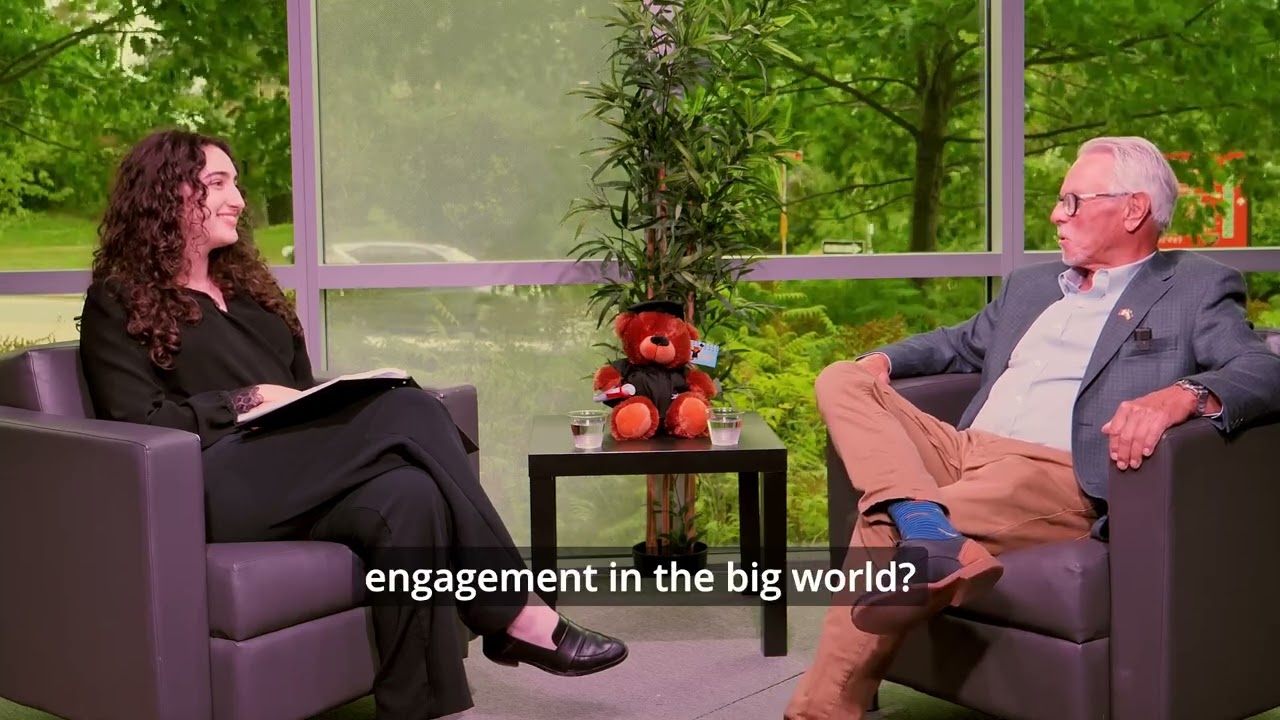
The video features an insightful conversation between Alisa, a current master's student in public policy and administration at Carlton University, and Carl, a graduate who completed the program fifty years ago. Both speakers emphasize that the core strength of the Master of Public Policy and Administration (MPPA) lies in its ability to provide a comprehensive foundation while allowing for significant personalization. The curriculum is designed so that first-year students master essential policy areas like economics and political science, but by the second year, they gain the flexibility to tailor their studies to specific interests, such as health, social, or environmental policy. This structure ensures that graduates leave with both a broad understanding of the Canadian federation's complexities and the specialized skills needed for various career paths, whether in intergovernmental affairs, local governance, or international development.
Beyond academic rigor, the speakers highlight the transformative power of the program's community and collaborative environment. Carl recalls his small cohort from 1973, who lived in close proximity, played sports together, and supported one another through difficult courses like statistics, fostering deep friendships that have lasted for decades. Alisa echoes this sentiment, noting how the supportive network helps students navigate stress and diverse backgrounds. The program teaches crucial soft skills, such as active listening, managing biases, and engaging with stakeholders from different perspectives, which are essential for driving meaningful change. Whether organizing local political associations or improving community hockey programs, both alumni demonstrate that the practical management and policy skills learned at the university empower individuals to make a tangible impact at every level of society.
The dialogue also addresses the reality of working in a dynamic world where geopolitical tensions and economic shifts, such as the oil crises of the 1970s, can create seemingly insurmountable challenges. Both Carl and Alisa agree that while circumstances change rapidly, the ability to adapt and learn from historical precedents is vital for policy analysts. They stress that there is rarely a quick fix for complex issues, but rather a need for patience, resilience, and a willingness to engage in ongoing dialogue. The education provided at Carlton prepares students not just with theoretical knowledge, but with the confidence to tackle real-world problems and contribute to positive change, whether through minute local improvements or broader national strategies.
In conclusion, the most valuable advice Carl offers to incoming students is to follow their genuine interests rather than forcing themselves into areas where they lack passion, as this leads to greater engagement and success. He also underscores the importance of building relationships with fellow students, noting that these connections become increasingly significant both professionally and socially over time. Ultimately, the program serves as a launchpad for careers in public policy by equipping individuals with the adaptability, collaborative spirit, and practical skills necessary to navigate a changing world. The enduring legacy of the SPA community is evident in the lifelong bonds formed among graduates, proving that the experience extends far beyond the classroom and continues to influence how alumni approach their roles as leaders and citizens.
Read the full video transcript
Well, it's so nice to have a chance to
chat with you one-on-one, Carl. Um, so
I'm Alisa and I am a student completing
my masters in public policy and
administration and uh previously I
studied at uh the University of Toronto
focusing on uh foreign policy and
international relations. And I came to
Carlton primarily because I wanted to
have the opportunity to learn more about
the Canadian policy landscape. And that
is sort of what drove me uh to start
this program. I'd love to hear a little
bit about uh you and what was sort of
the impetus for you starting the MPPA.
>> Yeah. Um it it the fact that I'm here um
has a lot to do with my undergrad. I
worked for three years after high school
before starting as an mature student. I
don't know how mature I was. Uh but I
started at WLU in my undergrad and did
an honors political science and
economics and really found that uh quite
interesting. Um and uh it took me to the
place where I then started educating
myself about what different universities
had by way of um complimentary uh
masters programs. I hadn't intended on
doing a master's program. I had intended
on getting my BA, honors BA, as it
turned out, get out, get a job and away
I go. But then I thought, this is quite
enjoyable. Um, and I was intrigued and
there was a lot going on at the time in
the public policy uh world. I think the
opportunity to study and work in the the
nation's capital was also important for
me and I think that it uh has really
been a nice opportunity to learn a lot
about the complexities of the Canadian
Federation and uh in my case although I
studied uh last year here I had the
opportunity to go back to Toronto over
the summer and apply a lot of the
knowledge that I learned over the course
of last year to uh my role in
intergovernmental affairs. So I will say
that I think this program has has
certainly prepared me well in terms of
uh ensuring that
I am able to adapt to a variety of
different situations even in in terms of
research papers or the the variety of
different electives. I know for me a lot
of my interest areas uh relate to health
and social policy, but I found myself
also learning a lot about environmental
and energy policy. And so I think
there's a lot to uh to gain from a
program like this. And I'm grateful that
I was able to apply a lot of the
knowledge that I acquired here and have
a I think a a general comprehensive
understanding of how policy
uh across various jurisdictions can
manifest and how it can um change
depending on different as we know uh
geopolitical challenges or tensions in
addition to uh domestic uh realities as
Well, so
>> I think it's nice to have uh just
something that prepares you as a
generalist and I can safely say that I I
have felt like this program has given me
a a good foundation to apply myself in
in various policy roles.
>> You know, it's interesting. I think that
the school um the actual the school uh
uh curriculum, syllabus, whatever you
would call it, I think thematically um
it has not it has certainly evolved.
it's much more complete and a sort of
much larger number of choices. But I
thought that one of the constants was
the fact that in first year you you were
expected to take a um and master a set
of u of separate um uh program uh policy
areas, issue areas, um like economics,
uh you know, political science. You're
expected to be able to have a foundation
and get that in in first year. you may
have already had part of that in your
undergrad and so therefore you might
have had some some ability to maybe
obiate one or two of those programs
because you've already had like I had I
kind of want to make some political
science so they said yeah we're not
going to make you do that over so it
what it did was it it fed into
two things requiring you to actually do
the things that you might not have
really wanted to do in your undergrad
and you had to take those accounting for
example um which I had not had um but
then again in second year um you really
did have and I think you still do a fair
bit of flexibility in building quite a
bit of your own program and um and and
so that but by that time you had learned
what your interests were maybe what you
thought you were good at maybe you
weren't but you thought you were and um
you were able to um apply yourself uh in
at at different programs within say
political science or economics or
another uh two or
uh programs within the university. And I
thought that that was um really really a
benefit because we're all individuals
and we all have uh sort of uh
expectations and interests and
confidence levels about certain things.
So in the second year, I thought that
was really a great uh thing to be able
to do and it actually took me into a um
a a program uh run out of the economics
department that actually landed me my
first interim job after uh I graduated
in um in May of um of 75. So I think
that that foundation
of the program has not changed and I
think that's really really saying a lot
after 50 years that it's that uh well
thought out and and and and effective.
Yeah, I think that's a a really
important point is uh seeing what has
translated really well and what uh has I
think I think it's as someone who didn't
have a lot much of a policy background
before I started this program. I think
the having that uh foundational
knowledge is really key as part of the
curriculum
>> and uh I'm I'm glad to hear that you
felt that as well.
>> Um as we were uh mentioning we had a
great tour of the campus today and the
campus has fundamentally changed u many
many more students and many more
buildings and some of the locations I
didn't recognize some I did. Uh but it
speaks to the subject of um the world is
changing and we're participating in a
changing world. Um we are not getting
education for this for the purpose of
sitting home and doing nothing. We want
to be out there. We want to affect uh
the world we live in and and we want to
see change the right kind of change
made. How would you describe you know
what you would like to see as a function
of your own engagement in the big world?
>> Thank you for that question. I think as
someone who has had the opportunity to
work in the international development
sector before I started at uh the SPA, I
think I realized that there's so much
that you can contribute both, you know,
globally and also within your own local
community. So for me, I think I want to
continue to have experiences where I am
able to contribute to uh individuals
within my local community, whether that
be at the municipal level, provincial
level, or at the federal level. I think
there's quite a bit of fulfillment in uh
having the opportunity to
affect change in minute ways and also in
perhaps more broader,
you know, abstract ways, let's say.
>> And so for me, I think I am always open
to new opportunities to contribute. And
I think it's it's really hard for me to
pinpoint in one specific area that I I
would like to contribute. But I think I
know that when I had the opportunity to
work uh in intergovernmental affairs
that really inspired me and made me
reflect on the complexities of the
Canadian Federation and how important it
is to engage with stakeholders and
engage with local partners uh and
indigenous communities and how pivotal
all these different voices are in
affecting change and in ensuring that we
are moving forward and and making
improvements and uh I think it's for me
it's just it's a goal of mine to
continue to learn from others. Again, I
I don't think there's one particular uh
area that I'm drawn towards,
>> but I do think I I have found a great
fulfillment in focusing on projects or
programs
>> or policy areas where I'm able to see
how
um different uh I guess voices can be uh
heard and then also how we can make
improvements through feedback from
communities and ensure that changes that
are made are actually benefiting
>> those that are most heavily impacted.
>> Well, I think that I think the skill
sets that you're going to pick up
through the program um will uh give you
a foundation for um uh recognizing when
you're finished your degree and you're
out in the quote unquote real world. um
where those opportunities to make a
change um and and make people's lives
better uh can come from and I'll give
you an example um when I finished uh of
course you know a lot of polyai and a
lot of study in the area and a lot of
prov and all kinds of things uh one of
the things I did was I I recognized that
you know you have to you need to start
at the local level to really help people
at the in their immediate lives there's
lots of ways of doing that um I mean I
ended up becoming president of both my
federal and provincial uh parties riding
association as we then called it EDAS
now uh in Ottawa West. Um okay fine I
got involved in that because I thought
no no no we need to organize this
better. We need to be more effective. We
need to be more a more able to represent
people here and bring our policy
initiatives to the party and uh and
impact uh local elections. So that
because we thought we had some good
ideas. Uh the other thing I did was I
became president of my local minor
hockey association, right? My sons
played within it. A whole bunch of other
kids in the neighborhood did it and I
knew all their families and I thought,
well, this is an this is a way of
bringing some administrative,
policy, management, financial integrity
to a program at a local and community
level. all of those things which I had
been exposed to in the context of this
program and didn't realize at the time
that no no I can I can do that and I can
make an impact there. Um so those are
very small examples but they they
demonstrate how you can benefit uh
others uh take on challenges make a
difference change uh predicated on what
you've uh you been able to do. Now 2
years at a program here also forces you
to get engaged. Uh you got to you got to
deal with challenges and you got to deal
with administrative challenges of your
own uh of the schools. Um and also
working with other people. Um I one of
the great I would tell students coming
in you're going to learn from your profs
you're going to learn from the syllabus.
You're going to learn from you know
being in lecture halls. You're going to
learn from doing research paper. Here's
where you're really going to learn
something of value with the people
you're going to school with. Really
spend time getting to know them, getting
their opinions, thoughts, and and
understand their experiences, asking
them, "Hey, how would you address this?
How would you address that?" uh because
as for our program 50 years ago, we had
people from lots of different countries
and the perceptions about issues were a
little different, solutions were a
little different, but it opened your
mind to the fact that there might be
other ways of thinking about things. So
yeah, you can make change, you can
impact change at a local, maybe a
national level, I don't know. Uh but you
have to have the skill sets in order to
be able to do that. It's it's definitely
something that I have incorporated in my
own worldview is keeping in mind how
one's own biases can sometimes uh cloud
your perception of something and how
it's important to have those dialogues
and see other people's perspectives
>> even when you yourself may think that
the answer is very obvious or that but
it's important to to recognize the
nuance and I think see where you know
different um where different voices may
be underrepresented let's say.
>> Yeah.
>> Yeah. It's it's it's fascinating. You
can't get through this program without
learning how to uh work with other
people, learn from other people,
collaborate um either in joint projects
or even in a you know in a in a in a
panel discussion. You have to it really
helps you to learn uh to engage
um listen um but also come to some
conclusions about okay what needs to be
done. There's an awful lot of uh
academic uh energy wasted on just
shuffling around through a particular
issue and not coming any conclusions
about okay what are we going to do?
Well, you get through this place you've
done some things. Okay, you've been
forced to do some things. Um, and then
you carry that with you into uh into
working life wherever it is. But that's
that's a big that's a big benefit, big
bonus.
>> I'd love to hear about how the SPAA
community made an impact on you during
your time at Carlton and also following
the completion of your degree. I know
today you had an opportunity to go on a
tour with some of your um peers and I'd
love to hear
>> about, you know, when you look back,
what has the SPA community meant to you?
>> Well, when we when I first started here
in 73, um we were a fairly small class.
The program had changed in ' 72. It was
a very small incoming full-time class.
The 73 group that I was with um were
probably only full-time, probably only
15 or 16 of us. We were at Patterson
Hall. We were in the same building on
the same floor and we were very in close
proximity to each other. So, we got to
know each other. That was one of the
benefits of being in close proximity.
You had to learn how to get along with
people. You had to learn how to help
people. They could help you. Um, as a
function of that, we also shared a lot
of common uh interests uh and socialized
a lot together. Uh we had a broom ball
team and for example, many of us used to
play Saturday afternoon uh at an old
outdoor hockey rink uh in the fall, no
ice. Uh we would play ball hockey and
then we would rejoin to a hotel that
still actually exists on the market
called the Lafayette. Well, it's it's
those inclass
in hall and social activities which
allow you to really uh learn about
people and understand and appreciate
their perspective and their value. Part
of the value is supporting each other
because this can be tough from time to
time and somebody's going to have a
difficult time and you can perhaps help
them. they might they might have an
expertise where gee I mean stats I was
terrible in stats but I had to get the
course or else I wouldn't pass and there
were a couple of guys who really really
uh helped um so but that was only a
function of us getting to really know
and be comfortable with each other and
confident in each other and respectful.
So I I think in the working world you're
going to be out there if you have an
opportunity to develop the same kind of
relationships that's great. So I I I
really think that is um one of the
was one of the things that we all took
away and the evidence of that is today.
We've got I think there's about seven or
eight of us today that graduated 50
years ago and then I will be hosting a
backyard barbecue tomorrow for another
four or five that couldn't be here on
this location. And but we all see each
other and it's like the years just drop
away. Um, but it but that's that's only
a function of the time we put in
together
academically and socially.
>> That's lovely to hear. I think that's
something that's also really important
to me is the community here. I compared
to my undergrad, I really feel like the
SPA community has been incredibly
supportive and I as someone who is a
member of the SPA society, I think that
has played a huge role in ensuring that
I am not only um having the opportunity
to learn and grow academically but also
have the opportunity to as you noted
learn from other people, learn from my
peers and also
foster great friendships and I'm really
glad to hear that
>> you felt like no time had passed when
you all met up again.
>> I'm sure with my cohort I we will have
the same experience and I think that's
what's so valuable about this type this
program in particular. I think I noted
um when I first arrived how uh
incredibly welcoming everyone was and
how important this uh work was for
everyone. And so we were all I think not
only united in our interest in uh policy
and the importance of of
uh acquiring
more knowledge related to policy
development. But I think we also have
learned a lot uh about what we value
aside from that and how that all
connects. And I think it's really really
nice that people can come from a variety
of different regions across the country
and still be able to connect in a
variety of different ways and also be
really I think um genuine and and
committed to supporting one another like
you said the importance of having say a
study group or having assistance when
you are having challenges with
coursework. I noticed the same thing
with with our cohort. the importance of
being there for each other is is really
key.
>> We're all in the same boat. I mean, we
all come in here from different places
with different backgrounds and
experiences. There's some commonalities,
but by and large, we bring uh we bring
different geographic uh you know, sort
of references and maybe different
program references. Um maybe we're
single, maybe we're married, maybe one
of the guys had kids. Uh you know, so
you you kind of sort of, well, gee, I'm
going to have to figure that out. You
know, what's that all about? And by the
time you get out of here and you made
those relationships
uh and friendships and you've learned a
lot about um people approach life
differently and that's not bad. That's
good because that broadens your own
horizons, right? There's not just one
way of doing things. So I I think that
that's good. Um I would say I would also
give you a a a thought. Um it this is a
very very stressful time uh in a public
policy um international geopolitical
even in a Canadian you know fedrov
environment. Um
that's the way it was and that's the way
it's going to be. And uh in 73 when we
came here uh things seemed kind of
interesting. Uh the Vietnam War was
still on. Uh Gaza, you know, the Sudan,
uh Ukraine, uh a lot of lot of
bumptiousness about that. Uh we got here
in 73 in September. In October was the
Kipper war. Okay. And that resulted in
the Arab oil embargo as it was called.
Gasoline prices went through the roof.
There were long lineups of cars unable
to get gas in the states and here. And
it set off what became known as
stagflation. High inflation,
no economic
activity, stagflation.
And we thought this was the we'd never
get out of this. It was the end of the
world. Uh but over time there were
public policies that addressed that and
things changed and people got to work
and um you know we went through a couple
of elections.
There was an election in 1972. The
Liberals won by one seat.
How many seats did they win by this
time? One seat. Okay. So, things happen
and and there is change all the time.
And I think that that the program, the
education you're getting here will stand
you in goodstead. Uh but remember that
it's all happened before. It's all going
to happen again, you know, but be ready.
>> Absolutely. I think that's an important
uh lesson for us I think especially as
young policy students and analysts is
that even when the challenges seem
insurmountable and seem like they are
impossible to
correct or you know it it's a there's a
lot of precedent and there's a it often
times is not a quick fix. So we are
certainly seeing that now as well when
new challenges present themselves you
have to adapt
>> and uh I mean it's it's always great to
have so many wonderful you know for
example faculty members and and
academics who are wrestling with those
questions at all times both at Carlton
and and elsewhere. So
>> it's certainly uh always, you know,
reassuring when you hear from others
that have been through a lot of
stressful geopolitical challenges as
well and how do you navigate them? So my
final question for you is if you could
go back and give yourself one piece of
advice as an incoming SPA student, what
do you think it would be and why?
Um
I suppose as an incoming student
and what I learned expost facto after
two years would be
um
follow your follow your interests.
Make sure you're following your
interests and that you're applying
yourself within the program to subject
matter that you're really truly
interested in. Don't force yourself, you
know, round peg, square hole type thing.
The other thing is I suppose after 2
years I learned that um that the people
around me,
my fellow students
uh were becoming more and more important
uh both professionally and socially. Uh
so those are the two things that I I
learned um you know along with the
benefit of being in Ottawa. I mean I was
able to watch stuff happening in real
time in the area that I was interested
in. So that was I would say those things
they sound a bit amorphous
um you know but that was that was
reality for me.