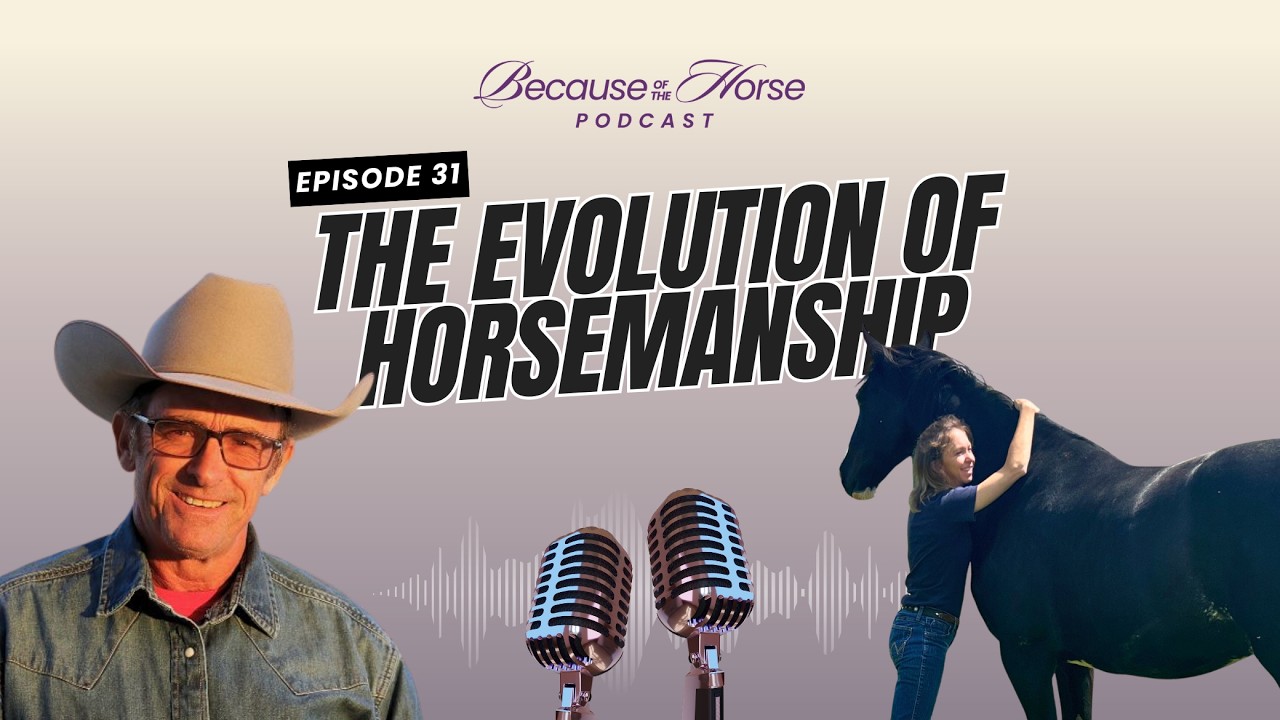
Video summary
Warwick Schiller, an internationally recognized clinician and author, has undergone a significant evolution in his approach to horsemanship, moving away from traditional behavior modification toward a philosophy centered on connection and mental well-being. This pivotal shift occurred roughly eight years ago when he encountered a highly functional horse that was emotionally "shutdown" and resistant to standard training methods, prompting him to explore alternative approaches based on listening rather than forcing change. Schiller emphasizes that horses act as mirrors for humans, reflecting internal baggage and past conditioning that must be addressed with care; consequently, he advocates for a dynamic of "care for" rather than "power over," arguing that the energy behind an action rooted in safety and empathy is far more impactful than the technique itself.
Central to this new methodology is the belief that effective horsemanship prioritizes the relationship first, as many behavioral issues stem from initial interactions rather than isolated physical problems. Schiller has moved away from manipulating a horse's feet to reach its mind, preferring instead to establish a place of rest where horses can naturally stand and feel secure. Influenced by concepts such as herd dynamics and the collaborative nature of nature itself—citing examples like trees communicating via mycelium networks—he argues that horses operate without hierarchy and act for the good of the whole. In practice, this means distinguishing between acclimatization and desensitizing by stopping at the first sign of a horse's concern or refusal, thereby building trust and giving the animal ownership of its experience rather than imposing dominance unconsciously.
The application of these principles extends to specific techniques like steering, where Schiller advocates for asking a horse to go further in its current direction instead of forcing a change against its will, which avoids creating resistance or "brace." He stresses the importance of congruence between internal intention and external expression, noting that being present and aware of one's own posture and energy is essential for building trust. By allowing horses the option to say "no," trainers foster willing cooperation rather than compliance born of fear, fundamentally altering the interaction by changing how humans view safety and communication. While his earlier work in public clinics often required compromises to fit a rider's limitations, his current private practice focuses on deepening relationships without altering the horse's nature to suit those constraints.
Ultimately, Schiller concludes that adopting a collaborative mindset transforms the entire human-horse dynamic, shifting the focus from control to partnership. He encourages viewers to recognize that humans often impose dominance without realizing it and to instead embrace a perspective where nature is seen as collaborative rather than competitive. By sharing resources and promoting this empathic approach, he aims to help individuals address the root causes of behavioral issues through genuine connection. His message is clear: when we prioritize the horse's well-being and respect its boundaries, we unlock a level of trust and cooperation that traditional methods cannot achieve, creating a harmonious partnership based on mutual understanding rather than force.
Read the full video transcript
You're listening to The Art of the
Horseman, [music] a podcast for
equestrians who know that true
horsemanship goes far beyond the arena.
[music]
At the heart of this journey, horses
teach us who we truly are, revealing
[music] what's possible when we let go
of control, lead with love, and allow
ourselves to be transformed from the
inside out. Around [music] here,
horsemanship is lifemanship. And every
conversation [music]
is a celebration of the ways horses help
us grow into who we were meant to be. If
you'd like to take it deeper, head on
over to because of thehorse.net. Grab a
ticket to [music] our free online horse
fair or check out our other learning
pads and resources.
Welcome. Today we're joined by
internationally respected horseman
clinician and author Warwick Schiller, a
name that's become synonymous with
relationshipbased training and a fresh,
thoughtful approach to horsemanship.
Growing up in a farm in rural Australia,
Warwick was riding horses by the age of
seven. Since then, his journey's taken
him from a professional reigning arenas
where he became an NRHA reserve world
champion and represented Australia at
the 2010 and 2018 World Equestrian Games
to building a global online community on
trust, connection, and mental well-being
of the horse. With over 33 million views
on YouTube and a thriving online video
library and best-selling book, Warwick
continues to inspire riders around the
world to slow down, listen more deeply,
and train in a way that feels good for
both horse and human. So, welcome
Warwick. It's great to have you here
today.
>> Thanks, guys. It's good to be here.
>> You've been a part of the fair for seven
years now, and we're in our seventh
year. So I first of all I cannot thank
you enough for taking that jump when I
first decided to do this and it was a
big leap for me because it was going
from basically in-person training of
horses and riders to doing an online
thing and learning web design and all of
that and marketing and and you were so
willing to hop on board. You gave me so
much encouragement. You're one of my
first interviews for the fair and you
encouraged me to stay the course and
have a tough skin and don't worry about
what others have to to say to just, you
know, stick with your mission. And I
sure appreciated appreciated that cuz uh
when you first enter the online space,
it can be a little little
nerve-wracking, let's say.
>> Yeah, it can be a little rough out
there.
>> It it sure can. So, what sparked your
passion for horses and sort of the path
that you're on now with horses at this
point in your
>> Well, that's like 50 years worth of
stuff. You know, I think, you know, I
grew up on a farm and we, you know, I
started riding when I was probably about
seven, like Paula said. And I think, you
know, initially it was something we did
as a family. Um, I do think that as a,
you know, as a teenager when you're in
those weird years right there, I think
horses were the I don't know, horses
were probably the one place I could be
me. I didn't have to pretend to be, you
know, whatever other than what I was
sort of thing. There was that. And, you
know, I think I've, you know, I've
always enjoyed doing stuff with horses.
And I think, you know, I think part of
it, the bit I just said about, sorry,
the bit I said about horses a minute
ago, I mean, at home alone, me and my
horse, I could be me. But then like as
far as like horse shows and stuff like
that, it's it was was probably the one
place I was one of the cool kids whereas
I wasn't a cool kid at school sort of
thing. So that I think there's a you
know there's a bit of that there too.
And I that's something I've been really
aware of the last well maybe seven or
eight years now is I think it's really
important to understand why you do the
things you do whether you're a CEO or
whatever you do. What was it that drove
you to do it in the first place? Because
in doing that you might unravel some
things you didn't even know were there.
And so I, you know, obviously I was I
was good with horses and I like the
horses or whatever, but I think there
was some I think there was some other
stuff underneath that that that kind of,
you know, led my my passion for horses.
And I, you know, I think as you do that
sort of that inner work stuff,
understand why you do the things you do,
you can keep doing the things you do.
You just let go of some of the reasons
why you got there in the first place. I
think
>> it's like it's like having a backpack
with some additional baggage that you
chose to carry on from, you know, when
you were young. And although you don't
need any of those things in the backpack
anymore, we all carry our own own
backpacks and and it's helpful to know
what's in the backpack. But like you
said, letting go and then allowing
yourself to be in the place that you're
in in your journey and accept it for
what it is and what its new meaning is
to you right here and right now.
>> Yeah. It's funny you mentioned a
backpack. I was actually in Santa Fe,
New Mexico last weekend for a a men's
retreat. And that was that was basically
the whole thing about the retreat was we
carry these stuff around in our backpack
and we want to you don't need it
anymore. You needed it at some point in
time and you don't need anymore. And
it's about unloading that stuff. And you
know, I think some people start that
much earlier, like in their 30s or
whatever. I was I was 50 before I even
knew I was carrying a backpack. So, you
know, it's a slow start.
>> It's like horses, they they make us
aware of of so much. And even like you
you think like meditation or something
like that to become familiar with.
Horses make us do that. It's one of the
first times, at least for me, what I
love about horses is it puts me in the
moment right right now. not what I need
to do later today or what I should have
done yesterday. It's right now in the
moment. And I think for so many people,
that's why horses feel good to them to
bring them back to that. And so much of
the time as we go more and deeper into
this horsemanship journey, we start
realizing how much comes from within
one's oneself. And so for me, the big
lesson with horses is is just that that
it's I really need to learn myself. Was
there a point in your life where you
really understood it's you and it's got
to come from you? And if if so, what
what triggered that uh sort of that aha
moment?
>> I'd say the start of the whole thing was
about 8 years ago. My wife bought a I
was still involved in the raining back
then and um maybe it's 9 years ago now.
My wife bought a new raining horse and
he had some he had some little things
about him. Just tiny little things that
I wanted to change and I couldn't change
them. And um you know at this point in
time I had probably I don't know 23 24
million views on YouTube and I'm
traveling around the world doing clinics
and every horse leaves better than they
arrived. I think I know what I'm doing.
This horse had me puzzled because I
couldn't I couldn't train him to be
different you know so training behavior
modification vaping couldn't change I
couldn't train him to be different. He
kind of he kind of made me take a step
back and like what else is there? And
then I started, he kind of got me
interested in what I don't take offense
at this, but what I used to call crazy
cat lady land, like horse people who
don't train their horses, but they have
this relationship with them. And I used
to think a bunch of weirdos, you know,
and he kind of got me thinking, what
else is there? And I started looking at
different things. And yeah, he was kind
of the the start of heading me heading
down the path I'm on on now. I realized
he didn't need more training. He needed
to be listened to. And he was, you know,
he was a very highly functional shutdown
horse. So he was very obedient kind of
in his head. Very obedient. Like most
people think this is the best trained
horse I've ever had. He's perfect. Does
what I say when I say it, how I say it,
and doesn't do anything else. Um, you
know, he's a little bit robotic. Yeah. I
couldn't train him to be different. But
once I started working on that
relationship stuff, it was a different
story. a similar moment when I when I
was younger and I had a horse that I
thought I had going quite well and I I
was in a situation at a clinic where I
kind of wanted, you know, as a teenager
to show that I was, you know, doing well
with my horse even though I had some
questions about him, you know, cuz there
were some ear pinning and tail ringing
and that sort of thing. And but he did a
lot of stuff, you know, jumped
bridalist, you know, did all the tricks
and laid down and whatnot. So the gal in
Lee Smith is is her name. She she
pointed out to me in that clinic, she
grabbed a hold of lead rope and she got
him to really brighten up and really
look and focus on where she was
directing his mind. That's it was the
same sort of thing where it was like,
boy, this needs to come from a totally
different space than like you were
mentioning, you know, training,
modifying behavior, you know, different
conditionings, operant and whatnot. and
and it was it was a night and day
difference that I saw how his expression
was with her and it really opened my
eyes up. I'm still not as good as I'd
like to be at it, but but it comes more
from the heart then. And like you said,
some people that are really, you know,
like a cat lady and they love on their
cats and those cats love them. It's a
feel following a feel thing. And and I
love how you brought that in. And it's
those difficult horses, right, that that
point out to us where we might need to
make some adjustments and changes in our
approach and ourselves.
>> Yeah. And the and the big thing with
this horse is what I learned from him
was he was a reflection of me. I'd spent
most of my life kind of kind of shut
down. So it was, you know, I kind of,
you know, I've done a lot of work since
then, but it's kind of like my first
introduction to where I was at was from
a horse, you know, so it was pretty
cool.
>> Yeah. and realizing it's the whole we're
learning the whole horse, right? So
there is the mind and there there is the
life or the energy or the spirit of the
horse and then there's the body of the
horse and then there's learning oursel
oneself putting the two together. That's
the part that I don't know how to
explain that to people and I guess
that's just something people just sort
of have to find. But it it's interesting
because I don't know it takes these
these horses these special horses or
these harder horses that that really
make us stop for once and think and then
you look back and you go that was the
best thing that ever happened to me was
that that horse coming into my my life
you know with him she kept showing him
you know back then it's just the little
things that I couldn't change we just
left it there and he was he was quite
good without changing those when you
know what I figured out was I what I'd
been trying to do up to that point in
Um, I was always interested in learning
things, but I was always interested in
learning things in one box, and that was
behavior modification. And I was on the
outskirts of the behavior modification
box, you know what I mean? I was not,
you know, I was always on the very
empathetic end of it anyway. And I was,
but I was still inside that box. I
hadn't gone outside that box yet. So, he
really um, he really kind of got me
thinking about things differently. And
then lucky I was doing a lot of clinics
and I got to experiment with a lot of
horses and I had you know had some
amazing things happen at clinics that
really helped me with that too. But the
thing about it you know like I said some
people kind of have these I don't know
midlife crisis or whatever they are in
their 30s. I was I kind of viewed the
world the same way until I was 50 and so
I'm 58 now. For me it's not that long
ago that I remember looking at the world
completely differently. Some people they
evolve over a long period of time. and
they kind of don't even realize they're
evolved. And so it can be quite easy to
be judgmental of others. But I remember
when it wasn't that long ago, if I
looked at me doing what I'm doing now,
I'd go, "That guy's an idiot." And so I
do get a bit of that in the social
space. Like it's a it's almost like
lately every time I put a video up,
there's there's a few trainers out there
that without referencing the video, they
would like to like poo poo it and say
that doesn't work and whatever. and and
it doesn't bother me because like I said
8 years ago I would have seen that video
and went he's an idiot. You know what I
mean? So it's it's I'm lucky I it was a
sharp progression sort of thing. So I
don't actually forget the way I used to
view the world. And when I viewed the
world that way I was right. Like I said
I was doing clinics around the world and
it seemed to be working and and if it's
working there's no need to change it.
And that's where, you know, being
open-minded and
trying to see not through your
perceptual filter that has been built,
you know, through the backpack that
you've been carrying along all this
time, right? And so, you're viewing life
and viewing the world through this
backpack. And I'm sure there's some
people that are going to listen to this
that they've got their backpack with
their horse. So, they've got this
relationship where the horse always
responds this way and they always
respond this way and they're they're
always kind of viewing their their horse
is viewing them and they're viewing
their horse through the lens that
they've always seen each other because
that's the way they interact all all the
time. And there there can be a change
though and there can be a way of showing
up differently ourselves and or maybe
observing our horses from a different
perspective. Again, it's coming through
us though that now we can start to
rewrite that story that we've had
together with our horse. What would be
some things you would tell our viewers
that might be helpful for them if
they're finding themselves in that kind
of friction place or a place where their
journey with their horse isn't quite
matching the picture that they had maybe
originally hoped for?
>> Great question, Paula. You know, I
really I I've had a number of
perspective changes in the last 8 years,
but probably the thing that's really
helped me the most. I have a podcast and
three of my guests on the podcast had a
perspective and I'll tell you what that
perspective is. The first one was a guy
named Rupert Isacson. I don't know if
you ever saw the movie The Horse Boy or
read the book The Horse Boy. It's about
this guy has this highly autistic son.
He took him to Mongolia to the horse
shamans there to to help him. But Rbert
used to be also a documentary filmmaker.
He did a lot of documentary films with
the Koi sand bushmen of the Kalahari. So
some of the last remaining hunter
gatherers and he said when a documentary
filmmaker goes to a tribe like that, you
know, the chief comes out and you talk
to the chief and blah blah blah blah.
But he said he's only the chief cuz we
think he's the chief because we come
from hierarchical type societies. We
have kings and queens and popes and
prime ministers and presidents and
dictators and all that sort of stuff.
Whereas hunter gather society the best
person for the job does the job for the
good of the whole. Everything everybody
does is not for the self it's for the
good of everybody. And obviously in this
case the guy that come out and talk to
them he can speak English or he can
speak French or like he's had
interactions with non what's the I can't
remember the the language they speak.
It's the one that does all the clicks
and stuff. And so there was that
perspective. And then I had a couple of
people on the podcast who were talking
about the same thing with horses that
you know I used to believe that the of
the the whole hierarchy thing. There's a
you know if you had 10 horses there's a
number one and they tell everybody what
to do and there's a number two and tells
everybody else what to do except the
number one. There's a number three and
it's like there's winners and losers.
Whereas these other two, oh probably
three of them actually three different
guests on the podcast making me aware of
the fact that like so there's a lead may
she's you know or there's different jobs
in a herd. Okay. And some horses are
better at smelling water. Some horses
are better at finding some horses have
better daytime eyesight. Some horses
have better nighttime eyesight. So
everybody kind of has a role to play and
you know the lead mayor makes a lot of
decisions and the rest of the herd are
always testing the lead mayor but
they're not testing her cuz they want
her job. They're testing her to make
sure she's still the best one for the
job for the good of the whole. And it's
just a totally different perspective.
It's very indigenous view perspective to
where it's more about care for the
whole. It's one of my podcast guests
said it's a care for versus power over
dynamic. And so that's the thing is
these days like the whole relationship
stuff with horses. I'm not doing it for
me. Some people I think follow the
relationship stuff cuz like oh yeah I
want to feel the warm and fuzzies. For
me it's all about those horses feeling
safe cuz a horse that feels safe around
you and with the things you do is so
much easier to train. And so even if you
have to have a boundary, that boundary
is out of a care for dynamic versus a
power over dynamic. And so the way you
do it, the energy you do it with, the
internal energy that you have,
everything is different when you have
the perspective that you're doing it to
help them, not to control them. And
that's probably the for me the biggest
thing. And you know, I kind of learned
this stuff in hindsight looking back at
some of the changes I'd made like that's
why that works so well, you know? So
it's it's really interesting especially
the like say the testing part you know
some people go oh my horse is really
testy they're not I don't think they're
testing to be testy they want to know
who are you like how do you respond in
this situation cuz I you kind of said a
minute ago Paula that you know there's
this lens that you view your horse and
they view you I think all horses view us
with the same lens the only lens
differentiation is the one we view their
actions with because it seems like as
soon as you make the change they make
the change you know it's they were
willing to view you through that lens
anyway. But that's probably the biggest
thing is why are you doing the thing
you're doing? Cuz like any technique
with a different energy is a different
technique and that energy a lot of time
comes from your perspective. So why are
you doing this particular action? Is it
about domination and control or is it
about helping them feel better? And I I
I feel like you could use the same
technique for to do both of those
things, but the energy with which you do
it will come out of you differently.
Just defines a really good leader for
people as well because it's it's is it
based on, you know, dominance and force
or respect or is it based on, oh, this
person is really going to help us out,
right? is really an asset to this team,
to this.
>> Just like you could have a person walk
into a room and it can shift the whole
room depending on their energy,
especially if they've got a real intense
energy. Our horses, they pick up on that
intention piece that you're talking
about. Just like we would pick up on
somebody with a whole lot of energy
coming into a room, it's that glaringly
obvious to them. And that's where, you
know, it's so important that our our
energy when we're coming in with, you
know, this new intention. And I think
this is great. I think this is a a big
help for for those that are that are
listening. But it needs to be the whole
human is invested in that intention
rather than saying, "Well, I'm not
working on, you know, control and making
my horse do X, Y, or Z." and then
pretending like our intention is good
and for the best of the horse. But now
we're really in congruent and now the
energy we bring into the situation is
very confusing and scattered for a horse
because they're not used to some acting
in one way that's feeling in another.
>> You've got it. Yeah, that's that's hit
the nail on the head right there.
They're not don't like inongruent
behavior. It's just a weird energy.
Yeah. And so, yeah, that's yeah, that's
a that's a huge part of it right there,
Paula, is is being congruent. And what
it's what the hard part is is there's a
uh one of the most spiritual of the
ancient Hindu practices is called karma
yoga. And karma yoga is basically
focusing on a task with no thought as to
the outcome of that task. And so, what's
hard with people is if they do something
with their horse knowing that if they do
this right, they will get a certain
result. and they tend to tend to come
with the energy thinking about the
result rather than rather than the doing
thing, you know, and so it's it's very
hard if you you know, one of the things
I suggest people do early on in the
piece, you know, if they've got a horse
that's not interested in them or is hard
to catch or whatever, you just go out in
the pasture, take a chair, whatever, go
and sit out there, read a book, scroll
through Facebook, meditate, whatever you
want to do. And if you do that often
enough, at some point in time, those
horses will kind of become curious,
probably come up to you. And so I was at
Ecoin Affair a few years ago. Lady came
up to the booth. She goes, "Hey, I've
been doing that." And I said, "You
better do it with no expectation." And
the lady said, "I've been doing that
thing you said. I've been going out in
the pasture with my chair with no
expectation. Anyway, I've been doing it
for 2 weeks and she still hasn't come up
to me. What am I doing wrong?" And I
said, "Do you realize you just told me
that you are going out there with no
expectation, but then the expectation
you say you don't have hasn't been met,
and you're wondering why? So, you
actually are going out there with an
expectation. And I'm not saying it's
easy because once you know that this
thing, if I said, "What I want you to do
is go out and sit in the pasture with
your horse, nothing's going to happen,
he's going to ignore you, but this is a
I don't know, this is a sitting in
silence exercise or whatever." If they
did that, the horse would come up and
hang with him because they wouldn't have
the agenda of like, "Is he coming yet?
Is he coming yet?" You know, and that's
the hard thing is your expectations have
an energy. So your thoughts have an
energy and your expectation has energy.
And it's that I think it's that internal
energy that's the that's probably talked
about the least that but it's probably
the most important part of the whole
thing.
>> And if you can maybe set your
expectation because humans do tend to be
um driven towards a goal or towards a
result. So maybe you reset the
expectation towards I'm going to be out
here and I'm going to learn as much
about my horse and who they show up as
in their herd. Um we we've got a a
program. This is where we start with
people. Go sit out there and is you're
the horse the one that looks and tells
the rest of the herd, hey, there's
there's turkeys off in the field way
over there. Did you see that? And you
can watch them. they will, you know, did
you see like over there, you know, and
they they point and they use their body
language so clearly. And then you've got
the one that's, you know, they're always
sta staying back and they're always a
little cautious and they're using
everybody else in the herd to help them
understand how should I process what is
going on in my surroundings. And you're
going to show up so differently for your
horse if you have the horse that's
bashful and nervous and unsure and
always looking for a little, you know, a
little support or a little handholding
versus the one that's like turkeys.
Let's go, you know, let's go check them
out. And they're they're off and and
interested. And and so that just helps
you maybe sit and be present in a way
that you're still feeling, you know, for
for those people that just they they
feel like they have to be doing
something or they've got that busy
monkey mind going all the time.
Something like that can be be helpful
because it gives a person a direction
maybe. And the thing you just talked
about then is really the big thing is
horses rely on the awareness of other
members of the herd to keep them safe.
And the other members of the herd will
communicate things through posture and
energy. And that's I think that's their
their main method of communication to
posture and energy. You know, if there's
four of them out there grazing, their
their posture is relaxed and their
energy is relaxed. And if one of them
sees those turkeys up the hill and his
head pops up and his energy gets tense,
the other three go, "What? What did you
see? what is it? And then if that first
horse kind of goes, oh no, it's only
turkeys. And they kind of relax, the
others will relax back down. And so they
read each other's posture and energy is
part of their big part of their
communication. And so that's where I
think a lot of people
um have their horses lose a lot of trust
in them is the fact that the people
aren't aware of their posture and
energy. You know, they're always
basically communicating that I'm not
aware of my posture and energy or I'm
not aware. And so you tend to have
horses that they they don't they don't
trust you. And I don't mean they don't
trust you as in they don't trust you.
They don't trust you like you're going
to hurt them. It's not that kind of
trust. It's that they don't trust your
judgment to inform them of the
environment. You know something I talk
about at clinics. I'll say if you ever
got a horse, if you ever had a an
established herd of horses and you add a
new horse, a lot of times you know
there's a bit of run around and then
they're good. But sometimes that new
horse others run them off and run them
off and run them off for weeks. And I
said, "Usually those horses that get run
off like that, probably through human
interaction, they've probably forgotten
how to act properly like a horse." And
what the herd is doing is you're always
anxious or you're always whatever. Like,
get away from us because we cannot rely
on your posture and energy to give us a
good reading of the environment. And so,
get over the we don't want you around us
because you're in congruent with your
body language. You know what I mean?
like you're always tense and there's
nothing to be tense about and we can't
get any rest if you're always t you know
that sort of thing. And so I really feel
like a lot of times people have trouble
with their horses
because of they they have inongruent
body language around their horses for
the environment. Like you know people
that will walk along holding their horse
under the chin with their arm straight
out the side with that tension in their
body. They're basically saying we're all
going to die's wrong. And if you've got
a a horse that tends to be anxious,
that'll probably make them really
anxious. But if you got a horse that's,
you know, not the anxious type, it's
probably not going to make them anxious,
but they're going to ignore everything
you do because it doesn't make any
sense. You know what I mean? So those,
you know, those are the ones people go,
I can't get my horse to, you know, he
doesn't respond to my asks. It's because
they don't believe your energy because
it's it's it's not environmentally
appropriate.
It's not beneficial. And you know, think
about when you're riding a horse, you're
up higher, right? So your eyes were up
higher. So we're the eyes. We want to be
the brains and the awareness. And we
want them to be aware as well, but we
want them to we want them to be the the
feet, but we want to be a because we're
higher than them. We should see things
before our horse sees things. If we're
really aware, and then all of a sudden,
we shape the situation up to our to how
we would like the horse to respond. So
we're ahead of the game. And so all of a
sudden we're three steps ahead and
someone's got to run the show and not in
a dominant way. Horses are just
someone's got to be to step up like you
said earlier. Someone's got to have a
job. And so it's either going to be us
or the horse. And so if all of a sudden
I'm noticing what's in my horse's
environment and I'm showing my horse,
look, there's a deer, there's a car
coming, let's go turn, let's look at it,
let's go follow it. All of a sudden that
horse goes, you're pretty good. You're
pretty good leadership material. I feel
good. And and the thing is is they feel
good about you. And that's the thing is
it's like an emotional memory. How do
they feel when they're with you? That's
really what we need. And so for that we
need to be really aware, right? Yeah.
That whole awareness piece, you know,
there's an old Ray Hunt saying that says
they know when you know and they know
when you don't. And I used to think many
years ago, I used to think that meant
they know when you know what you're
doing and they know when you don't know
what you're doing. Which I think is
true. But then I don't know a number of
years ago I was reading an article by
someone who was around Ray Hunt a lot
and he said when you're around your
horse you need to be aware of what their
eyes are doing, what their ears are
doing, what their muzzles doing, what
their nostrils are doing, what's their
breathing doing, what's their back
doing? What's their tail doing? Is it
up? Is it loose? Is it clamped? What are
their feet doing? Are they standing
square? Are they standing bit off? And
you need to know all those things
because they know when you know and they
know when you don't. They basically know
when you are present. And if you're not
present, you are not a helpful member of
the herd. And so that's when they, you
know, you see people leading the horses
trying to pull away from them or
whatever. Like basically the horse is
trying to go, I can't I can't trust your
judgment, so I'm out of here. It's not
that I don't like you. I don't like the
way you're showing up. And that's
something I try to tell people is if you
can, it's not that it's not that the
horse doesn't like you, but the way
you're showing up, you're not it's not
beneficial for their survival sort of
thing. I mean, if you really think about
that's all they're ever worried about is
safety. and you come at it from that
angle, I think that helps a lot.
>> If you're in a conversation with
somebody and they're distracted and
they're they're checking their phone or
they're kind of looking over your
shoulder at what's going on behind you
and and doing these things, you're
realize you're not in communication with
that person with the entirety of that
person. And the horses are, they know
when you don't know. And you don't know
when you're either in here or you're
thinking about the past, present,
present would be great, future. Maybe
you ask yourself, how soon can I show up
and be present with my horse and just be
an observer? Because if you're in
conversation with somebody and you
notice they're observing you and they're
taking into all of your little nuances
and and your tone and all of that,
you're going to warm up and soften into
that conversation really easily. But if
they're distracted and they're looking
over their shoulder or they're checking
their phone, you kind of you're going to
kind of just go to yourself and not warm
up to them and you're going to just take
care of you and your surroundings
because there's not that communication
going on between two individuals.
>> Yeah, most certainly. It's I mean
everything I'm doing these days, I'm
really trying to I found if you can
communicate your awareness of their
awareness, that's kind of a game
changer. And it almost gets to the point
to where you're communicating your
awareness of their awareness of your
awareness of their awareness. And then
when you get a bit further along, it's
like you're communicating your awareness
of their awareness of your awareness of
their awareness of your awareness of
their awareness. Really, I mean, that
might sound really weird, but it's, you
know, you think about the old saying,
you know, reward the slightest try. When
you reward the slightest try, not only
are you rewarding the try, you're
communicating your awareness of that
try. And so I feel like the more you can
communicate how aware you are, the more
comfortable they feel around you.
>> Your description reminded me of like
when you're in a dressing room and
you've got those mirrors on both sides
and you just
>> go forever.
>> Yeah.
>> Yeah. Yeah. It's a bit like that.
Turtles all the way down. Something that
I, you know, I think about quite a bit
is when I used to work with horses in
the past. And there's a lot that I would
certainly change and there's a lot that
I look back on that I feel bad or guilty
that I did it that way. And we all we
all probably have had something with
horses that we've done and maybe we saw
somebody else present it that way and I
tried to present it that way and and it
and it it didn't work that way. But it
did bring me to who I am today. So my
past and what I did, it did bring me to
to to who I am today. And so then when I
now when I think back, I think, well,
maybe maybe there's a reason I did it
that way or maybe I learned a lot that
doing it like that even though I
wouldn't repeat that. And so as I look
back, I start to think, well, maybe
maybe it was okay that that it worked
like. So, is there anything in the past
like when you worked with horses that
that you would that you really wish you
knew like a younger Warwick that you
really wish you knew or would you sort
of have kept kept your past the way it
is because that's brought you to who you
are today? I think two things can be
true at the same time, Jeff. You know, I
wouldn't have the understanding of what
I understand from the perspective I have
now if I hadn't if I hadn't done all
that stupid stuff in the past anyway.
So, I do think it's what led me to have
the the point of view I have now. But
then on the other hand, you look at it
like, "Yeah, I wish I wish I hadn't done
those things." The thing about horses is
I feel like they they will show up how
you show up. So, it's kind of like they
don't hold a grudge about that. Like,
you used to do it that way, now you do
it this way. Okay, we're good. They they
tend to not hold grudges about things.
I've got some horses that we own here
who've who have been through the
transition. And then we've got some
we've raised that didn't have any of the
other stuff in the first place. They're
a completely different horse. But the
ones that have been through the
transition, they're like, "Yeah, well,
this is how you operate now." You know,
it's funny. One of my horses I've had
had him since he's a yearling. He's 13
now, I think. But he's very orally
fixated. He used to always when you go
to put the halter on him, he would get
the nose band in his mouth and want to
chew it and just give me that. Thank
you. And then I go to put on and put it
on. And you know, this went on for 6
years sort of thing. And then here a few
years ago, I'm like, I think he's just
asking questions. And so I went to put
the halter on him. He got the nose band
in his mouth and I just let him chew it.
And I just stood there until he was
done. And he chewed it for maybe 2
minutes, which seems like 3 hours when
you're standing there with your horse
chewing the nose band of the halter. And
then he spat it out. And when I went to
put it on him after that, he didn't try
to get in his mouth that day. Came out
the next day. Went to put the halter on.
And he gets the nose band in his mouth.
I chew it till he's done. He spits it
out. I put it on. I do that four days in
a row. And then for the next 2 years, he
never once tried to get in his mouth.
But he tried to get in his mouth every
time for 6 years. And it's almost like
they're going, "If I do this, how do you
respond?" Cuz that will tell me a lot
about you. Are you the obedient guy or
you the patient guy? And I'm I'm cool
with whichever guy you're going to be. I
just want to know who I'm dealing with.
Yeah. After letting him do it for four
days in a row, he didn't try it again
for another two years. He's like, and
when I say try it, he's not trying to be
bad. He's just trying things out. you
know, at clinics a lot of times I will,
you know, because you're most of the
time you're working with women. I'll
say, "Does anybody here when you were
younger ever play hard to get?" And a
lot of them raise their hand. And I
said, you know, I believe when a woman,
when a girl plays hard to get, it's not
that she doesn't want to get got. It's
kind of like, what is your level of
interest in me? If you play hard to get
and then two days later he's hot and
heavy with your friend from down the
street, you know, well, it wasn't me he
was interested in. He was interested in
someone that he thought was an easy
catch. So, I dodged a bullet there. So,
that I said that's I think that's one
reason you'll play hard to get. But then
if you once you get past the what's your
level of interest in me, the next
question would be how are you going to
express that interest? Do you call me
every Thursday night and say you want to
go out for dinner tomorrow night or do I
find you creeping around outside my
house at 3:00 in the morning? And so
that playing hard to get, if that's what
you want to call it, is really about
safety. It's like who who am I dealing
with? And I really feel like horses do
that with this. They just they want to
know who who they're dealing with and
they can, you know, they can they can
work with that. They would just like to
know. So I really think, you know, I've
had horses at um clinics like I've had I
had one horse that my horse hates to be
brushed for the last 5 years. So the
whole time I've had my horse, this horse
tries to bite me when I go to brush it.
And without any correction at all,
within about half an hour, I could brush
that horse and she just stood there with
her eyes bright and her ears working
really well. And all it was was when the
person would go to brushes, she would
kind of swing around and and open her
mouth a little bit, I think, to see what
the response would be. And the response
was either don't do that or shrinking
back sort of thing. And all I did, I'd
go to brush her and her head would come
around like, "Hey darling, how's it
going? You having a good time?" Then her
head would go straight and I'd go to
brush and her head would swing around.
She'd pin her ears and instead of me
buying into that, I'd get, "Hey,
darling, how's it going?" Half an hour
later, she was not worried about being
brushed at all. And I never once said
no. I really feel that that horses, I
think they're quite happy to do whatever
it is we want them to do as long as they
have a say in it. As long as they have
the option to say no. I did a video the
other day about about the Leslie Desmond
quote. I heard it from Leslie Desmond
first, which was yes has no value if no
is not an option. I did a video on
YouTube about the the value of a no. And
I think allowing them to say no is what
gets the good yeses. But that's but I
also think that's when you've got to
have quite a horsemanship background
behind you too to know you know so you
can stay safe and still allow nos too.
You know I think a lot of this stuff is
a bit like the I think it's a Richard
Branson quote but he says in order to
break the rules first you need to learn
all the rules. And I feel like you know
Jack you said well I've done things
different in the past. I feel like the
horsemanship journey a lot of us have
been on up to this point allowed us to
learn the rules and then this stuff's
kind of like breaking them. That's a
really great way to to look at that and
even for some people to just spend time
with their horse for for the first time
and that might work for some people.
Then there's some people and some horses
that there might need to be some
exercises or some gr some something
established first because maybe that's
too much for that horse and that that
person. But that's I think that's really
I think that's their question. that I've
I've asked clinicians and horse people
from all over the world this question
and I it it's something like this is it
would would go like this is if I had to
or ask you I guess Warwick would you
when you work with your own horse so
working with a horse for yourself that
you're you've got time and you can have
for your is there a difference in how
you'd work with that horse versus a
horse that you're say maybe when you
used to train for people I'm sure at one
point you trained horses for people
right so did you work with horses a
little bit differently back then when
you were training, knowing that it would
go to another person that would present
it differently than than you might
present it.
>> Yeah, most certainly. I wasn't I was no
longer training horses for the public
when my wife bought that one horse I was
talking about. Yeah, I I certainly did
things differently. You know, these days
I don't know if I could train horses for
the public because you you know, in
order to make the horses work for
everybody, you'd have to probably, you
know, take a little bit away from the
horse. You know, I think Martin Black
says something along the lines of, you
know, sometimes you can get the person
to raise to the level of the horse and
sometimes you have to bring the horse
down to the level of the person. And I
think if you can have a horse, at least
in the early stages, I mean, you know,
once you get far enough along, I think
anybody could anybody could catch them
and ride them and whatever. I think it's
just really depends on how you how you
want to build that foundation, whether
you want to build it out of I think I
used to to build relationship through
skills. I would teach them skills and
that's what built the relationship. I
would tell them, you know, I'd
communicate how consistent I was, how
fair I was, how boundaried I was, all
that sort of thing. These days, I've
it's almost like I want to do
relationship first only because and not
because I want to get all the warm and
fuzzies, but only because I feel like
it's easier. It works better. You know,
you probably know this, probably thought
this same way, Jack, that over the
years, I've had to develop a lot of
techniques to solve problems that horses
have. I don't need most of those
techniques anymore, at least with my
horses, because I realized that a lot of
the a lot of the problems horses and
every horse would have has to do with
our first interactions with them. And
you kind of, you know, I used to be big
on moving their feet. You know, I used
to be big on using the feet to get to
the mind. These days I'm I'm I'm I'm
probably more about get to the mind to
get to the feet. Especially in the
beginning stuff to where you just want
the horse to stand around. You know, I
used to be very good at getting a horse
to stand still cuz I'd move them here
and move them there and yield the front
end, yield the front and move the front
end and then now there's a place of
rest. You know, horses don't need to do
that with each other. They just stand
around all day sort of thing. Anyway, so
yeah, it's just a different way of
getting the I think it's a different way
of getting the same thing. So, I know
you do a lot of reading and with your
podcast you're, you know, you're getting
all sorts of people in that that have,
I'm sure, shined many different
perspectives on horses, way they
operate, ourselves, how we ourselves
operate. What have been in the last few
years the either people or books or
influences on your horsemanship journey
that have changed it the most? I would
say that the three or four people I
talked about before that I've had on the
podcast that gave me that different
perspective. But one of them, episode
115 of my podcast was a lady from Sweden
named Emily K's daughter. And she runs a
sanctuary in Sweden where she teaches or
she has a school that she calls
intercies empathic communication. And
she grew up in Sweden and had a pretty
dysfunctional sort of a childhood. and
she used to take lessons and in Sweden
with the pony, the pony's not doing what
you want, you hit him with the stick
sort of thing. And one day she was 10
years old or 12 years old or something
having a hitting the pony with the stick
thing. And suddenly her whole the whole
time space continuum kind of collapsed
and she had a she had a you know some
people would call it a mental breakdown,
but she basically inhabited, this might
sound weird, but she basically inhabited
the consciousness of the horse. She
could feel emotionally what the horse is
feeling. She could feel physically what
the horse is feeling. She could feel
things from the horse's point of view.
And so she's one of the things she's as
an animal communicator, but she gets
messages from the collective
consciousness of horses. And that's the
thing they've told her the most is we
don't have a hierarchy. We do things for
the good of the whole. And I feel like
coming at things from that perspective
is is pretty much a game changer that
you're doing things to help. It's it's
not about controlling this animal or
teaching them to do things or whatever.
If you start out doing things from a I'm
here to help perspective, things are so
easy.
>> Yeah. The community wants to be there.
They're not forced. They're not forced
to be there. Right.
>> Jack, you said something before about
leadership and with people or whatever.
Another one of my podcast guests, a lady
named Kelly Wendorf, and she is like a
CEO whisperer, you know, she does an
she's from Santa Fe, New Mexico, and she
does like an ecoin assisted learning
model there. And she does with a lot of
work with high achievers, CEOs, that
sort of thing. And that's the thing she
tries to get them to understand is how
the herd of horses works. And it's not a
it's not from a power over dynam. That's
a her terms. Power over versus care for.
And um she tries to bring that herd that
herd perspective into the business
world. And it's apparently it's having
quite a ripple effect.
>> It reminds me of I was listening to I
don't know if you've heard of um Dean
Gratziosi. I think that's how you say
his last name, but he works with Tony
Robbins a lot. But uh he was talking
about in 2020 when he had to help Tony
completely convert and do things online.
Tony does all these live workshops and
that sort of thing. And so he brought
Dean in to help his team accomplish
getting this amazing setup and and thing
together for him to be able to do his
workshop online. And Dean came in there
and he was getting all these things done
and checking all the boxes and things
were going really quick. And Tony pulled
him aside and he said, you know, hey,
look, you're you're doing a great job.
You're getting all this stuff done, but
you're really you're not doing it the
right way. He said, you you've got to
and he didn't say it in these words. I'm
sure it was, you know, super empowering.
It's but he said you've got to you got
to come in and you have to understand
they were working as a team together
collectively for a while. Now you're
coming in and you're saying you know and
doing and getting all these things done
really quick but they're feeling like
they don't have ownership and they're
not part of your community. You're just
kind of dictating to them where let's
let's build some community. Give them
some tasks to do. ask them their
opinion, get some input from them. You
know, I know you're a superstar at
getting all of this stuff done, but what
we need is we need this cohesive unit
where everybody understands where
everybody else is at, and you're working
together now together for the greatest
good. Horses appreciate that. People
appreciate that, teams appreciate that.
It really it's it's so cross species.
All the stuff that we talk about in
horsemanship, interacting with our
horses and those sorts of things. It
really it applies to life. It's
lifemanship. It's not, you know, it's
not just horsemanship.
>> It's basically how the world the world
works. Nature is very collaborative. You
know, if you're out in nature and
there's something poisonous, usually the
antidote to that poisonous thing grows
nearby. It's not and and it's it's kind
of like I've read it to where it was
Darwin's strongest survive sort of
thing. Species wise, yes, the strongest
in your species survives the best, but
the species that survive are the most
collaborative. So, it's not it's not the
survival of the fittest, it's the
survival of the most collaborative
because you can't go it, you can't do it
alone.
>> Love that. They've even found that with
trees now, you know, where
>> Yeah.
>> they communicate and work together and
the whole, you know,
>> yeah, that whole mycelium, the wood web
thing, you know. Yeah. It's once you get
into the See, that's the thing. Once you
start down that rabbit hole, you can't
come back out of that rabbit hole, you
know, as far as being aware of how
collaborative species are with each
other, how collaborative plants are with
each other. Yeah. It's it's a it's a
whole different perspective.
>> And humans, I mean, we really are that
way ourselves. I think we're through the
school system and and the systems that
we've been brought up in in recent
history, it has maybe been the best
survive and you know those that get the
better grades get get better
opportunities and those sorts of things.
But really when I think you get down to
the base of who we are, it's the
collaboration of the whole entire unit.
>> Yeah. The ones that get the best grades
get better opportunities. If you think
that getting stuck in an office 10 hours
a day is an opportunity. Yeah. It's
almost like they've been, you know,
they've been creating these little
robots to go and do all the stuff.
>> Before we finish up here today, I'd like
to touch on your presentations that are
in the fair. And um on day one, we've
got the three steps to acclimatizing,
which it's different than desensitizing.
So, can you can you tell us a little bit
about that particular presentation?
>> Yeah. Yeah. Well, it come, you know,
it's it's about I used to do a lot of
desensitizing with horses and what I
realized those horses end up doing is
they have a level they end up with a bit
of a level of shutdown to them that's
going to come back and haunt you in some
other places. But what I found, and I
learned this actually from a trauma
therapist from Canada that was a guest
on the podcast, but it's it's a
three-step process to acclimatizing
versus desensitizing. And the first step
is you stop at the first sign of a no or
the first sign of concern. You know,
this is basic the horse I was talking
about before that had the my horse can't
be brushed thing. You know, these were
the steps I used with that horse. But
the three steps are first step is stop
at the first sign of concern. So in
doing that, you're saying I noticed your
concern. I noticed that bothers you. And
so you you're getting some skin in the
game already that you you're building
some trust like you noticed that I was
worried. Okay? So there's no agenda to
that bit. you're not it that part is
pure communication of your awareness of
their concern. Step two is is um I don't
know if you've ever heard of cat H, but
uh it came from the dog training world,
but cat H is constructional approach
therapy for horses or constructional
approach training for horses. But what
you do is let's say you were trying to
get your horse used to a flag and you
had the flag behind you. When you pulled
it out from behind you, if they saw it
and snorted, you put it away. Okay,
that's step one. Step two is you bring
it out and as they notice it, you stop
and hold it wherever it is and you wait
for them. They'll look at it like, "What
are you going to do with it? What are
you going to do with it? What are you
going to do with it? Oh, you're not
going to do anything with it." And
they'll start to relax. Then you take it
away when they relax. So that's when it
starts you starting to shape behavior.
But the I've done that quite a bit for
years. But the the game changer is the
first bit is to stop at the first sign
of a no and take that thing away. And
that's when you're communicating right
then that you are aware of them and you
don't have an agenda and that makes that
makes a huge difference. And then and
the third part is basically like you
would for desensitizing but so it's
there's two steps before the the step
that most people will use.
>> I think that's great and that gives the
horse so much ownership of the
experience that they are in with you.
>> Yeah. It gives them ownership of the
experience, but it also communicates a
lot to them about you and your lack of
expectations and the fact you're here to
help, not here to control or, you know,
you're not shaping behavior from the
start.
>> And then um the other presentation that
you have is the art of avoiding the
brace while steering.
>> Once again, that's a bit of a three-step
program, too.
You know, the first thing I usually do
when I'm teaching a young horse to
steer, well, I'd say the first thing
most people try to do is, you know, the
horse is going to the wanting to go to
the left and they're trying to get them
to go to the right. Whereas for me,
that's the last thing I will do. The
first thing I'll do is if they're going
left, I will ask them to go just a
little bit more left. So, they're
already bent left, they're already going
left and can you give me a little bit
more left? And you let go. So, it takes
you don't you're not trying to change
their mind initially while you're
teaching them the skill. Second step
would be if they were walking along and
they're going straight, so they're not
thinking left or right, I will decide to
go left or right. And then the third
step would be if they're going to the
left and they're bent to the left, I'm
going to pick up and see if I can
actually change their direction and
change their shape. By that point in
time, they follow a feel really well.
But I think a lot of times in teaching a
young horse to steer, people will be
trying to get the horse where he's not
wanting to go. And so you end up with a
bit of a brace in your steering. And
then you've got to be good enough to get
that brace out of the steering at some
point. in some other point in time.
Whereas I would rather I don't I don't
think I have the, you know, the best
feel or timing or whatever in the world.
So I've kind of set my process up to
where you don't have to have the perfect
feel and timing, but you can still get
the response of people who do have that
perfect feel and timing. I read a a
Martin Black quote recently that was
about something about timing and he says
it was something to do with the fact
that I don't feel like you have to have
perfect timing. If you can get your
horse on board, they fill that bit in
for you. whatever. I forget exactly what
it was, but I kind of I resonated with
that cuz I'm I'm not the perfect timing
guy. I'm I'm probably more about the
making the the right decision guy, you
know, breaking things down to where it's
easy for the horse to learn. It's easy
for the person to get to do things and
there's less chance of creating a brace.
I think that's so important. And you
know, when a horse has made up their
mind, let's say, to go right, especially
if they don't don't have a lot of ed
education in there, why would we go in
there? You know, they're they've made
their mind up. They've committed their
body. So now, and let's not mention or
let's also mention that if you're on a
horse that hasn't been steering real
well, it's probably kind of dealing with
some balance issues with you up there.
It's having a lot going on in its head.
And so to flood it with more pressure
where it's going to have to
counterbalance that because, you know,
just like if I were to push on Jack
right now, he's going to have to balance
against me. So why would I go in there
and try to tell my horse to go the other
way versus why would you probably The
reason most people do is because we have
this dominance over thing really
somewhere deep down there inside where
you can't let the horse get away with
it. And I'm not saying people make that
conscious decision, but it's kind of put
in there from the start. And I wanted to
mention, too, that that second video
that's on the Dline Horsefare, it's
actually got footage from the saddle.
So, I was wearing a GoPro and so you
guys can see the shape of the horse and
things like I thought it would be a good
idea to do uh do it from the saddle so
people can get an idea what it looks
like from up there. So before we finish
up here today, Warick, is there anything
else you'd like to touch on or maybe let
us or let our audience know where they
can find you? And
>> yeah, okay. So I have a website, uh,
warsheller.com. I have a large video
library on there. Um, I've been videoing
horses for probably 12 years now, so
there's a lot of stuff on there. I have
a Facebook page, a Facebook group, war
tuned horsemanship. And I think that's
about it. If you could leave kind of the
audience with one one tip or sort of
maybe something they could do to improve
themsel maybe off the horse, what would
that one tip be? I love to quote Wayne
Dyier when he says when you change the
way you look at things, the things you
look at change and and probably that
just have some thought about that
perspective I was I was talking about
before that you know first thing horses
are worried about is being safe. So when
you come in there and you start trying
to tell them what to do rather than
communicate your awareness of their
awareness sort of thing, you just start
off on a totally different track, you
know, sort of thing. But yeah, not
necessarily a tip, but you know, they're
a direct reflection of us as far as, you
know, when you change the way you view
the things that they do, they definitely
change how they view you.
>> Well, thank you so much for being here
today and for being a part of the fair
war.
>> You're welcome. Great chatting with you
guys.
>> Thanks for riding along with us. If
you're [music] finding these
conversations meaningful, leave us a
quick review and help bring more of this
work into the world. If you'd [music]
like to take it deeper, head on over to
because of thehorse.net.
Grab a ticket to our free online
horsefair or check out our [music] other
learning pads and resources. Because of
the horse, I believe in better people,
better horses, and a better world.