Video summary
The video presents a curated list of five literary works centered on war, specifically tailored for viewers who typically dislike traditional war stories. The host, identifying as a "dirty hippie" who opposes killing for profit yet supports the military personnel tricked into service by politicians, argues that these books offer profound insights through beautiful prose rather than just action. The first recommendation is *The Yellow Birds* by Kevin Powers, a lyrical account of the Iraq War told from the perspective of a soldier tasked with bringing his dying friend home. While acknowledging that the plot may not be complex, the host praises the book's gorgeous writing and its focus on the emotional journey leading up to death rather than the event itself.
Moving into historical fiction, the second pick is *The Sojourn* by Andrew Krivak, a National Book Award nominee set during World War I that follows an elite sniper in Austria-Hungary. Despite the host's usual aversion to snipers and war games, this novella captivated them with its character development and the intense cat-and-mouse game between rival snipers. The story features a protagonist who moves from Colorado to rural Europe, engaging in mathematical precision regarding ballistics while facing off against an opposing elite marksman. The host notes that while it is plot-driven compared to many award winners, the descriptions of the setting and the hunt for the enemy sniper make it a compelling read even for those not interested in military tactics.
For fans of fantasy, the third selection is *The Wall of Storms* by Ken Liu, described as a political epic reminiscent of *Game of Thrones* but set in a Chinese-inspired world. The narrative involves an invading army and features fantastical elements like dragons and a literal wall of storms that limits travel until a path is found. Although it contains magic and monsters, the host emphasizes the realism of the battles and the clash between two distinct cultures. This book serves as a bridge for readers who enjoy epic scale and political intrigue without necessarily wanting a strictly realistic depiction of combat, offering a unique blend of high fantasy and grounded conflict dynamics.
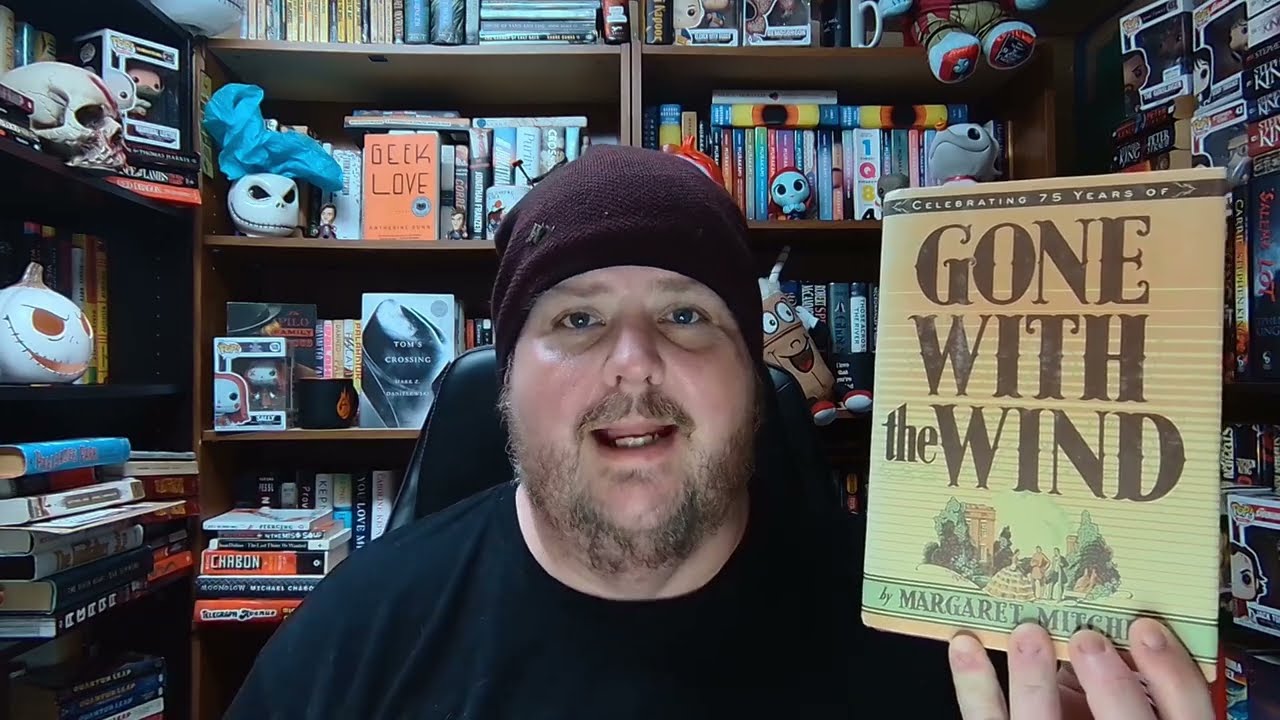
The final two recommendations address more controversial historical periods with a progressive lens. Number two is *Gone with the Wind*, which the host defends by highlighting its portrayal of the South's failure and the hidden horrors of slavery that were censored at the time due to social codes. The host argues that Rhett Butler is a liberal character and that the book avoids glorifying slavery, instead showing it as a tragic system where the South receives its comeuppance. The top pick is *From Here to Eternity*, an 850-page novel set in Hawaii just before World War II that focuses on the monotonous and heartbreaking daily lives of soldiers rather than the battles themselves. The host particularly loves a stark scene depicting the attack on Pearl Harbor, where the horror is conveyed through visual details like dust and blood without explicit explanation, making it a powerful entry for those who want to understand the soldier's mindset before the war fully erupts.
Read the full video transcript
Hello everybody. E here. Welcome back to
Top Five Friday, something I'm
considering bringing back if I can if I
can do this without without reaching too
far. Like I don't want to do like, you
know, my top five books about
nightgowns, you know.
If I can keep it up, I'll keep it up. So
definitely leave your suggestions for
top five anything that I should cover
down there in the doobly-doo.
I have five of these planned out so far.
So if I don't get to your idea until you
know, over a month away, I apologize.
But I'm going to try and do everyone's
suggestions. So leave all that stuff
down in the doobly-doo. If you're new to
the channel, I'm E. The doobly-doo is
the description or it can also be the
the comment section of the video and
that's what I mean by doobly-doo in this
regard.
So today, as you can tell by the title
of this video, we are talking about war
stories for people who do not like war
stories. These are books that I have
read. I'm one of those damn dirty
hippies who thinks that we should not be
killing each other for profit and
whatever else people, you know, murder
each other legally for.
And
I I want to I also want to make it known
that I support our military and the
people who go over there and die for
for our way of life who have been
tricked into believing that they must
kill other people to
support freedom here in America.
And usually it's you are sent over there
by politicians who would not even go
themselves, much less send their own
children. So yeah, this is war stories
for people who do not like war stories.
If you are a fan of amazing writing and
beautiful
beautiful prose, definitely check out
number five on the list, The Yellow
Birds. And this is in order. Not all of
these are going to be in order, but this
one today is going to be in order. This
would be my number five on the list, The
Yellow Birds by Kevin Powers. This is a
lyrical, beautiful dissection of the
Iraq War by somebody who was actually
there and experienced it. The plot does
fall a little flat, but you're not here
for the plot. That's not why you read
this one.
Um this one is about
two people. One of them is tasked with
bringing the other one home.
It's not so much as like a post death
book. It's It's a book leading up to
that death. So it's not like that one
movie that I can never remember. It had
Woody Harrelson in it,
Brian Cranston.
I I actually might be confusing two
different movies. But anyways, the one
where the the guy's whole job is to go
around and tell people that they're you
know, their loved ones have passed in
the war. Um it's not like that. This is
completely told from the point of view
of one character during the the
conflicts and how one of those
characters dies and
he has he has to fulfill his promise
anyways to bring this person home.
Again, beautiful. Absolutely gorgeous
writing. Kevin Powers is a poet and he
shows it.
Anyways,
so yeah, if if you're looking for
something beautifully written about
wartime, definitely check that one out.
Next one is a book I did not think that
I was going to enjoy whatsoever. Not
only is it about war and it is set in
during World War I, it is also about a
sniper which I don't
I don't really have any reason, but
snipers
that's not something that I would
normally want to read about.
Also, three of four four of the books on
here either won the National Book Award
or were nominated for the National Book
Award. And this one was nominated and
that's The Sojourn by Andrew Krivak, I
believe is how you pronounce it. This is
a This is a
very small, short book. Um 191 pages,
but also Well, I don't want to show off
that because that would give away Now,
that's I I don't have a regular-size
hardcover anywhere. Ah, here we go.
Let me show you the difference here, how
short it actually is. Yeah, it's
more like novella
than novel. Uh but this follows uh
a an extremely good sniper
um during World War I,
and uh the the relationships in here,
the character development, everything is
fantastic. But what really drew me in
was him going up against another elite
sniper. Um and I Once again, I'm not I
don't play I don't even play COD. That's
how little I care about, you know, Call
of Duty. I don't even play war games.
That's how little I care about it. But
definitely, this one, come for the
characters uh and stay for the
intriguing plot that develops.
Uh this is
Now, it's not really a potboiler, but it
is more plot-centered
than most National Book Award winners
and and nominees. Again, this is a
nominee. It wasn't a winner. Maybe
that's why it didn't win, because there
was a lot of plot here.
Um but I I love the descriptions of
where they are. I loved how they they
found the the other sniper, because I
believe it's The one guy is a sniper,
and then there's the other guy who like
helps him out, does the math and the
equations and where to fire and whatnot.
Um yeah, that's that's what this is
about. Uh but I do remember my my
favorite part about this book is the
section where they are hunt trying to
hunt down this other elite sniper on the
opposite side.
Um it's also about a
um the main character is Yosif Vinik, I
believe is how you pronounce it. Um, and
he is uh
move he moves from Colorado of all
places uh to rural Austria-Hungary.
Um, so yeah, World War book. Um, I
didn't purposely I think I got one
one book from like each uh major war at
least as
as far as America
was uh
it is involved and then one uh that
doesn't have anything to do with
anything real. Um, but it is a wartime
book. Uh, I'm going to talk about that
next. And I don't even think I planned
it. I didn't plan to pick one from each
war, but I think I did because we got
the Iraq War, we got uh World War
and then you'll see what the other two
are. They're they're from other wars as
well. But yeah, number three is The Wall
of Storms by Ken Liu. At the heart of
this book this book is about war. It's
about an invading army. I believe it's
the
Leusu, I believe, invading Dara. Um, and
I also want to say I'm probably
completely wrong here, so I apologize,
but I saw someone else talking about it
that it was also about the Mongol
invasion into China.
Um, it it has bits and pieces of that.
Again, I could be completely wrong. Um
or that might have been the first book.
It's been a long time since I read the
first two books and I haven't read the
last two. Um, but the the the battles in
this one are epic because the bad guys
bring dragons. Um, and you also have the
the wall of storms. The at literal in
this world there is a wall of storms.
You you travel by boat, you can only get
so far unless until someone finds a way
through the storms. And up until this
point before the invasion, only a
handful of people had had found the way
through. At least that's how I remember
it. But um, someone finally finds their
way through, finds their way back, and
upon finding their way back the enemy
army finds a way
also. So, it's like two different
cultures clashing.
Amazing epic battles.
Uh at the The first one wasn't really a
war story. It was more of like a
political fantasy novel. This one is
very heavy on the political fantasy
also. Um it's very Game of Thrones in
that regard. In fact, people are saying
that it's the Chinese
uh Game of Thrones. I believe that was a
that was a selling point.
Um
But I Yeah, it's it's it's got a lot of
a lot of realism, I guess you would say.
Um a lot of things go down like I would
believe that they would in the real
world. Even though there is like magic,
there are dragons, there are monsters,
there is a wall of storms, all that cool
stuff. Um but yeah, if you're into
fantasy and you like epic battles,
definitely check out The Wall of Storms.
Number two is one that people are
probably going to like you're you're a
damn dirty hippie and you like this
book. I love this book. Ain't no like
about it. I absolutely love this book.
Number two, Gone with the Wind. Um I
love the way the the I love the way the
South is portrayed. Um I love that Rhett
Butler is as liberal as he is. In fact,
even Clark Gable, the guy who played
him, but was helping boycott certain
things because Hattie McDaniel's
was was snubbed and that the Oscars were
segregated and all that stuff.
They got the perfect person to play him
in the movie. And I love his character
in here. I also just love seeing the
South fail. If that upsets you, I'm
sorry, but it it's it's a beautiful
rendition of a war of traitors getting
their comeuppance.
Um and if you read the book in that
mindset, I think you will enjoy it more
if you're of my mindset, more on the
liberal side of things.
Um if if you read it with that mindset,
you will find stuff to enjoy in the book
and you will see that Margaret Mitchell
was a little more progressive than uh
than maybe you would assume that she she
was.
That now there is some some glorified
representations of slavery in the movie.
I did not get that as much here. The way
I read it, Mitchell
talked about the horror, not didn't go
into great detail. She wouldn't have
been able to back then because all the
codes and everything they had.
She couldn't have gone to detail about
that stuff and and gotten away with it
is what I'm saying.
Um
But yeah,
she does I I don't want to say the best
she could cuz she could have went much
much farther.
But it is it is not a beautiful painting
of how idyllic and bucolic slavery was.
There's none of that in there. Even
though in the movie it's like
everybody's all friend and buddy buddy.
Nobody's getting whipped. Nobody's
getting shackled. Nobody's being
starved. Nobody's being chased down by
dogs, you know, all that horrible stuff
that actually happened. You're not going
to see that in here. But also it is not
treated as the South was innocent. I
guess is the best way I can explain it.
It's also been over a decade since I
read it and I want to do another read
through of it. I might do the audiobook
this next time. But yeah, if you're of
the if you've been on the fence about
Gone with the Wind and you're like,
"Hey, I don't like war stories. Civil
war ain't my thing. I definitely don't
like you know Southern heritage and
culture." You might actually like this
book. As someone who who got thrust who
got the South thrust thrust upon him at
a very early age, had to move from
California to Alabama, complete culture
shock, and I still I don't understand
the draw of this place. Last but
certainly not least, this is the number
one number one
From Here to Eternity.
This is a chonker of a book. It is 800
pages long, 800 plus. It might be nearly
nine. Yeah, it's eight 850.
Um this is a book that has very little
to do with war, but it's all about
wartime. It is all about the mindset of
a soldier, capital S. Um
these two guys that are in the military
that they're in the army that it could
not be any farther from each other as
far as personality, likes, dislikes, all
that stuff.
Um there's uh let's see here. Uh Pruitt
was was my favorite character.
Um and Warden. Though these two guys uh
they know each other, they bump into
each other. Uh one is in a uh not an
officer uh com-
cap-
I'm trying to think what he is. Um not a
sergeant, but he he's he's up there.
He's he's going to be an officer.
Noncom? Non-commissioned officer? Is
that what they're called before officer?
I don't know. I don't know jack
about the military. I'm sorry. But
definitely let me know how wrong I am
down there in the dubly-do.
Um but yeah, so this this book takes
place uh as World War II is gaining
steam. America has yet to uh to to get
into the tumult.
Has yet to actually jump into it. Um and
it at one point in time it does deal
with the bombing of Pearl Harbor. That's
where the book picks up as far as plot.
It really gets going after that. Um but
before that is a very small story, very
insular story about life as a a soldier
and how boring, monotonous, and
heartbreaking all of that stuff can be.
Um I love the relationships. Uh one of
one of the guys, Warden, is is having an
affair with his off- his officer's wife.
So, that's sketchy as hell. And then you
have Pruitt who is uh has fallen in love
with a hooker. So so so many good
things. It takes place in Hawaii. Of
course, like I said, Pearl Harbor and
all that. Um I think Diamondhead is the
actual Yeah, Diamondhead, Hawaii, 1941.
Um but there's this one scene in here,
man, that I absolutely love that um the
Japanese planes are coming in. This kid
um comes running up to this group of
soldiers, and he's like, "Mister, you
got to go. You know, the the Japanese
are bombing." And he takes off, the kid
takes off running to save himself. And
this plane swoops in, and it there's
like puffs of dirt and concrete and
whatnot. You know what's happening. He
just doesn't tell you what's happening.
There's the puffs of dirt and concrete
and everything. And when the dust
clears, Pruitt looks over,
and the kid is laying in the road with
uh with with pooling blood. It is a very
stark and horrific scene. Um but yeah, I
I I dug it. Um I dug the way Not that
the kid died, of course, but I dug it in
a way that, you know, the
not the beauty of it, just the the way
it is It's very visual. It's described
in such a way that you can see every
little detail, every every mote of dust
in the scene. But yeah, that's all the
time I have for today. Um if I missed
your favorite wartime story, or if you
have a war story novel, short story that
you think people who don't like war
stories would enjoy, let me know down in
the doobly-doo. But until next time, I
have been
the
I have been you have been you. This has
been another Top Five Friday. I'll talk
to you guys later. Bye-bye.