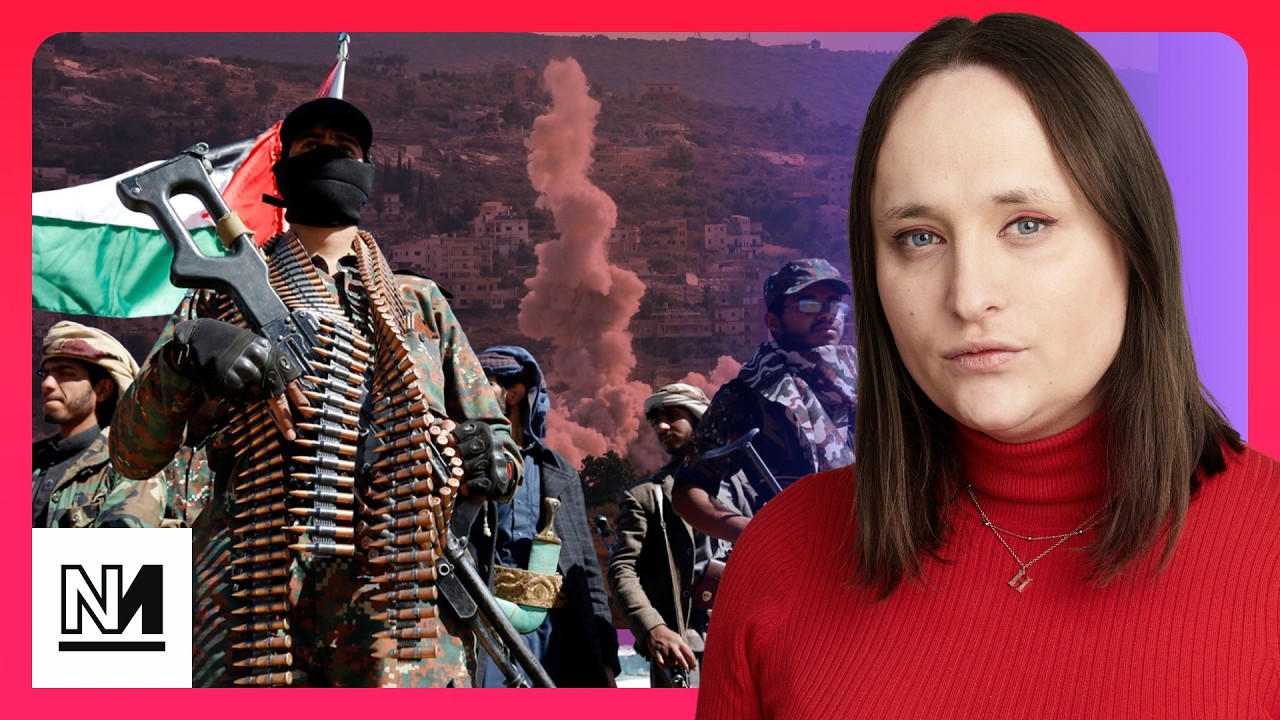
Video summary
Escalating tensions between Saudi Arabia and the Houthi rebels in Yemen have marked a significant shift in geopolitical dynamics, as Iran-backed groups are now viewed as militarily competent rather than mere nuisances. The Houthis have successfully launched drone attacks on critical Saudi infrastructure, including a missile strike on a pipeline that transports 5% of the world's oil supply, leaving it out of operation for weeks. These assaults coincide with Houthi control of the Bab el-Mandeb Strait, effectively blocking Saudi Arabia's primary shipping route to Asia and exposing the vulnerability of Gulf states that rely heavily on Western capitalism and globalized infrastructure. This new reality contrasts sharply with nations like Iran, which possess resilient military doctrines, while Western powers such as the UK and US have declined requests for military assistance, signaling a departure from previous alliances where they supported Saudi-led airstrikes that resulted in significant civilian casualties.
Domestically, the United Kingdom faces severe economic challenges driven by rising inflation caused by energy shocks and high borrowing costs exacerbated by the Bank of England's quantitative tightening policies. These economic pressures intersect with contentious domestic political issues, particularly the "triple lock" mechanism for state pensions, which critics argue disproportionately benefits retirees at the expense of younger generations. The transcript also highlights the emergence of right-wing parties like Restore Britain and Reform UK, noting their ideological differences and potential electoral strategies as they navigate a fractured political landscape. Meanwhile, significant constitutional shifts are occurring across the UK, with First Ministers from Scotland, Wales, and Northern Ireland signing a cooperation agreement to advance their respective movements toward independence or reunification, signaling that Westminster's authority is waning.
The political fragmentation extends to internal conflicts within these movements, exemplified by Reform UK's deputy leader attacking Scottish First Minister John Swinny for engaging with Sinn Féin, and the departure of Sarah Koopa from Reform UK to join Plaid Cymry due to disagreements over immigration policies. In a separate but related controversy involving cultural expression, Matt Lomax was dropped from Ed Sheeran's US tour after he used his platform to call for "Free Palestine," a decision attributed to pressure from venue owner Robert Kraft rather than direct action by the artist or promoters. This incident sparked outrage among artists and politicians supporting Palestine, while Sheeran issued a statement prioritizing diplomacy over political advocacy, though critics argue that his subsequent neutral stance is politically counterproductive and undermines the purpose of art.
The debate surrounding Ed Sheeran's actions further illuminates the dangers of conflating criticism of Israel with anti-Semitism, as speakers warn that linking Jewish ownership of stadiums to political decisions fuels prejudice by projecting ethnic identity onto political choices. Critics contend that billionaires controlling community infrastructure like stadiums allow for unilateral decisions rather than democratic ones, arguing that if a community opposes an artist, they should be able to vote on it through public officials instead of having one billionaire dictate policy. The discussion emphasizes that the rhetoric used to build anti-Semitism "brick by brick" must be challenged, as the oligarchic system where wealthy individuals control venues undermines democratic processes and community autonomy. Ultimately, these interconnected events reveal a world where military vulnerabilities, economic instability, and political polarization are reshaping alliances and societal norms across the globe.
Read the full video transcript
Welcome to Navara Live. Coming up
tonight, 13 people have been injured
overnight and the latest escalation of
the Houthi's attacks on Saudi Arabia.
We're going to delve into the economic
realities that Burnham's agenda will
have to contend with. And rapper
McLemore has been kicked off the Ed
Sheeran tour for supporting Palestine.
I'm Helena Akeno, Justice MTG, and
tonight I'm joined by Aaron Bastani.
It's been a while since we've been in
the studio together.
>> It's been a long time. It's been a hot
minute. It
>> has indeed been a hot minute. A very,
very hot month. Few months in fact.
>> Yeah. We went through what like
effectively a drought. Sorry to be a bit
of a damper on things. It's great to see
you though.
>> Likewise. Likewise. Yeah. Plenty plenty
of news has happened since and probably
plenty more news to come. Speaking of
which, if you'd like to support our
work, you can sign up at
novaramedia.com/support.
Many things to be covering. So, that
support is well and truly appreciated.
You can also listen to the show on
Spotify and Apple Podcasts. And as
always, make sure you like the video,
subscribe to the channel if you haven't
already, and don't forget to let us know
what you think in the comments section
down below. Yemen's Ansarah, also known
as the Houthies, have launched a drone
attack on Saudi Arabia overnight,
injuring 13 people. Amongst the targets
was Saudi Arabia's Kamis Machete, though
the drone also appears to have hit
civilian areas, damaging a mosque and
homes. They say that attack was in
response to widescale bombing off their
positions by Saudi Arabia on Monday with
the Houthis accusing the Saudis of
having launched 54 air raids on Yemen in
just 24 hours. That's on top of an
alleged 250 raids, some conducted by
F-15 and Typhoon fighter jets that had
taken place over the previous 4 days.
The latest clashes between Saudi Arabia
and the Houthis comes during a period in
which the Yemeni rebels have made
massive advances across the country.
Last week, Houthi forces won ground
south of their previous positions,
ultimately coming to control the entire
western coast of the country, including
the port of Mocker, as well as several
Red Sea islands. That has given them
control of the Babel Mandib Strait, the
narrow opening that allows ships to pass
between the Red Sea and the Indian
Ocean. With the closure of the straight
of Hormuz, Saudi Arabia had been
transporting oil from the Gulf to the
Red Sea via its cross-country pipeline.
And control of the Babel Mandib Strait
now leaves the Houthis in command of
Saudi Arabia's only remaining direct oil
shipping route to Asia. But even before
taking full control of Babel Mandeb, the
Houthis had been blocking Saudi Arabian
oil from leaving the Red Sea, declaring
a maritime embargo in July on ships
carrying their oil through the Red Sea
and attacking several. Saudi Arabia's
problems were compounded over the
weekend when missiles fired from
neighboring Iraq struck their pipeline,
which had been moving around 5% of the
world's oil supply, meaning it'll be out
of operation for several weeks. That
immediately drove oil prices to $18 a
barrel, with analysts predicting further
hikes over increasing uncertainty in the
Middle East. And Saudi allies don't
appear to be rushing to help. It's been
reported that Saudi Arabia had asked the
US for assistance earlier this week. The
answer was no. Trump appeared to confirm
that view in Dublin on Sunday.
>> They're on the balls of their feet right
now, but I think they are. They've been
in charge of that for a while. We've had
uh discussions. The Houthis called us
and they don't want to fight with us.
They let us know. They don't want to
fight with us. They don't want me to go
after they don't want us to go after
them. But they've called and they've
talked to us and they don't want us to.
They would much prefer not having us
involved and they're letting most ships
go through. There's just one country
that they're not too happy with and
we'll get that straightened down.
>> The UK also doesn't seem very keen to
get involved. British Prime Minister
Andy Burnham is also said to have been
asked for assistance by Saudi Arabia,
but he continues to mullet over. Those
are two very different stories compared
to previous Saudi Arabian conflicts with
the Houthis. Foreign powers are not
rushing to Saudi Arabia's aid this time.
Saudi Arabia, backed by an international
coalition, was at war with the Houthis,
opening what was essentially a civil war
into a wider confrontation, joined by
eight other Arab states as well as the
Pakistan and the United States. The
Saudiled coalition intermittently
continued to wage war until 2021. In
that period, at least 15,000 civilians
were killed in air strikes, most of them
inflicted by that coalition. And
according to the United Nations, a total
of 370,000 civilians were killed in the
war too. Around half of them in the
conflict and the rest due to the ensuing
humanitarian crisis. Britain was also
involved with a former Saudi Arabian
foreign minister revealing that British
and American officials were in the
command room for Saudi strikes in Yemen
and that both had access to lists of
targets, though did not choose them.
Britain, of course, continued selling
arms to Saudi Arabia throughout. In
2021, the president Joe Biden at the
time announced an end to US support to
the Saudi led offensive in Yemen and
paused arm sales to Saudi Arabia. It's
worth pointing out that Yemen has been
under crippling naval blockade by the
Saudis since 2015, causing food
shortages and famine despite an
agreement that it would be lifted
following a 2022 truce. It remains in
place in Houthy controlled areas. Aaron,
a lot's changed since 2015 when the US
and the UK were keen to work with the
Saudis against the Houthis. But what do
you think is driving their quite
different decision-making here?
>> Previous orthodoxy and common sense was
get behind US foreign policy in the
region in order to keep oil prices down.
That was the point, right? So it might
not be popular with domestic voters. It
might cost some money. Some people might
even die. But as a broad modus operandi,
it made some sense. You align yourselves
with the house of SA. you make sure that
OPEC's broadly speaking on side and you
ensure most of all that you have um free
trade globally of energy supplies that's
really important particularly for the
Europeans and it's backed up with US
force what we're seeing in the last 18
months is a complete inversion of that
in other words getting behind the United
States having this interventionist
foreign policy increases energy prices
it doesn't keep them down and it's taken
a while to percolate through I to people
like the British government, but it's
certainly there. So, the logic has
fundamentally changed. Alongside that,
there's now recognition of the
competence of the military actors
they're facing. I think before Iran was
seen as a bit of a joke I think and
Sarah and the Houthies were seen as like
a a regional nuisance
but now I think with a great deal of
justification there's an understanding
that actually this center point this
major artery for the glo global economy
can be shut down by state actors and
non-state actors alike and this for me
is the really fascinating part yes
you've got the IGC Iran is is a powerful
country with 90 million plus people but
also these militias in Iraq very
powerful very competent have significant
weapons same with the Houthis and there
are similar organizations right across
the region you can say his polar as well
and all of these actors have shown
remarkable resilience in the last year
and a half I mean Iran has taken a
pummeling still there the Houthies have
taken a pummeling for more than 10 years
not only are they still there making
significant gains militarily
So the fundamental logic has changed.
There's a recognition of the resilience
and capacity of the people that are in
the region on the other side so to
speak. And then finally I think it's
really hitting home how vulnerable and
weak our allies are in this part of the
world. I mean we were thinking about the
Gulf States sort of on the eastern flank
of the Arabian Peninsula. So Gata, the
UAE, Bahrain. We've known that for a
while, right? They're much They're paper
tigers, but that's not really a
surprise, is it? They're very um
vulnerable to uh oil price shocks,
hospitality, and tourism. If that goes
south, they're kind of screwed. They're
very, very, very vulnerable. And Iran
exposed that in a way that I think few
expected. Okay. [gasps]
Equally though, Saudi Arabia is far more
vulnerable than I think is widely
understood. Because it's so large,
people think it's a huge country. It can
be a regional player. You know, Israel
and Saudi Arabia and Iran will be the
three regional players. Saudi Arabia has
a smaller population than Yemen. Okay?
If you take away foreign nationals,
Yemen's population is almost twice as
large as Saudi Arabia. Um Yemen has some
of the most fertile arable land anywhere
in the region in the Yemeni Highlands.
It has about the same in terms of
renewable water sources as Saudi Arabia,
even though it's much smaller.
So you look at population size, you look
at geography, you look at the choke
points it can sort of close down. It's
obviously got access to Iranian military
technology.
What's to say that, you know, Saudi
Arabia couldn't be involved and
embroiled in a very long, cold, and
sometimes hot war on both sides of its
of its kind of natural borders.
And that then becomes an existential
conflict. And I I do think these were
kind of provocative questions that
people like you and me would have said
two or three years ago, but I think
that's now a mainstream talking point
for foreign policy circles in in London
and Washington.
>> It's the uh it's the curse of being
leftwing. It's being right too early.
>> Yeah. What you know what if Okay, what
if the Saudi regime collapses? What if
what if we lose Bahrain the Iranians?
What if you know Kata joins the Iranians
and they want to cut the UA in half?
These are all quite plausible things.
Um, and I do think that's on the one
hand a credit to Iranian, particularly
Iranian and Houthy military doctrine,
but also underscores just how naive and
ignorant our political class has been
about this part of the world and by
extension how ignorant our publics have
been. You know, I have not seen, maybe
you have, Helena, because maybe we
consume slightly different media, I
don't know.
I haven't seen one good explainer of who
the Houthies are in about 15 years in
the British media. I haven't seen one.
Who are these people? You know, you said
before we started the show, is it
Houthis? You know, how do we pronounce
this properly? You forgot the main part.
Iranbacked.
That's the main bit. You can say
ansarah, you can say Houthies, you can
call them whatever you like. Just make
sure if you're in the British media
landscape, it is preceded with that
phrase, Iranbacked, Iranian proxy. Like
I say, Yemen is a country with 43
million people. They run large parts of
it. Now in terms of population almost
all of it
>> 80% I believe is the percentage of the
population who which is in Houthi lives
in Houthi controlled areas.
>> Yeah this it's the government of it's
the de facto government of Yemen. Um but
we were still treating it like a a sort
of you know a student activist group
until 10 minutes ago and and that's a
real indictment of the public sphere in
this country.
>> 100%. I mean you you saw the same with
Hamas in in Gaza. They were constantly
the British media would extort to the
public how these the Iranianbacked proxy
specifically against Israel rather than
understanding the roots of where they
came from, the Palestinian nationalism
that drives their politics, right? It's
why the Hamas ISIS stuff never really
caught on because everyone could see
that it was about Palestine rather than
about Islamism or whatever it is. And
likewise, as you say, the Houthies have
a they have their own ideas for for
Yemen. They have again they are now in
control of huge amounts of the territory
and the population. uh and it's still
only seen as being an extension of the
game that the west is playing with Iran
rather than their own military uh their
own ideological position themselves.
>> And also one more thing about
vulnerability, you know, um Riyad has
about 7 million people and I we said
this when it started kicking off between
the the smaller Gulf states and Iran,
you know, you blow up a few
disselination plants and you know, the
UEE doesn't exist anymore, right?
fundamentally you can't you can't
provide or guarantee water for these
very large urban populations. It's the
same with Riyad, right? And so yes,
Yemen is poorer in a strange way like
with Iran in a strange way that pres
that provides more resilience because
you're not dependent on this highly
globalized sophisticated infrastructure
that is backed up by Western companies.
>> We were literally talking just before we
came on air about, you know, the the the
Middle Eastern like Formula 1 grumpies
all been cancelled, right? So many of
these these uh these Gulf states have
assumed that their relationships with
new kind of western capitalism that was
going to continue forever. That was
going to be an enduring thing and
they've all divested away from purely
commodity export-based economies. I mean
look at what's happening with their
royal exports right now. Maybe that was
wise in some respects but they've gone
into entertainment and the getting into
UFC and all of these other things that
they're trying to import like Mr.
Beastworld is in Saudi Arabia for
Christ's sake, right? That's the level
to which they thought there was going to
be this enduring relationship and blink
of an eye suddenly all of this the
geopolitical crisis because Trump can't
say no to BB and all of these things
look very very shaky indeed e
economically
>> the Saudis built their economy around
Eddie Hearn and Gulf and you know the
Iranians decided to just build infinity
missiles and and loitering munitions and
drones. Now, one country is wealthier
than the other, but when the proverbial
hits the fan, I know what's more useful,
right? I mean, do you want Eddie Hearn
or do you want, you know, ballistic
missiles and and drones and and
helicopters and and marine commandos? I
know which one I want. And again,
this is a really important point and
it's only really become clear in the
last 12 months. These things that were
sold to us as strengths of countries
like Saudi Arabia are in fact
weaknesses. You know, it's just talked
about really well by the economist,
political economist John Rapley and
Icarus economics. It's that wealth which
makes them vulnerable. It's their
integration within the global economy
and dependence on western investment
which makes them weak. Uh and that's
only really become clear in the last
year 18 months. But I think in the
background Iranians have been thinking
about this for a really long time
clearly. Well, it explains the endurance
of regimes like the like people in Iran
because when you when you population see
state after state kind of capitulating
to western hijgemony like no matter how
you know terrifying these people are to
be a citizen of the country of they are
the one of the very few states who still
stand up to that. I mean the same is
true of Assad as well. M well Kmeni was
asked once you I'm not look we're not
talking about which country you'd rather
live in or you know these are about
these are about military capabilities in
a conflict in another part of the world
and I think the ideology that's driving
the people there matters
said in response to a question about
what was the point of the Islamic
revolution of Iran again this is not
something you'll hear in the media what
was the point of the revolution he said
so Iran can be governed finally from tan
right we can govern ourselves the exact
same ideology as mobilizing the
Houthies. That doesn't mean you agree
with everything the Houthies say. Okay?
It doesn't mean they're necessarily uh
legible for a western leftist audience
in terms of policies on this or that
issue. But in general, it just it's just
smacks to the the absolute kind of awful
foreign policy jobs of Western
governments wanting to have puppet
states and client states in the region
rather than allowing these these
countries to develop independently.
Because if they had left their own
devices, we wouldn't be in a position
where there would be these this high
level of obviously as anti-western
sentiment which drives them towards
authoritarian and you know in some ways
pretty kind of brutal people at the top
of the top of these countries. There
would be a significantly better internal
politics in these countries. And how do
we respond? We respond with sanctions.
We we respond with economic warfare. And
in now we're seeing belligerent warfare
and all that's in strength in the hand
of the autocrats rather than trying to
develop countries that are not
continually living in a state of fear of
western aggression. Fear that we seem as
warranted.
>> Yeah. I I'll finish with two points.
First, we still have sanctions on
Afghanistan, which is just
extraordinary. You know, people will be
saying we've got aid agencies there.
We've got charities. Please donate to
this or that. We've got sanctions on the
country. You can't help that country if
there are sanctions on it. Secondly, in
terms of helping this part of the world,
you know, effectively govern itself.
This goes back so far and it's something
we talk about repeatedly on the show. If
you look at that eastern flank of the
sort of the north part of the Arabian
Peninsula, you have all these what I
like to call fake countries. Now, people
get very upset with me. You know,
Kuwait, the UEE, Gata, Bahrain.
These are countries which are
effectively or or desparatisms which are
propped up by the British Empire. so
they could guarantee that the French
wouldn't have a path to get to India in
the Indian Ocean. Right? This was this
was clientalism by a former imperial
power, Britain. And and this is so bad
that in someone like Bahrain, which was
majority Shia until quite recently,
there is there is literal cleansing in
order to guarantee a Sunni majority. And
that's part of a a geopolitical
diplomatic project to make sure that
Iran can't basically garner political
control of that country. It would mean
the Iranians are ruling it, but there
would be, you know, Shia uh political
interests which might be more immeable
to Iran. That can't be allowed to
happen. So, you literally have the
re-engineering of a country's religious
demographics. This is fine. This is
absolutely fine as long as it aligns
with US foreign policy interests, as
long as it means we stop our enemies. Of
course, if Russia did that, if Russia
was doing that in Georgia or Ukraine,
some people say they're doing it in
Ukraine. Um, it's very hard to get, you
know, independent objective numbers
about how that looks, whereas we can do
it with Bahrain. People would rightly be
shouting from the rooftops about it.
Okay, I Ukrainian children being taken
from the Donbass and transported to
Russia and things like that which again
to try and rustify the area and again
rightly treated with outrage happens in
countries that we wanted that we do it
to and again there's a double standard
as you rightly point out. Andy Bham
swept into number 10 on some very lofty
promises. He was going to end half a
century of neoliberalism whilst being a
continuity government all while sticking
to the restrictive manifesto pledges
around taxation and borrowing. He also
stated his opposition to what he
described as crude welfare cuts, but
also had an ambition to raise defense
spending to 3 and a half% of GDP by
2035. Economic headwinds have different
ideas, however, and the supply
bottlenecks caused by the closing not
only of the straight of hormuse, but
also the Babel Mandibra are predicted to
cause inflation to climb potentially as
high as 6%, more than double the current
CPI of 2.9%.
In these figures from the FT accurate as
of 4 p.m. today, we can see that the
combination of an energy supply shock
pushing oil costs back up over $100 a
barrel and a proflegate treasury in the
United States has taken its toll on UK
borrowing costs with longdated guilts
reaching yields of almost 6%. This means
the government's fiscal headroom, the
amount it has left over after its budget
allocation before it breaches its own
fiscal rules has been slashed in half.
It hasn't helped the UK government that
it spent the last few years fighting
against its own central bank either.
Since 2022, the Bank of England has been
engaging in what is known as
quantitative tightening, the process of
selling guilts held on the bank's
balance sheet back into the market,
having bought them during the period of
quantitative easing post 2008. This
extra supply pushes down the prices and
pushes up the yields, making it doubly
hard for the government to borrow on top
of the market conditions that have made
rates naturally high already. With a
quarterly meeting of the bank's monetary
policy committee coming up this week,
some economists are trying to push the
bank to halt this program entirely, but
it remains to be seen whether or not the
bank officials will listen. Aaron,
given, you know, how kind of
dilitterious that the QT regime has been
from the Bank of England during this
period of high interest rates as well
as, you know, yields being pushed up by
this program. Should the Bank of England
really remain independent?
>> Uh, well, it's is it independent is one
thing. Um this is obviously a very live
question now in terms of we're going to
see so many moves with interest rates
because of these energy price
fluctuations. Uh we're going to see lots
of interest rate rises apparently this
year. Um my view is that historically we
had for the good part of the 20th
century when productivity growth went to
working people when we had real rising
wages for working people you had um a
bank of England which wasn't independent
but subject to political control of the
party of government. I would like to see
that happen again. It's very
unfashionable. Um and you won't find
many people in support of it because so
far it's just about worked. you know, in
22 23 when we had that, you know, price
shock with Russia Ukraine and interest
rates went up to deal with rising
inflation, you're beginning to get a bit
of an understanding of, well, maybe we
shouldn't just do this. Um, I think it's
probably going to require another shock
or two uh for us to come to terms with
it. But no, I I don't think that um
central bank independence has anything
to show for it fundamentally. I mean,
what's really been accomplished in terms
of really smart macroeconomic policy in
the last 25 years? Not that much. Um,
and I'd like to I'd like to see it be
subordinate to the government of the
day. It doesn't mean it will do things I
want. You know, it won't just be a
leftwing government in power, but I
think that should be quite a central
part of a democratic agenda.
>> 100% agree 100% agree. Imagine if we'd
use the quantitative easing period
during the zero interest rate policy
period rather than just inflating the
price of houses and financial assets.
We'd use that to invest in productive
businesses. That was Jeremy Corbyn's
plan in 2017. What was known as the
people's quantitative easing. You could
have even given it to people on the
street. You could have given helicopter
money out like Australia did post 2008.
You could have used quantitative easing
to actually generate enough demand on
new products or into productive
businesses rather than inflating asset
prices and our economy would have
recovered. We probably have had a
productivity increase like we've seen
now. We get proper investment from the
new government. Obviously, I don't think
it's gone far enough, but you know what
I mean. And in terms of things like
quantitative tightening, we were the
only bank of like central bank really
out of like the big countries that were
doing any QT at all. So what the United
States is Federal Reserve was doing was
what's called passive QT. Whereas rather
than selling these bonds back onto the
market, you just let them mature. So it
doesn't actually decree uh increase
yields and decrease prices in the wider
market. And as a result, right, we have
the highest borrowing costs in the G7.
And again, as far as I can see, the
apart from you the Liz trust premium,
the biggest kind of biggest entity to
blame for that is the Bank of England
for engaging in a policy that I don't
even think is necessarily relevant given
that supply chain shocks just pass
higher prices through the economy. A
change in demand through interest rate
policy and through quantitative
tightening quantitative easing policy
doesn't actually really have a as far as
I can see a particularly big effect on
inflation. when we saw the inflation
came down before the interest rate rise
in 2022 had any time to filter through
to the economy at all.
>> It's it's really hard to politicize
these questions to a mass audience. It's
not you know the people watching and
listening to this might think no well I
I agree but I'm talking about the tens
of millions of people ultimately that
you know um form the backbone of the
electorate in this country.
>> The government of the bank of England
literally said you have to lose jobs
there has to be more unemployment to
bring down inflation. that was bank was
the kind of stuff that Andrew Bailey was
saying. It's a political question.
>> Yeah. [clears throat] The one that
really gets me as well is help to buy.
>> If we're talking if we're talking about
crazy policies, help to buy. I didn't
realize until quite recently. Um help to
buy cost well I mean it was loans. You
get some back obviously, but it was
about I think30 billion pounds.
30 billion pounds in the early 2010s to
effectively inflate the British housing
market to effectively make sure that
it's harder for you if you're a
first-time buyer, if you're a young
person or not saying me. I didn't get my
first home until late 30s. Trying to get
on the housing ladder. We're going to
make it harder for you. And guess what?
We're going to spend30 billion pounds
doing it. I mean, just outlandish.
Imagine, like you say, if that 30
billion had been given over to a
publicly owned national investment bank
that was available to small and
mediumsiz businesses, local authorities,
>> a publicly owned housing developer. That
money could have all gone into building
council houses, increasing supply and
driving the price down. But we can't we
can't upset the boomer vote, can we?
They can't sitting on the existing asset
already which the Conservative party at
the time relied on for all those votes.
It's worth pointing out like lots of
people at home would be well to buy like
but I I I can't afford a deposit. And
I'm like well all that does is make the
the children of upper middle class
people easier to get onto the housing
ladder because if you don't reduce the
price the mortgage affordability
criteria that doesn't change if the
price is still large, right? You still
need to have a high salary. It's just
getting there earlier and having to save
up for a shorter amount of time. It
happens quicker. So it means that the
children of the rich are becoming
homeowners at 24, 25, 26 because they've
got this help to buy stipen from the
government and you know high salaries to
be able to pay for the mortgage cost and
to be able to pass that mortgage
affordability criteria and yet people
from poorer families are looking at ever
accelerating house prices. That deposit
doesn't mean jack If you go to a
mortgage product you your mortgage
advisor tells you you don't earn enough
money cuz you're working class.
>> I mean that's true. I add two more
things though. First of all, helped if I
did help the rich but only for a couple
of years, right? It was it was it was
never a permanent solution. I mean, it's
just crazy to me, Helena, if you're
spending one or two billion on a
giveaway. I may not agree with it, but
politicians do that all the time. Left,
right, sense. They do that all the time.
They spend30 billion on a political
giveaway, which made the problem worse.
And I can't recall a single major media
figure actually talk about30 billion
pounds. Now, let's be clear, that was
credit. Okay? So, I'm not just giving 30
billion away. A lot of it was given
away, but it's 30 billion of credit made
available to make the problem worse. I
just find it utterly extraordinary. And
then you're saying it's harder for poor
people to get on the houses. Absolutely.
But also, we need to be real about this.
Just the lower middle class, the people
who used to be the bedrock of people who
be buying houses. Well, it was it was
the um disappeared.
>> It was politically important is this is
cohort that decided every election.
Yeah. The housing theory of everything
is how this country works electorally
since right right to buy and since we a
marketized housing system, access to
mortgage products, access to housing,
access to wealth generation for middle
class people. That is the fork on which
every election depends which is why
after every housing crash you see a
change of government list trust black
Wednesday 2008. That's the reality of
this country and we had a conservative
party that shot their own chances at
trying to generate new conservative
voters like in the face right just
completely blew that away in favor of
appeasing their existing cohort of
homeowners. They thought it would last
forever very although I feel like we're
going to come on to um electorally
advantageous photographs just in a
second. Now, with a budget looming at
the end of the next month, Chancellor
John Healey will struggle to be able to
juggle not only the promises left to him
by the previous government, but also all
the shiny new things that the PM wants
to roll out. One of the promises left to
Healey by Rachel Reeves, other than the
pledge not to raise the rates of income
tax, national insurance, or VAT, is a
promise to keep the pensions triple
lock. The triple lock is a mechanism
which uprates the state pension each
year by whatever is highest out of
inflation, wage growth, or 2.5%. And as
wage growth is still higher than
inflation at 3.9%, that is the rate at
which the state pension is set to rise
this year, having risen by 4.1 and 8.5%
in the last 2 years previous in line
with wages and the year before that at
10.1% in line with inflation. And again,
it's worth pointing out as well, this is
one thing that the triple lock does is
that you'll get like multiple booms from
an inflationary shock. So when there's
an inflationary shock, usually wages
will catch up later. That's usually how
these things work as the labor market
recalibrates for the new prices. But if
you increase one thing by inflation and
then by the wages, you get a year of
increases from the inflation and then
another year of increases as wages catch
up. So it's increased with w ahead of
wages and then with wages. So it
continually increases ahead of the
incomes of working people which creates
a ratchet effect which moves the money
that's being spent, the money generated
throughout the economy more and more and
more to pensioners. Now politically the
triple lock is a thorny issue as it
directly affects the incomes of a
powerful voting block which is the
retired and as a policy since its
introduction in 2010 it's done a huge
deal. It's done a great deal to reduce
pension and poverty huge problem
historically in this country and it
really did solve that but problem is the
welfare hawks of the toyan reform
parties they paradoxically both back
keeping in the increase in the state
pension from the triple lock alongside
the current Labor government. But one
right-wing politician in particular has
come out today in opposition to the
policy. The leader of Restore Britain,
Rutert Low, tweeted this out this
morning. Younger workers already facing
outrageously high taxes, enormous
housing cost, and the challenge of
saving for their own retirement. Yet,
the triple lock can push pensions up
faster than prices, leaving a younger
generation of workers with an ever
growing burden. It's just not fair.
These are our grandchildren and our
children. When I launched
[clears throat] Restore Britain as a
party, I said we would take the
difficult decisions needed to deliver a
better Britain for those who come after
us. I meant it. So we will replace a
triple lock. Restore Britain will secure
the state pension by linking it to CPI
protecting pensioners purchasing power.
Aaron, it's going to lose in votes,
isn't it?
>> It is going to lose the votes. I'm going
to give up the journalism game. I'm
going to get into politics. I'm going to
be like James Goldmith in 1997, you
know, the referendum party, which is the
kind of precursor to to UKIP, although I
think UKIP also existed at the same
time. I'm going to start the get rid of
the triple lock party. I'm not going to
campaign on anything else. Uh that
doesn't mean I want pensioners to be
poorer. I still think it should be
indexed to wages.
>> Wages.
>> Yeah. You mean you might say inflation,
it should be indexed to something,
right?
>> But the present setup we have means that
you're going to have an ever larger part
of the overall economic pie of overall
economic output going to pensioners. And
you know, at certain point, I don't
know, maybe in 2200 or something, 100%
of GDP would be spent on public
pensions. It's it's a crazy policy. Like
it's an insane policy. people then point
to still high levels of pension poverty
in this country which is which is a real
thing. Um you might look at the sort of
average um state pension per month going
to somebody in Britain it's lower than a
lot of other European countries but it's
very legitimate point to make. Here's
the thing most Brits especially most
older Brits are homeowners. So yes in
Germany their state pension might be 40%
higher but they're paying rent. Okay, if
you own a home and you've paid off your
mortgage, you don't have you don't have
an out outgoing like that. So, if you're
looking at Switzerland or Germany or one
of the Nordic countries, bear in mind
that they have a much larger number of
older people who are spending a big
chunk of that on rent. So, why would I
get rid of the triple lock? That seems
so unfair. Here's the thing. If you're
over 65 and you're getting the state
pension, let's say you get the full
state pension, right? you've got 35
years of national insurance
contributions, but you're not a
homeowner and you've still got to pay
your rent. You're really screwed, aren't
you? So, what I would do is I would move
just to uh the Robert Low option here. I
would have it indexed just to inflation.
Uh you'd have a decent saving, not huge,
but depends on the year, right? You'd
have a decent saving. Let's say 5
billion a year. I would probably spend
at least half of that on social housing
specifically for older people. and over
a parliament you're looking at 10 to 15
billion being spent on increasing
socially owned housing stock for over
65s. So I think that's a really
important thing to do.
>> They can fold it into a national care
service policy like this current
government promised to do and that
doesn't seem to be happening
>> quite exactly and I would probably use
the remainder of the money um for
retrofitting again people in older homes
to have more energy efficient houses to
help reduce you know our CO2 emissions
and and help national energy resilience.
I think that's a smarter use of that
money from a climate perspective, from a
social justice perspective, from a
energy security perspective than what
we're presently doing. And you know, I
know that many people watching and
listening won't like what I'm saying.
They won't like what Rupert Low is
saying. But here's the thing. I think it
goes back to your original question.
There is no, as maybe I'm wrong. There's
no electoral upside for him saying this.
So I'm really curious as to why he's
doing it. Is he trying to turn the screw
on Farage a little bit to get younger
reform voters over to restore? Maybe.
It's not many people, but it's, you
know, it's something like they they came
third in Manchester with what, 8%. 8%.
That's pretty good. In in in
bi-elections or in constituency
elections, you're going to keep your
deposit. That's a that's a good place to
be if you're a new party. So, that may
be part of it. I think probably what
explains this quite strange decision is
he has a very large number of younger
I would say farr right but some of just
radical right activists sort of around
him and I suspect that they're driving
that agenda. So is that going to help
Rert Low electorally? Probably not. But
if you're if you're thinking about well
we want to create a new political
formation to the right of the Tory party
which isn't beholdened to certain
demographic interests like reform and
we're here to stay for 10 20 30 years.
It's probably quite a smart move. I
mean, that's the thing, right? Is that I
was saying this on on social media
earlier today in so far as like whatever
you think about Restore Britain's
personal ideology. I think it's rancid
personally, but like when it comes to
how it's been put forward, it's at the
very least sincere. Whereas Reform UK
don't seem to have any particular
political ideology other than just do
whatever boomers want, right? I mean,
you can see in terms of the voting
intentions predominantly um uh younger
people just don't really vote for
reform. like six or 7% in current cross
tabs, but there's definitely, you know,
a gap in the market for a right-wing
party that's, you know, aimed at younger
people cuz none of them seem to be
looking at any policy that young people
want to see.
>> I think that's right. So restore, again,
I agree with I don't agree with much of
what they say, but and and and you're
right that the word I would say is
yeah, they're sincere. There's no other
there's no other way of putting it. They
want to create a party modeled on the
likes of resembl national ninal in
France or you know the AFD or the
futelli ditalia. They want a reactionary
radical right party far to the right of
the historic center party of Christian
democracy in this country as the
conservative party. Right? So they are
very much an ideological project and
that's not new is it? I don't think
reform are an ideological project.
Reform are
a weird hybrid of celebrity culture. Um,
I'm I'm gonna say I'm gonna say Vanity
Project. [laughter]
>> Vanity Project.
>> Is that too far?
>> Feeding on the carcass of basically the
collapse of the center right, which has
collapsed for a bunch of reasons. We've
not reproduced the middle class since
2008 in this country because of the
housing market, because the economic
model, because of Brexit, um the the the
fragmentation of the union. All this
feeds into some big problems for the
legacy center, right? And so I I I do
look at reform as
they might form a government, but I
don't and people you know what famous
last words. I don't look at them as like
a long-term ideological political
project.
>> It's a mess in the way that I look at
restore. I mean their political platform
it's just a mess. I'm sorry. In my kind
of my personal opinion, right? You know,
total uh
all the caveats here, but I just think
reforms political platform is a total
mess. I don't think they'll come into
contact with government and they'll I
think will then make a big picture of
it. I I don't see any coherent
prescriptions for a governing party from
reform UK. I just don't I see a bunch of
red meat for a bunch of politically
important electorates rather than a
coherent plan for what they want to do
when they make up when they get into
office. I really don't.
>> I think there's two things that happen
with reform. One of one of two options,
right? If they're a majority government.
I mean, and by the way, they would love
to be in coalition. They would love it
because
>> Oh my god. Literally. I mean, there's a
really
>> they blame everything on the Tories.
Like they love to blame everything on
everybody else all the time. Does do
they even want to be in office? Do they
do they want to be in I think they would
rather let the politicians do the work
and they can, you know, cut from the
sidelines. Very similar to Pauline
Hansen in Australia with her One Nation
party kind of snapping at the heels of
the Liberals over there. Like she she
wants to be part of a coalition where
everyone else does the work and she gets
to grandstand.
>> I think you know after 2024 they were
probably thinking if we do well one time
a Labor government and you know it'll be
Estori in coalition and Nigel can be the
home secretary. [laughter] You know you
know he can he can cut the ribbon for a
new prison or something right. I I I I I
agree with you. But if they do form
majority, I think there's one or two
options. Either like you say, they just
collapse on impact with the state and
whiteall and all kinds of things. Or
another is they say, you know what,
we'll basically we'll basically do what
the the Tories and Labor would do, some
sort of middle ground, you know, so
they're not going to rep privatize
trains and do all these things. We're
going to and this will be the one that
might be a coherent political project.
we're basically just going to do
immigration and maybe we'll they
probably will try and destroy higher
education because they obviously hate it
and that's how a lot of the the center
left reproduces itself is is via higher
education. um we'll do these two things,
but every everything else will kind of
leave it.
And I just think for their voters, you
know, you're promising a revolution,
right? You're promising a revolution,
and what you going to do? Okay, you're
going to have, you know, rather than 24%
fall in um uh small boats crossings
under Labor, it'll be 60%. I mean, I you
know, when I speak to reform voters,
they don't want that. You know, I was
speaking to Michelle Jubrey, and this is
on the record. I was speaking to her at
GB News a while back about the Burnham
and I said well he's they're cutting
these crossings so you know what what
what percentage cut would you be happy
with? She said 100%. And I said but it
wasn't you know I mean there has always
been even in the even the '9s there were
crossber illegal crossings with trucks.
You know it's not a new phenomenon. So
even if Labour get it down 90% you won't
be happy. No. And I'm not saying that to
to criticize her. I think most reform
voters would agree with that. So I think
they're really on a hiding to nothing.
Um but I do think the smarter people in
that project will say look let's just
focus on immigration particularly
undocumented migration and higher
education and the the problem things
they've got is that their economic pro
um prescriptions just unpopular like
Robert like you see their polling kind
of go down almost directly in line with
Robert Jenner getting involved and being
you know uh recommended policy by David
Cameron is like well you're going down
the exact same economic spiral that
created the rise of reforming gay in the
first place. Westminster's time as the
center of power in Great Britain is
coming to an end. That's according to
the first ministers of Scotland, Wales
and the north of Ireland who for the
very first time are also the leaders of
the three nation separatist parties.
Pleum Reena Purewith, the SNPs John
Swinny and Shinfane President Marylu
Macdonald and Northern Ireland's first
minister Michelle O'Neal met in Cardiff
on Monday to sign a cooperation
agreement to work together towards
independence from England. The
memorandum of understanding signed by
the three leaders said this. Momentum is
behind our movements. We believe that
constitutional change is coming. No
Westminster government has the right to
block democracy or undermine the
principle that our people will decide
their own future. We call for the
British government to prepare for plan
and facilitate constitutional change in
each jurisdiction. Now unlike Scotland
and the north of Ireland, Wales is
seeking devolution rather than
revolution. At the signing, Reapure said
what he would require from the British
Prime Minister Andy Bernham. What I've
said is that I want to have a positive
relationship with him. I believe he
wants to have a positive relationship
with with me. My job is to get him to
really understand what devolution is to
Wales and what Wales's needs are moving
uh forward. These are early days in our
relationship. I want to keep it
positive. I you know I think it that's
in the interest of the people of Wales.
But but I think he understands that he
has a lot of learning to do about what
how devolution to a nation is rather
different to a devolution to a region or
a city of England. The country nearest
to devolution is of course Scotland.
After the summit, John Swinny was asked
about the strength of language in that
statement.
>> You're all very bullish about this. I I
noted that the language in the
memorandum of understanding.
Westminster's time is coming to an end.
That's a pretty bold statement.
>> I think it's a statement of fact because
we're in a completely different
situation now because of what happened
in the election in May. And I want to
advance that argument because the people
of Scotland have elected a Scottish
Parliament that's got the largest number
of members of the Scottish Parliament
committed to independence and the
holding of a referendum. That's a a
seismic change in the the landscape.
It's also it's it's it's reinforced by
what's happened in Wales and what the
situation is in Ireland.
>> But you're much more bullish today as
well. You're talking about a referendum
in the course of this parliament. That
means by 2031. That's exactly right. How
are you going to do that?
>> Well, it's got to be delivered because
the people essentially elected a
parliament to deliver that in May. And
>> you said before the election they had to
elect an SNP majority to deliver that.
They didn't do that.
>> No, no. I What I said was an S&P
majority was necessary to unblock the
objecturate position of the UK
government. They didn't get that. So,
you haven't unblocked. But the people
but well the the people elected a
majority that's committed to the holding
of a referendum on independence and
committed to independence made no
difference and well hope we have a
different constitutional landscape now
because across Scotland Wales and
Northern Ireland we have first ministers
who are in place that support a change
to the constitutional structures of the
United Kingdom and I intend to advance
Scotland's argument within that context.
Mary Lou Macdonald, president of
Shinfane and leader of the opposition in
the Republic of Ireland, told Times
Radio she hoped Andy Bernham would be
the last UK prime minister. This is her
explaining why.
>> I know that uh for English people the
same as Scottish and Irish and Welsh.
All of us want a good future for herself
and for our kids. I want that for
everybody. But I will tell you that the
only way forward that we can achieve our
best opportunities and our best outcomes
is for Ireland to be reunited and that
means an end to British jurisdiction on
our island. It means those referendums
happening and it means the preparations
happening. Now, I can't speak for the
Scottish people or the Welsh, H, but I
would absolutely defend their complete
right to self-determination just as we
enjoy that too.
>> First minister in the north of Ireland,
Michelle O'Neal, also had a few words
for Andy Bernham. We've had very
disappointing comments, albeit we
shouldn't be too surprised by the
British prime minister in recent weeks
whenever he visited Belfast where he
told us Irish reunification was off the
table, but very much today the message
that he needs to hear from all of us
collectively that it is very much on the
table. We voted for the good Friday
agreement. We voted for all of its
parts, including the referendum and the
question being put to the people because
of course at home the constitutional
position will only ever change whenever
the people vote for it. That's the job
of the politics of all of us who want to
bring about unification. I think this
can be such a positive journey because
the one thing that we'll be talking
about today with ply comry and with SMP
is that shared objective. The fact that
Westminster never we're always an
afterthought. They will never serve our
people well. And the message that we
want Andy Burnham to take very much from
our gathering today and from the fact
that we're coming together in common
purpose is very much that it's his job
to plan and to facilitate a referendum.
For our part, it's fulfillment of the
Good Friday Agreement. Macdonald and
O'Neal may well have been boyed by some
recent comments from US President Donald
Trump who visited Ireland last week.
>> What's your view on?
>> Well, I don't want to cause any problem,
but I will tell you I'd love to see it
unified. I have friends on both sides.
Great people.
They're Irish people. How could they be
bad, right? I'd love to see it unified.
I think we'll be a great
a great feather in everybody's cap. Did
that happen? It's going to happen
eventually. Mr. President, you know what
the way I look at it's going to happen
eventually. It will happen now. We're
talking about it and you got the right
man over here to get it moving, but uh
yeah, I'd like I think it would be a
fantastic thing. Now, the UK will have
something to say about it obviously, but
I think it would be a great thing. I
mean, how could it be bad? Finally,
something for Trump and Biden to agree
on. Now, not everyone has been so happy
about the meeting. Reform's deputy
leader in Scotland, Thomas Kerr, also an
MSP, said this to Swinny on Twitter.
You're a national disgrace coing up to
extremists with links to terrorism to
keep your dying cause relevant. Scotland
does not want nor need another decade of
division. I predict how United Gon will
remain intact long after your career is
ended. First Minister, early today, I
spoke to Laura Webster, editor of The
National. I began by asking her whether
the breakup of the UK is really around
the corner.
>> It depends on on where you're coming at
it from. Honestly, I think it depends on
which nation we're looking at it from
and depending on whichever leader you
paid attention to yesterday. There's
quite different stories at play here.
So, in Northern Ireland, there is an
awful lot of determination to push
forward with a referendum on
unification. And this has been
especially spurred on by Andy Bernham's
quite offensive comment um that a
referendum would be off the table. It's
really not his place to say that. And it
demonstrated a lack of understanding
about the Good Friday Agreement, which
really sets out that the Northern
Ireland secretary shall agree to a
referendum to be held should it look
like there would be majority support.
And in recent polling, it does indeed
look like there's majority support. So I
think the reunification situation is on
the cards maybe potentially sooner than
Scottish independence. If you listen to
John Swinny yesterday at the press
conference, he sounded uh a little more
cautious than Michelle O'Neal and Mary
Lou McDonald. Um definitely a lot of
talk about allowing the Scottish people
to decide and and he personally believes
that Westminster's time is coming to an
end, but I don't think that he was as
guns blazing as the Irish leaders there.
And then if you listen to Runworth, h
he's extremely cautious. He definitely
doesn't want to spook people in Wales.
Um in Wales, the support for Welsh
independence is quite a bit lower. Um
we're maybe looking at kind of the
mid30s. Now, of course, once a campaign
gets called, as we have seen from the
2014 Scottish independence referendum,
that support can grow very, very
quickly. And so, people in Wales on the
independent side believe that they have
a lot of potential to win people over
and should a campaign happen, things
could absolutely start to change. So,
yeah, that you've got three different
leaders. They have the same aim, which
is to get the recognition of their right
to self-determination from Westminster,
but they're in incredibly different
positions at incredibly different stages
of their journeys towards
self-determination. And I think that's
what makes it so interesting that
they're working together and actually
makes their working together more
significant. You know, they they are
understanding that there are differences
politically, culturally here,
constitutionally as well because of the
involvement of the Good Friday
Agreement, but they are all working
together towards that common cause. And
I was thrilled to to see that press
conference yesterday. I've got to be
honest, it's the kind of momentum that
we in the Scottish independence movement
have needed for a long time. And I
absolutely love that it forces the media
to pay attention. Honestly, the fact is
when John Swinny or Runa Pworth or
Michelle O'Neal make a statement uh
individually about independence or
reunification, it's so easy for the
media to ignore it. And we've seen that
time and time again. But the media kind
of has to go, "Oh, look, it's Wales,
Scotland, and Northern Ireland. we're
going to cover this. We're going to make
people listen. And that has led to just
a stunning amount of engagement on this
subject today. There were people on the
digital side of the S&P saying they
don't think there's been as much organic
natural online conversation about
independence since 2014. So I think that
really demonstrates how significant a
moment this is. Now, obviously you
mentioned there the level to which that
there is kind of support for
independence across those three
different nations in so far as I mean it
seems like there's always seems to be on
the cusp indeed when it comes to yes no
polling and when it comes to Scotland
there's obviously a lot of more tension
when it comes to North of Ireland and in
Wales it's kind of in the background of
a lot of discussion whereas as you say
plug mostly focusing on governance first
and foremost and then independence is is
one of their ambitions that they're
trying to as you say get to the
electorate via these kind of meetings
and these kind of memorandums that
they've been signing. But what is the
risk given how this has made it another
high-profile conversation of driving and
fermenting anti-independence support
because of that high-profile nature of
this discussion?
>> Sure. I mean, I think there's always
going to be unionist commentators who
are going to come out of the woodwork
and and say something whenever anyone
dares to suggest the UK breakup, right?
You've had Steven Daisley today
suggesting that we need to find a way to
make it completely illegal for there to
be these kinds of conversations. I mean,
some of the reaction has been just
totally ridiculous and and it's out of
touch, frankly. It doesn't respect the
fact that so many people are looking for
an alternative to the established union
and so many people are waking up to the
fact that the union does not serve their
interests. And so I think part and
parcel of this is that there are going
to be high-profile people, perhaps
powerful people who are going to come
forward and make their opposition to any
change to the union very clear. Uh
again, there was Rupert Low from Restore
saying this would be his trigger point
for their new policy on rolling back
devolution. Do you know what? So what?
We are up for the challenge. We are up
for the fight. The independence
movements in Scotland and Wales. uh we
we know what's going to get thrown at us
and and in here in Scotland we have
experienced it already. We saw it in
2014. We saw the businesses
scaremongering people. We saw the
politicians lying and we we stood up to
it and we still achieved 45% of the
vote. And if you look at how much has
changed since 2014, how much of a worse
position the UK is in, how we were lied
to about our position in the European
Union as well. I think a lot more people
will vote for independence this time
when we get the chance to vote again and
I believe we will get the chance to vote
again.
>> Now, when it comes to that backlash that
you mentioned there, one piece of
backlash in particular caught my eye,
which was Reform UK's deputy leader
Thomas Kerr, who responded to John
Swinny and accused him of uh ping around
with extremists with links to terrorists
in a kind of veagal reference to Shin
Feain. How does that kind of language go
down in Scotland?
>> There's plenty unionists who have
examples of uh working with extremists
on the other side of the argument in in
Northern Ireland. So I think sometimes
it's better for them to to stay away
from that kind of conversation unless
they might be accused of hypocrisy. But
I think yeah, I've seen there has been
media coverage suggesting that the SMP
should not work with Shinfane, that John
Swinny should be ashamed to be talking
to Michelle O'Neal. I think
realistically people understand it's
2026. we're in incredibly different
situation to where we were decades ago.
And it's it's a pretty outofouch
approach to suggest that, you know,
these historical factors mean that we
can't work together now um for a better
future for our nations. Um yeah, I I
think most people can kind of see
through that argument. Michelle O'Neal
is the democratically elected first
minister of Northern Ireland and the
first minister should engage with her
just as he should engage with any
democratically elected leader.
>> Yeah, as always the it's made very clear
point that Shinfane is indeed a
legitimate political party and
whatever's happened in the past and
whatever links people may have, they are
democratically elected right now and
that's what's important. Although when
it comes again specifically to kind of
the Scottish issue here, uh Andy Burnham
has said whilst this kind of storm of
English devolution has been going on uh
in uh down the south of the border, he
said that Scottish independence was
quote offlimits. Now how is that kind of
gone down in terms of the reaction?
>> I think pretty badly to be honest. And
he keeps making these statements
consistently that demonstrate his kind
of lack of awareness around independence
or the constitutional issue in general.
yesterday his spokesperson's response to
the Celtic Alliance meeting was along
very similar lines like I'm focused on
dealing with the cost of living crisis.
I'm not interested in these
constitutional debates. The truth is it
doesn't really matter what Andy Burnham
is interested in when the leaders of
Wales, Scotland, and Northern Ireland
are all interested in having this
conversation. There's only so long that
he can get away with saying that for.
And it's really interesting as well. I
don't know if on the show you guys have
been talking about what the prime
minister said at PMQ's last Wednesday,
which was he again kind of demonstrated
a bit of a lack of awareness on this
where he said that Scotland should have
the same kind of mechanism to getting a
referendum as Northern Ireland. Now, as
I've already mentioned, the Good Friday
Agreement states that the Northern
Ireland Secretary can or shall hold a
referendum should it look like there's
majority support, which then therefore
would mean that Andy Bernham thinks that
the Scottish secretary should or shall
hold a referendum in Scotland when it
looks like there is majority support.
Now, that is actually quite a massive
change from the the government saying
things like independence is off limits,
independence is off the table. And so
there is a bit of a perception now in
Scotland among independent supporters
that Andy Bernham has set the challenge.
He has set the test for what we have to
achieve in order to secure that
referendum. Of course, he's kind of w
that back uh maybe after PMQ's got some
angry phone calls from the Scotland
office or something or from his advisers
at number 10. Um but he has said that
it's on the record. It's in the
parliament. It's unanswered for anybody
to go and see. And so I think that is
something for people to focus on and
rally around. uh we haven't had a prime
minister say anything close to that um
since the referendum and so why not try
and rise to that challenge and try and
get independent support up and and I
think that's what the pressure will now
be on John Swinny here in Scotland. Uh
people want to see what action is going
to be taken to capitalize on this moment
to make the most of this momentum and to
really push Andy Bernham into sticking
to his word. The one of the things in
the run-up to the the elections in
Hollywood earlier this year was the them
essentially the SNP stating that they
would use it as a mandate to drive the
uh the argument for independence or to
try and find a mechanism to be able to
gain independence. Do we do we see how
that might play out at all or is it this
one like the first step on a long road
do you think?
>> Well, if I'm going to be really really
frank about the mandate that the S&P set
for themselves before the election, I
think it was a mistake. Um they said
that only an S&P majority would quantify
as a mandate for a second referendum.
And I mean for for listeners who might
not be aware maybe the S&P got around 37
38% in that Hollywood vote. They
certainly did not secure a majority. Um
even though there was a pro-independence
majority, the largest ever
pro-independence majority the Scottish
Parliament's ever seen. But the support
for independence in the polls is sitting
at around more like 52%. So that's a
huge gap between people who want to vote
S&P and people who would potentially
vote for Scottish independence. So
therefore making the mandate for a
referendum totally tied to the fortunes
of one party and under the control of
one leader is is a mistake. uh there are
other pro-independence parties available
in Scotland and of course there are many
people who are not affiliated with any
party who would vote for independence
and so those people have to be included.
Um how we go about making people work
together is a whole thing. The
independence movement much like leftist
movements or you know progressive
movements is incredibly factional. There
are many people who will not work with
other people because of their
associations with you know Alex and
Nicholas Sturgeon whatever it may be.
Also gender issues play unfortunately a
rather large role in the kind of
factionalism in the independence
movement in Scotland. So I think we have
a huge hurdle there of how we get people
to actually work together uh towards a
referendum. Um but regardless John
Swinny is going to face a lot of
pressure at the S&P conference uh next
month. uh the members are pushing for uh
this particular motion at the
conference. They would like to see uh an
independence delivery unit set up. They
would like to see a national campaign
set up to try and move towards what
we've talked about as the standard set
by Andy Burnham. H we'll have to wait
and see if that wins support. But I
think uh regardless of what happens at
S&P conference, there has to be more of
a move towards the independence movement
coming together um and not allowing uh
any one party or or individual to
control the narrative here.
>> Aaron, I want to get your take on this
memorandum in a moment, but first a
story from Wales broke just before we
went on air. Sarah Koopa, who is elected
to the Senate as a reform MS in May, has
quit that party to join Pled Camry of
all things. That's quite a switch from
Wales's most right-wing party to its
most progressive. Explaining in a
statement why she's jumped ship, Koopa
Southath said this reform has no
interest in the work I came here to do.
They are not serious about governing
Wales. Therefore, more interested in
division, opposition, and headlines than
in finding solutions. There is a real
appetite in the group to want the
government to fail and no interest in
what that failure would mean for the
people that we represent. She went on to
say this. I cannot support reforms
attacks on people seeking sanctuary or
other vulnerable groups. I particularly
reject the way minorities have too often
been used as political targets. The
party century has no interest in Wales.
The Senith Group is staging post in the
effort to get Naja Farage into Downing
Street. And that was glaringly obvious
at its conference this week. Uh, was it
not obvious the whole time? I mean, I
guess what do you make of this radical
move, Aaron? I'm not that surprised. You
know, I went to Cardiff and I went to
Murtha Tidfield before May, before the
elections for the Senate and I met quite
a few reform voters who were voting
reform just to give them a chance and
their view is that well the Conservative
party has collapsed and the Labour Party
is discredited and I'm not I'm not a
Welsh nationalist so I'll just vote for
these guys. You know, some people also
then voted for the Greens on the other
side, but it was very much, okay, well,
what happens when the two- party system
collapses? And I think that can often
lead to quite incoherent outcomes, which
is not to say that the majority of
reform voters are like this lady. I
she's saying about sanctuary. I presume
she's talking about refugees.
Very strange. You know, she wasn't just
joining reform as a member. She was
standing for office. But in any case, I
think particularly in the context of
Wales, the collapse of both major
parties,
um because remember it was applied
reform one two there kind of explains
this. Uh and that's maybe where we're
heading, maybe less so now with Burnham,
but in England as well. You know, I
don't think Labour, even with Burnham,
[gasps]
even if they perform out of their skin,
are going to get the same percentage
they got in the last general election
with Karma. I could be wrong. Um, and by
the way, with a lower percentage, they
could still form a government because of
reform doing better uh than last time
around as well. So, I'm not that
surprised in the context of Wales. In
terms of the other stuff, we'll talk
about that in a moment, but it does feel
very much like um
everything's to play for. And my worry
with the left is, and I don't want to
criticize the left, but look, we're on
the left. I don't care what the right or
the center right are doing, you know? I
don't want to criticize them because let
them fail.
>> [snorts]
>> My worry with the left is often that,
you know, if you aren't part of our side
in a highly legible, codified way, well,
we're not interested. Believe me, there
are millions of people like this whose
votes are up for grabs. Millions. I'm
not I'm not exaggerating. But it's worth
pointing out as well on that note,
reform got huge amounts of their voters
at the last election and continually to
have it pulled in terms of their vote
share. It's coming from non voters,
people who did not vote at the last
election. These are politically, you
know,
people
[clears throat]
in a certain way of stripes could
potentially engage with their vote. Is
it, you know, our reform offering
something specific that, you know,
engages a certain part of the
electorate? Well, that doesn't mean
there are other people who are non
voters who couldn't be engaged in
different ways.
>> Yeah. They feel heard. There's two parts
of that. So, the most right-wing people
that I've encountered while doing these,
you know, documentaries around the
country, um, we've not been to Scotland,
but we've been to Northern England,
we've been to the Midlands, the South,
obviously, and Wales. The most
right-wing people, the the kind of
craziest right-wing people I speak to,
almost always say they won't vote, which
I find really fascinating. So, I'll even
say, "Well, Farage wants to be the prime
minister." They say, "No, he's just like
the rest." There are quite a few people
like that. And I think reform have that
in the back of their minds. you know, we
can't form majority unless we win over a
critical mass of Tory voters, right? But
we also activate these people. That's
really hard. That's a really hard
political thing to do. [laughter]
Secondly, um that's very very true. If
you look at propensity to vote,
um it correlates with income quite
significantly. Uh that wasn't the case
until about 1987, 1992, but I think 87
was the last election where it was was,
you know, not really true. In other
words, you could be earning £10,000 a
year or £200,000 a year. You were just
as likely to vote more or less within
the margin of error. Okay. So, this is
quite a new phenomenon. Opportunity
democracy.
>> Yeah. Exactly. And I I think it's
something that absolutely the left
should be taking on. And by the way,
when you're talking to somebody who's
not voted for 15 years, who who may not
be that well off or lower middle class
even, yeah, again, they're not going to
have the most coherent politics of all.
But like I say, I do think there's
something quite specific with Wales
here. So there'll be lifelong Tory
voters. The Tory party's collapsed.
Well, I'm not going to vote Labour
because that's been the party of the
country for 100 years in Wales until
May. And I'm not a Welsh nationalist, so
I'm not going to vote CLI. So I I'll go
for reform. There'll be there'll be
quite a few people like that. When I was
in Murtha Tidville, I met quite a few
reform voters who have to be honest were
quite nice people. They probably voted
well. They told me I voted Lib Dem in
the past. Uh but I'm not going to vote
for them now. And I'm obviously never
going to vote for Labor because that's
the negative polarization thing there is
so real. You know, you meet lots of
tribal Labor voters, but also people who
define themselves by not voting Labor.
And I think that really is a lot of
reform people over there.
>> Yeah. And I think what reform has in my
mind, you know, when I've watched I've
watched so many Vox parts now at this
point, right, from you know the four or
five years of streaming whilst reform
have been a political movement in this
country. And the thing I hear the most
from reform supporters is we need a
change, right? It's not even necessarily
an ideological predelection towards what
reform are offering, but they they
everything's getting worse. They see no
solutions and they're hitting the chaos
button, right? They're saying whatever
has been going wrong has been, you know,
predicated on the uni party being in
office. Therefore, I need to shake
things up. And that's what reform
represents to me. And the left party can
certainly be that. I mean, Jeremy Corbyn
was that in 2017. That's what 67% voter
turnout more than years more than they
had in years. One of the most remarkable
things about the 2017 general election
was the best data suggests that bear in
mind um reform rather reform's
predecessor but one UKIP got almost 4
million votes in 2015 I think it was
about 3.85 85 million votes.
>> 12 12% of the vote or something.
>> Yeah, this is UKIP in 2015 and they just
win one MP. Quite an extraordinary
moment. The best data suggest that in
2017 in terms of where those voters
went, the break for the Tories and Labor
was about 50/50. It was maybe marginally
greater for the tries. In other words,
the person standing on the most
left-wing platform of any British
politician, you might argue since the
Second World War, certainly since
Michael Foot in 1983,
um was attracting just as many UK voters
as Theresa May, the home secretary who,
you know, who who who made it a big part
of her agenda to target and isolate um
uh migrants here, both who are
undocumented, but who also overstayed
visas. So, it's not as, you know, it's
not as set in stone as um as we're often
led to believe. And by the way, this
idea that people are ideologically
coherent and they believe this or that
and they'll never believe this and they
won't change, that is so central to the
agenda of the mainstream media. They
love elections which are 4951, 52, 48.
They love them. Why? It keeps you
gripped. And if one party's doing too
well, well, we got to boost this side.
Oh, well, they're flying at the moment.
We need to find some dirt. Bring them
down to earth. they they want that. Um,
and so, you know, I think in terms of
judging our fellow voters out there, do
not take your prompts uh from the likes
of the BBC or Sky News or GB News or
ITV. Make up your own mind.
>> At the end of the day, I think my kind
of maxim on this is that voters have
concerns, right? They have a a list of
concerns that they want to be addressed
by politicians and they don't have, you
know, preconceived notions of how those
things might be solved, but they're
looking for politicians who are offering
solutions to those issues. Those issues
may be in line with what you're saying.
They may be out of line with what you're
saying, but as long as you can speak to
them and convince them that your
solution is best for those issues, then
they'll vote for you. You look at
Mandali in New York City, for example,
where he's talking about cost of living
and there are people there literally.
There's a a direct quote from a Voxbot
with somebody saying, "I voted for him
because I thought he was a conservative
cuz conservatives talk about bringing
the cost of things down and that's why
he was running on wouldn't believe that
they were a socialist." again it's about
the issues being solved by policy rather
which is why again the video format of
explaining policies to voters was so
powerful and has been powerful for Andy
Bernham is because it's not necessarily
about how it's done or the ideological
position that get there it's about
making sure that those issues get solved
yeah you know and sort of adjacent to
this is a big difference between Burnham
and St and how they do politics kan will
say I am allocating 2 billion pounds to
transport budgets which is a good thing
good Bernham will say I'm capping bus
fairs at2 so Burnham is talking about
the outcome. Star is talking about the
process. You know, you can you can put 5
billion into transport. It can be mis
misspent. It could be wasted. And again,
this is something that I think it's kind
of like a it's a reflex from the sort of
post 1989, postcold war Hillary Clinton,
Tony Blair technocratic center that we
need to just move a million miles away
from. Like I say, talking about cost of
living or getting cost down for
businesses, that is not rightwing. That
is not rightwing. If those businesses
are worker owned or if it's a family and
the the the staff are paid 20 quid an
hour and the community depends on it,
that is not a right-wing thing to do to
care about their energy costs or to care
about their bills on XY Z or their
supply cost. That's that's a very
progressive thing to care about. And and
like you say, Mani superb. Ever since
the start of Israel's brutal assault on
Gaza, we here on Novar Alive have
reported on many musical artists showing
solidarity with the Palestinian cause.
Artists such as Nikap and Bob Villain
have faced controversy with their pro
Palestinian sentiments, but it's rare to
see more mainstream acts use their
platform to show support. That was until
last week when rapper McLemore gave this
speech while supporting Ed Sheeran on
his US tour.
>> I've been trying to figure out a way to
say this all day. One of the reasons why
I wanted to come on this tour was
because I wanted to stand up here
on stages and stadiums across America
and say two words that are very near and
dear to my heart. Free Palestine.
I said free Palestine.
I want those words to be loud and clear
so the people from Gaza all the way to
the occupied West Bank know that we have
not forgotten them. And this next song
was inspired
by the bravery of Columbia University
students who led an encampment movement
that mobilized the entire world, open up
hearts, myself included. So, thank you
to those students that risked their
diplomas, that risked their tuition,
that risked their scholarships, that
stood up and said no. CUAD students,
students for justice and Palestine and
Jewish Voices for Peace. Thank you guys
to all of my Jewish brothers and
sisters. Criticism of Israel, criticism
of apartheid, being against genocide in
no way is a criticism of you.
My message is for peace, love, for all
human beings to be treated with dignity,
respect, and equality. So I say free
Palestine. I say free Lebanon. I say
free Cuba. I say free Congo. Free Sudan.
Free all people in America living in
fear over this terrorist organization
ICE. That speech was given just before
Matt Lammore performed a song Hint, a
reference to Hindra, the 5-year-old
Palestinian girl killed by the IDF after
they shot the car that she was in over
300 times. This however attracted the
eye of Israel supporters who immediately
pulled the anti-semitism alarm. Many
fans took to social media to accuse him
as such and demand Ed Sharon to disavow
McLemore. The musical artist Pink
weighed in too and posted a real to her
Instagram story criticizing McLemore
from the page stop anti-semitism which
accused McLemore of spreading quote
anti-Israel propaganda. Pink then
clarified her position in an Instagram
post of her own saying this. Last
weekend, he stood in front of a stadium
full of music loving families with
violent images from a war on the
screens, dedicated a song to the
movement of his choice, and then took
the mic to tell all of the Jews in the
stadium that it wasn't about them. You
didn't get to decide that for us. Okay,
so we're just doing like dual loyalty
trope in reverse, are we now? Just
actually you we are we are one and the
same with Israel. Your criticism of that
is criticism for us. And he was very
clear that, you know, he can only he can
direct who his criticism is actually at
there. Second of all, people playing in
front of war footage isn't a new thing.
I know that you've ever seen a
performance of War Pigs or Bob recently,
but many people have indeed used war
footage as part of their musical acts or
as music videos. Turns out music
sometimes quite political unfortunately.
Now, it wasn't just criticism that
McLemore was subjected to. The Israeli
American Council, a powerful pro-Zionist
lobby group, even started a petition to
have McLemore removed from the tour on
the grounds that he had quote used a
global concert platform to advance a
one-sided political agenda. The
naysayers got their wish over the
weekend as it was announced that
McLemore had indeed been dropped from Ed
Sheeran's tour with many speculating
that Sheran himself had asked for
McLemore to be removed. It turned out,
however, that it was the promoter that
had been behind the decision to remove
Matt Llemore after venue operators had
threatened to pull the plug on the
entire tour dates. This is from Rolling
Stone. In a statement shared on
Instagram, McLemore claimed he was
dropped from the tour after Robert
Craft, the billionaire owner of the New
England Patriots in Gillette Stadium,
mounted a pressure campaign against
Sheran. Craft in his own statement
confirmed he made the decision to bar
Matt Llemore from performing at
Gillette, saying it was based on his
recent actions, material shared from the
stage during Ed Sheeran shows in New
Jersey and a broader history of
anti-semitic rhetoric and imagery that
we believe has been deeply offensive and
hurtful to the Jewish community. Robert
Craft has never been a politically
neutral actor. He's donated money to
politicians of both parties and has had
a longtime friendship with the US
President Donald Trump. He's been a
longtime supporter of Israel, too,
having previously donated $20 million to
a fund opposing BDS. That donation was
announced at the ceremony in which he
was awarded Israel's Genesis Prize,
presented with the award in 2019 by none
other than Israeli Prime Minister
Benjamin Netanyahu, who stated that
quote, "Israel does not have a more
loyal friend than Robert Croft." The
news that Matt Llemore had been dropped
was immediately met with public outrage.
Artists offering their support included
the affforementioned kneecap, but also
Pink Panther, Paloma, Faith, Garbage,
and Saul Williams amongst many others.
The outrage as to platforming even
reached Congress with the former chair
of the Congressional Progressive Caucus,
Premier Jaipal, saying this. It's so
incredibly disappointing that McLemore,
my constituent, was removed from Ed
Sheeran's tour because of his comments
in support of the Palestinian people. We
should all be outraged that powerful
people are more upset at what an artist
says than the displacement, starvation,
and killing of innocent Palestinian
children and families. Thank you, Matt
Llemore, for speaking up. This is a
moment for us to come together, find our
moral conscience as a nation, and end
this genocide. There has been, as we've
gone live, a statement made by Ed
Sheeran, which I will read out at least
a part of at the moment. It's very long.
This is the main portion of it. There is
a reason I do not use my professional
platform for politics. My audience
includes young people, often children of
all backgrounds. Those who come to my
shows do not expect a political forum. I
respect Mlemore's strength of purpose to
stand up and shout for what he believes.
However, there is room for multiple
approaches to the same end peace. I
choose to use my fame and platform to be
a place of safety and sanctuary to
maintain diplomacy and keep
conversations open, not closed. If we
only focus on shouting the loudest,
nothing will ever change. There are
different approaches to being an
advocate for change. I am not complicit,
the statement said. I have my own
personal views on this devastating
conflict. Just because I choose not to
speak publicly, it doesn't mean I don't
have them and doesn't mean I don't care.
I mean, the whole point of the statement
being made by McLemore is to try and
engage in conversation, engage in
dialogue, right? By wanting to, you
know, potentially not have those things
beyond stage. That is actually shutting
away that conversation. And it's real
kind of cowardice from Ed Sheeran. Like,
you're the big name on this tour. You're
a bigger international name than Robert
Croft, right? You're probably bigger
international name than Benjamin Inah to
be honest. But like you can use your
platform to call out promoters who are
canceling tour dates because at the end
of the day, right, no venue should be
forced to have someone play at their
venue if they don't want to, right? This
is a a business transaction like any
other which is based on mutual
agreement, right? I don't think that
venue should be forced to, you know,
host Screwdriver or Jim Davidson or
whatever, right? I don't think that's
anything should be the case. But you
have a platform to be able to advocate
for the independence of the axe who you
invite onto your tour with you and
instead you've just tried to play both
sides. I will remark that he didn't do
with Ukraine like Ukraine very open and
supportive and same thing is happening.
Ethnationalist uh invasions and
murdering and killing in terms of the
incursions from Russia into the Donbass
just like with Israel into the West Bank
and Gaza. Yet again, that's a settled
issue in the west, right? You have you
have to support Ukraine, but in
Palestine, it's treated as divisive, and
there seems to be no justification as to
why. Now, on the subject of people
cancelling, it was interesting, however,
how the anti-cancel culture brigade over
at Fox News greeted the news, and I'm
sure you can guess how it went. I I
believe like five of the seven venues
are owned by Jewish uh operators or
business people and they don't want to
have anything to do with the
anti-semitism of course coming from this
anti-semite McLemore. And I will point
out they're the heroes in all of this.
Not the promoter, not Ed Sheeran who's
an absolute coward who chose to do
absolutely nothing despite the fact that
McLemore was using the venues that he
put him on to spread this anti-semitic
garbage. And so kudos to Robert Craft
and others who the ter family as well
who have stepped up and said no to
Mcmore.
>> Got it. I think that's a good thing.
>> Yes. It's a good thing that he has been
cancelled for wrong thing. It's really
weird how they can hold these two
thoughts simultaneously in their head.
The cancel culture is terrible. But we
can also, you know, just openly embrace
this idea that actually there is dual
loyalty. And it's not just that there's
Jewish people that own these stadia.
It's actually really important that we
make sure everybody knows that the Jews
own these things and they're the ones
coming down here. like that is breaching
into hugely anti-semitic territory to
imply that somehow the ethnicity of the
people who own these stadia is entirely
kind of projecting those political
viewpoints, right? To to link the
ethnicity of the people doing it to
these decisions is only going to make
anti-semitism worse when again these are
political decisions for political
reasons and ideological reasons that has
nothing to do with anyone's ethnicity.
Aaron, what did you make of this this
story? This
>> there was the sheeran response which was
I'm not doing anything. I'm not saying
anything, but we all try and affect
change in our own way. Well, that sounds
to me like you're doing nothing. Which,
by the way, is fine. You can say, I'm
doing nothing. I don't care. You can say
that. It's a free country. I mean, at
least like you can be a political and
say it's not my job to be political.
People who are into politics can do
that. I'm stepping away.
>> But the zeitgeist for for creative
artists in the US is you have to kind of
be an activist, right?
>> But he's saying I'm an activist. We want
change. There's different ways of making
change. Which is true. That is true.
diversity of tactics, but I'm not doing
anything and I'm not saying anything,
but there's different ways of creating
change. Okay, so what are you going to
do? And he says specifically, I want my
concerts to be a place of safety. It's
such a dangerous thing to say, a place
of safety. I don't want people to be
challenged. I don't want people to have
to reflect on their views. I don't want
people to um
or be it even just temporarily to leave
themselves behind. That's that's that's
not what you do when you you you go and
see art or you go and listen to music.
You you're there to be part of a crowd.
Be you're there to be part of something
bigger, not safety. It sounds so anodine
and sterile. I feel like I'm in a sort
of white padded cube listening to that
statement. Of course, it was not written
by him, I'm sure. Um the jewel the jewel
um
the dual loyalty thing is really
interesting and I I think it's just so
ridiculous now that it's just important
to pull out. actually drives me around
the bend. It drives me around the bend.
>> It's crazy and it's both sides of the
Atlantic. Although I have to say this is
just utterly absurd. Um we saw the chief
rabbi do it in this country as well uh
quite recently. It just needs to be
called out. You you can't have it both
ways. Um and then in terms of
the sort of broader sweep here, Fred
Sheeran, it just seems so this to me is
the almost more interesting question.
Right. So, like you say, he can just
argue, I'm not here to be political. I'm
not an activist. I just want people to
have fun at my concerts or the safety
thing doesn't really add up to me. But
the way he's done it just seems so
politically counterproductive given this
is a very polarizing issue in American
politics. I do get that, right? Um,
but to not even pretend to defend free
speech, it's kind of crazy, isn't it? I
mean, this is literally this is the
first amendment of the US Constitution.
This is what America is built on is is
the right to free speech. This is how
it's arguably corrected its original
sins of things like slavery and
asymmetries around civil rights. So if
you don't believe in free speech, I
struggled to believe how you
uphold the idea of America at its best,
right? And I don't believe all that
crap.
>> Being a musical artist, free expression,
like like musical art, any art is
fundamentally about expression, right?
And I said before, I don't think any
anyone should be forced to, you know,
like be engaged in a business
transaction. Anything anybody they don't
want to do so, right? But like go find a
different tour. Go just say cool. You
don't want people performing here. I
will go I will take my business
elsewhere. I will publicize, right? That
you don't want to be involved with this
on the grounds that you dislike what
somebody says and we will take it
elsewhere. We'll perform a better gig at
a different place and we'll we'll
rearrange it and the tickets will be
valid or indeed say something. use your
platform to call that out and say,
"Look, you're ruining fans enjoyment
because you're getting politically
involved in my musical expression, my
artistic expression." Right? There are
so many different ways that he could
have gone to try and get a better
outcome for the tour and the people who
bought the tickets for the tour knowing
that Mlemore would be there and knowing
he's already released a song that's pro
Palestine, right? Like if you already
had problems with Mlemore because of him
doing a pro Palestine song, you should
have made that clear before you booked
all of these tour dates where you knew
he was going to support. And by the way,
the people shouting the loudest about
this are the far right. Is the
anti-semitic fascist far right. They're
saying, "See, going back to our point
about dual loyalty, see, they say
they're Americans, but the minute
somebody's criticizing other Jews in
Israel, look what they do. Five out of
the seven stadiums, look what they do."
That's what Nick Fentes is going to say.
And I find it really extraordinary that
these purportedly pro-American Jewish
organizations, which seem to be just
pro-Israel,
I find it extraordinary that hasn't
landed with them. They don't understand
what they're doing.
>> They don't understand how they are
building they are building anti-semitism
in America. They're building it brick by
brick.
>> There's a really really great article by
Ezra Klein where I was talking about
this like if you teach people that, you
know, like the hatred of Israel means
you're anti-Semitic, they won't they
won't stop hating Israel, they'll just
become anti-semitic. Yeah,
>> that's it's it's so so unbelievably
dangerous. So so so dangerous. And
again, it actually drives me round the
bend. Oh, and well, I think one point I
will lastly make is that this is a
problem with having oligarchy in your
country where billionaires who own every
part of your infrastructure, your
stadium, whatever it is, right? They're
not community venues anymore. They
become the play things of the people who
own Craft, who own the New England
Patriots, who own the stadiums, whatever
it is, right? And they get to decide
what does and doesn't happen. It's not a
community decision about who you want to
have playing music in your area. It
those decisions get totally kind of
subsumed by the capital class when you
don't have these things in public hands.
You don't have this in community hands.
And you know, if your community doesn't
want somebody to play music around you,
then perfectly reasonable. Why is it one
person's decision?
>> Yeah. So true. I mean, back in the day,
if that was a publicly owned venue or a
local authority owned venue, you know,
the mayor or the governor or the senator
might be the person that makes the
decision.
>> Um, hey, you might not like the
decision. At least somebody voted for
them.
>> Yes. It's a rep it's a representation of
popular opinion, popular decision-m
rather than the the kind of unilateral
policy of one incredibly cranky
billionaire.
>> Oh, thank you very much for joining me
tonight, Aaron. It's been a pleasure.
It's been too long. Too long.
>> My pleasure. I mean, I'm I'm a bit I'm a
bit tired, he says, with the two kids.
I'm still adjusting, but I have to say
one thing that has definitely struck me,
Helena, is how good you are at this now.
>> It's been it's been a quite a wild ride
over the last 3 years. Literally 3 years
and 5 days time.
>> Wow. I should also say the tech team
have done a phenomenal job. But very
impressed.
>> Thank you. Very impressed. Much
appreciate.
>> I'll be out of a job soon, I'm sure.
>> And of course, as always, thank you
everyone for tuning in at home, too.
Come back tomorrow for another live
stream from 6 p.m. For now, you've been
watching Novara Media. Good night.