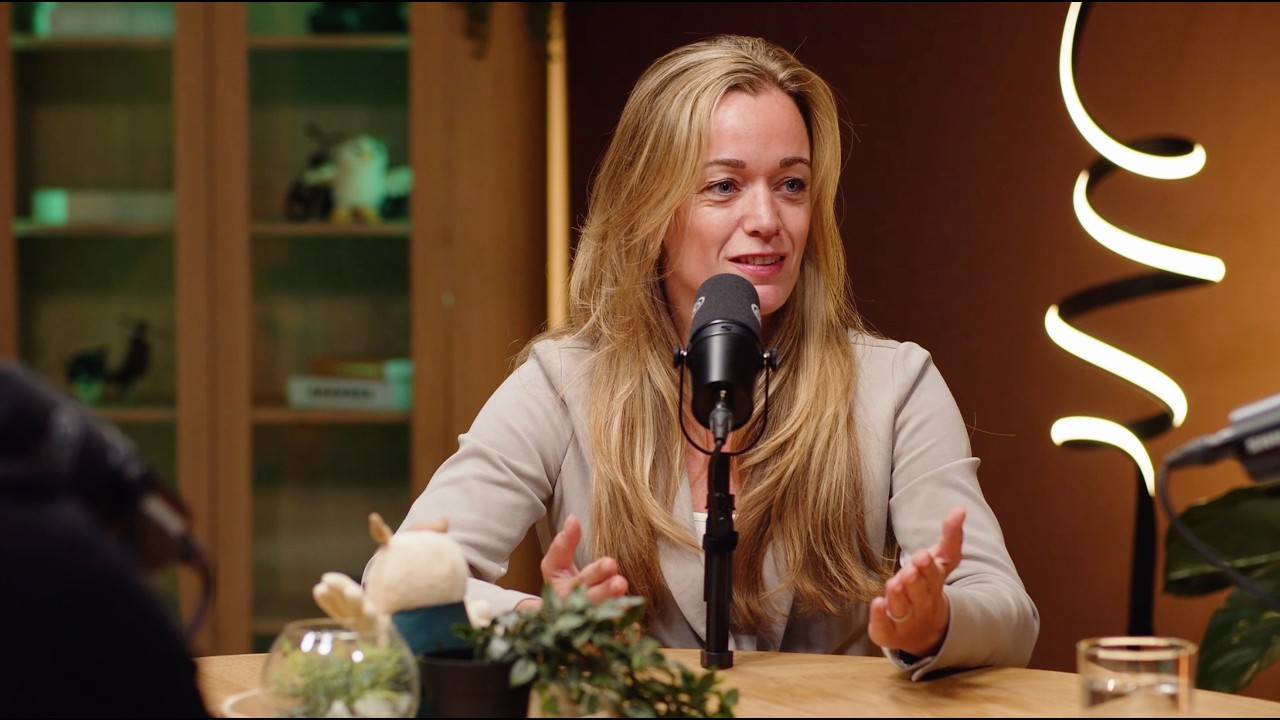
Video summary
The podcast explores the critical relationship between Customer Relationship Management (CRM) systems and Enterprise Resource Planning (ERP) software, emphasizing how they must work in harmony rather than against each other to optimize customer service. The discussion highlights that while sales teams often operate within CRM to manage relationships and opportunities, these interactions rely heavily on backend ERP processes for order fulfillment and logistics. A central theme is the increasing pressure from customers who expect B2B services with consumer-like speed and transparency; therefore, organizations must balance automation efficiency with human connection to differentiate themselves in a competitive market where personal touch remains a key advantage.
A significant portion of the conversation addresses the risks associated with over-automation through AI agents and digital employees. While automating repetitive tasks like processing incoming emails or generating standard orders can free up sales teams for high-value activities, there is a danger that excessive reliance on technology erodes the essential human element in customer interactions. The hosts argue that automation should be implemented carefully to avoid losing the personal rapport that builds trust, especially when handling complaints or complex negotiations where empathy and direct communication are paramount. Consequently, companies need to decide strategically which processes to automate based on product complexity and whether a specific order requires manual review by an account manager before it proceeds in the ERP system.
The dialogue also tackles common implementation pitfalls, such as forcing all data into one system when they serve different purposes or attempting to use Excel spreadsheets alongside modern software due to resistance to change. The experts advise against creating makeshift CRM solutions within ERPs and instead recommend adopting dedicated tools that are designed for their specific functions while ensuring seamless data flow between them. Successful integration requires a solid foundation of documented processes and, crucially, effective change management that involves employees in the transition rather than imposing top-down mandates without understanding user needs or fears regarding job security.
Ultimately, the most important takeaway is to prioritize clarity on why certain systems are needed and what specific business problems they solve before investing heavily in technology. The principle of "less is more" applies strongly here; overloading a CRM with unnecessary fields can discourage adoption and turn it into an administrative chore rather than a strategic asset. By focusing on the right questions, empowering staff to craft their roles around new tools, and maintaining a balance between standardized efficiency and flexible customer service, companies can create a robust ecosystem where ERP handles operational logistics while CRM nurtures relationships, leading to sustainable commercial success.
Read the full video transcript
[music]
Welcome to Impact Makers, the
SuperOffice podcast. Today we have two
interesting guests at the table. On the
one hand Samantha Pijl and on the other
hand, uh, Wouter Schram. My name is
Harry van Ek. I am a sales philosopher. And
what we are going to talk about is
how ERP and CRM
can work together, or perhaps work against each other,
if people do not go along with
the entire implementation of CRM and
the EAP systems. What we are looking for
is the actual flow through which
customer service is optimized.
Very interesting discussions. Certainly
interesting when you are
looking at how you can
optimize customer service in your
company. It's very nice to
briefly introduce yourselves. Samantha, who are you
? What are you doing? And why are you sitting here? Yes
, well, thank you. Um, so Smante Pij
has been working as a lead sales representative at Succeed
for 3 years. Prior to that, a background
of approximately 12 to 13 years in IT. Yes. And
what makes me really happy is
advising companies on their internal processes.
So it is really about the ERP processes,
the internal processes, and how you, as a
wholesaler and B2B company, can further
automate them. Fine
. And Wouter, uh,
Wouter Scharam, Director at
Superhos Benelux. Um, 14 years with the
club, four years in this role, and uh, yeah,
my passion lies in CRM. Well
, great. Absolutely beautiful. Well, what we
constantly talk about is commercial
success. You may
have everything sorted out with your CRM system, but
the backend needs to be properly covered as well.
And how does that actually work?
I have three interesting propositions for that.
I would like to share that with you
. One statement: the pressure to
secure orders structurally causes
the internal organization to play catch-up
. Agree or disagree? It is possible, but
not necessary.
And how do you view that? Um,
I think. At
sometime. That's nice. It's not even necessary.
Sales representatives ensure they do not
gain access. They should not be granted access
to the ERP system. But they
do need the data to be able to score. At
sometime. Not even. At
sometime. At
sometime.
100% agree.
100% agree. If you automate everything with
AI and agents to grow efficiently,
you eventually lose the human
connection with the customer. Can can
[laughter] once once
. I see you hesitating again, from "it
might be possible" you explain to "do
you want to come back to something?" Well,
especially about the agents. That is, um, I'll just
start with the last one, that one is still
the furthest in my memory. Um, about the
agents. It is indeed possible that you
lose human contact with that, but
that also depends entirely on how you arrange it. That is why
I say it is possible. It really is
a risk what you have with that. Because
if you automate too much,
you can lose that personal touch, and then you have to
think very carefully about how to
differentiate yourself from your
competitors. After all, if everyone
starts automating everything with agents, how do
you differentiate yourself? So that is why my
answer is that it is indeed possible, but not necessary
. It just depends on how you set it up and
where you put the money.
Okay, that's a very good one. So how
exactly does CRM fit into that? Um well, the way
I see it now, uh, in the times we are
living in right now, um, I think the officers are
primarily, uh, yeah, the support, the
gateway to get inside somewhere or to be
able to stay inside. Um, but
I certainly still believe in the market we
operate in that, uh yeah,
that people buy from people. Hmm hmm.
Um, but to enable your people to function as well as possible,
I think the agents are, well, crucial at the
moment or becoming so. Yes.
Um yes, and the role of CRM is of
course very important in that. certainly the
uh the commercial part uh getting a seat at the table
, the uh sharing the right
information, making sure you serve your customers
well. Um, I think that
is crucial.
Absolutely beautiful. Um, if you take a very close
look at the
issues we run into when
trying to get ERP and
CRM to truly communicate with each other,
then we are certainly
also talking about the fact that, as consumers,
we are used to receiving everything the next day.
In B2B, that is actually becoming more and
more of a requirement, so to speak. The
logistical speed and, uh,
adaptability of an organization
are very important in that regard. How, how, how do
you see it, eh, Samantha? Well
, I've certainly seen that happening for years.
That pressure is increasing
. You see that a uh you are a consumer in your
spare time. Well, we have been quite
spoiled in that regard in recent years. It does
n't matter which day you order. We
expect it to arrive the next day. I
find it really absurd sometimes, because do
you always need it the next day? Hmm hmm.
As you can see, I obviously know everything that
needs to happen behind the scenes
to make that happen, but you
see that within B2B we expect that more and
more as well. We want to be able to
find more and more information online. So
no longer just having to call.
Well, you also see that more and more
millennials are at a certain
level. Yes, they look at it
differently than before. So you want to be able to
find information in there as well. Well
, that's already a bit of
information provision. And once you
have finally placed the order,
you want to receive it quickly. But
you also expect that when you call, if you have a question,
someone
answers immediately. So the service rate is
expected to be increasingly higher. Yes.
And in that regard, I think that on the one hand, yes,
you need to automate that.
And then you see that from a sales perspective,
the conversations are often pleasant. Otherwise, you would
n't choose them as your party. Or you need to be
more involved in the online field. But just going by a
B2B perspective for a moment,
you expect the conversations
with an account manager to be good. Yes.
But after that, that promise must
be fulfilled, and that is where ERP comes into play
. Ensure that you
have set that up efficiently, so that the order
moves to the warehouse as quickly as possible
for delivery.
But does that mean that those uh salespeople
promise too much or something, or uh...
Well, I think a
salesperson is pretty positive about everything anyway.
Yes,
that suits a salesperson a bit.
I can have that myself sometimes too. That
you view something very positively and
then also, well, those I don't know if they
are always promises, but in any
case, that feeling works with the customer that
it is all possible.
Certainly. Yes, but when does your
commercial aspect become a threat to
logistics and operations?
If things are promised that cannot
be achieved, of course. Yes.
So there needs to be a good balance
within your organization. What is feasible for us
in terms of delivery times. You also have
articles. Yes, we have had quite a few
problems in the world too. Yes.
Uh, containers that aren't making it to the
Netherlands. Yes. You can make all kinds of
promises upfront, but if
you don't have the product to
deliver, well, I think that piece of
communication with your customer
is very important. Hmm hmm.
How do you uh deal with that with your
customers? Because I find it quite
interesting too, you know? Because whether you
are dealing with ages or
complaints in general, um, a complaint
that comes in, there can of course
really be an immediate opportunity there. And
that is quite decisive in how you
deal with that as a company. Because
things going wrong will always
happen. No matter what industry you are in
. How do your customers talk about
that, like: okay, if there is a certain
error mass, 5% 10%, it doesn't matter. Um,
how do we ensure we
make that customer happy in the end?
Well, I think it already starts with
communicating when something changes. So
if you have indicated a delivery time
of a week, but the product arrives
later, make sure that I am
informed of that, at the very least.
Yes,
I think you can already get a lot of understanding
from the customer with that. And
you can automate that. That when a
delivery time is adjusted in your ERP,
messages are automatically sent out. That is
not very complicated, but make sure it
has the right tone of voice, et cetera. Yes.
Um, how they actually handle it otherwise in terms of, uh,
error marches. Yes, it varies a lot. Yes.
per company, how one person describes it
really says: "I have customer service,
I want to do everything by phone," while the
other is a bit more focused on automation
. I think it also depends very much on
what kind of product you have. Of
course.
Look, if they are somewhat smaller products
that are perhaps also
ordered online, well, there you go,
that is often resolved more automatically,
so getting in touch. Yes.
Um, we do have a comprehensive returns
system within our ERP as well, so that if you
can process returns—something different from
not delivering late, for example—but if they
are returns, you can easily resolve that
administratively. Yes. However,
how it is communicated to a customer varies greatly
. Yes. Yes.
Because I think that there is indeed a
risk there, but also immediately
a really huge opportunity for the company to be
distinctive in that area
. Well,
where I see companies increasingly
wanting to be distinctive now is
indeed how you handle customer contact. Yes. Hmm hmm. You
can automate a lot, but
you don't want that to come at the expense of
your availability.
Yes,
we... if I look at Succeed Itself itself, it
is almost a USP that we
have a support desk that
speaks Dutch and that you can call, especially
when I see it with competitors. Yes.
Yes,
but our customers do expect that, and
it is just as good for many other
companies. You do appreciate that there
is still some personal contact. Yes. So is that where
companies' competitive advantage lies in that
customer contact? Yeah, I think that if you, um,
where you can make a difference now is,
well, keep your customer contact there. Hmm hmm.
But also ensure that customers
can look up a lot themselves. After all, not
everyone feels like having to
call BG to find out that it is a time
later. So, make sure you
offer the possibilities in addition. You can
find everything online with us. Hmm hmm.
So if you are sitting on the
couch in the evening and want to find it, go ahead and look.
You can find it very easily with
a B2B portal or something similar. But
we also just have the sales people
who have known you for years. If you would like to
discuss something or if something did
n't go well, you can also call.
And I actually think that by fully utilizing those two areas,
you
can be distinctive
compared to the competition. Hmm hmm.
But to what extent is the customer
actually able to determine for themselves,
based on the information on the
internet, whether they are ordering the right products
?
That depends very much on your products,
of course. Look, you have products that
really need to be put together.
You need advice on that. More the
produced that then, uh, arises.
cabinets or something similar. But you
also have simple products. Yes, if you
have a serial number from something and it
matches, then yes, you know what you need
. So I think that varies a lot
. So in that regard, you also need to look very closely
at what type of customer I have. Hmm hmm.
But also how mature my client's IT is.
After all, we can decide that we are going to
do a lot online and keep you informed by email
. But if you are in a somewhat more
conservative market where that
is all a bit less common,
well, then that is the plan. Yes. Yes. Yes.
I think it is very important for a
company to take a close look now at who is my customer? Conduct
research into that as well. What does
my client expect? What makes them happy? And focus on that
.
Yes, but the customer is
encouraged to do a lot themselves. Uh, to
look things up myself.
Yes,
the seller groups of that is
all easy. But you see in
many companies that during that transfer from
the salesperson who manages the orders to
the customer, who essentially has to register his own orders,
he sometimes
comes under pressure.
Uh, how do you do that? Those kinds of
transformation processes, then?
Um
yeah, how you do that kind of transformation...
Yeah, you just have clients who are
n't suitable for that. You will never manage to
get everyone to place
orders in your B2B portal
. Look, what you from an ERP perspective—what we
mainly look at—is how
we ensure that people can still
send emails as well. Because some simply find it
easier, or they have
an order coming through from their own ERP system
. In any case, we will ensure
that they are automatically read by an agent
and appear in your EP.
Because you don't need to retype it manually
, you also remove errors.
But for everyone in a portal, yes, it
just varies a lot by industry. Yes.
Would that be more prone to errors if everyone
did it themselves? That they
order the wrong things more often, the wrong
units? That is just a question. I
am curious about that.
Um, you mean if it
comes in by email? Well, if people start
placing the orders themselves, so to speak—meaning a
company needs something and
thinks: "Well, I'll just go
order that from a portal somewhere." And without
them really knowing, well, this is really the
right product I need to have. Or
if they are
product combinations that they do not
know.
Yes, you see that happening. So, what
you can build in is ensure that the
order is automatically ready, but
that someone from sales takes another look at it
. Is this correct for that customer? Yes. Yes.
So then you are still left with a
bit of whether you
want a check to be performed from a certain amount onwards to ensure
that it doesn't
go through the order, either automatically in your
ERP or by ensuring there is human
intervention. Yes.
Can you also
automate part of the process based on whether certain
products are included or not, or can
you say, "Hey, those are allowed," or "
Deliveries can always be made to those customers"? Yes. Hmm hmm.
And then it can proceed. But you
actually want her to
move on to the warehouse as quickly as possible.
Precisely. Yes. Yes.
And that people are no longer occupied
with repetitive work, but only
with exceptions. Yes. Yes.
And that is a whole lot of furnishing
you can do.
As a result, your inside sales team,
for example,
only looks at the specific areas
they need to focus on and no longer
sees every order pass by. Yes.
No.
But does that mean that standardization
is actually an important part of sales as well? So that they
sell standard products or
yes. And you have to be careful with that,
because you also want to be distinctive. So
you don't want to stick too closely to standards either.
So it's really about looking at, "Hey, how can I
make it as standard as possible?" Because
that makes handling your processes much easier for you as a
company
.
But you also want to offer a bit of
flexibility. So, uh, that is yeah
looking at yourself as a company as well:
hey, how far can we go with that? But
I do see a trend where more and more
companies are saying: "We are simply moving towards
more and more standard products.
We can deliver those much faster, and then
we don't have the problems
or challenges involved."
Yes,
but then again, it can also be a point
where you make the difference compared
to your competitor: that you
are the one who is flexible. Yes. Well
, exactly. But—and
I think that is also where
the seller's fear sometimes lies—that he might
lose out on the item in order because he
cannot deliver as standard, yet always
wants to claim those exceptions.
Well, what I see a lot is that
salespeople also like to
have a lot of free rein in the entire
pricing process with a client and the
negotiations involved.
Yes, those are points that I see
changing significantly towards increasingly standard
prices with a certain
discount percentage that a customer
falls into. Yes.
Where you used to see roughly a
separate price list for each customer. Those are also
points to standardize it further.
Yes,
I do see a lot of companies
increasingly moving in that direction.
And how does the collaboration between
CRM and ERP play a role in that? Because, uh,
everything about that customer naturally needs to
be recorded in CRM. Uh, just name anything
. The price agreements, I don't know what else.
How, how, how does that all work together, then? I'm just
asking as a layman. Uh
yes, a good question, because those are
indeed the tricky questions, since you
have your sales working in CRM. Well,
it is really suitable for the Zeals
people there too. Can they capture all their quotes, all
their opportunities, send them, and
customer data? But you also have an ERP where
your data eventually ends up.
Yes,
so it is also very good to have a conversation with each other
about what you
ultimately really need in your CRM? Well,
you have multiple solutions
for that. Of course. Well, it isn't
a question that, uh, where there is actually only one
right answer. It depends quite a
bit on the type of company. Um,
my view is that salespeople
really should work purely in CRM. Uh, but
there are quite a few, uh, there are also
companies where sales are really super order-
driven, and then they really do
need a lot of EAP data. So, when
we look at companies that do
not need that—for
example, a
revenue information building is sufficient for them to essentially
operate commercially there. Uh, looking
at companies that are really, uh, very order-
driven where there is a high
turnover rate. Yes, they just
need order information. And where the
difficult part lies is often in
preparing quotations. Uh, because then you
actually need price and, yes,
product information from EAP. Um
yes, that is actually where you want CRM,
but CRM isn't an article
database. And where does
the emphasis lie, then? Uh, where does
the essence lie, then? With ERP or with the CRM?
What is the guiding principle, then?
Your ERP ultimately leads for your order
.
Yes, because that is where
your order lands. And this is
indeed a good point from the
quotation. What are you eventually going to
use them in?
Yes,
because you do want your sales people to be able to
prepare a quote, but
ultimately your ERP is actually the
system with all your standard features. Well, I think
you look at it the same way
,
but all your price lists are
fixed in that as well. And this is a point you will
always look at together. What is
the most workable solution here? We're going to
create those quotes after all, but based on the
standard price list. And if that then—it
also depends on how complex the
pricing structure is—will it
still end up in your ERP, or are you going to
record it in the ERP?
Varies again. I also see companies that
say: "Yes, we have an
inside sales team that
supports the outside sales team with preparing
quotes." Yes. Yes. Yes.
They are often included in ERP, because
if you have an inside sales team
, they ultimately handle the
quotes and process the orders as well.
But that sounds very complex to me
, doesn't it? How do you make that
simple, then? Well
, if I just take the point
information.
Look, I am not always in
favor of exchanging data with systems
if you don't immediately
do something with the data afterward. We solve that
with Power BI, where you can
zoom in on all data. Could you also make that
can we do available for sales people? Hmm hmm.
That we also prefer not to have them in the ERP
if it is not necessary. Because it
is not an ERP, it is very data-
driven. Yes.
And often, sales simply wants to
see what is happening with a customer in a straightforward way
. Hmm hmm.
Well, that is becoming increasingly easier with AI
, but right now we are
giving them insight into that
using Power BI. Yes.
And that means that you
put something in between, like I'm looking from a bit of a
distance, and that you bring the
information together there, as it were, like a kind of
flow. Yes.
Well, what they can see in this is
very simple. Who are the clients who
report to me? Revenue per customer.
How does revenue compare to last
year? So you can go there again, and
you can find the orders there. Yes.
Yes, that is
actually recognizable. Is that really the case? Look, the
quotation part always remains a... uh...
an identical situation, so to speak. That is
different everywhere. But
actually, when it comes to exchanging that data, we do it that way as well
. And the question is also a
bit, um, do you want to be able to see information
when preparing for your client,
for example, or during your client visit, or do
you want to be able to apply commercial filters,
selections, or dashboards to that?
And yes, the moment that, uh, you
want that last part, yes, then you really do have to
get that data into your CRM. So then
you could say, for example: "Well, give me
establishments where we haven't been for three months
and which, uh, are
lagging behind last
year in terms of revenue." Well, you can clearly
act on that. Hmm hmm.
Is that information actually crucial
to increase your revenue? Um, at the
moment when, in preparation for your
appointment, you need to see, "Hey, which
products were purchased?" Which
product groups are selling well? Um, then a
view with Power BI, for example, is
actually already sufficient. Yes. Yes.
And that's nice, isn't it, because you guys are
shouting all sorts of terms, uh, agents, uh,
everyone is shouting it. But what is it
actually? What exactly is a police officer? Because
it is already very interesting for the
layperson to listen and think, '
What does that do?'
Yes, what an agent is is what you are actually
going to do as an organization. Check where
I have repetitive work? Hmm hmm.
Which are certain steps, actions in
sequence.
Yes,
you will have the system
execute that. As an example, an
order is sent to my to my
simply to my email. I want uh, another
10 uh, boxes of something. What
the agent can then do—because there is logic
behind it—is read: "Hey,
this is that customer, because I see that in the
email address, for example.
And I can retrieve these items from
the written text." And then they go
ahead and prepare a quotation or order in the ERP system
. It just depends on which choice
you make in that regard.
So normally, a sales representative would then
check the mailbox: "Oh, which customer is
this?" and take all of that over. It is being
prepared now. So it is
actually multiple actions that you
are currently performing manually, human
actions. Hmm hmm. You are going to
automate that. Okay
. And
that is actually an officer, an assistant. Yes. A
digital employee. Yes.
And what you do then is read that out,
for example from a CRM system, which is
put into it, or is it actually the
other way around?
Both are possible. Yes, all in all if an order comes
in, it might not
immediately, uh, come from CRM. So, uh,
I think it depends a bit on
the signal or, uh, yeah, or whatever is
happening. Hmm hmm.
Um, I see from the CRM side that an
agent is more focused on providing the right moments of
information
based on how the customer behaves. Yes.
Um, I think from the EAP perspective that it's much
more about what happens in terms of incoming
orders? When do they need to order again,
or when exactly do they order? And which
repetitive actions actually occur
then? And uh and and that is much more on
a fixed trajectory, I think. I think
companies know quite well that when this
happens, we always carry out these 3 to
10 steps. Yes.
Um, but I think that's more about
processing, and with CRM, I think it's more about being able to
act proactively.
But if you look at that flow
, you know—because what you're actually saying
is that those flows within the entire
contact loop with your customers, as well as internally
and with your suppliers, need to
be very well documented, so to speak,
before you can really have a good system built
.
Yes, which is very important, but that is the case anyway
these days. There is a
lot happening on the Jeek front at the
moment. It's going really lightning fast. So
is it now even more important to
know exactly what my processes are? Where do
I see points where people say: "I do the
same thing every day." Yes.
And then you will be able to
automate points. But then you do
indeed need to know your company very well
. Yes.
But does that mean that
on the one hand you have to document processes on the ERP side
just as you do on the
CRM side? Yes
, I think so. But I think
that ERP is also much more process-driven.
As you indicated right at the beginning,
that also comes from within. It is of
course really an internal system—a
CRM in a way too—but that is also
very much driven by what your customers
ask for at certain moments. So yes,
there are certainly processes, but I think there is
more of a mindset in CRM. So, for example,
we want
to visit our customers x times a year. Uh, we want us to
call within so many hours if a request comes in. So those are
more ways of thinking. That's how I see it. And I
think that EP really consists of documented processes
to manage your internal business operations as well as
possible. Yes. Yes.
And and how does AI help with that, uh, or
EAI—everyone has a different term
for it—but how does AI help with that
at the moment? If I take a quick look within
Business Central, which is a Microsoft
solution, you have Copilot.
You also have Copilot, so that is the AE
solution or AI, however you want to put it
. Uh, within Business
Central. Well, it can already do all kinds of
tasks now. Those agents are actually also
part of, uh, that of the copilot.
Um, so what you can do right now is that
there is a chat function included, and
it only looks at your own
database. You can ask which customer most
recently had an order lagging
behind, but also a lot regarding the
stock levels. Which items do
I need to reorder? You can start asking questions
to the system. Well, that
is what it is increasingly being used for now,
and therefore automating tasks.
So that
basically means that you enter into a
conversation with the system to see
what the smart decisions are that
I need to make. Yes.
And he is already giving advice as well. If you
open a customer, for example, you can
already see that you can view this from Copilot, and then
it provides what is essentially a
summary of the customer. Yes. Yes.
And in that, you see it going further and further.
So you see, um, previously you
really had to run analyses. Hmm hmm.
And then you had to
click all sorts of things together. And now you can simply
ask Coopilot within Business
Central: "I would like a report
on my cash flow or a cash flow
report and take such and such into
account," and then it will give it to
you. So that is very different. Work. Yes.
Well, this morning at the BNA there was
a uh interview with uh a man who
had conducted research into increasing the
productivity of uh
improvement of uh offices through the
use of AI. And a great many companies
indicated that they do not see any real
productivity improvement. So what
makes you think that
productivity gains can be
achieved there? Well
, I think it's quite fun. A
colleague of mine has conducted
research into this. Yes.
Wouter, uh, that's his name too, coincidentally. He
presented that recently as well. Um, he really
looked at how do you get an organization on
board? What you often see is that decisions regarding AI
are made top-down. We are going to
focus on that. You will all receive
a Copilot license. Go ahead and
use it. Yes.
But it is much better to look at
what people need. So ask
the people themselves. And he conducted
research into that. How do
you ensure you get people on board with this
? Because otherwise, you wo
n't achieve that productivity if you make
decisions top-down.
So it will end up being human work again after all. Yes.
Ultimately, you want someone to
look into their own role and see for themselves how they can
take small steps. Yes.
And you shouldn't expect the world all at once either
, because people need to learn to
work with this as well.
But that is actually the same process
we saw with CRM in the beginning. That no
one really used the CRM. for which
it was intended. I certainly think you still see that at
companies
. Yes,
that actually involves training people
on how to do the integration between
CRM and ERP—really taking people along in
that whole process. That is a very
important one. Yes.
And also because it is moving so fast and
you also have people who are a bit
anxious, so they think: "Ooh, how is
AR going to handle this? Is it going to
take over my job or can't I do this? This is too much for
me technically speaking, because
obviously a lot is happening." Then
you specifically want people to be given the
space themselves to—yes, should that have taken a
whole study beforehand, but also how you can
embed that in your
work by paying attention to it for fifteen minutes a day, by pausing to reflect on it every now and then. Hmm hmm.
But especially if it comes from within yourself,
because you know the processes of
how you work best. So actually, bring the organization
along—uh,
that was his advice. That seems like very
simple advice. Yes.
But then also with a certain
structure—uh, that's called job crafting.
Otherwise, that you also give people the space
to work on that during their working hours
. Hmm hmm.
Make sure you have a few leaders, those who are
eager to bring the rest along
. Yes.
And what, then, is the role you
have in such a process as suppliers
and partners? Um, uh, I think it's mainly
guiding and making them realize
how important this is. And I think that, uh—and
I think this is where the
human aspect comes in—that the moment you start
talking to companies and you want to
set up, automate, or
digitize certain processes together, you really
look at it together: okay, but what is this going to
bring us as a company, but also
really as individuals—and
focus primarily on that. Look, what we
see a lot in CRM is that certain
functionalities are requested that
they perhaps, uh, never thought about in the 20 years prior,
and now suddenly have to
. Uh yes, and actually
it is just very simple: the 'why' question,
and trying to challenge that and
arrive at a certain solution together.
Um, if it isn't supported by
management and the people, well, then the
risk is certainly there with CRM, right, because that is, well,
I always call it a no-obligation
system. That is not entirely my perspective
, but that is how it is perceived. Yes, is
the chance of, uh, non-use then
extremely high? Then, uh, then it becomes a
chore, and, uh, and you can work outside of CRM,
and you must avoid that at all times
. Yes.
Can you also work outside the ERP system,
or...
then you have to be very creative. No, that
is, uh, if you are a wholesaler, that is
actually impossible, because it contains
all your items, your stock; you order
from it, you receive it. If you
have your own warehouse, it handles
the entire management as well. Your accounting is
in it, so actually not. It
actually goes wrong that very day if you don't, uh,
do it, right?
We sometimes see companies where I
think: "How did you keep it up for so long keeping track of
all this in Excel
and then only working with what is
actually a bookkeeping system?
" Hmm hmm.
But once you have ERP, you wo
n't go back.
But, but well, well, you hear me saying
about the CRM and the ERP: that is actually
a great combination. But we
still see companies where people
are retyping things to
transfer them from one system to another. So
what exactly makes those people
take that step now? And
I think above all that you need to empower the systems
. An ERP system
has no or very limited capabilities
to create opportunities to use
meeting minutes. So first make sure
you take a very close look at where to
put which system in the front. Well,
we definitely support that. Don't
do any custom work or anything like that in your ERP to
cover this either. Please don't. No,
then go look at a system where
they have really thought it through
and where it is included. Um, I think you
start with that and then see which
data needs to be exchanged. And even then,
that is still reasonably limited if you
use those systems for what they are intended for
. So don't try
to overlap both, that they can both do everything
.
And then it is mainly about a piece of
customer data, actually the points
where we have already, uh,
stood still. But that
essentially means you are talking about choosing,
making choices. Yes.
Um, those choices are sometimes difficult,
I think, because if you choose one thing,
you're also choosing not to choose something else. Um, what kind of
dilemmas does that present when making
decisions
regarding the setup of ERP
combined with CRM?
Yes, I don't know if there really are, uh, dilemmas
. I think if it doesn't happen then
uh then I think it's mainly uh just
the fear of change. Hmm hmm.
So that overtyping you were just talking about
. Yes, basically that makes
absolutely no sense, of course. But if
people have been doing it that way for 20 years—and it does
n't matter whether we're talking about
systems or whatever—but this
is of course a, well, a general thing. That’s just where,
I think, the
difficult part lies, the challenge. In
any case, we notice that clearly from our side
.
I'm also curious how that is with you guys
, but uh yeah,
change management. Yes, that is, you actually want to
take people along with it step by step. That is also coming to see the benefits of something
. Yes. Yes.
And where do you start?
With CRM or with ERP?
Yes, ERP is often actually what we were just talking about
. That is a must, and CRM
is often seen as a nice-to-have. I
find it more of a must
to be able to do it well. But um,
so I do think you often start
with your ERP.
And the only unfortunate thing is that some
companies think: "Yes, but then I'll
just create a few extra fields, then you have a
kind of CRM." No, it is not a CRM
system. Therefore, we advise: "Do
you want to do more with this? Move to a real CRM
system." Yes, they really are two
different worlds, I suppose,
that can just dabble a bit. Yes.
And what you do have, look, you
also have some companies where you have a bit
less to do. They don't have account
managers, for example. They focus
primarily on online activities. Yes.
And uh, then you only have a
customer service component, or a component for when questions
come in. Yes. Then you might
not need a full CRM, because you don't want just
one; you're not going to
record everything about every customer. But if you
are a reputable B2B company and you have
account managers with regular clients
, then you actually want them to have a
CRM to be able to
document everything.
Nice. Nice. Yes. Yes. Well, that brings us
to the end of this podcast. Uh, of
course you have to end with a
good question. Um, what is the most important
tip you have that will make an impact
when it comes to the synchronization
between EP and CRM?
for synchronization. Yes, I think that
is the most important thing, and certainly in
this whole era we are actually
in. I'm going to take a very close look at where
I put which system in the front. Applies to CRM,
ERP, and could be other systems as well. And
where do I need which data? Make sure
you have all that in order. Because now that AI is
becoming increasingly prevalent and we
can automate more and more, you must first
have the foundation solid.
Bright. And do you have another specific tip?
Well, they are very close to each other.
Um, the the the where is indeed very
important. For me, that is also just really,
uh, the why. So, uh, why do you
need certain data somewhere, and what should it
primarily bring you? Um, and don't go
looking for an uh overkill in that, because
that uh that will really go wrong. And that is
certainly on the CRM side. Are you going to move a
lot of data there, and people open
that system for the first time and see
a lot of fields, a lot of data? I've
actually already lost her there. So, um yeah,
less is more.
Less is more. That is a beautiful
creature. Um, my takeout is that people are primarily at the
center and that it
is true change management. That you
have to change people's mindset to
understand why the systems are the way they are and
how you
can organize better customer service with those systems, and also
get a grip on the processes, so to speak,
in a way that really fits well with
what you are all doing and
what the company is doing, so to speak
. This was, uh, the podcast from
Impact Makers by SuperOffice. Sitting
at the table with me today were Succeedited's lead sales representative
, uh Samant Pijl, and uh Wouter
as co-host of the SuperOffice. My
name is Hardy van Ek. I am a
sales philosopher and I was glad that
you were, uh, listening again.
Thank you, Harry.
Thank you.