Video summary
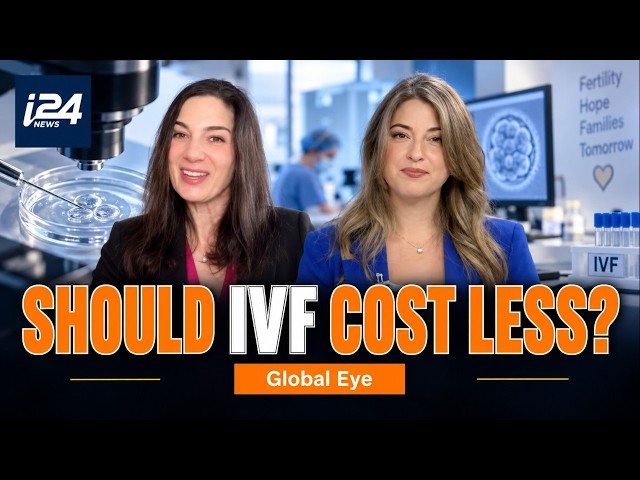
Fertility treatment in the United States often involves significant financial burdens, a reality highlighted by Congresswoman Alexandria Ocasio-Cortez who recently revealed she paid between $9,000 and $10,000 out of pocket for egg freezing despite having insurance. In response to this widespread issue, lawmakers are pushing new legislation designed to make treatments like in vitro fertilization (IVF) and egg freezing eligible for health savings accounts and to mandate that insurance companies cover IVF as an essential health benefit. While former President Trump had promised free IVF during his campaign, Republicans have yet to introduce concrete legislation to fulfill that pledge, leaving many patients to navigate a fragmented system where coverage varies drastically from one provider to another.
Dr. Carrie Bedient, a board-certified fertility specialist, explains that there is no standard for insurance coverage regarding reproductive care, with some companies covering nothing while others cover only diagnostic testing or exclude treatments for women in perimenopause or menopause. Although expanding access through health savings accounts provides an option for those who have already saved money, Dr. Bedient argues that mandating IVF coverage as an essential benefit would likely have a more profound practical impact by directly increasing the number of people who can afford necessary care. This distinction is crucial because relying on pre-existing savings does not solve the fundamental problem of affordability for many families facing infertility.
The debate also touches upon the broader context of declining birth rates in America, which currently sit below 1.6 children per woman, well under the replacement level of 2.1. While expanding insurance coverage could help address immediate barriers for individuals with active fertility issues, experts caution that it may not single-handedly reverse national demographic trends driven by larger economic and social factors. Furthermore, Dr. Bedient emphasizes that reproductive health care cannot be equated with maternity or postpartum care, noting that in states like Nevada, perimenopausal services are sometimes covered while fertility treatments remain excluded, highlighting the complex and often inconsistent nature of current women's health policies.
Ultimately, the push for legislative change aims to expose and increase access for those who desperately need medical intervention to conceive, even if it does not guarantee a complete shift in national birth statistics. The conversation underscores a broader pattern where various aspects of women's reproductive health are under-covered or treated as separate entities rather than a continuum of care. As these bills move forward, the outcome remains uncertain, but the dialogue has successfully brought personal experiences and medical realities to the forefront of the political debate regarding healthcare accessibility in America.
Read the full video transcript
Now, fertility treatment in America can
cost thousands of dollars. And now, one
of the country's most prominent
politicians is making her own experience
part of that debate. Congresswoman
Alexandria Ocasio-Cortez
has gone public about freezing her eggs,
revealing that she paid between 9 and
10,000 dollars out of pocket despite
having insurance.
She's now backing legislation that would
make fertility treatments like IVF and
egg freezing eligible for health savings
accounts. And another bill that would
require insurance companies to cover IVF
as an essential health benefit. And
interestingly, Trump himself promised
free IVF for all Americans during his
campaign, but Republicans still haven't
introduced legislation to actually do
it.
Joining us now is Dr. Carrie Bedient.
She's a board-certified fertility
specialist from the Fertility Center of
Las Vegas.
So, you know, AOC paid 9 to 10,000
dollars out of pocket despite having
insurance, which is actually a common
story for fertility patients in the US.
So, from your experience treating
patients, how much does insurance
typically cover right now? And would
these bills that she's introducing
genuinely close that gap?
>> There's really no typical about any
insurance coverage, particularly with
relationship to fertility care. There's
wide variety. Some companies will cover
absolutely everything, some will cover
just diagnostic testing but not the rest
of treatment, and then some will cover
nothing at all. And so, typical doesn't
really factor into this equation, but
even with good coverage, no fertility
doc is going to be surprised to hear
that their patient is having to pay
usually several thousand dollars out of
pocket.
>> One of the bills that AOC is pushing
forward would let patients use HSA funds
for fertility treatments, and the other
would mandate IVF coverage as an
essential health benefit. Which of those
two changes would actually make the
bigger practical difference for the
patients that you see every day?
>> Both would help, but HSAs really depend
on money that the patient already has
that they have set aside as opposed to
infertility coverage which might
actually improve access to care for
patients and increase the number of
people who have the ability to to access
it. And so I think that's what's most
likely to make the biggest functional
impact on who can get fertility
coverage.
>> We know that the American birth rate has
fallen below 1.6 children per woman.
That's obviously well under the 2.1 that
is needed for a replacement level. So if
cost is a major barrier keeping people
from having the children they actually
want, does expanding fertility treatment
coverage have any realistic chance of
moving that national birth rate number
in your opinion? Or do you think this
decline is really driven by much bigger
economic and social factors that
insurance policy alone can't really fix?
>> I think that the insurance policy
mandates and how those have the
potential to impact birth rates and
people to access care, I think that has
a a greater potential to address the
immediate problem of people with active
infertility problems who need care in
order to conceive. It doesn't address
any of the other components of why
someone may be delaying care. And the
other thing to consider is that all
statistics are easily manipulated and
you can often times change them and just
the criteria of how you were looking at
a birth rate statistic may have an
impact. And so I think that for the
fertility specific component of this,
the people who need care, exposing and
increasing their access will be helpful.
But I I can't speak to how that will
change birth rates in general across the
country for all of the other reasons
that you mentioned.
>> Right. Well, you know, obviously we know
in AOC's case
the decision to freeze her eggs was
because of the flexibility essentially
that she wanted in family planning. She
clearly has a big career. You know, she
specifically mentioned that many
insurance companies don't cover
treatments for women who are in
perimenopause or menopause either, which
kind of suggests that this is part of a
broader pattern of women's health as a
whole just being under-covered. So, from
your perspective in the fertility field,
is that a fair characterization of how
insurance treats reproductive health
more broadly?
Oh, it looks like we had a
>> Tech Oh, are you back?
There we go.
>> Go ahead. We froze for a second.
>> You can't paint fertility care as being
the same as maternity care, as being the
same as postpartum care, as being the
same as perimenopausal and menopausal
care. So, for example, here in Nevada
where I live, there are
specific coverages that allow for
perimenopausal care, but they
specifically exclude fertility care. And
so,
as a reproductive physician, as a
reproductive endocrinologist, I would
absolutely love to see all aspects of
women's health care covered and
expanded, but they're very different
aspects of of each one that are
important.
>> All right. Well, I'd like to thank you
so much for joining us. Really
fascinating to hear your take on all of
this. And we're going to have to wait
and see if there's actually any change
that is made to American insurance
policies.
>> Fingers crossed. Thank you.