Video summary
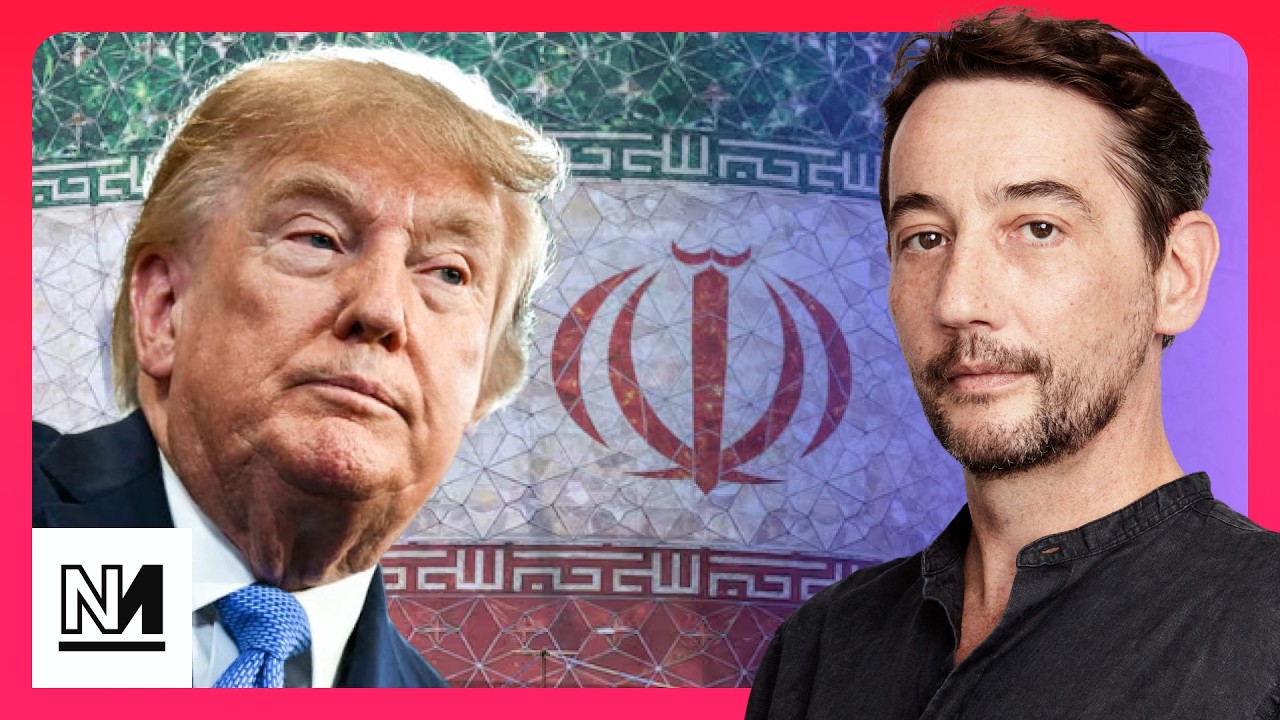
The United States has initiated "Operation Economic Outcast," a strategy designed to sever financial lifelines supporting the Iranian regime and the IRGC by imposing secondary sanctions on global enablers involved in oil smuggling and illicit finance. While this aggressive economic warfare aims to cripple Iran's revenue streams, its effectiveness is significantly hampered by China's steadfast refusal to participate in unilateral sanctions, which limits American leverage and suggests that such measures may inflict pain without forcing regime collapse. Experts warn that if the pressure becomes unbearable, Iran might retaliate against Gulf Cooperation Council nations and disrupt shipping lanes in the Strait of Hormuz, potentially igniting a new cycle of regional conflict. Furthermore, the US administration's refusal to engage in direct diplomacy while pursuing these punitive actions has undermined its ability to credibly blame Tehran for the ongoing stalemate.
Beyond international geopolitics, the video highlights significant domestic concerns regarding environmental impact and political integrity within the United Kingdom and the United States. In the UK, there is growing public opposition to proposed data centers that could emit 4.5 million tons of carbon annually, a figure surpassing ExxonMobil's UK emissions, reflecting broader anxieties about AI automation causing job losses and the lack of social value in such infrastructure. Simultaneously, questions have been raised about financial interference in politics, exemplified by reports that MP Rert Low earns nearly £1,500 per hour for tweets on Elon Musk's X platform. This contrasts sharply with figures like Nadia Witt, who donates half her salary and holds no registered interests, sparking a debate over whether politicians should accept payment for media appearances or internet posts.
The discussion extends to the ethical implications of these financial incentives, arguing that accepting payments from foreign billionaires with strong political views corrupts the concept of free speech and suggests that elected officials work for private vested interests rather than taxpayers. Advocates propose abolishing secondary incomes for MPs to remove corrosive influences from politics, ensuring that representatives serve the public trust without compromising their integrity. The conversation also addresses the interconnectedness of global oppression and domestic policy, challenging comparisons between US involvement in Gaza and Western complicity in Apartheid South Africa by noting that the West actively fueled the latter as an anti-communist outpost. Ultimately, the speakers emphasize that opposition to policies in Israel and Iran is no longer solely a left-wing issue, noting growing support among young Republicans and the public for Palestinian rights, while rejecting the notion that progressive politics should operate in isolation from broader global realities.
Read the full video transcript
Good evening and welcome to Navara Live.
Coming up tonight, the Trump
administration has threatened widespread
sanctions against quote Iran's financial
connections around the globe. Analysis
finds that two proposed UK data centers
could surpass the entirety of Exxon
Mobile's UK emissions in carbon and Rert
Low is set to earn more from posting on
Elon Musk's X than he is from being an
MP. My name is Steven Methan and tonight
I'm joined by Bansaka KMBI. How's it
going?
>> Hi, I'm good, thank you. This is our
first show together, so I'm very
excited.
>> I'm very excited, too. Uh been a fan
from the other side of the room, and the
show has been going on for a long time.
Glad to get to to do it with you
tonight.
>> Um before we begin, tickets for our next
Downstream in real life event go on sale
today. This time it's at the Duke of
York Picture House in Brighton where Ash
Sar will be joined by Nom Klein and
Astra Taylor to discuss their new book,
End Times Fascism and the Fight for the
Living World. Essential reading, I
imagine. That's on Thursday the 1st of
October. Tickets available via the link
in the description. Back in February,
the US and Israel launched an illegal
war against Iran. As everybody knows, in
the months that followed, despite
claiming to have obliterated the Iranian
leadership structure, destroyed the
country's military capabilities, and
ruined it economically, Washington
remained trapped remains trapped rather
in a stalemate with Thran. And to
achieve this pointless result, the US
killed over a 100 school children in a
strike on a school amongst thousands
more, destabilized the entire Gulf
region, and spent anywhere between 50
and hundred billion dollars on the
effort. According to the Washington
Post, that will come at a cost of at
least $1,000 to every American
household. And yet, the straight of
Hormuz remains effectively blocked with
roughly 10 vessels per day passing
through the passage from the Persian
Gulf to the Indian Ocean in August.
Before the war, that figure was around
140 per day. It's a failure that's come
at huge humanitarian, geopolitical, and
economic cost. And ordinary Americans
are beginning to pay the price of their
president's foolishness. The Financial
Times has reported on how US grain
farmers are facing the worst crisis in
decades over spiraling costs caused by
the Iran war. The FT reports on how fuel
and fertilizer costs are hitting farmers
hard, reporting this.
Inputs are way out of whack, said Matt
Bailey, who grows corn and soybeans in
eastern Nebraska. He said 11520, a
phosphorous rich fertilizer used at
planting time that was priced at $470 a
ton 10 years ago, now costs more than
$900. Where do you start with that? How
do you begin to budget for that?
The Iran war has made so much
uncertainty for us as farmers, said Pam
Johnson, who farms in northern Iowa and
is a former president of the National
Corn Growers Association. It's projected
that farmers aren't going to make any
money for the next two years. The
average cost of diesel, widely used to
power agricultural equipment, has shot
up to $545 a gallon nationwide, compared
with $381 before the war, according to
the US Energy Information
Administration. And obviously, all those
extra costs associated with farming,
farming of staples, is going to be
passed on to the American consumer. The
wider US economy has also experienced
some instability, though the Iran war is
just one of the contributing factors to
it. According to Treasury figures
released last week, the US debt has hit
over $40 trillion for the first time,
doubling in the last decade. Borrowing
has also become more expensive for the
US as the yields on the Treasury bonds
rose in recent weeks, representing
investor fears over inflation driven by
rising oil prices as well as wider
concern over the stability of the US
economy. That could of course then mean
in turn higher interest rates for
American consumers in the medium term.
So that's all bad news for the
Republicans with midterms just a couple
of months away. After all, as always,
it's the economy, stupid. And that may
all explain a series of announcements
made by US Treasury Secretary Scott
Bessant yesterday.
>> Today we are launching Operation
Economic Outcast to foreclose every
other option available to the Iranian
regime.
Treasury has mapped every node, every
facilitator, and every network that Iran
has used to smuggle oil and evade
sanctions.
Beginning today, the actions of Treasury
and other agencies will tighten the
noose and block every potential source
of revenue that funds the IRGC and the
evil Iranian regime. It is no longer
acceptable to operate in the gray spaces
of this conflict. Countries cannot claim
they are blind to enabling this
activity. Iran's enablers purchase,
transport its petroleum. They facilitate
the flow of its finances through
exchange houses and free trade zones.
They welcome Iran's flights and maintain
registries on its behalf. They turn a
blind eye to seaborn fuel transfers and
overland transits. They condone illicit
use of their banks, all the while
concealing the extent of their
complicity. The president is making
phone calls to world leaders with
specific requests to cease their
interactions with the regime. Nations
that facilitate any intern inter
interactions with the regime should
quickly heed our message. Those who
stand with the United States will reap
the rewards of our partnership. Those
who tether themselves to the Iranian
regime should expect to share in the
isolation of a withering regime.
>> Now, of course, there are countries that
continue to do business with Iran. It's
in the interests of many countries,
including Iran's neighbors, to remain on
good economic terms with a country that
they aren't at war with. And among them
are several very big players like China.
This graph shows the percentage of
Iranian exports by partner with China,
Turkey and Pakistan topping the table by
some measure and China came up in
questions to Bessent.
>> Chinese banks uh have often been talk
talked about being targeted but we don't
see any any of those institutions
targeted here. Is that something that is
coming in this campaign or is is the uh
very delicate trade truce with China
something that that could prohibit you
from you know going that far and taking
that very big step? uh we want to make
clear to here today that no one is above
the reach of US sanctions that if they
facilitate transactions and are part of
the ecosystem that turns Iranian oil
into money into repression they will be
targeted. We find that the best way to
engage with countries is through quiet
diplomacy
and we are level setting with every
country to tell them our expectations.
We know who they are. They know who they
are. So when the hammer of US Treasury
actions falls upon them, they will have
no one to blame but themselves. Quiet
diplomacy seems actually to be a pretty
sharp tack from the US's more recent
approach to foreign affairs. In his
speech, Bessant called the new threat of
secondary sanctions an economic D-Day.
D-Day, you'll recall, didn't involve
quiet diplomacy. As one reporter brought
up,
>> was an economic D-Day. But D-Day wasn't
a threat of an invasion and the US
didn't give a timeline to Germany. So
why not impose the sanctions today?
Well, we we are giving everyone the
opportunity the to remedy bad behavior.
Why would I want to blow up the global
financial system? We believe that it is
important to level set and give people a
cure period, but they should know that
that will move very quickly and that we
are serious.
>> Why would I want to blow up the global
financial system? Sorry, but if you're
threatening sanctions, that would blow
up the global financial system. And then
you say you don't want to blow up the
global financial system, you're not
really threatening sanctions at all, are
you? I mean, haven't you just totally
rumbled yourself exposing that what
you're calling quiet diplomacy are in
fact just empty threats. Now, now those
threats were briefed by the White House
for days before that announcement. So,
Iranian leaders have had some time to
prepare. The country's economic
minister, Sed Ali Madin Nazad, appeared
on Iran state TV on Monday night where
he said this. They want to launch an
economic terrorist attack against us. We
also have our own tools and we know the
rules of this game. This time they
shouldn't think that our approach is
purely defensive. They should also
expect an attack from us. He continued,
"Plans have been developed for various
scenarios, including what actions should
be taken if they attempt to cause damage
in the financial sector or in the
country's financial relations." and he
added that the global financial system
is not structured in a way that allows
anyone to claim that they can cut off
Iran economically. China has also
responded to what they they've seen as a
coercive threat from the US with its
foreign ministry spokesperson Lyn Jian
saying this today. China has made clear
on many occasions its firm opposition to
illicit unilateral sanctions that have
no basis in international law or the
authorization of the UN Security
Council. Economic warfare and maximum
pressure provide no solution. On the
contrary, they only serve to fuel
tensions and lead to risk spillover
which will disrupt the global economic
and financial order and harm the
legitimate rights and interests of other
countries. China's cooperation with Iran
is conducted within the framework of
international law that should not be
disrupted. China is closely following
the development and will do everything
necessary to firmly safeguard its rights
and its interests. Earlier today, I was
joined by Tita Parci, executive vice
president of the Quincy Institute for
Responsible Statecraft. And I began by
asking him whether the US can really
take on China and would the sanctions be
effective if they can't.
>> So I find it extremely unlikely that the
Chinese would go along with this. But I
also find it unlikely that the US will
really press the Chinese. It is actually
thanks to China that oil prices never
went above $200. They could have. In
many ways they should have. But because
the Chinese dramatically reduced their
demand, they shifted to other sources of
energy. They killed the demand for oil
and as a result prices were kept much
more stable. They didn't do this to
support the US or to undermine Iran.
They did it because it was in their own
interest. They wanted to prevent a
global recession which would have been
devastating for everyone including them.
If the United States now given this what
the facto support from the Chinese goes
after the Chinese I think the Chinese
have tremendous amount of leverage to
truly hurt the United States. So I doubt
that the US actually will go hard after
the Chinese on this issue and without
China's buying onto these sanctions
these sanctions or this implementation
of the sanctions will prove to be very
similar to what we've seen in the past.
It will inflict the cost on the
Iranians. It will not likely be
unbearable and as a result it will not
change the picture. If it ends up being
very painful to the Iranians, then
they're far more likely to escalate than
to surrender and mindful of the fact
that Besson has not presented any
demands to the Iranians. It leaves the
Iranians with the impression that the
objective is regime change and state
collapse and they will never accept
that. And as a result, they're more
likely to escalate if these sanctions
end up becoming painful. But it's very
difficult to see that right now given
the fact that it's going to be extremely
difficult, if possible at all, to get
the Chinese on board.
>> Just sticking with that idea of
retaliation from Iran if these sanctions
go through. Um I mean I guess that's
part of the strategy that we've seen
from Iran in responding to US aggression
over uh the past six months which is
that uh they often retaliate in a way
which is intended um to put off support
for the US. So if you look at like Gulf
states for example the idea there is
that the retaliation against the US
aggression is also such that uh it warns
off anybody from supporting them too
much at risk of even greater
retaliation. Do you think that's the
kind of um strategy we'd see at play in
in the case of sanctions?
>> Yes. Depending on how painful these
measures end up being, if they end up
becoming very problematic for the
Iranians, combined with the blockade and
other measures, then I can see a
full-scale counter escalation by the
Iranians in which they would strike at
economic interests in the GCC countries,
uh further attacks in the straight of
Hormuz in order to uh push up oil
prices. If they become less painful but
nevertheless problematic then you can
see other measures that they might take.
One um example from recent history that
I think is instructive here is that back
in 2018 2019 the US imposed maximum
pressure sanctions
and once they started to become
problematic for Iran that's when the
Iranians started back then strike at oil
tankers in the region and eventually
also strike at the Saudi oil fields uh
with drone attacks and they did so in
order to make it as costly as possible
for the United States to pursue that
policy and make it costly for these
countries if they collaborated with that
policy. But that was a much more
restrained leadership in Iran that did
that back in 2019
compared to the new leadership that you
have in Iran that is far more riskwing.
So I think that example tells you how
the Iranians are likely going to act in
this scenario if these sanctions end up
becoming biting. But without the type of
plausible deniability that they sought
back in 2019 because they still deny
that they had anything to do with those
attacks. I think this will be very open.
It will be far larger scale, far more
aggressive uh than it was in 2019. But
again only if they feel that these
sanctions actually are painful to them.
So yeah, I wanted to ask you about this
idea that the sanctions may not be
painful for the Iranians because from
our understanding that the Iranian
economy has been badly affected. Uh
inflation I think is in the high 80s
percentage wise. The currency has
collapsed roughly 20% I think against
the dollar. You know whatever that
means. Um surely if these were effective
it would in fact intensify that pain. Or
is it the is your is your thought just
that they they can't really possibly be
effective even if they're applied?
>> No. Um, I'm glad that you asked for that
clarification. I want to make sure that
I'm very precise. These sanctions often
times do inflict the pain on the
Iranians. The question is how painful
are they? Is it something that the
Iranians can tolerate? Is it something
that they can offset? Uh, many of these
other sanctions do inflict an initial
pain and then the Iranians find
workarounds and as long as that is the
case, it's not worth it for the Iranians
to counter escalate. But once the pain
becomes too problematic, that's when we
have seen them um uh respond in kind. In
this specific case, mindful of the fact
that the country is already under a
tremendous amount of pressure. Uh but we
have not seen that that pressure has led
to the Iranians uh collapsing or
surrendering. I find it unlikely that
these additional measures will be able
to bring uh the situation to that point
for the very simple reason that much of
this is about pressuring other states.
These are secondary sanctions as you
correctly pointed out which means that
the targets are actually the other
states that are trading with Iran. There
is nothing left in Iran that the US
itself could sanction. It sanctioned
everything. So now it's sanctioning
others that are trading with Iran. And
there the big items are countries such
as India and China and Russia where the
US has limited leverage of being able to
force them to go in that direction. And
then the smaller items are countries in
the region. Uh some of them are
bordering Iran such as Iraq or Pakistan.
A lot of that trade is not being done in
the dollar and as a result the US has
very little limited impact or even
insight to that trade. So its capacity
of doing much there is more limited. Um
and as a result the overall picture ends
up being one in which it seems unlikely
that these sanctions will dramatically
increase the pressure on Iran in such a
manner that it will compel the Iranians
to respond or or counter escalate. It
could happen. But I think the key
problem is if they're not particularly
effective, nothing happens. If they are
very effective, then you have a counter
escalation by the Iranians and then
instead of seeing this being an end to
the conflict, it just ends up becoming
another round in this escalatory cycle.
>> I see. Okay. So, so in terms of from the
Iranian perspective, it's a combination
of the potential effectiveness of these
sanctions applied to states where the US
actually doesn't have that much leverage
perhaps combined with what we've already
seen, which is quite a high pain
threshold from Iranian society itself
and and the Iranian government itself.
Um
>> and combine of course with the fact that
um street protests right now under these
circumstances and particularly mindful
of what happened in January are they can
still happen um but they're the bar is
going to be much higher before people
are willing to take those risks. And
here I think there's another thing that
the US is doing that frankly is playing
into the hands of the Iranian
government. When Trump says he's not
interested in diplomacy,
then you create a scenario in which
diplation
have a harder time blaming the Iranian
government for the collapse of the
negotiations because Trump is
essentially saying he's not actually
interested in a compromise. He just
wants the capital.
Now, if Trump had played this and
messaged this somewhat differently, he
could have potentially
um won some propaganda points amongst
the Iranian public in which they would
have started to view the Iranian side as
being the intrigent side, the one that
is responsible for the continuation of
the conflict. I don't think that is the
perception right now and given what
Trump himself is saying about these
things, it's very difficult for that
perception to be any different at this
point. So you've set out quite nicely
why in a way how how in a way the
Americans might have backed themselves
into some kind of corner with this
threat and you brought up the idea of
there Trump saying he doesn't do
diplomacy or doesn't want to do
diplomacy. In his announcement uh Scott
Bessant uh said he did want to do soft
diplomacy and in fact he said he wanted
to do it because he didn't want to
impose the sanctions because that would
collapse the global financial system. Um
what is the wider implications if they
were to impose these sanctions? I mean
it sounds like maybe well I don't know
perhaps you don't want to predict what
this US government would do but do you
think it's likely that they will
>> let me first say one thing when Bessent
there is talking about diplomacy he is
not talking about diplomacy with Iran
he's talking about diplomacy with other
countries that he's trying to convince
should cut all their trade ties with
Iran frankly that has been mostly what
the US has meant when it has said uh
that it's engaged in diplomacy certainly
that was the
during uh the early stages of the Obama
administration as well as much of the uh
Biden administration as well. It is
somewhat interesting that no country has
been no administration has been more
willing to go all out in terms of direct
diplomacy with the Iranians than the
Trump administration has. Uh it's under
the Trump administration that the vice
president of the United States has sat
down for hours with the other side. This
is the higher highest level contacts
between the two governments uh including
during the period of the JCPOA. Uh but
at the same time, no other
administration has been willing to go as
far as the Trump administration in terms
of military action either. But it's
important to understand that when he's
talking about diplomacy right now, it's
not diplomacy with Iran. It's diplomacy
in terms of convincing other countries
to do these things. Again, I find it
unlikely
because in order to do this, you have to
convince the big countries to go along
with it. And that means that you have to
prioritize your Iran file and your
objectives with Iran above all of your
other objectives. So in terms of the
USChina relationship, Trump is then
elevating collaboration on Iran more
than all of the other items that
constitute the agenda between the US and
China. And I find that unlikely to
happen, mindful of the fact that the US
has at the end of the day in its own
view uh a tacit or perhaps an explicit
great power competition with the
Chinese. And and this is again part of
the challenge with the way that this
administration has conducted things. It
doesn't seem to be capable of managing a
large set of priorities on a global
scale and being able to effectively and
precisely say well this specific issue
should have this level of priority but
it should not interfere with these uh
higher points above. The mere fact that
we're going in this direction right now,
in my view, is a sign of a failure of
the US's policy because it's it's
willing to take increasingly large risks
with its Iran policy at the expense of
its priorities with other countries that
according to their own NSS, National
Security Strategy Document from December
2025 are far more important than the
Middle East and Iran is.
>> So, I was going to ask you in that case,
what was the point of all of this? But I
think you've just sort of answered it.
There is no point.
>> Yeah, exactly. Well, then I'm going to
ask you, how do you think this is going
to play out?
>> So, I see a couple of scenarios. I can
see a situation in which this adds a bit
of more pressure on the Iranians, but
not enough for them to retaliate. It
freezes the situation. There's going to
be some mediation in the meantime, but
nothing really happens. There's a
relatively stable status quo that I
think the administration would be very
happy to have up until the midterm
elections. And then after the elections
things may change and they would want
this to be painful to the Iranians. So
it's more painful to the Iranians than
it is to the US but probably not so
painful that it actually causes the
Iranians to counter escalate. That would
create a relatively stable situation up
until the midterm elections and then
after the midterms the US may actually
go back to kinetic actions and other
things. So, I'm not seeing much of a
development towards really resolving
this issue. And the Trump administration
by now is well known for using all kinds
of um uh bombastic language about what
this measure is going to do and two
months later is going to move in a
completely different direction because
it was an utter failure. Uh but uh the
media cycle tends to forget that.
Remember, we were told uh four months
ago, five months ago that the blockade
of the blockade was going to collapse
the Iranians within 13 days. And here we
are five months later now he's talking
about D-Day sanctions.
>> That was treaty from the Quincy
Institute speaking to me earlier today.
And like now if you like me are a great
admirer of Twitter's eloquence, his
intelligence and like pure gravitas, uh
he does have a Substack, you can follow
him there and get some more of that at
treaty.substack.com.
But having said all those nice things, I
will also say I think his crisp white
shirt was working far too hard
subtweeting my slightly disheveled
orange one during that interview. We've
been focusing a lot on data centers on
the show recently and for very good
reason. People really don't seem to want
them. They're bad for the environment
and yet they keep getting foisted upon
us. Well, reporting from the Guardian
today has made clear exactly how toxic
some of them could end up being. The
paper reports that two planned data
centers, one in Buckinghamshire and
another in Bedfordshire, will have
higher UK carbon emissions than Exxon
Mobile, amounting to 4.5 million tons of
carbon a year when they're fully
running. Exon Mobile emitted 3.9 tons of
carbon in 2023. This is from the
Guardian's article. AI data centers use
a massive amount of electricity to power
servers and cooling equipment and to run
facility systems. There are currently
300 there are currently 315 data centers
in the queue to connect to the UK's
electricity grid. representing 73
gawatts of demand. This is almost double
the peak winter energy demand for the
entire UK. Because of the long wait to
connect to the grid, the Wapsies Wood
and Quest Park data centers, those are
the ones that we're talking about, are
seeking to build their own on-site
gasfired power stations. Based on
government figures on the carbon
intensity of electricity generation, Fox
Glove has calculated these projects will
produce 4.577
million tons of carbon emissions per
year. Fox Glove is a nonprofit that
carried out the research. Now, the
government said that their figures are
misleading, arguing that it isn't
accurate to assume the data centers will
be running 100% utilization from day
one. Well, okay, fine. Let's say they
emit 50% or 70% or even 30% of Exon
Mobile's annual UK emission. It hardly
sounds much better. Is the idea that
there's like some magic amount of
additional emissions that will somehow
not make it harder to meet our legally
binding carbon targets. No, it's the the
argument is, I suppose, that there is
some amount of additional emissions that
we should accept as a trade-off for the
economic benefits that a set populated
by bureaucratic billionaires intent on
exerting unwarranted political influence
and eliminating our jobs will bring.
Wonderful. Approval for the two sites
was also fasttracked as part of the
government's nationally significant
infrastructure project or the NSIP
regime. Projects that the government
decides fall under that scheme bypass
local planning applications with the
decision to go ahead being made by, you
guessed it, the same government that
fasttrack the project in the first
place. Former Greens leader Caroline
Lucas had this to say about the scheme.
In order to be able to make sensible
decisions on which projects should go
ahead and where they should be, we need
to have more information in the public
domain. We need to have more scrutiny,
not less. And yet things like the NSIP
regime are moving things in the opposite
direction. Now, there is obviously very
good reason to avoid local planning
processes in the case of data centers,
and it's because people hate them.
Polling by Politico conducted in July
shows just how quickly opinion has swung
against data centers amongst US voters.
In January, over a third of those pled
supported building data centers 3 miles
from where they lived, with just over a
quarter opposed. By July, those who
supported the idea dropped below a
quarter with this oppo with those
opposed rising to over 40%. That is an
incredible swing in just 6 months. And
the attack in opinion has shifted how
politicians are operating ahead of the
November primary elections in the
states. This map of the US shows the 250
legislative moratoriums on data centers
that have been proposed or enacted
across 43 states with just 18 having
been rejected so far. And the latest
politician to move against him is
Republican Mike Rogers who's running a
tight race in Michigan for the Senate
against Abdal say, the DSA member who
won the Democrat ticket earlier this
month. And we're seeing a bit of a
similar turn in Scotland. Scottish MSP
David Torrance, who represents the
village of Octatul in F, where a mammoth
data center has been proposed, has told
the Guardian he's never seen such a high
level of local objection to a project
before. The data center proposed there
is in fact bigger than the village
itself with an area larger than 100
football pitches. Protests are also
growing in other towns and villages
across the country which have been
inundated with data center proposals
partly because of Scotland's abundant
supply of water. Banska people really
don't seem to like data centers. They
don't seem to want them nearby if at
all. Is this though just nimism? you
know, even a couple of years ago, how
many people had the term data center
like rolling off their tongue? Like that
wasn't something I think we were really
talking about. So there is something
really interesting here about how a
consensus has kind of come together
really really quickly. Um I don't think
it is just nimism to be honest. I I I
get from the data obviously there is
this reflection of we don't want it here
specifically in our local area. Um but I
also think that there's something
empowering about people kind of having
some kind of desiring some kind of
autonomy about what happens in their
local area. This is something that Andy
Bernham was meant to be very much in
favor of. Uh, of course, so there might
be a bit of a bit of a kind of conflict
there. Um, I mean, some of the
justifications that have been made for
why we must we simply must have these
data centers and they must be in your
area. Um, it just feels really
shortsighted, which is the idea that all
growth is good growth and that if this
is creating growth, economic growth,
then that's actually really good. And I
think there's something severely
limiting about that argument. um you
know not all growth is good um the we
should be distinguishing between you
know a certain amount of energy for
example being used to do something like
you know create life-saving technology
that's a good I can see how that's a net
societal benefit for example but that's
being collapsed into technology which
might be being used to create sort of AI
slop images and so I I'm struggling to
see you know the distinction between
those things with the with these data
centers you know how how much of that of
this growth is is kind of so-called good
growth asosed opposed to growth which
might end up being a kind of societal
negative as well. But it's a reflection,
I think, of the the limitations of the
way in which we are measuring what is
good in the economy and what is
desirable or not. And and you made a
really interesting point when we were
talking about it earlier in thinking a
little bit about the speed at which
people have kind of mobilized against
these data centers. Um, which is that
often, you know, these technological
harms that we are facing, they're quite
intangible a lot of the time. It's very
difficult to kind of put a kind of
physical description on the intangible
harm of let's say social media apps for
example or X. It's not always very easy
to do that. And you made a really good
point which was that these data centers
are of course a very prominent
impossible not to look at probably if it
if it is built in your area physical
manifestation of um something which is
coming very quickly down the line.
Something which is going to be impacting
people in quite a material way very
rapidly very quickly. This week there
was news that you know about 50% of
graduate jobs are expected to be
scrapped um because of AI. AI is a kind
of contributing factor to that. And so I
think it's interesting that the
mobilization against these data centers
how quickly it's happening precisely
because there is a kind of physical
thing there for people to look at as
this kind of spectre of of horror this
spectre of dystopia.
>> Yeah. Yeah, I think I I think there's I
mean yes, we were talking about that
earlier and I think that there is really
something in that that you know you you
know AI and what it represents um is not
something that you can object to because
it's sort of intangible. out there
whereas these these these data centers
are and I think that you know Michael
will often make the point about you know
whether or not something which is being
developed piece of infrastructure
whatever has social value or not makes a
real difference and I think that
>> the social value of AI and people
definitely associate data centers with
AI. I know they do other things like
speed up the speed up transactions in
the city if they're nearby. Uh also very
limited social value. Um but people have
not been convinced of the social value
of AI. Um because they would really try
to make any arguments yet about its
social value. All people see when they
think about it is job losses coming down
the road. Indeed some job losses
happening already as you said about
graduate jobs. Um various kinds of
administrative jobs also going but you
know massive massive job losses
potentially in the future. uh and don't
understand why on earth they should be
supporting that on their doorsteps or
anywhere in in the the country. I mean I
think the other argument against this
being nimism is I think a lot of people
are actually moved by the waste that
these centers entail in terms of
resources in terms of water and
electricity um in terms of carbon
output. I think there is, you know, part
that's encapsulated into it the sort of
objection to AI and the data centers
that are required to support it. Um,
alongside the actual the thought that
like these technocrats, the not
technocrats, sorry, these bureaucrats,
these billionaires who stand to be
enriched from causing massive harm to us
and to our environment are all
represented in these things being built
on people's doorsteps with no social
value for them. And actually they're
unconvinced by the economic value as
well to be honest because everybody
knows that data centers are not really
going to employ a lot of people once
they've been set up. They have they
require like some minimal maintenance
and security and that's about it.
>> Yeah. Very minimal sort of benefits. Um
and I kind of worry about Andy Bham and
his government's potential uh sort of
positioning on this to be honest. I know
he's got this focus of cost of living
which I I think is good certainly better
than where we were at before. there's
already been some indications that he's
weaker around environmental concerns.
You know, I think for example, the
government procuring rules change so
that you don't need to um if you're
trying to procure someone for a
government contract, they don't need to
show any commitments to net zero, for
example, which I think is, you know, is
bad. Um but but I think his economic
outlook is is very much like growth
probably simulated by the state, which I
agree with. Okay. Um but no real
assessment, as I said, of of of whether
that growth is of societal benefit or
not. if it creates some jobs then that's
just a net benefit fine and and there's
no real more perhaps more detailed
analysis that than than that. I mean I
hope I'm wrong obviously because I want
him to be better on this. Um but his
positioning seems to be well we should
just try and see all growth is good and
if it can be redistributed a tiny little
bit that's that's fine. Um and I'm not
sure that's good enough for this kind of
technological uh sort of whiplash now
that's that's coming down the line with
with this. I think I mean in a way
nobody should be surprised by that
approach from Andy Bernham though
because that's a criticism that's been
leveled at him around Manchester right
that there's been uh growth in
Manchester there's been the growth of a
whole skyline in in in Manchester but
that it kind of floats above the people
who live there and it's a sort of shiny
um empty in many cases uh development of
homes which aren't really for you know
ordinary people in Manchester but rather
for like you international wealth and
things like that which have been drawn
to it. Um that you know looks looks like
something is happening but it's not
really happening in the in in any way or
in the right way for the people on the
ground.
>> I mean it's like a perfect metaphor for
our economy right
>> it's giving bladeunner
um yeah I think I think I do think
though in this energy around data
centers there is already um the capacity
for something more organized about AI
coming down the road. I mean on the show
yesterday, Michael was talking about how
like Open AI hasn't seen the adoption
that it expected to have seen by now.
>> Um, and I think it was put down to like
the recalcitrance of employers to to to
to to to use it more. Um, I actually
think it's probably because employers
are having to like negotiate very hard
with their workers to introduce these
things into the into the supply stream
of whatever it is that they're they're
doing. Um, I think there's a natural
antipathy towards this technology from
workers that we're seeing exhibited here
and it and and that we're seeing it
exhibited in this kind of public anger
around data centers means that there is
something to be harnessed against this
this technology you know not I mean you
know maybe there are good uses for it to
put be put to maybe there aren't that's
a public debate that actually has to
happen that has not happened and if it
doesn't happen there is this energy
there which I think probably will be
harnessed um to bring people together
against something that they really don't
trust.
>> They say you can't buy love, but what I
personally would call hate, on the other
hand, can apparently make you a ton of
money. The Guardian has reported that
Restore UK leader and actual MP Rert Low
has been paid almost £1,500 an hour for
some of his tweets on Elon Musk owned
platform X with a total sum paid out
this year set to match his parliamentary
salary. Now, I found this pretty hard to
believe myself. I don't know why because
Bana Seca told me earlier that she's
been talking about this a lot um on
another podcast. So I went and checked
the register of interest myself and yes,
it's right there in black and white. In
2026 so far, Lo appears to have received
almost £56,000 across 12 payments for a
total of 60 hours work. That's £932 an
hour. Nice work. And I'm going to do a
very heavy inverted commas on the work
there if you can get it. Except of
course in Lo's case, it isn't nice.
Amongst Low's high engagement recent
posts was this one from last week
calling on Britain to enact a burka
banan. This was another low banger from
the weekend getting in a in a strop over
the BBC reporting the success of a
Sudanese child refugee getting their
GCSEs.
Now it goes without saying that everyone
has the right to express their opinion
even if you fundamentally disagree with
it. Maybe the kind of engagement Lo gets
and the kind of money he makes though
shows that lots of people just do agree
with him. Maybe that's all it shows. But
that kind of massive engagement raises
more than a few questions for an elected
parliamentarian parliamentarian. For one
thing, Lo is supported by Elon Musk, the
owner of X. He's like politically
supported by Elon Musk, who has
repeatedly amplified the MP on the
platform and so grown his earnings.
Earnings which are in turn paid by Musk,
who likes Lo's political views. That's
clearly a case of possible
incentivization if not financial
interference in our politics. And while
there's no suggestion of wrongdoing, do
we want our MPs being paid by tech
oligarchs who write things they like uh
that they can then amplify all with the
sheen of the officialness that comes
with the author being an MP? In other
words, potentially reducing our
parliamentarians to handy puppets whose
income is derived from credentializing
the views of someone whose vast power is
not democratic but merely economic. And
of course those payments couldn't they
also incentivize a person and I'm not
specifically speaking about low here to
double down on their rhetoric even
intensifying it rather than engaging
with a politics that's more in the
interests of the nations of the nation
rather than their bank balance. In
response to the Guardian article Lo has
said this
if I wanted to make money I would not be
in politics. I donate my entire net MP
salary to local charities in my
constituency. Being a politician is the
most expensive job I've ever had. Maybe
don't give your money away and then it
wouldn't be expensive. In a later post
on X, Lo listed all the charities in
Great Yarmouth that he says he gives his
entire monthly MP salary to each month.
I think that's great. Fine, but it
doesn't answer any of the questions or
concerns that I raised above. Ben, what
do you make of the story? As you as I
said, you you've been talking about this
for a while.
>> An evergreen story is becoming for me, I
think. Um, yeah, it's really grim, isn't
it? Cuz I think for me, either way, it's
bad, right? if he collects his his whole
salary and on top of that he's still
being paid by X, you know, I think
that's bad. Increasingly, it looks like
he's on a trajectory at the moment where
that um amount that he's getting from X
will like start to dwarf his MP salary
if he was taking it. So, his incentives
are still warped because your main uh
pay is is actually coming from somewhere
else potentially. But then the other
side of it is also bad, which is what he
claims, which is he has said that he
donates his salary to charity. I would
argue that's maybe even worse actually
because then it means that you are
almost entirely bought potentially by
private interests and not the taxpayer
at all. You actually have no financial
incentive to be doing things um in in in
with the taxpayers and your constituents
in mind. So, I think that's really
really awful and the charitable angle
really it's a bit of a deflection. You
know, would his constituents not really
feel like they might be better off with
an MP who, you know, isn't bought by
private interest, right? Someone who
doesn't have this incentive to
potentially be engaging in increasingly
divisive rhetoric, you know, and and I
think as you've shown like the more his
posts are seen and engaged with, the
more money he gets. So, there's a direct
link, right, between engagement um and
how much he receives financially. And so
there is a big incentive in built into
there as we know in these very penicious
platforms particularly X to use more
divisive rhetoric divisive ideas to
further your reach and then if there's a
financial incentive linked to that you
know that I think that's quite a
corrosive situation. We were talking
earlier and and Rert Low is he's not
just a backbench MP really he's also
actually someone who on the political
scene increasingly at a kind of more
national electoral level is having an
impact. he may well have an impact as
restore party in a number of seats
across this country come the next
general election. So that's quite a
worrying set of ideas, a worrying um a
load of sort of things coming together.
And in contrast, Nadia Witt um when she
became an MP, I think it was in 2019 and
I believe she's still assigned to this
commitment which is that she would give
away half her salary and she gives away
half her salary to various different
charities I think or union movements and
and things like that. I checked her
register of interest today. She has no
registered interest. It was just a blank
page. And so if MPs want to do that, you
know, that's fair enough. You know, she
takes half her salary, which she feels
like she can live on and she donates the
rest elsewhere. I think that's
completely fine. But to try and make up
that vacuum with private vested
interests to me, you are bought. You are
not working for the taxpayer. You are
working for other shady interests. But I
think each of the um payments registered
from eggs was for 5 hours work. And I
think they start off at the you know
beginning of um this year or something
at you know sort of 2,000 or £3,000 for
5 hours work and by the end it's like
£12,000 for 5 hours work. So you can see
how you know the the amount of of how
the engagement has increased and the
value of of the tweets assuming that
that that hourly amount that he's put in
is accurate that you know he's can only
produce so many tweets in 5 hours or
whatever that the the money that they
bring in uh is in a kind of feedback
loop with the kind of engagement extra
engagement he gets um points at which I
suppose Musk has you know tweeted him
himself or commented on a on a tweet to
to to increase the the engagement
Um there is a kind of mechanism that
seems to be at work here, a really
lucrative mechanism if you're saying the
kinds of things that a particular
billionaire with very strong political
views um very strong and I would say
detrimental political views wants wants
you to say. Someone who is not even in
the UK, someone who's not that I think
billionaires in the UK should have extra
rights, but you know they're in they're
an American. They're not they're not
here.
>> And I it sort of made me laugh a little
bit because in one of the quotes that
you showed, he said, you know, I I have
to work really hard to make my money. I
I would not be in politics if I, you
know, if I just wanted to make easy
money. And, you know, not being funny or
anything, I think if he worked in a
hedge fund, I think he genuinely would
have to work harder for that money.
Like, and I'm not sitting here
defending, you know, hedge fund managers
or saying that they, you know, are kind
of hugely of a societal good, but I
genuinely think if you went to the city,
you would probably have to do more than
a few tweets to earn that kind of money.
>> Yeah. And you know what's interesting as
well is I was thinking I was thinking
when I about about, you know, what you
know what what should we do, what can be
done, that kind of thought. uh like you
know should there be you know
parliamentary rules that say that you
know if an MP just can't take money for
media appearances for example for work
in the media I mean I actually wouldn't
be particularly opposed to that I think
MPs they are paid by the taxpayer they
should go out and put themselves in
front of um the country for free to say
what they think so that people can
decide in their constituency whether
they want to vote for them and indeed
whether they want to vote for a party
that they belong to. Uh I think you know
it's ridiculous that MPs get paid to
make media appearances or get paid to
say things on the internet. I don't
think that should should should happen.
But the trouble is you sort of
immediately know what the reaction from
Rupert Low would be if there would be
any attempt to like institute on the
basis of the the kinds of earnings that
he's making from a foreign billionaire.
Um which is that it would be a free
speech issue and it would be a way of
trying to silence a voice of you know
much needed dissent in the country a
truth speaker who you know the
establishment can't bear to hear. Uh, I
mean obviously and some people would buy
that. I mean, no one's stopping him from
tweeting, right? They're just saying you
can't get paid for it.
>> Yeah. And you can say all that stuff for
free.
>> You know, I say stuff for free.
>> Yeah. So, you know, to me that kind of
sullies the the idea of of of freedom of
speech, right? To say, well, you know, I
have to be paid to say this. No, you
should have your freedom to be able to
to to to say what you believe within
some limitations. I'm not a free speech
absolutist, but you know, to me, it
really sullies that very important value
to say, "Well, I simply must be paid." I
mean, it's just completely perverse.
Just say it for free. If you really mean
it, and it really is just about your
values and nothing else. It's not about
the paycheck. You will get up and say it
for free and you can take your MP
salary. You know, I'm quite happy for
them to say their salary. I would even
justify if we just kind of abolished um
you know, secondary incomes, which I
personally would support by the way um
for MPs. I don't think they should get,
you know, a dime doing anything else,
you know, and if you don't if you don't
want to just be an MP, then don't be an
MP. I would support them having a
slightly higher salary to do that. I I
genuinely would because I think that the
impact of that would be to remove a lot
of kind of corrosive activity and in in
our politics. But yeah, if if it means
that much to you and you really want to
say it, you can say it with your MP
salary.
>> I never understand the argument against
raising MP salaries. I mean, you know,
saying like raise them to the, you know,
to the to the level of, you know, hedge
fund managers or whatever, but, you
know, like, yeah, put the put them up a
bit. It's a serious job. Pay it pay it
seriously. Um, but come with a come
bring bring the caveat that that's that
is like actually your full-time job,
your really truly full-time job, and you
can't have other sources of of of of
paid income. I mean, I, you know, I
guess you can't stop people being
landlords and whatever, unfortunately.
>> Yeah. And like I say this all the time.
I think that register interesting is a
joke because it's just one long list of
like here's all the ways I've been paid
and here's all the ways I'm complicit
but it's all written down so it's fine.
>> Yeah. The one that always makes me laugh
is like the assets but they never have
to say what they're doing with them.
They just have to say they've got them.
>> Medie Hassan is not the kind of debater
you challenge without being very
wellprepared. But Times journalist Hugo
Riiffken decided to have a go on the
topic of whether the Democratic
Socialists of America should be opposed
to Israel's policies in Palestine and
its role in American domestic politics.
Let's just say it didn't go well.
>> Is it a fundamental part of the DSA to
be anti-Israel?
>> I don't know. You'd have to ask the DSA.
>> But what do you think?
>> I think that has become a litmus test
for people on the left and center left
and in the Democratic party more broadly
in recent years. Having watched a
genocide be live streamed to their
phones. I think people are finally fed
up. And by the way, this isn't just a
left issue. As you know, Hugo, there are
parts of the right. There are young
Republican voters who are now saying we
should not be supporting Israel. There
are prominent Republican podcasters
saying that as well. People are quite
fed up of American blind support for
Israel, which not only helped do a
genocide in Gaza, but also played a role
in provoking an unnecessary war in Iran,
which continues which drives up gas
prices. Uh, and they're seeing APAC, a
lobby which like any other lobby, by the
way, I always make this clear, just as
the NRA or, uh, crypto or AI or big
farmer uh, use Dart money to influence
elections and help the 0.1%, Apac is
doing the same in Democratic primaries.
People are fed up of it. And I think,
yeah, that will be an issue. I don't
think the next Democratic presidential
candidate will be a rah rah rah, we must
support Israel Canada. They won't win
the nomination if that's how they run.
And I think that's a good thing. I think
it's a good thing that the American
public has now finally woken up on this
issue. And you now have polls showing
more Americans sympathize with the
Palestinians under occupation than
sympathize with Israel the occupied. I
never thought I'd see polls like that in
my lifetime. But to come back to your
point, that's Americans just showing
agency and being smart.
>> So you had there a very eloquent,
precise, comprehensive, causal
explanation for why the left as well as
others are standing against Israel in
the USA and also in other places like
here. But Rifken had another question, a
kind of different one.
>> Whether it's a good thing or a bad
thing, why is it so why is it so
important? Why is it so important for
this whole political movement that you'd
think was going to be largely about
about about domestic policy about about
capitalism, about social policy, about
rent controls to have something from the
other side of the world thrown into the
mix?
>> That's always been the case on the left
though. In the 1980s, could you be on
the left and be proarite South Africa?
>> Could you It's a serious question. Could
you Did you know any one prominent
leftist in the 80s who wasn't ardently,
loudly opposed to apartheite South
Africa? Namely,
>> no. But I mean but that but you can see
I mean even on the face of it how those
situations are different because you
didn't have a you didn't have an
apartite South South African leftist
movement for example you didn't have
South Africans who were proapartite who
consider themselves to be on the left
you know this I mean I don't the
parallel is a bit weird
>> I think the parallel is actually much
worse we were much less responsible for
apartheite in South Africa than we are
for genocide in Gaza Americans are fed
up of billions of dollars of American
taxpayer money going to an Israeli
government that uses it to bomb schools
and kill kids and I think that's a
fundamental now you got the war in Iran
Which by the way, the US government is
saying we fought the war in Iran because
Israel was going to do it. So the
problem you have is you have these
people saying it out loud that we are
fighting wars. Donald Trump said the
other day, Hugo, that Marco Rubio is
going after the International Criminal
Court to protect Israel. Those are
Trump's words, not my words. So when you
have American politics making very clear
that they are prioritizing Israel's
interest over Americ's interest, for
example, right now, um that is a
problem. I
>> I really didn't understand Riiffken's
point about about apartate South Africa
at all. So, so no, there were no
leftists who were pro-appartate because
you didn't have leftists in South Africa
who were pro- apartate. Was that the
>> It was just bizarre.
>> I couldn't make it. I mean, you
obviously had leftists in South Africa
who were against a partate on very good
socialist communist grounds. You had the
whole communist party which was um uh
you know at one point largely white
South Africans or and and then you know
merged in various ways with the ANC and
then split from it. Um but you also had
plenty of people who were leftists who
were in the ANC who were who were um you
know exiled. Um and you also have plenty
of Israelis who are leftists who live in
exile as well who don't want to bring up
their kids in Israel. you know well
maybe I don't know plenty I don't know
the figures but you know you have some
anyway but I don't understand what the
relevance of that was to this point
about it being kind of definitional of
the left that even if you are engaged in
domestic policies around rent controls
and whatever other examples he he gave
public services welfare you are also
it's always definitional of what you're
doing that you care about humanity
wherever it is and you're going to be
opposed to genocide and oppression and
apartate where wherever occurs, right?
>> Yeah. And I don't know if that shows a a
certain limitation in his thinking that
he thinks in political silos
>> in that sense. You know, he doesn't see
things as kind of being interconnected.
Um I went to South Africa, as I've
mentioned quite a few times on the show
already, I went to Johannesburg um
several weeks ago and I spent quite a
long period of time in the apartheid um
museum, which is this wonderful uh
resource of of information about what
went on in apartheid. And of course like
leftists are are opposed to apartheid on
principle which is that you know it's
wrong. Um but also that the basis of
apartheid like so much of it was
economic and so much of the subjugation
of black South Africans was about
economics and about having a economic
system that would benefit a very small
kind of white minority rule at the top
to the detriment of um of black South
Africans in in particular. And so of
course leftwing people would would make
that link. And again, that's not to say
that there has to be that um explicit
capitalist underscoring in order for
leftwing people to care because we
should be against, you know, genocides
or or mistreatment of anybody anywhere,
of course. But the idea that leftwing
people throughout history have not been
making those links, you know, workers of
the world unite, you know, kind of and
understanding what happens in the
colonies may have an impact on what
happens here and that our liberation
might be tied together. You know, that's
just a to me that's a very basic idea
underpinning leftist politics. I accept
not everybody leftwing thinks that way.
Like there are some people on the left
who who do wish to operate in silos and
talk about you know class in a very kind
of narrow way which is just about
domestically what's going on here. But I
would argue those people by and large
were in the minority. I don't think
those people are in the majority on the
left and and so to to to talk about this
as though somehow it was it was a kind
of an oddity that uh leftwing
politicians in the US are taking these
positions where they are being
explicitly against what's going on in
Gaza and that being some kind of a
historical aberration is ahistorical to
me.
>> Yeah. I think also what's interesting as
well is that you know what's what's not
said there is that leftwing politicians
and indeed like you know increasingly
like online right media commentators are
also taking issue with Israel over its
what they see as it its interference
through hugely wealthy bodies of money
include like Apac but also you know a
couple of billionaires um it's influence
on domestic politics it's influence on
who gets to run on on what ticket, who
gets the funding based on the views that
they that they've had around Israel, who
who whose competitor gets funded if
they've been critical of Israel. You
know, this is this is not just um you
know, this argument about the domestic
political structures in the US is not
merely a foreign policy argument or an
argument about funding Israel. It's also
an argument about the insidious creep of
another state's influence into US
domestic politics which means that
things like rent controls um welfare
spending um you know debates around
universal basic incomes about you know
universal health these all don't make it
up to the you know the highest you know
parts of like establishment power
because those candidates who have those
views also have anti-Israel views and
therefore get like suppressed
early on down the kind of electoral
system and that's only just really
starting to change now where uh people
because I guess there's all this
attention on on Apac and the and the
lobby uh people are actually breaking
through on anti-APAC tickets which I
don't think is something that we've seen
frequently in the US before and that is
a domestic issue that's not a an
international issue.
>> Absolutely. They're very intertwined and
you know money and politics in the US
has been a big issue for a really long
time. I think it's something that's
becoming more prominent here, but it's
still somewhat new. I think that
discussion about money in politics, but
in the US, we were talking about when
the Supreme Court made its decision, was
it in 2010, we said
>> systemsite um
>> for uh unlimited amounts of money to be
given to political um parties or
political individuals under the banner
of free speech. Again, another
perversion of of of free speech, right?
And that's something which like across
both Republicans and Democrats like
they've they've actually been against in
lots of ways for for quite a long period
of time. You know, polling consistently
has shown that that actually it's a kind
of cross party issue of money and
politics and and you're right like this
issue around um Gaza and this issue
around Israel like it gets to the heart
of the way in which American democracy
is operating and the way in which it's
actually it's failing people.
>> Yeah. Yeah. Absolutely. Just I just
wanted to make one last point about that
debate and and and apartate. Um and I
think this is something maybe Medi
wasn't quite right about because he said
uh you know the the the US is much more
responsible for Israel than it was for a
partate South Africa. Um and you know
there is there is a lot of truth to
that. You know the US sends more aid to
Israel than it does to anywhere else and
it has done consistently for a really
long time. But I don't want but but
there's also a way in which the US and
the west in general you know a partate
didn't just happen in South Africa as a
kind of isolated thing which sustained
itself on its own sort of internally
merely on its own internal mechanisms.
It was very much boyed up by the west as
a kind of outpost for antis-siet
um sympathy and as a way of activating
the military in South Africa against
communists in other parts of Africa like
in Angola for example. Um, and you you
know how you can tell that? You can tell
that because apartate collapsed as soon
as the Soviet Union did and there was no
further interest in the West sustaining
it. It became intolerable at that point.
>> No, that's a really really interesting
point and I mean, yeah, like the US's
hands are kind of all over the African
continent in that respect and the way
that they, you know, were incredibly
instrumental in removing uh any kind of
so-called threat of communist or or
socialist leaders.
>> Banana, thank you so much. I really
enjoyed this.
>> Yeah, thank you so much for having me.
It was great. Yeah, it was great for me
as well. And uh thank you everyone for
tuning in tonight. Come back tomorrow
for another live stream from 6 p.m. For
now, you've been watching Navara Media.
Good night.