Video summary
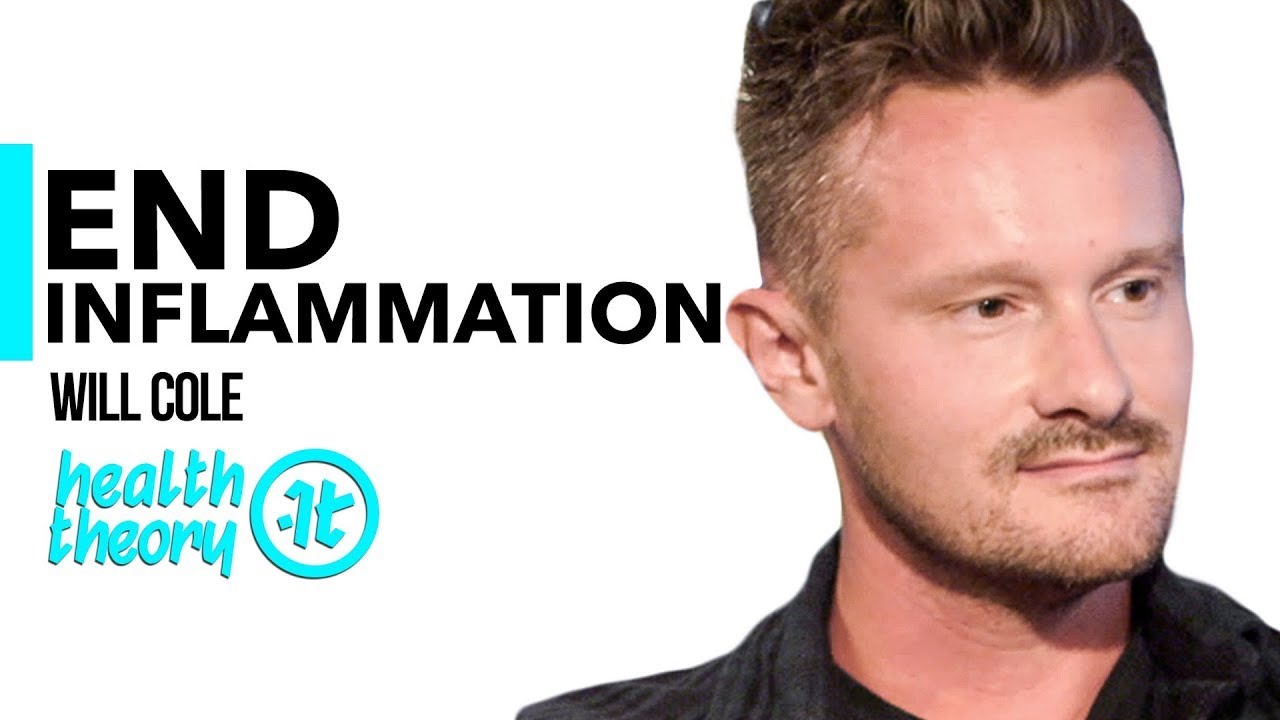
Dr. Will Cole, a top functional medicine practitioner and author of *Ketoarian* and the upcoming book *The Inflammation Spectrum*, argues that chronic disease is not merely genetic but largely driven by "insidious inflammation." He defines this as a spectrum ranging from mild symptoms like brain fog and anxiety to severe conditions such as diabetes and autoimmune disorders. According to Cole, lifestyle factors including diet, stress, toxins, and environmental exposures act as epigenetic modulators that instruct gene expression, often upregulating inflammatory pathways in the immune system. This inflammation is not limited to physical ailments; it significantly impacts mental health issues like depression and anxiety, which are frequently misunderstood as purely psychological when they have deep physiological roots involving the gut-brain axis. The root causes of this modern "storm" include specific dietary choices and environmental toxins that disrupt biochemistry. Cole identifies sugar in various forms—such as evaporated cane juice or coconut sugar—as a major driver of inflammation, alongside harmful fats like canola oil and vegetable oils cooked past their smoke points. Environmental factors such as glyphosate exposure from conventional farming also play a critical role. Furthermore, he highlights histamine intolerance, often caused by Small Intestinal Bacterial Overgrowth (SIBO), which manifests through skin reactions or digestive issues due to the gut-skin axis. He emphasizes that while genetics provide the "cup size" for one's tolerance to stressors, epigenetics dictates how much we fill those cups with inflammatory substances, noting that two-thirds of autoimmune inflammation is driven by lifestyle rather than DNA changes alone. To combat these issues, Cole advocates for a personalized approach centered on whole foods and reducing systemic inflammation, often through his "Ketoarian" method—a clean version of the ketogenic diet rich in plants but allowing for animal proteins like wild-caught fish and grass-fed beef to ensure nutrient density. He acknowledges that while some individuals thrive on veganism or vegetarian diets due to their specific genetic profiles (such as MTHFR gene variants affecting folate conversion), others may struggle with high-carb plant-based foods, leading them toward carnivore-adjacent approaches for short-term gut healing using bone broths and organ meats. He supports intermittent fasting but warns against aggressive protocols like One Meal A Day without proper caloric intake or metabolic readiness, suggesting that autophagy benefits depend on individual insulin sensitivity and inflammation levels rather than a fixed timeline. A significant portion of Cole's philosophy addresses the psychological component of health, describing how trauma and "baggage" regarding food create disordered relationships that sabotage recovery efforts. He notes that many patients suffer from orthorexia or shame-induced binge cycles because their current eating habits are disconnected from present needs and rooted in past experiences. His clinical approach combines rigorous lab testing for markers like calprotectin with an empathetic understanding of a patient's emotional state, recognizing that healing requires addressing the spiritual block before nutritional mechanics can take hold. He concludes that self-love is essential to breaking cycles of food guilt, urging individuals to eliminate sugar and replace it with healthy fats while cultivating a mindset free from body shame as the most impactful step toward holistic wellness.
Read the full video transcript
Because you see their relationship with
food is not about the present moment.
It's not about the breakfast. It's not
about the lunch or the dinner. It's
about their years of
baggage that they've brought into where
they're at. So, you have to start to
unpeel that. And that takes months, can
take years to really work with somebody
to overcome that disordered eating. And
I don't mean that just an eating
disorder. I think there's a eating
disorder spectrum. I think that there's
a lot of people that really have
disordered relationships with food and
body shame. So that if I had to punch
anybody patient wise, if it got them to
change, it would hurt a little bit, but
if it made them change, I would do it.
Um because
it's literally killing them.
Hey everyone, welcome to Health Theory.
Today's guest is Dr. Will Cole. He was
named one of the top 50 functional
medicine practitioners in the US and
he's written the book quite literally on
how to do a keto diet with primarily
plant-based nutrition. It's called
Ketoarion. He also founded the Cole
Natural Health Centers and is the host
of not one but two health and wellness
podcasts, Goop Fellas and Keto Talks.
But even with two podcasts, I'm not sure
you could do more than simply scratch
the surface of the number of topics that
this man can go deep on, including what
I want to start with today, which is the
terrifyingly complex diseases of
modernity to put a nice fancy word to
it.
I love it.
So define that for us like what are the
things that are ailing us? You talked
about in the book that there's a storm
coming. What is that storm?
Yeah. So this commonality between just
about every health problem we face as a
world is has one thing in common and
it's inflammation. It's chronic
insidious inflammation. And inflammation
is a good thing, right? It's parts of
our immune system. It fights viruses and
bacteria. It's like really good to have
healthy balance inflammation levels. The
problem is so many people that we love
and so pe many people that we know,
they're going through chronic
inflammatory issues. So anything from
diabetes to heart disease to autoimmune
conditions to things that don't even
seem inflammatory like anxiety and
depression and fatigue, like people
don't think of mental health issues as
having inflammatory components, but
that's what the literature suggests.
Yeah, that that was super interesting.
Talk about that. So mental health, which
for sure before I started researching
about health, I never in a million years
would have thought that it was anything
other than sort of a
a mental as removed from the body
problem or even a brain wiring problem.
I wouldn't have thought that like you
said, the best medicine is on the end of
our fork for something that has to do
with the mind. So how is the
inflammation triggered underlying all of
this and then how does it work its way
up to being a mental disorder? So the
things that we do in life, these
epigenetic modulators, the foods we're
eating or the foods we're not eating,
our stress, our exposure to toxins, all
of these things in life are constantly
and dynamically instructing our
biochemistry, influencing our immune
system and bringing up inflammation or
bringing down and modulating it in some
way.
Really fast, let's let's dive into that
so longtime listener listeners of the
show will understand the difference
between genetics and epigenetics. But
are you saying that lifestyle, food,
etc. are essentially signaling molecules
that tell what genes to turn on and off,
what amount to turn on?
Exactly. They are they are instructing
gene expression and they're upregulating
pathways in our body of our immune
system. So all of these things that we
do in our life and when you look at the
statistics of these diseases that I
mentioned these are largely overcomeable
healable things at least supportable
things with easy lifestyle change.
It's not easy but it's needed. Human
nature is to do this same thing and
expect a different result. The human
nature is to want a quick fix. you know,
every meal is another opportunity to
feed health or feed health problems.
There's no like benign food.
There's there's no benign activity. And
that's actually why I talk about this
concept of the inflammation spectrum in
ketoarian. We are all somewhere on this
inflammation spectrum. From one end,
it's mild fatigue and brain fog and
low-grade anxiety which are ubiquitous.
And then the other end of that spectrum
is full-blown ICD10 like diagnosis
codes, you know, autoimmune conditions
or diabetes, god forbid, or any one of
these problems. And then everything in
between on that continuum.
So my job is as a functional medicine
practitioner is to like find out where
what what's driving that inflammation
and then start moving their health in a
positive direction.
All right. What are some super common
inflammation causes that you see day in
and day out with your patients?
Well, the foods we eat is instructing
our biochemistry. It's influencing the
gut microbiome, which is 75% of the
immune system, and that's upregulating
the immune system in that way. A lot of
gut centric inflammation has to do with
food, but it's not just food. So, you
have to look at toxins. I see that quite
a bit and that's a broad umbrella, but
products that people are using, um,
environmental toxins,
let's get real [ __ ] specific. So, I'm
going to, if you had to put an apex
predator of toxins, are we talking
glyphosate?
Yeah, it's our food supply. It's it's
things that our food the way our food is
grown, the way that it's grown, the way
the things that are sprayed on the food,
but it's also not just the food itself,
but it's it's how people are cooking.
They're cooking it in a wrong way.
They're frying it and they're kind of
turning good fats into bad fats by
smoking it uh cooking it beyond the
smoking point,
which is different for different oils.
Yes.
So, give me give me a a short list of
like the real bad things to avoid. So,
um to avoid glyphosate, should I be
going to locals farmer markets or like
how how do we avoid that one? Um what
fats should we be cooking with? How do
we know the smoke point? How do we make
sure that we're in safe ranges?
Yeah, I would say for most people, and
this is the double-edged sword of
information, right? We sometimes people
can get this paralysis of analysis. They
feel like I'm screwed. Like what I'm I
have to live in a bubble and like eat
air and ice cubes and like do nothing.
So, I want to be very like stressing
about food is not good for our health
either. I think people need to find out
where they're at on this inflammation
spectrum. And the way that I explain it
in the book, the inflammation spectrum,
is there's seven sections on this
spectrum. There's brain, there's
hormones, there's blood sugar, there's
detox, there's muscularkeeletal, the
seven, and then there's connections of
the seven or polyinflammation.
So we go and ask questions about each
section. So for example, like the outer
third of your eyebrows are thinning. It
may seem random to the lay person, but
that's a sign that the thyroid may be
not working well. So, someone may think,
"What the heck? Why is he asking me
about the outer third of my eyebrows?
These are clues like check engine
lights." People need to start taking
inventory of this stuff because
it's the mundane that people just think
it's normal, but these things are not
normal. Like having low-grade anxiety
isn't normal.
Like not for having this fatigue and
brain fog, just like getting through the
day with tons of coffee and sugar is so
ubiquitous, but it's not normal. But
people think it's normal because that's
their life. So through asking the
questions in the inflammation spectrum
book, people can start being conscious
of the fact that this isn't normal.
Whoa, I thought it was. Chronic disease
is ubiquitous but not normal,
right? Uh I do suffer from low-grade
anxiety. It used to be bordering on
paralyzing and I had to work my way out
of that. Now, what complicates things
for me is that working my way out of
that was massively about getting my mind
in a different place. And when I when I
first started having to unwind it, I had
no sense that this was diet related. So,
I went from almost paralyzed to
um still sort of a background issue, but
very manageable all mentally. But now
I'm in the zone where I feel like this
probably is
something that's happening at a gut
level, like a literal gut level if I had
to guess.
Um, so
I come to you as a patient, I can
articulate that. What What do I begin to
do? What am I am I doing an elimination
diet? Am I going keitarian?
To me, I would
go deep on a health history level.
Let's do it.
Okay. Fire away.
Uh, do you have a family history of
autoimmune problems? Yes. Okay. And
that's that continuum. I mean, just
because you have a family history of
something doesn't mean you're going to
get it. But I find that a lot of people
with this low-grade anxiety or anxiety
and panic attacks oftentimes, not every
time, you'll find this autoimmune
component in the family. And there's a
whole field of research called the
cytoine model of cognitive function.
It's basically how inflammation impacts
our brain. So that's anxiety,
depression, brain fog, ADHD, autism, and
the like. Uh so I would want to look at
the second brain at your gut and look
kind of look at the complexities of the
gastrointestinal system and the
microbiome which is the trillions of
bacteria in our gut which influence our
our brain.
I send off a test.
Yeah.
And you're looking for diversity.
We're looking for diversity. We're
looking for bacterial imbalances or
dispiosis or bacterial overgrowths.
We're looking for any yeast and fungal
overgrowths. We're looking for digestion
and absorption. We're looking at
intestinal permeability or what they
call leaky gut syndrome. We're looking
at inflammation like markers like
calrotectin. These are immune
inflammatory markers in the gut.
So we look at that to kind of get a
benchmark of the what's going on in the
second brain. Your gut and brain are
formed from the same fetal tissue.
All right. So let's say what we get back
is ah there are signs of gut
permeability.
Mhm.
Because I this is about maybe a year ago
I all of a sudden I had a rash and I was
like the [ __ ] is going on? It was so
abrupt and so out of nowhere and I had
not changed my diet. So I was like is it
possible that like we changed detergents
or something? And so we were like going
through some of those things. Is this a
topical reaction?
And then I was just like no I know
better than this. like the skin is for
sure a representation of something
that's going on inside.
So, I started researching um histamine,
foods that were high in histamine. And
then I also I ate a lot of olives and I
read that that was high in histamine and
so I removed that. I was eating a lot of
cured meat, a lot of cured meat, so I
cut that out. Um and then once I started
doing that, poof,
it went away.
And I was like, whoa, that's weird. So,
I feel like even now I'm I'm at this
where if I eat things that are high in
histamine, I'm going to have a problem
where I'll either break out or I'll
start getting itchy
or if I eat too many um highly processed
foods that'll also and I don't know what
ingredient it is in there or what. Um
but if I stray too much from just whole
food
that and specifically avoid even some
whole foods like olives that are high in
histamine.
Yeah. So I would say knowing what I know
at this and I talk about histamine
intolerance at length in the
inflammation spectrum because of this
sort of gut centric inflammatory
response and I see histamine intolerance
a lot. So it's typically caused or at
least in part driven by something called
small intestinal bacterial overgrowth or
SIBO.
SIBO I know it well.
So it can basically it's bacteria living
where it shouldn't live into the small
intestines. And you know this, I'm sure,
but there's this connection between the
gut and the skin. It's called in
functional medicine, we refer to it as
the gut skin axis. It's not just
functional medicine. If you look at
PubMed, you'll see that connection as
well. Um, but it's the the the idea that
what goes on in the gastrointestinal
system is influencing the skin. It's out
it's the check engine light again of
what's going on in the gut. So I would
look at these gene snips, these single
nucleotide gene variants that we get a
copy from our mom, a copy from our dad.
So with this autoimmune inflammation
spectrum component potentially with your
case, I would want to look at these
snips, but it's important to know these
snips have been around for 10,000 years.
Our genes have remained largely
unchanged. So yes, genes are a component
to that, but so much of that is
epigenetics. So research estimates that
twothirds of that autoimmune
inflammation puzzle is epigenetics, the
lifestyle stuff that we do. But genes
are a part of that. So if you have a
slow gene,
a sluggish gene variant, that's going to
that's going to slow down your body's
breakdown of these histamines if that's
the issue. It seems like it if you're
avoiding these high histamine foods, but
we can kind of know as you know
definitively as we can know from a lab
standpoint if that's an issue or not.
I love it.
Yeah.
So you call it a storm. the storm of
inflammation is coming and when I look
at the world it I'm actually scared. So
you talk about seeing people that have
kids that are like 2 years old that have
autoimmune conditions and I'm like what
the [ __ ] Like when you think about okay
sure if I've punished myself for decades
and decades and decades with a stupid
lifestyle. I get why I end up with an
autoimmune disease. when you're two,
it's like that pretty clearly says to me
something happened to your parents,
something happened to your grandparents,
your great-grandparents, and that this
has been like this um ever escalating
problem from generation to generation
passed down either through the
microbiome. It's not changes in DNA, at
least I don't think. So when I think
about epigenetic changes that can be
handed down that gets maybe a little
more controversial but the microbiome I
would say is pretty incontrovertible
which is you're going to pick up what
your parents had. So it's there there do
you agree that there's something
happening generationally?
Yeah. There's no way around it. You can
look at the statistics of what kids are
up against. Again, it's a confluence of
a lot of different factors, but it's
largely the world we're living in. And
we are just
You got to define that for me. What do
you mean? So, I'm eating glyphosate.
Problem number one. I'm uh eating uh
vegetable oils. That was stupid. What
else is stacking on us?
Well, if you want to get very specific
here, I think sugar is a major driver of
inflammation. And it's so it's
everywhere. It's in so many things with
various trop nice sounding names,
euphemisms.
sugar that people are sucked in by
uh evaporated cane juice
uh even like coconut sugar, you know, it
sounds more like natural, right?
But it's still sugar. It may be a
better, but better doesn't mean optimal,
right?
So, look at the grams of carbohydrates,
look at the grams of sugar. I think that
that's a very easy thing for people to
start being mindful of. But then look,
we have these some people are more
insulin resistant than other people.
They're going to probably have a lower
tolerance for carbs than the next person
that doesn't have those gene variants.
They're insulin sensitive. So, yeah,
some people have like I I like to use
that cup analogy. Some people have big
cups, some people have small cups,
meaning they can get away with a lot of
quote unquote abuse before you see a
problem,
right? The genetic tolerance to
stressors. We can't change our cup size.
We're born with that. But we can change
to a large degree what we put in our
cups. So if people have small cups,
they're going to have to do more.
They're just going to have to. And it's
not fair, but that it's reality. And
they're going to have to lean into
emptying that cup. People with large
cups, they could start off simple and
lean into it. Uh,
all right. Let's talk to the small cup
people. So, uh, we're cutting out sugar.
Mhm.
We are. Are we going keitarian? Like, is
that going to be a key part of this?
It depends on what their personal
preference is. Ketoarian is the way that
I eat. It's a very effective way for
brain function. It's a very effective
way of lowering inflammation. It's the a
clean way to do the ketogenic diet. And
I do a cyclical ketoarian approach where
I I'll be in ketosis and then I moderate
my carbs when I want to.
And you fluctuate your carbs more than
your protein.
You you'll have to adjust your protein
and fat when you bring your carbs up.
But you find a rhythm and a grace that
works for your body. So people have to
do some experimenting. So maybe it is
ketoarian or maybe they can just lead
into like you said an elimination diet.
That's how what I actually advocate for
in the inflammation spectrum.
Now do you think that ketoarian works
because people are eliminating a lot of
the sugar and other garbage?
That's part of it. Yeah.
So what is it about a ketogenic diet
that makes it so anti-inflammatory?
Well, let's start with the basics
because I I agree with you. You're going
off of sugar. You're going off of
inflammatory fats like canola oil and
soybean. Well, you should be, but most
people in keto space are. They're going
off of grains. They're going off of all
these sort of inflammatory foods. So,
that's of course foundational to its
benefits, but we can go an extra level
here and kind of tap into our body's
metabolic state known as ketosis. So
your body we all we all have this
capability but beta hydroxybutyrate is a
ketone that our body produces and it
yeah it's a way to burn fat and that's
what people are excited about the
ketogenic diet but I what excites me
even more than the fat burning and
becoming a fat burner is its
anti-inflammatory benefits in the body
that excites me as a functional medicine
practitioner way more that you can lower
like things like NFCappa B and and COX 2
and the these inflammosomes that are
high in the people we love and maybe in
ourselves
So, let's tap into our body's own innate
way to modulate inflammation levels and
balance inflammation levels.
Okay. So, to do that, um, I'm going to
walk through some of the things that I
think you would recommend. Um, so, we're
going to have to experiment for sure.
And you're very clear that one size
definitely does not fit all. And I think
that's absolutely correct when it comes
to nutrition. um whether it's just the
epigenetic state that you're in or the
genetic state or the combination of the
two, which of course is the reality, but
you're probably going to want to
eliminate sugar.
You're going to want to eliminate bad
fats, which you've already listed some
of those. You're going to want to stop
damaging your fats, meaning cooking them
past the the smoke point.
You're going to want to avoid
environmental toxins. Let's list a few.
You're going to want to stop eating
things that have glyphosate, which is
going to be really hard, but you're
going to try to eliminate that, aka
Roundup. You're going to eat whole food
whenever humanly possible. Um, your your
recommendation certainly in ketoarian is
to be largely plant-based. You're very
evenhanded about um the use of certain
animal proteins um in moderation. I
don't remember you actually using that
word, but like that is certainly the
gist of the book. Mhm.
Um and then the part that I'm just
looking at the way that you live. You
live outside the city. You specifically
wanted to get away.
Um all those things,
how does that play in?
Yeah. All those things are super
important, but it's not just about food.
And I think you brought up a good point.
So food has to be like a major component
of this. You can't you have to start
there. Um, and I think healthy fats are
one way because if you're eliminating
carbs and sugar, you have to fill it
with something else. Avocados, avocado
oil, nuts and seeds, I recommend soaking
them to break down the phytic acid and
the lectins, make them more digestible.
Um,
coconut uh, and did I mention olives and
olive oil and, uh, wild caught fish,
fresh seafood, things like that. So that
would be the healthy fats and some
protein in there.
What is something that makes you want to
punch your patients in the face? Like do
they ignore advice a lot? Are there just
common mistakes that people just keep
making because they're addicted to sugar
or anything like that. And I know you
would punch them with love. That goes
without question. But is there any like
frustration element to dealing with
that? In my own life, there are people
that I love desperately that suffer
needlessly in my opinion because there
are things that they can't give up or
won't give up or whatever.
If I had to love punch a patient,
if that was a thing, I would say it's
the self-sabotage. It's it's the people
that
you know the other side is so near like
if they could completely improve their
wellness in a powerful way,
but they have baggage and trauma that's
sabotaging them in the present moment.
That's [ __ ] interesting. What do you
mean? How's how is baggage and trauma
sabotaging them?
Because you see, their relationship with
food is not about the present moment.
It's not about the breakfast. It's not
about the lunch or the dinner. It's
about their years of
baggage that they've brought into where
they're at. So, you have to start to
unpeel that. And that takes months, can
take years to really work with somebody
to overcome that disordered eating. And
I don't mean that just an eating
disorder. I think there's a eating
disorder spectrum. I think that there's
a lot of people that really have
disordered relationships with food and
body shame. So that if I had to punch
anybody patientwise, if it got them to
change, it would hurt a little bit, but
if it made them change, I would do it.
Um because
it's literally killing them. It's and
they you see them doing well and then
they go off and they binge again and
they are just they feel like a failure
and their guilt and shame around it.
That takes time to start to unwind that.
Whenever I heard somebody ask you like,
and of course I'm sort of ruining it for
myself because I'm going to ask you at
the end, but uh like what's one thing
that you would have people do? You
always say you can't heal a body that
you hate.
I think that's super interesting that
you get involved in like the mental
aspect of the game.
Yeah.
How do you do that? Like as a clinician,
how do you help with that?
It's such a central part to my job. Like
the science is important. We run the
labs. We look at the data. We look at
the objective baseline. And that's
without a doubt paramount to my work as
a functional medicine practitioner. But
there is stuff that you can't measure on
a lab that influences the lab.
You cannot spend your whole day like
talking to people that are going through
real stuff for the past 11 years at this
point and not see this human component,
this emotional, mental, spiritual
component to their relationship with
food and their physiology at large. We
find ourselves and by we I mean myself
and my team find ourselves as almost
food therapists in many ways as being in
this space of wellness is you have to
get this this right this the spiritual
block right then when you get that right
all of the food and the macros and the
micros and all the nutrition stuff tends
to fall into place a lot more easily.
It's an outward expression of their
realization of who they are. And then
some people have to deal with just the
logistical nutritional stuff. I'm not
saying that there sometimes is just a
food change and they're fine. But if I
had to say one thing that's plaguing our
culture as a whole and in addition to
the food stuff, it's people's
disordered relationship with themselves.
So how do you insert yourself in that?
Do are there questions that you ask? Is
it just case by case and you pick up on
something that somebody says like how do
you help them begin to heal that?
Yeah, we just ask a lot of questions to
get to the to the root cause. But
it's this it's the dichotomy of
functional medicine. It's the science
and then the art.
And the art side of it is feeling the
energy. E most of my patients are
online, but I still feel that pause or
that way that they word things. and you
get to know somebody and I'm a fairly
empathic person and you just get that
rhythm of where they're at and what they
need in the way that you even should be
speaking to them because not everybody
like you have to kind of sometimes lean
people in gently for them to receive it
at all
because sometimes if you go with good
intentions and say this is all the stuff
you need to be doing they will throw
their hands up
and walk the other way because it's just
too much too soon. So you have to find
the rhythm of what what's their love
language, where are they at, and then
what's the lab what do the labs say?
So what are some of the patterns of
dysfunction? Like what do you see people
really struggle with that's super
common?
Well, I think in this wellness space, I
think that various forms of orthorexia
are a problem.
Meaning they get so paranoid about their
diet that that becomes its own fixation.
Yeah. And and a lot of times it's born
out of real health issues because we
have this epidemic of inflammation of
autoimmune conditions. They are having
reactions to the like healthiest food
under the sun. They're like having
histamine reactions from them. It's like
if I can't eat vegetables and and
olives, like what the heck am I supposed
to do? And again, it's stress and shame
and anxiety about food large healthy
food and healthy eating. I think that's
a problem. And then I think that because
people are stressed and they're not
sleeping well, people are stress eating.
I think that's those are the two things
that I see the most.
That's super interesting. One of the
things that I found fascinating about
your own story is that you start as a
were you full vegan or were you just
vegetarian?
I was a vegan for 10 years.
Okay. So you migrate away from that. Why
did you migrate away from that? So I
think there's a good way to do an
optimal way to go to the ve a vegan diet
and there's many vegan keto options in
ketoarian. So if people are for
religious reasons or ethical reasons or
personal preference reasons I wanted to
teach them to go entirely plant-based in
a way that I believe is sustainable not
only for the environment but for
their physiology,
their environment, their bodily
environment. So we all have different
gene snips. I have a double gene snip of
the MTHFR gene, which is the gene that
makes the enzyme that converts folic
acid into folate, which we need as a
methyl donor. It basically does a lot of
cool things for our body. It's a carbon
hydrogen group that brings down
inflammation. It helps our hormones
working well, our brain working well. It
builds proteins in our bodies. My body
does that pretty dang slowly, like up to
70% slower. and
folate, uh, especially in abundant
amounts and B12 aren't as high in in B
vitamins, uh, when you're doing entirely
plant-based. So, I adjusted my diet
where I'm still predominantly
plant-based, but I'm bringing in things
like egg yolks into the vegetarian land
and then the wild caught fish. And as
far as the pescatarian section of my
diet, uh to provide my body more ample
bioavailable sources of these nutrients
and omega fats are another one of them,
not just the B vitamins. But the
conversion
is lousy in my body of these like flax
seeds and chia seeds. My body doesn't
convert them to sort of the longchain
omegas as well as somebody else.
So we have to find out what works for
our body. Then there's some people that
do great with vegan diets. I mean, you
know, Rich Roll, right? I mean, the guy
does amazing on this diet and his wife,
Julie, they do fine. But I talk to
patients for a living. And I most of my
patients are very well read. They've
done all their research.
They're eating cleaner than most
Americans. They're eating vegan diets.
They're eating vegetarian diets. They're
doing all these things, but their health
is struggling. How can we optimize it
without abandoning the foundation of
maybe their ethics or principles?
Right. So, one thing in the book that
you cover is what oftentimes vegetarians
and vegans do wrong. What is that? Where
do they um what hole is in their diet
that you help fix?
I think a lot of them overdo it on the
carbs, you know, they're carbarians by
definition. And
when you look at the vegan diet,
vegetarian diet, it doesn't by it
default mean it's a healthy diet. Just
means you're avoiding animal foods. So
you have to have it properly formed. You
have to really lean into it. And it's so
easy because it's convenient to get all
these convenient vegetarian foods just
like any other way of eating. So you
want to make sure you're again focusing
on whole foods, real foods. Look at your
macros. Just get a snapshot of where
you're at from a macronutrient, which is
proteins, fats, and carbs. Some people
have a toler handle more carbs. Some
people can't. Like I have many patients
that if they ate what Rich Roll ate,
their blood sugar would be through the
roof. But some people can do it. So we
have to find your what works for your
body and what doesn't.
So there they could that that doesn't
mean that they shouldn't be plant-based.
Maybe they just need to shift what
plant-based foods they're focusing on.
That's all.
So
the carnivore diet is something that I'm
super interested in. So my wife has
struggled very profoundly with
microbiome issues
and she has made tremendous progress.
She's been dealing with it now for four
years, but she's made tremendous
progress. And she's gotten to the point
where the things that she eat, she can
maintain equilibrium, but she isn't like
progressing as much as I she's sort of
hit steady state, but she's not making
progress in my estimation. Um, and so
one thing that if the hypothesis about
lectins is accurate and that you have
plants that have these toxins in them,
you eat the toxins, they break the
epithelial lining of the gut and now you
have um your autoimmune response.
If that is accurate, then potentially
for her, if she was a good carnivore and
ate nose totail and, you know, got the
whole mix of everything and isn't just
eating hamburgers or steaks,
um, I'd be very curious to see if that
worked for her or not.
Um, I'd be curious to get your take on
the carnivore diet.
Yeah. So, you would think as the author
of Ketoarian, I wouldn't advocate for
the carnivore diet. It's I do use a
carnivore diet in my for my patients
that need it. It's an an ultimate
elimination approach. You're taking out
a lot of variables and these people with
really dysfunctional guts and
gastrointestinal lining and microbiome
and this inflammatory cascades going on.
Sometimes you need that intervention to
lower inflammation for a short period of
time or for a period of time. It could
be months. If you're going going to do
the carnivore diet, you're going to want
to make it make sure it's nutrientdense.
You're going to want to make sure that
you're going for more of the organ meats
from a nutrient density standpoint like
you pointed out. And I have people be
fish centric as well. It's not just
about the organ meat. So, I want people
to getting making sure they're getting
their healthy omegas from
the fish. And grass-fed beef has omegas
as well. But the problem with this is
that they it's not sustainable for most
people long term. And we're going off of
dairy, too. And many times we're going
off of egg whites for a while, too,
because the albumin can be a problem for
some people with autoimmunity, the egg
white. Some people have dairy
sensitivities as well. So, it's pretty
tight. That's why for most people, it's
not going to be a long-term thing. So,
we do it for a period of time. We do
some broths and soups and stews and
things like that. sort of a GAPS
approach. I don't know if you're
familiar with GAPS. It stands for gut
and physiology syndrome or gut and
psychology depending on what you're
using it for, but it's the gut brain
axis, the gut physiology axis. So, it's
it the premise is lots of bone broth
soups and stews. So, we use that with
sort of these nutrient-dense organ meats
for a time and then we lean in.
Why soups and stews? Bone broth I get.
Yeah.
I don't understand soups and stews. It's
it's soft and cooked meat because even
the meat can be hard to digest for these
people.
Many of them have hypoglyhria, decreased
hydrochloric acid. They're not breaking
down meats even.
Wow.
They have really messed up guts. So, we
have to help with their digestion at the
beginning really to even break down
meats. But then you start with you lean
into pureed vegetables after that and
you know uh softcooked vegetables, low
FODMAP vegetables which are the
fermentable sugars that people with
these dispiosis can have a problem too.
How the hell if I went carnivore for a
year,
how the hell would I still have bacteria
like a SIBO problem? So for fermentation
being the thing that I'm thinking of,
would that bacteria not die off?
Well, there are certain bacteria
and yeast that feed on other things,
too. They can feed on proteins. They can
feed on ketones. So, then you're going
to have to bring in some typically
herbal antimicrobials to help with that.
Oh, god. This stuff gets so complicated.
It is complicated. My my whole day job
is like looking at all the variables and
trying to make this as digestible, no
pun intended, but as practical as as
possible.
Yeah, man. God, going through this with
my wife, it really it is it has opened
my eyes to trying things that I never in
a million years would have thought would
work. The laundry list of crazy things
that she has tried from like hold a vial
of this stuff and I'll know if you're
allergic to it. It's like yeah, try it
all. Like do everything you can grip
strength based on what she's holding. I
mean, stuff that I'm like is not
possible,
but
she's it it's almost like the crazier
stuff we finally have given ourselves
over to and just like I hate the word
surrendered more than you can imagine,
but at some point like we have just
literally just surrendered to
the potential like
that anything might work. tried in a
very systematic titrated way. Like we're
not just throwing things to the wind,
but it's like
trying things, anything, just to see
like if something works. And it's it's
really been interesting to see things
that I never thought would work start to
slide into place, which is actually one
of the things that makes me consider
carnivore. Never would have considered
it before.
Yeah.
But let's talk uh carnivore versus
vegetables. So, I maybe I like
vegetables a lot, but I tend to like the
ones that are really um carby.
Mhm.
Sweet potatoes are so delicious. I would
give up virtually everything to eat them
all day. Um but I even though I like
vegetables partly out of laziness
because I don't want to cook them, I am
almost not entirely because I'll throw
in rice every now and then. Um, but I'm
carnivore adjacent.
I like that.
What is it? What nutrients do you fear I
will miss if I were to eat organ meat
and all that but not have vegetables? I
think if you are
eating organ meat uh and doing it well
with a variety of nutrient-dense meats,
I don't think you'd be meeting missing
many nutrients
other than fiber,
which is a major way that we help with
gut diversity.
A robust variety of plant foods is
associated with a healthier microbiome
longer term. And we have longer term
studies with these. We don't have longer
term studies with the carnivore diet. I
would assume that if someone's doing it
properly, they're they probably at a
period of time would be would seem more
good than bad
because they're removing a lot of foods
and then it's going to be a net positive
for them if they're doing a properly
formed carnivore diet,
right?
But is that going to be sustainable long
term for them?
Most people are are going to want more
variety than that.
No, I get that. So, I do uh intermittent
fasting every day. I do I try to keep my
average pretty damn close to 20 hours a
day.
Mh.
What are What's your take on
intermittent fasting, fasting in
general? Useful, not useful.
I I love it. I I advocate it in both of
my books. I But you have to find what
works for your body because I feel like
sometimes people I see this a lot. They
go too aggressive with timerestricted
feeding or intermittent fasting and then
they what's too aggressive? Well, it's
for their body. So, let's just say they
want to try like the OMAD like the one
meal a day 22 to2. You are getting your
calories in in a 2hour to one hour
window. So, 22 to2 or 23 to one fasting
to eating window.
You have to make sure you're getting
enough calories in that time.
You That's a big meal.
Yeah. So, I've been experimenting with
it.
You've tried OMAD?
Oh, yeah.
And
I like it. And I've just been doing
this. I knew about the research. I've
written about it before, but I didn't do
it for myself until recently. Um, and
I'm experimenting.
What's the research saying? Cuz I want
to live forever.
Is this going to help in that endeavor?
I mean, with these longer periods of
fasting, you in theory are upregulating
these autophagy pathways.
The cellular recycling gobbling good
cells gobbling. When do you think that
kicks in? 16 hour, 18 hour, 20 hour?
Well, I think depends on how much
inflammation's going on in the person.
It depends on how insulin
will determine when autophagy kicks in.
Yeah. Because if the if the body you see
people that are resistant and look, we
can't gauge. I have no practical
clinical way for me to gauge autophagy.
I wish I did, but when a lab comes out,
I will be running it. But when you look
at people's biomarkers and the things we
can gauge, you look at their blood
sugar, you look at their insulin levels,
you look at their inflammation levels.
Some people can't get into this in
ketosis very easily. They have to kind
of get these things in check and that
takes time, right?
And then you could measure your glucose,
you can measure your insulin, you can
measure your ketones if you wanted to.
Have you ever worn a continuous glucose
monitor? I haven't.
It's [ __ ] interesting, dude. You have
to do it.
I know I need to. I have patience on it.
I was going to say like that's a must
that it's it is if your diet is clean
it's a little bit
gimmicky maybe the wrong word but you
just get to see like oh wow like I ate
an Impossible burger. I thought I'm
really going to like go ham on this
whole plant protein thing or plantbased
diet thing. Let me see how I do as I
upregulate.
Admittedly it was at a restaurant. So
maybe they put so much pinache in it
that it, you know, is what made it
ridiculous. But dude, I reacted like I
ate ice cream.
It spiked my glucose to like 170, which
for me is crazy town. I mean, you could
just see on the cuz it's, you know, my
continuous monitor is pretty flat.
This massive peak. It was crazy.
That is crazy.
Crazy. All right. Where can people find
you? Where can they find your two
amazing books? The inflammation book is
out.
The inflammation spectrum comes out
October 15th. Okay.
So, it's on pre-order now depending when
people listen to this, but uh yeah, it
comes out uh October 15th and
Ketoarian's out now, but everything's
that drill will.com.
That's awesome.
Yeah.
I'm going to take away from you the
answer of uh love thyself and love thy
body and get rid of the shame around
food, which is absolutely critical. But
if people were going to make one change
that would have the biggest positive
impact on their health, what change
would you have them make?
Cut cut sugar out or lower it. It's I
heard it once that it's like a
recreational drug. You should not not
use it very often, but and and
supplement that with healthy fats. So
avocados, avocado oil, olives, olive
oil, grass-fed beef, wild caught fish. I
think that those taking the place of
sugar is would be one thing would change
the human race in a positive way.
I would agree with that.
Awesome.
Well, thank you so much for coming on
the show, man. That was amazing,
guys. I think he has a lot of very
evenhanded advice across the spectrum.
Talks a lot about having to do the
testing yourself, but walks you through
exactly how to do that. I think you will
really enjoy digging into his books, his
videos, everything. It is all absolutely
fantastic. I can't recommend it enough.
If you haven't already, be sure to
subscribe. And until next time, my
friends, be legendary. Take care.
Thank you guys so much for watching and
being a part of this community. If you
haven't already, be sure to subscribe.
You're going to get weekly videos on
building a growth mindset, cultivating
grit, and unlocking your full potential.