Video summary
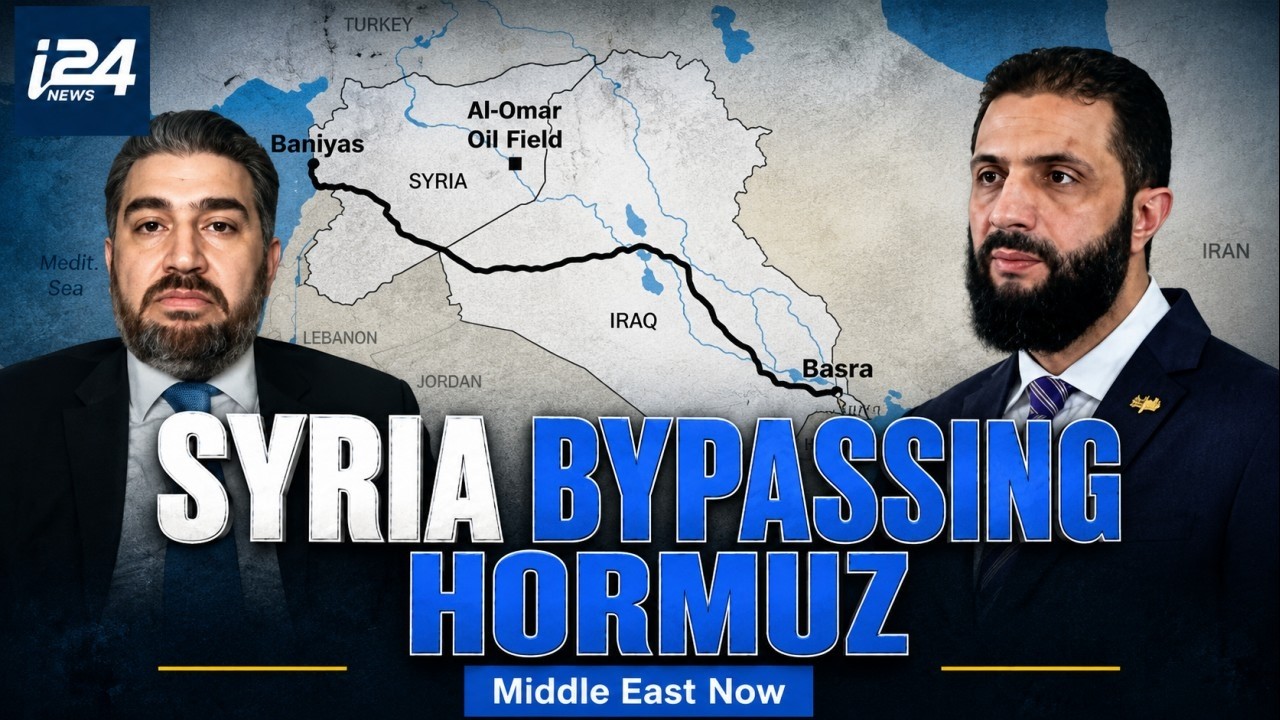
President Trump has endorsed Syria's emerging role as a vital trade corridor connecting the Gulf region with Europe, specifically by facilitating oil tankers that bypass the conflict-prone Strait of Hormuz. To support this initiative, the administration is backing a proposed $5.5 billion pipeline project designed to link Iraq's oil fields directly to Syria's Mediterranean coast. This development marks a significant shift, as thousands of tankers are already utilizing Syrian territory for transit, and Trump has publicly praised the move on social media, highlighting the strategic importance of creating an alternative route that reduces reliance on Iranian-controlled choke points.
The feasibility of such a massive infrastructure project hinges less on political declarations and more on economic stability and security guarantees. Hazem al-Ghabra, a former senior adviser at the US State Department, notes that while Syria has recently been removed from the terrorism sponsorship list, it remains uncertain whether the new government can provide the safe environment necessary to attract billions in investment. The transcript emphasizes that security is ultimately the responsibility of the Syrian state, which faces the challenge of rebuilding its army and police forces after a decade of civil war. Without a stable internal environment, businesses are unlikely to commit to such ventures, regardless of international backing.
Beyond the immediate economic benefits for Syria, which desperately needs funds to rebuild from devastation, this project carries broader geopolitical implications aimed at reducing Iran's influence in the region. By offering a viable alternative to Hormuz, the initiative seeks to pull Iraq and Syria out of Iran's orbit by providing economic opportunities that foster a modern, pro-peace mindset among the population. The discussion also addresses potential competition with the IMEC project involving India and Israel, concluding that businesses will naturally choose the route that offers the safest conditions and highest profit margins, effectively allowing market forces to determine which corridor becomes more viable.
Despite the optimistic outlook, the transcript highlights stark economic realities facing Syria, including a government deficit of approximately one billion dollars and a GDP significantly lower than neighboring countries like Lebanon or Israel. While telecom investments have provided some temporary relief, the overall economic landscape remains fragile with high government spending relative to a tiny economy. Experts warn that while these projects are complicated and face lurking threats from various actors, their success depends on whether Syria can create a secure environment that attracts investment without requiring external powers to fund security operations directly. Ultimately, the project represents a high-stakes gamble on Syria's ability to stabilize and integrate into global trade networks.
Read the full video transcript
President Trump has hailed Syria's
emerging role as a new trade corridor
between between the Gulf and Europe.
Thousands of oil tankers are already
crossing Syrian territory from Iraq in
order to bypass the conflict-ridden
Strait of Hormuz. And the Trump
administration is backing a $5.5 billion
pipeline linking Iraq's oil fields to
Syria's Mediterranean coast. Trump wrote
on social media, "This is great." Well,
for more on that, we're joined by Hazem
al-Ghabra. He is a former senior adviser
at the US State Department. Welcome,
Hazem. Good to have you with us. So, I
mean, this is great for Syria, isn't it?
It's only just been removed from the
list of countries which sponsor
terrorism. Is it stable enough though at
this point to deal with such a huge
infrastructure project?
>> It's a great question because these
projects are not political projects.
They are economic projects. They're
business ventures. And nobody's going to
spend billions on pipelines in a region
or a country
that is not stable. So, it's yet to be
seen if the pipeline will actually make
its way
to reality. And it's up to the new
Syrian government and the Syrian
government and the Syrian people to
create a nation, a system, an
environment where businesses can come in
and say this is a safe place to do
business. Whether it's
small or medium enterprise or massive
projects like this.
>> Right. And
>> But this I mean, this is this comes more
of a pressure on Iran
type of statement saying, "Well, you
want to continue to disrupt Hormuz, we
have options." While the Iranians do not
have options except Kharg Island.
>> Right. And it's a positive thing that
the United States is so heavily involved
in the project. That could keep out more
nefarious actors, couldn't it?
>> Hopefully. I mean,
yes and no almost because
US investments do attract certain
terrorist groups that are anti-Western,
anti-American. So it's not necessarily
the safest environment right now. But
again, it's the US is not going to come
and install a pipeline and spend
billions on top of it to secure the
pipeline. The security aspect, the
safety aspect will remain and will
continue to be the Syrian government's
responsibility. A challenge that is not
easy and nobody is 100% sure if the new
government with their their nascent army
and police force is up to that task.
>> And if it is successful, I mean this
would help the United States pull both
Iraq and Syria out of Iran's orbit
completely, wouldn't it?
>> Absolutely and it's it's on it's not
only Iran, it's a bigger idea. The
economic growth and economic opportunity
will pull
people
not it's not only the government
problem, it's the people problem.
They'll pull them from this ideological
thinking, anti-Western thinking into a
more modern, pro-peace, pro-prosperity
mindset. Hopefully that will work.
Again, these things take time, they're
complicated and there are many actors
who are just lurking waiting for an
opportunity to disrupt such effort.
>> And would this be seen as a threat to
the IMEC project which is about
transferring goods from India via the
Middle East and potentially Israel?
>> Again, it's business.
Businesses will go where it makes more
sense, where it's safest, where you
know, their risk analysis tells them to
go, where their profit margins tells
them to go. So
I'm I'm all for competing, fair
competition.
I don't think it's a risk. I think the
region and the supply uh, but handle
both projects.
But again, which one is safer? Which one
is more viable? That is for the market
to decide.
>> And of course, Syria desperately needs
more funds, more investment. It still
has to rebuild the country that was
completely devastated in a 10-year civil
war.
>> The numbers are scary. I mean, we're
talking about a government deficit of
billion dollars. And this was, you know,
that happened magically because the
deficit was supposed to be closer to 2
billion if it wasn't for the Zain
investment in the telecom
infrastructure.
And by becoming the third mobile
provider in the country and paying the
government for that privilege. But also,
when you look at that number, the
government spending
and compared to the GDP, it's
the government spending is very high and
the GDP is incredibly low. We're talking
about less than 7 billion dollars GDP,
let's say compared to Israel's half a
trillion dollars GDP. Uh, even Lebanon,
decimated by terrorism and and
misconduct and mismanagement,
their GDP is closer to 25 billion
dollars right now. The country needs a
lot of help.
>> Really eye-watering statistics there,
Hassan. Great to talk to you. Thank you
so much. Hassan Mneimneh.
>> Thank you.