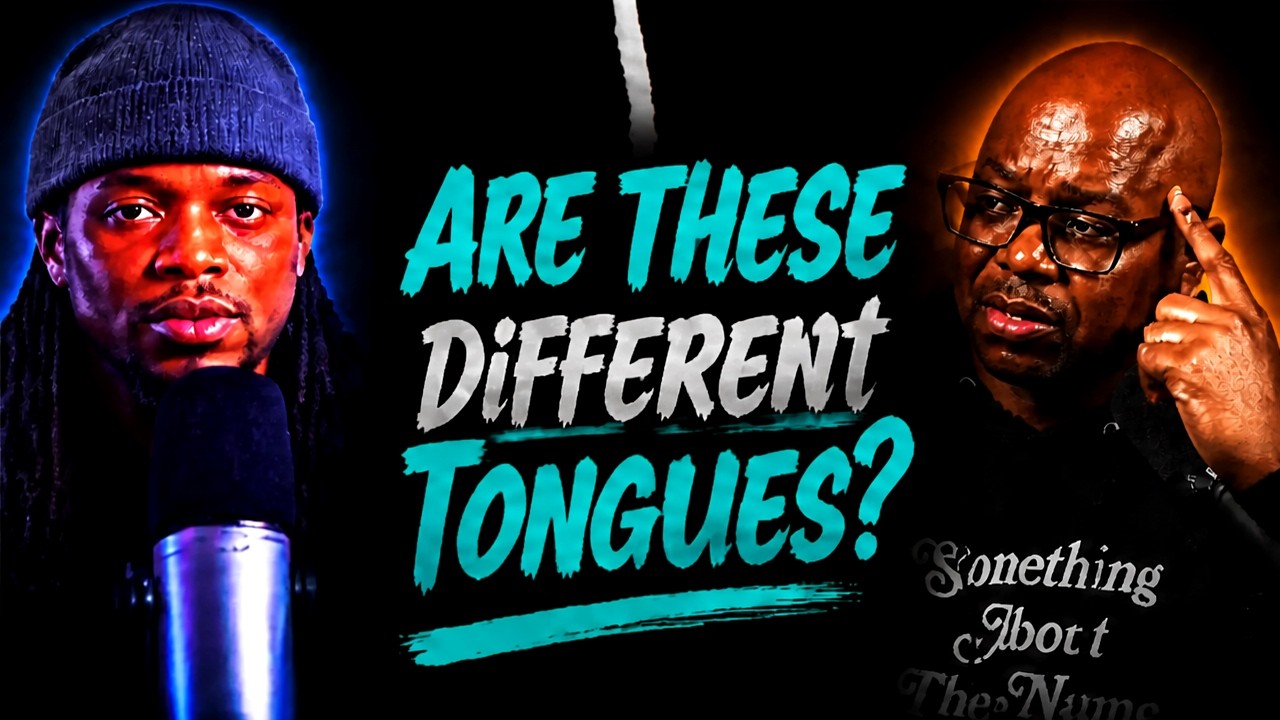
Video summary
The video addresses a common confusion regarding the nature of "tongues" described in the Book of Acts versus those mentioned by Paul in 1 Corinthians. The speaker argues that these are not two different types of spiritual gifts but rather refer to the same phenomenon: speaking in foreign languages. By examining the original Greek words *glossa* for tongues and *laaleo* for speaking, the transcript demonstrates that the terminology is consistent throughout both books. Specifically, when Paul quotes Isaiah 28:11 in 1 Corinthians 14:21, he references a prophecy where God speaks to an unbelieving people through "strange tongues" or foreign languages so that they may not listen. This establishes that the primary purpose of this gift in the biblical narrative is often directed toward unbelievers as a sign, rather than solely for personal spiritual edification among believers.
The discussion highlights specific instances in Acts where speaking in tongues occurred alongside the presence of Jewish audiences who understood the message being proclaimed. In events such as Pentecost (Acts 2), Cornelius's household (Acts 10), and Ephesus (Acts 19), the speakers were addressing Jews or those familiar with Hebrew, and the content involved magnifying the goodness of the Lord. The speaker emphasizes that every recorded instance of this gift in Acts resulted in a clear message that was recognized even by skeptics or non-believers, who could attest that something supernatural had occurred. This contrasts sharply with modern experiences where individuals claim to speak in tongues without anyone else understanding the language or recognizing the event as a genuine move of the Spirit.
Furthermore, the video critiques the tendency of some believers to use tongues primarily for self-edification rather than building up the church, which Paul rebukes in 1 Corinthians 14. The speaker points out that throughout the New Testament, spiritual gifts are consistently described as being intended to benefit others and strengthen the body of Christ. A key distinction made is that genuine biblical manifestations of the Spirit are never hidden; they are observable events where both believers and non-believers can witness the occurrence. The transcript notes that in Scripture, no one ever went around boasting about having spoken in tongues or claimed a private spiritual experience without external validation.
In conclusion, the speaker asserts that while speaking in tongues is indeed a spiritual gift, the specific experiences often cited today do not align with the biblical pattern found in Acts and Corinthians. The argument rests on the idea that true manifestations of the Spirit are public, understandable to observers, and always accompanied by a clear message or fruit that points to God's work. By adhering to the scriptural examples where tongues were used to communicate with unbelievers and glorify God in a way that everyone could perceive, the church can avoid ignorance and ensure that its practices genuinely edify others rather than just the individual practitioner.
Read the full video transcript
Uh this is in in regards to our you know
our favorite topic of speaking in
tongues
>> um and all that. So I was trying to
figure out when it comes to um the way
that tongues was being mentioned by Paul
in Corinthians and the ways that it was
mentioned in the book of Acts.
>> Are these the same type of tongues?
That's you know what I mean? Because it
seems like when I'm reading Acts, I'm
thinking it's telling us it's more so a
matter of of being able to speak other
languages, but it seems like in
Corinthians, it's like something that's
completely different that's like
something spiritual between you and God
as it's mentioned there. So, is there
like different versions of tongues?
>> No. Oh, not not that we know of. As a
matter of fact, let's go to the very end
of 1 Corinthians 14 because I think
everyone would probably agree that Paul
is kind of hot and heavy talking about
tongues. He's talking about spiritual
gifts, right? When he when we get to 1
Corinthians 12, 13, and 14, 13 takes a
little bit of a break because he's
talking about how things ought to be
done in love. I don't care what I'm
doing, how great it is, if I have not
love, I'm nothing. And then he goes
right back into it. He says, "Desire
um the things of the spirit." desire the
spiritual in order that you would
prophesy. He's not asking in order that
you have the gift of prophecy because we
are we're already told that we don't get
to choose. And so and and by the way, he
says not all prophesy. So so therefore
he's not he's not referencing the gift
of prophecy. He's telling what comes
about by using the numatic the spiritual
things or the gift or the spiritual
gifts. What comes about is something
prophetic, something that's revelatory,
something that's informing and telling
us. But let's go to 1 Corinthians 14 and
I want to pull up something that is
vitally important. Well, first of all,
two things. Uh this will be verse 2021.
But I want to go through
uh let's start in verse 18. I want to
pull up a text though. I want to show
you something. First off, he says um
I thank God that I speak in tongues more
than all of you. And so the word that's
used here is lo, which is to speak or I
speak. And then glow size which is for
tongues. The problem sometimes is though
that how we interpret the word tonesues
as though we just get traditional and we
just hold on to the to the word
tonesues. I speak in tonesues. We don't
talk like that. No, no one talks like
that. What is your native tongue? What
is your tongue? There was a time when
people say that meaning what is your
native language?
So staying in 1 Corinthians 14, we're
talking about tongues. But I wanted to
highlight the the the words that's used
the Greek words that are used there.
Lalo and glossias. So every time you're
going to see the the word tongues,
you're going to see lasice.
Laas speaking tongues or languages
gloss. Now the reason why I use the word
language is because staying in this same
chapter, chapter 14, clearly Paul is
talking a lot about tongues. So let's
scroll past verse 19. Verse 20. And he
says, "Brethren, do not be children in
your thinking." So, we've got to be do a
better job of how we think and
>> and kind of parse things and look at
things, right? We've got to do a much
better job with that. He says, "In evil
be infants, but in your thinking, be
mature." Now, look what he says. In the
law, it is written. So, we're going to
go to the Old Testament. It is written
by men of strange tongues.
And the word that's used there for
tongues. Let me make this small so you
can see the whole thing. And the word
for uh strange tongues
is this word hetererois.
So other tongues other languages. He
says I will speak to the people and even
they will not listen to me. So then
tongues are a sign not for those who
believe but to the unbelievers. Now
Paul, by the way, look at at the
phrasing here over to the right. He's
got hetero which is others looo which is
um
um speaking. So in other speaking to the
people. So when we speak to these other
people they will not listen. They will
not believe. And he says so therefore
tongues are a sign for those who not
those who do believe but for those who
don't believe. And then continuing in
verse 22, he says, "So then tongues,
gloss are uh not for those who believe,
but for the unbelievers." Right? So what
are the words that he's using? He's
using gloss for for tongues or language
and the word laas for speaking.
But let's not also lose sight of the
fact of where Paul just referenced this.
Paul's talking about tongues
and he says just as it is written in the
law
verse 21.
So now where is this passage at? This
passage here is Isaiah 28:11. So let's
go to Isaiah 28:11.
To keep it in context a little bit more,
let's go up a little further and see who
he's speaking to or see what he's
speaking about. Let me make this a
little bit easier to read. Can you guys
Is is that You know what? Let me just
leave it like that cuz I want people to
be able to see what we're reading.
Uh let's see. You know what? We can we
can stay right here. We don't have to go
too far up. For all the tables are full
of filthy vomit without a single clean
place. To whom would he teach knowledge?
And to whom would he interpret? So this
is God speaking uh to Israel. And to
whom would he interpret the message? So
whom is going to explain or tell us the
message?
those just weaned from milk, those just
taken from the breast. For he says,
order on order, order on order, line on
line, line on line, a little here, a
little there. Indeed, and here it is.
This is what what Paul is quoting in 1
Corinthians 14. He will speak to this
people. Now, let me ask you a question.
Who who do you think he's referring to
when he says this people?
the Gentiles.
>> To the Gentiles in Isaiah. No, in Isaiah
28, he he's speaking to Jews. He's
speaking to this nation, these the the
Israelites, the Jews. He says, "Indeed,
he that's God, the Lord, will speak to
this people." So, he will speak to these
people. How? Through stammering lips and
a foreign tongue. So, what would you
take as a foreign tongue to mean?
>> A different language. of a different
language. Amen. Now, let me pull let me
move the Hebrew out of the way and let's
put the Greek there because I want to I
want to I want to show you the Greek. In
the Greek, look at the words that are
used there. Heterise clos lass or in
this case leusen.
So, the same words that are used in 1
Corinthians 14 in the Greek, if we go to
to the Septuagent of the Old Testament
in Isaiah, it's the same words using
there. But Paul clearly we see where
they are. Um they're saying the same
thing, right?
>> So that's important.
So now uh let's look at what he says.
Who said to them here is rest?
Give rest to the weary. Does that does
does this part right here give rest to
the weary remind you of anything?
>> That sounds Yeah, it sounds like what we
Jesus has said.
>> Yeah. Come unto me all all you who labor
who are heavy laden and I will give you
rest. Which is what he's saying. He who
said to them here is rest. Jesus said
that give rest to the weary. And he said
here is repose.
But they would not listen. So the Jews
would not listen. So the word of the
Lord will to them be order on order,
order on order, line on line, line on
line, a little here, a little there,
that they may go and stumble backwards
and be broken and snared and taken
captive. Therefore, hear the word of the
Lord, oh scoffers who rule this people.
Now, let's pause.
Couple things that were said that is
encapsulated in a lot of what Paul says
and what God says going is going to
happen with these Jews. He says that to
him, to the Jews, Jesus is a rock of
offense, a stumbling stone. As a matter
of fact, this passage here, let me go
back to it. Um,
that they that they may go and stumble
backwards and be broken. Well, Paul
brings this up about what David says
regarding the Jews in Romans 9:10-11,
where David prays that you would bake
break their back and they stumble
backwards. Remember Jesus is a rock of
offense, a stumbling stone to them. And
so when he's preached to the Jews, what
won't they do? They won't listen.
However, there will be some now not all
Jews. Some Jews will listen because
obviously the first people that ever
believed were Jews,
>> right? They were Jews.
>> And so what who's going to come when
they when they speak to this people and
they won't listen. The first time that
we see those laas glossi show up, the
scoffers show up, which is just what
Isaiah just said.
>> So Isaiah
is talking about the same thing that
Paul is talking about. So let's go back
to what Paul said. Let's go back to 1
Corinthians 12. Uh-oh.
1 Corinthians, I'm sorry, 14:21.
In the law it is written by the strange
by the by men of strange tongues or
these other languages
um by the lips of of of strangers I will
speak to this people. Who do we say the
people are? This people um is do who? To
the Jews.
>> So Paul is referencing tongues and he's
bringing up this to this people. The
point of this is to this people. Well
the this people are not Gentiles. It's
not me and you. Not to say that he
wouldn't that that me and you wouldn't
do it, but me and you would do it for
the benefit I'm speaking to this people.
So if I'm by myself speaking in tongues
and there's no Jew around, who's the
this people I'm speaking to? Since
that's what Paul says and referring back
to what Isaiah first starts. So the very
first time we see tongues being
mentioned and one of the last times that
Paul's that that tongues are being
mentioned speaking about the purpose of
it to speak to this people and even so
what does he say? Even so they the they
are is the same as this people. So that
they the Jews will not listen to me says
the Lord. So the Lord says this. So then
tongues are assigned to who? Not to
those who believe, but to the
unbelievers. Who are the unbelievers
that Paul and Isaiah are referring to?
>> It's got to be the Jews.
>> Jews. And then in Acts two, when we go
to Acts two, guess what are the same
words that are used there in Acts two.
So if we go to Acts two, let's go to it
and we're going to see the same Greek
words that are there in Acts chapter 2.
He says, "And they were all filled with
the Holy Spirit and began to speak with
other tongues." What are the words, the
Greek words that are there? The same
Greek words, las gloss.
>> So it's the same words that are used.
And who are they on that day? Who are
they speaking to?
>> They're speaking to Jews.
>> And even so, these people will not
believe. And so when we see, by the way,
every time that we see tongues actually
being spoken in Acts 2, Acts 10, Acts
19, the a there's also an audience of
Jews that are there as well.
>> By the way, what are they also going to
do? They're also going to magnify or
speak of the goodness of the Lord. So
there's a message there. We know there's
a message there because in Acts two,
there's a message there. In Acts 10,
there's a message there. In Acts 19,
there's a message there. They are
magnifying the Lord or speaking about
the good things of the Lord. And the
Jews who are who hear it and understand
it, those who are going to hear it, they
get it. There are other Jews. No, sorry.
So that's what tongues according to
Isaiah and Paul referring to Isaiah. If
Paul's gonna going to reference and cite
Isaiah as a part of what he's talking
about, he's not citing Isaiah to say
that ain't the kind of tongues we're
talking about.
>> You don't cite someone to say, "Well, I
don't mean this. Why would you cite
them?" I'm citing them because this is
what I'm talking about.
>> So all you folks that don't quite get
it, this is what we're talking about as
it is written in the law. In this case,
as it's written in in the book of
Isaiah, Isaiah the prophet. So to come
back and say, "Well, it means something
different or it's for something else."
Well, then all right, make your case.
But you don't have you have no
scriptures.
>> So, so when someone comes back and says,
"What about verse two? This is to edify
yourself." Paul is not saying you should
edify yourself. He's saying that's what
you guys are doing.
>> All you're doing is edifying yourself.
That's it. But are you supposed to edify
yourself? Because every other time that
you find something talking about
spiritual gifts, they either are for
someone else or we're told they're for
someone else. As a matter of fact,
>> seven times in 1 Corinthians 14, in just
that chapter alone, as well as twice, I
think in 1 Corinthians 12,
>> Paul says that these spiritual gifts are
to build up others. He also says it
earlier in 1 Corinthians. He says it
also in Romans twice in Romans. Peter
says it um once or twice. Well, I know
in 1 Peter 4, he says it also. So,
seems to me that's what they're for. And
so, when Paul makes a statement, cuz
remember Paul is writing to rebuke them
of of wrongdoing from chapter one on,
well, what's the wrongdoing as regards
to tongues? Paul says you're doing
things ignorantly, unknowingly. I don't
want you to do these things ignorantly.
So, in chapter 14, what are you doing
ignorantly? you are using tongues to
edify yourself. Rather, what you should
do is be using using the gifts to edify
others. And guess what? Here's the other
thing. Paul didn't say, "Those people
are not
saved." He says, "But basically, since
you are, since you're zealous for the
things of the spirit, strive for the
things that build up or edify others,
the church."
>> Mhm.
>> So,
how's that sound? Does that make sense?
>> Interesting.
>> No. Yep. That definitely puts things
into more uh uh clearer perspective on
on the scriptures. So,
>> let me ask you a question.
>> I've been trying to Yeah.
>> Let me ask a question.
>> Would you say speaking in tongues is a
move of the spirit?
>> Not these tongues that I've been seeing.
No.
>> But but general just in the Bible, would
would you call that it's a spiritual
gift, right?
>> That and yes, based off of what we're
saying. Yes.
>> Yeah. And so would you say a spiritual
gift is a move of the spirit?
>> Oh yeah. Yeah.
>> So is there ever a time in the Bible
where the spirit moved
>> either outside of someone or through
someone and people didn't know about it?
>> Nope.
>> Nope. Every time. And guess who noticed
the spirit move? Believers and
non-believers. In other words, everybody
knew it.
>> Everybody knew it. So, here's another
key to tell if your spiritual gift that
you think is a gift, maybe it is, maybe
it's not, but here's a surefire way to
tell. Other people recognize it as well.
Even the non-believers.
>> And so, if the non-believers don't get
it, because remember in the Bible, even
the scoffers say, "We can't deny that
something has happened. We know, we see
it." Now, they might do everything they
can to to to to quash it. I mean, to
squash it, um to quell it, but but they
can't. They'll at least admit it. At
least privately, the Bible attested they
did know something happened. Man, these
people are drunk. What is this happening
here? But here, here, and by the way,
every time it happens, when a move of
the spirit happens, something happens to
trigger people to come to um
I'm looking at someone. Uh something
happens with the people.
So therefore, it'd be hard to say that
the tongues that we see today are
anything like the tongues in the Bible.
>> Yeah. Gotcha. That makes sense.
>> And by one last thing, I'm not even
saying that tongues don't exist. I'm
just saying that I haven't seen the kind
that the Bible has. And so person speaks
in tongue, fine. And one last thing,
>> I shouldn't say one last thing, but one
other thing.
How many times in the Bible does someone
speak in tonesues and go tell someone
else that hey I spoke in tonesues?
>> Nope.
>> Never. So to but today we are quick to
tell people
>> everybody will let them know that I
speak in tongues and yeah
>> nobody in the Bible ever whoever did
something went and told people hey I
healed this person I I did this. No
>> no no we don't we don't see that. So, if
we're going to follow the pattern of the
Bible, I think we should follow because
if we just did follow the pattern of the
Bible, we might be a little bit better
off as a body. That's
>> I think yeah, it's it's a it's a great
start, especially for especially for the
followers and being able to at least um
proclaim the gospel to other people. If
they can see the fruits there, then I'll
definitely help in bringing more people
to the kingdom. But