Video summary
Businesses currently face a significant talent paradox where massive investments in learning and development fail to yield high employee engagement due to a lack of understanding regarding brain function. The primary issue often lies in training programs that do not stick because the human prefrontal cortex has an attention span comparable to a smartphone battery; just as running multiple apps drains a phone's power quickly, dividing attention across too many tasks depletes cognitive resources. To counter this, organizations should adopt micro-learning strategies that break long sessions into short, bite-sized chunks spread over time. This approach leverages the brain's ability to retain information better when content is presented in manageable segments, ensuring that learning experiences align with neuroplasticity timelines rather than fighting against natural cognitive limits.
Another critical area for improvement involves how feedback is shared and how high performers are motivated, as traditional methods often trigger fear rather than growth. When employees anticipate negative feedback, their brains process it similarly to physical pain, causing a defensive reaction that hinders development. To bypass this amygdala hijack, feedback should be framed constructively by focusing on specific behaviors and offering actionable alternatives, such as suggesting ways to share ideas without interrupting others' thought processes. Furthermore, high-performing employees often leave not solely for higher salaries but because they are starved of dopamine, the chemical associated with anticipation and motivation. Companies can address this by creating visible "dopamine trails" that make career progression tangible, allowing employees to see their progress as a battery charging from 20% to 50%, which sustains motivation by providing a clear vision of future goals.
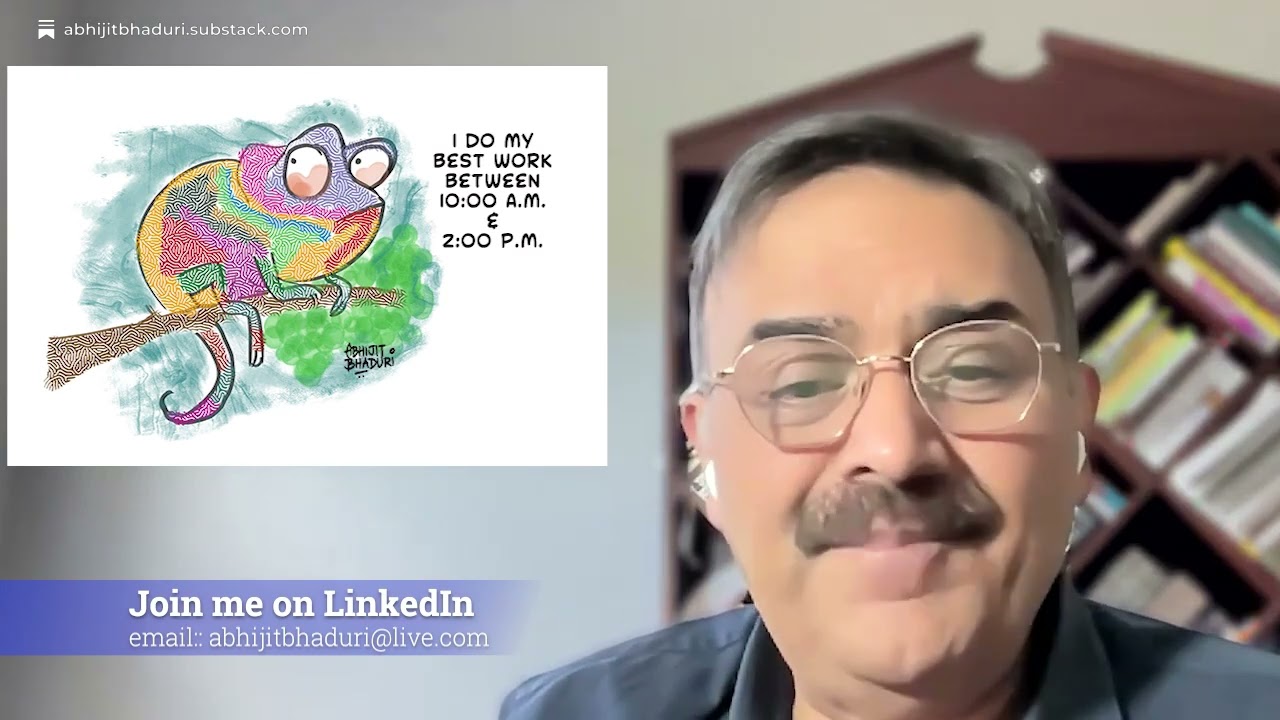
The final challenges addressed include decision fatigue and the breakdown of collaboration in remote work environments, both of which stem from how the brain manages energy and social connection. Every minor choice, from what to wear to which meeting to attend, draws from a finite pool of mental energy, leading to exhaustion that hampers complex thinking. Organizations can mitigate this through decision architecture, which simplifies routine choices by establishing default options for trivial matters, thereby preserving cognitive resources for high-value work typically performed between 10:00 a.m. and 2:00 p.m. Additionally, remote and hybrid work models often disrupt collaboration because mirror neurons—cells that fire when we act or observe others—are less effective in video calls where only partial body language is visible. This lack of full physical mirroring reduces natural empathy and makes joint problem-solving more difficult, explaining why leaders like Andy Jassy advocate for returning to offices to foster the spontaneous interactions necessary for creative breakthroughs and inventions.
In conclusion, addressing the talent crisis requires shifting from strategies that work against human biology to those that align with it. By implementing brain-based talent strategies, organizations can transform their approach to learning, feedback, career development, daily operations, and teamwork. This involves creating learning experiences that respect attention limits, designing feedback systems that reduce threat responses, building transparent career paths that sustain motivation through anticipation, simplifying decision-making processes to prevent fatigue, and prioritizing in-person interactions to maximize mirror neuron activity and collaboration. Ultimately, when companies assume that their talent strategies honor the way the brain actually works, they can overcome engagement issues and unlock the full potential of their workforce without relying on outdated or ineffective methods.
Read the full video transcript
[Music]
Businesses are grappling with a talent
paradox which is that they are making
massive investments in learning and
development but employee engagement
remains stubbornly low. Um one of the
things that I want to do today is to
talk about a couple of ideas in which
you can use neuroscience to be able to
address these talent management crisis.
So let's look at a couple of them. Uh
let's start with the most common one
which is that the training program
doesn't stick. People invest a lot of
money in the training programs but it
doesn't stick. Why is it so? It's
because the brain's prefrontal cortex uh
actually has the attention span pretty
much like a smartphone battery. So the
more number of things that you are
dividing that attention in, the more
number of apps that you run, your phone
battery actually runs out faster. So
what you need to do is to think about
not doing 8 hours of leadership training
uh you know in one day actually break it
up into short chunks. It's far better to
do 15 minutes micro learning bite-size
lessons spread it out over time.
Chunking is one of the methods by which
the brain remembers much more. So um you
know that's probably a much better way
to do it. So that's the first thing. The
second thing that I want to talk to you
about is how do you share feedback?
Because very often feedback triggers
fear. It doesn't trigger uh the growth
mindset. Um annual performance reviews
are a place where this can be used quite
effectively. So one of the things that
happens is when you tell someone that
I'm going to give you a piece of
feedback very often what do you think?
you are thinking that this is going to
be some kind of criticism which you know
nobody likes and the brain actually uses
u the same kind of centers to process
negative feedback as it does for
physical pain. So it causes the same
response. Um what you really need to do
is to
frame feedback in a very different
method. One of the ways to do it is uh
for example instead of saying you need
to improve your communication um you
actually really start to say that you
know yesterday when you were sharing
your ideas it interrupted the CFO and
broke his chain of thought. So can you
think of ways in which you can share
your ideas without breaking somebody's
chain of thought just rephrasing the
feedback in this manner makes it less
threatening and the brain becomes far
more receptive to it. Let's take about
talk about a third uh idea which is high
performers uh you know don't seem
engaged. One of the things that happens
as a result is that your star employees
are leaving um you know they don't
necessarily always leave for better
salaries. Of course when they leave they
will get a better salary because that's
how the market operates but they are uh
leaving very often because they are
starved of dopamine fixes. So how do you
do that? Dopamine is really think about
it as the um chemical that uh gets
triggered uh when you u you know are
anticipating something nice to come your
way and that triggers motivation. So um
when you chase a goal for example uh
your dopamine gets released. The
anticipation not the reward. The
anticipation of the reward actually
triggers dopamine. So one of the ways to
think about it is most career paths uh
in the companies are really opaque
ladders that offer very little
visibility in what the next level is all
about. But high performers want to see
their current role clearly but don't
have a compelling vision of what their
future is all about. So how do you build
anticipation? Uh so companies can solve
this uh by what neuroscientists call the
dopamine trails which is visible
pathways that makes your progress um
tangible. Uh and you kind of say think
about it like saying you've completed
20% of the charge. You know the same
smartphone analogy your phone is now at
20% it's now at 50%. that could show the
readiness for the next role and then it
gives the person the opportunity that
okay I'm almost there. So you really
start to see the finish line and that
can make a world of a difference to
motivation. Um the fourth problem is
decision fatigue. You know most of the
times people find that every little
choice uh and this is what neuroscience
tells us from which meeting to attend,
what to wear, what to eat for lunch, it
actually draws from the same finite pool
of uh mental energy. So um the way to
think about it is how do you simplify
the routine choices? Those don't really
need any time to think. Simplify it and
this is called decision architecture. it
eliminates um you know decision
overload. So for many of the things
putting a default option uh if it is
good for the person you know deciding to
have that uh default option makes it
much easier. So you are not really
spending um a lot of time deciding
trivial things like which meeting to
attend, what to wear etc. And the best
work is very often done by people
between 10:00 a.m. and 2 p.m. This is
the time to really where you can engage
the uh you know brain uh to do really
tough work. So but just remember that
instead of saying which option do you
think we should take if you can finally
trigger it down to minimal choices you
know so let's say option A or option B
people find it easy to respond to that.
Um and the last one is really
collaboration breaks down. Um because
the m mirror neurons are mismatched. Uh
what often happens because of remote
work and hybrid work uh there's a
breakdown of natural empathy. So
when you are sitting and talking to
somebody in person across the table uh
the brain actually has what are called
mirror neurons. These are cells that
fire both when we act and when we
observe others when they are doing
something. So you'll find that um you
know we very often as we are talking to
somebody across the table we mirror
their uh nods you we mirror the way that
they are sitting we mirror their hand
movements all of that so those are
things that uh you know break down when
you are talking to somebody on zoom or
you know when you're doing that these
video calls you can only see the person
part of the person you know in a little
tile and that uh delays uh you know your
response responses the cues that you can
uh see from the rest of the body uh that
is very limited. As a result, there
isn't enough for your brain to start
firing uh and which is why collaboration
is much harder uh to be achieved uh in
in
you know on in remote settings. So you
will find a number of organizations that
stress uh collaboration because that's
the nature of the work that they are
doing. Uh you know recently I read in
the Harvard Business Review uh magazine
of July August 2025 Andy Jasse uh the
CEO of Amazon uh was asked why he wanted
everybody to return to office and he
said that he found that when people meet
in the office they are able to be far
more collaborative and as a result uh
inventions go go up and the creative
breakthroughs that they've been waiting
for happen much more. So they have data
to show that it goes up significantly.
Of course, commuting to office uh in
crowded settings is really not pleasant
for anyone. But the outcomes uh that are
guaranteed uh actually are far better.
So to summarize uh you know the you
should really be thinking about brain
based talent strategies. Make the talent
strategies work with the brain not
against it. uh just really assume that
learning experiences that honor
neuroplasticity timelines um creating
feedback systems that bypass the amydala
hijack and building career paths that
you can see there are simp simple ways
in which it can be done. Um if you like
this you can join me on LinkedIn where I
have a newsletter where I share this and
also of course on Substack and do
consider subscribing to it. I do the
deep dives and put many of the best
ideas right out here. So, see you the
next time. Thank you.
[Music]