Video summary
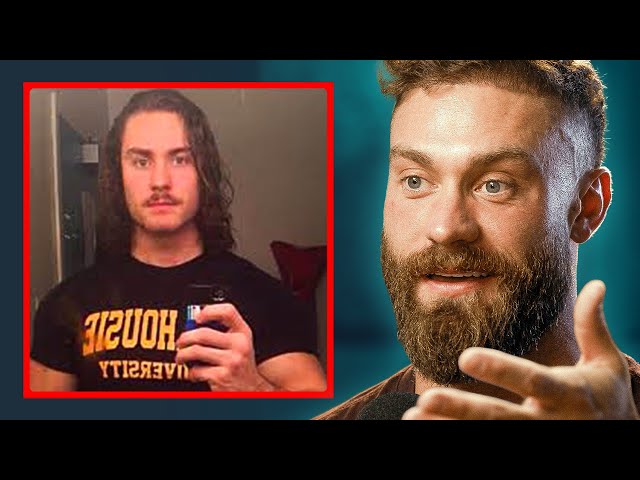
In this reflective conversation, Chris Bumstead shares profound insights he would offer his younger self regarding success and identity. He emphasizes that while one will achieve great things, there is no compulsion to be "great" in a performative sense; simply being oneself is sufficient. This realization stems from the pressure many feel to validate their worth through external achievements like winning competitions or gaining public adoration. Bumstead argues that relationships, personal values, and life experiences hold far more significance than spectacular moments on stage at the Olympia. He suggests that the drive for greatness often arises from an unconscious fear of not being enough unless one performs exceptionally well, a mindset fueled by societal expectations raised in a self-esteem culture where parents' lack of opportunities led their children to feel they must achieve everything possible to prove value. A central theme of the discussion is the distinction between extrinsic and intrinsic goals, with Bumstead advocating for setting authentic objectives rather than chasing world dominance solely for ego or validation. He introduces the concept that "privilege is a pressure," noting that those who have opportunities often feel burdened by the expectation to perform well enough to justify their advantages compared to previous generations. This internal conflict creates stress and can lead individuals away from enjoying the process of growth. Bumstead challenges listeners to consider whether achieving greatness truly brings peace or if it comes at too high a cost, suggesting that true confidence is not about suppressing doubt with false bravado but rather being honest with oneself about fears and limitations. He asserts that unwavering confidence without acknowledging fear is often just a lie, whereas accepting one's doubts while still performing well represents genuine strength. To illustrate the importance of authenticity in success, Bumstead references tennis legend Matthew Sayed's observations at Wimbledon regarding three legendary players: Novak Djokovic, Rafael Nadal, and Roger Federer. Each athlete possesses a unique style—Nadal with raw aggression, Djokovic with robotic precision, and Federer with playful trick shots—and all are considered "GOATs" (Greatest of All Time). Bumstead uses this example to demonstrate that there is no single correct formula for success; trying to emulate someone else's approach is akin to wearing shoes that do not fit one's size. He argues that forcing oneself into a specific mold creates stress and hinders performance, whereas true mastery comes from trusting one's own instincts and showing up as they are authentically, whether that means being playful, intense, quiet, or doubtful. Ultimately, the conversation concludes with the idea that there are no rigid rules for becoming a champion; rather, champions do whatever is necessary to win while staying true to their individual nature. Bumstead admits he still struggles with doubt but has proven over five years of winning six Mr. Olympia titles that one can succeed and progress even when carrying those doubts mentally. He encourages listeners to build intuition through time and practice until they reach a flow state where they trust themselves completely without needing to wear a facade. By releasing the mask and acting on instinct, individuals can find their own path to excellence without feeling compelled to meet external standards of perfection. The episode ends with an acknowledgment that success is deeply personal, defined by how well one aligns their actions with their true self rather than societal expectations or comparisons to others in their field.
Read the full video transcript
if I could go back I'd tell younger me
you're going to do some pretty great
things but you do not need to be great
all you have to do is be yourself that
will always be enough what's that mean
to
you you know I've had a lot of different
thoughts that have come into my mind now
having a child when Courtney was
pregnant thinking about raising a child
myself when I was a child and all these
things and I think I always felt like I
wanted
to be good at everything I did and be
great at what I did and I never expected
to be as good as I was so it would just
be such an interesting relief to be able
to give myself to be like you are going
to be great you're going to have all
these things that you want but you're
also going to realize that they're not
as important as you think they are you
know like you're going to come to the
realization where the relationships and
your values and everything that you
enjoy and the experiences everything
aren't going to come down to those
spectacular moments on stage at the
Olympia they're going to be much more
simpler than that there's just going to
be those moments where you're being
yourself and the people who love you for
that is going to be everything
you do not need to be great that
compulsion that necessity that's sort of
being pulled forward the lack I am not
enough as I am and if I achieve these
great things and if everyone thinks I'm
cool or says that I'm successful then I
am worthy of acceptance and validation
and praise and adoration is that the
subtext below that quote like yeah
essentially yeah that's um
it's just a drive of selfworth you know
it's a kind of a buzz word of what's
going on right now but I think it's you
know we were all kind of raised in a
self self-esteem Society of being like
you can do anything you can be anything
go be this X Y and Z and it almost built
expectations that we had to be these
great things because we could be and our
parents didn't have these opportunities
and these privileges so we go do all
these things and there's just no need
for any of it you know and I think when
you were able to alleviate that pressure
from it like we were talking about the
difference of like the extrinsic goals
is trying to be the best in the world
vers just trying to be my best self you
know and setting authentic goals to
myself what are my authentic goals
winning the Olympia sometimes is a
little more unauthentic than me truly
trying to just push myself to be my best
do I still enjoy that absolutely but
those are the more of the need to be
great the little ego the the thing that
I'll die not needing but the intrinsic
goals that are regardless of things out
of my control you know win lose beat
them don't beat him what's in my control
to of just being myself and who I am
showing up at my best knowing that I can
go to sleep at night knowing I was
myself we talked about pressure is a
privilege last time but this is actually
the same but in Reverse this is
privilege is a
pressure that the privilege is a
pressure yeah that the privilege you
have carries along with it this pressure
in order to perform well your parents
didn't have this opportunity and think
about you six time Mr Olympia you're
really going to think about maybe not
going for seven why wouldn't you leave
the most dominant athlete in history why
are you going to drop the you know like
privilege is a pressure yeah and uh it's
one of the odd byproducts of anybody
that's doing really really great things
that a lot of people are driven by
this unconscious assumption that they're
not enough unless they do do great
things and it'll cause you to go and do
great things but to what end what's the
outcome what's the texture of your mind
like when you go to sleep on a night
time do you really want that you feel
great doing great things do you feel
like [ __ ] doing great things what's it
worth what's the price do you think
you're a like an odd person to become a
world
champion I think so I don't know if
everyone thinks that you think that
you're [ __ ] we Champion I totally
agree I think most people would be like
there's no [ __ ] way this guy's going
to be world champion if they were my
literally this little [ __ ] you know but
I I don't know I think in my opinion
what I've learned very deeply over the
years is that confidence is just truth
you know it's just being honest and
there's people who put on this false
bravado of arrogance of being like you
know they were fifth place at the
Olympia last year don't pick out whoever
was Fifth and pick on him but someone
not winning like I'm going to show up
and I'm going to win this Olympia I know
it in my heart it's like you don't know
that you're lying that's not confidence
that's just a lie whereas when I've
Speak to myself truthfully and I'm like
I don't really know if I can do this
like I have doubt I have fear I just
wanted X Y and Z and I'm like being
honest to me that exemplifies real true
confidence and you're being realistic
with yourself you know if you s tell
yourself you're going to do something
you don't think you really can do you're
creating this gap between your beliefs
and your reality and it just creates
more stress in yourself and an inability
to perform in my
opinion unwavering confidence is a Lie
the fears never go away completely they
just don't linger as
long what's that you're my clot to you
sounds great you wrote it I mean it
sounds sounds fantastic s beautiful um I
mean that's kind of in that same boat
and maybe I'm just the weird Champion
who's not like that but I still am full
of Doubt all the time and I've tried to
find ways to believe I wouldn't have
doubt you know I've tried to like talk
in ways where I don't have doubt I've
tried to everything and there's always
just lingering doubt in my mind of being
like well [ __ ] what if you don't what if
you can't and it's just the truth of my
mind and regardless of that over the
past 5 years I've still been able to
perform
progress and be the best in the world
with that on my mind so who's to say
that I can't have that debt on my mind
while being a champion there's no rules
to it which why I've always said the
champion mentality the rules of being a
champion is that there are no rules it's
just whatever the champion does to win
that's it yeah there's a a great story
from Matthew Sayed so he's a sports
reporter he's obsessed with tennis and
he went to Wimbledon a few years ago and
a unique aspect of tennis over the the
last decade or so has been that you had
jovic fedra and Nadal three goats three
potentially literally goats all at the
same time all interchanging and
exchanging who won on this court or this
tour with this surface and he went to go
and watch them warm up and you go in and
you see Nadal and he's just ripped
absolutely shred it's all aggression
it's pure sort of raw animalistic energy
and then you go and see jovic and he's
sort of robotic uh very precise very uh
curated with the way that he moves
nothing is wasted and then you go and
see uh federa and he's playing trick
shots and he's laughing with the guy
that's woman he goes okay so if you were
to take any of those three approaches
and say in order for me to become a
world champion I must be a b or c well
you can't be all of them and all of them
are successful so what does it mean to
say that A or B or C are the right
approach in order for you to be
successful in the sport of tennis
doesn't it means that each different
athlete has found a way that works for
them and when you try and take that
format and apply it to yourself what you
end up doing is take it's like trying to
put on somebody else's pair of shoes I'm
a size 10 and they're a size eight and
this is not going to work yeah well the
truth is a B and C are all wrong answers
anything out there is a wrong answer you
have to build it in yourself you know
and like I talk about the cookies of the
intuition you know over time you just
you build intuition when you can get
into a flow state of just trusting
yourself to show up as you are and if
it's playful if it's intense if it's
quiet if it's loud if it's doubtful if
it's whatever if it's just who you are
and you're not needing to put on any
facade and you are able to release that
mask and show up in a flow and chest
your instincts and act on Instinct I
don't think you can be beat in other
news this episode is brought to you by
function I wanted a better way to track
what was happening inside of my body and
that is why I partnered with function
they run over 100 tests every year
covering Heart hormones nutrients
thyroid and even detecting 50 types of
cancer at stage one that's five times
more testing than a regular physical
best of all your results are charted
over your lifetime and explained in one
simple dashboard lab testing like this
would usually cost thousands but with
function it's only $500 I rely on
function because it's evidence-based and
run by a team of expert Physicians so
you can trust that the data and insights
you receive are scientifically sound and
unbiased plus Dr Andrew hubman is the
Scientific Advisor and Dr Markman is the
chief medical officer function has a
300,000 person weight list but every
Monday they open a few spots for modern
wisdom listeners you can bypass the
weight list right now by going to the
link in the description below or heading
to function health.com sodern wisdom
that's function health.com slod wisdom
thank you very much for tuning in if you
enjoyed that clip you will love the
fulllength conversation with Chris which
is available right
here go on press it