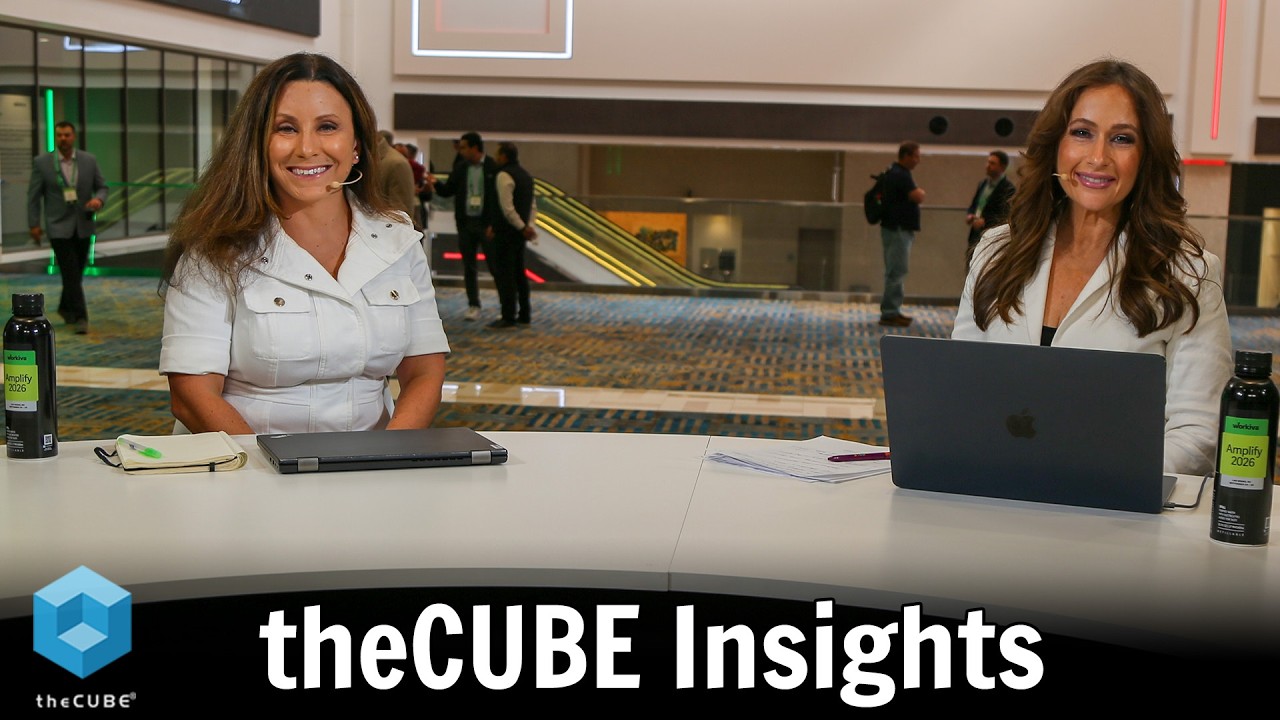
Video summary
The Workiva Amplify 2026 event in Las Vegas highlighted a significant shift where artificial intelligence is moving beyond simple assistance to performing actual consequential work within critical business workflows such as finance, audit, risk, and sustainability. Practitioners are increasingly considering how to leverage AI to execute tasks directly rather than just supporting human efforts, which raises the bar for essential elements like auditability, controls, evidence, and accountability. A central theme emerging from these conversations is the necessity of trust; AI outputs must be substantiated and traceable, particularly in regulated environments where plausible responses are insufficient without clear provenance regarding data sources, approval chains, and the actions taken by autonomous agents.
A major positive outcome discussed was the potential for improved speed and scale, which could lead to fewer errors in compiling documents like 8-Ks or SEC filings and in audit rationalization processes. However, these benefits are heavily dependent on data readiness, as AI is only as effective as the fragmented or inconsistent data it is built upon. The transcript emphasized that while issues like inconsistent data definitions and ownership existed prior to AI adoption, relying on such information for high-speed decision-making amplifies the risks, making the organization of a robust data house a critical first step before fully integrating AI into enterprise operations.
The dialogue also explored the evolving dynamic between human oversight and AI execution, noting that requiring humans to review every single action would negate much of AI's value proposition. Consequently, businesses must define clear boundaries for when AI assists versus when it executes independently, a process that will require continuous monitoring, exception handling, and policy enforcement. This shift is driving a new approach to auditing, where governance is embedded directly into the adoption process rather than treated as a siloed, post-fact activity; establishing proper controls upfront allows enterprises to build greater trust and subsequently scale their AI usage more effectively.
Finally, the event underscored the changing role of financial leaders, with CFOs now sitting at the forefront of AI strategy discussions beyond just overseeing numbers. They are actively bringing teams together to interpret what data means for the broader business, reflecting a move toward more holistic control environments. Workiva is positioned to capitalize on these trends by leveraging its strengths in reporting, auditing, and compliance, specifically through its capabilities in evidence and lineage, which become increasingly relevant as AI agents take action within controlled processes. As companies expand their use of AI into areas like governance, risk, and compliance (GRC) and sustainability, the ability to maintain rigorous oversight while accelerating innovation will define future success in this rapidly evolving landscape.
Read the full video transcript
And welcome back to Workiva Amplify
2026. We're coming to you live from Las
Vegas. Um I'm Allison Koscik alongside
Kristi Case. She changed chairs because
she is going to take put on her analyst
hat. And we get to reflect on the
conversations and interviews that we had
today and really talk about some of the
the themes we heard throughout the day.
Um one thing I heard was how, you know,
we're seeing AI move into, you know,
these consequential workflows. We're
actually seeing AI perform actual work.
What have you What did you hear
throughout the day?
>> Yeah, I heard that as well, Allison. You
know, we had the benefit of hearing from
another a number of customers in
addition to Workiva executives. Um and
so certainly across a number of roles,
right? I heard across finance, audit,
risk, sustainability. I heard that these
practitioners are really considering
where they can lean on AI to start
actually doing work versus just
assisting them. Um and then I think
especially grounding this in the context
of Workiva, you know, that certainly
raises the bar when we think about
auditability, controls, evidence,
accountability. Um and so, you know, I
think some of those questions are still
a little bit TBD in terms of how they're
being solved, but certainly I think
they're all kind of top of mind and
along that vein, I guess, you know,
another related thing that I heard was
this concept of trust. You know, AI is
only as good as as far as we can trust
it. So, um you know, we need to
understand things like where did this
information and where did these insights
come from, who approved a particular
action, and can you maybe trace, you
know, what happened if an AI agent is
taking um
an an action on your behalf. Um and so,
especially we think about kind of, you
know, finance and these other regulated
um um processes,
it's not really good enough for the um
you know, the action or the response to
just look plausible. We have to really
make sure that it can be substantiated.
>> What are some of the positive outcomes
that you heard throughout the day about
AI performing actual work?
>> Yeah, so I think um again, I think in
terms of kind of the the ROI, right?
That's something that we did talk about
with a few guests, right? So we heard a
lot about speed and scale. It can allow
us to, you know, move much faster,
right? And certainly we hear that in
other industries as well. Um but when I
think about, you know, kind of this
market in particular,
you know, we can extrapolate that to
think about, okay, maybe it means that,
you know, our auditors are actually
making fewer errors or that when we're
compiling it's an 8-K or an SEC document
or when we're rationalizing something to
um you know, an audit, that we're making
fewer errors, right? So there's um
there's fewer errors happening in our in
our processes. Um or maybe we're able to
kind of take this information in context
and make better decisions and make them
faster.
>> Yeah.
>> Um so, you know, that latter one goes
back to speed, but I was really glad
glad to see the conversation went beyond
just we can move faster.
>> Right, right. And and there there was a
lot of importance placed on data
readiness, right?
>> Yes. Yes, exactly. And so, this is so
I'm a I'm kind of a a data data security
person at heart. So that piece of the
conversation was near and dear to my
heart, but I think it's commonly
understood that our our AI is only as
good as the data that it's built on.
Um and what we talked about more
specifically here at Workiva Amplify was
the fact that if we have fragmented data
stores, if we have inconsistent
definitions and inconsistent ownership
over data. These are not necessarily new
problems that were created as a result
of the enterprise adopting AI. They're
problems that existed before,
but because we're leaning on this
information to make decisions in a new
way and because the AI can move faster
and at a greater
um scale, like we were just talking
about, there are in fact even more
significant potentially negative
implications.
One of the very important first steps is
really to kind of getting that data
house um in order.
>> Yeah.
>> There was also this theme of the push
and pull of, you know, letting AI
function in the workflow and then the
human review aspect of it. It seems like
that is something
that is really just revving up, isn't
it?
>> It really is, Allison, and
what's interesting is that uh going back
to the conversation around speed, if a
human has to review and approve every
action,
then really the whole point or much of
the value is moot, right? So, we need to
kind of make decisions around when is AI
assisting a human, when can it execute
on its own, when does it need approval,
um and I do think that some of these
boundaries are still being defined and I
think they're going to evolve and change
over time, especially as the business
use cases evolve, but thinking about,
you know, the control environments that
we're talking to, you know, those will
also have to evolve with them as well.
So, I do think that when it comes to
things like monitoring, exception
handling, enforcing policies and having
more continuous um assurance, those are
going only going to become more
important. I think they're going to play
an important role as these boundaries
start to evolve.
>> Yeah, there was also a lot of
conversation today about embedding
auditing in the process of adopting AI.
That's that's It's a big conversation at
Workiva. I thought that was really
interesting Al- Allison because
when we think about auditing, we
typically think about it sort of as
maybe after the fact or kind of its own
maybe siloed process. But when we think
about the enterprise moving to adopt AI,
auditing with can actually allow the
enterprise to move faster. You know,
yes, there's some work that needs to be
done up front and that's going to take
some time and require some resources. Um
but once you know, proper auditing and
proper governance is in place,
um we have better insights into kind of
the activity that these AI, you know,
these AI agents are taking. And so from
there, we can build greater trust and
then move and adopt um at a bigger at a
bigger scale.
>> One other thing struck me. It's
interesting how CFOs now are not just
wearing the CFO hat, they're wearing all
different hats now. They're really
They're front and center of the
conversations when it comes to AI
adoption, right?
>> I It's in a I think especially when we
think about um
you know, like we say kind of these
control environments, but yes, they
definitely have a very important seat at
the table, you know, the CFO does and
they're
they're moving beyond just kind of
someone who's overseeing numbers.
They're bringing teams to the table and
they're having conversations around what
these numbers mean to the business,
right? And so I would definitely agree
with you, you know, from that standpoint
and obviously that's an important
component of AI adoption.
>> Yeah. So I'm curious where what you
think, your thoughts about, you know,
where Workiva sits as we move forward
with AI adoption.
>> Yeah, Allison. So you know, I think it's
it's pretty clear that Workiva has, you
know, some great strengths to lean on,
you know, things like reporting,
auditing, and compliance. Um
the evidence and lineage, you know, that
came across in perhaps all of our
conversations today and I think that's
very important as we start to let these
AI agents take action on our behalf.
And we do have some customer research
from our new partner Qualtrics that
really reinforces that. And when we
think about allowing AI to start
entering these controlled
environments and business processes, I
think those capabilities are going to
become even more, you know, relevant.
One thing for me that I'm looking at is
I know
Workday has talked to kind of expanding
some share of wallet. We talked about
that a little bit earlier this morning,
but I'm going to be really interested to
track how it continues to expand in
areas like GRC,
you know, and sustainability as well. We
saw some really interesting
We had some interesting conversations
around sustainability today. So, those
are be a couple of areas that I'm
watching for from Workday.
>> Well, thanks so much for breaking all
that down and thanks for your expertise.
>> Thank you so much, Allison. It was
really a great day and really appreciate
being on the desk with you today.
>> It was fabulous. And you've been
watching the Cube, the leader in live
tech coverage and in-depth expert
analysis. Thanks for watching. We'll see
you again next time.