Video summary
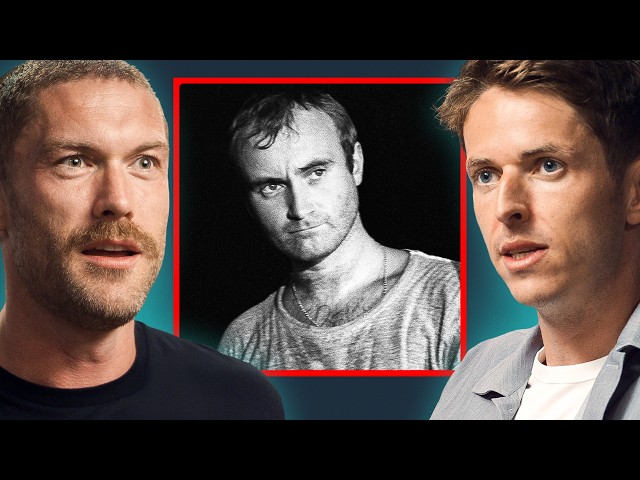
The podcast opens with a dramatic recounting of what is described as the worst phone call in history, centering on musician Phil Collins and his life in 1970s Surrey, England. After moving into an old farmhouse called Oldcroft that required significant repairs, Collins embarked on a year-long tour to pay off its mortgage before returning home only to discover his wife had been having an affair with the painter hired to fix up the house upon his departure. Upon flying back from the successful tour, he found she was leaving him for Canada with their children and converting the master bedroom into her new music studio. Overcome by grief and anger while staring at a ravioli in a derelict state of mind, Collins channeled this emotional turmoil directly into songwriting, reportedly writing "In the Air Tonight" on an invoice from the painting company that slept with his wife. The narrative then shifts to explore how these personal tragedies often fuel artistic genius and unexpected life turns. While Collins was in a fugue state creating music for his new studio, he also wrote "Against All Odds," which went on to win a Grammy. The discussion highlights a specific anecdote where the song's massive radio success led a man in Manchester who had recently split from his partner to hear it repeatedly; inspired by the track, they met at a bus station and eventually reunited, leading to marriage and three children within six months. This story serves as an example of how art can influence real-life reconciliation, though the hosts clarify that Collins himself did not write coded messages for specific listeners but rather poured his raw pain into the lyrics about drowning and wiping grins off faces. The conversation expands to other instances of rapid creative bursts in music history, noting that Dolly Parton famously wrote two of her biggest hits, "Jolene" and "I Will Always Love You," during a single songwriting session, joking later that it was an incredibly good day for writing. Similarly, the hosts mention Bobby Darin's "Splish Splash" being written in just 20 minutes and The Beatles recording their greatest hits albums with incredible speed. These examples illustrate how artists often experience intense periods of productivity where multiple masterpieces emerge from a single burst of energy or emotional state, contrasting sharply with the typical slow pace of modern content creation. The focus then moves to actor Sylvester Stallone's legendary struggle before his breakthrough role in *Rocky*. Born with facial defects that hindered casting opportunities despite his desire to act, Stallone decided to write his own script after years of rejection at auditions. He isolated himself for three days, painting the windows black so he could not distinguish day from night until finished, and wrote the entire screenplay while struggling financially to the point where he had to sell his dog for a few hundred dollars just to eat canned beans. When offered one million dollars by studios who wanted only the script without him playing Rocky, Stallone turned it down in favor of taking twenty-five thousand dollars so that he could star as the title character himself. The story concludes with *Rocky* becoming an unexpected hit on a shoestring budget filmed handheld and without permits, which allowed Stallone to finally buy back his beloved dog from the man who had purchased him for pennies by paying the original asking price of twenty-five thousand dollars once he became wealthy. The hosts emphasize that this three-day bender where Stallone wrote *Rocky* while at rock bottom is perhaps more inspiring than the fictional boxing story itself, as it represents a real-life redemption arc involving financial ruin and emotional loss followed by total triumph. Throughout these stories, the podcast underscores how personal pain and adversity can transform into some of history's most enduring cultural artifacts and life-changing moments.
Read the full video transcript
Let's tell you a story about the worst
phone call of all time.
>> You have my interest.
>> Okay. So, it's
Picture this. We're going to go back to
1970s
Surrey
in England. There's like a beautiful old
farmhouse called Oldcroft. And a
musician who's just moved in. And he's
in a band and they just had their first
like top 40 song. So,
it's at that point of a musician's
career where either this is like we're
about to take off or we had that like
one blip and we that.
And he's just mortgaged like the most
insane house for like his wealth size.
Like way above his income cuz he's
betting on his future success. And he's
like this is the childhood sweetheart
dream. He met his wife when they were 11
years old in drama class. They got two
kids together. So, they've moved into
this house together. This beautiful old
farmhouse
with the two kids. And like he's managed
to get the deal on it. So, it's slightly
cheaper than he can afford, but it's
still way too expensive. But the whole
thing needs a whole paint job. It's like
the whole building needs a load of
different work. Kind of like this stuff
here, right? Um
>> Shut up, Fred.
>> And so, he
he has to go on tour
go and try and crack America to see if
he can pay for this house. So, he's kind
of leaving the house. There's painters
there that are doing everything up. And
he's kind of saying goodbye to his
family. And as he's saying goodbye, he
doesn't know if this is going to be the
last time he sees this house
or if this is going to be the new family
home. So, he goes on tour for a year. Um
And surprisingly, the tour goes really,
really well. So, he's basically going to
pay for this mortgage.
And at the end of the tour, he's having
a phone call with his wife. And it's not
going well.
And she basically confesses whilst he's
been away, she's been having an affair.
And like his heart just drops. He's like
who? So, he starts thinking of whoever
it is. Like the singer or somebody else
in the band.
The guy she was having the affair with
was the painter. He was paying for the
house. So, he like got he just loses
mind. He ends up flying back from the
tour, tries to win her back. The
Not only can he not win her back,
she basically says, "I'm taking the kids
and I'm leaving to Canada." So, he sits
down the band and he says, "Well,
I think the the band's over. Like, I've
got to go Like, there's no remote work.
I've got to go I'm going to fly to
Canada and try and put my marriage
together." So, the band say, "Hey, we'll
just do a solo hiatus. We'll go on solo
and we'll get back together." So, he
goes to Canada for 3 months
putting it putting the marriage back
together.
Flies back 3 months later, it's
completely failed. And the only place he
has to stay is he goes back to this old
house.
And he says he walks in and he says the
paint was still wet with the man who
cuckolded me.
So, he got he can't So, he's just
fuming. So, he leaves,
goes to his favorite restaurant, orders
a ravioli, and he's just staring at this
ravioli. He's starving cuz he's not
eaten in days. And this ravioli is
staring at him, he's staring back at the
ravioli. He just can't eat. He goes back
to the house. It's just this old
derelict house that he's made all this
money and paid for, but his family are
no longer there.
So, he starts drinking. He's calling her
and she's ignoring his calls in Canada.
He starts drinking. He's calling her.
And finally, he goes, "Well,
I've got to start channeling this
thing." So, he decides, he looks at the
master bedroom that she slept with the
guy who was on his payroll whilst he's
on tour and goes, "Well, you know what?
This is going to become my new music
studio."
So, he starts like channeling all the
energy that's coming up.
And as he's like in the moment, he grabs
the invoice from the painting and
decorating company that slept with his
wife. And he writes a song on it, okay?
So, should I play I've got it on my
phone. I'll play the song. You ready?
This is the song that he writes.
You're [ __ ] me. So, that's how Phil
Collins wrote In the Air Tonight? It's
on the invoice of the painter that slept
with his wife.
>> And what's interesting What's fun about
>> Did you know that story?
>> What's so What's funny about this um
this story IS UM
>> NOTHING.
LOOK, IT'S A SAD STORY.
WE GOT A banger out of it.
>> But he Well, anyway, so while he's he's
in this house um or in this new music
studio that he's created, he then is in
a fugue state, writes Against All Odds,
which goes on to win a Grammy. So, he
makes that song then Against All Odds
the next day. What's interesting about
the story, the funny part is
um what he makes Against All Odds um
obviously becomes a smash hit on the
radio. And there's a guy in Manchester
who's listening to the song on loop cuz
he split up with his partner 5 years
ago, his girlfriend 5 years ago. So,
he's listening to the song thinking
about her, sees her at a bus station um
and they end up going out on a date,
spend all night till 6:00 a.m. They get
back together. It's within 6 months
they're engaged.
They have three children. Second child
was me.
So, the whole
>> Whoa.
>> So, the whole thing
>> He goes, "Yeah. Yeah, with the
toothpick. Yeah. Yeah, the second child
was me."
Are you
>> So, yeah. So, when you So, what's
beautiful now
when you re-listen to that Phil Collins
in the air tonight
>> son?
>> No. No, no, no.
>> Wait, I got lost there for a sec.
>> No, no, no. My dad My dad basically
wrote that song um when he split up with
my mom, basically.
>> Okay. Okay.
>> Phil Collins' story.
That's where you got from.
>> No, no, no, NO, NO, NO.
>> YOU KNOW WHICH ROOM THAT WAS? THIS ROOM.
>> AND THAT'S why
>> That room became a podcast studio. Okay,
still crazy.
>> So, yeah. But what's crazy is when you
re-listen to that song I think that
song's incredible anyway. It still holds
up 50, 60 years later. But when you now
re-picture him in that old master
bedroom where it all happened. And the
lyrics often when you go back and listen
to
>> What does he say Is he saying something
that's like direct or coded for that?
>> in there like, "If you gave me If you
was drowning, I would not lend a hand."
Um
and it talks about you been smiling or I
wipe that grin off your face. Um
it's all about him falling
>> Doesn't sound like a breakup song on
first listen.
>> Well, but it is.
>> Yeah.
>> Yeah, that's crazy. Dude, I [ __ ] It's
such a fantastic one.
What was it that we found out the other
day that Dolly Parton wrote uh
um
two of her [ __ ] biggest Google what
two songs did Dolly Parton uh
>> Jolene.
>> Jolene and um [ __ ]
like Working 9 to 5 or something in the
in the same day.
She wrote them in the same day. The
[ __ ] crazy.
>> Wow.
>> There's a bunch of those examples of
these bursts these bursts where like I
think the the Beatles famously did this
when they recorded like a [ __ ] album
in a day or they did like they had like
this insane burst of their greatest hits
in a very short
>> about five
>> What was it? Jolene and I Will Always
Love You.
>> Yeah.
>> Wow.
>> In the same day uh she mentioned in
interviews that she wrote them during
the same songwriting session and later
joked that was a good writing day.
>> Wow. So nonchalant.
>> I
I think Bobby Darin's Splish Splash was
wrote written in 20 minutes or something
like that.
>> Have you guys heard the full uh Rocky
story the Sylvester Stallone Rocky
backstory?
>> No.
>> Oh, this is insane. You know this one.
So, Sylvester Stallone wants to be an
actor.
And uh you know, but he's got this like
birth defect. So, when he was born, I
think the doctors
they did something that's why he has
that crooked smile. So, he had like a
medical almost like a malpractice issue
when he was born that messed up his
face. But he wants to be an actor. He's
a talks kind of funny, face is kind of
funny. So, he's not getting any roles.
Keeps going to casting auditions. No
role. No role. No role. So, he says,
"All right, if I can't get cast in
somebody else's movie,
I'll write my own." So, he goes to his
house and again like sort of in that
fuse state, he basically does two
things. He paints all the windows black.
And he's like, "I'm not leaving this
house. I don't even want to know if it's
night or day until I finish the script."
He hates writing.
So, he's like, "I just got to do this
fast cuz I hate writing." So, in 3 days,
he writes the script for Rocky.
And he has And the story of Rocky, which
is like this average guy wants to be a
boxer, but it's not really happening for
him. This is the story of him wanting to
be an actor, but he just chose boxing
cuz it's more like physical, like
knockout punch, easy for the audience to
understand. But, it's his story. And so
then he goes and he pitches the script
and people are like, "Actually, the
script is pretty good." He's like,
"Awesome." And they're like, "We'll buy
it." He's like, "Great." He's like, "And
I'm Rocky." And they're like, "No, no,
you're not Rocky. We'll buy the script,
but you're not Rocky." And so, he has an
offer, I think, for a million dollars or
something like that, which at the time
was a lot of money. And he
turns it down. He ends up taking, I
think,
25 grand or some ridiculously low amount
of money for the script, but he gets to
be Rocky.
And he's struggling to make ends meet.
He literally He's like eating like
canned beans. He ends up selling his dog
because he can't feed his dog. So, he's
like His dog was his only companion in
the world. He goes, he sells it to a
guy, and gets like uh a couple hundred
bucks for his dog. And then he's just
like, "Fuck." He's just literally rock
bottom.
To film Rocky, he basically films the
whole movie on like a million-dollar
budget, handheld camera, no permits,
sneaking into things. They filmed Rocky
that way. Okay, Rocky becomes this huge
hit. He basically gets this money. He
goes and he First thing he does, he goes
back and buys back his dog. The guy
doesn't want to sell it to him. He's
like, "I love this dog." And he ends up
paying 25 grand to get his dog back. And
then that was basically the the start of
Sylvester Stallone's story was this like
3-day bender he had to write the story
of Rocky. How insane is that?
>> guy in in the film as well, right?
>> And that was part of the deal. It was
like, "I'll give you 25 grand and you
get to be a cameo in the movie." And
he's in the movie Rocky, the guy. He's
like by the liquor store is the guy who
he sold his dog to.
>> I didn't know any of that.
>> [ __ ]
>> know that Sylvester
>> Isn't it better than the actual story of
Rocky?
Sylvester Stallone is George's dad.
Oh, we did. Yeah, you've got the nose
for it.
We'll get back to talking in just 1
second, but first tell me if this sounds
familiar. You train regularly, you eat
reasonably well, maybe you even
supplement. You feel fine, but you're
just kind of going off vibes. Most
people have absolutely no idea what's
going on inside of their body, which is
why I partnered with Function. Function
gives you access to more than 160
advanced lab tests spanning hormones,
heart health, metabolic markers,
inflammation, thyroid, nutrients, liver
and kidney function. It even detects
early signals linked to more than 50
types of cancer. To put that in
perspective, your typical annual
physical might test about 20 markers,
and Function runs over 160. And this
isn't just numbers dumped into your
inbox. Every result is reviewed by
clinicians, abnormal markers get
flagged, and you get clear explanations
and a personalized protocol with
actionable next steps so you can
actually do something about what you
learn. Best of all, you test twice a
year and everything lives in a simple
dashboard. You can just track trends
over time, make sure that you're moving
in the right direction. Normally, this
level of testing would cost thousands
through private clinics. With Function,
it is $365
a year. That's $1 a day to know what's
actually happening inside of your body.
And right now, you can get $25 off
bringing it down to 340. Get the exact
same blood panels that I get and save
that additional $25 by going to the link
in the description below or heading to
functionhealth.com
{slash} Modern Wisdom and using the code
Modern Wisdom at checkout. That's
functionhealth.com {slash} Modern Wisdom
and Modern Wisdom at checkout.