Video summary
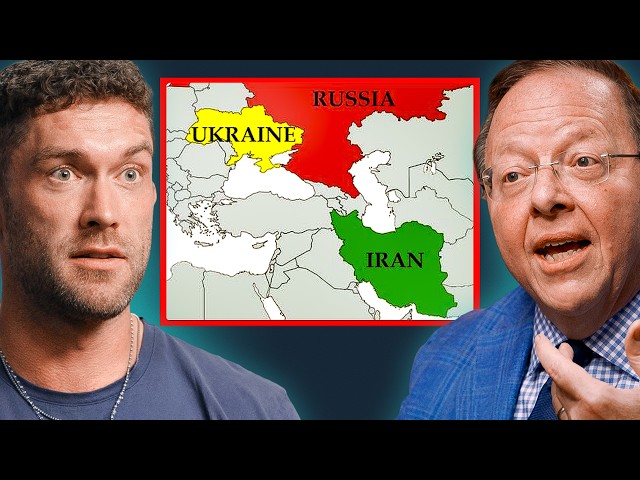
The transcript argues that the conflicts in Iran and Ukraine are not isolated events but are rapidly converging into a single, global confrontation involving major world powers like China and Russia. The speaker suggests that recent escalations, such as attacks on Iranian cargo ships and the involvement of groups like Hezbollah and the Houthis, indicate a shift toward a scenario resembling World War II. A critical focal point for this geopolitical realignment is identified as January 2027, a time when key actors including the United States, China, and Iran will likely attempt to reset their strategies based on the outcomes of the upcoming US midterm elections.
The discussion highlights that the current war has evolved beyond simple economic disputes into what is described as a religious crusade driven by groups like the Houthis and the IRGC, who are willing to sacrifice heavily for their causes. This escalation is fueled by Israel's refusal to adhere to previous peace terms regarding its allies in Lebanon, leading to increased attacks on Saudi Arabia and the closure of strategic straits. The speaker emphasizes that Israel faces an internal crisis where its military capabilities are insufficient against a new coalition involving Turkey, Pakistan, and potentially Iran, creating a situation of paranoia and fear within Israeli society that could lead to further instability if not resolved diplomatically.
The political implications of these conflicts hinge heavily on the results of the US midterm elections, which will determine whether Democrats control Congress and subsequently constrain executive war powers. The speaker notes that there is significant pressure within the Democratic party to end what they view as a "forever war," citing historical precedents like Vietnam where Congress successfully checked executive overreach. However, a major uncertainty remains regarding whether elected officials will have the political courage to stop the war once in power, especially if doing so risks national security concerns or electoral backlash, potentially leading to a scenario where both parties support an endless conflict out of fear of losing viability.
Ultimately, the video concludes that the world is approaching a decisive threshold in January where the trajectory of these wars will be recalibrated based on election results and shifting geopolitical alliances. If Democrats gain control, there will likely be intense efforts to restrict war powers and end the conflicts, but if they remain supportive due to fear of political consequences, the risk of a permanent state of war increases significantly. The speaker warns that the fundamental difference now is that even within the opposing party, there is a sense of betrayal regarding the continuation of these wars, suggesting that Iran may be waiting for internal fractures in Western alliances before making a deal, while the global community braces for a complex and potentially dangerous future involving multiple superpowers.
Read the full video transcript
What do you think is the likely outcome
of the Iran war?
>> It doesn't end. It What's going to
happen is eventually the Ukraine war and
the Iran war will emerge already. We're
seeing that uh after Zalinski uh bombed
an Iranian cargo ship in the Caspian Sea
and Iran and Zansk was very proud of
this like you you see um I can do this
for for the Americans. So um it is very
likely that all the world powers are
brought are brought in. China is brought
into the war. Russia is brought into the
war. Um,
>> this sounds a lot like the World War II
that we said wasn't going to happen at
the top of this episode,
>> except this world.
>> So, I mean, did I say that?
>> No, no, he No, he No, he actually thinks
World War II is is kind of coming
quickly. Here's where my Here's where I
would uh So, I see the trends that Jen
is saying. I don't want to disagree with
the trends. I think January of this year
is going to be a focal point moment.
>> January of next year.
>> Of next year. I mean January 2027 will
be a focal point moment where all the
actors the United States, China, Iran
have a chance to reset. Now where they
go here's what I but why January keep go
back to what I just said which is Iran
has a strategy for the US midterms. It
sees the oil inventories running down.
It sees its period of maximum pressure.
The opportunity here is uh to destroy
Trump's presidency politically, not to
knock him out of office, but so that he
is the lamest of lame ducks. Well, will
that happen or not? We'll know quite a
bit in the first week in January. Now,
we won't necessarily know 100%, but
we'll know a lot of information. And I
believe what's going to happen is once
we get to the first week in January,
everybody will be recalibrating for a
post Trump world or a future Trump
world. It'll either How do you feel
about that?
>> Look, the problem is we're trying to see
this from an economical lens. And the
reason why the MOU fell apart is Israel
refused to abide by the terms. One of
the major terms of theou signed between
the United States and and Iran is that
all terms all peace terms that apply to
Iran would also apply to Iran's allies
especially Hezbollah in Lebanon. And
that required Israel to withdraw its
forces from southern Lebanon. Israel
refused to do so and Israel has only
accelerated its attacks on Hezbollah. So
we think that it's entirely between
um United States and Iran but Israel has
a lot of options and right now for the
reason we can discuss this Israel is
choosing to um escalate the war and we
and also the Houthies have been brought
in and the thing about the Hoofies is
that they are religious fanatics. They
are they are they are very poor people.
They live in mountains and they're not
afraid to die. And right now they're
fighting this war against Saudi Arabia.
So Saudi Arabia Aramco facilities are
being hit. The um the other strait uh in
the Middle East, the the Bab al-Mandad
strait has been closed by by the
Houthis. So we're seeing this war
escalate. And again, we're trying to see
this from economic lands. But if you if
you look at what the Houthies are doing,
if you look at the what the IRGC and the
are doing, I would say this is almost
like a religious war. It's a crusade.
It's an escalological war. But there's
an other dimension. We have to see
>> the alliance
>> between Saudi Arabia, Turkey, and
Pakistan. Now, if you take a look at a
map all around them, these countries,
Saudi Arabia has no use for Iran. The
the Turks are seeking to evolve
themselves into a major point, scaring
the Israelis to death.
And Pakistan itself is evolving
dramatically in this war into a very
sophisticated state. So when you take a
look at the situation of Iran, let's not
just talk about the bombing and
everything, but the geopolitical
development. Now today there was a
story, I don't know if it's true or not,
that Iran is going to be asked to join
this coalition. In other words, submit.
Whether they do it or not, whether this
is an actual offer or I have no idea,
but it was there. But this created a new
structure in the Middle East. This
alliance, a very different one with a
very powerful country. Israel is
terrified of
Turkey because they know they do.
>> What? It just bombed Turkish [laughter]
>> Turkish officials in in Syria.
>> My my Yes. And that was part of it
because this is a country they cannot
defeat. They've only fought countries
along their borders. and they were able
for since the founding of Israel to hold
those borders.
The Turkish army is three times as large
as the Israeli army.
And while I don't believe that the Turks
really have any desire to fight them,
these Israeli,
shall we say, society is built around,
a commitment to the belief that they're
going to try to destroy us. There is a
built-in paranoia. So when this ends,
you know, this problem ends a little
bit, they bomb
uh Syria. They then tell the American
ambassador they didn't bomb Syria.
Then they say Turkey is our greatest
fear
built into Israel
by n by history is a paranoia. Who is my
greatest enemy? I have one. Now they're
facing for the first time an enemy that
they cannot because of both geography
and military capability
defeat. All right. Now
when Lunet was asked what to do after
the battle of Bulge, he said make peace
you fools.
And this is the situation that Israel is
in. It's an internal crisis. It has
reached a point where its military
capability is not enough. So the reason
I think the midterms are a decisive
threshold and I agree, not just a minor
threshold, is it will determine whether
the Democrats control Congress.
>> If the Democrats control Congress, which
is still an if, but we'll know in
January. There is going to be two things
that are going to happen, and we see
this in the Democratic policies already.
Number one is there'll be tremendous
pressure to literally end the Iran war.
So we saw this in 1974 by Congress.
Congress has not played much of a role
in foreign policy. The last time it got
involved was 74 with Vietnam to truly
constrain the executive. There'll be a
battle about this of course, but number
one is the Democrats wanting to shut
down this and that would stop it from
becoming a forever war which one more
one more point and then I'll let you.
The second point is they're going to
want to constrain Israel. There's a huge
push in the Democratic party to shut
down all of the look at all the
Democrats that are um uh that were pro-
Israel that are losing. [laughter]
And they're losing because there's a
huge movement inside of the Democratic
party uh to zero out the budgets to
Israel. And that means that come
January, Israel is going to have to
calibrate. Uh Iran, others are going to
calibrate based on the results of
whether the Democrats control Congress.
Now, we don't know whether the Democrats
will control Congress. But what I'm
saying is it's too soon to truly project
out beyond January because come January,
we'll know. Are we in a forever war? And
by the way, if the Democrats, even
though they control Congress, support
the war. Oh yeah, we're in a forever
war.
>> So which major Democratic leader has
come out against the Warren? And which
leader has said we must end this war
right now? Which which leader?
>> Oh jeez, almost all of them. I mean just
watch CNN. They come on all the time. So
what they if you if you listen Jiang to
the Democrat No. Well, if you listen to
the Democratic leaders, this has just
been a mantra to end the Vietnam War.
I'm sorry to end the the Iran war. And
the uh real question is going to be
Jiang whether or not once they control
will they take responsibility for that?
Because right now it's easy to run
against the uh Iran war because gas
prices going up uh you know bad mistakes
by the admin the Trump administration
which they hate they hate anyway. where
it will become difficult will be once
the Democrats uh assume power because if
it turns out that the Democrats stop the
war and Iran gets a nuclear weapon,
think about that for the Democratic
party, that could bring the Republicans
right back in in 2028. So, I think these
are the real issues and that's why it's
about not just what you claim you're
going to do, but what you do when you're
in power. So, so I I must have missed
the news, but can you name me one major
Democratic leader whether it's just
>> Jeff is was just on CNN, I think it was
3 days ago arguing that the war should
end now. Um, I just listened to the
woman who just ran um the progressive
who just won uh the Senate uh for the
Senate seat in the primary here on
Florida. I was just on a um a podcast
with her on uh the Joy Reed show just
two days ago uh talking about this issue
and she was hugely uh uh against the uh
against the war and and thought it was a
total mistake and it should end. So I
mean those are at least two people right
there. So, so did Heck Jeffree say that
if the de Democrats were to win the
House in November, they would
immediately try to restrict Trump's war
powers and try I haven't said anybody
has gone that far. That's the next step.
That's the real issue here. And that's
what I'm saying is you won't be able to
know whether they'll do it until they're
in power, Jiang. And if they're in power
and they support the war for fear that
they will lose their political viability
as Hillary Clinton was worried about
with the Iraq war, then this will that's
how you got a forever war. You get both
parties in favor of the war because
neither one will stop it. Now you have a
forever war. But in this particular
case, both the Republicans
opposed the war because that's one of
the bases on which he won the election
was not to get into these forever wars.
The Democrats also are doing it. When
you take a look at the poll numbers on
this war, they're enormously unpopular.
Congress tends to do what's popular and
ending [snorts] the war is popular not
only in the Democrats, but with the
Republicans. This is the fundamental
difference that I've never seen, which
is that his own party feels betrayed. So
I think there's one of the things I
think the Iranians are saying. Let's
wait. Let's wait to see if they come
apart. In the same way I'm talking about
Iran having internal problems. We have
enormous internal problems. I'm seeing
the Iranians trying to put this off as
long as possible and then try to make a
deal at in September and or October
before the election. A quick aside,
you've probably heard me talk about
Element before, and that's because I've
studied every single morning the same
way for the last 5 years now, which is a
cold glass of water with Elements in it.
Element is an electrolyte drink mixed
with everything that you need and
nothing that you don't. It's a
sciencebacked electrolyte ratio of
sodium, potassium, and magnesium. No
sugar, no coloring, no artificial
ingredients. It reduces muscle cramps
and fatigue, supports brain function,
and helps to regulate your appetite
throughout the day. I genuinely notice
the difference when I take it versus
when I don't, which is why I don't shut
up about it and also why it's used by
everyone from Dr. Andrew Humeman to
Olympic athletes and FBI sniper teams,
the the good sniper teams, not the bad
ones. Also, they have a no questions
asked refund policy, so if you don't
like it for any reason, they'll just
give you your money back. Plus, they
offer free shipping in the US. Right
now, you can get a free sample pack of
Element's most popular flavors with your
first purchase by going to the link in
the description below, heading to
drinklnt.com/modern
wisdom. That's drinklnt.com/modern
wisdom. Thank you very much for tuning
in. If you enjoyed that clip, you will
love the fulllength episode in all of
its glory right here. [music]
Come on, press it.